
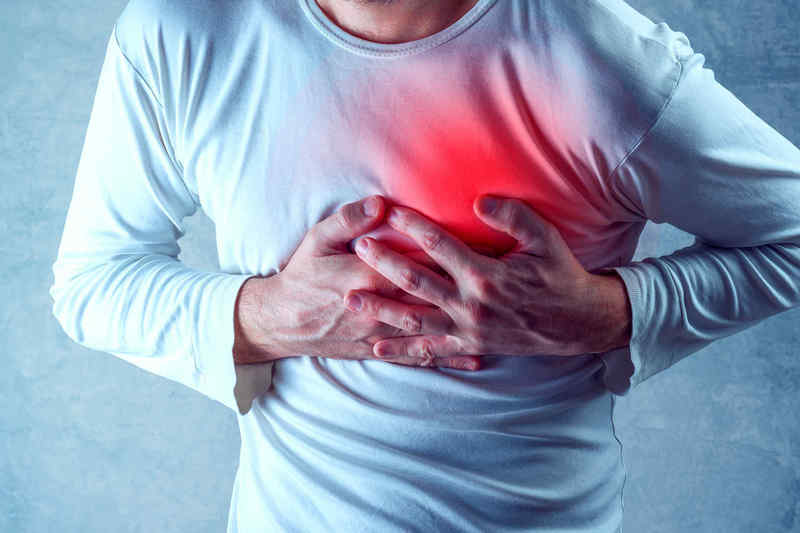
Back pain and heart attack symptoms share more overlap than most people realize. While the vast majority of back pain stems from benign causes — muscle strain, disc problems, or posture — a subset of heart attacks present primarily or exclusively as back pain, without the classic chest pressure that most people associate with a cardiac event. Recognizing when back pain and heart attack symptoms are connected can mean the difference between prompt treatment and dangerous delay. This article explains the mechanisms behind cardiac back pain, which types of heart attacks are most likely to cause it, how it differs from aortic dissection, and the clinical features that help distinguish heart-related back pain from far more common musculoskeletal sources.
How Back Pain Can Signal a Heart Attack
The heart is supplied by sensory nerve fibers that travel through the T1–T4 spinal segments — the same segments that provide sensation to the chest, shoulders, upper back, inner arms, jaw, and neck. When cardiac muscle is ischemic (starved of oxygen), the pain signals generated travel to the dorsal horn of the spinal cord at these levels, where they share processing neurons with sensory inputs from the thoracic back and surrounding regions. The brain, receiving these convergent signals, interprets the pain as originating from the back rather than — or in addition to — the heart. This is referred pain, the same mechanism responsible for the classic left arm and jaw pain of a heart attack.
The interscapular region — the area between the shoulder blades in the upper back — is the most common site of cardiac referred back pain. This location corresponds to the T3–T4 dermatomes and is particularly common in inferior myocardial infarction (involving the right coronary artery) and posterior MI (involving the posterior descending artery or circumflex territory). In these MI patterns, the ischemic zone lies in the lower wall of the heart, and the resulting referred pain projects more posteriorly than in anterior MI, which typically causes anterior chest pressure.
Approximately 25–30% of heart attack patients experience back pain as part of their symptom constellation. More significantly, back pain is the primary or dominant complaint — rather than chest pain — in an estimated 5–10% of MIs, a proportion that rises considerably in women, older adults, and people with diabetes. The quality of cardiac back pain is typically described as dull, aching, pressing, or heavy — not sharp or stabbing. It tends to come on over minutes rather than instantaneously, and may build in intensity alongside other symptoms such as shortness of breath, nausea, or unusual fatigue. Unlike musculoskeletal back pain, it is not reproduced or worsened by pressing on the back, twisting, or breathing deeply.
Aortic Dissection: When Back Pain Is a Vascular Emergency
Aortic dissection is a separate but equally urgent cardiac emergency that classically presents with severe back pain and is frequently confused with MI in the initial assessment — a distinction that matters enormously because the treatments are diametrically opposite. In aortic dissection, the inner lining of the aorta tears, allowing blood to surge between the vessel layers and propagate along the aorta’s length. The pain is characteristically described as tearing, ripping, or knife-like — maximal at the very instant of onset rather than building gradually over minutes. Patients often use the phrase “the worst pain of my life” and describe it as reaching peak intensity instantaneously.
The location of back pain in aortic dissection depends on the dissection type and extent. Type A dissection (involving the ascending aorta) tends to produce anterior chest pain with radiation to the back, particularly the interscapular region. Type B dissection (involving the descending aorta, beginning beyond the left subclavian artery) more often presents with isolated mid-back or interscapular pain without significant anterior chest involvement. A classic bedside finding is a blood pressure differential between the two arms — a difference of more than 20 mmHg suggests that the dissection has compromised flow to one subclavian artery — though this finding is neither perfectly sensitive nor specific.
The therapeutic contrast with MI is critical: MI is treated with thrombolytics (clot-dissolving drugs) or anticoagulation alongside reperfusion procedures, but administering thrombolytics in aortic dissection can be catastrophically fatal, causing uncontrolled hemorrhage into the dissection plane. For this reason, emergency physicians routinely consider and exclude aortic dissection before initiating thrombolytic therapy in patients presenting with severe chest or back pain. Type A dissection requires emergent cardiac surgery; Type B dissection is typically managed with aggressive blood pressure control and may require endovascular repair depending on complications.
Who Is Most Likely to Experience Back Pain During a Heart Attack
Certain groups are significantly more likely to experience back pain as their primary MI symptom, which creates a particular risk of diagnostic delay when clinicians and patients alike expect the classic chest-pressure presentation. Women are approximately 1.7 times more likely than men to report back pain as a heart attack symptom, a pattern documented extensively in the Women’s Ischemia Syndrome Evaluation (WISE) study and replicated in large MI registry data. The physiological reasons for this sex difference are not fully established, but likely involve differences in autonomic pain processing, coronary microvascular disease patterns, and hormonal influences on pain perception.
Older adults and people with longstanding diabetes mellitus are also at higher risk of atypical MI presentations due to autonomic neuropathy — damage to the autonomic nervous system from years of hyperglycemia that alters normal pain signal transmission. In these patients, the ischemic pain pathways function less efficiently, and referred pain patterns can be blunted, shifted, or absent entirely, producing what is called a “silent” or nearly silent MI in which back pain, fatigue, or mild nausea replace the expected dramatic chest pain. People with prior MI who developed scar tissue in specific myocardial territories may also have altered ischemic pain patterns on subsequent cardiac events.
Patients with inferior or posterior MI anatomy — involving the right coronary artery or circumflex territory — are more likely to experience back and jaw symptoms compared to those with anterior MI (left anterior descending artery), who more typically present with substernal chest pain. Understanding these anatomical correlations helps clinicians maintain a high index of suspicion for cardiac causes of back pain in patients with appropriate risk profiles.
Common Non-Cardiac Causes of Back Pain
The overwhelming majority of back pain in adults has nothing to do with the heart. Acute muscle strain — from lifting, sudden twisting, or prolonged static posture — is the single most common cause of both acute and chronic back pain. The back muscles, ligaments, and facet joints can sustain microtears or spasm during ordinary daily activities, producing pain that is typically localized, worsened by movement, and reproduced by pressing on the affected muscle group or joint. Muscle strain back pain usually improves with rest, heat, NSAIDs, and gentle mobilization over days to a few weeks.
Intervertebral disc herniation occurs when the gel-like nucleus pulposus of a spinal disc protrudes through a tear in the outer annulus fibrosus, potentially compressing adjacent nerve roots and producing radiating pain (radiculopathy) — the classic shooting pain that travels down the leg in lumbar disc disease (sciatica) or down the arm in cervical disc disease. Lumbar disc herniation most commonly affects the L4–L5 or L5–S1 levels, producing lower back pain with or without leg pain. Thoracic disc herniation is less common but can produce band-like chest or abdominal discomfort in addition to back pain.
Degenerative disc disease and facet joint arthropathy accumulate with age, producing chronic, gradually worsening back pain that is typically worse in the morning and after prolonged activity, with variable relief from position changes. Costochondritis — inflammation of the cartilaginous joints between the ribs and sternum — can radiate to the back in some patients and is reproducible by pressing on the costochondral junction. Kidney stones produce severe, cramping flank pain that migrates toward the groin; pyelonephritis causes persistent flank pain with fever, chills, and urinary symptoms — both are distinguishable from cardiac back pain by their associated features.
How to Tell the Difference: Cardiac vs. Non-Cardiac Back Pain
Several clinical features help distinguish cardiac back pain and heart attack symptoms from the far more common benign causes. The most reliable distinguishing feature is the response to movement and palpation: musculoskeletal back pain is typically reproduced or worsened by pressing on the back, bending, twisting, or breathing deeply, whereas cardiac back pain is not — it persists at the same intensity regardless of body position or movement and is not tender to palpation over the back muscles or spine. If a patient cannot identify any movement that makes the pain better or worse, this should increase suspicion for a non-mechanical (visceral or cardiac) source.
The presence of associated symptoms is the most powerful indicator of cardiac back pain. Diaphoresis (breaking into a cold sweat) accompanying back pain is a high-alert finding — the autonomic stress response of a cardiac event produces sweating that is out of proportion to exertion or ambient temperature, and is rarely a feature of musculoskeletal pain. Shortness of breath, nausea or vomiting, lightheadedness, or palpitations accompanying back pain similarly raise cardiac concern. Radiation of the back pain to the chest, left arm, jaw, or neck — in any combination — is a strong indicator of referred cardiac pain and should prompt immediate cardiac evaluation.
Onset pattern also matters: cardiac back pain typically appears suddenly without a mechanical trigger — without any lifting, fall, or movement that could explain it — and may be associated with exertion or emotional stress. Musculoskeletal back pain usually has an identifiable mechanical precipitant. The clinical context of the patient matters enormously: back pain in a 60-year-old man with hypertension, dyslipidemia, and a smoking history is in a fundamentally different risk category than the same complaint in a 25-year-old athlete who lifted weights yesterday.
Other Serious Non-Cardiac Causes That Require Urgent Care
Beyond heart attack and aortic dissection, several other serious conditions cause back pain that demands urgent medical evaluation. Pulmonary embolism (PE) — a clot in the pulmonary arteries — can produce pleuritic chest and back pain (pain that worsens with a deep breath) accompanied by sudden shortness of breath, rapid heart rate, and oxygen desaturation. The classic PE presentation includes back or chest pain, breathlessness, and risk factors such as recent immobility, surgery, cancer, or prior clots. PE shares the feature of a non-mechanical pain pattern with cardiac causes and should prompt urgent evaluation including D-dimer testing and CT pulmonary angiography.
Ruptured abdominal aortic aneurysm (AAA) produces severe lower back and abdominal pain, often with hemodynamic collapse and a pulsatile abdominal mass. Unlike the interscapular pain of aortic dissection or MI, ruptured AAA pain tends to localize to the lower back and abdomen and is a surgical emergency with very high short-term mortality. Spinal epidural abscess or hematoma causes severe, progressive back pain accompanied by fever (in abscess), rapidly developing neurological deficits such as weakness or numbness in the legs, and bowel or bladder dysfunction — this requires urgent MRI and neurosurgical consultation. Any back pain accompanied by new neurological symptoms should be treated as an emergency until proven otherwise.
Understanding the spectrum from benign musculoskeletal back pain to life-threatening cardiac events is important not to create anxiety, but to enable appropriate triage. Jaw pain shares many of the same referred pain mechanisms as back pain during MI; chest tightness often accompanies back pain in cardiac events. Recognizing these connections enables faster response.
What to Do When Back Pain May Be Cardiac
When back pain occurs alongside any of the warning features described above — diaphoresis, shortness of breath, nausea, radiation to the chest or arm, sudden onset without mechanical cause, or in a patient with known cardiac risk factors — the appropriate response is to call emergency services immediately rather than adopting a wait-and-see approach. In confirmed or strongly suspected acute MI, the treatment goal is coronary reperfusion within 90 minutes of first medical contact for STEMI. Every minute of delay between symptom onset and reperfusion results in additional myocardial cell death — approximately 1.9 million cardiac muscle cells die per minute during a STEMI.
While waiting for emergency services, the patient should sit or lie in whatever position is most comfortable, avoid exertion, and chew (not swallow whole) 325 mg of aspirin if available and if there is no known aspirin allergy or history of active gastrointestinal bleeding — aspirin inhibits platelet aggregation and can reduce the extent of coronary thrombus. Do not drive yourself to the hospital; EMS arrival enables on-scene cardiac monitoring, IV access, and oxygen administration, and pre-notification to the receiving hospital allows the catheterization laboratory team to be activated before arrival, dramatically reducing door-to-balloon time.
Women are encouraged to advocate strongly for cardiac evaluation when they experience atypical symptoms including back pain. Studies have shown that women with atypical MI presentations are less likely to receive timely ECGs, troponin testing, and cardiac catheterization compared to men with the same symptom profile and risk factors. Being direct about concerns — “I am concerned this might be my heart” — and insisting on appropriate workup if the initial evaluation seems insufficient is an important form of self-advocacy. Monitoring key heart health numbers including blood pressure, cholesterol, and blood sugar is an important part of understanding personal cardiac risk before a crisis occurs.
Back pain and heart attack symptoms occupy opposite ends of the clinical spectrum in terms of frequency, with benign musculoskeletal causes being vastly more common. But the serious minority of cases in which back pain represents a cardiac emergency are precisely the situations where recognition and rapid response matter most. Any back pain that is sudden, severe, non-mechanical, accompanied by systemic symptoms, or occurring in the context of cardiac risk factors deserves urgent cardiac evaluation. The cost of calling 911 unnecessarily is inconvenience; the cost of not calling is potentially irreversible myocardial damage or death. For additional reading, the American Heart Association and the National Heart, Lung, and Blood Institute provide comprehensive resources on heart attack warning signs; the CDC also maintains updated statistics and prevention guidance.
Exertional Back Pain as an Anginal Equivalent
Just as some patients experience exertional jaw aching or exertional left arm heaviness instead of chest pain during episodes of cardiac ischemia, others experience upper back aching as their primary anginal equivalent — a predictable, reproducible symptom that represents reduced coronary blood flow during increased myocardial oxygen demand. The pattern is characteristic: the upper or mid-back aching reliably appears after climbing a certain number of stairs, walking briskly for a set distance, or during emotional stress, and reliably resolves within two to five minutes of stopping the activity. This rest-responsive, exertion-triggered pattern distinguishes anginal back pain from musculoskeletal back pain, which typically behaves differently — worsening with sustained rest and improving with gentle warmup movement.
Nitroglycerin responsiveness provides additional diagnostic information: sublingual nitroglycerin that reliably relieves the exertional upper back aching within two to three minutes — the same time course as its effect on classic anginal chest pressure — strongly suggests an ischemic origin. Any patient with known coronary artery disease or significant cardiac risk factors who develops reproducible exertional upper back pain should be evaluated with exercise stress testing or pharmacologic stress imaging to document the ischemic basis of the symptom. If ischemia is confirmed and involves a significant myocardial territory, coronary angiography and possible revascularization may provide superior relief compared to medical management alone.
True Posterior MI: A Commonly Missed Diagnosis
True posterior myocardial infarction — involving the posterior wall of the left ventricle, supplied by the posterior descending artery or circumflex — is the pattern most likely to produce interscapular back pain as its primary symptom, and it is also among the most frequently missed MI patterns on a standard 12-lead electrocardiogram. Unlike anterior or inferior MI, which produce ST elevation in the anterior (V1–V4) or inferior (II, III, aVF) leads respectively, true posterior MI produces ST depression in leads V1–V3, a finding that is easily misinterpreted as anterior ischemia rather than recognized as the mirror image of posterior ST elevation. The tall R wave in V1 or V2 (R/S ratio ≥1) is another indirect indicator of posterior MI that is frequently overlooked.
Definitive diagnosis requires posterior leads — V7, V8, and V9, placed on the left posterior chest — which directly record the ST elevation over the infarcting posterior wall. These leads are not part of the standard 12-lead ECG and must be specifically requested and applied. Emergency physicians and paramedics who encounter a patient with severe interscapular back pain, diaphoresis, and ST depression in V1–V3 should perform posterior leads to avoid missing the posterior STEMI diagnosis. Delay in recognizing posterior MI results in the same myocardial cell loss as delay in recognizing any other STEMI, making ECG interpretation skills and appropriate clinical suspicion critical for patients presenting with back pain and heart attack symptoms.
MINOCA, SCAD, and Stress Cardiomyopathy: Uncommon Cardiac Causes of Back Pain
Several less common cardiac conditions can produce the symptom complex of back pain with myocardial injury, presenting similarly to atherosclerotic MI but with different underlying mechanisms and treatment implications. Myocardial infarction with non-obstructive coronary arteries (MINOCA) describes a syndrome in which patients have positive troponin levels and classic MI symptoms — potentially including back pain — but no flow-limiting plaque found on coronary angiography. The underlying mechanisms include coronary vasospasm, coronary microvascular dysfunction, plaque erosion without significant stenosis, and embolism — and MINOCA is disproportionately diagnosed in women, younger patients, and those with autoimmune conditions. Treatment differs from conventional atherosclerotic MI and requires investigation of the specific underlying mechanism, often including cardiac MRI to characterize myocardial injury patterns.
Spontaneous coronary artery dissection (SCAD) is a non-atherosclerotic, non-traumatic tear in the coronary artery wall that creates a false lumen compressing the true coronary lumen and causing myocardial ischemia. SCAD disproportionately affects young and middle-aged women, particularly in the peripartum period and in those with fibromuscular dysplasia (a non-inflammatory arterial disease). It presents as ACS with all possible symptom patterns including back and jaw referred pain, and its management often differs from atherosclerotic MI — percutaneous intervention is generally avoided if the vessel is patent, as catheter manipulation can extend the dissection. Stress (Takotsubo) cardiomyopathy — transient apical ballooning triggered by sudden intense emotional or physical stress — produces troponin elevation and ACS symptoms including back pain, predominantly in postmenopausal women. The distinctive ventriculographic pattern (apical ballooning with preserved or hyperdynamic basal function) establishes the diagnosis, and the condition typically resolves fully within days to weeks with supportive care.
As someone dealing with this personally, the back pain and heart attack symptoms section was very helpful. The specific numbers and thresholds mentioned are exactly what I needed to understand my lab results. Will definitely be coming back to this site for more health information.
Bookmarked this article on back pain and heart attack symptoms immediately — going to reference it regularly. The specific numbers and thresholds mentioned are exactly what I needed to understand my lab results. Keep up this kind of thorough health journalism — it genuinely helps patients like me.
Bookmarked this article on back pain and heart attack symptoms immediately — going to reference it regularly. The connection between diet, lifestyle, and long-term outcomes is explained clearly here. I wish I had found this article when I was first diagnosed — would have saved a lot of confusion.
Really well-written article on back pain and heart attack symptoms. I appreciate that the article is careful about distinguishing between what is known and what is still being researched. I wish I had found this article earlier — would have saved a lot of confusion.
As someone dealing with this personally, the back pain and heart attack symptoms section was very helpful. The connection between lifestyle choices and long-term outcomes is explained clearly here. Keep up this kind of thorough health journalism — it genuinely helps patients like me.
Finally a resource that explains back pain and heart attack symptoms in plain language. The specific numbers and thresholds mentioned are exactly what I needed to understand my results. Appreciate the effort that went into researching and writing this — it shows.