

Sweating and chest discomfort occurring together represent one of the most clinically significant symptom combinations in cardiovascular medicine. While each symptom can occur independently from entirely benign causes, their combination — particularly when sweating is cold, sudden, and out of proportion to any physical exertion — carries a substantially elevated probability of a cardiac event. Understanding why sweating and chest discomfort occur together during heart attacks, how to distinguish cardiac from non-cardiac causes, and when this combination demands immediate emergency response can be life-saving knowledge.
Why Sweating Accompanies Chest Discomfort During a Heart Attack
The sweating that accompanies a heart attack is not the same as the sweating that comes from exercise or heat. It arises from a completely different physiological process: activation of the sympathetic nervous system in response to cardiac ischemia. When coronary blood flow is suddenly reduced — by a ruptured plaque, a clot, or severe vasospasm — the myocardium begins to lack oxygen and generates an acute stress response. The brain and brainstem, perceiving a life-threatening emergency, trigger massive release of catecholamines (adrenaline and noradrenaline) from the adrenal medulla and sympathetic nerve endings throughout the body.
These catecholamines simultaneously stimulate eccrine sweat glands throughout the body, producing sudden, profuse sweating, and constrict peripheral blood vessels to divert blood toward the heart and brain. This peripheral vasoconstriction is what produces the characteristic cold, clammy quality of cardiac sweating — unlike exercise-induced sweating, where peripheral vasodilation makes the skin warm and flushed, cardiac diaphoresis produces pale, cold, damp skin because blood flow is being shunted away from the periphery at the same time that the sweat glands are being activated. Patients reliably notice that this sweating feels different from any sweating they have experienced during exercise or in hot weather.
The combination of sweating and chest discomfort is therefore a direct physiological signature of the catastrophic sympathetic activation that occurs during myocardial ischemia. Data from the GRACE (Global Registry of Acute Coronary Events) registry showed diaphoresis present in approximately 40% of patients with confirmed myocardial infarction presenting to emergency departments. This proportion rises with STEMI (complete coronary artery blockage) compared to NSTEMI (partial blockage), reflecting the greater ischemic burden and more intense sympathetic response. While sweating alone is not specific for cardiac events, the combination with chest discomfort — particularly when accompanied by additional symptoms — substantially increases the probability of acute coronary syndrome (ACS).
The Difference Between Cardiac Sweating and Ordinary Sweating
Recognizing the qualitative difference between cardiac diaphoresis and ordinary sweating is important because it helps patients and bystanders identify when sweating is a warning sign rather than a normal physiological response. Ordinary sweating from exercise, heat, or anxiety is typically warm, associated with flushed or pink skin, and corresponds directly to the level of physical activity or temperature exposure. It does not appear suddenly at rest, does not drench clothing within minutes, and is not accompanied by chest symptoms, nausea, or a sense of doom.
Cardiac diaphoresis, in contrast, tends to appear abruptly — often described by patients as “breaking into a cold sweat” or “suddenly soaked” while sitting quietly or performing very light activity. The skin feels cold and clammy rather than warm. The patient may appear pale or gray rather than flushed. The sweating often involves the forehead, upper lip, and chest prominently. It typically cannot be explained by the ambient temperature, physical exertion, or emotional stress alone — it appears disproportionate to any identifiable trigger. This unprovoked, cold, profuse quality is the distinguishing feature that should prompt immediate concern when sweating and chest discomfort occur together.
Night sweats that awaken a patient from sleep accompanied by chest tightness or pressure deserve particular attention. Nocturnal sweating from warmth or hormonal causes is easily understood by context. Night sweats from cardiac causes — including nocturnal angina, decompensating heart failure, or nocturnal arrhythmias — are accompanied by other cardiac symptoms and often represent worsening cardiac function requiring medical evaluation.
Other Cardiac Causes of Sweating and Chest Discomfort
While acute MI is the most feared cardiac cause of sweating and chest discomfort, several other cardiac conditions can produce this combination through similar mechanisms of sympathetic activation and reduced cardiac output. Unstable angina — episodes of ischemia from plaque instability without complete coronary occlusion — activates the same sympathetic stress response as full MI, producing chest pressure or tightness accompanied by diaphoresis, often at rest or with minimal exertion. Unstable angina is categorized as an acute coronary syndrome along with MI and requires the same emergency evaluation because the risk of progression to complete coronary occlusion is high.
Rapid cardiac arrhythmias, particularly ventricular tachycardia (VT) and supraventricular tachycardias (SVT) with very fast rates, cause sweating and chest discomfort through a different mechanism: reduced cardiac output from the arrhythmia triggers compensatory sympathetic activation, producing diaphoresis alongside palpitations, chest tightness, and lightheadedness. Ventricular tachycardia is particularly alarming because it can degenerate into ventricular fibrillation and cardiac arrest; patients with VT frequently describe a sudden onset of rapid pounding chest sensation, chest tightness, and drenching sweat that are unmistakably different from ordinary palpitations.
Hypertensive emergencies — in which systolic blood pressure exceeds 180 mmHg with evidence of end-organ damage — can produce severe headache, chest tightness, visual changes, and diaphoresis from extreme cardiovascular stress. Decompensated heart failure causes progressive sweating and exertional chest tightness (from pulmonary congestion) as the sympathetic nervous system maintains cardiac output in the face of a failing heart. In all these cardiac conditions, the sweating and chest discomfort arise from the same fundamental pathway: the sympathetic nervous system reacting to impaired cardiac function.
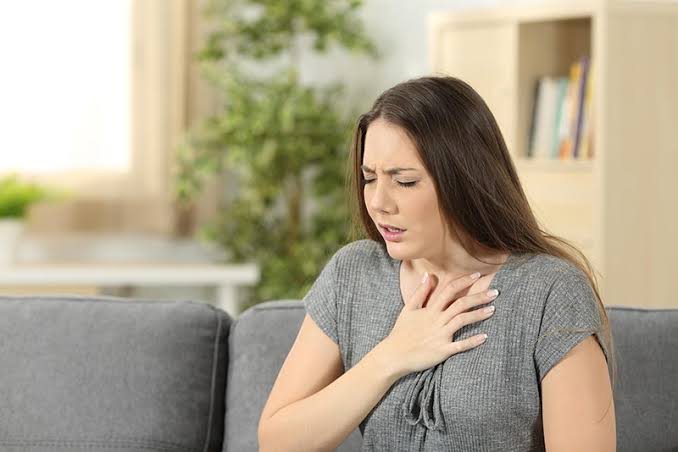
Non-Cardiac Causes That Can Mimic the Combination
Not every episode of sweating and chest discomfort represents a cardiac emergency, and several non-cardiac conditions can closely mimic this presentation. Panic attacks and acute anxiety produce chest tightness, sweating, palpitations, and shortness of breath through hyperventilation and sympathetic activation that is physiologically similar to the cardiac response, though the precipitating mechanism is psychological rather than ischemic. The chest tightness of a panic attack is real — it results from respiratory alkalosis causing bronchospasm and intercostal muscle tension — but it is typically associated with a strong sense of fear or terror that precedes the symptoms, and it resolves completely within 20–30 minutes either spontaneously or with controlled breathing. Nonetheless, because panic attacks and acute MI can present identically, it is not safe to assume the cause is psychological without cardiac evaluation.
Esophageal spasm and severe gastroesophageal reflux disease (GERD) are particularly challenging diagnostic mimics because both can produce substernal chest pain or discomfort that radiates to the back or jaw and is accompanied by autonomic sweating during severe episodes. Esophageal spasm famously responds to sublingual nitroglycerin — the same medication used to treat angina — because nitroglycerin relaxes smooth muscle in both the coronary arteries and the esophagus. This response cannot be used to distinguish esophageal from cardiac chest pain. Hypoglycemia in people with diabetes causes profuse sweating, chest pounding (tachycardia), anxiety, and chest discomfort from sympathetic activation that resolves rapidly with glucose administration. Pulmonary embolism (PE) presents with sudden dyspnea, chest pain, and diaphoresis alongside tachycardia — a life-threatening emergency in its own right. Pheochromocytoma, a rare adrenal tumor, secretes catecholamines in paroxysms, producing episodes of severe hypertension, profuse sweating, headache, and chest discomfort.
Vasovagal Reactions vs. Cardiac Events: A Critical Distinction
Vasovagal syncope — the common fainting reaction — produces sweating and chest or throat discomfort in the presyncope phase, and can be confused with a cardiac event. The vasovagal reaction is mediated by a sudden switch from sympathetic to parasympathetic dominance, resulting in bradycardia (slowed heart rate) and peripheral vasodilation that drops blood pressure. The critical distinguishing features of vasovagal from cardiac events are: (1) an identifiable trigger such as pain, prolonged standing, blood draw, or a hot crowded room; (2) a prodrome of lightheadedness, nausea, tunnel vision, and muffled hearing before sweating and presyncope; (3) rapid and complete recovery within seconds to minutes of lying down; and (4) bradycardia (slow pulse) rather than the tachycardia typical of cardiac events.
Cardiac events do not recover with position changes. A patient who remains pale, sweating, and with persistent chest discomfort after lying down — rather than rapidly recovering — is not having a vasovagal reaction and should be treated as a potential cardiac emergency. The persistence of chest symptoms after the sweating begins is the key feature: in vasovagal reactions, chest and throat discomfort are brief prodromal sensations; in cardiac events, chest discomfort is the primary ongoing symptom that does not resolve in minutes. An inferior MI (right coronary artery territory) can trigger a Bezold–Jarisch reflex that mimics vasovagal physiology — bradycardia, hypotension, nausea, and sweating — but unlike true vasovagal, the patient will have persistent ST changes on ECG and rising troponin levels confirming ischemia.
When Sweating and Chest Discomfort Require Emergency Action
The combination of sweating and chest discomfort should prompt an emergency response when: the sweating is cold and sudden in onset; the chest discomfort involves pressure, tightness, heaviness, squeezing, or burning; either symptom appears without clear non-cardiac explanation; the patient has cardiac risk factors (age over 45, hypertension, diabetes, high cholesterol, smoking, or family history of heart attack); or either symptom is accompanied by shortness of breath, nausea, radiation to the arm or jaw, palpitations, or a sense of impending doom. In any of these scenarios, the appropriate response is to call emergency services immediately rather than waiting to see if symptoms resolve.
Do not drive yourself to the hospital — EMS personnel can begin cardiac monitoring and treatment en route and pre-notify the catheterization laboratory to reduce the time from arrival to coronary reperfusion. Chew (not swallow whole) 325 mg of aspirin if available and if there is no allergy or active gastrointestinal bleeding. Do not take antacids or assume the symptoms are from reflux — if symptoms are from GERD, the antacid is harmless; if they are from a heart attack, the delay may be fatal. Symptoms that transiently improve do not necessarily indicate a non-cardiac cause — unstable angina can produce sweating and chest pressure that fluctuate before progressing to complete coronary occlusion. Women are particularly encouraged to act on the sweating and chest discomfort combination even without prominent central chest pressure, as this presentation — sweating with more diffuse or atypical discomfort — is a recognized female MI pattern.
The combination of sweating and chest discomfort is one of the body’s most specific alarm signals for cardiovascular crisis. Recognizing it, understanding its mechanisms, and knowing when to act can be the difference between timely intervention and irreversible harm. Keeping track of key cardiovascular risk numbers provides important personal context for evaluating risk. For those who have experienced chest tightness or back pain during cardiac events, understanding that sweating often accompanies these symptoms helps build a complete picture of how heart attacks present across their full spectrum. Additional resources are available from the American Heart Association, the National Heart, Lung, and Blood Institute, and the CDC.
How Women Experience Sweating During Heart Attacks
Women experience sweating and chest discomfort during heart attacks in patterns that differ subtly but importantly from the classic male presentation. Research including the HEROINE (HEart disease Research Of women IN the Emergency department) study has documented that sweating is one of the most consistently reported symptoms in women with confirmed MI, often appearing prominently even when classic substernal chest pressure is absent or mild. In many women with MI, the presenting constellation is sweating combined with unusual fatigue, nausea, and jaw or back discomfort — without the dramatic central crushing chest pressure that clinical training and public awareness campaigns have historically emphasized as the cardiac “template.”
This pattern has contributed to documented delays in the evaluation and treatment of women with MI. Studies using large emergency department registries have shown that women with ACS are less likely to receive early ECGs, are more likely to have their symptoms attributed to anxiety or gastrointestinal causes, and wait longer for cardiac biomarker testing compared to men with equivalent symptom profiles and risk factors. Women with sweating and chest discomfort are encouraged to be explicit about their concern for a cardiac cause — stating “I am worried this might be my heart” has been shown to accelerate triage in emergency settings.
The autonomic physiology underlying diaphoresis in female MI is identical to that in men — the same catecholamine surge, the same peripheral vasoconstriction, the same cold clammy quality — but women may be more likely to experience the sweating in the context of nausea or fatigue as the dominant associated symptoms rather than central chest pressure. Recognizing that the combination of unusual sweating with fatigue, nausea, or jaw and back discomfort constitutes a cardiac warning sign — regardless of the presence of classic chest pressure — is essential cardiovascular literacy for all women, particularly those over 50 or with cardiac risk factors.
Drug-Related and Toxin-Related Causes of Sweating with Chest Pain
Several substances and medications can produce sweating and chest discomfort through mechanisms that mimic or actually cause acute cardiac ischemia, and distinguishing these from spontaneous ACS has important treatment implications. Cocaine is the most clinically significant example: cocaine blocks the reuptake of catecholamines at synaptic junctions throughout the sympathetic nervous system, producing intense and prolonged sympathetic stimulation that causes severe coronary vasospasm, accelerated plaque rupture, and direct myocardial toxicity. Patients with cocaine-related chest pain and sweating are typically younger adults — often 25–45 years old without traditional cardiac risk factors — who present to the emergency department with severe chest pain, profuse sweating, hypertension, tachycardia, and sometimes ECG changes that mirror STEMI. The management of cocaine-associated chest pain differs from standard ACS in several respects: beta-blockers are relatively contraindicated because they can worsen coronary vasospasm by unmasking unopposed alpha-adrenergic stimulation, and benzodiazepines play a more prominent role in reducing sympathetic activity.
Methamphetamine and other sympathomimetic drugs produce similar presentations through related mechanisms of catecholamine excess. Withdrawal from opioids, alcohol, or benzodiazepines causes severe autonomic dysregulation with profuse sweating, tachycardia, hypertension, and chest discomfort; these presentations can be complicated by genuine demand ischemia (Type 2 MI) in patients with underlying coronary disease whose oxygen demand has been dramatically increased by the withdrawal state. Carbon monoxide poisoning — from faulty heating systems, fires, or enclosed spaces with combustion — produces chest pain, headache, sweating, confusion, and nausea as the hemoglobin becomes progressively saturated with carbon monoxide and unable to carry oxygen; CO poisoning is a medical emergency treated with high-flow oxygen or hyperbaric oxygen therapy, and it is easily missed because the symptoms are nonspecific and the patient is not visibly hypoxic.
Several prescribed medications can also produce sweating and chest symptoms as side effects or in overdose. Thyroid hormone replacement in excess causes sympathomimetic symptoms including chest pounding, sweating, and palpitations. Certain antidepressants, particularly the serotonin-norepinephrine reuptake inhibitors (SNRIs), can cause excessive sweating as a side effect, though chest discomfort alongside this would warrant investigation. Nitrate tolerance — in patients on long-acting nitrates for coronary artery disease — can produce “rebound” symptoms including chest discomfort and sweating during the nitrate-free period if the scheduled drug holiday coincides with increased activity or emotional stress.
What to Expect in the Emergency Department
For patients presenting with sweating and chest discomfort, the emergency department evaluation follows a systematic protocol designed to rapidly identify or exclude ACS while simultaneously assessing for other life-threatening causes. The first priority is a 12-lead ECG, which should ideally be obtained and interpreted within 10 minutes of arrival — a benchmark set by ACC/AHA guidelines because ST elevation MI (STEMI) requires immediate catheterization laboratory activation and cannot wait for blood test results. If the initial ECG shows ST elevation in a coronary distribution, the patient will typically be taken directly to the cardiac catheterization laboratory for primary percutaneous coronary intervention (PCI) without waiting for confirmatory troponin results.
If the ECG does not show STEMI, the evaluation continues with high-sensitivity troponin measurements — typically drawn at presentation and again at one to three hours later, depending on the assay used and institutional protocol. High-sensitivity troponin can detect even small amounts of myocardial cell death and becomes detectable within one to two hours of MI onset in most cases. A rising pattern of troponin values (“delta troponin”) confirms myocardial injury and ACS even in the absence of ECG changes; a stable, non-elevated troponin pattern after two serial measurements in a low-risk patient is reassuring but not absolutely conclusive, and clinical judgment remains essential.
Oxygen saturation, blood pressure, and continuous cardiac monitoring are established simultaneously. Intravenous access is placed for medication administration. The history focuses on the onset, quality, radiation, and duration of chest discomfort; associated symptoms including the sweating pattern; cardiac risk factors; and prior cardiac history. Chest imaging (X-ray or CT) may be performed to evaluate for alternative diagnoses such as aortic dissection, pulmonary embolism, or pneumonia. Patients with sweating and chest discomfort who are found to have ACS receive antiplatelet therapy, anticoagulation, and are transferred either to the catheterization laboratory for invasive evaluation or to a cardiac monitoring unit for further management, depending on the type and severity of the ACS diagnosed. The speed and thoroughness of this evaluation is why calling 911 — rather than driving to an urgent care or waiting to see a primary care physician — is so strongly emphasized for sweating and chest discomfort of possible cardiac origin.
Reducing Long-Term Risk After an Episode of Sweating and Chest Discomfort
Patients who have been evaluated for sweating and chest discomfort — whether the episode turned out to be cardiac or non-cardiac — benefit from a structured risk assessment conversation with a physician to understand their personal cardiovascular risk and appropriate follow-up. For patients with confirmed ACS, the post-discharge period is critical: the days to weeks after an acute coronary event carry the highest risk of recurrence, stent thrombosis, or sudden arrhythmia, and adherence to prescribed medications (dual antiplatelet therapy, statins, beta-blockers, ACE inhibitors) during this period has a direct impact on survival.
For patients whose sweating and chest discomfort were found to be non-cardiac — from panic disorder, GERD, or another cause — the evaluation still provides an opportunity to formally assess cardiac risk. A primary care physician or cardiologist can calculate a 10-year cardiovascular risk score using validated tools such as the ACC/AHA Pooled Cohort Equations, identify modifiable risk factors (hypertension, dyslipidemia, smoking, diabetes, obesity, physical inactivity), and recommend appropriate preventive interventions. For patients with intermediate or higher calculated risk, additional testing such as a coronary artery calcium (CAC) score may help guide decisions about statin therapy and lifestyle intervention intensity.
Blood pressure control, smoking cessation, regular aerobic exercise, dietary modification toward a heart-healthy pattern (Mediterranean or DASH diet), and management of diabetes and dyslipidemia collectively reduce the risk of future cardiac events more substantially than any single intervention. These same measures reduce the likelihood of a future episode of sweating and chest discomfort from cardiac causes — not by eliminating the warning system, but by reducing the cardiac risk that would trigger it.
I have been reading about sweating and chest discomfort for weeks and this is the most thorough guide I have found. I especially valued the explanation of why these recommendations exist, not just what they are. Appreciate the effort that went into researching and writing this — it shows.
Bookmarked this article on sweating and chest discomfort immediately — going to reference it regularly. I have tried following advice from several sources but this is the most consistent with what my specialist told me. Will definitely be coming back to this site for more health information.
Thank you for covering sweating and chest discomfort so thoroughly without being overly technical. I appreciated how the article addressed both the clinical side and the practical lifestyle adjustments. I wish I had found this article when I was first diagnosed — would have saved a lot of confusion.
This breakdown of sweating and chest discomfort is exactly what patients need before a specialist appointment. The article answered questions I didn’t even know I had until I started reading. This gave me real confidence going into my next specialist appointment.
Thank you for covering sweating and chest discomfort so thoroughly without being overly technical. The specific numbers and thresholds mentioned are exactly what I needed to understand my results. Thank you for making complex medical information accessible without dumbing it down.
Bookmarked this article on sweating and chest discomfort immediately — going to reference it regularly. The practical tips made this immediately actionable, not just theoretical. This is exactly why I prefer this website over generic health platforms.