

Annual foot exams for people with diabetes are one of the most impactful and most consistently neglected components of diabetes care — impactful because early detection of neuropathy, circulation problems, and structural foot abnormalities enables interventions that prevent diabetic foot ulcers, and neglected because foot care lacks the urgency and symptom-driven motivation that drives patients to seek care for other problems. Diabetic foot disease is the leading cause of non-traumatic lower limb amputations in adults, and the majority of these amputations are preceded by a foot ulcer — an injury that in most cases goes unnoticed because peripheral neuropathy (nerve damage from diabetes) has eliminated the normal pain response that would have prompted the person to seek care. The central, clinically critical insight about foot exams for people with diabetes is this: neuropathy removes the body’s alarm system for foot injury. An adult with significant peripheral neuropathy can sustain a serious foot wound from a pebble in the shoe, a blister from a new shoe, or an accidental burn from a hot surface — and feel nothing. Regular professional foot examinations and daily self-inspection are the substitutes for the pain signal that neuropathy has removed.
Diabetic foot disease is one of the most devastating and costly complications of diabetes. Approximately 15–25% of adults with diabetes will develop a foot ulcer during their lifetime. Once a foot ulcer develops, the 5-year mortality rate exceeds that of many cancers — approximately 50% — due to the systemic cardiovascular and infectious complications associated with severe lower extremity disease. Non-traumatic lower limb amputations in the United States are attributed to diabetes in approximately 60–70% of cases, with an estimated 70,000–80,000 amputations per year. Yet expert consensus and multiple intervention trials suggest that 50–80% of diabetic foot amputations are preventable through systematic foot monitoring, patient education, and prompt treatment of early foot problems — making routine foot exams one of the highest-return preventive interventions in all of diabetes care.
What Happens During a Professional Foot Exam for Diabetes
The annual comprehensive foot exam for people with diabetes — performed by a primary care provider or podiatrist — is a structured assessment that evaluates the four main categories of diabetic foot risk:
- Peripheral neuropathy assessment (10-gram monofilament test): The Semmes-Weinstein 10-gram monofilament is a thin filament that is pressed against the skin of the foot until it bends — applying a standardized 10-gram force. In a foot with intact protective sensation, this stimulus is felt reliably; in a foot with peripheral neuropathy sufficient to create significant ulcer risk, the stimulus is not felt at one or more of the standard testing sites (typically 10 sites on the plantar surface of the foot). Failure to feel the monofilament at one or more sites is a clinically significant finding that indicates loss of protective sensation — the neurological deficit that makes a person unable to feel foot injuries. Additional neurological assessments may include vibration sense testing with a 128 Hz tuning fork (reduced vibration sense is one of the earliest detectable signs of peripheral neuropathy), ankle reflex testing, and qualitative assessment of temperature and pinprick sensation. Peripheral neuropathy detected at the annual foot exam triggers increased monitoring frequency, patient education about foot self-care, and consideration of footwear changes, insoles, or podiatry referral.
- Peripheral vascular assessment (foot pulses): Peripheral arterial disease (PAD) — narrowing of the arteries supplying the lower extremities — is 2–4 times more common in adults with diabetes than in the general population and is present in approximately 25–30% of adults with diabetes and peripheral neuropathy. PAD impairs wound healing by reducing blood flow to the foot and increases the risk of limb-threatening ischemia when a foot ulcer develops. The foot examination assesses peripheral circulation by palpating the dorsalis pedis artery (on the top of the foot) and the posterior tibial artery (behind the medial ankle) — the two primary foot pulse locations. Absent or weak foot pulses suggest significant peripheral arterial disease and should prompt further vascular assessment, which may include ankle-brachial index (ABI) testing and vascular surgery consultation. ABI below 0.9 confirms peripheral arterial disease; very low ABI values (below 0.4) indicate severe ischemia requiring urgent vascular evaluation.
- Structural foot examination: The comprehensive foot exam includes assessment of foot structure for deformities that increase ulcer risk. Hammertoes (contracted toes where pressure over the dorsal toe joints creates callus and skin breakdown), bunions (hallux valgus deformities causing pressure along the inner border of the foot), and Charcot foot (a serious complication of severe neuropathy where the bones of the foot collapse due to repeated undetected trauma, causing progressive structural deformity) are all conditions that significantly increase ulcer risk and may require orthotic devices, specialized footwear, or surgical correction. Calluses — areas of thickened skin that develop over pressure points — are important findings because high-pressure areas beneath calluses are common sites of ulcer development; callus debridement by a podiatrist reduces peak foot pressure and ulcer risk in high-risk patients.
- Skin and nail assessment: The foot exam evaluates skin integrity (dryness, cracking — particularly at the heel where cracking can penetrate through to dermis), color changes (redness, discoloration, cyanosis), temperature differences between the two feet (asymmetric warmth may indicate early Charcot; coolness may indicate ischemia), any open wounds or ulcerations, interdigital (between-the-toes) maceration that can promote fungal infection, and nail health (thickened, dystrophic, or ingrown nails that are common sources of foot infection in adults with diabetes and neuropathy).
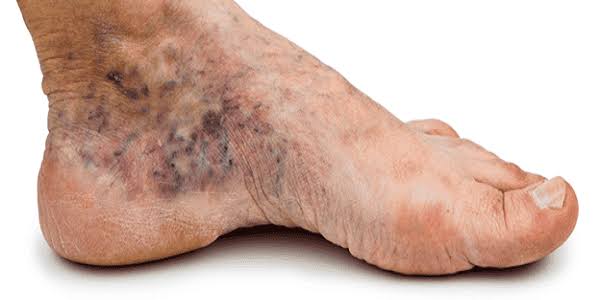
Daily Foot Self-Examination: The Between-Visit Safety Net
Professional annual foot exams for people with diabetes are essential — but the 364 days between annual exams represent the period when foot injuries actually occur, which is why daily foot self-inspection is one of the most important diabetes self-care behaviors for adults with neuropathy:
- What to look for daily: Every day, inspect all surfaces of both feet: the tops, the soles, the heels, and between each pair of toes. Look for wounds (cuts, punctures, blisters, abrasions), redness or swelling in any area, areas of skin that look different from yesterday (new dark spots, new callus formation), nail changes (ingrown nail edges, nail color change), or swelling of the entire foot or ankle. Use a hand mirror to see the bottom of the foot if flexibility is limited, or ask a family member to help with the inspection. Good lighting is essential — foot problems are easy to miss in dim light.
- When to seek care immediately: Any open wound, any blister that has broken, any area of redness or warmth that is spreading, any swelling of the foot or ankle that is new or worsening, or any wound that does not show clear signs of healing within 24–48 hours should be evaluated by a clinician within 24 hours — not at the next scheduled appointment, which may be weeks away. The speed of treatment matters enormously in diabetic foot disease: a small wound treated within 24 hours has a dramatically better prognosis than the same wound left untreated for a week while the person hopes it heals on its own. Any foot problem that is accompanied by fever, ascending redness, red streaks up the leg (lymphangitis), or systemic illness should be treated as a medical emergency requiring same-day emergency evaluation for potential limb-threatening infection.
- Footwear guidance: Adults with peripheral neuropathy should never walk barefoot — even indoors, where a step on a nail, a sliver of glass, or a piece of plastic can cause a puncture wound that is not felt and not noticed until it has become infected. Well-fitting footwear that provides adequate toe box width, no internal pressure points, and cushioned soles is protective. Shoes should be checked with the hand before putting them on — a common practice in diabetes education — to feel for any foreign objects or rough interior seams that could cause a wound. The complete diabetes monitoring schedule that places foot exams in context alongside all other annual components is in our annual diabetes care checklist. The diabetes checkup schedule covering how foot exams fit within the overall monitoring system is in our diabetes checkups: what to expect guide. The blood glucose control that is the primary modifiable risk factor for peripheral neuropathy development is monitored through HbA1c covered in our A1C testing schedule guide. The ADA’s diabetic foot complications resources, the NIDDK’s diabetic foot problems information, and the CDC’s diabetes foot problems guidance provide authoritative information on foot care and complication prevention for adults with diabetes.
Diabetic Foot Risk Classification: Why It Matters
The findings from the annual comprehensive foot exam for people with diabetes are used to classify each patient’s diabetic foot risk — which directly determines the recommended monitoring frequency and the intensity of preventive foot care:
- Risk Category 0 — no neuropathy, no PAD: Adults with intact protective sensation (monofilament felt at all test sites), normal foot pulses, and no structural deformities are at the lowest risk for diabetic foot ulcers. Annual comprehensive foot exams by the primary care provider are typically sufficient, with patient education about daily self-inspection and proper footwear as the primary preventive measures. Even patients in Risk Category 0 should not become complacent — peripheral neuropathy can develop or worsen substantially between annual exams, particularly when blood glucose control deteriorates.
- Risk Category 1 — neuropathy without deformity or PAD: Adults with loss of protective sensation (failure to feel the 10-gram monofilament at one or more sites) but without structural foot deformity or peripheral arterial disease are at moderate risk. Foot exams every 3–6 months are recommended, with attention to early pressure area identification and footwear assessment. Therapeutic shoes with extra depth and custom insoles are often appropriate to redistribute foot pressure and prevent callus formation over high-risk bony prominences.
- Risk Category 2 — neuropathy with deformity or PAD: Adults with peripheral neuropathy combined with either a structural foot deformity (hammertoes, Charcot changes, prominent metatarsal heads) or peripheral arterial disease are at high risk of foot ulcers. Foot exams every 3 months are recommended, with podiatric management of deformities, regular callus debridement, and therapeutic footwear. The combination of insensate feet and structural abnormalities that create focal high-pressure areas is particularly ulcerogenic — most diabetic foot ulcers develop at pressure points in insensate feet, often under calluses that the patient does not notice.
- Risk Category 3 — history of foot ulcer or amputation: Adults with a previous diabetic foot ulcer or lower extremity amputation are at the highest risk of recurrent ulceration — recurrence rates of 50–70% within 3–5 years of healing are documented in the literature. Monthly foot exams by a podiatrist, intensive offloading with therapeutic footwear and custom insoles, and active management of any new pressure areas or skin changes are recommended for this group. Patients in Risk Category 3 should have access to a multidisciplinary foot care team (podiatrist, vascular surgeon, wound care specialist, infectious disease specialist) for prompt management of any new foot problems.
Peripheral Neuropathy: The Root Cause That Foot Exams Target
Understanding the mechanism of peripheral neuropathy helps explain why the specific components of foot exams for people with diabetes are structured the way they are:
- What peripheral neuropathy is and why diabetes causes it: Peripheral neuropathy in diabetes — formally called diabetic peripheral neuropathy (DPN) — is damage to the peripheral nerves (the nerves that carry sensation from the feet and legs to the spinal cord) caused by chronic exposure of nerve fibers to elevated blood glucose. The mechanism involves multiple pathways: sorbitol accumulation (the polyol pathway), oxidative stress, reduced nerve blood flow, and advanced glycation end product formation — all of which impair the function and structure of peripheral nerve fibers over years of poorly controlled blood glucose. The longest peripheral nerves in the body (those reaching to the feet and toes) are affected first and most severely, explaining why diabetic neuropathy has a characteristic “stocking and glove” distribution — affecting the feet and lower legs before the hands and upper extremities. By the time Type 2 diabetes is diagnosed, peripheral neuropathy is already present in approximately 20–30% of patients — reflecting the years of unrecognized elevated blood glucose that typically precede Type 2 diabetes diagnosis.
- Sensory, motor, and autonomic components: Diabetic peripheral neuropathy is not a single condition but involves multiple nerve fiber types with different clinical consequences. Large sensory fiber damage reduces protective sensation (the target of the monofilament test) and vibration sense. Small sensory fiber damage causes neuropathic pain — burning, tingling, shooting pain — that may paradoxically coexist with loss of protective sensation. Motor fiber involvement weakens the small muscles of the foot, contributing to structural deformities like hammertoes and claw toes that increase pressure over specific bony prominences. Autonomic fiber involvement reduces sweat production in the foot, causing the dry skin and cracking that can create entry points for infection. The full clinical picture of diabetic peripheral neuropathy encompasses all these fiber types — the annual foot exam specifically screens for the large fiber loss (monofilament) that most directly predicts ulcer risk.
- Prevention of neuropathy progression through blood glucose control: While established peripheral neuropathy cannot be fully reversed, its progression can be substantially slowed through blood glucose control. The DCCT trial demonstrated in Type 1 diabetes that intensive blood glucose control reduces the rate of new peripheral neuropathy by approximately 60% and slows the progression of existing neuropathy compared to conventional control — benefits that translated across to Type 2 diabetes in the UKPDS and subsequent studies. This means that the foot exam that finds early neuropathy is not merely identifying a fixed problem — it is identifying an intervention opportunity, where improved blood glucose control can prevent the progression from early neuropathy to the severe neuropathy associated with foot ulcer risk. The medication overview that covers treatment options for improving blood glucose control is in our diabetes medications overview. The A1C monitoring that tracks whether blood glucose control is sufficient to slow neuropathy progression is in our A1C testing schedule guide. The full annual monitoring checklist that places foot exams alongside all other diabetes monitoring components is in our annual diabetes care checklist. The ADA’s foot care resources, the NIDDK’s diabetic foot information, and the CDC’s foot care guidance provide the authoritative clinical information behind these foot exam and foot care recommendations.
What to Ask at Your Diabetes Foot Exam
Making the most of the annual comprehensive foot exam for people with diabetes requires knowing what questions to ask when the examination is complete:
- “What is my foot risk category?” This single question establishes what your monitoring frequency should be and whether podiatry referral is appropriate. Many patients leave foot exams without being told their risk category or what it means for their future monitoring schedule. If the examiner says the exam was “normal,” asking specifically whether protective sensation was intact, whether both foot pulses were felt, and whether any structural issues were noted gives you the specific findings rather than a summary conclusion.
- “Do I need therapeutic footwear?” Adults who are in Risk Categories 1, 2, or 3 (neuropathy, deformity, or previous ulcer) may qualify for Medicare and insurance coverage of therapeutic diabetic shoes and custom insoles under specific qualifying criteria. Therapeutic footwear significantly reduces peak foot pressure at high-risk bony prominences and reduces the rate of foot ulcer recurrence in multiple randomized trials. If neuropathy or structural abnormalities are found on exam, asking specifically about therapeutic footwear eligibility can open access to a meaningful preventive intervention that many patients are eligible for but are never offered.
- “Should I see a podiatrist?” The annual foot exam may be performed by the primary care provider, but referral to a podiatrist is appropriate for patients in higher risk categories, for those with calluses requiring regular debridement, for those with structural deformities requiring orthotic management, and for those with nail problems that are difficult to manage safely at home. The primary care provider’s foot exam and the podiatrist’s foot management are complementary rather than redundant — the primary care exam screens for risk stratification and medical management needs; the podiatrist provides ongoing foot maintenance and problem treatment. For adults with peripheral neuropathy who are trying to understand why their feet feel numb, burning, or tingling — as well as those trying to prevent the progression from neuropathy to foot ulcer — understanding the kidney and vascular monitoring that relates to their overall complication risk is important context. Our kidney tests for diabetes monitoring guide covers the renal monitoring that tracks overall diabetic microvascular disease alongside retinopathy and neuropathy. The blood pressure monitoring that protects both kidney and foot vascular health is in our blood pressure monitoring in diabetes guide. The comprehensive annual monitoring checklist that confirms all diabetes monitoring components are current — including the foot exam frequency appropriate for each risk category — is in our annual diabetes care checklist. For the complete picture of diabetes monitoring, including the eye exam that screens for the retinal damage that parallels peripheral neuropathy pathologically, see our eye exams for people with diabetes guide. The ADA’s diabetic foot resources, the NIDDK foot care information, and the CDC’s foot problem guidance provide the authoritative foundation for all foot examination and care recommendations.
The commitment to annual professional foot exams and daily home inspection is not a minor inconvenience — it is the foundation of diabetic foot complication prevention. The majority of lower limb amputations attributable to diabetes are preceded by a foot ulcer, and the majority of those ulcers are preceded by a period of peripheral neuropathy during which the person had no pain signal warning them of developing foot problems. Replacing the missing pain signal with systematic visual inspection and professional periodic assessment is the most effective substitution available — and it is effective enough that when implemented consistently, it can reduce amputation rates by half or more in high-risk populations. For adults with diabetes who have never had a comprehensive foot exam or who have not had one in the past year, scheduling one at the next primary care visit — or at any point between scheduled visits by requesting it directly — is one of the most impactful health actions they can take for their long-term lower extremity health.
Sources: American Diabetes Association — Standards of Medical Care in Diabetes, diabetic foot care and examination recommendations; NIDDK — diabetic foot problems and prevention resources; CDC — diabetes foot care guidance; ADA diabetic foot risk classification system (0–3) based on neuropathy, deformity, and vascular status; Semmes-Weinstein 10-gram monofilament testing protocol and sensitivity for identifying loss of protective sensation; peripheral arterial disease prevalence and ankle-brachial index interpretation in diabetes; Charcot neuroarthropathy diagnosis and management; diabetic foot ulcer epidemiology and amputation prevention data; podiatric referral indications in high-risk diabetic foot patients; daily self-examination recommendations from ADA and APMA (American Podiatric Medical Association); footwear guidelines for adults with diabetic neuropathy.
I never fully understood foot exams for people with diabetes until I read this. I have tried following advice from several sources but this is most consistent with what my specialist told me. Exactly the kind of evidence-based information that is hard to find in one place.
This is one of the clearest explanations of foot exams for people with diabetes I have found. I appreciated how the article addressed both the clinical side and the practical adjustments. This is going into my health folder that I bring to every doctor’s visit.
Finally a resource that explains foot exams for people with diabetes in plain language. The article answered questions I didn’t even know I had until I started reading. This is going into my health folder that I bring to every doctor’s visit.