
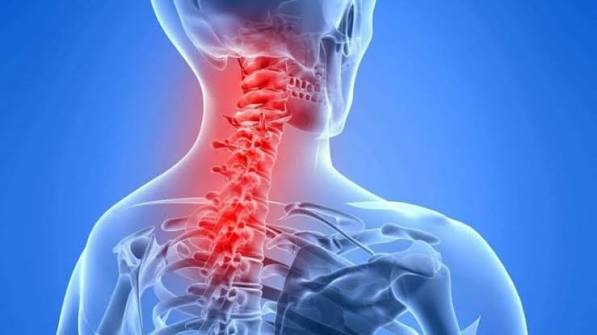
Neck pain common causes and self-care basics are topics that affect the majority of adults at some point in their lives. The neck — or cervical spine — supports the full weight of the head (approximately 5 kilograms) while allowing the greatest range of movement of any spinal region. This combination of load-bearing and mobility makes it inherently vulnerable to injury and degeneration. Most neck pain is mechanical in origin and resolves within days to weeks with appropriate self-care. However, a minority of neck pain presentations signal serious underlying pathology, and distinguishing between the two is critical knowledge for every adult. This guide explains the anatomy, the most common causes of neck pain, the warning signs that require urgent medical evaluation, and the evidence base for effective self-care.
The Cervical Spine: Anatomy and Why Neck Pain Is So Common
The cervical spine consists of seven vertebrae (C1 through C7) with six intervertebral discs between them. The top two vertebrae are structurally unique: C1 (the atlas) supports the skull and allows nodding movement; C2 (the axis) provides the pivot point for rotation via the odontoid process. C3 through C7 form the lower cervical spine that carries most of the load and is the most common site of degenerative change and disc herniation.
Passing through the foramina (openings) in the cervical vertebrae on each side is the vertebral artery, which supplies blood to the posterior brain. The cervical spinal cord is housed within the cervical spinal canal. Branching from the spinal cord are the cervical nerve roots, which supply sensation and motor function to specific areas of the shoulder, arm, and hand. C5 controls deltoid and biceps function and shoulder sensation; C6 controls wrist extensors and supplies the thumb and index finger; C7 controls the triceps and middle finger; C8 and T1 supply the hand muscles and ring and little fingers. Understanding these root distributions is essential for interpreting arm and hand symptoms that accompany neck pain.
- The lower cervical spine (C5-C6, C6-C7) is the most common site of disc herniation and degenerative change
- The cervical spinal cord is housed within the cervical canal — compression here causes myelopathy (dysfunction of the spinal cord itself), not just radiculopathy
- The vertebral arteries run through the cervical vertebrae and can be affected by severe injury or extreme manipulation
- The head weighs approximately 5 kg — for every inch of forward head posture, effective cervical loading increases significantly
Neck Pain Common Causes: Mechanical Origins
Muscle Strain and Ligament Sprain
The most common cause of acute neck pain is strain of the cervical paraspinal muscles or sprain of the ligaments supporting the cervical spine. This can follow a specific mechanical event — sleeping in an awkward position, a sudden movement, prolonged static posture (particularly forward head posture at a computer or mobile device) — or can develop insidiously from cumulative postural stress. The pain is typically felt as aching or stiffness in the neck, often worse in the morning after sleep or after prolonged sitting, with restricted range of movement particularly in rotation and lateral flexion. There is no radiation of pain below the elbow, no numbness or tingling in the hand, and no weakness.
Most acute cervical muscle strains resolve within 2-4 weeks with appropriate management. Staying active, maintaining normal movement within comfortable limits (avoiding prolonged rest and immobilization), applying heat for muscle relaxation, and using over-the-counter NSAIDs for pain and inflammation are the core management strategies supported by evidence.
Cervical Disc Herniation and Radiculopathy
Cervical disc herniation occurs when the nucleus pulposus of a cervical disc protrudes and compresses an adjacent nerve root. The most commonly affected levels are C5-C6 (compressing the C6 nerve root) and C6-C7 (C7 root). Unlike lumbar disc herniation, where the dominant symptom is leg pain, cervical radiculopathy produces arm pain — typically sharp, shooting, or burning pain that travels from the neck through the shoulder and down the arm into the hand, following the dermatomal pattern of the compressed root.
C6 radiculopathy classically produces pain and numbness into the thumb and index finger, with weakness of biceps and wrist extension. C7 radiculopathy produces pain and numbness into the middle finger and weakness of triceps. These distributions are important because they help localize the level of pathology. Many cases of cervical disc herniation resolve with conservative management over 6-12 weeks as the herniated material resorbs. Surgery (anterior cervical discectomy and fusion or ACDF) is reserved for cases with severe or progressive neurological deficit, or failure of conservative management.
Cervical Spondylosis and Degenerative Disc Disease
Cervical spondylosis refers to age-related degenerative changes in the cervical spine — disc height loss, osteophyte (bone spur) formation, facet joint arthritis, and ligamentum flavum thickening. These changes are virtually universal by the sixth decade: studies using MRI in asymptomatic adults show that the majority of those over 50 have degenerative cervical changes. The presence of these changes on imaging does not mean they are causing pain — the correlation between imaging findings and symptoms is imperfect.
When symptomatic, cervical spondylosis typically causes neck stiffness and aching, with reduced range of movement, particularly in rotation and extension. It may be accompanied by referred pain to the shoulder or suboccipital headache. Most management is conservative: exercise, physiotherapy, analgesics, and activity modification.
Whiplash and Cervical Acceleration-Deceleration Injury
Whiplash injury results from a sudden acceleration-deceleration force applied to the neck, most commonly in rear-end vehicle collisions but also in sports injuries. The mechanics involve rapid extension followed by flexion (or the reverse), straining the anterior longitudinal ligaments, anterior disc annulus, facet joint capsules, and cervical muscles. Symptoms typically develop within 24-48 hours of the injury: neck pain, stiffness, headache (often suboccipital), shoulder pain, and in some cases, arm symptoms suggesting root involvement.
The prognosis for whiplash varies considerably. The majority of patients (approximately 50%) recover fully within 3 months. A substantial minority (30-50% in some studies) develop chronic neck pain. Predictors of worse outcome include higher initial pain severity, presence of radiating arm pain, and psychological factors including fear of movement and catastrophizing. Early active mobilization — rather than immobilization with a collar — is supported by evidence as the approach that leads to better long-term outcomes.
Facet Joint Pain
The cervical facet joints are synovial joints that guide and limit cervical movement. They can be a significant source of pain, particularly following whiplash injury or with degenerative change. Facet joint pain is typically felt as a unilateral neck ache that may refer to the shoulder, suboccipital region, or inter-scapular area. It is characteristically worsened by rotation and extension movements and is often present in the morning. Diagnosis is confirmed with fluoroscopically guided facet joint blocks; treatment options include physiotherapy, manipulation, and in refractory cases, radiofrequency denervation (medial branch neurotomy).
Cervical Myelopathy: The Serious Complication of Cervical Stenosis
Cervical myelopathy — dysfunction of the spinal cord caused by compression within the cervical canal — is a diagnosis that must not be missed. It occurs when cervical stenosis (narrowing of the spinal canal from degenerative changes — disc bulging, osteophyte formation, ligamentum flavum thickening) compresses the spinal cord itself rather than just the nerve roots. Unlike radiculopathy, which affects a single nerve root and causes symptoms in one arm, myelopathy affects the spinal cord and causes symptoms in both arms and legs.
Classic features of cervical myelopathy include: hand clumsiness (difficulty with fine motor tasks — buttoning, writing, handling small objects), gait disturbance (wide-based, unsteady walking), bilateral hand or leg weakness or numbness, hyperreflexia (brisk or exaggerated deep tendon reflexes), and the Lhermitte sign (an electric shock sensation running down the spine with neck flexion). Myelopathy is progressive if untreated; surgical decompression (laminoplasty, laminectomy, or anterior decompression with fusion) is typically required to prevent further deterioration. Any patient with hand clumsiness, gait disturbance, or bilateral arm and leg symptoms in the context of neck pain requires urgent neurological or spinal surgery assessment.
Cervicogenic Headache
Cervicogenic headache is head pain originating from the cervical spine and its soft tissues. It is a specific, recognized headache disorder that is often misdiagnosed as migraine or tension headache. Its distinguishing features are: unilateral (one-sided) head pain beginning in the neck or suboccipital region and radiating forward to the forehead or temple; provoked or reproduced by neck movements or sustained awkward neck positions; associated with restricted cervical range of movement; and typically accompanied by ipsilateral (same-side) neck stiffness and shoulder pain. Unlike migraine, cervicogenic headache does not typically cause nausea, vomiting, or photophobia (though mild photophobia can occur). It arises from dysfunction or pain in the upper cervical joints (C1-C2-C3), which refer pain into the head via the trigeminocervical nucleus. Treatment is directed at the cervical source: physiotherapy, cervical manipulation or mobilization, and in refractory cases, nerve blocks.
Non-Mechanical Causes of Neck Pain: Red Flags
A minority of neck pain presentations arise from serious underlying pathology that requires urgent investigation and treatment. The following features alongside neck pain should prompt immediate or urgent medical evaluation.
- Neck pain with severe headache of sudden onset (“thunderclap headache”) — may indicate subarachnoid haemorrhage; this is a neurological emergency
- Neck stiffness with fever and headache — the classic triad of bacterial meningitis; photophobia and rash may also be present
- Neck pain with rapidly developing arm or leg weakness, loss of coordination, or loss of bladder/bowel control — may indicate acute cord compression
- Neck pain following significant trauma in anyone who is unconscious or has neurological symptoms — possible unstable cervical fracture; immobilize the neck and call emergency services
- Neck pain with fever, night sweats, or unexplained weight loss — possible infection or malignancy
- Neck pain with a palpable mass in the neck
- Progressive arm or hand weakness or worsening hand clumsiness
- Bilateral arm or leg symptoms (weakness, numbness) with neck pain — possible myelopathy
- Neck pain with a known cancer history
- Neck pain not improving after 4-6 weeks of appropriate self-care
Neck Pain Self-Care Basics: What the Evidence Supports
For the large majority of mechanical neck pain — muscle strain, mild disc-related pain, postural neck pain — self-care measures are effective and represent the appropriate first-line approach. The following strategies are supported by clinical evidence.
Stay Active, Avoid Prolonged Rest
The single most consistent finding in the acute neck pain literature is that staying active and maintaining normal movement leads to better outcomes than rest and immobilization. Soft cervical collars, once commonly prescribed for acute neck pain, are now generally not recommended because immobilization impairs recovery. Gentle movement within comfortable limits, gradual return to normal activities, and avoiding the fear-avoidance cycle are the foundations of effective self-management.
Heat and Cold Application
Heat application (warm shower, heat pack) relaxes cervical muscle spasm and reduces aching. It is particularly useful for chronic muscle tension and morning stiffness. Cold application (ice pack wrapped in a cloth, 15-20 minutes) is more useful in the first 24-48 hours after an acute injury to reduce local inflammation. Both can be used alternately. Neither is superior to the other for long-term outcomes, and patient preference should guide choice.
Analgesics
For pain management, NSAIDs (ibuprofen, naproxen) are preferred over paracetamol (acetaminophen) for acute mechanical neck pain with an inflammatory component. A systematic review found that NSAIDs are more effective than paracetamol for acute spinal pain. Muscle relaxants (cyclobenzaprine, methocarbamol) may be useful for significant muscle spasm but have sedative effects and are generally used short-term. Topical NSAIDs (diclofenac gel) applied to the neck are effective and have a better systemic safety profile than oral NSAIDs, particularly for older adults or those with gastrointestinal concerns.
Gentle Cervical Exercises
Specific cervical exercises — including range-of-motion exercises, isometric strengthening, and deep neck flexor training — are effective for both acute and chronic neck pain. Key exercises include: gentle neck rotation (turning the head side to side within comfortable range), lateral flexion (ear toward shoulder), forward and backward nodding, and chin tucks (drawing the chin directly backward to strengthen the deep neck flexors). These should be performed slowly, within pain limits, 2-3 times daily. Avoid aggressive stretching into pain — this can exacerbate muscle spasm rather than relieve it.
Sleep Position and Pillow Selection
Neck pain is frequently worse in the morning, often due to suboptimal sleeping position. The goal is to maintain cervical alignment — the neck neither too flexed nor too extended during sleep. Side sleeping with a pillow that fills the gap between the ear and shoulder is generally well tolerated. Back sleeping with a pillow that supports the natural cervical lordosis is also effective. Stomach sleeping (prone) forces the head into sustained rotation for hours and is consistently associated with worse cervical outcomes — many physiotherapists specifically advise against it for patients with neck pain. Pillow height (not excessive firmness or softness) should be matched to shoulder width for side sleepers.
Postural Factors and Neck Pain: The Technology Effect
The past decade has seen a substantial increase in neck pain prevalence in younger adults, a shift that correlates temporally with widespread smartphone use. “Text neck” — the term popularized to describe cervical strain from sustained forward head posture during mobile device use — is mechanically valid: for every degree of forward head flexion, the effective load on the cervical spine increases. Studies have documented that 60 degrees of neck flexion (typical smartphone use angle) increases cervical loading to approximately 27 kg equivalent — more than five times the neutral load.
The practical implications: prolonged smartphone or tablet use with the device held below eye level creates sustained anterior cervical loading that fatigues and strains cervical muscles and accelerates degenerative change over time. Recommendations include: holding devices at eye level to minimize neck flexion, taking regular movement breaks (the 20-20-20 rule — every 20 minutes, move for 20 seconds), and strengthening the cervical and periscapular muscles to improve load tolerance. Ergonomic computer setup (monitor at eye level, keyboard position allowing neutral shoulder posture) similarly reduces chronic cervical loading in desk workers.
Neck Pain in Specific Populations
Neck Pain After Age 60
Cervical spondylosis and degenerative change are the dominant cause of neck pain in older adults. The key management consideration is distinguishing radiculopathy (arm symptoms from nerve root compression) from myelopathy (cord compression causing widespread neurological dysfunction). Myelopathy becomes more common with advancing age as cumulative degenerative changes narrow the cervical canal. Any older adult with neck pain accompanied by hand clumsiness, gait changes, or bilateral limb symptoms requires urgent MRI and specialist referral. Vertebral compression fractures in the cervical spine from osteoporosis — while less common than in the thoracolumbar region — can occur from minimal trauma and may require vertebral augmentation.
Neck Pain in Office and Desk Workers
Occupational neck pain is extremely prevalent in desk workers. Key risk factors include prolonged static cervical posture, monitor height below eye level, mouse and keyboard placement requiring shoulder elevation or reach, and psychosocial work stress. Workplace interventions with the strongest evidence include: monitor height at or slightly below eye level, keyboard and mouse placement allowing relaxed shoulder position, and structured breaks from sustained posture. Ergonomic interventions alone are less effective than ergonomic adjustment combined with exercise; neck strengthening and periscapular exercises specifically targeting the lower and middle trapezius and deep neck flexors are the most evidence-supported exercise approach for occupational neck pain.
Neck Pain With Headache
The co-occurrence of neck pain and headache is extremely common and can indicate several different diagnoses with different management implications. Cervicogenic headache (described above) is treated by addressing the cervical source. Tension-type headache often has a prominent neck pain component but is primarily a primary headache disorder managed differently. Migraine frequently has associated neck pain or neck stiffness as a premonitory or accompanying symptom and is treated with migraine-specific therapies. Occipital neuralgia — irritation of the greater or lesser occipital nerves — causes a shooting or electric pain from the base of the skull to the scalp and may be managed with occipital nerve blocks. Accurate diagnosis is important because the management of these overlapping conditions differs substantially.
When to See a Physiotherapist or Specialist
A physiotherapist should be consulted when neck pain is not responding to self-care after 2-3 weeks, when arm symptoms are present (suggesting disc or nerve root involvement), when the neck pain is significantly limiting work or activities, or when there are recurrent episodes with functional impact. Physiotherapy for neck pain includes manual therapy (cervical mobilization and manipulation), exercise prescription, postural correction, and education.
Referral to a neurologist or spinal surgeon is appropriate when there is progressive neurological deficit (worsening arm weakness or hand function), suspicion of myelopathy, failure of conservative management with radiculopathy over 6-12 weeks, or any of the red flag features described above. Rheumatology referral is appropriate when inflammatory arthritis is suspected (morning stiffness, associated systemic symptoms, young patient with axial pain).
Related Articles on Horizon Health Guide
- Back Pain: Causes, Symptoms, and Prevention
- Joint Pain: Common Causes and When to Seek Care
- Muscle Pain: Common Causes and Warning Signs
- Bone Pain: What Adults Should Know
- Mobility and Healthy Aging: What Adults Should Know
Frequently Asked Questions
What are the most common causes of neck pain common causes in adults?
The most common causes of neck pain in adults are muscle strain and ligament sprain (often from awkward posture or movement), cervical spondylosis (age-related degenerative disc and joint disease), and cervical disc herniation causing radiculopathy. Whiplash injury is common after motor vehicle accidents. Text neck from prolonged smartphone use has become increasingly prevalent, particularly in younger adults. Less common but important causes include inflammatory arthritis (rheumatoid arthritis causing C1-C2 instability, ankylosing spondylitis), spinal infection, and cervical metastatic disease.
How long should neck pain last before I see a doctor?
For mechanical neck pain without red flag features, most episodes improve within 2-4 weeks with appropriate self-care. If neck pain persists beyond 4-6 weeks without significant improvement, has been getting progressively worse, or is accompanied by arm symptoms (pain, numbness, weakness), it warrants medical assessment. Any neck pain accompanied by red flag features — fever, weight loss, headache of sudden onset, cord symptoms — requires immediate or urgent evaluation regardless of duration.
Is neck cracking harmful?
Habitual neck cracking (self-manipulation) for mild stiffness is generally considered low-risk, though it is not recommended as a substitute for treating the underlying cause of discomfort. The sounds (cavitation) come from gas bubble release in the joint fluid. Professional cervical manipulation by a trained physiotherapist or chiropractor carries a very small but documented risk of vertebral artery dissection, which is why it requires an appropriate clinical assessment beforehand. Patients with cervical instability (rheumatoid arthritis with C1-C2 involvement, Down syndrome), severe stenosis, or vascular risk factors should avoid cervical manipulation.
Can poor sleep posture cause neck pain?
Yes — sleep position is a genuine contributor to neck pain, particularly morning stiffness and pain. Prone (stomach) sleeping requires sustained head rotation for hours and is the position most consistently associated with cervical discomfort. Side sleeping with an excessively thick pillow forces the neck into lateral flexion; too thin a pillow allows the head to sag. Back sleeping with a supportive pillow maintaining the natural cervical curve is generally the best tolerated position for those with neck pain. Pillow height should match shoulder width for side sleepers. Cervical roll pillows or contoured cervical pillows may help specific individuals.
What is the difference between neck pain radiculopathy and myelopathy?
Radiculopathy is compression of a single cervical nerve root, causing arm pain, numbness, or weakness in the specific territory of that root — typically one arm. It is the more common and generally the less urgently serious condition; most cases resolve with conservative management. Myelopathy is compression of the spinal cord itself within the cervical canal, causing dysfunction below the level of compression — potentially both arms and legs, with hand clumsiness, gait disturbance, and altered reflexes. Myelopathy is a more serious condition that typically requires surgical decompression and does not improve reliably with conservative management alone. Any suspicion of myelopathy requires urgent specialist assessment.
Does stress cause neck pain?
Psychological stress is a significant contributor to neck pain, particularly the tension-type neck pain associated with sustained muscle contraction. Stress activates the sympathetic nervous system and increases muscle tone in the cervical and shoulder girdle muscles, contributing to the “shoulders up around the ears” posture many people notice when under pressure. Chronic stress is a risk factor for the transition from acute to chronic neck pain. Addressing psychological stress — through exercise, relaxation techniques, cognitive-behavioral approaches, or treatment of underlying anxiety or depression — is a legitimate and evidence-supported component of neck pain management, not merely adjunctive.
Are there exercises I can do at home for neck pain?
Yes — gentle home exercises are an effective and recommended part of self-management for most mechanical neck pain. Useful exercises include: chin tucks (draw the chin straight back while keeping eyes level — 10 repetitions, 2-3 times daily), gentle rotation (slowly turning head to each side within comfortable range, holding 2-3 seconds), and lateral flexion (gently tilting each ear toward the shoulder). Shoulder rolls and scapular retractions (squeezing shoulder blades together) strengthen the supporting periscapular muscles. All exercises should be performed slowly and within comfortable range — stop if sharp or radiating arm pain occurs and consult a physiotherapist. Progression should be gradual.
References
- Hoy DG, et al. The epidemiology of neck pain. Best Pract Res Clin Rheumatol. 2010;24(6):783-792.
- Cohen SP. Epidemiology, diagnosis, and treatment of neck pain. Mayo Clin Proc. 2015;90(2):284-299.
- Borghouts JA, Koes BW, Vondeling H, Bouter LM. Cost-of-illness of neck pain. Pain. 1999;80(3):629-636.
- Blanpied PR, et al. Neck Pain: Clinical Practice Guidelines. J Orthop Sports Phys Ther. 2017;47(7):A1-A83.
- Iyer S, Kim HJ. Cervical radiculopathy. Curr Rev Musculoskelet Med. 2016;9(3):272-280.
This article is for educational purposes only and does not constitute medical advice. Always consult a qualified healthcare professional for evaluation and treatment of neck pain, particularly if red flag symptoms are present.
The section on cervical myelopathy is something I wish I had read two years earlier. I am 67 and had been experiencing neck stiffness and what I was calling ‘clumsiness’ for about eighteen months — dropping cups, difficulty with buttons, balance problems when walking. I attributed it all to normal aging and general stiffness. My GP had treated the neck pain symptom with physiotherapy. When I read your description of myelopathy — hand clumsiness, gait disturbance, bilateral symptoms — I was describing myself exactly. I specifically asked to be seen by a neurologist rather than another physiotherapy course. MRI showed severe cervical stenosis with cord signal change. I had surgery eight weeks ago. My surgeon told me that surgery cannot reverse damage already done but can prevent further deterioration — and that I had been at real risk of a more acute deterioration from even minor neck trauma. The message that hand clumsiness plus balance problems plus neck pain in an older adult is a potential emergency is not getting through to patients or, apparently, to all GPs.
Thank you for the honest section on posture and technology. I’m 29 and have had significant neck pain for three years that I had never been able to explain because I don’t do heavy lifting, I’m not in an accident-prone occupation, and I’m not elderly. I spend approximately 8-10 hours a day at a computer and several additional hours on my phone. The forward head posture loading explanation — that 60 degrees of flexion multiplies cervical load to five times normal — finally gave me a mechanism I could understand and act on. I raised my monitor to eye level, started positioning my phone higher when I use it, and began a chin tuck and shoulder strengthening routine. My neck pain has reduced substantially over about six weeks. I’m frustrated that nobody in three years of GP visits connected my work habits and phone use to my symptoms. The article should be mandatory reading for anyone who spends most of their waking hours at a desk.
Thank you for sharing this, and your experience highlights a real gap in clinical practice. Occupational and technology-related neck pain is now among the leading causes of cervical spine presentations in younger adults, yet the history-taking in many primary care encounters does not include structured questions about screen time, device use posture, or workstation setup. The mechanical loading concept is important because it explains why someone with no trauma history and no degenerative disease on imaging can have significant neck pain: sustained high-load cervical posture for many hours daily is a genuine injury mechanism, just a slow one. The interventions you describe — monitor height adjustment, device positioning, chin tucks and periscapular strengthening — are exactly what the evidence supports. The chin tuck specifically targets the deep cervical flexors (longus colli and longus capitis), which are the stabilizing muscles most consistently found to be weak or inhibited in people with chronic neck pain from postural causes. They are small muscles that fatigue easily under sustained loading, and targeted rehabilitation of them is more effective than generic neck stretching. Your outcome over six weeks is a good demonstration of what structured self-management can achieve when the correct mechanism is identified.