
SGLT2 Inhibitors and Kidney Health
SGLT2 inhibitors and kidney health have become inseparable topics in modern nephrology following a series of landmark randomized controlled trials that established these medications as the most significant kidney-protective pharmacological advance in a generation. Originally developed as glucose-lowering agents for type 2 diabetes, SGLT2 inhibitors — empagliflozin, dapagliflozin, and canagliflozin — were found in large outcome trials to dramatically reduce the risk of kidney failure, sustained GFR decline, and cardiovascular death in people with chronic kidney disease (CKD), including those without diabetes. Dapagliflozin is now approved specifically for CKD regardless of diabetes status, and KDIGO (Kidney Disease: Improving Global Outcomes) guidelines recommend SGLT2 inhibitors as standard of care for people with CKD and an eGFR above 20 mL/min/1.73m² who can tolerate them. This guide explains how SGLT2 inhibitors protect the kidney, what the major trial evidence shows, who should take them, what side effects to monitor, and how they fit into the complete CKD medication regimen — giving people with kidney disease the information they need to understand and engage with this important treatment.
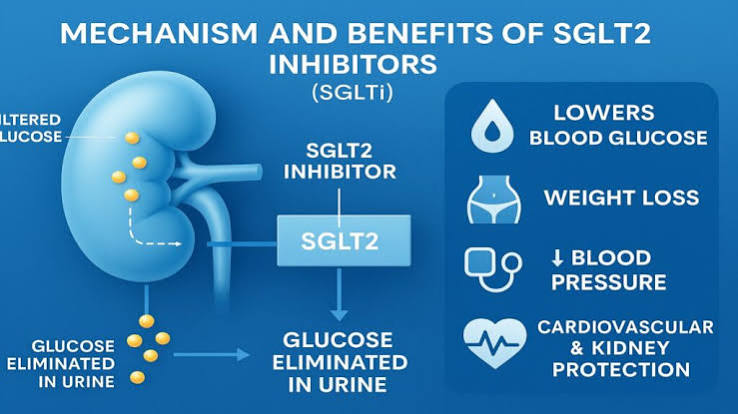
The name SGLT2 refers to sodium-glucose cotransporter-2 — a protein expressed in the proximal tubule of the kidney that normally reabsorbs approximately 90% of the glucose filtered by the glomerulus. In people with diabetes, the elevated filtered glucose load drives increased SGLT2 expression, amplifying glucose reabsorption and contributing to the glucotoxicity that damages the kidney over time. SGLT2 inhibitors block this transporter, forcing the excretion of glucose in the urine (glycosuria) and producing their primary glucose-lowering effect. But the kidney effects of SGLT2 blockade extend far beyond glycosuria — by blocking sodium reabsorption alongside glucose in the proximal tubule, SGLT2 inhibitors activate a physiological kidney protective mechanism called tubuloglomerular feedback and reduce the intraglomerular hypertension that is the central driver of CKD progression in proteinuric kidney disease. Understanding this mechanism is why SGLT2 inhibitors protect the kidneys of people without diabetes just as they protect those with diabetes — the kidney mechanism is independent of glucose lowering. For the broader overview of all medications used in CKD, including how SGLT2 inhibitors fit alongside ACE inhibitors, ARBs, and other kidney-protective agents, the kidney disease medications overview guide provides the comprehensive introduction.
How SGLT2 Inhibitors Protect the Kidney: The Mechanism
The kidney-protective mechanism of SGLT2 inhibitors operates through several complementary pathways, the most important of which is the reduction of intraglomerular hypertension through tubuloglomerular feedback. In CKD and diabetic kidney disease, the glomerular filtration units are under excessive hydrostatic pressure — a condition called glomerular hypertension — caused by preferential vasodilation of the afferent arteriole (the blood vessel entering the glomerulus) relative to the efferent arteriole (the vessel leaving it). This pressure excess drives albumin across the glomerular filtration barrier (proteinuria), injures the delicate podocyte cells that maintain that barrier, and accelerates glomerulosclerosis (scarring of the glomerulus). SGLT2 inhibitors address glomerular hypertension through tubuloglomerular feedback: by blocking sodium reabsorption in the proximal tubule, they increase sodium concentration in the tubular fluid delivered to the macula densa — a specialized sodium-sensing structure at the junction of the loop of Henle and the distal tubule. Increased macula densa sodium delivery signals through adenosine and prostaglandin pathways to constrict the afferent arteriole, reducing the blood flow into the glomerulus and lowering intraglomerular filtration pressure. This is the same feedback mechanism that evolved to protect the kidney from overwork when tubular function is normal — SGLT2 inhibitors restore this protective signaling in the CKD kidney where it has become dysregulated. The tubuloglomerular feedback mechanism is completely independent of glucose or insulin — which is why SGLT2 inhibitors protect non-diabetic kidneys just as effectively as diabetic ones. Additional kidney-protective mechanisms include: reduction of proximal tubular oxygen consumption (the SGLT2 cotransporter is energetically expensive — blocking it reduces the oxygen demand of the hypoxia-prone outer medulla of the CKD kidney, potentially reducing the tubular hypoxia that drives interstitial fibrosis); direct anti-inflammatory effects in the kidney (reducing NF-κB-mediated inflammatory cytokine production in tubular cells); reduction of uric acid levels (by competing with urate reabsorption in the proximal tubule — elevated uric acid being independently associated with CKD progression); and modest weight and blood pressure reduction that contribute to the systemic cardiovascular protection that complements kidney protection in people with CKD. For the clinical framework of blood pressure management in CKD alongside SGLT2 inhibitors, the blood pressure medications and kidney protection guide provides the complete antihypertensive framework.
The Trial Evidence: CREDENCE, DAPA-CKD, and EMPA-KIDNEY
The kidney-protective evidence for SGLT2 inhibitors comes from three major randomized controlled trials that together enrolled over 15,000 people with CKD and demonstrated consistent, clinically meaningful reductions in kidney failure risk across a broad range of CKD populations and causes. The CREDENCE trial (2019 — canagliflozin in type 2 diabetes with CKD and macroalbuminuria): This was the first dedicated kidney outcome trial for an SGLT2 inhibitor, enrolling 4,401 people with type 2 diabetes, eGFR 30–90, and urine albumin-to-creatinine ratio above 300 mg/g. Canagliflozin reduced the primary composite endpoint (sustained 40% eGFR decline, kidney failure, or kidney-related death) by 30% compared to placebo — a reduction so large that the trial was stopped early. Proteinuria was reduced by approximately 30%, and eGFR decline slope was significantly attenuated. The DAPA-CKD trial (2020 — dapagliflozin in CKD with or without diabetes): This trial enrolled 4,304 people with eGFR 25–75 and urine albumin-to-creatinine ratio 200–5000 mg/g — of whom approximately one-third did not have diabetes. Dapagliflozin reduced the primary composite endpoint by 39% overall, and the non-diabetic CKD subgroup showed a similar magnitude of benefit (44% reduction), definitively establishing that SGLT2 inhibitor kidney protection extends to non-diabetic CKD. The trial was also stopped early due to overwhelming benefit. The EMPA-KIDNEY trial (2022 — empagliflozin across a broader CKD spectrum): This was the largest of the three trials (6,609 participants) and enrolled people with the broadest CKD spectrum — eGFR as low as 20, and including people with non-proteinuric CKD (urine albumin-to-creatinine ratio as low as 200 mg/g). Empagliflozin reduced the primary composite endpoint (sustained 40% eGFR decline or kidney failure) by 28% and reduced all-cause hospitalizations by 14%, confirming that SGLT2 inhibitor benefit extends to lower eGFR values and milder proteinuria than the earlier trials suggested. Together, these three trials produced a consistent and compelling evidence base that SGLT2 inhibitors are kidney-protective agents regardless of diabetes status, across a broad range of CKD severity, and through mechanisms independent of blood glucose control. The authoritative summary of this evidence is provided by the KDIGO CKD guidelines, which now recommend SGLT2 inhibitors alongside RAAS blockade as the two-pillar foundation of kidney-protective pharmacotherapy. The NIDDK’s accessible patient summary of kidney disease management, including SGLT2 inhibitors, is available at the NIDDK CKD management page.
Who Should Take SGLT2 Inhibitors for Kidney Health
Current KDIGO 2024 guidance recommends SGLT2 inhibitors for all people with CKD who meet the eligibility criteria — not just those with diabetes or heavy proteinuria. The key eligibility criteria are: eGFR at or above 20 mL/min/1.73m² (below this threshold, the glucose-lowering effect is negligible and the kidney-protective benefit, while theoretically present, is less well-established by large trials); urine albumin-to-creatinine ratio of 200 mg/g or above (the EMPA-KIDNEY trial showed benefit at this lower proteinuria threshold, though earlier trials required higher albumin levels); and absence of absolute contraindications (type 1 diabetes, recurrent diabetic ketoacidosis, severe allergy, eGFR below 20). People with CKD from any cause — diabetic nephropathy, IgA nephropathy, focal segmental glomerulosclerosis, hypertensive nephrosclerosis, or other glomerulopathies — are eligible if they meet the eGFR and proteinuria criteria. Dapagliflozin is the SGLT2 inhibitor with the broadest regulatory approval for CKD regardless of diabetes status — its DAPA-CKD data forms the specific regulatory basis for non-diabetic CKD use in most regulatory jurisdictions. For people who cannot tolerate one SGLT2 inhibitor (for example, due to genital mycotic infections or urinary tract infections), trial of an alternative SGLT2 inhibitor is reasonable, since the tolerability profiles differ modestly between agents. The practical use of SGLT2 inhibitors alongside ACE inhibitors, ARBs, and diabetes medications in the complete kidney-protective regimen is covered in the diabetes medications and kidney protection guide and the ACE inhibitors and ARBs for kidney health guide.
Side Effects and Monitoring for SGLT2 Inhibitors in CKD
SGLT2 inhibitors are generally well tolerated in CKD, with a side effect profile that is manageable with appropriate patient education and monitoring. Genital mycotic infections — fungal infections of the genital area (vulvovaginal candidiasis in women, balanitis in men) — are the most common side effect, occurring in approximately 5–10% of treated patients due to the glucosuria providing a substrate for yeast growth; they are usually mild and respond to topical antifungal treatment. Maintaining good genital hygiene, promptly treating any early symptoms, and using topical azoles reduces the impact of this side effect. Urinary tract infections are increased modestly with SGLT2 inhibitors in some studies; women with a prior history of recurrent UTIs should be aware of this risk and seek evaluation early if urinary symptoms develop. Volume depletion and orthostatic hypotension can occur particularly in patients concurrently taking loop diuretics or those with limited fluid intake; the SGLT2 inhibitor’s mild osmotic diuretic effect may require loop diuretic dose reduction, especially at initiation. Blood pressure monitoring at the first visit after starting an SGLT2 inhibitor is important to detect excessive hypotension. Euglycemic diabetic ketoacidosis (DKA) — a rare but serious complication in which ketoacidosis develops at near-normal blood glucose levels — is the most clinically serious SGLT2 inhibitor risk, occurring predominantly in type 1 diabetes (which is why SGLT2 inhibitors are contraindicated in type 1 diabetes) and in people with type 2 diabetes subjected to significant physiological stress (surgery, prolonged fasting, severe illness, very low carbohydrate diets). The sick-day rule for SGLT2 inhibitors — hold the medication 3–5 days before elective surgery and during any serious illness with poor oral intake — is the most important safety practice for preventing euglycemic DKA and should be communicated to every patient starting an SGLT2 inhibitor. Lower limb amputations were initially a concern with canagliflozin (raised in the CANVAS program); this signal has not been confirmed with dapagliflozin or empagliflozin and is not considered a class effect. People with peripheral vascular disease or diabetic foot complications who are started on canagliflozin should receive additional foot care monitoring. Laboratory monitoring after starting an SGLT2 inhibitor includes: eGFR and electrolytes at 2–4 weeks (a modest creatinine rise of up to 10–15% is expected from the tubuloglomerular feedback-driven reduction in GFR — smaller than the rise seen with ACE inhibitors but representing the same kidney-protective hemodynamic adjustment). The medication safety considerations for kidney patients — including which medications interact with SGLT2 inhibitors — are covered in the medication safety for kidney patients guide. For the comprehensive laboratory monitoring framework for all CKD medications, the kidney health numbers guide explains what each value means in the context of CKD treatment. The full StatPearls clinical review of CKD pharmacotherapy, including SGLT2 inhibitor use across CKD stages, is available at the StatPearls CKD review.
Sources: NIDDK — Managing CKD · KDIGO CKD Guidelines · StatPearls — CKD
SGLT2 Inhibitors Across CKD Stages: Practical Use and Dose
Understanding how SGLT2 inhibitors are used across the spectrum of CKD stages — from early CKD to advanced stages approaching kidney failure — helps people with kidney disease and their clinicians make informed treatment decisions. In CKD stages 1–3a (eGFR above 45), SGLT2 inhibitors are initiated at their standard dose and provide both kidney protection and, in people with diabetes, meaningful glucose lowering. In CKD stages 3b–4 (eGFR 20–44), SGLT2 inhibitors continue to provide kidney-protective benefit through tubuloglomerular feedback and anti-inflammatory mechanisms, though their glucose-lowering effect diminishes progressively as fewer proximal tubular cells are available to reabsorb filtered glucose; dapagliflozin and empagliflozin are used down to eGFR 20 for their kidney-protective indication. Below eGFR 20, current guideline recommendations do not support starting SGLT2 inhibitors due to inadequate trial evidence at this GFR range; patients who are already taking an SGLT2 inhibitor when eGFR falls below 20 may be continued at clinician discretion, particularly if they are tolerating it well and have not yet reached dialysis. On dialysis, SGLT2 inhibitors have no established role since there is no tubular function for them to act on. The dose of SGLT2 inhibitors used for kidney protection is: dapagliflozin 10 mg once daily (the dose used in DAPA-CKD), empagliflozin 10 mg once daily (the dose used in EMPA-KIDNEY), and canagliflozin 100 mg once daily (the dose used in CREDENCE). There is no established dose-response relationship for kidney protection — higher doses used for greater glucose lowering in diabetes do not appear to confer proportionally greater kidney protection. SGLT2 inhibitors are taken once daily, typically in the morning, and can be taken with or without food. The interaction between SGLT2 inhibitors and diuretics — including the need to monitor for volume depletion when both are used together — is covered in detail in the diuretics and kidney health guide.
SGLT2 Inhibitors in Non-Diabetic Kidney Diseases
The extension of SGLT2 inhibitor benefit to non-diabetic CKD — established definitively by DAPA-CKD (one-third non-diabetic participants) and EMPA-KIDNEY (approximately half non-diabetic) — has opened a new therapeutic option for kidney diseases that previously had limited pharmacological treatment beyond RAAS blockade. IgA nephropathy is the most common primary glomerulonephritis worldwide and a major cause of kidney failure in young adults; DAPA-CKD’s pre-specified subgroup analysis showed that dapagliflozin reduced the rate of CKD progression in IgA nephropathy with a hazard ratio below 0.5 (approximately 50% risk reduction), one of the most striking subgroup results in the trial. IgA nephropathy is now treated with SGLT2 inhibitors as part of the optimized supportive care strategy, and the recent approval of targeted complement and immunosuppressive therapies (iptacopan, sparsentan) for IgA nephropathy adds further options on top of SGLT2 inhibitor-based supportive care. Focal segmental glomerulosclerosis (FSGS) — often associated with heavy proteinuria and rapid CKD progression — showed benefit in the DAPA-CKD subgroup, and SGLT2 inhibitors are now part of supportive care for proteinuric FSGS alongside disease-specific treatment. Hypertensive nephrosclerosis — the CKD caused by longstanding hypertension, common in Black and older patients — showed consistent benefit in the EMPA-KIDNEY subgroup with a majority of non-diabetic participants. Non-proteinuric CKD — kidney disease with eGFR below 45 but minimal proteinuria — was included in EMPA-KIDNEY (albumin-to-creatinine ratio below 200 mg/g) and the trial showed benefit even in this lower-risk proteinuria group, though the absolute risk reduction was smaller than in higher-proteinuria participants. The evolving evidence base for SGLT2 inhibitors in specific non-diabetic CKD causes is part of the rapidly changing landscape of CKD pharmacotherapy reviewed by the KDIGO CKD guidelines, which are updated as new trial evidence emerges. For the full kidney-protective medication overview including where SGLT2 inhibitors fit alongside ACE inhibitors, ARBs, finerenone, and GLP-1 receptor agonists, the kidney disease medications overview guide provides the comprehensive framework. The NKF patient-facing resource on CKD and its treatments is available at the National Kidney Foundation CKD information page.
Combining SGLT2 Inhibitors With Other Kidney Protective Medications
SGLT2 inhibitors work best as part of a combination kidney-protective regimen rather than as monotherapy — their mechanism (tubuloglomerular feedback reduction of glomerular hypertension and anti-inflammatory tubular effects) is distinct from and additive to the mechanisms of RAAS blockers (efferent arteriolar dilation reducing intraglomerular pressure) and, in diabetic CKD, finerenone (mineralocorticoid receptor blockade reducing aldosterone-driven fibrosis). The KDIGO 2024 CKD guideline now recommends that people with CKD and eGFR above 20 should be considered for both SGLT2 inhibitors and maximum-dose RAAS blockade (ACE inhibitor or ARB) simultaneously rather than sequentially — the traditional “start one, see how they do, then add the next” approach is less appropriate given the overwhelming evidence that both classes together outperform either alone. Large-scale post-hoc analyses from DAPA-CKD and EMPA-KIDNEY both showed that people already on maximum RAAS blockade received additional significant kidney-protective benefit from adding an SGLT2 inhibitor, confirming the additive rather than redundant nature of the two class effects. In diabetic CKD, the four-pillar regimen (RAAS blocker + SGLT2 inhibitor + GLP-1 receptor agonist + finerenone) now represents the most evidence-backed pharmacological approach, with each pillar acting on a different DKD mechanism and the combined benefit exceeding any single class alone. The SGLT2 inhibitor and GLP-1 receptor agonist combination was specifically validated in a pre-specified FLOW trial subgroup analysis showing that semaglutide provided kidney-protective benefit in people already on an SGLT2 inhibitor, establishing their additive independent effects. When starting an SGLT2 inhibitor in a patient already on an ACE inhibitor or ARB, the expected modest eGFR reduction from SGLT2 inhibitor initiation is the same hemodynamically mediated protective adjustment seen when starting RAAS blockers — a creatinine rise of up to 10–15% in the first 1–4 weeks that stabilizes and is associated with better long-term eGFR preservation. Reassuring patients that this expected creatinine rise is not a sign of kidney harm but rather evidence that the medication is working — reducing glomerular filtration pressure as intended — is an important part of initiating SGLT2 inhibitors in the clinic. The interactions between SGLT2 inhibitors, RAAS blockers, and diabetes medications — including how the combination affects potassium levels (SGLT2 inhibitors modestly lower serum potassium, which can partially offset the hyperkalemia risk of RAAS blockade) — are covered in the diabetes medications and kidney protection guide. For people managing kidney disease and wanting to understand the full picture of how their medications work together, the kidney disease medications overview guide integrates all medication classes into the complete CKD treatment framework that modern nephrology practice follows.
Starting an SGLT2 Inhibitor: What to Tell Your Doctor
People with CKD who have not yet been started on an SGLT2 inhibitor, or who have not had the conversation about whether they are eligible, can advocate for themselves effectively at their next nephrology or primary care appointment by raising specific questions. The evidence is now sufficiently strong that SGLT2 inhibitors should be the default for eligible CKD patients rather than something patients need to specifically request — but in practice, prescribing uptake remains incomplete, and many eligible CKD patients are not yet on these agents. If you have CKD with an eGFR above 20 and a urine albumin-to-creatinine ratio above 200 mg/g, asking your clinician whether an SGLT2 inhibitor is appropriate for you — and if not, why — is a reasonable and clinically justified question based on current KDIGO guidelines. Before starting an SGLT2 inhibitor, your clinician will check your current eGFR (to confirm above 20), your urine albumin levels, and your current medication list for potential interactions. If you are not on an ACE inhibitor or ARB, the standard approach is to ensure RAAS blockade is established before or alongside SGLT2 inhibitor initiation — both classes are recommended together, not as alternatives. If you have a prior history of genital fungal infections or recurrent urinary tract infections, discuss these with your clinician before starting, as they represent relative rather than absolute contraindications — preventive hygiene measures and awareness of early symptoms can allow SGLT2 inhibitor use even in these patients. The sick-day rule — holding your SGLT2 inhibitor during serious illness, extended fasting (more than 12 hours), or before planned surgery — should be clearly explained at the time of prescription and confirmed at follow-up visits. Writing it down in a medication list alongside the sick-day guidance for your ACE inhibitor or ARB creates a unified “what to do when unwell” reference that is practically useful during illness when it is most needed. The full medication safety framework for kidney patients — including the sick-day rules and drug interactions for all CKD medications including SGLT2 inhibitors — is detailed in the medication safety for kidney patients guide.
I have IgA nephropathy and my nephrologist recently added dapagliflozin to my losartan — I didn’t have diabetes so I was confused about why a ‘diabetes drug’ was being prescribed for my kidneys. This article is the first time I’ve seen a clear, mechanistic explanation of why it works for non-diabetic CKD — the tubuloglomerular feedback section made sense to me immediately. The mention that IgA nephropathy had one of the strongest subgroup results in DAPA-CKD (approximately 50% risk reduction) was particularly meaningful for my condition. I’ve now been on dapagliflozin for four months, my proteinuria has dropped from 1.8 g/day to 0.9 g/day, and my creatinine rose briefly then stabilized — which I now understand is the expected hemodynamic adjustment rather than a sign of harm. The sick-day rule was the most important practical information — I hadn’t been told to hold it before my upcoming dental extraction under local anaesthesia and will ask my nephrologist about this.
Excellent and current summary of SGLT2 inhibitor pharmacology in CKD. The tubuloglomerular feedback mechanism is explained at exactly the level of detail needed for an informed patient to understand why the medication works, and the distinction that the kidney-protective mechanism is independent of glucose lowering is the key conceptual shift that non-diabetic CKD patients need to understand their prescription. The EMPA-KIDNEY lower proteinuria boundary point — benefit demonstrated even in people with albumin-to-creatinine ratios between 200–300 mg/g — is a particularly important finding that expanded the treatable population significantly beyond the earlier trials. The sick-day rule deserves the emphasis it receives: SGLT2 inhibitor-associated euglycemic DKA is rare but life-threatening when it occurs, and the surgery sick-day guidance (hold 3–5 days before elective procedures) should be documented in the surgical pre-assessment record for every patient on an SGLT2 inhibitor.
Fiona, the dental extraction question is worth raising with your nephrologist — the general guidance for elective procedures under local anaesthetic is that SGLT2 inhibitor hold is usually not required for very brief, low-stress procedures with normal oral intake maintained, but this is clinician-dependent and your nephrologist’s specific guidance for your case is the right answer. The proteinuria response you describe (1.8 → 0.9 g/day) at four months is excellent — a greater than 40% proteinuria reduction on combined RAAS blockade and SGLT2 inhibitor is associated with significantly slower IgA nephropathy progression in the trial data. Dr. Hoffmann’s point on the euglycemic DKA sick-day documentation is critically important for surgical and anaesthetic teams who may not know a patient is on an SGLT2 inhibitor — a MedicAlert note or clearly labelled medication list that includes ‘hold dapagliflozin if fasting for more than 12 hours’ before any procedure prevents the most serious potential complication of this otherwise well-tolerated medication.