
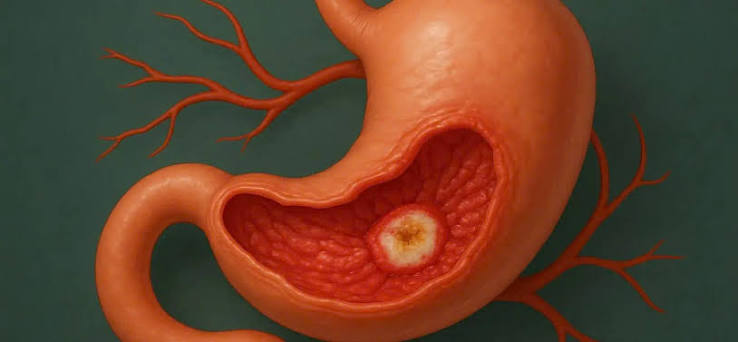
Stomach ulcers affect approximately one in ten adults over their lifetime. For most people, they announce themselves as a gnawing or burning pain in the upper abdomen — often most noticeable on an empty stomach, sometimes waking the person from sleep, and temporarily relieved by eating or antacids. This pattern is familiar, and it has led many adults to self-manage with over-the-counter antacids for months or years before receiving a proper diagnosis. What most people with stomach ulcers do not realise is that the vast majority are caused by one of two treatable conditions — a bacterial infection called Helicobacter pylori or regular use of non-steroidal anti-inflammatory drugs (NSAIDs) — and that addressing the cause leads to full healing, not just symptom control.
What Is a Stomach Ulcer?
A stomach ulcer — more precisely called a peptic ulcer — is a breach in the mucosal lining of the stomach or duodenum that extends through the muscularis mucosae into the submucosa. This distinguishes a true ulcer from a mucosal erosion, which is shallower and does not penetrate through the full mucosal thickness. Erosions heal quickly when the causative irritant is removed; ulcers require sustained treatment, may bleed from larger submucosal blood vessels, and in the case of gastric ulcers, require biopsy to exclude malignancy.
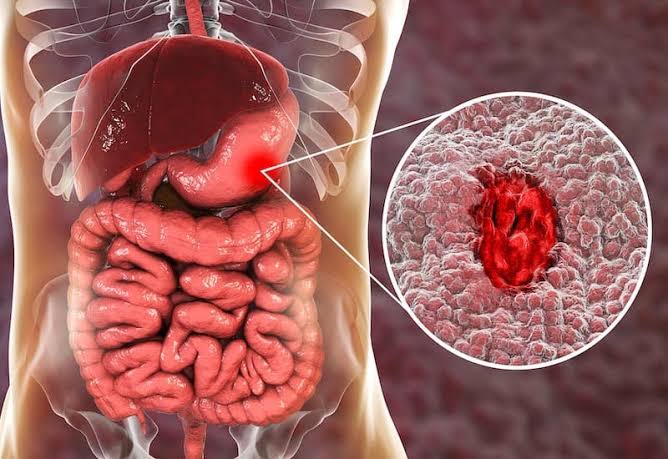
Gastric ulcers (stomach ulcers proper) occur most commonly on the lesser curvature of the stomach, at the incisura angularis. All gastric ulcers must be biopsied during endoscopy: approximately 3–4% harbour gastric cancer, and the endoscopic appearance cannot reliably distinguish a benign ulcer from an early malignant one. Duodenal ulcers occur in the first part of the duodenum — the duodenal bulb — and are virtually always benign.
The umbrella term peptic ulcer disease (PUD) encompasses both gastric and duodenal ulcers. Lifetime prevalence is approximately 10% in Western countries, declining as H. pylori detection and eradication have become more widespread.
What Causes Stomach Ulcers?
Helicobacter pylori
H. pylori is responsible for approximately 70–80% of gastric ulcers and 90–95% of duodenal ulcers worldwide. The mechanism by which it causes duodenal ulcers is well characterised: antral gastritis from H. pylori raises serum gastrin levels (by inhibiting somatostatin-producing D cells), leading to increased gastric acid output. This acid overload in the duodenum causes gastric metaplasia and ultimately duodenal ulceration. In gastric ulcers, corpus and pangastritis impair the mucosal defence mechanisms of the stomach itself, allowing acid to damage the now-vulnerable mucosa.
The key clinical implication of H. pylori’s causal role: eradication cures the disease, not just treats the symptom. Before effective eradication therapy, ulcers recurred in approximately 70–80% of patients per year once acid suppression was stopped. After successful H. pylori eradication, ulcer recurrence rates fall to less than 5% per year. For more detail on H. pylori specifically, see our article on H. pylori infection and stomach health.
NSAIDs and Aspirin
NSAIDs are the second major cause of peptic ulcers, accounting for the majority of H. pylori-negative cases. Their mechanism involves inhibition of COX-1, reducing prostaglandin synthesis in the gastric mucosa and impairing its protective functions: mucus secretion, bicarbonate production, mucosal blood flow, and epithelial repair. The result is a mucosa vulnerable to acid damage even at normal acid concentrations.
GI risk varies across NSAIDs: piroxicam, ketoprofen, and high-dose diclofenac carry the highest risk; ibuprofen at low doses carries the lowest; naproxen is intermediate. Even low-dose aspirin (75–100mg) approximately doubles ulcer risk. The combination of H. pylori infection and NSAID use is multiplicative — increasing ulcer risk 6–10 fold compared to either alone.
Zollinger-Ellison Syndrome
Zollinger-Ellison syndrome (ZES) is a rare but important cause: a gastrin-secreting tumour (gastrinoma) in the pancreas or duodenum causes massive, unregulated gastric acid hypersecretion. The resulting ulcers are often multiple, unusually located (post-bulbar duodenum, jejunum), and resistant to standard doses of acid suppression. Diarrhoea is a common feature. Approximately 25% of gastrinomas are associated with MEN1 syndrome (multiple endocrine neoplasia type 1). ZES is diagnosed by a fasting serum gastrin above 1000 pg/mL, confirmed with a secretin stimulation test. It should be suspected in any patient with multiple ulcers, atypically located ulcers, ulcers refractory to standard treatment, or a family history of MEN1.
Other Causes
Crohn’s disease involves the upper GI tract in approximately 2–4% of cases and can cause gastric and duodenal ulceration — biopsy showing non-caseating granulomata is the diagnostic clue. CMV can cause ulcers in immunocompromised patients. Idiopathic ulcers (H. pylori-negative, NSAID-negative) exist but are uncommon; before accepting this diagnosis, false-negative H. pylori testing should be considered.
Stomach Ulcer Symptoms in Adults
The classic symptom is epigastric pain — gnawing, burning, or aching in the upper central abdomen. However, the symptom pattern differs between ulcer types:
Duodenal ulcer: pain typically relieved by food (food buffers acid); pain returns 2–3 hours after eating. Nocturnal pain — waking the patient at 1–3am — is characteristic. This is the classic “hunger pain” pattern.
Gastric ulcer: the food–pain relationship is less predictable. Food may worsen pain or have no clear effect. Weight loss is more prominent. Pain tends to be more persistent and less clearly episodic.
Other symptoms common to both: nausea, bloating, early satiety, belching. It is important to note that many NSAID-associated ulcers — particularly in older adults — present with no pain at all; the first indication may be an acute complication.
- Haematemesis (vomiting blood — fresh red or coffee-ground appearance)
- Melaena (black, tarry, offensive-smelling stools)
- Dysphagia or odynophagia (difficulty or pain on swallowing)
- Progressive unintentional weight loss
- Persistent vomiting
- Iron deficiency anaemia on blood testing
- A palpable upper abdominal mass
- Jaundice
- Age ≥55 with new-onset dyspepsia without a clear benign cause
Complications of Stomach Ulcers
Upper gastrointestinal bleeding: The most common serious complication, occurring in approximately 15–20% of peptic ulcer patients over their lifetime without treatment. Bleeding occurs when the ulcer erodes into a submucosal blood vessel. Clinical presentation ranges from melaena to frank haematemesis. Management involves IV proton pump inhibitor infusion (esomeprazole 80mg bolus → 8mg/hour × 72h) and urgent upper GI endoscopy within 24 hours. Endoscopic haemostasis — combining injection with thermal or mechanical clipping — achieves primary haemostasis in over 90% of cases. Risk is stratified using the Glasgow-Blatchford score before endoscopy.
Perforation: An ulcer erodes completely through the gastric or duodenal wall, releasing contents into the peritoneal cavity. Presentation: sudden severe generalised abdominal pain → rigid abdomen. Free air under the diaphragm on erect CXR confirms perforation. This is a surgical emergency requiring urgent laparoscopic omental patch repair (Graham repair). Mortality is approximately 5–10%.
Penetration: The ulcer erodes into an adjacent organ (most commonly the pancreas) without free perforation. Pain becomes constant, radiates to the back, and no longer responds to antacids. Managed medically unless complications develop.
Gastric outlet obstruction: Now rare with modern acid suppression — results from fibrotic scarring of the pylorus or duodenal bulb from recurrent ulceration. Presents as large-volume vomiting of undigested food and electrolyte disturbance (hypochloraemic metabolic alkalosis). Managed with endoscopic balloon dilatation or surgical bypass.
How Stomach Ulcers Are Diagnosed
Upper GI endoscopy (OGD) is the diagnostic gold standard. Endoscopy allows direct visualisation of the ulcer — its location, size, appearance, and stigmata of recent haemorrhage. For gastric ulcers, biopsy of all four quadrants plus the ulcer base is mandatory to exclude malignancy. H. pylori testing (rapid urease/CLO test) should be performed during endoscopy using biopsies from the antrum and corpus.
H. pylori testing: All patients with peptic ulcer disease should be tested for H. pylori and treated if positive. The preferred non-invasive tests are the urea breath test and the stool antigen test. Serology cannot distinguish active from previous infection and should not be used to confirm eradication. Testing should be performed at least 4 weeks after stopping antibiotics and at least 2 weeks after stopping PPIs.
Blood tests: Full blood count (iron-deficiency anaemia from chronic bleeding; macrocytic anaemia from B12 deficiency). Fasting serum gastrin if ZES is suspected (patient must fast and be off PPI for at least 2 weeks; gastrin >1000 pg/mL is highly suggestive). Imaging: erect CXR or CT abdomen if perforation is suspected (free air under the diaphragm on CXR).
Treatment for Stomach Ulcers
H. pylori-positive ulcers: Standard first-line triple therapy — PPI (twice daily) + amoxicillin 1g (twice daily) + clarithromycin 500mg (twice daily) for 7–14 days. Where clarithromycin resistance is a concern, bismuth quadruple therapy (bismuth + PPI + metronidazole + tetracycline for 10–14 days) is preferred. After completing eradication, PPI continues for a further 4 weeks (duodenal ulcer) or 4–8 weeks (gastric ulcer). Eradication must be confirmed using the urea breath test or stool antigen test, at least 4 weeks after antibiotics and 2 weeks after stopping PPIs.
For gastric ulcers, repeat endoscopy at 6–8 weeks is required to confirm healing and allow re-biopsy of any residual ulcer. A gastric ulcer that fails to heal on repeat endoscopy must be treated with strong suspicion for malignancy until proven otherwise.
NSAID-associated ulcers: Stop or reduce the NSAID. Where NSAID therapy must continue, a PPI should be co-prescribed and a COX-2 selective agent used where clinically appropriate. PPI therapy for 8 weeks (gastric) or 4 weeks (duodenal) achieves healing in the majority of cases.
Bleeding ulcer management: IV PPI infusion (esomeprazole 80mg bolus → 8mg/h × 72h) reduces re-bleeding. Endoscopic haemostasis with combination therapy (injection + mechanical clip or thermal coagulation) achieves primary haemostasis in >90%. According to guidance from the National Institute for Health and Care Excellence (NICE), endoscopy within 24 hours is recommended for all patients with acute upper GI bleeding.
Stomach Ulcers and Gastric Cancer — What’s the Link?
Gastric ulcers carry a genuine malignancy risk — approximately 3–4% of endoscopically benign-appearing gastric ulcers will be found on biopsy to contain cancer. This is why biopsy of all gastric ulcers is non-negotiable, and why the follow-up endoscopy at 6–8 weeks is equally important: a benign ulcer treated with PPI and H. pylori eradication should show clear healing; failure to heal warrants re-biopsy and oncological review.
Duodenal ulcers are virtually always benign — duodenal malignancy is extremely rare.
H. pylori-associated gastric mucosal disease carries a long-term gastric cancer risk through the Correa cascade (chronic gastritis → atrophy → intestinal metaplasia → dysplasia → cancer), as detailed in our article on gastritis symptoms and causes. H. pylori eradication substantially reduces this risk. For patients who have had a gastric ulcer diagnosed, treated, and confirmed healed — with H. pylori eradicated — the ongoing cancer risk is substantially reduced from the untreated baseline. For the broader spectrum of peptic ulcer presentations, see our complete article on peptic ulcer disease explained.
Prevention
H. pylori: There is no licensed vaccine. Prevention relies on food and water hygiene. For individuals at higher risk — first-degree relatives of gastric cancer patients, residents of or migrants from high-prevalence regions — test-and-treat for H. pylori is appropriate even without symptoms.
NSAIDs: Use the lowest effective dose for the shortest necessary duration. Add a full-dose PPI from the outset if regular NSAID use is unavoidable and risk factors are present. According to a landmark analysis published in The Lancet by Lanas and Chan (2017), NSAID-associated peptic ulcer disease remains a major global health burden, particularly in ageing populations. Avoid combining NSAIDs with corticosteroids, anticoagulants, or other NSAIDs without gastroprotection. Where the anti-inflammatory effect is not essential, paracetamol provides adequate analgesia without GI risk.
Lifestyle: Smoking approximately doubles ulcer risk, slows healing, and reduces H. pylori eradication success rates. Smoking cessation should be part of peptic ulcer management. Alcohol moderation reduces acute mucosal injury. Also see our article on GERD vs gastritis for how these conditions overlap with peptic ulcer disease in clinical practice.
Managing Stomach Ulcers Long-Term
For most adults, a successfully treated peptic ulcer — particularly one caused by H. pylori — does not require lifelong follow-up beyond the immediate post-treatment period. The key milestones in long-term management are: confirming H. pylori eradication with a urea breath test, confirming gastric ulcer healing with repeat endoscopy at 6–8 weeks, and addressing any ongoing risk factors such as NSAID use or smoking. Once these steps are completed and results are satisfactory, the majority of patients can be discharged from specialist follow-up without any further routine surveillance.
However, certain groups do require ongoing monitoring. Patients with gastric ulcers who are found to have intestinal metaplasia or atrophic gastritis on biopsy — a finding that can co-exist with H. pylori ulceration — fall into the higher-risk category for gastric cancer and may need surveillance endoscopy every 3 years under OLGA/OLGIM staging guidelines. Patients with idiopathic ulcers (H. pylori-negative, NSAID-negative) who require ongoing PPI maintenance to prevent recurrence should have their diagnosis reviewed periodically to ensure Zollinger-Ellison syndrome has been excluded and to confirm that the minimum effective dose of PPI is being used.
For patients in whom long-term NSAID use is unavoidable — for example, those with rheumatoid arthritis requiring disease-modifying anti-inflammatory doses of conventional NSAIDs, or those on dual antiplatelet therapy after coronary stent placement — the management strategy involves ongoing PPI co-prescription, regular symptom review, and periodic anaemia screening. Annual haemoglobin and ferritin measurement is a reasonable approach to detect subclinical GI blood loss before it progresses to symptomatic anaemia. This is particularly relevant in older adults, in whom the threshold for GI bleeding symptoms is often higher and the margin for physiological compensation narrower.
Dietary modifications play a supportive but not curative role in the long-term management of peptic ulcer disease. There is no evidence-based “ulcer diet.” Patients are generally advised to avoid food and drink that reliably exacerbate their symptoms — which varies between individuals but commonly includes very spicy food, alcohol, and large late-night meals. Regular mealtimes and avoiding prolonged fasting (which increases the duration of unstimulated acid secretion in an empty stomach) may reduce symptomatic episodes. Caffeine stimulates gastric acid secretion and may worsen symptoms in some patients, though moderate coffee consumption is unlikely to cause harm in an ulcer that has healed.
The psychological dimension of peptic ulcer disease is often underappreciated. Many patients live with significant anxiety about their diagnosis — particularly around gastric cancer risk after a gastric ulcer — and benefit from a clear explanation of the surveillance plan, the significance of confirmed ulcer healing on repeat endoscopy, and the fact that H. pylori eradication substantially reduces their long-term cancer risk. A confirmed negative urea breath test following eradication therapy, combined with a healed ulcer on follow-up endoscopy, is genuinely reassuring information that should be communicated clearly to the patient.
Frequently Asked Questions
Symptom overlap between peptic ulcer and functional dyspepsia is substantial. Features suggesting peptic ulcer include: pain that reliably wakes you from sleep; pain clearly relieved by food or antacids; weight loss; any alarm features such as blood in vomit or black stools. The definitive distinction requires endoscopy. In patients under 55 without alarm features, a test-and-treat approach for H. pylori (test non-invasively, treat if positive, endoscopy if symptoms persist) is recommended before proceeding to endoscopy.
True peptic ulcers do not reliably heal without treatment. An untreated H. pylori ulcer persists and recurs because the bacteria causing it remain. NSAID ulcers may improve if the NSAID is stopped, but acid suppression is typically needed for proper healing. Self-managing with antacids alone — without addressing the underlying cause — provides symptom relief but does not heal the ulcer or prevent complications such as bleeding or perforation.
With appropriate treatment, a duodenal ulcer typically heals within 4 weeks of acid suppression and H. pylori eradication. Gastric ulcers generally take 4–8 weeks. Healing is confirmed by repeat endoscopy (mandatory for gastric ulcers; not routine for uncomplicated duodenal ulcers once symptoms resolve and eradication is confirmed). Large or complicated ulcers may take longer. Without treating the underlying cause, ulcers will recur in the majority of patients.
Ibuprofen and other NSAIDs should be avoided with an active peptic ulcer — they impair mucosal healing and increase bleeding risk. For pain relief during ulcer treatment, paracetamol is the recommended alternative. If an NSAID is genuinely required despite an active ulcer (for instance in rheumatoid arthritis), this should be discussed with your doctor, who can assess risk and consider whether a PPI should be added and the NSAID switched to a COX-2 inhibitor.
Most stomach ulcers are not dangerous when diagnosed and treated promptly. The risk comes from complications — primarily bleeding and perforation — which occur most commonly in patients who delay treatment, continue NSAIDs, or whose ulcer is undiagnosed. Upper GI bleeding from a peptic ulcer can be life-threatening; perforation is a surgical emergency with approximately 5–10% mortality. These risks are substantially reduced by prompt diagnosis, appropriate treatment, H. pylori eradication, and NSAID avoidance. All gastric ulcers require biopsy and confirmed healing on follow-up endoscopy to exclude malignancy.
Both are peptic ulcers caused by the same conditions. Stomach (gastric) ulcers are in the stomach wall; duodenal ulcers are in the duodenum. Duodenal ulcers are roughly 4× more common. The classic symptom pattern differs: duodenal ulcers tend to cause pain relieved by food and nocturnal pain; gastric ulcers are less predictable. Crucially, gastric ulcers require biopsy and a follow-up endoscopy to confirm healing and exclude malignancy; duodenal ulcers do not. Both respond to the same eradication and PPI treatment.
Psychological stress does not cause peptic ulcer disease — the evidence for this is clear following the discovery of H. pylori in 1983 by Barry Marshall and Robin Warren (2005 Nobel Prize in Physiology or Medicine). Physiological stress in critical illness (major surgery, burns, severe sepsis) causes stress ulceration — a specific ICU syndrome from mucosal ischaemia — but this is not the everyday peptic ulcer. Psychological stress can exacerbate symptoms in people with existing ulcers or functional dyspepsia through gut-brain axis mechanisms, but it is not an independent cause of mucosal ulceration.
Medical Disclaimer: This article is for educational purposes only and does not constitute medical advice. Alarm symptoms such as haematemesis, black stools, severe abdominal pain, dysphagia, or unexplained weight loss require urgent medical evaluation.
References
- Lanas A, Chan FKL. Peptic ulcer disease. Lancet. 2017;390(10094):613–624. Available at: PubMed.
- Malfertheiner P et al. Management of Helicobacter pylori infection — the Maastricht V/Florence Consensus Report. Gut. 2017;66(1):6–30.
- NICE guideline CG184: Dyspepsia and gastro-oesophageal reflux disease. 2014 (updated 2019). Available at: nice.org.uk.
- NICE guideline CG141: Acute upper gastrointestinal bleeding. 2012. Available at: nice.org.uk.
- NHS. Stomach ulcer (peptic ulcer). Available at: nhs.uk.
I was diagnosed with a duodenal ulcer six weeks ago after an endoscopy for classic night pain that had been waking me at around 2am for several months. H. pylori was positive on the CLO test. I completed the 14-day triple therapy and my symptoms resolved within about 10 days of starting treatment. What I found most useful in this article is the explanation of why H. pylori eradication is curative rather than just symptomatic treatment — my GP told me to ‘take the antibiotics and you’ll be fine’ without explaining the mechanism, so I had no real understanding of why this was so different from just taking antacids. The statistic about ulcer recurrence dropping from 70–80% annually to under 5% after eradication is the clearest way I’ve seen this explained. I have my urea breath test next week — four weeks post-antibiotics as recommended. Good to know exactly what I’m looking for with that result.
Thomas — your urea breath test next week is the critical step, and the four-week post-antibiotic window (with at least two weeks off PPIs before the test) is the appropriate timing to avoid false-negative results from residual PPI suppression of H. pylori. A negative breath test at that point is very meaningful confirmation of eradication — not just a probable result. For an uncomplicated duodenal ulcer with confirmed eradication and symptom resolution, most guidelines do not require a follow-up endoscopy; the resolved symptoms and negative breath test are sufficient. The distinction from gastric ulcers — which require mandatory follow-up endoscopy regardless of symptom resolution — is worth understanding: duodenal malignancy is extremely rare, whereas a gastric ulcer that turns out to be malignant can present in exactly the same way as a benign one. Your night pain pattern — waking at 1–3am, characteristic of acid secretion in the absence of food buffering — is the classic duodenal ulcer presentation, and your response to antibiotics within 10 days is consistent with H. pylori-associated mucosal inflammation resolving as the bacterial load is eliminated.
Sandra — your presentation is unfortunately a well-recognised pattern in older adults on long-term NSAID therapy: the absence of preceding pain is a known feature of NSAID-associated ulcers, because NSAIDs also have analgesic properties that can mask the pain that would otherwise signal the presence of an ulcer. The combination of age over 60, regular NSAID use, and likely no H. pylori-negative gastroprotection (since you were self-managing) is precisely the risk combination that current prescribing guidelines recommend PPI co-prescription for from the outset. Your gastroenterologist’s approach — PPI, switch to low-dose COX-2 inhibitor, confirm healing at repeat endoscopy with re-biopsy — is correct and complete. The mandatory re-biopsy at your follow-up endoscopy is there specifically because a 1.5cm gastric ulcer, even one that looked macroscopically benign and bled from a vessel at the base, must be histologically confirmed to be benign before the case can be closed. Healing of the mucosal surface does not rule out malignancy in the base or edges of the original ulcer. Once healing is confirmed and the biopsies are benign, you will have very strong reassurance about the nature of that lesion.
I’m 64 and was diagnosed with a gastric ulcer three months ago after presenting to A&E with melaena. I had been taking ibuprofen daily for six months for hip osteoarthritis without telling my GP — I thought it was just a painkiller. The endoscopy showed a 1.5cm gastric ulcer with evidence of recent bleeding; I needed endoscopic clipping and a two-unit blood transfusion. H. pylori was negative. The article explains what happened very clearly — NSAID-associated COX-1 inhibition, reduced prostaglandins, mucosal vulnerability — and the fact that asymptomatic NSAID ulcers presenting as acute bleeding without prior pain is real and apparently particularly common in older adults. I had no warning symptoms at all. I’m now on a PPI and have been switched to paracetamol plus a COX-2 inhibitor at a low dose for the arthritis pain, with a repeat endoscopy scheduled in two weeks to confirm healing. The mandatory re-biopsy requirement for gastric ulcers also came as a surprise to me — my gastroenterologist mentioned it but I didn’t fully understand why until reading this.