
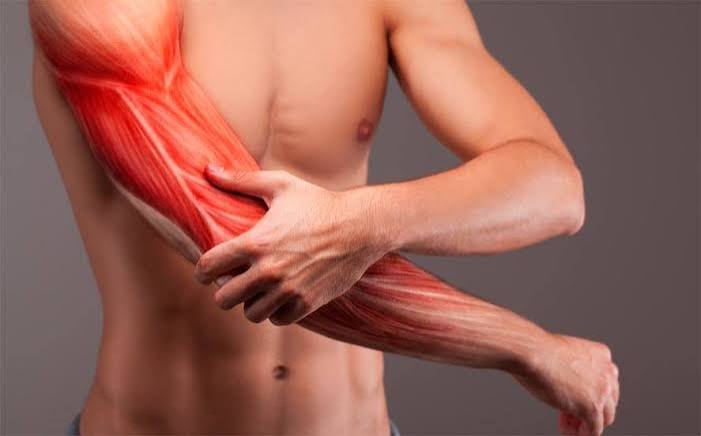
Muscle stiffness causes and prevention span a wide range — from entirely benign post-exercise soreness that resolves on its own, to drug-induced muscle damage from statins, to neurological rigidity from Parkinson’s disease, to the rare but life-threatening rhabdomyolysis. The vast majority of muscle stiffness experienced by adults is caused by exercise, inactivity, or dehydration and responds straightforwardly to movement, hydration, and rest. But knowing which pattern of stiffness is a signal of something more serious — and which simple habits genuinely prevent it — is worth understanding clearly, particularly for adults who are active, taking long-term medications, or starting to notice stiffness that does not resolve as quickly as it used to.
Understanding Muscle Stiffness
Muscle stiffness is the sensation of tightness, reduced ease of movement, and resistance in a muscle or muscle group — distinct from joint stiffness, which arises from intra-articular pathology. The two frequently coexist (an inflamed joint is surrounded by muscles that guard and tighten in response), but the underlying mechanisms and management differ. Muscle stiffness does not involve swollen joints, and passive movement of the joint itself is typically preserved unless the adjacent muscle is severely shortened or injured.
It helps to distinguish three clinically different types of increased muscle tone:
- Myalgia / musculoskeletal stiffness: pain and tightness in a muscle from overuse, injury, metabolic disturbance, or inflammation; normal neurological tone on passive examination; the focus of this article
- Spasticity: velocity-dependent increase in muscle tone from an upper motor neuron lesion (stroke, multiple sclerosis, spinal cord injury); “clasp-knife” quality on examination; associated with hyperreflexia
- Rigidity: constant resistance throughout the full range of passive movement, independent of speed; characteristic of Parkinson’s disease and other extrapyramidal conditions; “lead pipe” or “cogwheel” quality
This distinction matters because spasticity and rigidity are neurological findings that require neurological investigation and management — not the same as the musculoskeletal stiffness addressed by stretching, hydration, or exercise modification.
Muscle Stiffness Causes and Prevention: Exercise-Related
Delayed Onset Muscle Soreness (DOMS)
Delayed onset muscle soreness is one of the most universally experienced phenomena in exercise — the familiar stiffness and soreness that develops 12–72 hours after unaccustomed or intense physical activity, peaking around 24–48 hours and typically resolving within 5–7 days. It is particularly pronounced after eccentric exercise — movements in which the muscle is under load while lengthening: the lowering phase of a bicep curl, downhill running, the descent of a squat, walking down stairs. These eccentric contractions generate more force per motor unit than concentric contractions and produce more microscopic muscle fibre disruption.
DOMS is caused by this microstructural muscle damage and the subsequent inflammatory response — local cytokine release, neutrophil and macrophage infiltration, oedema, and sensitization of type III and IV muscle afferents that signal pain. It is not caused by lactic acid accumulation — a persistent myth. Lactic acid (more accurately, lactate and hydrogen ions) clears from muscle within approximately one hour of stopping exercise. The soreness that appears a day later is entirely unrelated to this acute metabolic byproduct. The lactic acid myth persists partly because the burning sensation during high-intensity exercise (which IS related to lactate/hydrogen ions) is conflated with the soreness that arrives the following day from a completely different process.
DOMS is not dangerous and does not represent muscle injury in the clinical sense. It is the normal response to mechanical loading that exceeds the muscle’s current adaptive capacity. Repeated bouts of the same exercise produce progressively less DOMS — the “repeated bout effect” — as the muscle adapts structurally and neurologically. This adaptation is the basis of progressive resistance training.
Prevention of severe DOMS: introduce new exercises and increased training loads gradually, following the principle of progressive overload — increasing total training volume or intensity by no more than approximately 10% per week to allow adaptation. A proper warm-up reduces acute strain risk but does not prevent DOMS. Post-exercise static stretching does not prevent DOMS — a Cochrane systematic review (Herbert et al., 2011) found no clinically significant effect of stretching on DOMS prevention.
Acute Muscle Strain
An acute muscle strain is a direct or indirect injury to a muscle from a sudden excessive force — a sprint, a sudden change of direction, an unexpected heavy lift. Unlike DOMS, which develops hours later, the pain of a muscle strain begins immediately during or directly after the precipitating activity. The muscle belly is tender, the area may be swollen and warm, and in higher-grade injuries bruising (ecchymosis) appears as blood dissects through tissue planes.
Muscle strains are graded by severity: Grade I involves microscopic fibre disruption with minimal functional loss; Grade II involves partial muscle tear with significant pain, weakness, and possible defect on palpation; Grade III is a complete rupture with total loss of function — sometimes accompanied by a visible or palpable defect in the muscle belly and, in the biceps and Achilles tendon, a characteristic bunching deformity. Grade III strains typically require surgical assessment. Acute management for Grade I–II: PRICE (Protection, Rest, Ice, Compression, Elevation) in the first 48–72 hours; progressive rehabilitation thereafter.
Inactivity, Deconditioning, and Ageing
Prolonged physical inactivity is one of the most common causes of general muscle stiffness in adults. During prolonged sitting or bed rest, muscles shorten adaptively, myofascia loses extensibility, and synovial fluid production in adjacent joints diminishes — all contributing to the familiar stiffness of a long sedentary period. This form of stiffness is benign and resolves predictably with gentle movement and progressive exercise.
Ageing adds a further dimension. Sarcopenia — the age-related loss of skeletal muscle mass and strength, which begins from the third decade and accelerates after 50 — reduces the resilience and recovery capacity of muscle tissue. Sarcopenic muscles are more susceptible to stiffness from a given activity level and take longer to recover. Regular resistance training is the most effective intervention for preventing and partially reversing sarcopenia; even in adults over 70, consistent resistance exercise produces meaningful gains in muscle mass, strength, and functional capacity. For broader context, see our article on mobility and healthy aging.
Dehydration and Electrolyte Imbalance
Muscle function depends on adequate hydration and electrolyte homeostasis. Dehydration — even mild, at 1–2% of body weight — impairs muscle endurance and recovery, and is associated with increased muscle cramping and stiffness during and after exercise. The mechanism involves reduced blood flow to working muscles, impaired thermoregulation, and reduced cellular hydration affecting protein and enzyme function.
Of the electrolytes involved in muscle function, magnesium deficiency (hypomagnesaemia) is the most clinically significant for muscle stiffness and cramping. Magnesium is required for ATP synthesis (the energy currency of muscle contraction) and modulates calcium channels at the neuromuscular junction. Low magnesium increases neuromuscular excitability, producing muscle cramps, twitching, and stiffness. Hypomagnesaemia is common in older adults, in people with high alcohol intake, and in patients taking proton pump inhibitors (PPIs) for prolonged periods. Calcium deficiency (hypocalcaemia) causes the more dramatic phenomenon of tetany — involuntary sustained muscle contraction producing carpopedal spasm (clawed hand and plantarflexed foot). Low potassium (hypokalaemia) causes muscle weakness and cramps.
- Drink approximately 500 mL of water 2 hours before exercise
- Drink 150–250 mL every 15–20 minutes during exercise lasting over 45 minutes
- After exercise, replace ~1.5× the fluid lost (use body weight change or urine colour as guide — pale yellow = adequate)
- For exercise lasting over 90 minutes or in heat: add electrolytes (sodium, potassium) — plain water alone can cause dilutional hyponatraemia in endurance athletes
Medical Causes of Muscle Stiffness
Statin-Associated Myopathy
Statins — including atorvastatin, rosuvastatin, and simvastatin — are among the most widely prescribed drugs in the world, used by tens of millions of adults for cholesterol reduction and cardiovascular risk prevention. Muscle symptoms are the most common side effect: myalgia (diffuse muscle pain and stiffness without significant elevation of creatine kinase) is reported by approximately 5–10% of statin users in clinical practice, though randomised controlled trial data suggest a lower incidence (the “nocebo effect” accounts for some of the difference — patients who know they are taking a statin are more likely to notice and report muscle symptoms).
The clinical spectrum of statin-associated muscle disease ranges from benign to serious:
- Myalgia: muscle aching, stiffness, or weakness; CK normal or mildly elevated; most common presentation; usually reversible with dose reduction or drug switch
- Myositis: muscle inflammation with CK elevated more than 10× the upper limit of normal; requires dose reduction or statin cessation
- Rhabdomyolysis: severe muscle breakdown with CK more than 40× normal; myoglobinuria (dark, “cola-coloured” urine); acute kidney injury risk; medical emergency — stop statin immediately and seek emergency care
Risk factors for statin myopathy: high-dose statin (simvastatin 80 mg carries significantly higher myopathy risk than lower doses), older age, female sex, low body mass index, pre-existing hypothyroidism or renal impairment (both reduce statin metabolism/clearance), and drug interactions — particularly with fibrates, azole antifungals, macrolide antibiotics, and cyclosporin. Any statin user who develops new muscle aching or stiffness should have their CK measured before concluding the symptoms are DOMS or general fatigue.
Hypothyroidism
Hypothyroidism is a frequent and often missed cause of generalized muscle stiffness, myalgia, and fatigue. The thyroid hormones (T3 and T4) regulate muscle metabolism, protein synthesis, and calcium cycling in muscle cells — deficiency causes slowed muscle metabolism, reduced oxidative capacity, and elevated creatine kinase in many patients. The presentation can closely resemble fibromyalgia or polymyalgia rheumatica. Crucially, hypothyroidism dramatically increases the risk of statin-associated myopathy — patients with undiagnosed hypothyroidism who are taking statins are at substantially increased risk of myositis or rhabdomyolysis.
TSH (thyroid-stimulating hormone) measurement is inexpensive, widely available, and should be performed in any adult with unexplained muscle stiffness, fatigue, or elevated CK. Treatment with levothyroxine is highly effective: most patients notice significant improvement in muscle symptoms within weeks of achieving adequate thyroid replacement.
Polymyalgia Rheumatica
Polymyalgia rheumatica causes prominent proximal muscle group stiffness — shoulders and hip girdle — with morning stiffness lasting over 45 minutes in adults aged 50 and over. ESR and CRP are markedly elevated; it responds dramatically to low-dose prednisolone. See our article on morning joint stiffness for a full description, including the associated risk of giant cell arteritis.
Fibromyalgia
Fibromyalgia produces widespread muscle pain and stiffness that is not explained by peripheral tissue pathology — the mechanism is central sensitization (amplified pain processing in the central nervous system). CK is normal, inflammatory markers are normal, and muscle biopsy is normal. The stiffness and pain are real — they are not “imaginary” — but they arise from abnormal pain signalling rather than muscle damage or inflammation. Management includes graded exercise (most evidence-supported), low-dose tricyclic antidepressants, duloxetine, and CBT. Regular gentle aerobic exercise improves fibromyalgia symptoms more than rest does.
Parkinson’s Disease
Parkinson’s disease causes neurological rigidity — one of its three cardinal features alongside resting tremor and bradykinesia (slowness of movement). This rigidity is not musculoskeletal stiffness: it is constant resistance to passive limb movement throughout the full range of motion, arising from disinhibition of the basal ganglia motor circuit due to dopaminergic neuron loss in the substantia nigra. Clinically, it produces the characteristic stooped posture, reduced arm swing, micrographic handwriting, and masked facial expression of Parkinson’s. Any adult with new muscle stiffness accompanied by tremor at rest, slowness of voluntary movement, or changes in gait should be referred to neurology for assessment.
Prevention of Muscle Stiffness
Warm-up before exercise. A proper warm-up consists of 5–10 minutes of low-intensity aerobic activity (increasing heart rate and blood flow to working muscles) followed by dynamic stretching (controlled movements through the range of motion — leg swings, arm circles, walking lunges). Warming up increases muscle temperature and extensibility, improves neuromuscular coordination, and reduces acute strain risk. It does not prevent DOMS. Dynamic stretching before activity is preferable to static stretching, which can temporarily reduce power output when performed immediately before explosive activities.
Cool-down after exercise. A cool-down (5–10 minutes of gradually reducing intensity) facilitates cardiovascular recovery, prevents blood pooling in peripheral muscles, and assists psychological transition from exercise. It does not prevent DOMS. Static stretching performed after exercise, when the muscle is warm, improves long-term flexibility and is best placed in the cool-down phase.
Progressive overload. The most effective prevention for exercise-related muscle stiffness is gradual progression: increasing training volume or intensity by no more than approximately 10% per week allows the musculoskeletal system to adapt between sessions. Violating this rule — especially returning to exercise after a period of inactivity — is the most common cause of severe DOMS and acute strain.
Sleep and recovery. Skeletal muscle repair and protein synthesis occur primarily during sleep, driven by growth hormone release in slow-wave sleep. Chronic sleep deprivation impairs muscle recovery, increases inflammatory markers, and is associated with increased injury risk. Adults engaged in regular exercise need at least 7–9 hours of sleep per night for adequate recovery.
Magnesium and nutrition. Adequate dietary magnesium (found in nuts, seeds, legumes, whole grains, and leafy greens) supports normal muscle function. There is weak evidence that magnesium supplementation reduces nocturnal leg cramps in some populations; it is reasonable for adults with documented hypomagnesaemia. Adequate protein intake (1.2–2.0 g/kg/day for active adults) supports muscle protein synthesis and recovery.
Red Flags: When Muscle Stiffness Is Serious
- Severe muscle stiffness after intense exercise + dark brown or cola-coloured urine — possible rhabdomyolysis; risk of acute kidney injury; stop all exercise and seek emergency care immediately
- Muscle stiffness + trismus (difficulty opening jaw) + fever after a wound — possible tetanus; medical emergency
- Statin user with new diffuse muscle pain or stiffness — have CK measured before assuming DOMS
- Proximal muscle stiffness (shoulders and hips) in an adult over 50 with fatigue — possible PMR
- New muscle stiffness with resting tremor, slowness, or gait changes — possible Parkinson’s; neurology referral
- Muscle stiffness + unexplained fatigue + weight gain + cold intolerance — check TSH for hypothyroidism
When to See a Doctor
Muscle stiffness following a new workout, a period of inactivity, or mild dehydration does not require medical assessment if it resolves within 5–7 days and is not associated with significant weakness, swelling, or dark urine. Medical assessment is warranted for: stiffness that is unexplained, persistent beyond two weeks, accompanied by significant weakness or fatigue, associated with systemic symptoms (weight loss, fever, sweats), or occurring in a statin user — CK measurement is a simple test that helps risk-stratify these presentations promptly.
Related Articles on Horizon Health Guide
- Morning Joint Stiffness: What It May Indicate
- Joint Pain: Common Causes and When to Seek Care
- Knee Pain: What Adults Should Know
- Back Pain: Causes, Symptoms, and Prevention
- Mobility and Healthy Aging: What Adults Should Know
Frequently Asked Questions
What are the most common muscle stiffness causes and prevention strategies?
The most common cause of muscle stiffness in active adults is delayed onset muscle soreness (DOMS) — the 24–72 hour post-exercise soreness from unaccustomed or eccentric exercise. DOMS is benign and resolves within a week; it is prevented by gradual progression of exercise intensity (no more than ~10% increase per week). In inactive or older adults, deconditioning and shortened soft tissue are the primary causes; resolved with progressive movement. In adults taking statins, statin-associated myalgia is an important cause to identify, as it requires CK measurement and possible medication adjustment. Hypothyroidism and polymyalgia rheumatica are medical causes that are commonly missed and easily treated.
Does lactic acid cause muscle stiffness after exercise?
No — this is one of the most widespread myths in exercise science. Lactic acid (more accurately, lactate and hydrogen ions) causes the burning sensation during intense exercise, but clears from muscle tissue within approximately one hour of stopping. The delayed muscle soreness (DOMS) that appears 12–72 hours later is caused by microscopic muscle fibre damage from eccentric contractions and the subsequent inflammatory response — a completely separate mechanism. Lactic acid has no role in DOMS. The two sensations — the burning during exercise and the aching the next day — are often conflated because they feel like they should be related, but they are not.
Can statins cause muscle stiffness?
Yes — muscle-related symptoms are the most common side effect of statin therapy, reported by approximately 5–10% of users. The most common presentation is diffuse muscle aching and stiffness (myalgia) without significant CK elevation — a benign but bothersome symptom. More serious is myositis (CK elevated over 10× normal) and the rare but dangerous rhabdomyolysis (CK over 40× normal, with myoglobinuria and risk of acute kidney injury). Any statin user who develops new unexplained muscle symptoms should have their CK checked rather than attributing the symptoms to exercise or ageing. Risk is higher with high-dose statins, in older adults, in patients with hypothyroidism, and with interacting drugs.
Does stretching prevent muscle stiffness?
Regular stretching maintains muscle and tendon extensibility (range of motion), which is beneficial for long-term flexibility and function. However, stretching does not prevent DOMS — a Cochrane systematic review (Herbert et al., 2011, covering 12 trials) found that neither pre- nor post-exercise stretching had any clinically significant effect on DOMS severity or duration. This finding surprises most people because stretching “feels” like it should help with soreness, but the mechanism of DOMS (micro-injury and inflammation) is not addressed by passive lengthening. The value of stretching lies in maintaining long-term flexibility and possibly reducing chronic injury risk — not in preventing next-day soreness.
What electrolyte deficiencies cause muscle stiffness?
Magnesium deficiency (hypomagnesaemia) is the most clinically significant electrolyte cause of muscle stiffness and cramps. Magnesium is essential for ATP production and regulates calcium influx at the neuromuscular junction; low levels increase neuromuscular excitability, producing cramps and twitching. Hypomagnesaemia is common in older adults, heavy alcohol drinkers, and patients on proton pump inhibitors. Calcium deficiency (hypocalcaemia) causes tetany — sustained involuntary muscle contraction — and is a medical emergency at severe levels. Low potassium (hypokalaemia) causes muscle weakness and cramping. A basic metabolic panel (electrolytes, including calcium and magnesium) is worth checking in any adult with unexplained chronic muscle cramping or stiffness.
How is Parkinson’s rigidity different from ordinary muscle stiffness?
Parkinson’s rigidity is neurological — it arises from loss of dopaminergic neurons in the basal ganglia, causing overactivation of motor pathways. On clinical examination, it produces a constant resistance to passive limb movement throughout the full range of motion, independent of speed (unlike spasticity, which is velocity-dependent). It has a characteristic “cogwheel” quality when tremor is superimposed on the rigidity. Ordinary musculoskeletal stiffness does not produce this constant resistance to passive movement, does not affect tone in the neurological sense, and is not associated with tremor at rest, bradykinesia, or postural instability. Anyone with suspected Parkinson’s features should be referred to a neurologist — the diagnosis and treatment (levodopa, dopamine agonists) are specialist territory.
What is rhabdomyolysis and how do I recognize it?
Rhabdomyolysis is the breakdown of skeletal muscle with release of myoglobin into the bloodstream. Myoglobin is toxic to the kidneys and can cause acute kidney injury — making rhabdomyolysis a potentially life-threatening emergency. It occurs after extreme exercise (particularly in unfit individuals suddenly undertaking intense activity), crush injuries, severe heat illness, statin toxicity (especially in combination with interacting drugs), and some infections. The warning sign is dark, brown, or “cola-coloured” urine appearing after intense muscle activity — this is myoglobinuria (myoglobin being excreted by the kidneys). Other features include severe generalised muscle pain, weakness, and swelling. CK is typically extremely elevated (over 10,000 U/L; sometimes hundreds of thousands). Anyone with these symptoms after exercise should stop all activity and seek emergency care — treatment with aggressive IV fluid resuscitation to protect the kidneys must begin as soon as possible.
References
- Herbert RD, et al. Stretching to prevent or reduce muscle soreness after exercise. Cochrane Database Syst Rev. 2011;(7):CD004577.
- Thompson PD, et al. Statin-associated myopathy. JAMA. 2003;289(13):1681-1690.
- Clarkson PM, Hubal MJ. Exercise-induced muscle damage in humans. Am J Phys Med Rehabil. 2002;81(11 Suppl):S52-S69.
- Pasternak RC, et al. ACC/AHA/NHLBI advisory on the use and safety of statins. Circulation. 2002;106(8):1024-1028.
- Lees AJ, et al. Parkinson’s disease. Lancet. 2009;373(9680):2055-2066.
This article is for educational purposes only and does not constitute medical advice. Always consult a qualified healthcare professional for evaluation and treatment of muscle stiffness.
I have been on atorvastatin for two years and recently started getting muscle aching that I couldn’t explain. I assumed it was just getting older. After reading this I realised I need to get my CK checked — I had no idea statins could cause a spectrum of muscle problems including the serious rhabdomyolysis. Booking a GP appointment this week.
Paul, you’re right to get that checked. A CK (creatine kinase) blood test is quick and will clarify whether there’s any muscle damage beyond simple myalgia. If your CK comes back significantly elevated, your GP may recommend switching to a lower-dose or different statin. It’s also worth asking them to check your thyroid function at the same time, as hypothyroidism increases statin myopathy risk and is easy to miss. Good luck.
The lactic acid myth-bust was genuinely surprising. I’ve been telling people for years that sore muscles the day after exercise is from lactic acid — turns out that’s completely wrong. The explanation about microscopic fibre damage making much more sense. Great article.