
Early Signs of Cancer: Warning Symptoms You Shouldn’t Ignore
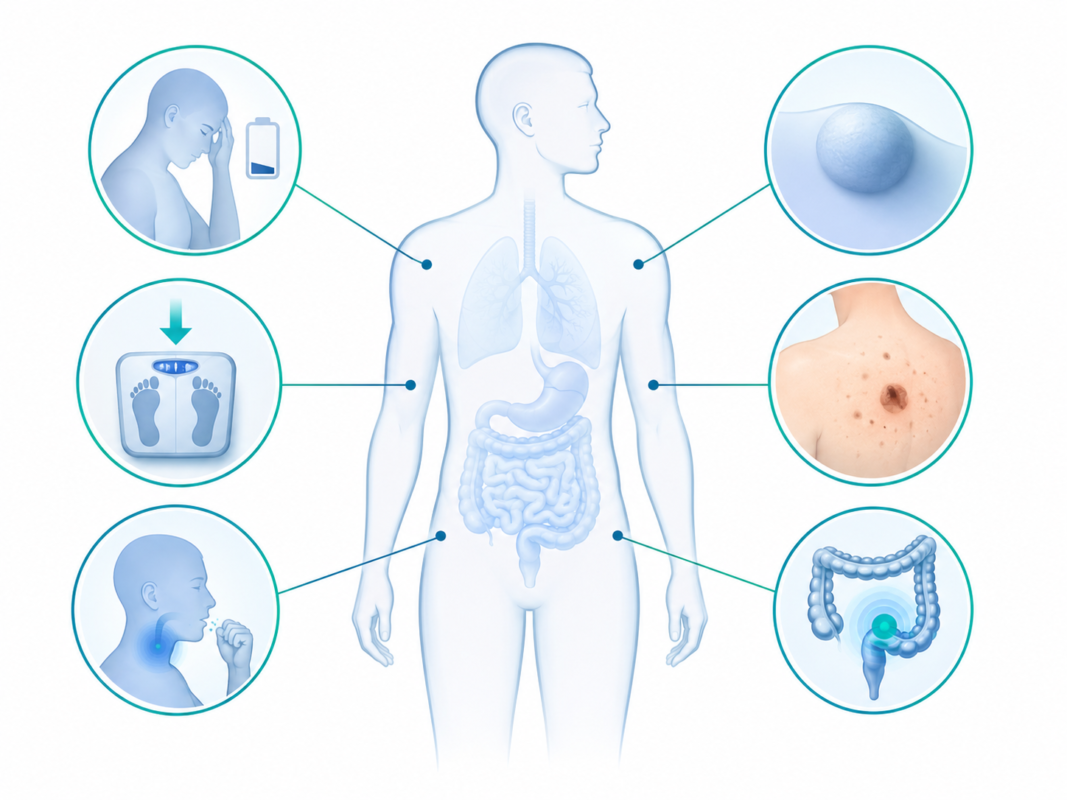
Cancer does not always begin with dramatic symptoms. In many cases, the first clue is a subtle change: tiredness that does not improve, a lump that was not there before, unexplained weight loss, unusual bleeding, a persistent cough, or a change in bowel or bladder habits. These symptoms do not always mean cancer, but they are important signals that deserve attention when they last, worsen, or appear without a clear reason.
Why Early Cancer Symptoms Matter
In the United States, cancer remains one of the most important public health challenges. The American Cancer Society estimated that about 2.1 million new cancer cases would be diagnosed in the U.S. in 2026, with more than 626,000 cancer deaths expected during the same year.
Estimated new cancer cases in the United States in 2026.
Source: American Cancer Society, Cancer Statistics 2026.
Estimated cancer deaths in the United States in 2026.
Source: American Cancer Society, Cancer Statistics 2026.
The goal of recognizing early cancer warning signs is not to create fear. It is to help people notice meaningful body changes sooner and have informed conversations with a healthcare professional. Many common symptoms are caused by infections, hormone changes, digestive conditions, stress, aging, or other non-cancer causes. Still, persistent or unexplained symptoms should not be ignored.
Key idea: A symptom becomes more concerning when it is new, unexplained, persistent, getting worse, or different from what is normal for you.
This guide explains common early signs of cancer, what they may look like in everyday life, which symptoms need prompt medical attention, and how screening can sometimes find cancer before symptoms appear.
Common Early Signs of Cancer
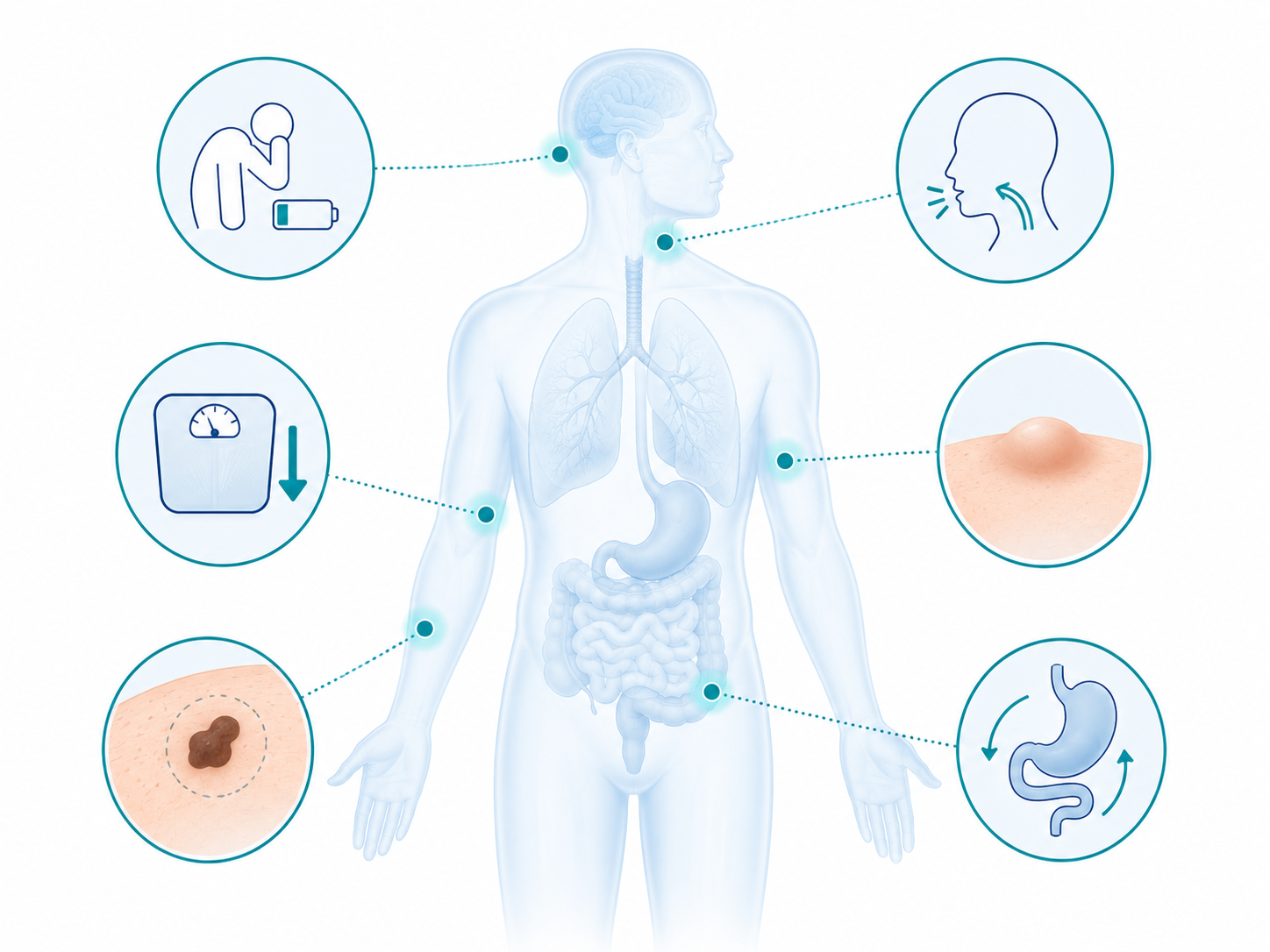
Cancer symptoms can vary widely depending on where the cancer starts, how large it is, and whether it affects nearby organs, blood, nerves, hormones, or the immune system. The symptoms below are commonly listed by major cancer organizations as changes that may need medical evaluation, especially when they persist or have no clear explanation.
Unexplained Weight Loss or Appetite Changes
Losing weight without trying can happen for many reasons, including thyroid disease, digestive problems, infection, depression, medication effects, or cancer. A noticeable weight change becomes more important when it occurs without a clear change in diet, exercise, or lifestyle.
Fatigue That Does Not Improve With Rest
Everyone feels tired sometimes. Cancer-related fatigue is different because it may feel deeper, last longer, and not improve after sleep. It may also appear with shortness of breath, dizziness, pale skin, or weakness if anemia is involved.
A New Lump, Swelling, or Thickened Area
A lump in the breast, neck, underarm, groin, testicle, abdomen, or another area should be checked, especially if it is new, growing, firm, painless, or does not go away. Swollen lymph nodes can also occur with infections, but persistent swelling deserves attention.
Unusual Bleeding or Bruising
Blood in the stool, black stools, blood in the urine, coughing up blood, vomiting blood, unexplained bruising, or vaginal bleeding after menopause should be discussed with a healthcare professional. Bleeding may have non-cancer causes, but it should not be dismissed.
Persistent Bowel or Bladder Changes
Ongoing constipation, diarrhea, narrower stools, blood in the stool, frequent urination, pain with urination, or blood in the urine can be linked to many conditions. If these changes are new, persistent, or worsening, medical evaluation is important.
A Cough or Hoarseness That Does Not Go Away
A lingering cough is often caused by allergies, asthma, infection, acid reflux, or smoking-related airway irritation. However, a cough that lasts for weeks, gets worse, produces blood, or appears with chest pain or unexplained weight loss should be checked.
A New or Changing Mole, Sore, or Skin Growth
A skin change may be important if it involves a sore that does not heal, a new growth, or a mole that changes in size, shape, color, border, or appearance. Melanoma warning signs are often remembered by the ABCDE pattern: asymmetry, border, color, diameter, and evolving.
Persistent Pain, Headaches, or Neurological Changes
Pain does not automatically mean cancer. But pain that is new, unexplained, getting worse, or combined with symptoms such as vision changes, seizures, weakness, numbness, or balance problems should be evaluated.
When a Symptom Becomes More Concerning
A symptom is more concerning when it lasts longer than expected, keeps returning, gets progressively worse, appears with unexplained weight loss or fatigue, causes bleeding, or feels clearly different from your normal health pattern.
- New symptom with no clear cause
- Symptom that persists for several weeks
- Symptom that becomes more frequent or severe
- Bleeding that is unusual for you
- A lump, sore, or skin change that grows or does not heal
Sources: American Cancer Society and National Cancer Institute symptom guidance.

Early Warning Signs by Body Area
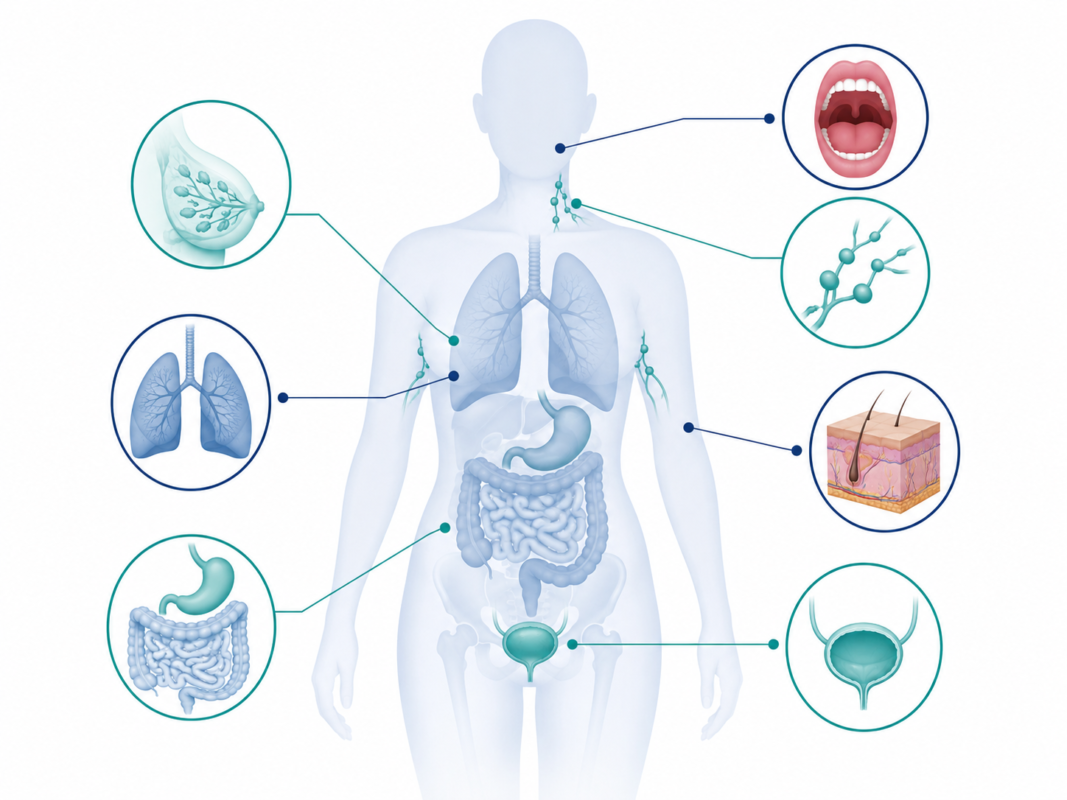
Cancer is not one disease. It is a large group of diseases that can begin in different tissues and organs. That is why symptoms may look very different from person to person. The examples below are not a diagnosis, but they can help you understand which body changes are worth discussing with a clinician.
Breast or Underarm Lump, Skin Dimpling, Nipple Changes
- New lump in the breast or underarm
- Thickening or swelling in part of the breast
- Dimpling, irritation, redness, or flaky skin
- Nipple pulling inward, nipple pain, or discharge including blood
- Change in breast size, shape, or persistent breast pain
Source: CDC breast cancer symptom guidance.
New Growth, Non-Healing Sore, or Changing Mole
- A sore that does not heal
- A new growth that bleeds, crusts, or changes
- A mole with uneven color, irregular border, or changing size
- A spot that looks different from your other moles or marks
Source: CDC skin cancer symptom guidance.
Blood in Stool, Persistent Bowel Changes, or Unexplained Anemia
- Blood in the stool or black stools
- Constipation or diarrhea that does not go away
- A change in stool shape or bowel pattern
- Ongoing abdominal discomfort, bloating, or cramping
- Fatigue related to possible iron-deficiency anemia
Persistent Cough, Hoarseness, or Coughing Blood
- Cough that does not go away or gets worse
- Hoarseness that persists
- Shortness of breath or chest discomfort
- Coughing up blood, even a small amount
- Repeated respiratory infections without a clear reason
Blood in Urine or Changes in Urination
- Blood in the urine
- Pain or burning when urinating
- Needing to urinate more or less often than usual
- Difficulty starting urination or weak urine flow
- Pelvic, back, or side pain that persists
Unusual Vaginal Bleeding, Pelvic Pain, or Persistent Bloating
- Bleeding after menopause
- Bleeding after sex or between periods
- Unusual vaginal discharge
- Persistent pelvic pain, pressure, or bloating
- Feeling full quickly or appetite changes that persist
Source: CDC cervical cancer symptom guidance notes that early cervical cancer may not cause symptoms.
Mouth Sores, White or Red Patches, or Trouble Swallowing
- A sore in the mouth that does not heal
- White or red patches on the tongue, gums, or inside the mouth
- Bleeding, numbness, or pain in the mouth or lip
- Trouble swallowing or persistent indigestion
- Voice changes that do not improve
Symptoms Can Be Overlapping
Many symptoms listed above can be caused by conditions that are not cancer. For example, blood in the stool may be related to hemorrhoids, inflammatory bowel disease, infection, or other digestive problems. A persistent cough may come from asthma, reflux, infection, or smoking-related irritation. The important point is not to self-diagnose, but to investigate symptoms that are persistent, unusual, or worsening.
When Should You See a Doctor?
You do not need to panic over every symptom. But you should pay attention when a symptom is persistent, unexplained, or clearly different from your normal pattern. A good rule is to write down when the symptom started, how often it happens, what makes it better or worse, and whether it appears with other changes such as weight loss, fever, bleeding, fatigue, or pain.
Schedule a Medical Visit If You Notice
- A lump, swelling, or thickened area that does not go away
- Unexplained weight loss or appetite change
- Fatigue that is severe or persistent
- Ongoing cough, hoarseness, or trouble swallowing
- New bowel, bladder, breast, skin, or mouth changes
- Persistent pain without a clear cause
Seek Prompt Care for Red-Flag Symptoms
- Blood in stool, urine, vomit, or coughed-up mucus
- Vaginal bleeding after menopause
- Sudden neurological symptoms such as seizure, weakness, or vision change
- Severe shortness of breath or chest pain
- A rapidly growing lump or a non-healing wound
- Severe unexplained pain that is getting worse
Screening Can Find Some Cancers Before Symptoms Start
Some cancers may not cause symptoms in the early stage. That is why screening is an important part of cancer prevention and early detection. Screening recommendations depend on age, sex, personal history, family history, tobacco exposure, and other risk factors.
| Screening Area | General U.S. Guidance | Why It Matters |
|---|---|---|
| Colorectal cancer | USPSTF recommends screening adults ages 45 to 75. Adults 76 to 85 should discuss individualized screening with a clinician. | Screening can detect cancer early and may also find precancerous polyps before they become cancer. |
| Breast cancer | USPSTF recommends biennial screening mammography for women ages 40 to 74. | Mammography can help detect breast cancer before a lump can be felt. |
| Cervical cancer | USPSTF recommends cervical cancer screening for women ages 21 to 65 using age-appropriate cytology and/or HPV testing strategies. | Screening can detect precancerous changes and early cancer, often before symptoms appear. |
| Lung cancer | People with a significant smoking history may qualify for annual low-dose CT screening based on age and pack-year history. | Lung cancer often causes few symptoms early, so screening can be important for eligible high-risk adults. |
The Bottom Line
Early signs of cancer are often ordinary symptoms that become important because they are persistent, unexplained, or worsening. A single symptom does not mean you have cancer, but ignoring a meaningful body change can delay diagnosis. Pay attention to patterns, document what you notice, keep up with recommended screening, and talk with a healthcare professional when something does not feel right.
Horizon Health Institute focuses on clear, practical health education that helps readers understand symptoms, prevention, screening, and informed conversations with medical professionals.
Sources & References
- American Cancer Society. Cancer Statistics, 2026. CA: A Cancer Journal for Clinicians. https://acsjournals.onlinelibrary.wiley.com/doi/10.3322/caac.70043
- American Cancer Society. Signs and Symptoms of Cancer. https://www.cancer.org/cancer/diagnosis-staging/signs-and-symptoms-of-cancer.html
- National Cancer Institute. Symptoms of Cancer. https://www.cancer.gov/about-cancer/diagnosis-staging/symptoms
- CDC. Symptoms of Breast Cancer. https://www.cdc.gov/breast-cancer/symptoms/index.html
- CDC. Symptoms of Skin Cancer. https://www.cdc.gov/skin-cancer/symptoms/index.html
- CDC. Symptoms of Cervical Cancer. https://www.cdc.gov/cervical-cancer/symptoms/index.html
- U.S. Preventive Services Task Force. Colorectal Cancer Screening Recommendation. https://www.uspreventiveservicestaskforce.org/uspstf/recommendation/colorectal-cancer-screening
- U.S. Preventive Services Task Force. A and B Recommendations. https://www.uspreventiveservicestaskforce.org/uspstf/recommendation-topics/uspstf-a-and-b-recommendations
Came across this while researching early signs of cancer: symptoms you for a family member. It is refreshing to see an article that acknowledges individual variation rather than giving one-size-fits-all advice. Appreciate the effort that went into researching and writing this — it shows.
Really well-written article on early signs of cancer: symptoms you. The specific numbers and thresholds mentioned are exactly what I needed to understand my lab results. Looking forward to reading more articles from this website.
I shared this article on early signs of cancer: symptoms you with my doctor and they appreciated the level of detail. The specific numbers and thresholds mentioned are exactly what I needed to understand my lab results. I wish I had found this article when I was first diagnosed — would have saved a lot of confusion.
I never fully understood early signs of cancer: symptoms you until I read this. The article answered questions I didn’t even know I had until I started reading. Thank you for making complex medical information accessible without dumbing it down.
Bookmarked this article on early signs of cancer: symptoms you immediately — going to reference it regularly. I especially valued the explanation of why these recommendations exist, not just what they are. Appreciate the effort that went into researching and writing this — it shows.
Came across this while researching early signs of cancer: symptoms you for a family member. The specific numbers and thresholds mentioned are exactly what I needed to understand my results. Exactly the kind of evidence-based information that is hard to find in one place.