

Cancer recurrence is the return of cancer after a period of remission — a time when cancer was undetectable by standard tests and imaging. For many cancer survivors, the possibility of recurrence is the most persistent fear that follows them long after completing treatment. Understanding cancer recurrence — what it means, when and where cancer most commonly comes back, how it is diagnosed and treated, and how to live well with the uncertainty it creates — is an essential part of navigating life after cancer.
Cancer recurrence happens because most treatments, even when highly effective, cannot guarantee that every single cancer cell has been eliminated. Some cells enter a state of dormancy — a metabolically quiescent state in which they survive undetected for years before eventually awakening and growing again. Circulating tumor cells or micrometastases present before treatment started but too small to detect continue to grow after treatment ends. The risk of recurrence is highest in the first 2–3 years after completing curative-intent treatment for most solid tumors, but for some cancers — especially hormone receptor-positive breast cancer and prostate cancer — it never reaches zero.
What Is Cancer Recurrence?
Cancer recurrence is defined by where the cancer returns relative to its original site:
When cancer recurs at a distant site, treatment goals typically shift from cure to disease control, quality of life, and life prolongation — though there are important exceptions: oligometastatic disease treated with stereotactic radiation or surgery, and certain chemotherapy-sensitive tumors (testicular cancer, some lymphomas) that are curable even with distant metastases.
Signs and Symptoms of Cancer Recurrence
The key principle: new, persistent, or unexplained symptoms in a person with a cancer history warrant prompt evaluation. Do not wait for the next scheduled surveillance appointment.
| Symptom | What It May Signal | Most Relevant For |
|---|---|---|
| New or worsening bone pain (spine, pelvis, ribs) not relieved by pain relievers; worse at night | Bone metastases | Breast, prostate, lung, thyroid, kidney cancer |
| Right upper abdominal discomfort, jaundice, or abnormal liver blood tests | Liver metastases | CRC, breast, lung, ovarian, gastric cancer |
| New or changing cough, shortness of breath, hemoptysis, or pleural effusion | Lung metastases | Breast, CRC, melanoma, renal cell, thyroid |
| Headache worst on awakening; focal neurological deficits; new seizure; cognitive/personality changes | Brain metastases | Breast, lung, melanoma, RCC, CRC |
| New palpable, hard, non-tender, fixed lymph nodes | Regional or lymphatic recurrence | Any cancer type |
| Unexplained weight loss >10 lbs in 6 months; persistent fatigue; fever; night sweats | Systemic disease burden | Any cancer type |
| New firmness, mass, or skin change at original tumor site or surgical scar | Local recurrence | Breast, CRC, sarcoma, melanoma |
Recurrence Rates by Cancer Type
| Cancer Type | Approximate Recurrence Risk | Timing Pattern |
|---|---|---|
| ER+ breast cancer | 13% (stage I) to 40% (stage III) at 20 years | Constant rate up to 20 years; 50% of distant recurrences occur >5 years post-diagnosis (EBCTCG NEJM 2017) |
| TNBC (triple-negative breast) | 40–60% for stage III | Highest risk in first 3 years; risk drops substantially after 3 years without recurrence |
| Colorectal cancer (stage III) | 30–40% | ~80% of recurrences within first 3 years |
| NSCLC (stage I after resection) | 30–50% | Most within 2–3 years; EGFR-mutant: adjuvant osimertinib — 5-yr DFS 65% vs. 29% (HR 0.23; ADAURA NEJM 2023) |
| Prostate cancer (high-risk) | ~40% biochemical recurrence at 10 years | Very late recurrences possible at 10–15 years; PSA doubling time is key prognostic marker |
| Ovarian cancer (advanced) | ~70–80% within 3 years | Most within 3 years even after complete clinical remission; PARP inhibitor maintenance reduces risk significantly |
| Hodgkin lymphoma (relapsed) | ~20% of treated patients relapse | Most relapses within 2 years; salvage HDCT + ASCT ~30–40% long-term EFS |
Cancer Dormancy and Late Recurrences
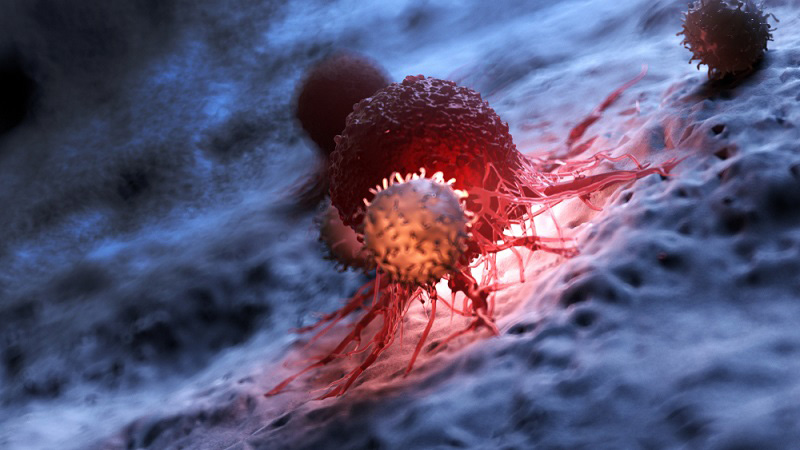
Dormant cancer cells can survive in specialized anatomical niches — particularly the bone marrow and liver sinusoids — in a quiescent metabolic state that resists chemotherapy and escapes immune surveillance. They can persist for years before awakening in response to inflammatory signals, aging of the immune system, or changes in the local tissue environment. This explains the late recurrences characteristic of ER+ breast cancer, where the EBCTCG data showed a constant rate of distant recurrence continuing for 20 years — and it explains why standard 5-year follow-up is insufficient for these patients. For high-risk ER+ breast cancer patients, extended adjuvant aromatase inhibitor therapy (beyond 5 years to 10 total years) further reduces recurrence risk. For tools to detect recurrence before symptoms appear, see the cancer monitoring article.
How Recurrent Cancer Is Diagnosed
When imaging or tumor marker changes suggest cancer may have returned, tissue biopsy of the suspected recurrence site is typically recommended before changing treatment — even when imaging strongly suggests recurrence — because benign conditions can mimic recurrence, and because tumor biology frequently changes between initial diagnosis and recurrence.
Repeat molecular profiling of the recurrent tumor is essential. Key examples of tumor evolution at recurrence:
- ESR1 mutations in ER+ breast cancer after aromatase inhibitor therapy (~30–40% of AI-resistant patients): activate ligand-independent estrogen receptor signaling; drive eligibility for elacestrant (EMERALD trial: DFS HR 0.55 in ESR1-mutated patients)
- EGFR T790M in EGFR-mutant NSCLC after first/second-generation TKI therapy (~50–60% of resistant tumors): drives switch to osimertinib
- KRAS/NRAS mutations in RAS wild-type CRC after anti-EGFR therapy (~50–80% of resistant tumors): remove anti-EGFR eligibility
- HER2 status changes: HER2-negative at initial diagnosis may acquire HER2 amplification or reach HER2-low expression at recurrence, affecting ADC (T-DXd) eligibility
Treatment of Cancer Recurrence
Local and Oligometastatic Recurrence
Local recurrence is often treated with curative intent: surgery (if resectable) or radiation. For colorectal cancer, isolated hepatic or pulmonary metastases may be resected with curative intent — approximately 30–40% of patients achieve 5-year survival after complete resection of isolated CRC liver metastases. The SABR-COMET trial (Palma DA et al., Lancet 2019) showed stereotactic ablative radiotherapy (SABR) for 1–5 oligometastatic lesions achieved overall survival of 41 months versus 28 months — a clinically meaningful signal.
Systemic Therapy for Metastatic Recurrence
Olaparib for BRCA1/2-mutated metastatic breast cancer (OlympiAD: ORR 59.9% vs. 28.8%; PFS HR 0.58), recurrent ovarian cancer (SOLO-2), and HRRm metastatic prostate cancer (PROfound: rPFS HR 0.34 BRCA1/2 cohort)
T-DXd (DESTINY-Breast04): PFS HR 0.50, OS HR 0.64 — first ADC proven in HER2-low breast cancer. Sacituzumab govitecan (ASCENT): OS 12.1 vs. 6.7 months in metastatic TNBC. Enfortumab vedotin (EV-301): OS HR 0.70 in metastatic urothelial carcinoma
Pembrolizumab (KEYNOTE-177): first-line MSI-H metastatic CRC — median PFS 16.5 vs. 8.2 months (HR 0.60), with durable responses lasting years in ~30% of responders. Tissue-agnostic approval covers MSI-H tumors of any origin
Palbociclib, ribociclib, or abemaciclib + endocrine therapy: OS benefit demonstrated. MONALEESA-3: ribociclib OS HR 0.73 (53.7 vs. 41.5 months). MONARCH-2: abemaciclib + fulvestrant OS HR 0.757
Preventing Cancer Recurrence
Adjuvant therapies for recurrence prevention:
- Adjuvant hormone therapy (tamoxifen or aromatase inhibitors, 5–10 years): reduces ER+ breast cancer distant recurrence by ~40–50% relative; extended AI to 10 years further reduces risk in high-risk patients (MA.17R: DFS HR 0.66)
- Adjuvant osimertinib (ADAURA): EGFR-mutant stage IB–IIIA NSCLC — 5-yr DFS 65% vs. 29% (HR 0.23, NEJM 2023)
- Adjuvant olaparib (OlympiA): BRCA1/2-mutated high-risk early HER2-negative breast cancer — 4-yr iDFS HR 0.63
- T-DM1 (KATHERINE): HER2+ breast cancer with residual disease after neoadjuvant therapy — iDFS HR 0.50; 3-yr iDFS 88.3% vs. 77.0%
Lifestyle modifications:
- Exercise: Walking 3–5 hours per week is associated with 20–40% reduction in breast cancer-specific mortality; higher volumes (>8–9 MET-h/week) associated with up to 50% reduction (Holmes MD et al., JAMA 2005). ASCO recommends 150 min/week moderate aerobic + 2×/week resistance for all cancer survivors
- Weight management: Obesity increases ER+ breast cancer recurrence risk; maintaining healthy BMI improves hormonal and metabolic biomarkers
- Alcohol reduction: Post-diagnosis alcohol intake is associated with higher breast cancer recurrence risk; WCRF/AICR recommends <1 drink/day
- Surveillance adherence: Completing scheduled follow-up visits is the patient’s primary defense — early detection of local or regional recurrence significantly expands treatment options; see cancer follow-up care
The Psychological Impact of Cancer Recurrence
A cancer recurrence diagnosis is often more psychologically devastating than the initial cancer diagnosis. The story patients had told themselves — that they had “beaten” cancer — is challenged, and the future seems uncertain in a deeper way. Depression affects 30–40% of cancer patients at recurrence — higher than the 20–30% rate at initial diagnosis. Anxiety affects 40–50%. Existential distress is especially prominent.
Early integration of palliative care at recurrence has been shown to improve both quality of life and survival. The Temel et al. trial (NEJM 2010) randomized patients with newly diagnosed metastatic NSCLC to early palliative care versus standard care: the palliative care group had better quality of life and a median overall survival of 11.6 versus 8.9 months — despite receiving less aggressive end-of-life chemotherapy. Palliative care at recurrence is not giving up; it is adding specialized expertise.
Support groups specifically for people living with metastatic disease — separate from early-stage survivorship groups — are more helpful because the experiences and emotional landscape are fundamentally different. Organizations including Living Beyond Breast Cancer, SHARE Cancer Support, and the Colorectal Cancer Alliance maintain resources specifically for patients navigating recurrence. Cognitive behavioral therapy (CBT) and acceptance and commitment therapy (ACT) have the strongest evidence for managing existential distress after recurrence.
Frequently Asked Questions
- Pan H et al. (EBCTCG) — 20-year ER+ breast cancer distant recurrence; NEJM 2017
- Tsuboi M et al. / Herbst RS et al. (ADAURA) — Adjuvant osimertinib EGFR-mutant NSCLC 5-year update; NEJM 2023
- Moore K et al. (SOLO-1) — Olaparib first-line maintenance advanced ovarian cancer; NEJM 2018
- von Minckwitz G et al. (KATHERINE) — T-DM1 residual HER2+ breast cancer; NEJM 2019
- Robson M et al. (OlympiAD) — Olaparib BRCA+ metastatic breast cancer; NEJM 2017
- de Bono J et al. (PROfound) — Olaparib HRRm metastatic prostate cancer; NEJM 2020
- Modi S et al. (DESTINY-Breast04) — T-DXd HER2-low breast cancer; NEJM 2022
- Bardia A et al. (ASCENT) — Sacituzumab govitecan mTNBC; NEJM 2021
- André T et al. (KEYNOTE-177) — Pembrolizumab MSI-H mCRC first-line; NEJM 2020
- Palma DA et al. (SABR-COMET) — SABR oligometastatic disease; Lancet 2019
- Temel JS et al. — Early palliative care metastatic NSCLC; NEJM 2010
- Holmes MD et al. — Exercise and breast cancer mortality; JAMA 2005
- Tutt ANJ et al. (OlympiA) — Olaparib adjuvant BRCA+ early breast cancer; NEJM 2021
- Goss PE et al. (MA.17R) — Extended letrozole adjuvant beyond 5 years; NEJM 2016
- NCI — Cancer recurrence: cancer.gov/about-cancer/causes-prevention/risk/recurrence
- NCCN — Disease-specific recurrence guidelines: nccn.org/guidelines
This article is for educational purposes only and does not constitute medical advice. Discuss all cancer recurrence decisions with your oncology care team.
I shared this article on cancer recurrence: signs, rates, and treatment with my doctor and they appreciated the level of detail. The section on managing this condition day-to-day was especially useful for meal planning. This gave me real confidence going into my next specialist appointment.
As someone dealing with this personally, the cancer recurrence: signs, rates, and treatment section was very helpful. The practical tips at the end made this immediately actionable, not just theoretical. This is going into my health binder that I bring to every doctor’s visit.
I have been reading about cancer recurrence: signs, rates, and treatment for weeks and this is the most thorough guide I have found. I have tried following advice from several sources but this is the most consistent with what my specialist told me. Will definitely be coming back to this site for more health information.
I never fully understood cancer recurrence: signs, rates, and treatment until I read this. I especially valued the explanation of why these recommendations exist, not just what they are. Exactly the kind of evidence-based information that is hard to find in one place.
This is one of the clearest explanations of cancer recurrence: signs, rates, and treatment I have found. The practical tips made this immediately actionable, not just theoretical. This is going into my health folder that I bring to every doctor’s visit.
Bookmarked this article on cancer recurrence: signs, rates, and treatment immediately — going to reference it regularly. I appreciate that the article is careful about distinguishing between what is known and what is still being researched. Appreciate the effort that went into researching and writing this — it shows.