
Understanding Ovarian Cancer Risk Factors
Ovarian cancer risk factors can be divided into two broad categories: those that increase the cumulative number of ovulation cycles over a woman’s lifetime (the dominant theoretical mechanism behind most non-hereditary ovarian cancer risk), and those that reflect inherited genetic mutations that directly impair DNA repair in the cells of the ovary and fallopian tube. Understanding which of these factors apply to you is the first step in determining whether genetic testing, enhanced surveillance, or preventive surgery may be appropriate for your situation.
The general population lifetime risk of developing ovarian cancer is approximately 1.3% — meaning that roughly 1 in 78 women will develop the disease at some point in their lives. This baseline risk is shaped significantly upward or downward by a constellation of genetic, hormonal, reproductive, and lifestyle factors. Having one or more risk factors does not mean ovarian cancer is inevitable — even women with BRCA1 mutations, who face the highest hereditary risk, have more than a 50% chance of never developing ovarian cancer. But identifying elevated risk creates the opportunity to take informed, evidence-based preventive action.
Genetic Risk Factors: The Highest-Risk Category
Hereditary gene mutations are the most powerful known ovarian cancer risk factors, accounting for approximately 15–20% of all ovarian cancer diagnoses. The most clinically important are:
BRCA1 Mutations
Women who carry a pathogenic mutation in the BRCA1 gene have an estimated lifetime risk of developing ovarian cancer of approximately 35–46% — roughly 30 times the general population risk. BRCA1-associated ovarian cancers are predominantly high-grade serous carcinomas, the most aggressive subtype, and tend to be diagnosed at a younger age than sporadic ovarian cancer (median age approximately 53 years for BRCA1 carriers vs. 63 years for the general population).
BRCA1 is a tumor suppressor gene involved in repairing double-strand breaks in DNA via homologous recombination. When one copy is inherited in mutated form and the second copy undergoes somatic mutation or loss of heterozygosity in an ovarian or fallopian tube cell, the cell loses the ability to accurately repair DNA damage — the foundation of BRCA1-related carcinogenesis.
BRCA2 Mutations
Women with pathogenic BRCA2 mutations have an estimated lifetime ovarian cancer risk of approximately 13–23%. While lower than BRCA1, this is still approximately 10–17 times the general population risk. BRCA2-associated ovarian cancers also tend to be high-grade serous carcinomas. The median age of ovarian cancer diagnosis in BRCA2 carriers is somewhat older than in BRCA1 carriers — approximately 57–60 years.
Both BRCA1 and BRCA2 mutations are more prevalent in certain ethnic populations, particularly Ashkenazi Jewish women, among whom three specific founder mutations (BRCA1 185delAG, 5382insC; BRCA2 6174delT) are present at a combined frequency of approximately 1 in 40, compared to approximately 1 in 400 in the general population.
Lynch Syndrome (Hereditary Non-Polyposis Colorectal Cancer)
Lynch syndrome — caused by pathogenic mutations in the DNA mismatch repair genes MLH1, MSH2, MSH6, or PMS2 — is most commonly associated with colorectal and endometrial cancer, but also confers elevated ovarian cancer risk of approximately 5–10% lifetime. Lynch syndrome-associated ovarian cancers are most commonly endometrioid or clear cell carcinomas, unlike BRCA-associated high-grade serous carcinoma.
Family History Without Identified Mutation
Women who have a first-degree relative (mother, sister, or daughter) with ovarian cancer have approximately a 2–3 fold increase in lifetime ovarian cancer risk compared to women without such a family history, even if no causative gene mutation has been identified. This elevated familial risk may reflect unmapped genetic susceptibility loci, shared lifestyle or environmental factors, or low-penetrance variants not captured by current testing panels.
Who Should Consider Genetic Testing?
Current guidelines from the National Comprehensive Cancer Network (NCCN) recommend referral for genetic counseling and potential testing in women who have:
- A personal history of ovarian, fallopian tube, or primary peritoneal cancer at any age
- A personal history of breast cancer diagnosed before age 50, or triple-negative breast cancer before age 60
- A personal history of breast cancer at any age plus Ashkenazi Jewish ancestry
- A known family BRCA1 or BRCA2 mutation (testing the unaffected relative is indicated)
- Two or more close relatives on the same side of the family with breast and/or ovarian cancer
- A first-degree relative with ovarian cancer
- A personal or family history consistent with Lynch syndrome
Genetic testing for hereditary breast and ovarian cancer syndrome (HBOC) is increasingly covered by insurance when NCCN criteria are met. Testing typically uses a multi-gene panel that evaluates BRCA1, BRCA2, and a range of other moderate- to high-risk genes in a single test. Positive results have implications not only for the individual being tested but for all first-degree relatives, who each have a 50% chance of having inherited the same mutation.
Reproductive and Hormonal Risk Factors
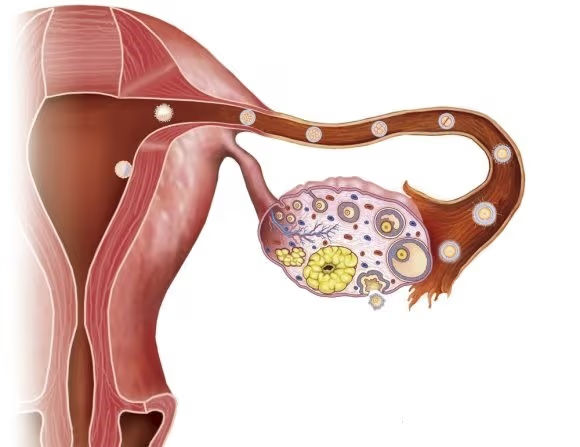
The most influential non-genetic theory of ovarian cancer carcinogenesis is the incessant ovulation hypothesis, proposed by Dr. Malak Fathalla in 1971. This model proposes that the repeated trauma of ovulation — in which the ovarian surface epithelium ruptures to release an oocyte and then must repair itself — creates cumulative opportunities for DNA replication errors and transformation in the cells of the ovarian surface. Factors that increase the total lifetime number of ovulations (nulliparity, early menarche, late menopause) increase risk; factors that suppress ovulation (oral contraceptives, pregnancy, breastfeeding) decrease risk. The incessant ovulation hypothesis is not the only mechanistic model — retrograde menstruation and fallopian tube inflammation are also proposed — but it is the most widely supported and provides the most useful framework for understanding reproductive risk factors.
Factors That Increase Risk
- Nulliparity (never pregnant): Women who have never had a child have a modestly higher lifetime ovulation count and elevated ovarian cancer risk compared to women who have had one or more pregnancies.
- Infertility: Independently associated with increased risk, beyond the effect of nulliparity alone. May reflect underlying hormonal or inflammatory factors.
- Early menarche / late menopause: A longer span of reproductive years — earlier first period or later final period — means more total lifetime ovulations and modestly elevated risk.
- Endometriosis: Associated with a relative risk of approximately 1.7 for ovarian cancer overall, with stronger associations for specific subtypes — clear cell carcinoma (RR ~3.0) and endometrioid carcinoma (RR ~2.6) — that are thought to arise directly from endometriotic implants within or adjacent to the ovary.
- Polycystic ovary syndrome (PCOS): Associated with modestly elevated risk, primarily for endometrioid subtype; may reflect hormonal milieu of chronic anovulation with elevated androgens and estrogen.
Factors That Decrease Risk
- Oral contraceptive (OC) use: One of the most powerful non-surgical protective factors. Women who use oral contraceptives for 5 or more years have a 40–50% reduction in lifetime ovarian cancer risk compared to never-users. This protective effect persists for 20–30 years after stopping OC use. Even shorter durations of OC use (3–5 years) confer significant protection. Oral contraceptive use is also recommended as a chemoprevention option for BRCA mutation carriers who have not yet completed childbearing and wish to defer risk-reducing surgery.
- Pregnancy: Each full-term pregnancy reduces ovarian cancer risk by approximately 8%. The protective effect is strongest for the first pregnancy and remains after additional pregnancies. The mechanism likely involves interruption of ovulation cycles plus hormonal changes of pregnancy that may directly reduce ovarian surface epithelial proliferation.
- Breastfeeding: Associated with modest risk reduction, estimated at approximately 2% per month of breastfeeding. Like OC use and pregnancy, the mechanism involves suppression of ovulation.
- Tubal ligation: Surgical occlusion or removal of the fallopian tubes is associated with approximately a 34% reduction in ovarian cancer risk. The mechanism is not fully understood but may involve blocking the retrograde transport of carcinogens from the lower genital tract into the peritoneal cavity via the tubes.
- Risk-reducing salpingo-oophorectomy (RRSO): Surgical removal of both fallopian tubes and ovaries in BRCA1/2 carriers reduces ovarian cancer risk by 80–96%. It is the most effective risk-reduction strategy for high-risk women. NCCN currently recommends RRSO for BRCA1 carriers between ages 35–40 after completion of childbearing; for BRCA2 carriers between ages 40–45. RRSO also reduces breast cancer risk by approximately 50% in BRCA2 carriers when performed before natural menopause.
Endometriosis and Ovarian Cancer Risk
Endometriosis — the condition in which tissue resembling the uterine endometrium grows outside the uterus — is both a common gynecological condition (affecting approximately 10% of reproductive-age women) and a recognized ovarian cancer risk factor. The association is strongest for the endometrioid and clear cell subtypes of ovarian cancer, which are thought to arise through malignant transformation of endometriotic implants within the ovary (endometriomas).
Women with endometriosis who develop new or changing pelvic symptoms — particularly progressive pain, a new adnexal mass, or changes in an existing endometrioma — should have pelvic imaging performed to evaluate for malignant transformation. Endometriomas with new solid components, internal vascularity on Doppler, or rapid growth warrant urgent gynecologic oncology referral.
Postmenopausal Hormone Therapy
The association between postmenopausal hormone replacement therapy (HRT) and ovarian cancer risk has been studied extensively. The current evidence suggests:
- Estrogen-only HRT (used in women who have had a hysterectomy) is associated with a modest increase in ovarian cancer risk with prolonged use (10+ years), with relative risks of approximately 1.3–1.5 in meta-analyses.
- Combined estrogen-progestogen HRT has a less consistent signal in the literature; some studies show elevated risk, others show no significant association.
- Short-term HRT use (less than 5 years) is generally not associated with substantially elevated ovarian cancer risk in most studies.
Women considering HRT should discuss the full risk-benefit picture with their gynecologist, including the effects on bone density, cardiovascular health, menopausal symptoms, and cancer risk across all sites.
Age
Age is a fundamental ovarian cancer risk factor. The disease is rare under age 40 and uncommon under 50. The median age at diagnosis is 63 years, and the incidence peaks between ages 55 and 75. Postmenopausal women who develop new pelvic or abdominal symptoms — particularly the bloating, early satiety, pelvic pain, or urinary urgency described in our article on ovarian cancer symptoms — should have a lower threshold for evaluation than younger women in whom these symptoms are far more likely to reflect benign causes.
Obesity
Obesity (BMI ≥30 kg/m²) is associated with a modest increase in ovarian cancer risk — relative risk approximately 1.3 — primarily for endometrioid and clear cell subtypes. The mechanism may involve elevated endogenous estrogen levels from peripheral aromatization of androgens in adipose tissue, chronic low-grade inflammation, and hyperinsulinemia. The association is more pronounced in postmenopausal women who have never used postmenopausal hormones (in whom adipose-derived estrogen is the primary endogenous estrogen source).
Talcum Powder
Perineal use of talcum powder (talc applied to the genital area, underwear, or perineal pads) has been a subject of ongoing scientific and legal controversy for several decades. Epidemiological studies have reported modestly elevated ovarian cancer risk with long-term perineal talc use (relative risk approximately 1.2–1.4). The International Agency for Research on Cancer (IARC) classified perineal talc use as “probably carcinogenic to humans” (Group 2B) in 2020. Several large U.S. jury verdicts have found in favor of plaintiffs who attributed their ovarian cancers to talcum powder products. Johnson & Johnson discontinued its talc-based baby powder in North America in 2020. Women who have used talcum powder perineally for many years cannot undo that exposure, but they can discuss their individual risk profile with a gynecologist if they are concerned.
Smoking
The relationship between smoking and ovarian cancer varies by subtype. Smoking is a confirmed risk factor specifically for mucinous ovarian carcinoma — relative risk approximately 2.0 — but is not significantly associated with the serous subtypes that account for most ovarian cancer cases. Mucinous ovarian carcinomas are relatively rare (approximately 3–5% of ovarian cancers) but are specifically increased in smokers, possibly through shared carcinogenic pathways with gastrointestinal mucosal cancers.
Protective Factors Summary
- Oral contraceptive use (≥5 years): 40–50% risk reduction
- Tubal ligation: approximately 34% risk reduction
- Each full-term pregnancy: approximately 8% risk reduction
- Breastfeeding: approximately 2% risk reduction per month
- Risk-reducing salpingo-oophorectomy (in BRCA carriers): 80–96% risk reduction
What to Do If You Have Risk Factors
If you have identified one or more of the risk factors discussed above — particularly BRCA1/2 family history, personal or family history of ovarian cancer, Lynch syndrome, or endometriosis — the following steps are appropriate:
- Speak with your OB-GYN: Discuss your specific risk profile and whether referral to a genetic counselor or gynecologic oncologist is appropriate.
- Consider genetic counseling and testing: If you meet NCCN criteria for hereditary breast and ovarian cancer (HBOC) testing, genetic counseling helps you understand what testing involves, what results mean, and what your options are if a mutation is found.
- Know your symptoms: No proven general-population screening test for ovarian cancer exists (TVUS and CA-125 have not been shown to reduce mortality in the general population in large trials). The best approach for average-risk women is to know the symptoms and seek prompt evaluation if they develop. For information on what to watch for, see our guide to ovarian cancer symptoms.
- For BRCA carriers: Discuss RRSO timing with a gynecologic oncologist. Guidelines recommend surveillance with transvaginal ultrasound and CA-125 every 6 months until surgery is completed, though the evidence that this surveillance reduces mortality is limited — RRSO remains the most effective risk-reduction strategy. Learn more about the CA-125 test and its role in ovarian cancer monitoring.
Frequently Asked Questions
I tested negative for BRCA1 and BRCA2. Am I at average risk for ovarian cancer?
Testing negative for BRCA1/2 mutations significantly reduces your likelihood of HBOC syndrome, but does not eliminate all hereditary risk. A small percentage of familial ovarian cancer risk is attributable to mutations in other genes (RAD51C, RAD51D, BRIP1, PALB2). If you have a strong family history of ovarian cancer despite negative BRCA testing, a multi-gene panel that includes these additional susceptibility genes may be appropriate. Discuss with a genetic counselor.
Does using birth control pills to prevent ovarian cancer affect breast cancer risk?
Oral contraceptive use is associated with a modest increase in breast cancer risk during current use and shortly after stopping (relative risk approximately 1.2), which diminishes after cessation and is negligible after 10 years off OCs. In BRCA carriers, the breast cancer risk from OC use must be weighed against the substantial ovarian cancer risk reduction. For BRCA2 carriers (who have higher breast cancer risk relative to ovarian cancer risk compared to BRCA1), the calculus may be somewhat different. This is a conversation to have with a genetic counselor and gynecologic oncologist.
My mother was diagnosed with ovarian cancer at age 70. Should I be tested for BRCA mutations?
NCCN guidelines recommend that a first-degree relative with ovarian cancer at any age be considered for genetic evaluation referral. However, the most informative testing is to test the affected relative first (your mother), if possible, since testing an unaffected person when the causative mutation is unknown may yield a negative result that does not fully rule out familial risk. If your mother is available for testing, that would be the starting point.
Sources
- Antoniou A, et al. Average risks of breast and ovarian cancer associated with BRCA1 or BRCA2 mutations. Am J Hum Genet. 2003;72(5):1117–1130.
- American Cancer Society. Ovarian Cancer Risk Factors.
- National Cancer Institute. Ovarian Cancer Prevention (PDQ).
- NCCN Guidelines. Genetic/Familial High-Risk Assessment: Breast, Ovarian, and Pancreatic.
- Fathalla MF. Incessant ovulation — a factor in ovarian neoplasia? Lancet. 1971;2(7716):163.
The Role of Ovarian Cancer Screening — Why There Is No Standard Test
One of the most important things women with elevated ovarian cancer risk factors need to understand is that there is currently no proven effective screening test for ovarian cancer in the general population — and this includes women with risk factors short of BRCA mutation carriers. The two tests most studied for ovarian cancer screening — transvaginal ultrasound (TVUS) and the CA-125 blood test — have been evaluated in large randomized controlled trials and have not been shown to reduce ovarian cancer mortality in average-risk women.
The UK Collaborative Trial of Ovarian Cancer Screening (UKCTOCS), the largest ovarian cancer screening trial conducted, evaluated over 200,000 postmenopausal women over a median of 16 years and found that annual screening with TVUS and CA-125 did not significantly reduce ovarian cancer deaths compared to no screening, and was associated with a small but meaningful rate of unnecessary surgical interventions in women with false-positive results. The U.S. Preventive Services Task Force (USPSTF) currently recommends against ovarian cancer screening in the general average-risk population for this reason.
For high-risk women (BRCA mutation carriers, Lynch syndrome), surveillance with 6-monthly TVUS and CA-125 is recommended by NCCN as an interim measure until risk-reducing salpingo-oophorectomy is performed — but the primary goal of this surveillance is not detection of early cancer (the evidence for that benefit is limited) but supporting the transition to surgical risk reduction. RRSO — not surveillance — is the definitive intervention for high-risk women.
This is why understanding and recognizing ovarian cancer symptoms matters so much for both average-risk and elevated-risk women: in the absence of a reliable population screening program, symptom recognition is the primary pathway to earlier diagnosis. Women who experience persistent bloating, pelvic pain, early satiety, or urinary urgency — especially if these symptoms are new, daily, and have persisted for more than a month — should seek prompt evaluation including pelvic examination, transvaginal ultrasound, and CA-125 testing. For more on what the CA-125 test measures and what results mean, see our article on the CA-125 test and its role in ovarian cancer evaluation.
Racial and Ethnic Disparities in Ovarian Cancer Risk and Outcomes
Ovarian cancer incidence and outcomes differ by racial and ethnic group in ways that reflect both biological differences in tumor subtype distribution and systemic factors in healthcare access and quality. White women in the United States have the highest age-adjusted incidence of ovarian cancer among racial groups, followed by Hispanic women, Black women, Asian/Pacific Islander women, and American Indian/Alaska Native women. However, Black women with ovarian cancer have significantly worse 5-year survival rates compared to White women — a disparity that persists after adjusting for stage at diagnosis and reflects differences in access to gynecologic oncology specialist care, receipt of guideline-concordant surgery and chemotherapy, and socioeconomic factors that influence health outcomes.
Ashkenazi Jewish women represent a particularly important genetic risk subgroup: the three BRCA founder mutations common in this population (BRCA1 185delAG, 5382insC; BRCA2 6174delT) are present in approximately 1 in 40 Ashkenazi Jewish women, compared to approximately 1 in 400 in the general population. This 10-fold higher prevalence of BRCA mutations in the Ashkenazi Jewish population means that genetic counseling and testing is particularly strongly indicated for women of Ashkenazi Jewish ancestry with any personal or first-degree family history of ovarian or breast cancer, even without meeting the full NCCN criteria that might apply to other ethnic groups. Some genetic counselors and oncologists recommend offering BRCA testing to all Ashkenazi Jewish women regardless of family history, given the high prior probability of a founder mutation.
Really well-written article on ovarian cancer risk factors: what raises. The connection between diet, lifestyle, and long-term outcomes is explained clearly here. Keep up this kind of thorough health journalism — it genuinely helps patients like me.
As someone dealing with this personally, the ovarian cancer risk factors: what raises section was very helpful. The specific numbers and thresholds mentioned are exactly what I needed to understand my lab results. I wish I had found this article when I was first diagnosed — would have saved a lot of confusion.
Really well-written article on ovarian cancer risk factors: what raises. It is refreshing to see an article that acknowledges individual variation rather than giving one-size-fits-all advice. This is going into my health binder that I bring to every doctor’s visit.
I have been reading about ovarian cancer risk factors: what raises for weeks and this is the most thorough guide I found. I especially valued the explanation of why these recommendations exist, not just what they are. Exactly the kind of evidence-based information that is hard to find in one place.
Finally a resource that explains ovarian cancer risk factors: what raises in plain language. The connection between lifestyle choices and long-term outcomes is explained clearly here. Shared this with three friends who are dealing with related issues. Very useful resource.
Finally a resource that explains ovarian cancer risk factors: what raises in plain language. I appreciate that the article is careful about distinguishing between what is known and what is still being researched. This is going into my health folder that I bring to every doctor’s visit.