

What Is the CA-125 Test?
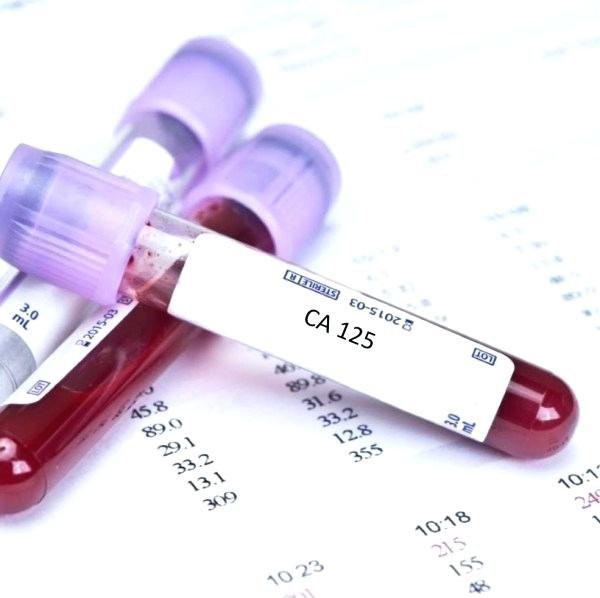
The CA-125 test (Cancer Antigen 125, also written CA125) is a blood test that measures the level of CA-125 — a glycoprotein produced primarily by cells lining the peritoneum (the membrane that covers the inner surface of the abdominal cavity), the pleura (the lining around the lungs), and Müllerian-derived structures including the fallopian tubes, endometrium, and endocervix. CA-125 is shed from these cells into the bloodstream and can be measured by a standard immunoassay from a serum sample.
CA-125 levels are elevated in the majority of advanced ovarian cancers, making it the most widely used biomarker in ovarian cancer management. However, CA-125 is not a cancer-specific protein — it is elevated in a wide range of benign conditions as well — and it has important limitations that determine when it is and is not appropriate to use. Understanding what the CA-125 test can and cannot tell you is essential for interpreting a result in context.
What Does a Normal CA-125 Level Mean?
Most clinical laboratories use a reference range with an upper limit of 35 U/mL for CA-125, though some laboratories use slightly different thresholds (30 or 46 U/mL) depending on the specific assay used. The lower the CA-125, the less likely that ovarian cancer is present — but a normal CA-125 level does not rule out ovarian cancer, particularly in early-stage disease.
In premenopausal women, CA-125 levels fluctuate naturally with the menstrual cycle, reaching their highest values during menstruation (days 1–3) and their lowest values in the mid-cycle. This means that a CA-125 measured during or immediately after menstruation may be falsely elevated compared to the same woman’s baseline. For the most clinically meaningful result in premenopausal women, CA-125 is ideally measured between days 8 and 15 of the menstrual cycle, outside of the menstrual phase. In postmenopausal women, CA-125 does not fluctuate with hormonal cycles, making the interpretation more straightforward.
How the CA-125 Test Is Used
The CA-125 test has several clinical applications, with varying degrees of evidence supporting each use:
1. Monitoring Treatment Response in Known Ovarian Cancer
This is the most well-established and appropriate use of the CA-125 test. In women being treated for ovarian cancer — typically with platinum-based chemotherapy — serial CA-125 measurements are used to assess response to treatment. A falling CA-125 with each treatment cycle is a reassuring indicator that the cancer is responding to therapy; a stable or rising CA-125 during treatment suggests that the cancer may be resistant to the current regimen and that a treatment change may be warranted. CA-125 levels correlate well with CT scan findings in most epithelial ovarian cancers, though they are less reliable in mucinous and clear cell subtypes.
2. Detecting Ovarian Cancer Recurrence After Remission
After completing initial treatment and achieving remission (normalization of CA-125 and absence of visible disease on imaging), serial CA-125 measurements are used to watch for signs of ovarian cancer recurrence. A sustained rise in CA-125 — typically defined as two consecutive values above the upper limit of normal, separated by at least 1 week — often precedes radiographic evidence of recurrence by weeks to months.
However, a critical finding from the landmark Rustin et al. trial (published in the New England Journal of Medicine in 2010) changed how oncologists interpret rising CA-125 after remission: the study enrolled 529 women with ovarian cancer who had completed treatment, were in clinical remission, and subsequently developed a rising CA-125 above the normal range. Patients were randomized to either immediate treatment (before symptoms or CT evidence of recurrence) or delayed treatment (until radiographic or clinical recurrence). The study found that early treatment of CA-125 rise alone did not improve overall survival and was associated with significantly reduced quality of life (due to chemotherapy side effects in women who felt well). Current standard practice is to not begin chemotherapy solely on the basis of a rising CA-125 without accompanying symptoms or CT evidence of recurrence, unless the patient specifically requests early treatment after being counseled about the lack of survival benefit.
3. Evaluation of an Adnexal Mass
When a woman is found to have a pelvic mass on transvaginal ultrasound (TVUS), CA-125 measurement is often obtained as part of the evaluation to help assess the likelihood that the mass is malignant. CA-125 alone is not sufficient to determine malignancy — it must be interpreted in the context of the ultrasound findings and the patient’s menopausal status. Several validated scoring systems incorporate CA-125 into this assessment:
- Risk of Malignancy Index (RMI): Multiplies the CA-125 level by an ultrasound score (based on malignant features) and a menopausal status multiplier (1 for premenopausal, 3 for postmenopausal). An RMI above 200 is generally used as a threshold for referral to a gynecologic oncologist for further evaluation and surgery.
- ROCA (Risk of Ovarian Cancer Algorithm): Uses serial CA-125 measurements over time and the patient’s age to calculate an individualized risk score. Used primarily in high-risk screening protocols (BRCA carriers) rather than for general adnexal mass evaluation.
In the context of adnexal mass evaluation, an elevated CA-125 combined with worrisome ultrasound features (solid components, internal septations with nodularity, papillary excrescences, bilateral masses, or ascites on imaging) is a strong indication for referral to a gynecologic oncologist for consideration of surgical evaluation. A normal CA-125 with a simple, unilocular cyst on TVUS in a premenopausal woman, by contrast, is reassuring and usually managed with follow-up imaging rather than immediate surgery.
Why CA-125 Is Not Used for Routine Ovarian Cancer Screening
Despite being the most sensitive serum biomarker for ovarian cancer, CA-125 is explicitly recommended against as a routine screening test in asymptomatic women by the U.S. Preventive Services Task Force (USPSTF), which issued a Grade D recommendation against ovarian cancer screening in average-risk women in 2018. This recommendation reflects the findings of large-scale randomized trials, particularly the UK Collaborative Trial of Ovarian Cancer Screening (UKCTOCS).
UKCTOCS, the largest ovarian cancer screening trial ever conducted, enrolled over 200,000 postmenopausal women in the UK and followed them for a median of 16 years. Women were randomized to annual multimodal screening (CA-125 measurement interpreted using the ROCA algorithm, followed by TVUS for elevated risk results), annual TVUS screening, or no screening. The trial found that multimodal screening detected more ovarian cancers at an earlier stage — but this did not translate into a statistically significant reduction in ovarian cancer mortality. In other words, detecting cancer earlier using CA-125 did not save more lives, at least not to a degree that could be demonstrated in this trial.
The reasons for this are complex and include the biology of high-grade serous ovarian cancer, which tends to metastasize rapidly and may not be biologically curable even when detected slightly earlier; the harms of false-positive screening results (which led to approximately 1 unnecessary surgery for every 3–4 women who underwent surgery based on screening results); and the modest improvement in stage distribution that screening achieved not being sufficient to meaningfully improve survival at the population level.
The bottom line: CA-125 is a valuable tool for managing known ovarian cancer, but it should not be ordered as a routine check in women with no symptoms or known risk factors.
What Can Cause a High CA-125 (Besides Ovarian Cancer)?
Elevated CA-125 is common in many conditions that have nothing to do with ovarian cancer. This is one of the central limitations of the test — particularly in premenopausal women, where false-positive results significantly outnumber true positives. Conditions that commonly elevate CA-125 include:
Gynecological and reproductive conditions:
- Endometriosis: Often causes markedly elevated CA-125 — values can exceed 100–200 U/mL in severe endometriosis, well above the ovarian cancer range. Endometriosis is one of the most common causes of incidentally discovered elevated CA-125 in premenopausal women.
- Uterine fibroids: Moderate elevations of CA-125 are common with large or numerous fibroids, particularly submucosal fibroids.
- Pelvic inflammatory disease (PID) and salpingitis: Acute infection and inflammation of the fallopian tubes and surrounding structures can cause significant CA-125 elevations.
- Menstruation: CA-125 naturally peaks during the first 3 days of menstruation and may be mildly elevated throughout the menstrual phase.
- First-trimester pregnancy: CA-125 is often elevated in early pregnancy, particularly in the first 8–10 weeks.
- Ovarian cysts (benign): Particularly functional cysts or endometriomas may be associated with mildly elevated CA-125.
Non-gynecological conditions:
- Liver disease (cirrhosis, hepatitis) — impaired CA-125 clearance leads to elevated serum levels
- Pleural effusion from any cause (fluid around the lungs is produced by mesothelial cells that express CA-125)
- Peritonitis (inflammation of the peritoneal lining from any cause)
- Heart failure (in severe cases with ascites or pleural effusion)
- Recent abdominal or pelvic surgery
Other cancers: CA-125 can be elevated in endometrial, fallopian tube, primary peritoneal, breast, lung (particularly adenocarcinoma), pancreatic, and colon cancers.
When CA-125 Can Be Normal Despite Ovarian Cancer
Just as elevated CA-125 does not necessarily indicate ovarian cancer, a normal CA-125 does not rule it out. The key limitation is early-stage disease:
- CA-125 is elevated in only approximately 50% of Stage I ovarian cancers — meaning half of the most curable ovarian cancers do not produce elevated CA-125 at the time they could most benefit from early detection.
- Mucinous ovarian carcinomas (approximately 3–5% of ovarian cancers) often produce little or no CA-125 — carcinoembryonic antigen (CEA) is a more useful marker for this subtype.
- Clear cell carcinoma has lower CA-125 elevation rates than serous carcinoma.
- A woman with a large pelvic mass and a normal CA-125 should not have ovarian cancer dismissed solely on that basis — further imaging and gynecologic evaluation are still appropriate.
HE4 and the ROMA Score: Improving on CA-125 Alone
Human Epididymis Protein 4 (HE4) is a second-generation ovarian cancer biomarker that is complementary to CA-125. HE4 is less frequently elevated in benign conditions — particularly endometriosis, which commonly falsely elevates CA-125 — making it more specific than CA-125 alone in premenopausal women.
The ROMA (Risk of Ovarian Malignancy Algorithm) combines HE4 and CA-125 values along with menopausal status to calculate a probability score for ovarian malignancy. ROMA is validated for use in women presenting with a pelvic mass to help triage between those who should be referred to a gynecologic oncologist versus those who can be managed by a general gynecologist. FDA approved for this indication.
OVA1 and OVERA: Multivariate Index Assays
OVA1 and its successor OVERA are FDA-cleared blood tests that combine multiple biomarkers (including CA-125, HE4, transthyretin, apolipoprotein A1, and transferrin) into a single numerical risk score for pelvic mass malignancy. These tests were developed specifically to preoperatively assess whether a pelvic mass is likely benign or malignant, helping surgeons and gynecologists decide whether to refer a patient to a gynecologic oncologist before surgery.
OVA1 and OVERA have higher sensitivity for early-stage ovarian cancer than CA-125 alone but lower specificity (more false positives). They are intended to be used only in women who already have a pelvic mass and are planning surgery — not as standalone screening tests.
Interpreting Your CA-125 Result
If you received a CA-125 result and are trying to understand what it means, the most important principle is that the result must be interpreted in context:
- Mildly elevated CA-125 (35–100 U/mL) in a premenopausal woman with no adnexal mass on ultrasound: Most likely benign — common causes include endometriosis, fibroids, or menstrual timing of the test. Repeat testing in 2–3 months (outside menstruation) and clinical evaluation are appropriate.
- Elevated CA-125 in a postmenopausal woman: More concerning than the same value in a premenopausal woman, because the common benign causes are less applicable. Pelvic examination and transvaginal ultrasound are indicated.
- Elevated CA-125 + adnexal mass on ultrasound: Significantly increases concern for malignancy. Referral to a gynecologic oncologist is generally appropriate, particularly in postmenopausal women.
- Rising CA-125 after completing ovarian cancer treatment: Discuss with your oncologist. As the Rustin 2010 trial established, early treatment of CA-125 relapse without clinical symptoms or CT evidence of recurrence does not improve survival — but a sustained rise should prompt CT imaging to assess for radiographic evidence of disease.
For a full discussion of ovarian cancer warning signs that should prompt evaluation — including when to request a CA-125 test alongside a pelvic exam and ultrasound — see our articles on ovarian cancer symptoms and ovarian cancer bloating. For information about who is at elevated risk for ovarian cancer and when preventive genetic testing is recommended, see our guide to ovarian cancer risk factors.
Frequently Asked Questions
My CA-125 is 45. Does that mean I have ovarian cancer?
Not necessarily. A CA-125 of 45 is mildly elevated above the standard upper limit of normal (35 U/mL) but is a common finding in benign conditions — particularly endometriosis, fibroids, recent menstruation, or first-trimester pregnancy in premenopausal women. Your doctor should review this result alongside your clinical history, symptoms, and a pelvic examination. Transvaginal ultrasound is appropriate to evaluate the pelvis if not already done. A mildly elevated CA-125 without a pelvic mass in a premenopausal woman is most likely benign and may warrant repeat testing in 2–3 months rather than immediate invasive evaluation.
Can I test my CA-125 at home to screen for ovarian cancer?
CA-125 requires a blood sample that must be sent to a certified laboratory for immunoassay analysis — it cannot currently be performed at home. Direct-to-consumer laboratory testing services in some states allow women to order CA-125 testing without a physician order, but using CA-125 for self-directed screening in the absence of symptoms or a physician evaluation carries significant risk of false-positive results and unnecessary anxiety or procedures. USPSTF recommends against routine CA-125 screening.
My ovarian cancer doctor said my CA-125 is rising but doesn’t want to start treatment yet. Should I be worried?
This is actually consistent with current evidence-based guidelines. The Rustin 2010 trial demonstrated that starting treatment at the first sign of CA-125 rise — before symptoms or CT confirmation of recurrence — does not improve survival and does reduce quality of life. Your oncologist is following the standard of care. If and when imaging confirms recurrent disease or you develop symptoms, treatment will be initiated. Maintaining open communication with your oncologist about your symptoms between appointments is important.
Sources
- Rustin GJ, et al. Early versus delayed treatment of relapsed ovarian cancer. N Engl J Med. 2010;365(15):1679–1686.
- Jacobs IJ, et al. Ovarian cancer screening and mortality in the UK: UKCTOCS randomized trial. Lancet. 2016;387(10022):945–956.
- USPSTF. Ovarian Cancer: Screening — Recommendation Statement. 2018.
- American Cancer Society. Tests for Ovarian Cancer.
- National Cancer Institute. Ovarian Cancer Screening (PDQ).
CA-125 in High-Risk Women: BRCA Carriers and Lynch Syndrome
For women at high hereditary risk for ovarian cancer — particularly those carrying BRCA1 or BRCA2 mutations, or diagnosed with Lynch syndrome — CA-125 is used somewhat differently than in average-risk women. Current NCCN (National Comprehensive Cancer Network) guidelines recommend surveillance with transvaginal ultrasound and CA-125 every 6 months beginning at age 30–35 in BRCA1 carriers (age 35–40 in BRCA2 carriers) as an interim measure until risk-reducing salpingo-oophorectomy (RRSO) is performed. This surveillance is not recommended for average-risk women and is not the same as population screening.
It is important to understand that this surveillance protocol for high-risk women is not definitively proven to reduce ovarian cancer mortality — the evidence from large trials is limited. The primary benefit of surveillance in this context is to detect occult cancer that may have developed while a woman is preparing for or delaying RRSO, and to potentially identify disease at an earlier, more surgically resectable stage. The definitive risk-reduction strategy for BRCA carriers remains RRSO, not ongoing surveillance. Women who carry BRCA mutations and are uncertain about this distinction should discuss it directly with their gynecologic oncologist or genetic counselor.
The ROCA (Risk of Ovarian Cancer Algorithm), which uses serial CA-125 values interpreted in the context of prior values and the patient’s age, is more sensitive than a single threshold-based CA-125 for detecting early change in high-risk surveillance settings. Several specialized high-risk ovarian cancer screening programs at major cancer centers use ROCA-based interpretation rather than a fixed 35 U/mL cutoff for BRCA carriers enrolled in surveillance protocols.
What to Ask Your Doctor About CA-125
If your doctor has ordered or discussed CA-125 testing, here are useful questions to ask to ensure you understand the result and next steps:
- “Why is this test being ordered for me?” — Understanding whether it is for monitoring known ovarian cancer, evaluation of a pelvic mass, or surveillance due to high genetic risk helps you interpret the result correctly.
- “If my CA-125 is elevated, what are the next steps?” — In most cases, an elevated CA-125 without a known ovarian cancer diagnosis warrants pelvic examination and transvaginal ultrasound. Knowing the planned pathway in advance reduces anxiety about waiting for follow-up results.
- “Is my result concerning given my menopausal status and symptoms?” — The same CA-125 value carries very different implications in a premenopausal woman with endometriosis versus a postmenopausal woman with a new adnexal mass.
- “Should I also have an HE4 or ROMA test?” — In the context of evaluating a pelvic mass, HE4 combined with CA-125 (ROMA score) may provide more specific risk stratification than CA-125 alone, particularly in premenopausal women.
- “My CA-125 is rising during surveillance — when will we image?” — For women in remission after ovarian cancer treatment, a sustained CA-125 rise should generally prompt CT imaging to look for radiographic evidence of recurrence, even though starting treatment on CA-125 alone is not currently recommended.
The Future of Ovarian Cancer Biomarkers
Research into improved biomarkers for ovarian cancer detection — particularly for early-stage disease, where CA-125 has its most significant limitations — is an active and important area of oncology. Emerging approaches include circulating tumor DNA (ctDNA) assays, proteomic profiling, and microRNA-based biomarker panels, some of which are showing promise in early detection studies for ovarian and other cancers. Multi-cancer early detection (MCED) tests, which analyze a single blood sample for signals of multiple cancer types simultaneously, are in clinical development and early deployment in some countries. However, none of these newer approaches has yet been validated sufficiently for routine clinical use in ovarian cancer screening as of 2025.
For now, in average-risk women, symptom recognition — specifically, the persistent, new pattern of bloating, pelvic pain, early satiety, or urinary urgency identified by the Goff et al. symptom index — combined with prompt clinical evaluation including pelvic examination, transvaginal ultrasound, and CA-125 testing when an adnexal mass is found, remains the most practical pathway to earlier ovarian cancer diagnosis. For women at high hereditary risk, the most effective strategy remains genetic counseling, appropriate genetic testing, and RRSO at the guideline-recommended age after completion of childbearing.
I shared this article on ca-125 test: what it measures and with my doctor and they appreciated the level of detail. What I liked most was that the article didn’t just say what to avoid — it also gave alternatives. Forwarding this to others in my support group who are dealing with similar issues.
Came across this while researching ca-125 test: what it measures and for a family member. I especially valued the explanation of why these recommendations exist, not just what they are. Thank you for making complex medical information accessible without dumbing it down.
I shared this article on ca-125 test: what it measures and with my doctor and they appreciated the level of detail. The article answered questions I didn’t even know I had until I started reading. Thank you for making complex medical information accessible without dumbing it down.
Bookmarked this article on ca-125 test: what it measures and immediately — going to reference it regularly. I have tried following advice from several sources but this is most consistent with what my specialist told me. I wish I had found this article earlier — would have saved a lot of confusion.
Came across this while researching ca-125 test: what it measures and for a family member. I appreciated how the article addressed both the clinical side and the practical adjustments. I wish I had found this article earlier — would have saved a lot of confusion.
This breakdown of ca-125 test: what it measures and is exactly what patients need before a specialist appointment. The article answered questions I didn’t even know I had until I started reading. Forwarding this to others in my support group who are dealing with similar issues.