
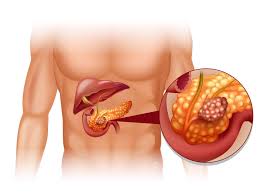
What Is Pancreatic Cancer?
Pancreatic cancer is a malignancy that arises in the pancreas — the elongated glandular organ situated deep in the retroperitoneum (behind the stomach, in front of the spine) that serves both exocrine functions (producing digestive enzymes that travel through the pancreatic duct into the duodenum) and endocrine functions (producing insulin, glucagon, and other hormones via the islets of Langerhans). Pancreatic cancer is one of the most serious diagnoses in oncology: approximately 85% of patients are diagnosed at Stage III (locally advanced) or Stage IV (metastatic), when surgical cure is no longer possible, and the overall 5-year survival rate of approximately 13% is among the lowest of any major cancer.
Approximately 90% of pancreatic cancers are pancreatic ductal adenocarcinomas (PDAC) — malignancies arising from the ductal epithelium of the exocrine pancreas. The remaining 10% include pancreatic neuroendocrine tumors (PNETs), acinar cell carcinomas, and several rare subtypes. PDAC and PNETs are biologically distinct diseases with very different prognoses, risk factors, and treatment approaches; the information in this article refers primarily to PDAC unless otherwise specified.
Why Is Pancreatic Cancer Diagnosed So Late?
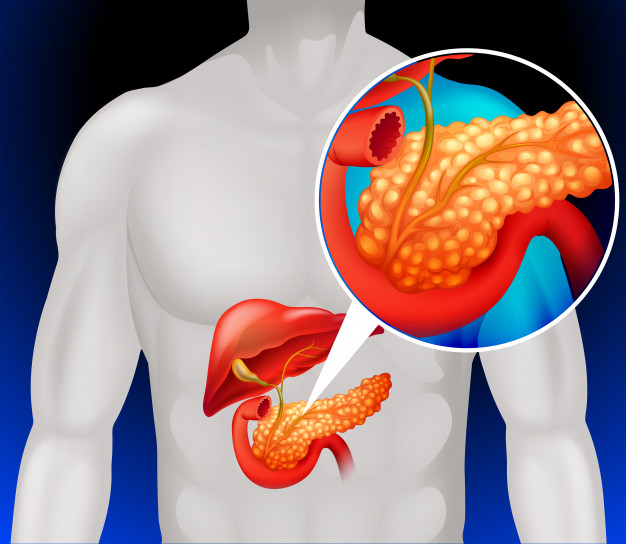
The retroperitoneal location of the pancreas — tucked behind the stomach, enclosed by the duodenum on the right, and abutting the spine posteriorly — is the primary anatomical explanation for late diagnosis. The retroperitoneal space contains few pain receptors and provides no early warning when a small tumor begins to grow. A pancreatic tumor must either obstruct a critical adjacent structure (such as the common bile duct, which runs through the head of the pancreas) or reach sufficient size to cause pressure or vascular involvement before generating symptoms that prompt medical evaluation.
The pattern of symptom onset varies significantly by tumor location:
- Head of pancreas (60–65% of cases): Tumors in the head of the pancreas obstructed the common bile duct as it passes through pancreatic tissue, causing progressive biliary obstruction and jaundice — a visible symptom that typically prompts earlier medical evaluation. For this reason, head-of-pancreas tumors are somewhat more likely to be diagnosed at an earlier, potentially resectable stage than body or tail tumors.
- Body and tail of pancreas (remaining 35–40%): The body and tail of the pancreas are not adjacent to the bile duct, so tumors in these locations do not cause jaundice until very late — if at all. Body and tail tumors typically grow silently until they are large enough to invade surrounding structures (causing back pain from retroperitoneal nerve invasion) or until they have already metastasized to the liver or other organs. These tumors are diagnosed at later stage and have worse overall prognosis than head-of-pancreas tumors.
Pancreatic Cancer Symptoms
The symptoms of pancreatic cancer depend on tumor location and stage, and are often non-specific in early disease. The most common symptoms are:
Painless Jaundice
Jaundice — yellowing of the skin and the whites of the eyes (sclerae) — accompanied by dark urine (from bilirubin excreted by the kidneys) and pale, clay-colored stools (from absence of bile in the GI tract) is the most classic presenting symptom of head-of-pancreas cancer. It results from obstruction of the common bile duct by the tumor, preventing bile from flowing from the liver into the duodenum. Importantly, the jaundice of malignant biliary obstruction is typically painless in early presentation — a key distinction from the painful jaundice of gallstone-related biliary obstruction (choledocholithiasis). A jaundiced patient with a palpable, non-tender gallbladder (Courvoisier sign) should be presumed to have malignant biliary obstruction until proven otherwise.
Abdominal and Back Pain
Approximately 70% of patients with pancreatic cancer report abdominal or back pain at the time of diagnosis. The pain is characteristically epigastric (upper abdominal) or mid-back, dull and persistent rather than colicky or sharp, and often worse at night or when lying flat. Positional worsening when supine (lying down) reflects the retroperitoneal location of the tumor — compression of the celiac plexus or retroperitoneal nerves is relieved by leaning forward (some patients report sitting forward or adopting a fetal position relieves pain). New, persistent mid-back pain in an otherwise healthy adult over 50, particularly in a smoker or diabetic, warrants investigation.
Unintentional Weight Loss
Significant, unexplained weight loss — often 10–15 kilograms over weeks to months — is present in approximately 85% of patients with pancreatic cancer at diagnosis. This reflects a combination of poor food intake (from nausea, early satiety, and pain), malabsorption (from pancreatic enzyme insufficiency), and cancer-related metabolic effects (tumor cachexia). Profound weight loss without an identified cause in a person over 50 should prompt thorough evaluation, including consideration of pancreatic and upper GI tract pathology.
New-Onset Diabetes
Pancreatic cancer can cause a specific form of diabetes — type 3c diabetes (pancreatogenic diabetes) — by destroying the islets of Langerhans through direct invasion of pancreatic parenchyma, ductal obstruction, and paracrine effects on insulin-secreting beta cells. Approximately 50% of patients with pancreatic cancer develop new-onset diabetes or worsening of existing diabetes in the 2–3 years before their cancer diagnosis. New-onset diabetes in a person over 50 without a clear cause (weight gain, family history, significant risk factors) warrants at least a consideration of pancreatic evaluation — though the vast majority of new-onset diabetes in this age group is Type 2 diabetes, not pancreatic cancer-related. The distinction may be suggested by rapid unintentional weight loss in association with new diabetes, or by atypical features (very lean new-onset diabetic, or abdominal pain accompanying new diabetes).
Exocrine Insufficiency and Steatorrhea
Obstruction of the main pancreatic duct by tumor reduces or eliminates the flow of pancreatic digestive enzymes (lipase, amylase, protease) into the duodenum. Without adequate lipase, dietary fat cannot be digested and absorbed, leading to steatorrhea — fatty, bulky, greasy, foul-smelling stools that float. Patients may also notice undigested food in their stools. This malabsorption contributes significantly to weight loss and nutritional deficiency.
Trousseau Syndrome
Migratory superficial thrombophlebitis — episodes of superficial vein thrombosis that characteristically move from one location to another over time — is known as Trousseau syndrome and is a paraneoplastic phenomenon classically and strongly associated with pancreatic cancer (and other GI cancers). Unexplained, recurrent, or migratory venous thrombosis in a middle-aged or older adult should raise concern for occult malignancy, including pancreatic cancer.
Pancreatic Cancer Risk Factors
Several established and suspected risk factors for pancreatic ductal adenocarcinoma have been identified:
- Smoking: The strongest modifiable risk factor. Smoking approximately doubles the risk of pancreatic cancer (relative risk ~2) and is estimated to account for approximately 25% of all cases. Risk decreases after smoking cessation but takes approximately 10 years to return to the level of never-smokers.
- New-onset diabetes (especially in 50+): As described above, new-onset diabetes in older adults may be a manifestation of underlying pancreatic cancer rather than a traditional risk factor. It can precede diagnosis by 2–3 years.
- Chronic pancreatitis: Long-standing chronic pancreatitis (typically from alcohol, gallstones, or autoimmune causes) increases pancreatic cancer risk 5–10 fold. Hereditary pancreatitis (caused by PRSS1 mutations) carries a dramatically higher risk — relative risk of 50–100 fold over the general population, with cumulative lifetime risk of 40–55%.
- Obesity and physical inactivity: BMI ≥30 is associated with modestly elevated risk. Physical inactivity may contribute independently beyond its association with obesity.
- Family history and genetic mutations:
- BRCA2 mutations: 3–6 fold elevated pancreatic cancer risk; most commonly associated hereditary mutation
- PALB2, ATM mutations: moderately elevated risk
- Lynch syndrome (MLH1, MSH2): elevated risk of pancreatic cancer among other GI malignancies
- CDKN2A mutations (familial atypical multiple mole melanoma syndrome): highest non-pancreatitis genetic risk
- Family history of pancreatic cancer (2+ first-degree relatives): substantially elevated risk; surveillance recommended in some guidelines
- Blood type: Non-O blood types (A, B, AB) are associated with modestly elevated pancreatic cancer risk compared to blood type O, in multiple large epidemiological studies. The biological mechanism is not fully understood.
How Is Pancreatic Cancer Diagnosed?
Diagnosis of pancreatic cancer typically begins with cross-sectional imaging, followed by tissue confirmation:
CT abdomen/pelvis (pancreatic protocol): The preferred first imaging study. A “pancreatic protocol” CT uses thin cuts and both arterial and venous phase contrast enhancement to optimally image the pancreatic parenchyma and characterize vascular anatomy — critical for surgical planning. This technique has greater than 95% sensitivity for pancreatic tumors larger than 2 cm and provides essential information about tumor extent, involvement of the portal vein or superior mesenteric artery (which determines resectability), and the presence of liver or other metastases.
Endoscopic ultrasound (EUS) with fine-needle aspiration (FNA): The most sensitive technique for detecting small tumors (less than 2 cm) that may be missed on CT, and the preferred method for obtaining tissue for histological diagnosis. An endoscope with an ultrasound probe at its tip is passed into the duodenum, allowing direct visualization of the pancreatic head and guided needle aspiration of suspicious masses. EUS-FNA has a sensitivity of approximately 80–90% for malignancy diagnosis.
MRI/MRCP: Useful for characterizing cystic pancreatic lesions (intraductal papillary mucinous neoplasms — IPMNs — are common precursor lesions for PDAC), evaluating biliary anatomy, and detecting liver metastases that may be isoattenuating on CT.
CA 19-9: The primary serum biomarker for pancreatic cancer, elevated in approximately 80% of patients at diagnosis. However, CA 19-9 is not produced by approximately 5–10% of the population (those with the Lewis antigen-negative blood type), and can be elevated in benign biliary conditions (cholangitis, biliary obstruction from stones). CA 19-9 is most useful for monitoring treatment response and detecting recurrence, not for diagnosis. A normal CA 19-9 does not rule out pancreatic cancer.
Pancreatic Cancer Staging and Resectability
The staging of pancreatic cancer — using CT, EUS, and sometimes PET scan — determines whether curative surgical resection is feasible:
- Resectable (Stage I–II): No arterial involvement (celiac axis, SMA, hepatic artery) and no distant metastasis. Approximately 20% of patients at diagnosis.
- Borderline resectable: Limited arterial or venous contact that may permit resection at a high-volume center after neoadjuvant chemotherapy. Definitions vary by institutional protocol.
- Locally advanced (Stage III): Tumor encases or invades major arteries (SMA, celiac), precluding resection. Distant metastasis absent. Management: chemotherapy ± radiation to achieve local control; select patients may be downsized to surgical resection.
- Metastatic (Stage IV): Distant metastasis present — most commonly liver metastases, then lung, then peritoneum. Treatment: palliative chemotherapy. Approximately 52% of diagnoses.
Treatment Options for Pancreatic Cancer
Surgery
For the approximately 20% of patients with resectable disease, surgery is the only potentially curative treatment. The Whipple procedure (pancreaticoduodenectomy) — which removes the head of the pancreas, duodenum, gallbladder, part of the common bile duct, and sometimes a portion of the stomach — is performed for head-of-pancreas tumors. Distal pancreatectomy (often combined with splenectomy) is performed for body and tail tumors.
A critically important point about pancreatic surgery: surgical volume dramatically predicts outcomes. The Whipple procedure carries a surgical mortality of 1–3% at high-volume centers (those performing ≥20 Whipple procedures per year) but a mortality of 10% or higher at low-volume centers. Long-term survival after resection is significantly better at high-volume specialized centers. Patients with resectable pancreatic cancer should be strongly encouraged to seek evaluation at a specialized, high-volume pancreatic cancer program.
Adjuvant chemotherapy after resection is standard of care. Modified FOLFIRINOX (mFOLFIRINOX) — a combination of 5-fluorouracil, leucovorin, irinotecan, and oxaliplatin — is the preferred adjuvant regimen for patients with good performance status, based on the PRODIGE 24 trial (Conroy et al., New England Journal of Medicine, 2018), which showed a median overall survival of 54.4 months with mFOLFIRINOX vs. 35 months with gemcitabine alone.
Chemotherapy for Advanced Disease
For patients with locally advanced or metastatic pancreatic cancer, systemic chemotherapy is the primary treatment modality. Two regimens are standard first-line options:
- FOLFIRINOX (5-fluorouracil, leucovorin, irinotecan, oxaliplatin): Median overall survival approximately 11 months in metastatic disease. Preferred for patients with good performance status (ECOG 0–1).
- Gemcitabine + nab-paclitaxel: Median overall survival approximately 8.5 months in metastatic disease. Better tolerated than FOLFIRINOX; used for patients who cannot tolerate the more intensive regimen.
Targeted and Precision Therapies
Genomic profiling of pancreatic cancer tumors at diagnosis has become increasingly important as targeted therapies for specific molecular alterations have been approved:
- BRCA1/2 or PALB2 mutations: Olaparib (a PARP inhibitor) is FDA-approved as maintenance therapy for patients with BRCA1/2-mutated metastatic PDAC that has not progressed on platinum-based first-line chemotherapy (POLO trial, 2019).
- MSI-H/dMMR (microsatellite instability-high): Pembrolizumab is FDA-approved for MSI-H solid tumors regardless of site; MSI-H is rare in PDAC (~1%) but when present confers remarkable responses to immunotherapy.
- KRAS G12C mutation: Sotorasib and adagrasib are FDA-approved for KRAS G12C-mutated solid tumors; KRAS G12C accounts for approximately 2% of PDAC cases.
- NTRK gene fusions: Larotrectinib and entrectinib are FDA-approved for any NTRK fusion-positive solid tumor; rare in PDAC but significant responses reported.
- HER2 amplification: Emerging targeted options; not yet standard of care in PDAC.
For these reasons, comprehensive genomic profiling (tumor NGS) is recommended for all patients with pancreatic cancer, and all patients with metastatic PDAC should undergo germline testing for BRCA1/2, PALB2, ATM, and Lynch syndrome mutations given the therapeutic and familial implications.
Pancreatic Neuroendocrine Tumors (PNETs): A Different Disease
Pancreatic neuroendocrine tumors (PNETs) arise from the hormone-producing islet cells rather than the ductal cells of the pancreas. They are biologically, behaviorally, and clinically distinct from PDAC. PNETs can be functional (producing excess hormones such as insulin, glucagon, gastrin, or vasoactive intestinal peptide, causing specific clinical syndromes) or non-functional (producing no active hormone). PNETs have a substantially better 5-year survival (approximately 56% overall) than PDAC, grow more slowly, and respond to different treatments including somatostatin analogs (octreotide, lanreotide), everolimus, and sunitinib. Many small, non-functional PNETs are discovered incidentally on imaging and can be managed with surveillance rather than immediate surgery.
Survival Rates for Pancreatic Cancer
Pancreatic cancer survival rates by stage (SEER 5-year relative survival):
- Stage I (localized, confined to pancreas): approximately 44%
- Stage II (regional spread): approximately 15%
- Stage III (locally advanced): approximately 6%
- Stage IV (distant metastasis): approximately 3%
- All stages combined: approximately 13%
These statistics, while sobering, reflect diagnoses from historical data and are gradually improving as chemotherapy regimens and targeted therapies improve. Survival statistics also significantly underestimate outcomes for younger patients in good health who receive care at specialized high-volume centers with access to clinical trials.
Living With Pancreatic Cancer
Supportive care is essential for quality of life at every stage of pancreatic cancer:
Pancreatic enzyme replacement therapy (PERT): Patients with pancreatic exocrine insufficiency — from tumor obstruction of the pancreatic duct, or post-Whipple procedure — benefit significantly from PERT (e.g., pancrelipase), which replaces the digestive enzymes the pancreas can no longer deliver. PERT reduces steatorrhea, improves nutrient absorption, reduces weight loss, and can substantially improve quality of life and even treatment tolerance in patients with PDAC.
Pain management: Retroperitoneal pain from celiac plexus invasion is a significant burden. Celiac plexus neurolysis (injection of alcohol into the celiac ganglion) provides durable pain relief in many patients and reduces opioid requirements. Adequate analgesia is an essential component of care for all pancreatic cancer patients.
Palliative care: Patients with pancreatic cancer at any stage benefit from early involvement of a palliative care team. Palliative care improves symptom management, supports patient and family communication, and in some cancers has been shown to extend survival. It does not mean ceasing active cancer treatment.
Biliary stenting: Patients with biliary obstruction from head-of-pancreas tumors who are not candidates for immediate surgical resection (or while awaiting neoadjuvant chemotherapy) benefit from endoscopic placement of a biliary stent to relieve jaundice and prevent cholangitis.
Frequently Asked Questions
Is there a screening test for pancreatic cancer?
There is no proven effective screening test for pancreatic cancer in the general population. CA 19-9, CT, MRI, and endoscopic ultrasound have all been studied but are not recommended for routine population screening due to low positive predictive value in the absence of symptoms. In very high-risk groups — those with BRCA2, PALB2, CDKN2A, or ATM mutations and a first-degree relative with pancreatic cancer; hereditary pancreatitis; or ≥2 first-degree relatives with pancreatic cancer — annual EUS or MRI surveillance is recommended by the International Cancer of the Pancreas Screening (CAPS) consortium beginning at age 50 (or 10 years before the youngest affected first-degree relative).
My parent had pancreatic cancer. Should I be tested?
If one parent had pancreatic cancer, your risk is modestly elevated above the general population — though most family history of pancreatic cancer is not associated with a hereditary syndrome. Discuss with your physician whether germline genetic testing (for BRCA2, PALB2, ATM, MLH1/MSH2, CDKN2A) is appropriate, and whether you meet criteria for pancreatic surveillance. Two or more first-degree relatives with pancreatic cancer significantly increases concern for a hereditary syndrome.
What is the difference between exocrine and endocrine pancreatic cancers?
The pancreas has two functionally distinct tissue types. Exocrine tissue (producing digestive enzymes) gives rise to ductal adenocarcinoma (PDAC) and acinar cell carcinoma — the common, aggressive pancreatic cancers discussed in this article. Endocrine tissue (the hormone-producing islet cells) gives rise to pancreatic neuroendocrine tumors (PNETs) — which are far less aggressive, with much better prognosis, distinct treatment options, and different clinical presentations.
Sources
- Conroy T, et al. Adjuvant FOLFIRINOX for Pancreatic Cancer after Resection. N Engl J Med. 2018;379(25):2395–2406.
- American Cancer Society. Pancreatic Cancer.
- National Cancer Institute. Pancreatic Cancer Treatment (PDQ).
- Siegel RL, et al. Cancer Statistics, 2024. CA Cancer J Clin. 2024;74(1):12–49.
- Pancreatic Cancer Action Network. PanCAN — Pancreatic Cancer Patient Resources.
Genetic Testing and Its Role in Pancreatic Cancer Management
Germline genetic testing has become a critical component of pancreatic cancer care. Approximately 10–15% of pancreatic cancers are associated with an identifiable hereditary gene mutation. Beyond BRCA2, relevant genes include PALB2, ATM, MLH1/MSH2/MSH6 (Lynch syndrome), STK11 (Peutz-Jeghers syndrome), and CDKN2A — the same mutation associated with familial atypical multiple mole melanoma syndrome and elevated melanoma risk.
Identifying a germline mutation has both therapeutic implications for the patient (olaparib maintenance for BRCA-mutated PDAC; immunotherapy for Lynch syndrome-associated PDAC) and critical implications for first-degree relatives who may carry the same mutation. BRCA2 mutations, for example, not only increase pancreatic cancer risk but also substantially increase breast cancer and ovarian cancer risk — a discovery in one family member can prompt protective testing and intervention in others. This genetic connection is discussed in more detail in our article on ovarian cancer risk factors, which covers the BRCA risk landscape comprehensively.
For patients who wish to understand the role of biomarkers like CA-125 in cancer monitoring more broadly — and how blood tests are used to track treatment response and detect recurrence across multiple cancer types — our article on the CA-125 test provides useful context on how serum biomarkers work and their limitations. Similarly, understanding how cancer symptoms develop and how to recognize them early — applicable to multiple cancer types including pancreatic cancer — is discussed in our guides to ovarian cancer symptoms and related conditions.
Thank you for covering pancreatic cancer: symptoms, causes, and treatment so thoroughly without being overly technical. The practical tips at the end made this immediately actionable, not just theoretical. Thank you for making complex medical information accessible without dumbing it down.
Thank you for covering pancreatic cancer: symptoms, causes, and treatment so thoroughly without being overly technical. The connection between diet, lifestyle, and long-term outcomes is explained clearly here. Will definitely be coming back to this site for more health information.
This is one of the clearest explanations of pancreatic cancer: symptoms, causes, and treatment I have found. I appreciated how the article addressed both the clinical side and the practical lifestyle adjustments. I wish I had found this article when I was first diagnosed — would have saved a lot of confusion.
Thank you for covering pancreatic cancer: symptoms, causes, and treatment so thoroughly without being overly technical. This is the kind of evidence-based writing that actually changes how people approach their health. This is going into my health folder that I bring to every doctor’s visit.
My doctor recommended I look into pancreatic cancer: symptoms, causes, and treatment and this article covered it perfectly. The practical tips made this immediately actionable, not just theoretical. Will definitely be coming back to this site for more health information.
I shared this article on pancreatic cancer: symptoms, causes, and treatment with my doctor and they appreciated the level of detail. This is the kind of evidence-based writing that actually changes how people approach their health. This gave me real confidence going into my next specialist appointment.