
Stroke Warning Signs: FAST Explained
Recognizing stroke warning signs is among the most important first-aid knowledge any adult can possess. Stroke kills 140,000 Americans annually and leaves millions more with permanent disability — yet 80 percent of strokes are treatable if treatment begins within hours of symptom onset. The single factor that most commonly delays this life-saving treatment is failure to recognize that a stroke is occurring and call emergency services immediately. Surveys consistently show that large proportions of the public cannot identify stroke warning signs, would wait to see if symptoms improved before calling 911, or would attempt to drive a stroke patient to the hospital themselves — all responses that measurably worsen stroke outcomes by allowing additional brain death during the delay.
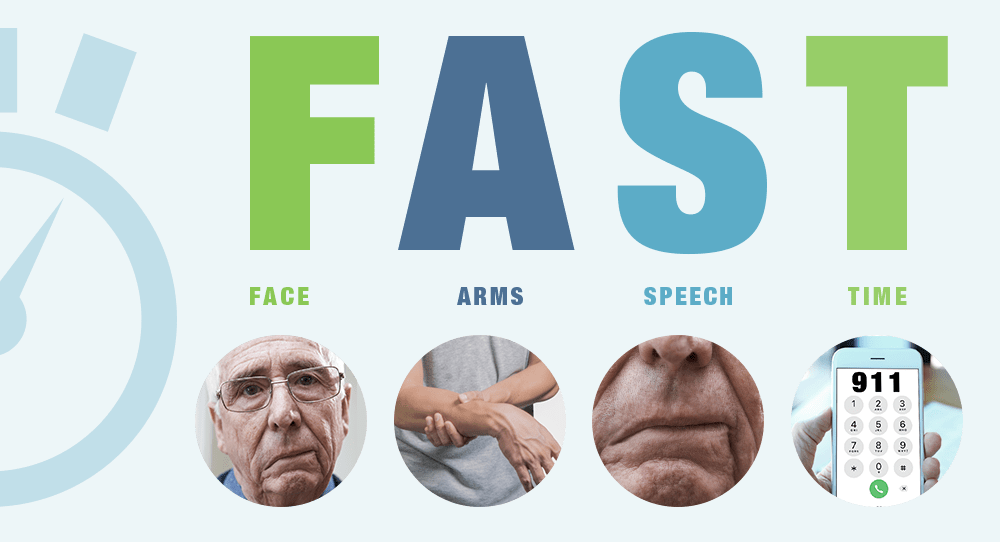
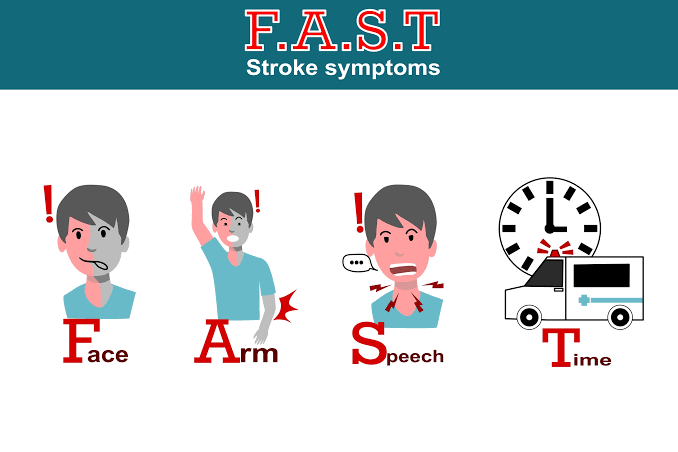
The FAST acronym — Face drooping, Arm weakness, Speech difficulty, Time to call 911 — was developed precisely to bridge the knowledge gap between what neurologists know about stroke recognition and what the general public needs to know to respond appropriately. Simple enough to remember without medical training, specific enough to capture the most common and recognizable stroke presentations, and actionable in its final letter (Time: call 911 now), FAST has been adopted by stroke advocacy organizations worldwide and has measurably improved community stroke recognition rates in regions where public awareness campaigns have been implemented.
FAST — Breaking Down Each Warning Sign
F — Face Drooping
Ask the person to smile. Does one side of the face droop or fail to move? Facial weakness in stroke reflects damage to the corticobulbar fibers that control the lower face — typically in the hemisphere contralateral to the drooping side. The forehead is typically spared in stroke because the forehead muscles receive bilateral cortical innervation (from both hemispheres), while lower facial muscles receive predominantly contralateral innervation. Sudden unilateral facial drooping with arm weakness and speech difficulty in a previously well person should be presumed to be stroke until proven otherwise by emergency medical evaluation.
The smile test is effective because it requires simultaneous activation of both sides of the face, making asymmetry immediately visible. Patients may also report sudden numbness on one side of the face, though numbness (a sensory symptom) is more common in posterior circulation strokes or lacunar infarcts than in the classic cortical middle cerebral artery stroke that FAST is designed to detect.
A — Arm Weakness
Ask the person to raise both arms to shoulder height and hold them there for 10 seconds. In stroke, one arm will drift downward — often with pronation (palm rotating downward) that reflects the predominant weakness of the shoulder abductors and elbow extensors in upper motor neuron (cortical/corticospinal) weakness. This “arm drift” or “pronator drift” test is one of the most sensitive bedside maneuvers for detecting subtle hemiparesis — neurologists perform it routinely because it often detects upper extremity weakness that is not obvious on casual observation. Patients may also report sudden weakness, heaviness, or clumsiness of one arm without pain — the painlessness of stroke arm weakness is important clinically, as musculoskeletal causes typically produce pain.
S — Speech Difficulty
Ask the person to repeat a simple phrase: “The sky is blue” or “You can’t teach an old dog new tricks.” Listen for slurred speech (dysarthria — impaired articulation from weakness of the speech muscles), difficulty finding words or producing speech (expressive aphasia from Broca’s area damage in the dominant left hemisphere), or inability to understand the request and repeat meaningfully (receptive aphasia from Wernicke’s area damage). Any sudden change in speech or language — including sudden difficulty finding words, speaking in fragmented sentences, or being unable to understand spoken language — is a stroke warning sign requiring emergency evaluation.
Speech difficulty is the stroke warning sign that patients and bystanders most commonly recognize and act upon, likely because communication impairment is immediately salient and difficult to rationalize away. Patients with sudden aphasia often appear confused or distressed, drawing attention from bystanders who may call for help. Dysarthria — slurred speech without language comprehension impairment — can be misinterpreted as intoxication, particularly in posterior circulation strokes where additional signs like ataxia and nystagmus may further suggest intoxication to an uninformed bystander.
T — Time to Call 911
If ANY of the F, A, or S signs are present — or if any sudden neurological symptom develops that the person cannot explain — call 911 immediately. Do not drive the patient to the hospital yourself. Calling 911 activates the prehospital stroke protocol, allowing hospital notification so that the stroke team and CT scanner are ready upon arrival, and enabling treatment to begin in the ambulance (oxygen, IV access, blood glucose check). Note the exact time when symptoms started — or, if symptoms were discovered upon waking, the time the patient was last seen neurologically normal — because this time stamp determines IV tPA eligibility (4.5-hour window from last known well) and guides treatment decisions for all patients.
BE-FAST — The Expanded Stroke Recognition Tool
The original FAST acronym, while highly effective for recognizing the common middle cerebral artery stroke presentation, misses a clinically important subset of strokes: those affecting the posterior circulation (vertebrobasilar territory), which supplies the brainstem, cerebellum, and occipital lobes. Posterior circulation strokes produce symptoms that FAST does not capture — sudden severe dizziness, sudden loss of balance or coordination, sudden double vision, and sudden vision loss — and may have relatively subtle presentations that lead bystanders (and sometimes clinicians) to underestimate their severity.
BE-FAST adds two letters to the original acronym to address this gap:
B — Balance: Sudden loss of balance, coordination, or ability to walk — particularly when accompanied by other neurological symptoms — is a stroke warning sign. Isolated dizziness without other neurological symptoms is less specific for stroke (many non-stroke causes produce isolated dizziness), but sudden onset of dizziness with any additional symptom (diplopia, facial numbness, slurred speech, limb weakness) should prompt immediate stroke evaluation.
E — Eyes: Sudden vision loss in one eye (amaurosis fugax, often described as a “shade coming down over the vision” — a TIA from carotid disease affecting the ophthalmic artery), double vision, or loss of half the visual field in both eyes (homonymous hemianopia from PCA territory stroke) are stroke warning signs that require emergency evaluation. Many patients experiencing visual stroke symptoms attribute them to eye problems and seek optometry or ophthalmology evaluation rather than calling 911 — a dangerous delay when the underlying cause is an ischemic stroke requiring thrombolysis.
Additional Stroke Warning Signs to Know
Sudden severe headache — described as “the worst headache of my life,” “a thunderclap,” or “as if hit on the head” — is the classic presenting symptom of subarachnoid hemorrhage (SAH) from a ruptured intracranial aneurysm. Unlike the typical tension headache or migraine that develops gradually, SAH headache reaches maximum intensity virtually instantaneously (literally within 1 to 2 seconds) and is often accompanied by nausea, vomiting, and neck stiffness. Any headache fitting this “thunderclap” description warrants emergency evaluation with CT head (sensitive for SAH in the first 6 to 12 hours) and, if CT is negative, lumbar puncture to detect xanthochromia (breakdown products of blood in the cerebrospinal fluid). Missed SAH diagnosis — which occurs in approximately 25 percent of cases on initial presentation — is associated with high rates of re-bleeding (which carries 70 percent mortality) and malpractice litigation.
Sudden confusion or altered level of consciousness can represent stroke, particularly in elderly patients who may not have obvious focal neurological deficits. Large hemispheric strokes or strokes affecting the brainstem reticular activating system can produce confusion, obtundation, or coma. Any acute change in mental status without an obvious explanation (fever, medication effect, hypoglycemia) in an adult with stroke risk factors should prompt neuroimaging.
Sudden severe dizziness, unsteadiness, or inability to walk — particularly of sudden onset in someone who was previously ambulatory and neurologically intact — is a posterior circulation stroke until proven otherwise. The difficulty in distinguishing central (stroke) from peripheral (labyrinthine) causes of acute vertigo is a well-recognized clinical challenge: the HINTS examination (Head Impulse test, Nystagmus pattern, Test of Skew) performed by trained clinicians has higher sensitivity for identifying posterior fossa stroke than early MRI-DWI in the first 24 to 48 hours.
What unites all stroke warning signs is their sudden onset in a previously neurologically intact person — the cardinal feature of stroke that distinguishes it from progressive conditions. Migraine aura can mimic stroke symptoms (spreading scotoma, unilateral tingling, speech difficulty) but typically develops gradually over 20 to 30 minutes, while stroke symptoms are maximal at onset. Todd’s paralysis after a seizure mimics stroke but is accompanied by witnessed seizure activity. Hypoglycemia can produce focal neurological deficits and must always be excluded with a rapid bedside glucose check — all 911 protocols for suspected stroke include immediate glucose measurement.
The American Stroke Association’s stroke symptoms guide provides comprehensive public education on recognizing all stroke warning signs. The CDC stroke signs and symptoms page explains FAST and when to call 911. The NHLBI stroke warning signs guide addresses all stroke symptoms and emergency response steps in patient-friendly language.
Related reading: What Is a Stroke? | Ischemic vs Hemorrhagic Stroke | Mini-Stroke (TIA) | High Blood Pressure and Stroke | Atrial Fibrillation
Sources
- Kothari RU, et al. Cincinnati Prehospital Stroke Scale: Reproducibility and Validity. Ann Emerg Med. 1999;33(4):373-378.
- Aroor S, et al. BE-FAST (Balance, Eyes, Face, Arm, Speech, Time): Reducing the Proportion of Strokes Missed Using the FAST Mnemonic. Stroke. 2017;48(2):479-481.
- Katan M, Luft A. Global Burden of Stroke. Semin Neurol. 2018;38(2):208-211.
- Newman-Toker DE, et al. HINTS to Diagnose Stroke in the Acute Vestibular Syndrome. Stroke. 2009;40(11):3504-3510.
- Powers WJ, et al. 2019 AHA/ASA Guideline for the Early Management of Patients With Acute Ischemic Stroke. Stroke. 2019;50(12):e344-e418.
What to Do When You Recognize Stroke Signs — A Step-by-Step Response
Recognizing stroke signs is the essential first step; responding correctly is equally important. The following action sequence maximizes the likelihood of the best possible outcome for a stroke patient:
Step 1: Note the time immediately. The exact time when stroke symptoms started — or the last time the patient was seen neurologically normal if they woke up with symptoms — is critical clinical information that will determine treatment eligibility. Write it down on your phone, tell the 911 dispatcher, and tell the emergency team when they arrive. IV tPA eligibility requires a last-known-well time within 4.5 hours; if this time is unknown or more than 4.5 hours ago, advanced imaging may still identify patients eligible for thrombectomy, but the time stamp guides these decisions.
Step 2: Call 911 immediately. Do not call the patient’s doctor first. Do not search the internet. Do not drive to the hospital yourself. 911 activation brings emergency responders trained in prehospital stroke protocols who can begin assessment, IV access, and oxygen en route and — critically — alert the receiving hospital so the stroke team is assembled before the patient arrives. Ambulance transport for stroke is associated with significantly shorter door-to-needle times and better outcomes compared to self-transport or transport by personal vehicle.
Step 3: Keep the patient calm and still. Do not give the patient anything to eat or drink — stroke can impair the swallowing reflex (dysphagia), and aspiration of food or liquid can cause aspiration pneumonia. Do not give aspirin unless specifically directed by the 911 dispatcher — aspirin is appropriate for suspected heart attack but may be harmful in hemorrhagic stroke, and stroke type cannot be determined without brain imaging.
Step 4: Stay with the patient and monitor for changes. Stroke symptoms can fluctuate — improving temporarily (which may represent a TIA rather than a completed infarct, but TIA requires emergency evaluation regardless) or worsening (as the infarct expands into the penumbra). Note any changes in consciousness level, symptom severity, or new symptoms, and relay this information to emergency responders upon arrival.
Step 5: If the patient loses consciousness or stops breathing, begin CPR if trained. Large hemispheric strokes or basilar artery occlusions can cause rapid neurological deterioration with loss of protective airway reflexes. Lay rescuer CPR with chest compressions (30:2 compression-to-breath ratio) should be initiated if the patient is unresponsive and not breathing normally.
Common Mistakes That Delay Stroke Treatment
Understanding the most common errors that delay stroke treatment helps both patients (who may be experiencing stroke themselves) and bystanders (who are the most common first responders to stroke events occurring outside hospital) avoid them:
“I’ll wait and see if it gets better.” This is the most dangerous response to stroke symptoms and the most common cause of delayed treatment. Stroke symptoms that resolve spontaneously within minutes to hours represent a TIA — a transient ischemic attack that is a neurological emergency even when symptoms have completely cleared, because TIA carries up to 10 to 15 percent 90-day stroke risk, with much of that risk concentrated in the first 48 hours. Waiting for symptoms to improve before calling 911 loses critical treatment time for both completed strokes (where every minute of delay worsens outcome) and TIAs (where urgent evaluation and treatment can prevent the subsequent major stroke).
“I’ll drive them to the hospital faster.” Driving a stroke patient to the hospital is slower than calling 911 in most circumstances because: the ambulance can begin prehospital care, the crew can call ahead to activate the stroke team, and the ambulance can bypass the regular emergency department triage queue to go directly to the stroke bay. Self-transport also leaves the driver distracted and potentially unable to provide critical clinical information (symptom onset time, medication list) while managing traffic. The only scenario where driving may be appropriate is in very remote areas where ambulance response times exceed 30 to 60 minutes — in which case rapid transport to the nearest emergency department is preferable to waiting.
“I don’t want to bother anyone if it turns out to be nothing.” False positive stroke calls — where the symptoms have another explanation — are a far smaller problem than missed strokes. Emergency departments have the tools to rapidly exclude stroke (CT head in 10 to 15 minutes) and assess the patient appropriately. A stroke mimic that presents to the emergency department receives appropriate evaluation and is discharged without harm; a true stroke that presents 4 hours late misses the treatment window and may result in permanent severe disability. The asymmetry in consequences strongly favors calling 911 for any suspected stroke, regardless of uncertainty.
“It can’t be a stroke because they’re too young” or “because they don’t have risk factors.” Stroke occurs at all ages — pediatric stroke, young adult stroke (which often has different causes: patent foramen ovale, hypercoagulable states, cervical artery dissection, substance use), and middle-aged stroke in people without traditional risk factors. Age and risk factor profile influence the probability of stroke versus stroke mimic but should never preclude evaluation when symptoms are consistent with stroke.
Teaching FAST to Others — How Community Knowledge Saves Lives
Stroke outcomes are a community-level phenomenon, not just a medical system problem. The majority of strokes occur at home (approximately 75 percent), and the first responder in most cases is a family member, coworker, or bystander — not a medical professional. The decision to call 911, and the speed with which it is made, depends on whether that first responder knows what they’re seeing is a potential stroke.
Studies comparing stroke outcomes in communities with and without stroke awareness campaigns consistently show that higher community stroke recognition rates correlate with shorter onset-to-hospital times, higher rates of IV tPA treatment, and better functional outcomes. The Akershus Stroke Study in Norway demonstrated that simple public campaigns with the FAST acronym increased the proportion of patients arriving within 3 hours of symptom onset from 39 to 60 percent. A Chinese study showed that an educational campaign doubled the rate of patients presenting within 4.5 hours of symptom onset.
Teaching FAST takes approximately 2 minutes. It can be done at family dinners, workplace health fairs, community events, and school programs. The investment of 2 minutes of education can translate into someone recognizing a family member’s stroke years later and calling 911 within minutes instead of hours — potentially saving that person from permanent severe disability. Share the FAST acronym with the people around you. Post it somewhere visible. Make sure your elderly parents and relatives know it. The medical system’s ability to treat stroke effectively is limited to patients who arrive in time — and whether patients arrive in time depends almost entirely on whether the people around them recognized what was happening.
Stroke vs Other Conditions That Mimic Its Signs
Several conditions can produce symptoms superficially similar to stroke, which is why emergency medical evaluation is always required to confirm the diagnosis — but the appropriate response to any suspected stroke symptoms is still 911 activation, not waiting to see whether the symptoms fit a “more likely” explanation.
Hypoglycemia (low blood sugar) in diabetic patients can produce focal neurological deficits — hemiparesis, speech difficulty, altered consciousness — that are clinically indistinguishable from ischemic stroke at bedside. Blood glucose is checked by 911 responders and emergency department staff in all suspected stroke patients, because hypoglycemia can be immediately reversed with IV dextrose, eliminating stroke as the diagnosis. Any patient with diabetes and sudden focal neurological symptoms should have glucose checked immediately, but this assessment is done in the emergency setting — not by withholding 911 activation.
Complex migraine (hemiplegic migraine, basilar migraine) can produce focal neurological deficits including visual disturbances, unilateral weakness, and speech difficulty that mimic stroke. The distinguishing features — gradual onset of aura symptoms over 20 to 30 minutes (versus sudden maximal onset in stroke), prior similar episodes, accompanying throbbing headache, younger age — are helpful but not reliable enough to definitively distinguish migraine from stroke in the emergency setting. Patients with known migraine who develop atypical or more severe focal symptoms than their usual aura, or who develop focal deficits without the usual migraine headache, should receive stroke evaluation.
Seizure-related Todd’s paralysis produces transient focal weakness after a seizure that can mimic stroke, typically resolving over minutes to hours. The witnessed seizure history is usually the diagnostic key — but in patients with unwitnessed seizures who are found with postictal weakness, the distinction from stroke requires neuroimaging.
This is one of the clearest explanations of stroke warning signs: fast explained I have found. The specific numbers and thresholds mentioned are exactly what I needed to understand my lab results. Thank you for making complex medical information accessible without dumbing it down.
This is one of the clearest explanations of stroke warning signs: fast explained I have found. I have tried following advice from several sources but this is the most consistent with what my specialist told me. This gave me real confidence going into my next specialist appointment.
I have been reading about stroke warning signs: fast explained for weeks and this is the most thorough guide I have found. The specific numbers and thresholds mentioned are exactly what I needed to understand my lab results. Forwarding this to others in my support group who are dealing with similar issues.
I shared this article on stroke warning signs: fast explained with my doctor and they appreciated the level of detail. The practical tips made this immediately actionable, not just theoretical. Shared this with three friends who are dealing with related issues. Very useful resource.
As someone dealing with this personally, the stroke warning signs: fast explained section was very helpful. The connection between lifestyle choices and long-term outcomes is explained clearly here. Will definitely be coming back to this site for more health information.
I have been reading about stroke warning signs: fast explained for weeks and this is the most thorough guide I found. I appreciate that the article is careful about distinguishing between what is known and what is still being researched. I wish I had found this article earlier — would have saved a lot of confusion.