

Low-glycemic foods are carbohydrate-containing foods that produce a slow, gradual rise in blood glucose rather than the rapid spike characteristic of high-glycemic foods — a difference in digestion speed that has profound consequences for insulin demand, post-meal energy levels, hunger and satiety, and long-term metabolic health. The glycemic index (GI) is the numerical system developed to measure and compare this quality across different foods: it ranks each food on a scale from 0 to 100 based on how rapidly it raises blood glucose relative to pure glucose (assigned a value of 100), with scores above 70 classified as high-glycemic, 56–69 as medium-glycemic, and 55 or below as low-glycemic. Foods with GI scores below 55 — the low-glycemic foods — are digested and absorbed more slowly due to their fiber content, resistant starch, protein, fat, or structural characteristics that resist rapid enzymatic breakdown in the small intestine, delivering glucose to the bloodstream gradually over a longer period rather than in a rapid bolus. This slower glucose delivery requires less immediate insulin secretion, produces smaller and more sustained postprandial glucose rises, maintains more stable blood sugar between meals, and over time reduces the cumulative insulin demand that drives beta cell fatigue and insulin resistance in adults at risk for Type 2 diabetes. Understanding which foods qualify as low-glycemic, why their GI values are what they are, and how to build meals around them provides a practical nutritional framework that supports blood sugar management without requiring carbohydrate elimination or precise macronutrient tracking.
A meta-analysis of 14 randomized controlled trials found that low-glycemic index diets reduce HbA1c by 0.5 percentage points and fasting blood glucose by 9.6 mg/dL compared to high-GI control diets in adults with Type 2 diabetes. Low-GI dietary patterns are also associated with 33% lower Type 2 diabetes incidence in large prospective cohort studies.
How the Glycemic Index Is Measured and What Affects GI Values
The glycemic index of any food is determined through standardized clinical testing in which 10 or more healthy volunteers consume a serving of the test food containing 50 grams of available carbohydrates, then have their blood glucose measured at 15–30 minute intervals for 2 hours to generate a blood glucose response curve. The area under this curve is divided by the area under the curve produced by 50g of pure glucose consumed on a separate day, and multiplied by 100 to produce the GI score. This measurement methodology means GI values are empirically determined averages across multiple human subjects rather than calculated from nutrient content — which is why GI values can sometimes surprise those expecting them to follow simple rules based on sugar or fiber content alone. Several key factors determine whether a food qualifies as a low-glycemic food:
- Fiber type and content: Soluble fiber (found in oats, barley, legumes, apples, and psyllium) forms a viscous gel in the digestive tract that physically slows the movement of starch-digesting enzymes to their starch substrates, dramatically reducing digestion speed. Insoluble fiber (found in wheat bran, most vegetables, and whole grain products) contributes less to digestion slowing but adds bulk that moderates gastric emptying. High soluble fiber content is the most consistent predictor of low glycemic index values across food categories.
- Starch structure (amylose vs. amylopectin ratio): Dietary starch exists in two structural forms — amylose (a straight-chain molecule) and amylopectin (a branched-chain molecule). Amylopectin’s branched structure provides more surface area for digestive enzymes to attack simultaneously, producing faster digestion and higher glycemic impact; amylose’s straight-chain structure is more resistant to enzymatic digestion, producing slower glucose release. Foods high in amylose (certain legumes, some rice varieties including basmati) have lower GI scores than foods high in amylopectin (waxy corn starch, most commercial white rice varieties) despite similar total carbohydrate content.
- Food processing and cooking: Processing breaks down the physical structure of starch-containing foods in ways that accelerate enzymatic digestion and raise GI values. Raw carrots (GI 16–47) have a lower GI than cooked carrots (GI 33–60); al dente pasta has a lower GI than overcooked pasta; intact whole grains have lower GI than flour made from the same grains. Cooling cooked starchy foods increases their resistant starch content through retrogradation (the starch molecules reorganize into a more crystalline structure that resists digestion), lowering their effective GI — cold pasta salad has a meaningfully lower glycemic impact than hot pasta of the same quantity.
- Protein and fat content: Protein and fat in a food slow gastric emptying, reducing the rate at which carbohydrate-containing portions of the food reach the small intestine for absorption. Foods that combine carbohydrate with substantial protein or fat — Greek yogurt, legumes, nuts — have lower GI scores than equivalent-carbohydrate foods with minimal protein or fat content.
- Acidity: Vinegar, lemon juice, and fermented foods lower the glycemic response to meals consumed alongside them by slowing gastric emptying through pH-mediated changes in digestive enzyme activity. Sourdough bread (GI 48–54) has a substantially lower glycemic index than regular wheat bread (GI 71–75) partly because of the organic acids produced during sourdough fermentation.
The Best Low-Glycemic Foods by Category
The most practically useful way to understand low-glycemic foods is organized by food category, making it easy to identify GI-appropriate choices within each section of the grocery store or restaurant menu:
- Legumes (GI 20–40, the lowest of any common carbohydrate food): Lentils (GI 21–30), chickpeas (GI 28–36), black beans (GI 20–30), kidney beans (GI 22–34), and soybeans (GI 15–20) have the lowest glycemic indices of any commonly consumed carbohydrate-containing foods. Their combination of soluble fiber, resistant starch, and protein (which contributes to their digestion slowing independent of fiber content) produces exceptionally gradual glucose responses. As covered in our guide on beans and blood sugar control, legumes also provide prebiotic fiber that supports the gut microbiome populations most associated with insulin sensitivity.
- Non-starchy vegetables (GI 0–20): Most non-starchy vegetables have glycemic index values below 20 and contribute negligible carbohydrate per normal serving — leafy greens, cruciferous vegetables, cucumbers, peppers, and tomatoes can be consumed freely as the primary volume of meals without any glycemic concern. These are the ultimate low-glycemic foods because they are nearly free of digestible carbohydrates entirely.
- Most whole fruits (GI 22–60): Berries (GI 25–40), cherries (GI 22), apples (GI 36), pears (GI 38), oranges (GI 43), and peaches (GI 42) qualify as low-glycemic foods. Their fiber content and natural structure moderate the absorption of their natural sugars. Tropical fruits (mango GI 51–60, pineapple GI 59–66, watermelon GI 72–76) and overripe bananas (GI 60–62) are higher-glycemic than other fruits and should be consumed in smaller quantities by adults focused on blood sugar management. Our guide on best fruits for blood sugar support covers the glycemic profile of specific fruits in detail.
- Dairy and dairy alternatives (GI 15–36): Whole milk (GI 27–34), plain yogurt (GI 14–23), plain Greek yogurt (GI ~12), and unsweetened soy milk (GI 34) are low-glycemic foods that provide substantial protein and fat alongside their lactose carbohydrate content, contributing to their low glycemic impact. The protein in Greek yogurt produces an exceptionally strong satiety response relative to its carbohydrate content — one of the most metabolically favorable food combinations available.
- Whole grains (GI 40–60): Oats (GI 42–55), barley (GI 22–33), quinoa (GI 50–53), bulgur (GI 46–53), and sourdough bread (GI 48–54) qualify as low- to medium-glycemic foods, with substantially lower GI values than their refined equivalents (white bread GI 71–75, white rice GI 64–72). Basmati rice (GI 50–58) is the lowest-GI common rice variety due to its higher amylose content.
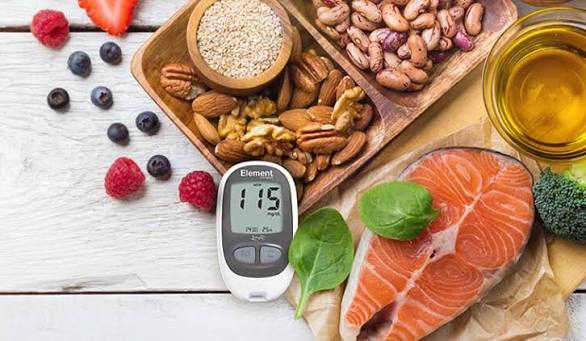
- Nuts and seeds (GI 0–22): Almonds (GI ~0–15), walnuts (GI ~15), cashews (GI 22), peanuts (GI 14–23), and chia seeds (GI 1–4) are among the lowest-GI foods available. Their minimal carbohydrate content combined with high fat and protein makes them extremely low-glycemic additions to meals and snacks — adding a handful of nuts to a higher-GI meal can meaningfully reduce the overall meal glycemic response.
Using Low-Glycemic Foods in Practice: Meal Strategies
The clinical benefit of low-glycemic foods is realized not just through food selection but through how these foods are combined at meals, prepared, and timed throughout the day. Several practical strategies maximize the glycemic benefit of low-GI food choices while making them genuinely satisfying and sustainable:
- Build every meal around a low-GI anchor: Starting meal construction by identifying the lowest-GI carbohydrate source in the meal — legumes, whole grains, or a GI-appropriate fruit — and using it as the primary carbohydrate around which other components are added creates a structural habit that naturally produces low-glycemic meals. If the first question when planning a meal is “which vegetable and legume serve as the base?” rather than “which starch?”, meals naturally orient toward lower glycemic profiles.
- Add fat, protein, and acid to higher-GI foods to lower the meal GI: Even higher-GI foods like white rice or regular bread can have their effective glycemic impact reduced substantially by combining them with foods that slow gastric emptying. Adding olive oil and vinegar to a white bread-containing meal, consuming it with substantial protein and vegetables, and eating it in smaller quantities alongside high-fiber components reduces the postprandial glucose spike to levels closer to the same meal prepared with low-GI equivalents.
- Cool and reheat starchy foods to increase resistant starch: Cooking rice, pasta, or potatoes and then refrigerating them overnight before consuming (cold or reheated) increases their resistant starch content by 2–4 fold through retrogradation, meaningfully reducing their glycemic impact. A bowl of cold leftover rice has approximately 40% lower glycemic impact than freshly cooked hot rice — a simple preparation habit that converts a high-GI food into a more moderate-GI option without any ingredient changes.
- Reference the glycemic load alongside GI: As covered in our detailed guide on glycemic index vs glycemic load, the glycemic index score of a food must be considered alongside the actual quantity consumed (glycemic load = GI × carbohydrate grams ÷ 100) for practical blood sugar management. A food with a moderate GI consumed in a small portion may have a lower blood sugar impact than a low-GI food consumed in very large quantities. The American Diabetes Association’s guidance on GI and diabetes explains how to use this tool practically without overcomplicating daily food decisions. For the comprehensive framework that integrates low-glycemic food choices with fiber, protein, healthy fat, and meal timing strategies, our guide on diabetes diet: a practical beginner’s guide provides the unified dietary approach supported by the strongest clinical evidence for blood sugar improvement and diabetes risk reduction. The NIDDK’s nutrition overview for diabetes addresses these strategies within the broader clinical context of diabetes self-management.
Surprising Foods That Are Low-Glycemic (And Common Misconceptions)
Several foods that adults managing blood sugar commonly avoid or restrict are actually low-glycemic foods based on rigorously measured GI values — while other foods perceived as healthy or blood-sugar-neutral have unexpectedly high GI scores. Understanding these counterintuitive findings prevents unnecessary dietary restriction and helps direct avoidance efforts toward the foods that actually matter for blood glucose management. Foods often incorrectly assumed to be high-glycemic but are actually low-GI:
- Pasta (GI 40–60 al dente): Regular white pasta — despite being made from refined wheat flour — has a substantially lower glycemic index than white bread made from the same flour. The dense, compact structure of pasta shapes (particularly thick pastas like spaghetti and linguine) resists rapid enzymatic digestion in a way that flour-based bread does not, producing a lower GI despite equivalent carbohydrate content. Al dente cooking (pasta that retains some firmness) preserves this structural resistance and produces GI scores of 40–50; overcooked pasta becomes more gelatinized and digests faster, pushing GI toward 55–65. Pasta is not the glycemic villain it is often portrayed to be — its moderate glycemic index, manageable portion size, and versatility as a vehicle for vegetables, protein, and olive oil make it a more blood-sugar-compatible food than its refined grain category membership would suggest. Whole grain pasta (GI 32–45) is lower-GI still and provides additional fiber benefit.
- Sweet potato (GI 44–61): Sweet potato is frequently mischaracterized as a high-GI food because of its sweetness, but its glycemic index (44–61 depending on variety and cooking method) falls in the low-to-moderate range and is substantially lower than regular white potato (GI 72–87). The beta-carotene, fiber, and natural carotenoid pigment structure of sweet potato moderates its starch digestion speed. Boiling produces lower GI than baking (boiling GI ~44–46, baking GI ~60–70) — making boiled or steamed sweet potato a genuinely low-GI carbohydrate choice when consumed in appropriate portions.
- Dark chocolate (GI 23–35): High-cocoa dark chocolate (70%+ cocoa content) has a surprisingly low glycemic index due to its high fat content (predominantly stearic acid and oleic acid), moderate fiber, and the structural properties of cocoa that resist rapid glucose release. A 30g serving (1 oz) of 70–85% dark chocolate contains approximately 8–10g of carbohydrates with a glycemic response comparable to many fruits. Beyond its low GI, dark chocolate’s flavanols (catechins and epicatechins) have demonstrated benefits for insulin sensitivity and blood flow in multiple randomized controlled trials.
Common foods incorrectly assumed to be low-glycemic but are actually high-GI:
- Rice cakes (GI 72–82): Rice cakes — often consumed as a “diet food” — have glycemic index values equivalent to white bread or higher. Their puffed, aerated structure digests extremely rapidly, producing glucose spikes comparable to eating white bread despite their bland, diet-food appearance. They have essentially no fiber, minimal protein, and minimal fat — all characteristics associated with high GI values.
- Watermelon (GI 72–80): Watermelon has a high glycemic index, though its glycemic load per typical serving is moderate because watermelon contains mostly water (92%) and a single cup contains only 11g of carbohydrates. Adults who enjoy watermelon can consume reasonable portions without extreme blood glucose impact, but should not assume it is a low-GI food based on its fruit category membership.
- Many “whole grain” cereals (GI 55–83): Breakfast cereals marketed as whole grain or healthy often have high GI scores because the extrusion and high-heat processing used to create puffed cereal shapes gelatinizes starch in ways that dramatically accelerate digestion, regardless of the original whole grain composition. Checking GI values specifically — rather than relying on marketing claims — prevents the common mistake of replacing high-GI refined cereals with equally high-GI “whole grain” cereals.
Low-Glycemic Foods and Long-Term Diabetes Prevention: What the Research Shows
The clinical evidence on low-glycemic foods and long-term Type 2 diabetes outcomes extends well beyond short-term blood sugar measurements to encompass meaningful reductions in diabetes incidence in large prospective studies — the research design most capable of establishing whether dietary patterns genuinely prevent disease rather than merely modifying surrogate markers. The Nurses’ Health Study, which followed over 90,000 women for 8 years, found that women in the highest quintile of dietary glycemic index had a 59% higher risk of developing Type 2 diabetes compared to those in the lowest quintile, independent of other dietary and lifestyle factors. The Health Professionals Follow-up Study found similar associations in male cohorts. A 2019 meta-analysis of 54 prospective cohort studies found that the highest versus lowest dietary glycemic index category was associated with a 33% higher Type 2 diabetes risk, with the association strongest in studies controlling for BMI — confirming that the GI-diabetes relationship is not simply mediated through weight but operates through direct metabolic mechanisms. The biological mechanisms connecting long-term high-GI diets to Type 2 diabetes development include: repeated high insulin demands driving progressive beta cell fatigue and loss of first-phase insulin secretion capacity; postprandial oxidative stress from high glucose spikes damaging endothelial cells and beta cells; chronic hyperinsulinemia promoting visceral fat accumulation and the downstream insulin resistance that characterizes early Type 2 diabetes; and gut microbiome shifts toward dysbiosis from reduced fermentable fiber intake associated with low-fiber, high-GI dietary patterns. For adults with established prediabetes or Type 2 diabetes, the Nurses’ Health Study and similar cohort studies are complemented by randomized controlled trials showing HbA1c reductions of 0.3–0.5 percentage points from sustained low-GI dietary patterns — clinically meaningful improvements that reduce the rate of diabetes complication development over time. The practical implication: choosing low-glycemic foods as dietary staples is not merely a short-term strategy for managing daily blood glucose readings, but a long-term investment in beta cell preservation, insulin sensitivity maintenance, and overall metabolic health that produces compounding benefits over years of consistent implementation. The CDC’s healthy eating for diabetes prevention guidance and the American Diabetes Association’s GI guidance both integrate the glycemic index evidence within a practical dietary framework for adults managing blood sugar and reducing diabetes risk. Combining low-glycemic foods with the fiber-rich choices from our guide on fiber and blood sugar control, the protein-based strategies from our guide on protein and blood sugar balance, and the healthy fat choices from our guide on healthy fats and blood sugar creates the most comprehensively evidence-supported dietary foundation for long-term blood sugar management and diabetes risk reduction available through nutrition alone.
Getting Started: Simple Swaps to a Lower-Glycemic Diet
Transitioning toward a diet centered on low-glycemic foods does not require learning GI scores for hundreds of foods or carrying a reference table to every meal. A small set of consistent substitution habits captures the majority of the glycemic index benefit available through dietary change: replace white bread with 100% whole grain bread or sourdough; replace white rice with barley, quinoa, or basmati rice; replace sugary breakfast cereals with rolled oats or steel-cut oats; add a half-cup of legumes to at least one meal per day; choose berries, apples, or oranges over higher-GI tropical fruits; and replace sugary snacks with nuts, plain yogurt, or raw vegetables. These six changes, applied consistently across meals, move the overall dietary glycemic index from the high range (typical of most Western dietary patterns) to the low range without requiring caloric restriction, precise macronutrient tracking, or the complete elimination of any single food. Adding a short walk after the largest meal of the day further reduces the effective glycemic impact of whatever foods are consumed, through the insulin-independent muscle glucose uptake mechanism that exercise activates — a strategy covered in depth in our guide on exercise after meals and blood sugar. The combination of low-glycemic food choices and post-meal activity represents the most accessible and evidence-supported starting point for adults beginning to manage blood sugar through lifestyle change.
Sources: American Diabetes Association — glycemic index and diabetes; National Institute of Diabetes and Digestive and Kidney Diseases — nutrition and diabetes; International GI Research Group — glycemic index database; meta-analyses on low-GI dietary patterns and HbA1c reduction published in Diabetes Care; prospective cohort studies on glycemic index and Type 2 diabetes incidence.
I have been reading about low-glycemic foods: what they are for weeks and this is the most thorough guide I found. What I liked most was that the article didn’t just say what to avoid — it also gave alternatives. Will definitely be coming back to this site for more health information.
Thank you for covering low-glycemic foods: what they are so thoroughly without being overly technical. The article answered questions I didn’t even know I had until I started reading. Appreciate the effort that went into researching and writing this — it shows.
Finally a resource that explains low-glycemic foods: what they are in plain language. The specific numbers and thresholds mentioned are exactly what I needed to understand my results. Forwarding this to others in my support group who are dealing with similar issues.