
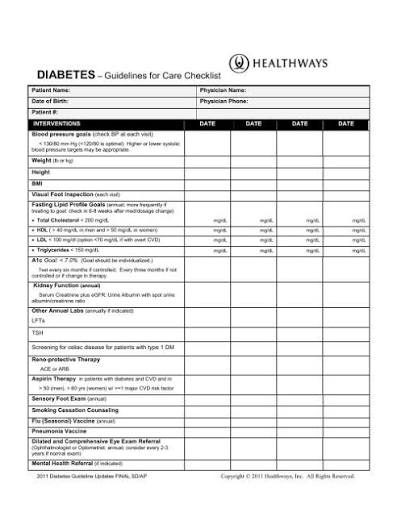
The annual diabetes care checklist is a practical tool that translates the American Diabetes Association’s comprehensive monitoring recommendations into a trackable list that every adult with Type 2 diabetes can use to ensure their care is complete — not just at year’s end, but at any point throughout the year when they want to know which tests and examinations are current and which may be overdue. The gap between recommended diabetes monitoring and what actually happens in clinical practice is substantial: studies consistently show that large proportions of adults with diabetes are missing one or more components of recommended annual monitoring, often because neither the patient nor the provider actively tracks the full monitoring schedule across multiple visit types and multiple providers. The annual diabetes care checklist closes this gap by creating a single reference that covers every test, examination, and specialist visit that should occur during the care year — making it straightforward to identify what has been done and what still needs to happen before the year is out.
Population-based studies of diabetes care quality in the United States consistently reveal significant monitoring gaps. According to CDC and ADA data, only approximately 50–60% of adults with diabetes receive all three of the core annual monitoring components (HbA1c, dilated eye exam, and foot exam) in a given year. Urine albumin testing — a critical early indicator of diabetic kidney disease — is not performed annually in approximately 25–35% of adults with diabetes. Lipid panel testing is skipped in a meaningful proportion of visits even though cardiovascular disease is the leading cause of death in adults with Type 2 diabetes. Dental care and pneumococcal vaccination — both recommended components of diabetes care — are among the most commonly missed preventive measures in this population. Using a personal annual diabetes care checklist is one of the most effective strategies for individual patients to ensure their own monitoring stays complete.
At Every Diabetes Visit (Each Appointment)
The following components of the annual diabetes care checklist should occur at every clinical contact — whether a scheduled quarterly visit or an unscheduled visit for another reason:
- Blood pressure measurement: Blood pressure is assessed at every diabetes visit because hypertension — present in approximately 70% of adults with Type 2 diabetes — is a primary driver of both cardiovascular risk and diabetic kidney disease progression. The ADA target is below 130/80 mmHg. Any reading above 140/90 mmHg at a visit should prompt discussion of medication adjustment. The full monitoring and management context for blood pressure in diabetes is in our blood pressure monitoring in diabetes guide.
- Weight (and BMI): Weight at every visit provides the trend data needed to detect slow weight gain (which can signal medication side effects, dietary drift, or worsening metabolic function) and to track intentional weight loss achieved through lifestyle or GLP-1 medication.
- Foot inspection (brief visual check): A quick visual check of the feet for wounds, blisters, calluses, or skin changes should occur at every visit. This brief check catches acute foot problems between annual comprehensive examinations.
- Medication and glucose data review: Current medications and any side effects or adherence issues, plus home glucose monitoring data (meter readings or CGM report), should be reviewed at every visit to inform ongoing management.
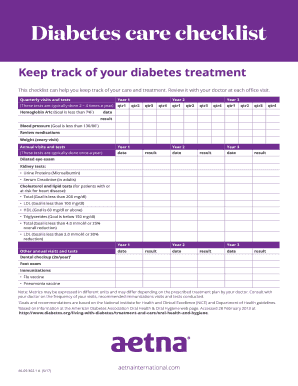
Quarterly (Every 3 Months)
The following items belong on the annual diabetes care checklist section for quarterly monitoring — or every 6 months if blood glucose is stable and at target:
- HbA1c test: The cornerstone of quarterly monitoring, measuring the 2–3 month average blood glucose. Target for most adults: below 7.0%. Patients newly diagnosed or above target should have HbA1c measured every 3 months; stable, well-controlled patients may extend to every 6 months after discussion with their prescriber. The complete A1C testing guide is in our A1C testing schedule: what to know article.
- Fasting lipid review (if on statin): If lipid panel was normal and on stable statin at last check, some guidelines allow annual rather than quarterly lipid assessment once on-target. However, for patients recently started on statin therapy or with abnormal lipid levels, a lipid panel at 3–6 months confirms the medication is producing the expected LDL reduction.
Annual (Once Per Year)
The annual section of the annual diabetes care checklist is the most comprehensive and includes the tests and examinations most commonly missed in real-world diabetes care:
- Comprehensive metabolic panel: Kidney function (creatinine, eGFR), liver enzymes, electrolytes, and blood glucose. The eGFR determines whether kidney function has changed since the prior year and whether any medication dose adjustments are needed. The complete guide to kidney function monitoring is in our eGFR and kidney function in diabetes guide.
- Urine albumin-to-creatinine ratio (uACR): Annual urine albumin testing detects early diabetic kidney disease before kidney function (eGFR) declines. A result above 30 mg/g warrants more intensive management. The full guide is in our urine albumin test and diabetes article.
- Lipid panel (full fasting): LDL, HDL, triglycerides, and total cholesterol annually confirms cardiovascular risk factor management. Target LDL below 100 mg/dL for most adults with diabetes; below 70 mg/dL if established cardiovascular disease. The cholesterol monitoring guide is in our cholesterol monitoring in diabetes article.
- Dilated eye examination: Annual dilated retinal examination by an eye care specialist detects diabetic retinopathy at treatable stages. Adults with no retinopathy and well-controlled risk factors may qualify for biennial (every 2 years) exams in some guidelines — confirm with the eye specialist. Full guidance is in our eye exams for people with diabetes guide.
- Comprehensive foot examination: Annual detailed foot assessment including monofilament testing for protective sensation, assessment of foot pulses, and structural inspection. Full guidance is in our foot exams for people with diabetes guide.
- Dental examination (twice yearly): Periodontal disease is more common and more severe in adults with diabetes, and gum inflammation worsens blood glucose control. Twice-yearly dental checkups and prompt treatment of gum disease are recommended.
- Thyroid function test (TSH): Thyroid disease — particularly hypothyroidism — is more common in adults with Type 2 diabetes and can worsen blood glucose control and lipid profiles. Annual TSH testing is recommended. A low or high TSH should prompt full thyroid evaluation.
- Vaccinations review: Annual influenza vaccine is recommended for all adults with diabetes. Pneumococcal vaccines (PCV15 or PCV20 followed by PPSV23 in sequence per current CDC schedule), hepatitis B vaccine series (if not previously vaccinated, for adults 19–59; consider for adults 60+), and COVID-19 boosters per current recommendations. Adults with diabetes are at higher risk of severe outcomes from vaccine-preventable infections. The ADA Standards of Medical Care checklist section details all vaccination recommendations. The complete monitoring context that explains why each annual test matters clinically is in our diabetes checkups guide. The kidney monitoring tests are covered in detail in our kidney tests for diabetes monitoring guide. The NIDDK diabetes management resources and the CDC diabetes management guidance provide additional authoritative information on annual diabetes monitoring recommendations.
How to Use the Annual Diabetes Care Checklist Actively
Having an annual diabetes care checklist is only useful if it is actively consulted and used to identify and close care gaps. Here is how to use this checklist practically in your own diabetes management:
- Create a personal tracking record: Write down the date each monitoring component was last completed — the date of the most recent HbA1c, the most recent dilated eye exam, the most recent urine albumin test, the most recent comprehensive foot exam, and the most recent lipid panel. This record can be kept in a notebook, a health app, or a simple calendar note. Having these dates written down allows you to quickly determine what is due at any upcoming appointment and what has been completed within the recommended time window. Many adults with diabetes who think their monitoring is current discover, when they actually record the dates, that one or more annual tests has been skipped for 18–24 months or longer without anyone noticing.
- Bring the checklist to appointments and ask directly: At each quarterly visit, review the annual checklist and ask the provider whether any annual tests are due. The question “Is my urine albumin test current?” or “Is it time for my annual lipid panel?” is a legitimate and appropriate question that any patient can ask. Providers manage large patient panels and annual monitoring reminders are not always triggered consistently — patient-initiated prompting is one of the most effective ways to ensure the checklist stays complete. If a referral for eye exam or podiatry has been recommended but not yet scheduled, use the appointment to confirm that the referral has been sent and to get the contact information needed to schedule it.
- Connect each checklist item to its clinical purpose: Understanding why each item on the annual diabetes care checklist matters — not just that it is recommended — makes it easier to prioritize completing it when scheduling is inconvenient. The dilated eye exam is not a bureaucratic requirement; it is a retinal screening for diabetic retinopathy, the most common preventable cause of blindness in working-age adults. The urine albumin test is not a redundant kidney check; it detects early kidney damage at a stage when treatment can substantially slow progression to kidney failure. Each checklist item has a specific clinical rationale that makes it worth the scheduling effort.
- Track year-over-year trends, not just single results: The most informative use of annual diabetes care checklist data is trend monitoring — how has HbA1c changed over the past 3 years? Is the eGFR stable or declining? Is LDL moving toward target or drifting upward? A single result tells you where things stand today; a trend tells you whether the trajectory is favorable or concerning and whether current management is sufficient. When you see your results, ask: “How does this compare to last year?” rather than just “Is this in range?”
Annual Checklist for Adults With Diabetes Complications
Adults with existing diabetes complications or comorbidities have an expanded version of the annual diabetes care checklist that includes additional monitoring components appropriate to their specific complication profile:
- With established diabetic kidney disease (CKD): Kidney function (eGFR and urine albumin) should be assessed more frequently than annually — typically every 3–6 months depending on the stage of CKD — to monitor progression and guide medication adjustments. Blood potassium levels require monitoring when ACE inhibitors or ARBs are used for kidney protection. A nephrology (kidney specialist) referral is recommended when eGFR falls below 30 mL/min/1.73m² or when the cause of kidney disease is uncertain. The detailed kidney test monitoring guide is in our kidney tests for diabetes monitoring article.
- With diabetic retinopathy: Once diabetic retinopathy is diagnosed, eye examination frequency is determined by the ophthalmologist based on severity — patients with moderate to severe non-proliferative retinopathy or proliferative retinopathy may need eye exams every 3–6 months rather than annually. The full guide to eye monitoring in diabetes is in our eye exams for people with diabetes article.
- With established cardiovascular disease: Adults with previous heart attack, stroke, or documented coronary artery disease have more intensive LDL and blood pressure targets (LDL below 70 mg/dL, blood pressure below 130/80 mmHg), more aggressive statin and blood pressure medication management, and should be on a GLP-1 receptor agonist or SGLT2 inhibitor with demonstrated cardiovascular outcome trial benefits (where not contraindicated). Cardiology follow-up in addition to primary care monitoring is typical. The medication overview that covers cardiovascular-protective drug classes is in our diabetes medications overview.
- With peripheral neuropathy or previous foot ulcer: Patients with peripheral neuropathy documented by monofilament testing, or who have had a previous diabetic foot ulcer, should have foot examinations every 1–3 months by a podiatrist rather than annually, because their risk of developing new ulcers is substantially elevated. The comprehensive foot examination guide is in our foot exams for people with diabetes article.
- With hypertension requiring active management: Blood pressure monitoring at home between visits — using a validated home blood pressure monitor — provides 24-hour data that is more representative of true blood pressure than clinic measurements alone. Home monitoring results should be brought to every clinic visit to guide medication adjustments. The blood pressure monitoring guide is in our blood pressure monitoring in diabetes article. The A1C monitoring frequency that applies to all adults, including those with complications, is in our A1C testing schedule guide. The ADA Standards of Medical Care — updated annually — is the authoritative source for diabetes monitoring recommendations, including the specific modifications for adults with established complications. The NIDDK’s diabetes management resources and the CDC diabetes management guidance provide complementary resources for tracking and completing annual diabetes care.
Barriers to Completing the Annual Diabetes Care Checklist and How to Overcome Them
Understanding why the annual diabetes care checklist is frequently incomplete in real-world care — and what practical strategies address each barrier — helps both patients and providers achieve better adherence to recommended monitoring:
- Scheduling fragmentation: Many components of the annual checklist require separate appointments with separate providers — primary care for blood tests, ophthalmology for eye exams, podiatry for foot care, dentistry for dental care. Each separate appointment requires scheduling, transportation, and time off work, creating a cumulative burden that leads to some components being indefinitely deferred. The most effective countermeasure at the patient level is to batch scheduling: at the beginning of each calendar year, schedule all annual appointments at once — eye exam, podiatry visit if indicated, and any other annual specialist visits — rather than waiting until the primary care provider recommends them during a visit. Proactive scheduling at the start of the year, when appointment availability is typically better, prevents the end-of-year scramble when calendars fill up.
- Lack of awareness of what is recommended: Many adults with diabetes do not know which tests and examinations are part of standard annual care and therefore do not request them or notice when they are not offered. The annual diabetes care checklist addresses this knowledge gap directly — knowing that a urine albumin test, dilated eye exam, and comprehensive foot exam should all happen every year means you can ask whether each is scheduled at your next appointment. Patient portal systems at many health systems now include preventive care reminders for common diabetes monitoring components; enabling notifications from the patient portal provides an automated prompt for overdue monitoring.
- Cost and insurance barriers: Annual diabetes monitoring tests are covered under most insurance plans as preventive care — including dilated eye exams, HbA1c testing, urine albumin testing, and comprehensive foot exams. Adults who are concerned about cost should contact their insurer to confirm coverage before scheduling, and should ensure that specialist visits for diabetes monitoring (eye exam, podiatry) are billed under diabetes monitoring coverage codes rather than general specialist visit codes when applicable. For adults without adequate insurance coverage, federally qualified health centers (FQHCs) and community health centers provide diabetes monitoring on a sliding-scale fee basis.
- Assuming monitoring is happening without confirming it: A common error pattern is assuming that because a test was ordered, it was performed and the result was communicated back. Blood test orders that are not fulfilled because the patient did not go to the lab, specialist referrals that are not scheduled, and imaging orders that are placed but the results are not followed up — all create the appearance of complete monitoring while leaving actual gaps. Verifying, rather than assuming, that each checklist item has been completed and that results have been received and acted upon is the final step in effective annual checklist use.
- The “no news is good news” misunderstanding: Some adults with diabetes interpret the absence of a phone call after a test as a sign that results were normal. In reality, abnormal results that require follow-up may be missed due to communication failures, results sent to an address or portal account that is not checked, or results received by a provider who is on vacation or has left the practice. For every test on the annual checklist, confirm receipt of the result and ask what the result was and whether any follow-up action is needed. Normal results should be communicated as clearly as abnormal ones — and the specific number (not just “normal”) is useful for tracking trends over years. The comprehensive overview of what each monitoring test means and how results are interpreted is in our diabetes checkups: what to expect article. For blood sugar monitoring that forms the background of all this testing, our A1C testing schedule guide explains frequency and what targets mean. The cholesterol monitoring guide that explains LDL targets and statin therapy is in our cholesterol monitoring in diabetes article. And for the kidney monitoring components of the annual checklist — both the urine albumin test and the eGFR — see our dedicated guides at urine albumin test and diabetes and eGFR and kidney function in diabetes. The ADA Standards of Medical Care, the NIDDK diabetes resources, and the CDC diabetes management guidance provide the authoritative clinical framework behind every item on this checklist.
Making the Annual Diabetes Care Checklist Work Long-Term
The annual diabetes care checklist is not a one-year exercise — it is a framework for lifelong diabetes monitoring that should be reviewed and updated each year as recommendations evolve (the ADA updates its Standards of Medical Care annually), as the patient’s clinical situation changes, and as new monitoring components become available. Adults who have used this checklist consistently over multiple years develop a clear longitudinal picture of their diabetes trajectory — whether complications are developing, whether targets are being maintained, and whether management adjustments are producing the expected improvements. The clinician who reviews multi-year monitoring data at each visit is in a fundamentally better position to make management decisions than one working from individual data points without context. Consistent engagement with the annual monitoring process — scheduling tests proactively, attending appointments prepared with questions, tracking results over time, and following through on specialist referrals — is one of the most impactful actions any adult with Type 2 diabetes can take to protect their long-term health independent of which specific medications they are on or which specific dietary approach they follow. No medication is as consistently protective against diabetes complications as a monitoring system that catches problems early and enables timely intervention across the full range of organs that Type 2 diabetes affects.
Sources: American Diabetes Association — Standards of Medical Care in Diabetes, annual monitoring checklist and frequency recommendations; NIDDK — diabetes management and monitoring resources; CDC — diabetes monitoring and vaccination recommendations for adults with diabetes; ADA HbA1c, blood pressure, lipid, kidney, and eye monitoring targets and frequency guidelines; urine albumin and eGFR annual testing recommendations from ADA and KDIGO; dilated eye exam annual recommendation from ADA and American Academy of Ophthalmology; comprehensive foot examination frequency from ADA and American Podiatric Medical Association; diabetes care gap data from CDC and population-based studies; vaccination schedule for adults with diabetes from CDC Advisory Committee on Immunization Practices (ACIP).
This breakdown of annual diabetes care checklist is exactly what patients need before a specialist appointment. The practical tips made this immediately actionable, not just theoretical. This gave me real confidence going into my next specialist appointment.
Thank you for covering annual diabetes care checklist so thoroughly without being overly technical. I have tried following advice from several sources but this is most consistent with what my specialist told me. Forwarding this to others in my support group who are dealing with similar issues.
Came across this while researching annual diabetes care checklist for a family member. The section on managing this condition day-to-day was especially useful for planning. Exactly the kind of evidence-based information that is hard to find in one place.