
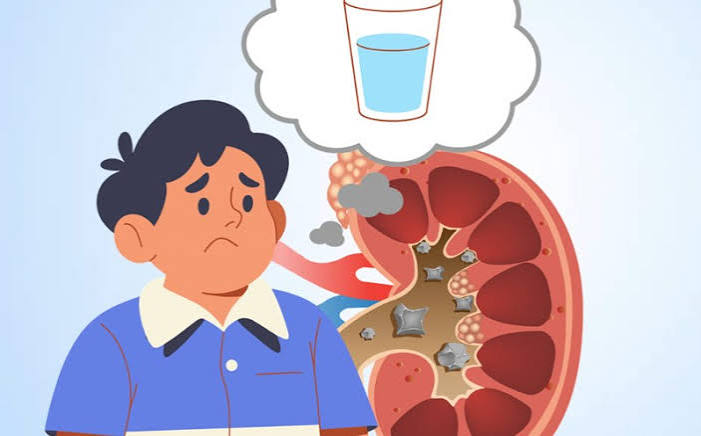
Dehydration and Kidney Problems
The kidneys are among the organs most immediately vulnerable to dehydration. When fluid intake falls and blood volume drops, the kidney’s first response is to reduce urine production — concentrating waste in smaller volumes while conserving water. If dehydration continues or deepens, the kidney shifts from conservation to self-protection: it reduces its own blood flow to maintain systemic circulation, a response that, when sustained, produces ischemic injury to the tubular cells responsible for filtration and reabsorption.
For people without kidney disease, mild dehydration is a temporary inconvenience that resolves with rehydration. For people with CKD — whose kidneys have reduced functional reserve, impaired autoregulatory capacity, and often a polypharmacy regimen that amplifies dehydration risk — even moderate dehydration can trigger acute kidney injury that does not fully reverse. Understanding how dehydration damages kidneys, which situations carry the highest risk, and how to recognize and respond to dehydration early is a clinical priority for anyone with kidney disease or at risk of developing it.
How Dehydration Damages the Kidneys
Dehydration reduces blood volume (hypovolemia), which triggers a cascade of compensatory responses that, while protective in the short term, become injurious if sustained.
Reduced renal perfusion. As blood volume falls, cardiac output decreases and the sympathetic nervous system activates, causing peripheral vasoconstriction including in the afferent arterioles of the glomeruli. Reduced blood flow to the kidney reduces GFR — the filtration rate drops. This is prerenal azotemia: elevated blood urea nitrogen (BUN) and creatinine from reduced filtration rather than intrinsic kidney damage. If blood volume is restored promptly, GFR recovers. If undercorrected or prolonged, reduced perfusion transitions to acute tubular necrosis (ATN) — actual structural kidney damage from ischemia.
RAAS activation. Hypovolemia activates the renin-angiotensin-aldosterone system: renin is released from the juxtaglomerular apparatus, producing angiotensin II, which constricts efferent arterioles (to maintain GFR despite reduced inflow) and stimulates aldosterone-mediated sodium and water retention. Angiotensin II also raises systemic blood pressure through vasoconstriction. These responses are protective acutely but chronically drive glomerular hypertension and fibrosis — the same mechanism by which undertreated hypertension damages kidneys.
Tubular concentration injury. As dehydration persists, concentrated tubular fluid containing high levels of waste products — urea, creatinine, myoglobin, nephrotoxic medications — causes direct chemical injury to the tubular epithelium. The tubular cells responsible for selective reabsorption are particularly vulnerable to osmotic stress and oxidative damage from concentrated solutes. This tubular injury contributes to the transition from functional (prerenal) to structural (intrinsic renal) AKI.
Uric acid and crystal nephropathy. Concentrated urine in the setting of dehydration promotes uric acid crystal formation in the collecting duct, particularly in patients with hyperuricemia or high purine intake. Uric acid crystals cause mechanical tubular obstruction and inflammatory injury. This is the mechanism of acute urate nephropathy — a form of AKI that can occur in dehydrated patients after intense physical activity or dietary purine loading.
Dehydration and CKD: Why the Stakes Are Higher
CKD patients face higher dehydration risk and higher dehydration consequence than the general population, through several mechanisms that compound each other.
CKD impairs tubular concentrating ability — the kidneys cannot reduce urine volume as efficiently when water is scarce. A healthy kidney can produce urine as concentrated as 1,200 mOsm/kg; a CKD kidney may be limited to 300–400 mOsm/kg. This means more water is lost in each liter of urine — the body cannot conserve as efficiently — making dehydration develop faster with the same fluid deficit. CKD patients need to drink more to maintain the same plasma volume that healthy kidneys would maintain with less.
CKD patients are also more likely to be taking medications that amplify dehydration risk. Diuretics (furosemide, hydrochlorothiazide) increase urine output; during illness or hot weather, this effect compounds the natural fluid loss. ACE inhibitors and ARBs — prescribed specifically for kidney protection — reduce glomerular filtration pressure through their mechanism of action; in a volume-depleted patient, this protective mechanism becomes injurious, causing acute-on-chronic kidney injury. NSAIDs, frequently self-administered for pain, block prostaglandin-mediated afferent arteriole dilation — a response that becomes the primary mechanism maintaining renal blood flow during volume depletion. Combining NSAIDs with dehydration in a CKD patient is the highest-risk combination for acute kidney injury in outpatient medicine.
The broader context of medication safety and kidney function is addressed in the kidney disease prevention guide. Blood pressure medications interact with hydration status in ways that make dehydration episodes directly relevant to blood pressure control, as explored in blood pressure control and kidney protection.

The Highest-Risk Dehydration Scenarios for Kidney Patients
Certain situations produce dehydration rapidly enough to cause AKI before patients recognize the risk. CKD patients and their families should have plans for each of these scenarios before they occur.
Gastrointestinal Illness (Vomiting and Diarrhea)
GI illness produces the fastest, largest fluid losses of any common outpatient scenario. A patient with severe gastroenteritis can lose 3–5 liters in a single day through vomiting and diarrhea — a deficit that a healthy kidney would compensate for through maximal urine concentration, but that a CKD kidney cannot fully address. Concurrent nausea makes oral rehydration difficult, often producing a clinical situation that requires intravenous fluid replacement. CKD patients experiencing vomiting or diarrhea that prevents adequate oral fluid intake should contact their nephrologist or proceed to emergency care within 24 hours, particularly if they are taking ACE inhibitors, ARBs, or diuretics — all of which should be temporarily held during significant GI illness (the “sick day rules” that nephrology practices should provide to patients proactively).
Hot Weather and Exercise
In hot or humid conditions, sweat loss can exceed 1 liter per hour during moderate activity. CKD patients who exercise regularly — which is encouraged for kidney protection, as documented in the exercise and kidney health guide — must proactively increase fluid intake before and during exercise in warm weather. The thirst mechanism lags behind actual dehydration, so waiting for thirst to prompt drinking means the kidney is already experiencing reduced perfusion. Practical guidance: drink 500 mL of water 2 hours before outdoor activity in heat, 250 mL every 20 minutes during activity, and monitor urine color after returning — it should return to pale within one or two voids.
Contrast Imaging Procedures
Iodinated contrast agents used in CT scans and cardiac catheterization are directly nephrotoxic at the tubular level, and dehydration significantly amplifies this risk by increasing contrast concentration in the tubular lumen and reducing tubular flow. Standard pre-procedure protocols involve IV saline administration before and after contrast exposure; CKD patients scheduled for contrast procedures should inform their care team of any recent illness, reduced fluid intake, or concurrent NSAID use — all of which elevate baseline dehydration risk. Elective procedures should be postponed if a patient arrives dehydrated.
Rhabdomyolysis
Rhabdomyolysis — the breakdown of muscle tissue releasing myoglobin into the bloodstream — can be triggered by extreme physical exertion, crush injury, severe heat exhaustion, or certain medications. Myoglobin is directly nephrotoxic and causes acute tubular necrosis by obstructing and chemically injuring tubular cells. Dehydration dramatically amplifies rhabdomyolysis-related kidney injury by concentrating myoglobin in the tubular lumen. The combination of extreme exertion, dehydration, and NSAID use is a recognized pattern for severe AKI — particularly in participants of endurance events who take ibuprofen for performance-related pain while underhydrated.
Recognizing Dehydration Early
Early dehydration recognition in CKD patients requires attention to a cluster of signs, because individual symptoms are non-specific and the thirst signal is unreliable.
- Urine color: Darkening urine — from pale yellow toward amber — is the earliest reliable sign of developing dehydration. Check urine color throughout the day, not just in the morning.
- Urine frequency: Fewer trips to the bathroom than usual, or smaller volumes per void, indicates that the kidneys are concentrating urine — a dehydration response.
- Weight: Daily morning weight (same time, same conditions) is the most sensitive measure of acute fluid changes. A 1 kg drop from usual weight equals approximately 1 liter of fluid deficit.
- Dizziness on standing: Orthostatic hypotension — dizziness when rising from sitting or lying — is a sign of volume depletion. This is particularly relevant for dialysis patients and those on antihypertensives.
- Dry mouth: A late and unreliable sign — present in dehydration but also caused by medications (anticholinergics), mouth breathing, and reduced salivation from other causes.
- Blood tests: BUN/creatinine ratio >20:1, rising creatinine above baseline, and rising hematocrit (blood thickening) are laboratory markers of volume depletion — but these require a blood draw and are reactive rather than preventive signals.
How to Rehydrate Safely With CKD
Mild dehydration in a CKD patient with maintained urine output can typically be managed with oral fluid replacement — plain water, diluted oral rehydration solutions, or broth — at a rate of 500 mL to 1 liter per hour until urine color returns to pale yellow. The rehydration should be spread over time rather than consumed rapidly as a bolus, which temporarily dilutes plasma but doesn’t fully restore intravascular volume as effectively as steady intake.
Sports drinks and commercial oral rehydration solutions (ORS) are generally not recommended for CKD patients due to their potassium and sodium content; diluted ORS at half concentration may be acceptable if discussed with the care team. Plain water with a small amount of sodium-containing food (crackers, broth) is a practical alternative that addresses both fluid and electrolyte replacement without the concentrated electrolyte load of sports drinks.
Moderate-to-severe dehydration — particularly when accompanied by vomiting, inability to tolerate oral fluids, a significant rise in creatinine from baseline, or orthostatic hypotension — requires intravenous fluid replacement under medical supervision. CKD patients should not attempt to manage significant dehydration at home without contact with their care team; the risk of AKI converting from prerenal (reversible) to intrinsic renal (not fully reversible) increases rapidly with duration of inadequate perfusion.
Regular hydration habits — consistent daily fluid intake, urine color monitoring, proactive increases for heat and activity — provide the best defense against the dehydration episodes that cause the most preventable acute kidney injury in CKD. The National Kidney Foundation and the NIDDK both emphasize adequate hydration as a cornerstone of kidney disease self-management. The American Heart Association similarly notes dehydration as a cardiovascular risk factor — relevant to CKD patients whose primary cause of death is cardiovascular disease. Knowing your hydration targets, recognizing the early signs of dehydration, and having a clear plan for high-risk situations are the practical steps that prevent the most common cause of acute-on-chronic kidney injury outside of hospital settings.
Conclusion
Dehydration and kidney problems are linked by a direct, mechanistic relationship: reduced fluid intake reduces renal perfusion, concentrates nephrotoxic substances in the tubular lumen, activates the RAAS and sympathetic nervous system in ways that damage glomeruli, and in CKD patients whose kidneys have diminished autoregulatory capacity, crosses into acute kidney injury faster and with less recovery than in healthy adults. The highest-risk scenarios — GI illness, heat exposure, contrast procedures, NSAID use — are predictable and preventable with advance planning. Monitoring urine color, maintaining daily weight records, knowing your sick-day rules for medications, and having a clear threshold for seeking intravenous fluid replacement are the practical tools that protect kidney function during the inevitable dehydration challenges of daily life with CKD.
Medications and Dehydration: Sick Day Rules Every CKD Patient Needs
The concept of “sick day rules” — a protocol for which medications to hold during episodes of illness, dehydration, or significant fluid loss — is one of the most underutilized tools in CKD self-management. Many patients continue taking their regular medications during GI illness, fever, or heat exposure without understanding that the same drugs that protect kidney function under normal conditions can accelerate kidney injury when the patient is volume depleted.
The core principle is that several medications that are beneficial under normal circumstances directly reduce renal blood flow when effective circulating volume is low. ACE inhibitors and ARBs (lisinopril, enalapril, losartan, valsartan) prevent angiotensin II from constricting the efferent arteriole — a protective mechanism against glomerular hypertension under euvolemic conditions. In a volume-depleted patient, removing this efferent arteriole constriction causes GFR to drop, sometimes dramatically. Diuretics compound this by further reducing plasma volume at a time when it is already critically low. NSAIDs eliminate prostaglandin-mediated vasodilation of the afferent arteriole, which becomes the primary mechanism keeping glomerular blood flow open during dehydration.
Standard sick day rules, endorsed by the UK National Health Service and recognized by nephrology organizations internationally, recommend temporarily holding ACE inhibitors, ARBs, and diuretics when a patient experiences: vomiting or diarrhea that limits oral fluid intake, any illness that reduces fluid intake for more than 24 hours, and high-output conditions (excessive sweating, fever) with inadequate replacement. NSAIDs should be avoided entirely during any episode of fluid loss. These medications are typically safe to resume 24–48 hours after the patient has returned to their baseline fluid intake and is tolerating oral fluids without difficulty. The decision to hold medications should ideally be made with guidance from the care team — CKD patients should know in advance which medications to hold, under which circumstances, and when to seek emergency evaluation rather than manage at home.
A proactive conversation with the nephrologist about sick day rules — before any illness occurs — is one of the most effective single interventions for reducing dehydration-related AKI in CKD. The broader context of medication management and kidney protection is addressed in the kidney disease prevention guide, which details the full framework of CKD management beyond hydration alone.
Building a Hydration Routine That Protects Kidney Function
Reactive management of dehydration — responding after symptoms appear — is inherently less effective than building consistent hydration habits that prevent significant fluid deficits from developing. For CKD patients, a structured daily hydration approach provides the most reliable defense against the dehydration episodes that cause preventable AKI.
Morning hydration is the most impactful single habit change for most patients. After 6–8 hours of sleep without fluid intake, morning plasma volume is at its lowest point of the day. A 400–600 mL glass of water consumed within 30 minutes of waking begins restoring plasma volume before the kidney faces the demands of the morning’s first medications (many of which are taken on an empty or semi-fasted stomach). For patients on morning diuretics, pre-hydrating before the diuretic dose begins to work can buffer the volume-depleting effect during the first hours after dosing.
Distributing fluid intake evenly across the day — rather than consuming large volumes at meals and minimal amounts between — produces more stable plasma volume and more consistent renal perfusion. A practical approach: set a fluid intake target (typically 1.5–2 liters for stable CKD stages 1–3 patients; confirm with the care team), divide it into 6–8 equal portions, and set a phone reminder for each. This removes reliance on thirst, which is an unreliable signal especially in elderly patients and those with diabetic neuropathy affecting hypothalamic thirst regulation.
Urine color monitoring — checking each void against a simple reference chart — provides real-time feedback on whether intake is matching output. Pale straw to light yellow indicates adequate hydration. Amber or dark yellow signals developing dehydration and should prompt additional fluid intake, not waiting for the next scheduled drinking time. Dark brown or tea-colored urine in a CKD patient should prompt immediate contact with the care team — this color suggests significant concentration, possible myoglobin (rhabdomyolysis), or bilirubin, all of which warrant urgent evaluation.
Daily weight monitoring on a calibrated scale at the same time each morning (before eating, after voiding) provides the most sensitive measure of acute fluid balance changes. Weight fluctuations beyond 1–2 kg from the patient’s established baseline in either direction — dehydration or fluid overload — are clinically significant and should be reported to the care team. Weight-based monitoring is particularly valuable for patients whose fluid intake is restricted (CKD stages 4–5, dialysis, heart failure) and who must balance avoiding dehydration against the equal risk of fluid overload.
The blood pressure and kidney protection article addresses the connection between fluid balance, blood pressure variation, and CKD progression — a relationship that makes hydration monitoring doubly important for the majority of CKD patients who also have hypertension. Consistent hydration habits, combined with the broader framework of lifestyle modifications for kidney protection, provide the most sustainable defense against both acute dehydration events and the slower progression of chronic kidney disease.
Dehydration, Exercise, and the Path to Sustainable Kidney Protection
Exercise is recommended for CKD patients because it reduces cardiovascular risk, improves blood pressure control, supports healthy weight, and independently slows kidney disease progression. But exercise, particularly in warm environments, is also one of the most predictable triggers of dehydration. The interaction between exercise-induced fluid losses and dehydration-related kidney risk is one of the most practical management challenges for physically active CKD patients.
The key is proactive hydration before, during, and after exercise — not reactive rehydration after thirst appears. Drink 500 mL in the two hours before outdoor or indoor exercise in warm conditions. During activity, consume 200–250 mL every 15–20 minutes rather than waiting for thirst. After exercise, aim to replace 150% of the estimated sweat loss — a practical approach is to weigh before and after exercise, then drink 1.5 liters for each kilogram lost. For CKD patients whose fluid intake is restricted (typically stages 4–5), this formula should be discussed with the nephrologist to prevent overcorrection from the opposite direction.
The exercise and kidney health article covers the full evidence base for exercise in CKD management, including intensity targets, types of exercise most beneficial for kidney function, and how to structure a program that balances cardiovascular benefit against dehydration risk. Combining evidence-based exercise with proactive hydration habits represents the most complete approach to lifestyle-based kidney protection — one that addresses the two most modifiable risk factors for CKD progression simultaneously.
When to Seek Emergency Care for Dehydration With CKD
Not every episode of dehydration in a CKD patient requires emergency evaluation, but several specific presentations warrant immediate care rather than home management. CKD patients and their caregivers should seek emergency evaluation — not a routine call to the office — for any of the following: inability to tolerate any oral fluids for more than 6–8 hours, orthostatic dizziness severe enough to cause falls or near-falls, complete cessation of urine output for more than 4 hours despite attempted oral hydration, confusion or altered mental status accompanying fluid loss, or a known creatinine elevation from baseline by more than 0.5 mg/dL in the context of reduced fluid intake. These presentations indicate that dehydration has progressed beyond what oral rehydration can safely address, and that intravenous fluid replacement under monitoring is required to prevent permanent kidney function loss. Early intervention — treating dehydration at the prerenal stage before it transitions to acute tubular necrosis — is the critical difference between a recoverable AKI episode and one that produces lasting GFR decline.
Preparing a written list of these emergency thresholds in advance — with the on-call phone number, the nearest emergency facility, and the list of medications to disclose on arrival — is a practical tool that every CKD patient should have, ideally created during a routine nephrology visit before any acute illness occurs. Dehydration-related AKI is among the most preventable forms of acute kidney injury, but prevention and early response require preparation, not just knowledge.
Sources: National Kidney Foundation (kidney.org); NIDDK (niddk.nih.gov); American Heart Association (heart.org); Kellum JA et al., KDIGO Clinical Practice Guideline for Acute Kidney Injury (2012); Kasiske BL et al., KDIGO Clinical Practice Guideline for CKD Management.
Pingback: Alcohol and Kidney Health - Horizon Health Guide
Bookmarked this article on dehydration and kidney problems immediately — going to reference it regularly. I especially valued the explanation of why these recommendations exist, not just what they are. Forwarding this to others in my support group who are dealing with similar issues.
This is one of the clearest explanations of dehydration and kidney problems I have found. The specific numbers and thresholds mentioned are exactly what I needed to understand my results. This gave me real confidence going into my next specialist appointment.
Thank you for covering dehydration and kidney problems so thoroughly without being overly technical. The specific numbers and thresholds mentioned are exactly what I needed to understand my results. Shared this with three friends who are dealing with related issues. Very useful resource.