
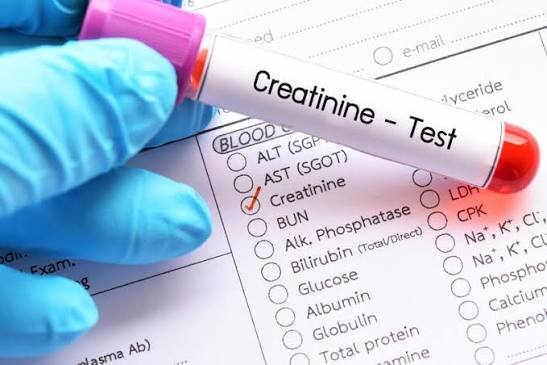
Kidney function tests are a group of blood and urine tests that measure how effectively the kidneys are filtering blood, removing waste products, and maintaining the chemical balance of the body. For most people, the results arrive as a panel of numbers — creatinine, eGFR, BUN — with little explanation of what each one measures or why a particular value should concern them. This guide walks through each major kidney function test in plain language, explains what the numbers mean in practice, and describes when results should prompt further evaluation.
What Do Kidney Function Tests Measure?
The kidneys filter approximately 180 to 200 liters of blood every day, retaining useful substances like proteins, glucose, and electrolytes while excreting waste products, excess water, and toxins in urine. Kidney function tests work by measuring two things: how much blood the kidneys are filtering (the filtration rate), and whether damage markers are appearing in the urine (such as protein or blood).
A single test captures only one moment in time. Kidney function is best assessed through a combination of blood and urine tests and ideally tracked as a trend over months and years rather than interpreted as a single snapshot. An eGFR of 58 measured once means something very different from an eGFR that was 72 twelve months ago and is now 58.
Creatinine: The Most Common Kidney Test
Creatinine is a waste product produced at a roughly constant rate by the normal breakdown of creatine phosphate in muscle. The kidneys filter creatinine freely out of the blood and it is not reabsorbed — so a healthy kidney should keep blood creatinine levels low and stable.
When kidney filtration declines, creatinine accumulates in the blood. The normal range is approximately 0.7 to 1.3 mg/dL in men and 0.5 to 1.1 mg/dL in women, though ranges vary slightly by laboratory.
Important limitations of creatinine:
Creatinine is generated by muscle. People with more muscle mass naturally produce more creatinine and have higher baseline values — without any kidney problem. Conversely, older adults, people with low muscle mass, vegetarians, and people who have had limb amputations produce less creatinine, meaning their blood creatinine may appear “normal” even when significant kidney function is lost.
Creatinine is also a “late” marker. As much as 50% of nephron function can be lost before creatinine rises above the normal range. By the time creatinine is clearly elevated, kidney disease has often already been present for years.
The most useful single piece of creatinine information is the trend. A creatinine of 1.1 mg/dL in someone whose creatinine was 0.8 a year ago represents a 38% increase — which, despite both values being within normal range, suggests meaningful kidney function decline.
eGFR: The Standard Measure of Kidney Filtration
The estimated glomerular filtration rate (eGFR) translates the creatinine result into a more intuitive measure: how many milliliters of blood the kidneys filter per minute, adjusted for body surface area. The current CKD-EPI 2021 equation uses serum creatinine, age, and sex (it no longer includes race as a variable, following a 2021 revision).
| Category | eGFR | Description |
|---|---|---|
| G1 | ≥90 | Normal or high (kidney damage must be present for CKD diagnosis) |
| G2 | 60–89 | Mildly decreased |
| G3a | 45–59 | Mildly to moderately decreased |
| G3b | 30–44 | Moderately to severely decreased |
| G4 | 15–29 | Severely decreased |
| G5 | <15 | Kidney failure (dialysis or transplant considered) |
A normal eGFR in a young healthy adult is typically 90 to 120 mL/min/1.73m². After age 40, eGFR naturally declines by approximately 0.75 to 1 mL/min per year from age-related nephron loss. A diagnosis of CKD requires the abnormality to be present for at least 3 months, confirmed on two separate measurements.
BUN and the BUN/Creatinine Ratio
Blood urea nitrogen (BUN) measures urea, a waste product generated when the liver breaks down amino acids from dietary protein. Normal BUN is approximately 7 to 25 mg/dL. BUN can rise from causes unrelated to kidney disease: a high-protein diet, gastrointestinal bleeding, corticosteroids, dehydration, and extreme catabolic states.
The BUN-to-creatinine ratio provides a useful diagnostic clue in acute kidney injury:
- BUN/Cr ratio 10:1 to 20:1: Normal; if both are elevated, suggests intrinsic kidney disease
- BUN/Cr ratio >20:1: Pre-renal causes — dehydration, heart failure, or GI bleeding; urea is reabsorbed disproportionately
- BUN/Cr ratio <10:1: Intrinsic kidney disease, low-protein diet, or protein malnutrition
Urine Albumin-to-Creatinine Ratio: The Damage Marker
Blood tests measure filtration capacity but miss damage to the kidney’s filtration barrier. The urine albumin-to-creatinine ratio (ACR) fills this gap by detecting albumin leaking through a damaged glomerular filter into the urine — often years before the eGFR begins to fall.
ACR categories:
- A1 (normal): <30 mg/g — no significant albuminuria
- A2 (moderately increased): 30–300 mg/g — microalbuminuria; early kidney damage
- A3 (severely increased): >300 mg/g — macroalbuminuria; established glomerular disease
In combination with eGFR, the ACR forms the two-axis KDIGO staging system: G-category (G1–G5) combined with A-category (A1–A3) determines overall CKD risk from low (green) to very high (red). For a detailed explanation, see our guide to the albumin-to-creatinine ratio and what it means.
Cystatin C: When Creatinine Is Not Reliable
Cystatin C is a small protein produced at a constant rate by all nucleated cells in the body. Unlike creatinine, its production is not influenced by muscle mass, diet, or sex — making it a more reliable GFR marker in older adults with sarcopenia, people with high muscle mass, and patients with limb amputations.
The CKD-EPI 2021 combined equation — using both creatinine and cystatin C — provides the most accurate eGFR estimate without measured GFR, and has stronger prognostic value for CKD progression, cardiovascular events, and mortality than creatinine-based eGFR alone. It is particularly useful when the creatinine-based eGFR is in the borderline 45 to 60 range.
Electrolytes, Acid-Base, and Other Kidney-Related Tests
Potassium: The kidneys excrete approximately 90% of dietary potassium. As eGFR falls below 30, potassium accumulates (hyperkalemia). Potassium above 6.0 mEq/L is dangerous, causing cardiac arrhythmias. Potassium binders such as patiromer and sodium zirconium cyclosilicate are used in advanced CKD.
Bicarbonate: The kidneys maintain blood pH by excreting acid and reabsorbing bicarbonate. In CKD, a low bicarbonate below 22 mEq/L indicates metabolic acidosis, which accelerates CKD progression. Oral sodium bicarbonate treatment can slow this progression.
Phosphate and calcium: Kidneys excrete excess phosphate. In CKD G3b and beyond, elevated phosphate drives secondary hyperparathyroidism and vascular calcification. Kidneys also activate vitamin D; impaired activation reduces calcium absorption from the gut.
PTH (parathyroid hormone): Elevated PTH in CKD signals secondary hyperparathyroidism triggered by low active vitamin D and hyperphosphatemia. Monitoring PTH in G3b–5 guides phosphate binder and vitamin D analogue therapy.
CBC (complete blood count): The anemia of CKD — a normocytic, normochromic anemia from reduced erythropoietin production — worsens as eGFR declines. A hemoglobin below 11 g/dL prompts iron studies (ferritin, TSAT) and consideration of erythropoiesis-stimulating agents.
Urinalysis with microscopy: Urine sediment findings reflect what is happening inside the kidney. Red blood cell casts signal glomerulonephritis; granular or muddy brown casts indicate acute tubular necrosis; waxy broad casts appear in advanced CKD; fatty casts indicate nephrotic syndrome. For a full guide to urinalysis findings, see our urinalysis results explained article.
Understanding Your Results in Context
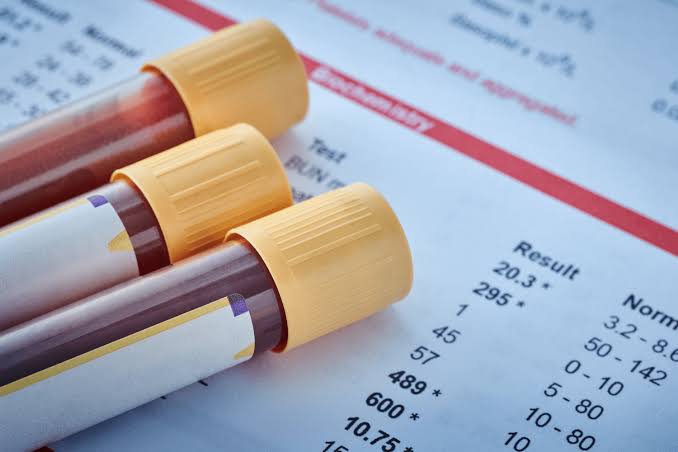
A single abnormal kidney function test is a data point; a series of results over time is the story.
What matters most is the trend — is the eGFR stable, slowly declining (less than 5 mL/min per year), or rapidly falling (more than 5 mL/min per year)? The combination of eGFR and ACR is also critical: an eGFR of 58 with an ACR of 15 mg/g carries far better prognosis than an eGFR of 58 with an ACR of 350 mg/g. And context matters: acute illness, dehydration, NSAIDs, or contrast dye can temporarily reduce eGFR without causing permanent damage. Repeat testing after recovery establishes whether the change is reversible.
An eGFR of 55 does not automatically mean CKD. Repeat testing in 3 months is needed to confirm persistence. If the second value is still in the 45–65 range, adding a cystatin C-based eGFR helps clarify whether the creatinine-based estimate is accurate.
When Kidney Function Tests Prompt Referral to Nephrology
Primary care providers manage most CKD patients in early stages. Nephrology referral is recommended when:
- eGFR falls below 30 (G4): Advanced CKD; specialist management of complications and planning for renal replacement therapy
- Rapidly declining eGFR: Fall of more than 5 mL/min per year, or creatinine doubling
- ACR >300 mg/g: Macroalbuminuria not responding to maximum RAAS blockade, or of unclear cause
- Glomerular hematuria: RBC casts or dysmorphic RBCs alongside proteinuria — see our guide to blood in urine test results
- Refractory hyperkalemia or metabolic acidosis
- Approaching eGFR 20: Pre-dialysis education and access creation planning
For guidance on how often kidney function tests should be repeated, see our dedicated guide to kidney function monitoring frequency.
Frequently Asked Questions About Kidney Function Tests
What is a normal eGFR for my age?
For adults under 40, a normal eGFR is typically 90 to 120 mL/min/1.73m². After age 40, eGFR naturally declines by roughly 0.75 to 1 mL/min per year. An eGFR of 65 in a healthy 80-year-old with no proteinuria and stable values over time may represent age-appropriate kidney function. The trend and the urine albumin level matter more than the raw eGFR number.
Can kidney function tests be normal even if you have kidney disease?
Yes. Early CKD often produces no abnormality on a creatinine-based eGFR because up to 50% of nephron function can be lost before creatinine rises. Urine albumin is often the first test to become abnormal in diabetic kidney disease and hypertensive nephropathy, sometimes years before eGFR falls.
Is a creatinine of 1.2 bad?
Not necessarily. For a large, muscular man, 1.2 mg/dL is within normal range. For a petite, elderly woman, 1.2 mg/dL might reflect significant kidney function loss, because her healthy baseline would normally be 0.6 to 0.7. The eGFR calculated from that creatinine, combined with the ACR and the trend over time, provides far more useful information.
How do I prepare for kidney function tests?
Most kidney function blood tests do not require fasting. For urine albumin testing, avoid vigorous exercise in the 72 hours before collection (exercise temporarily increases albumin excretion). Collect the first morning urine for the most accurate ACR. Inform your doctor of all medications, particularly NSAIDs and any recent contrast dye administration.
How often should kidney function tests be repeated?
Monitoring frequency depends on CKD stage and risk category. Low-risk patients (G1–G2 + A1) may need only annual testing. Very high-risk patients (G3b–G5 or A3) may need testing every 3 to 6 months. See our guide to kidney function monitoring frequency for a detailed schedule by risk category.
This article is for educational purposes only. Always consult a qualified healthcare provider for diagnosis and treatment of any medical condition.
Acute Kidney Injury vs. Chronic Kidney Disease: How Tests Help Distinguish Them
When kidney function test results are abnormal for the first time, one of the first clinical questions is whether this represents acute kidney injury (AKI) — a sudden, potentially reversible decline in kidney function — or newly discovered chronic kidney disease (CKD) that has been present silently for a long time. The distinction matters because the treatment and prognosis are fundamentally different.
Acute kidney injury (AKI) is defined as a rise in serum creatinine of 0.3 mg/dL or more within 48 hours, or a creatinine increase to 1.5 times or more the baseline value within 7 days, or a drop in urine output below 0.5 mL/kg per hour for 6 or more hours. AKI is staged by severity:
- AKI Stage 1: Creatinine 1.5–1.9 times baseline, or rise of ≥0.3 mg/dL
- AKI Stage 2: Creatinine 2.0–2.9 times baseline
- AKI Stage 3: Creatinine ≥3 times baseline, or initiation of dialysis, or eGFR drop below 35 in patients under 18
The three main categories of AKI are:
Pre-renal AKI results from reduced blood flow to the kidneys — dehydration, heart failure, shock, or NSAIDs reducing renal blood flow — without actual damage to kidney tissue. BUN rises disproportionately to creatinine (BUN/Cr ratio typically above 20). The urine is concentrated (osmolality above 500 mOsm/kg), and the fractional excretion of sodium (FENa) is low (below 1%), because the functioning tubules are avidly conserving sodium. Pre-renal AKI is often reversible with IV fluids and removal of the offending cause.
Intrinsic renal AKI involves direct damage to kidney tissue — most commonly acute tubular necrosis (ATN) from ischemia (hypotension) or nephrotoxins (aminoglycosides, contrast dye, myoglobin in rhabdomyolysis). In ATN, granular or muddy brown casts appear in the urine, FENa rises above 2%, and urine becomes dilute (osmolality below 300 mOsm/kg) because the damaged tubules can no longer concentrate urine. Recovery depends on the severity of the insult and how quickly the cause is removed.
Post-renal AKI results from obstruction of urine flow — bilateral kidney stones, urethral obstruction from a large prostate, or bladder cancer occluding both ureteral orifices. Urine backs up, raising pressure throughout the collecting system and impairing filtration. Kidney ultrasound typically reveals bilateral hydronephrosis. Relief of the obstruction — with a urethral catheter, ureteral stents, or nephrostomy tubes — often restores kidney function if done promptly.
The distinction between AKI and CKD on a blood test alone is not always possible — it requires knowing the patient’s prior creatinine values. If prior tests show the creatinine has been elevated for more than 3 months, CKD is more likely. If this is the patient’s first test, or if recent prior values were normal, AKI should be considered. Small kidneys on ultrasound (less than 9 cm) strongly suggest CKD; normal-sized or enlarged kidneys are more consistent with acute disease.
AKI that is not fully recovered increases the lifetime risk of CKD. Patients who had a hospitalization-associated AKI should have a creatinine and urine albumin checked 3 months after discharge to assess recovery. If the values have not returned to baseline, nephrology follow-up is recommended.
How Kidney Function Tests Are Interpreted in Specific Patient Groups
The same creatinine value carries very different implications depending on who the patient is. Understanding these differences prevents misclassification and missed diagnoses.
Elderly patients represent a particularly important group. After age 70, many people have eGFR values in the 45–65 range from age-related nephron loss alone, without any underlying kidney disease. The critical question is whether the eGFR is stable or declining. An eGFR of 55 that has been the same for 5 years in an 80-year-old with no albuminuria carries a very different meaning from an eGFR of 55 that has fallen from 72 over the past 2 years. In elderly patients, measuring cystatin C alongside creatinine is particularly valuable, because muscle mass is typically low and the creatinine-based eGFR tends to underestimate kidney disease.
Patients with diabetes are at high risk for diabetic kidney disease, and kidney function testing in this group requires both eGFR and urine ACR — the eGFR alone is insufficient for early detection. The classic early pattern in diabetic kidney disease is a rising ACR (first the A2 range, then A3) before the eGFR begins to fall. By the time the eGFR drops into the G3 range in a diabetic patient, the ACR is often already in the A3 category. Treatment decisions — starting ACE inhibitors, ARBs, SGLT-2 inhibitors, and now finerenone — are guided by ACR as much as by eGFR, and are most effective when started early in the A2 stage before extensive glomerular damage has occurred.
Patients with hypertension should have annual eGFR and ACR testing even if they feel well. Hypertensive nephrosclerosis produces a gradual decline in eGFR and rising ACR, often over years, without causing symptoms until the disease is advanced. Annual testing allows blood pressure targets to be set appropriately (below 130/80 mmHg in patients with CKD and proteinuria, per current guidelines) and RAAS blockade to be started at the right time.
Patients taking nephrotoxic medications — including NSAIDs (which reduce renal blood flow and can cause interstitial nephritis), aminoglycoside antibiotics (which are directly toxic to tubular cells), lithium (which causes nephrogenic diabetes insipidus and tubular scarring with long-term use), and calcineurin inhibitors such as tacrolimus and cyclosporine (used in transplant recipients and autoimmune disease) — require regular monitoring of creatinine and eGFR. For patients on long-term lithium, annual creatinine, eGFR, and urine osmolality (to detect nephrogenic DI) are recommended by guidelines. For patients on calcineurin inhibitors, the frequency of monitoring is dictated by the transplant or rheumatology protocol but is typically at least every 3 to 6 months.
Patients with a single kidney — from birth, previous nephrectomy, or living kidney donation — function entirely on one kidney’s capacity. Their eGFR is roughly half what it would be with two kidneys from the same underlying function, because total filtration capacity is reduced. However, the remaining kidney undergoes compensatory hypertrophy and increases its individual filtration rate, so a healthy kidney donor after surgery typically has an eGFR in the 45–65 range rather than the expected 50% of their pre-donation value. Long-term follow-up of kidney donors shows a small but real increased lifetime risk of CKD and ESRD compared to matched healthy controls, making regular monitoring essential for this group.
Pregnant women normally have a substantially higher eGFR during pregnancy — up to 50% above non-pregnant values — because of the increased plasma volume and cardiac output of pregnancy. This means that a creatinine of 0.8 mg/dL, which is normal in a non-pregnant woman, may actually represent impaired kidney function in a pregnant woman whose creatinine should be 0.4–0.6 mg/dL. Pre-eclampsia causes a characteristic pattern of rising creatinine, proteinuria, and hypertension; if the creatinine rises above 1.0 mg/dL in a pregnant woman, this is a significant finding warranting urgent evaluation. Gestational proteinuria (from the lower protein reabsorption threshold in pregnancy) is common and must be distinguished from pathological proteinuria using ACR in the context of blood pressure and clinical symptoms.
What to Do After Receiving Abnormal Kidney Function Test Results
Receiving an abnormal creatinine, eGFR, or ACR result in the mail or through an online patient portal — without any accompanying explanation — is a common and unnecessarily frightening experience. Here is what to actually do:
Don’t panic, but don’t ignore it either. A single abnormal kidney function result is a data point, not a diagnosis. It should prompt a follow-up appointment, not a trip to the emergency room (unless you also have symptoms like severe swelling, difficulty breathing, decreased urine output, or confusion, which can indicate rapidly deteriorating kidney function requiring urgent evaluation).
Check for reversible causes first. Were you significantly dehydrated on the day of the test? Had you taken ibuprofen or naproxen recently? Were you recovering from a gastrointestinal illness? Were you just started on a new blood pressure medication — particularly an ACE inhibitor or ARB, which characteristically cause a transient 10–15% rise in creatinine in the first weeks of use? Any of these can produce a transiently abnormal result that returns to baseline on repeat testing.
Request a repeat test in 3 months. If no obvious reversible cause is found, a second measurement in approximately 3 months is the appropriate next step. This is the minimum requirement to diagnose CKD (as opposed to a transient acute process). If the second result is also abnormal, the interpretation shifts from “possible acute change” to “confirmed chronic problem requiring an organized evaluation.”
Ask for the urine albumin result too. If your doctor ordered a kidney function panel that only included blood tests, ask whether a urine ACR was also collected. Many kidney panels in primary care do not include the urine ACR unless specifically ordered. Knowing the ACR changes the risk stratification and monitoring plan substantially, and it is a simple test that can be added to any routine visit with a urine sample.
Bring your prior lab results to the appointment. If you have been getting blood tests for several years — for any reason, including annual physicals, diabetes monitoring, or medication follow-up — gather those old results. A creatinine result from 3 years ago is invaluable context. If your creatinine was 0.9 three years ago and is now 1.3, that is a meaningful trend even though both values are within or near the normal range. If your creatinine was 1.3 three years ago and is still 1.3 today, that is reassuring stability.
Sources: KDIGO CKD Guidelines 2024; NIDDK — Tests for Kidney Disease; National Kidney Foundation — Lab Values; Mayo Clinic — Kidney Function Tests.
My doctor recommended I look into kidney function tests: a simple guide and this article covered it perfectly. What I liked most was that the article didn’t just say what to avoid — it also gave alternatives. Thank you for making complex medical information accessible without dumbing it down.
As someone dealing with this personally, the kidney function tests: a simple guide section was very helpful. The practical tips made this immediately actionable, not just theoretical. Shared this with three friends who are dealing with related issues. Very useful resource.
Thank you for covering kidney function tests: a simple guide so thoroughly without being overly technical. It is refreshing to see an article that acknowledges individual variation rather than one-size-fits-all advice. This gave me real confidence going into my next specialist appointment.