
Magnesium is often called the “forgotten electrolyte” — essential to over 300 enzymatic reactions, critical for cardiovascular and neuromuscular function, and frequently abnormal in chronic kidney disease (CKD) — yet routinely underemphasized in patient education compared to the more widely discussed potassium, phosphorus, and sodium restrictions of kidney disease management. In CKD, the kidney’s reduced capacity to excrete magnesium creates a risk of accumulation (hypermagnesemia) — but simultaneously, dietary restrictions, medication interactions, and the metabolic disruptions of CKD can also cause magnesium depletion (hypomagnesemia) in some patients. Understanding the dual risk profile of magnesium in kidney disease, when magnesium supplementation is appropriate versus dangerous, and what magnesium does in the body helps patients navigate a topic that is both clinically significant and commonly misunderstood. This article covers magnesium metabolism in kidney disease, the risks of both high and low magnesium, common sources of inadvertent magnesium loading (which many CKD patients don’t recognize as magnesium-containing), dietary guidance, and when supplementation is and is not appropriate. For the broader context of electrolyte and mineral management in CKD, the companion article on kidney disease and mineral balance covers the full calcium-phosphorus-potassium framework alongside magnesium. The article on supplements for kidney health provides the general safety framework for supplement evaluation in CKD.
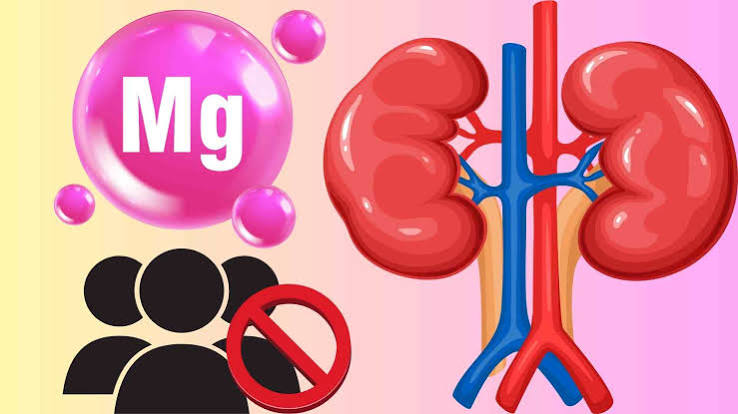
Magnesium Metabolism in Kidney Disease: How CKD Changes the Balance
In people with healthy kidneys, magnesium homeostasis is maintained by a finely tuned balance between intestinal absorption and renal excretion. The kidneys serve as the primary regulatory organ for magnesium — adjusting how much is excreted or reabsorbed in the thick ascending limb of the loop of Henle and the distal convoluted tubule in response to serum magnesium levels. When CKD damages this regulatory capacity, magnesium balance becomes more fragile. The impaired excretion problem in CKD: as GFR declines in CKD, the kidneys’ ability to excrete excess magnesium is progressively reduced. In mild to moderate CKD (stages G1–G3), the kidneys can still compensate by reducing tubular reabsorption and increasing fractional excretion of magnesium — so serum magnesium levels often remain within normal range despite reduced GFR. However, this compensatory capacity has limits: as CKD progresses to stages G4–G5 and into dialysis dependence, the risk of hypermagnesemia increases substantially, particularly if the patient is taking magnesium-containing medications or supplements. Serum magnesium in CKD patients — the distribution is complex: interestingly, population studies of CKD patients show a bimodal pattern of magnesium abnormalities rather than uniformly elevated levels. Some CKD patients — particularly those with early CKD, those on loop diuretics (which cause urinary magnesium wasting), and those with diabetes (which increases renal magnesium excretion) — have hypomagnesemia rather than hypermagnesemia. Studies in diabetic nephropathy patients have found that hypomagnesemia is common and associated with worse glycemic control and faster CKD progression, possibly because magnesium is required for insulin signaling pathways and glucose metabolism. This means that the clinical picture in CKD is not simply “restrict magnesium” — it’s “monitor magnesium and correct in either direction as needed under medical supervision.” What magnesium does in the body: understanding magnesium’s physiological roles helps explain why both hypermagnesemia and hypomagnesemia can cause significant symptoms. Magnesium is required for ATP synthesis (essentially all cellular energy production is magnesium-dependent, because the active form of ATP is the Mg-ATP complex), for activation of over 300 enzymes including those involved in DNA and protein synthesis, for maintenance of transmembrane ion gradients (particularly calcium and potassium channels), and for cardiovascular regulation including myocardial contractility and vascular tone. Hypermagnesemia: symptoms and risks: mild hypermagnesemia (serum magnesium 2–4 mg/dL, above normal range of ~1.7–2.2 mg/dL) often causes no symptoms and may be discovered only on routine labs. As magnesium levels rise further, symptoms emerge in a fairly predictable severity sequence: nausea and flushing; reduced deep tendon reflexes (an early neuromuscular sign used clinically); muscle weakness and hypotension; cardiac conduction disturbances including bradycardia and prolonged PR interval; respiratory muscle paralysis; cardiac arrest. Severe symptomatic hypermagnesemia is a medical emergency treated with intravenous calcium gluconate (which rapidly reverses neuromuscular effects), dialysis, and discontinuation of the magnesium source. Most cases of clinically significant hypermagnesemia in CKD patients are iatrogenic — caused by magnesium-containing medications that the patient or prescriber did not recognize as a magnesium source. Hypomagnesemia: symptoms and risks: low magnesium causes neuromuscular irritability (muscle cramps, fasciculations, tremor, tetany), cardiac arrhythmias (including torsades de pointes, a potentially life-threatening ventricular arrhythmia), and metabolic abnormalities including refractory hypokalemia (low magnesium makes it difficult to correct low potassium because magnesium is required for proper kidney potassium handling) and hypocalcemia. The NIDDK resource on kidney disease and lab tests is at the NIDDK CKD tests and diagnosis page.
Hidden Magnesium Sources: The Medications CKD Patients Must Know About
One of the most clinically important and underappreciated aspects of magnesium safety in CKD is the abundance of over-the-counter medications and supplements that contain substantial amounts of magnesium — often without patients or even prescribers recognizing them as magnesium sources. Magnesium-containing antacids: several of the most widely used over-the-counter antacids contain magnesium hydroxide or magnesium carbonate as active ingredients. Milk of Magnesia (magnesium hydroxide suspension) is a common laxative and antacid that provides approximately 500 mg of elemental magnesium per tablespoon. Combination antacids containing both magnesium and aluminum hydroxide (Maalox, Mylanta) contain meaningful magnesium per dose. Regular use of these products in CKD patients — even at doses considered safe in the general population — can cause progressive magnesium accumulation because the kidneys cannot excrete it adequately. Aluminum hydroxide-only antacids (e.g., pure aluminum hydroxide gel) do not contain magnesium and are sometimes used as phosphate binders in CKD patients specifically for this reason, though aluminum accumulation is its own concern with long-term use. Magnesium-containing laxatives: magnesium citrate (sold as oral solution, often in large bottles used as bowel prep before colonoscopy) contains a very large magnesium load — enough to cause symptomatic hypermagnesemia even in patients with mildly reduced kidney function. Magnesium sulfate (Epsom salt) used as an oral laxative carries similar risk. CKD patients who need bowel prep before a procedure should discuss alternatives with their care team, as the standard magnesium citrate prep can be dangerous in CKD. Magnesium-based laxatives should be avoided in CKD patients without medical supervision. Supplements marketed for sleep, relaxation, and muscle cramps: magnesium glycinate, magnesium threonate, magnesium L-threonate, magnesium taurate, and magnesium malate are all popular supplement forms marketed for their purported benefits for sleep quality, anxiety, muscle cramps, and headache. These products are widely sold in health food stores and online as “natural” remedies. However, they all provide elemental magnesium that the impaired kidneys of CKD patients cannot excrete efficiently, and regular use can cause progressive magnesium accumulation even when individual doses appear modest. CKD patients with stage G3b and above should specifically discuss any magnesium supplement with their nephrologist before using. Magnesium in multivitamins and mineral formulas: many standard adult multivitamin-mineral supplements contain 50–100 mg of magnesium per dose. For CKD patients in earlier stages with well-preserved kidney function, this amount is generally not a concern. However, as CKD progresses, the cumulative magnesium load from a multivitamin plus dietary sources plus any additional supplements can contribute to marginal hypermagnesemia, particularly if GFR is below 30 mL/min/1.73m². Renal-specific multivitamin formulas designed for CKD patients are available and typically contain reduced or no magnesium alongside modified potassium and phosphorus content. The NKF patient resource on kidney disease diet is available at the NKF mineral management page.

Dietary Magnesium in CKD: Navigating Restrictions and Nutritional Needs
The relationship between dietary magnesium and kidney disease is more nuanced than a simple “restrict all magnesium” directive — and overly aggressive restriction of magnesium-containing foods can inadvertently worsen nutrition and hypomagnesemia risk in CKD patients who are already magnesium-depleted. Foods high in magnesium and their CKD compatibility: the major dietary sources of magnesium include nuts and seeds (almonds, cashews, pumpkin seeds), legumes (black beans, edamame, lentils), whole grains (brown rice, quinoa, oats), dark leafy greens (spinach, Swiss chard), and dark chocolate. Many of these foods are also high in potassium and/or phosphorus — which creates a dietary constraint for CKD patients with hyperkalemia or hyperphosphatemia. However, not all magnesium-rich foods are equally restricted in CKD: nuts and seeds, for example, are high in magnesium but have variable potassium and phosphorus profiles, and their potassium and phosphorus bioavailability from plant sources may be lower than from animal sources due to phytate binding. The renal dietitian can help identify which magnesium-rich foods are compatible with the individual patient’s specific restrictions — a blanket avoidance of all magnesium-containing foods is neither necessary nor nutritionally appropriate. Magnesium and the cardiovascular risk in CKD: an emerging body of evidence from epidemiological studies in CKD patients suggests that higher dietary magnesium intake is associated with lower rates of cardiovascular events, vascular calcification progression, and mortality — somewhat paradoxically, given the concern about magnesium accumulation. The proposed mechanism relates to magnesium’s role as a physiological antagonist of calcium: adequate magnesium may inhibit calcium deposition in vascular smooth muscle cells, potentially slowing the vascular calcification that is a hallmark of advanced CKD and a major driver of CKD-associated cardiovascular mortality. Some researchers have proposed that the modest hypermagnesemia often seen in CKD patients may actually be partially protective against vascular calcification — though this hypothesis requires validation in larger prospective trials before it influences clinical practice. What is clear is that severe hypermagnesemia is dangerous, mild hypermagnesemia’s clinical significance is uncertain, and hypomagnesemia is clearly harmful. Magnesium monitoring in CKD: KDIGO guidelines for CKD management recommend monitoring serum magnesium as part of routine CKD lab monitoring, particularly in patients taking magnesium-containing medications or supplements, those with symptoms of magnesium abnormality, and patients at higher risk for electrolyte imbalances. The frequency of monitoring depends on CKD stage — more frequent in advanced CKD (stage G4–G5) and dialysis. Patients who are proactive about their CKD management can ask their care team to include serum magnesium in the routine lab panel if it is not already there. For dialysis patients specifically: in patients on hemodialysis, serum magnesium is cleared with each dialysis session to a degree determined by the dialysate magnesium concentration. The dialysis team monitors and adjusts the dialysate composition to target appropriate serum magnesium levels. Dialysis patients should still avoid magnesium-containing antacids and laxatives unless specifically approved, as the magnesium load between dialysis sessions can be significant. Peritoneal dialysis provides continuous but slower magnesium clearance. The KDIGO CKD guidelines framework for electrolyte monitoring is at the KDIGO CKD evaluation and management page. The StatPearls resource on hypomagnesemia management is available at the StatPearls hypomagnesemia page. Patients who notice muscle cramps, weakness, irregular heartbeat, or other neuromuscular symptoms should have magnesium checked — these symptoms can indicate either hypo- or hypermagnesemia and should not be self-treated with magnesium supplements in CKD without first confirming the serum level. For the broader picture of how magnesium monitoring fits into CKD management over time, see the article on kidney disease and long-term monitoring.
Sources: NIDDK CKD Tests and Diagnosis · National Kidney Foundation · StatPearls: Hypomagnesemia · KDIGO CKD Guidelines
When Magnesium Supplementation Is Appropriate in CKD
Despite the general caution about magnesium supplementation in kidney disease, there are specific clinical situations where magnesium repletion is appropriate, necessary, and can be done safely with medical supervision. Understanding when supplementation is warranted helps patients and their care teams make informed decisions rather than applying a blanket avoidance that may leave hypomagnesemia untreated. Documented hypomagnesemia on lab testing: the clearest indication for magnesium supplementation in CKD is confirmed low serum magnesium (below the laboratory’s reference range) on blood testing. A serum magnesium level rather than a symptom assessment should guide this decision — not all patients with hypomagnesemia are symptomatic, and not all muscle cramps in CKD patients are caused by low magnesium (cramps are also caused by uremia, calcium and vitamin D abnormalities, and fluid shifts around dialysis). If serum magnesium is confirmed low, the nephrologist or care team will typically prescribe oral magnesium supplementation in an appropriate form and dose, with follow-up labs to monitor response and avoid overshooting into hypermagnesemia. CKD patients on loop diuretics: loop diuretics (furosemide, bumetanide, torsemide) are commonly prescribed in CKD for fluid management. Loop diuretics inhibit the sodium-potassium-chloride cotransporter in the thick ascending limb, which is also the site of magnesium reabsorption — so chronic loop diuretic use causes urinary magnesium wasting that can overcome the impaired excretion of CKD and lead to net magnesium depletion. CKD patients on long-term loop diuretics often need their magnesium levels monitored more frequently and may require oral magnesium supplementation if levels fall below normal. Diabetic nephropathy and insulin resistance: insulin resistance in type 2 diabetes is associated with reduced intracellular magnesium and higher urinary magnesium excretion, creating a state of magnesium depletion even when serum levels appear borderline. Some research suggests that magnesium supplementation in patients with diabetic kidney disease and documented hypomagnesemia may improve insulin sensitivity and glycemic control, and possibly slow kidney disease progression — though these findings require confirmation in larger trials before they change standard of care. CKD patients with diabetes who have low or borderline magnesium levels have particular reason to discuss supplementation with their care team. Safe forms of magnesium for CKD patients: when magnesium supplementation is prescribed for CKD patients, the choice of magnesium form matters. Magnesium oxide has poor bioavailability (approximately 4%) and a high cathartic (laxative) effect, making it less suitable for therapeutic repletion. Magnesium glycinate and magnesium malate have better bioavailability and fewer gastrointestinal side effects, though the same precautions about monitoring apply regardless of form. Intravenous magnesium sulfate may be used for acute severe hypomagnesemia in hospitalized CKD patients, with careful monitoring. For mild to moderate hypomagnesemia in outpatient CKD management, low doses of oral magnesium glycinate (typically 100–150 mg elemental magnesium per day) with serial serum magnesium monitoring is a common approach — dosed conservatively to replete without causing accumulation. Magnesium and constipation in CKD: constipation is highly prevalent in CKD patients — caused by dietary restrictions limiting fiber, fluid restrictions, polypharmacy (many medications used in CKD cause constipation), and reduced physical activity. This creates a demand for laxatives, and magnesium-based laxatives (magnesium citrate, milk of magnesia) are easily accessible over-the-counter. CKD patients who need laxatives should ask their care team for CKD-safe alternatives rather than self-treating with magnesium-containing products. Polyethylene glycol (PEG, brand names Miralax and others), psyllium husk, lactulose, and stool softeners (docusate) are options that do not carry the magnesium accumulation risk. Increasing dietary fiber within the patient’s specific potassium and phosphorus constraints, with guidance from the renal dietitian, is the preferred long-term approach to managing CKD-associated constipation. Practical summary for CKD patients: check all antacids, laxatives, and supplements for magnesium content before taking; do not start magnesium supplements without a serum magnesium level showing deficiency; report any muscle weakness, unusual fatigue, irregular heartbeat, or decreased reflexes to the care team; and ask for serum magnesium to be included in routine CKD monitoring labs. The connection between magnesium balance and overall mineral management in CKD is covered in the article on kidney disease and mineral balance. For patients wanting to understand how mineral lab monitoring integrates into the CKD care schedule, the article on kidney disease and long-term monitoring covers the full monitoring framework by CKD stage.
Magnesium and Cardiovascular Health in CKD: Emerging Research
Beyond its classical role as an electrolyte requiring balance management in CKD, magnesium is increasingly studied for its potential protective effects against the cardiovascular disease that is the primary cause of death in CKD patients. Several lines of evidence suggest that magnesium may play an active protective role in the cardiovascular complications of kidney disease, rather than simply being a passive electrolyte that must be kept within a safe range. Magnesium and vascular calcification: vascular calcification — the deposition of calcium phosphate crystals in the walls of blood vessels and heart valves — is an accelerated process in CKD driven by the combination of hyperphosphatemia, hyperparathyroidism, high calcium-phosphorus products, and vitamin D dysregulation. Vascular calcification in CKD is strongly associated with cardiovascular mortality. Magnesium functions as a physiological inhibitor of calcium phosphate crystal formation: at the cellular level, magnesium ions compete with calcium at calcium channels and in the calcification process itself, and in in vitro studies, raising magnesium concentrations inhibits hydroxyapatite crystal growth. Observational studies of CKD and dialysis patients have found inverse associations between serum magnesium levels and the extent of coronary artery calcification — patients with higher serum magnesium tend to have less calcification. Clinical trials of magnesium supplementation to reduce vascular calcification progression in CKD patients are underway, with some preliminary results showing promise. Magnesium and cardiac arrhythmia risk in CKD: CKD patients have substantially elevated risk of sudden cardiac death, partly attributable to the high burden of cardiac arrhythmias in this population. Hypomagnesemia is a well-established risk factor for ventricular arrhythmias, including torsades de pointes. In the CKD population, where multiple arrhythmia risk factors coexist (hyperkalemia, volume fluctuations, uremic cardiomyopathy), maintaining magnesium within the normal range through monitoring and appropriate management reduces one modifiable contributor to arrhythmia risk. This is one reason why magnesium monitoring is part of comprehensive CKD care rather than purely a concern about toxicity from supplements and antacids. Hypertension and magnesium in CKD: magnesium has vasodilatory effects mediated by relaxation of vascular smooth muscle — magnesium acts as a natural calcium channel blocker at the cellular level, counteracting calcium-mediated vasoconstriction. Several meta-analyses in the general population have found that magnesium supplementation modestly lowers blood pressure, particularly in individuals with low baseline magnesium levels. In CKD patients, who have very high rates of hypertension and for whom blood pressure control is one of the most important modifiable factors in slowing disease progression, the potential antihypertensive contribution of adequate magnesium status is clinically relevant — another reason to monitor and correct hypomagnesemia rather than simply tolerating it. Blood pressure management in CKD is covered in the broader context of CKD outcomes in the article on kidney disease and healthy aging. For CKD patients who want to understand how all aspects of their mineral and electrolyte management fit together — magnesium alongside calcium, phosphorus, potassium, and vitamin D — the comprehensive coverage in the article on kidney disease and mineral balance provides the integrative framework that clinical care is based on, and the KDIGO guidelines provide the evidence-based standards that nephrology practice follows for mineral management across all CKD stages.
I had no idea that Milk of Magnesia has so much magnesium per dose. I have stage 4 CKD and have been taking it regularly for constipation because my doctor said I should avoid potassium-based laxatives. Nobody ever mentioned that Milk of Magnesia would be a problem too. I’m calling the office tomorrow to ask about safer alternatives. The suggestion about polyethylene glycol as a kidney-safe option is really helpful — I didn’t know that was an option.
The section on the potential vascular calcification protection from adequate magnesium was surprising to me. I’m on dialysis and have significant coronary calcification, and I’d always thought of magnesium purely as something to be managed downward — not as something that might have a protective role. Has this actually been tested in dialysis patients specifically, or is the vascular calcification evidence mainly from earlier-stage CKD?
Frank, the vascular calcification research does include dialysis patients — some of the most compelling observational data comes from studies in hemodialysis populations where higher dialysate magnesium concentrations and higher serum magnesium levels have been associated with lower coronary calcification scores and better cardiovascular survival. A few small randomized trials of magnesium supplementation or higher-magnesium dialysate in dialysis patients have shown attenuated calcification progression. The evidence is not yet strong enough to change clinical practice standards, but it is genuinely an active research direction rather than a theoretical observation from earlier CKD stages.