
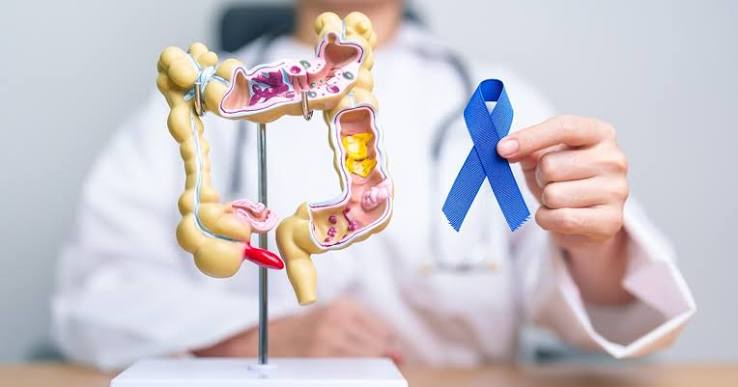
Colon cancer screening is one of the most evidence-supported preventive health interventions available — unique among cancer screenings in that it can prevent cancer outright by removing precancerous polyps before they become malignant, not just detect it early. Yet screening rates in adults over 45 remain well below recommended levels, partly because of discomfort with the topic, partly because the range of available screening options is rarely explained clearly, and partly because many adults are unaware that their personal risk factors determine both when to start and how frequently to screen. Understanding colon cancer screening means understanding that it is not a single test but a category of options with different evidence bases, convenience profiles, and implications for follow-up.
This article covers who should be screened for colon cancer and when, the full range of currently recommended screening modalities (stool-based tests, visual colonoscopy, and intermediate options), how personal risk factors change the screening schedule, and what to expect from the process. The specific details of stool-based tests — including how to interpret results and what a positive test means — are explored in the companion article on stool-based colon cancer screening tests. Practical preparation guidance for colonoscopy is covered in the article on colonoscopy preparation: a simple guide.
Who Should Be Screened and When
The U.S. Preventive Services Task Force (USPSTF) updated its colon cancer screening recommendations in 2021, lowering the start age from 50 to 45 for average-risk adults. This change reflected rising rates of colorectal cancer in younger adults — a trend documented since the 1990s across multiple surveillance datasets. Current guidelines:
- Age 45–75, average risk: Begin screening at 45 and continue until age 75 using a patient-preferred and clinician-recommended screening strategy. The USPSTF gives a Grade B recommendation (strong recommendation with moderate to high certainty of net benefit) for this age range.
- Age 76–85: Individual decision based on prior screening history, overall health, and life expectancy. The USPSTF gives a Grade C recommendation (screen selectively) — patients who have never been screened and are otherwise healthy may benefit; those with recent negative colonoscopy are unlikely to benefit from additional screening before age 85.
- Over 85: The USPSTF recommends against screening — the harms of investigation and follow-up outweigh expected benefits given remaining life expectancy and complication risk.
These age thresholds apply to average-risk adults. Average risk means: no personal history of colorectal cancer or polyps; no inflammatory bowel disease (Crohn’s disease or ulcerative colitis); no family history of colorectal cancer or confirmed hereditary colorectal cancer syndromes; no prior radiation to the abdomen or pelvis for a prior cancer. Adults who do not meet these criteria are classified as higher risk and require earlier or more frequent screening.
Higher-Risk Groups: Earlier Screening Is Essential
Personal and family history factors substantially elevate colorectal cancer risk and change the recommended screening start age and frequency:
Family history of colorectal cancer or adenomatous polyps:
- One first-degree relative (parent, sibling, child) with colorectal cancer or advanced polyps diagnosed before age 60, OR two or more first-degree relatives at any age: begin colonoscopy at age 40 or 10 years before the youngest affected relative’s age at diagnosis, whichever comes first. Repeat every 5 years.
- One first-degree relative diagnosed at age 60 or older: begin at age 40. Standard average-risk screening intervals apply thereafter.
Inflammatory bowel disease (IBD): Patients with Crohn’s disease or ulcerative colitis involving the colon have substantially elevated colorectal cancer risk due to chronic inflammation. Surveillance colonoscopy is generally recommended starting 8 years after the onset of IBD symptoms, with repeat every 1–2 years depending on extent of disease, histologic dysplasia findings, and specialist guidance. This is a medically supervised surveillance programme rather than standard population screening.
Lynch syndrome (hereditary non-polyposis colorectal cancer, HNPCC): Lynch syndrome is the most common hereditary colorectal cancer syndrome, caused by mutations in DNA mismatch repair genes (MLH1, MSH2, MSH6, PMS2). It accounts for approximately 2–4% of all colorectal cancers. Surveillance colonoscopy every 1–2 years beginning at age 20–25 (or 2–5 years before the youngest family diagnosis) is standard. Genetic counselling and testing are recommended when Lynch syndrome is suspected based on personal or family history.
Familial adenomatous polyposis (FAP) and attenuated FAP (AFAP): FAP is a rare autosomal dominant condition caused by APC gene mutations, leading to hundreds to thousands of colorectal adenomas and near-100% colorectal cancer risk without prophylactic colectomy. Annual flexible sigmoidoscopy or colonoscopy from age 10–15 is recommended. Genetic testing and counselling are standard for affected families.
Personal history of adenomatous polyps: Follow-up intervals after polypectomy depend on polyp number, size, and histology at the time of removal. Low-risk findings (1–2 small tubular adenomas <10mm) typically warrant repeat colonoscopy in 7–10 years. High-risk findings (3 or more adenomas, adenoma ≥10mm, villous features, or high-grade dysplasia) typically warrant repeat in 3 years. Individuals in this category should follow the specific surveillance interval recommended by the gastroenterologist who performed the colonoscopy.
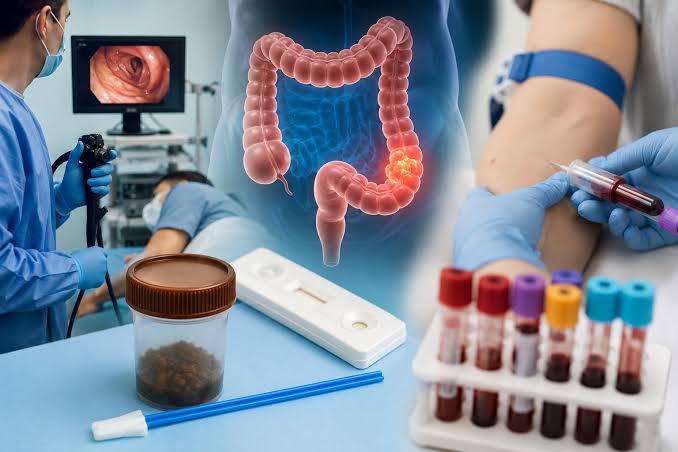
Overview of Approved Screening Modalities
The USPSTF-endorsed screening options fall into three categories. All are considered acceptable and the choice between them should be guided by patient preference, availability, and individual clinical circumstances:
Stool-based tests (non-invasive, annual or every 1–3 years):
- Guaiac-based faecal occult blood test (gFOBT): Detects haemoglobin via a chemical reaction. Requires dietary restriction (no red meat, vitamin C, NSAIDs) for 3 days before testing. Lower sensitivity than newer alternatives. Annual use is required. Interval: annually.
- Faecal immunochemical test (FIT): Detects human haemoglobin specifically using antibodies, requiring no dietary restriction. Higher sensitivity than gFOBT for cancer and advanced adenomas. Annual use required. This is the most widely used stool-based test in primary care. Interval: annually.
- Stool DNA test (FIT-DNA, Cologuard): Combines FIT with detection of abnormal DNA markers shed by colorectal cancer and precancerous cells. Higher sensitivity for cancer and advanced adenomas than FIT alone, but lower specificity (more false positives). Interval: every 1–3 years.
Visual (structural) tests (colonoscopy or alternatives, every 5–10 years):
- Colonoscopy: Direct visualisation of the entire colon with biopsy and polypectomy capability. Highest detection accuracy for both cancer and precancerous polyps. Requires bowel preparation and moderate sedation. Considered the gold standard for both screening and diagnostic purposes. Interval: every 10 years (average risk, normal result).
- CT colonography (virtual colonoscopy): CT imaging of the colon after bowel preparation and colonic gas insufflation. Does not require sedation. Cannot remove polyps — any finding requires follow-up conventional colonoscopy. Interval: every 5 years.
- Flexible sigmoidoscopy: Direct visualisation of the sigmoid colon and rectum only — approximately the lower third of the colon. Less comprehensive than colonoscopy; misses proximal lesions. May be combined with FIT. Interval: every 5 years alone, or every 10 years with annual FIT.
A key principle: a positive result on any stool-based or CT colonography screening test requires follow-up colonoscopy. Stool-based tests are screening tools; colonoscopy is the definitive diagnostic and therapeutic procedure. Declining follow-up colonoscopy after a positive non-invasive screening result is one of the most common and consequential gaps in the colon cancer screening pathway. Managing broader digestive health — particularly understanding liver-related symptoms that can sometimes overlap with colorectal presentations — is covered in the article on liver cancer screening awareness.
Choosing Between Screening Options: Practical Considerations
The clinical evidence supports all of the above screening modalities as effective when used consistently at their recommended intervals. The practical considerations that help individuals and clinicians choose between them:
Convenience and bowel preparation: Stool-based tests (FIT in particular) require no bowel preparation, no sedation, no time off work, and can be completed at home. Colonoscopy requires 1–2 days of bowel preparation, a day off work for the procedure and sedation recovery, and a companion to provide transport home. For patients who will reliably complete annual FIT but would defer or delay colonoscopy, annual FIT is the better real-world choice. Screening completion rate matters more than theoretical sensitivity of the test.
Detection capability: Colonoscopy detects and removes polyps in a single procedure, offering the “prevent as well as detect” advantage. FIT detects cancers and some advanced polyps but misses most non-bleeding polyps. For patients with higher-risk features or strong preference for a single definitive test, colonoscopy is more appropriate.
Access and insurance: In the United States, the Affordable Care Act requires coverage of USPSTF-recommended preventive screenings at no cost sharing for in-network providers. However, coverage specifics vary — some plans have charged cost sharing when a diagnostic colonoscopy following a positive FIT is billed as “diagnostic” rather than “preventive.” Confirming coverage with the insurer and the colonoscopy facility before scheduling is advisable.
Understanding Polyp Findings and What Happens After Screening
Most adults who undergo colonoscopy will either have a completely normal result or will have polyps found and removed during the same procedure. Understanding what polyp findings mean — and what they require — reduces anxiety and improves follow-up compliance:
Types of polyps: Not all polyps carry the same cancer risk. The two most clinically significant categories are:
- Adenomatous polyps (adenomas): The precancerous polyp type that colon cancer screening primarily aims to find and remove. Adenomas are further classified as tubular (lower risk), villous or tubulovillous (higher risk), and by size and grade of dysplasia. The transformation from adenoma to cancer takes an estimated 10–15 years in most cases — which is why the 10-year screening interval for colonoscopy is effective for average-risk adults. Finding and removing adenomas prevents cancer, rather than just detecting it early.
- Serrated polyps (sessile serrated lesions, SSLs): A distinct polyp type that has gained recognition as a significant contributor to colorectal cancers that develop on the right (proximal) side of the colon. SSLs can be difficult to visualise on colonoscopy due to their flat appearance and mucus covering. High-quality colonoscopy by an experienced endoscopist with adequate withdrawal time is particularly important for detecting proximal serrated lesions, which are associated with an accelerated adenoma-to-carcinoma sequence (5–10 years) compared to conventional adenomas.
- Hyperplastic polyps: Generally benign and not considered precancerous when found in the sigmoid colon and rectum. Hyperplastic polyps in the proximal colon may warrant closer surveillance. The pathology report from a polypectomy specifies polyp type, which determines the follow-up interval.
After polypectomy — surveillance intervals: The follow-up interval after colonoscopy with polypectomy is determined by the characteristics of the removed polyps, not a standard fixed interval. Guidelines from the US Multi-Society Task Force on Colorectal Cancer provide specific recommendations based on polyp number, size, type, and histology. As a general framework: finding 1–2 small (<10mm) tubular adenomas is low risk — repeat colonoscopy in 7–10 years. Finding 3–4 adenomas, any adenoma ≥10mm, villous histology, high-grade dysplasia, or sessile serrated lesions ≥10mm warrants repeat in 3 years. Finding 5 or more adenomas at a single colonoscopy warrants repeat in 1 year. These surveillance intervals are based on the risk of finding advanced adenomas or cancer at follow-up colonoscopy given the index findings.
When a biopsy reveals cancer: When colonoscopy reveals a lesion that is biopsied and returns as invasive colorectal cancer, the diagnostic pathway shifts to staging — CT scanning of the chest, abdomen, and pelvis to assess for nodal and distant metastases. Stage at diagnosis is the primary determinant of treatment and prognosis. Stage I colorectal cancer (confined to the bowel wall) has a 5-year survival rate above 90%. Stage IV (distant metastases) has a 5-year survival rate of approximately 14%. The difference between finding cancer at Stage I through screening versus Stage IV through symptoms is the outcome argument for consistent screening in average-risk adults. Managing overall digestive and liver health as part of a comprehensive preventive approach is also supported by regular symptom review and clinician check-ins, as outlined in the article on annual liver and digestive health checklist.
- Average risk, age 45–75: Begin screening at 45 — your choice of test with clinician guidance
- Family history (1st-degree relative, CRC before 60): Begin colonoscopy at 40 or 10 yrs before youngest diagnosis
- IBD, Lynch syndrome, FAP: Earlier and more frequent — specialist-guided surveillance programme
- Positive stool test: Must be followed by colonoscopy — do not skip this step
- Normal colonoscopy: Repeat in 10 years (average risk); stool tests need annual repeating
- Any test done consistently beats the best test done inconsistently
Frequently Asked Questions
The USPSTF lowered the screening start age from 50 to 45 in 2021 based on surveillance data showing a consistent rise in colorectal cancer incidence in adults aged 40–49 since the mid-1990s. Between 1995 and 2019, incidence in adults under 50 increased by approximately 2% per year. The reasons for this trend are not fully established but are likely multifactorial — dietary patterns, obesity, reduced physical activity, changes in gut microbiome composition, and possibly antibiotic exposure. The American Cancer Society had already moved to recommend screening at 45 in 2018, and the 2021 USPSTF update aligned major guidelines. Adults who were screened starting at 50 and are now past that age should continue on their established schedule rather than restarting.
Yes — the USPSTF endorses multiple screening modalities and considers the decision between them a shared one between patient and clinician. The most important factor is choosing a test you will actually complete and continue at the recommended interval. For patients who strongly prefer to avoid bowel preparation and sedation, annual FIT is a well-validated and evidence-supported choice. For patients who prefer a definitive test every 10 years and are comfortable with the preparation requirements, colonoscopy is appropriate. Your clinician may have a specific recommendation based on your risk factors, but among average-risk adults, the test preference is genuinely yours to exercise.
Colon cancer screening applies to asymptomatic adults. If you are experiencing symptoms — rectal bleeding, blood in the stool (bright red or dark/tarry), unexplained change in bowel habits lasting more than 3–4 weeks, unexplained weight loss, persistent abdominal pain or cramping, or iron-deficiency anaemia without an identified cause — these are not screening indications. They are diagnostic indications and require evaluation regardless of age. You should see a clinician promptly and expect colonoscopy rather than a stool-based test, since stool tests are not adequate for investigating symptomatic presentations. Understanding the full digestive health picture — including what symptoms are and are not normal at different ages — is covered in the article on digestive health after age 60.
Colonoscopy is a very safe procedure in appropriately selected patients, with serious complication rates of less than 3 per 1,000 procedures in average-risk populations. The main risks are perforation (0.05–0.08% of screening colonoscopies), bleeding following polypectomy (0.3–1% of cases with polypectomy), and adverse reactions to sedation. These rates are substantially higher with therapeutic colonoscopy (where large polyps are removed) versus purely diagnostic colonoscopy. The complication rates increase modestly with age and with medical comorbidities. In healthy adults aged 45–75 undergoing screening colonoscopy at accredited endoscopy units, the benefit-to-risk ratio is strongly favourable.
Yes — a normal colonoscopy at 50 with no polyps found indicates a 10-year repeat interval, meaning your next screening colonoscopy is due at 60. “Normal” here means no polyps and no suspicious findings. If polyps were found and removed at your age-50 colonoscopy, the follow-up interval depends on what was found — your gastroenterologist should have specified the recommended interval at the time of the procedure (typically 3–7 years depending on polyp characteristics). If you are unsure of your recommended follow-up interval, request the procedure report from your endoscopist’s office.
Cologuard (Exact Sciences) is the FDA-approved and USPSTF-endorsed stool DNA test that combines FIT with analysis of 11 DNA biomarkers shed by colorectal cancer and precancerous cells in stool. It has higher sensitivity for cancer than FIT alone (92% vs 74% in the DeeP-C pivotal trial) but lower specificity — meaning more false-positive results, each of which leads to a diagnostic colonoscopy. Medicare covers Cologuard every 3 years for average-risk adults over 45. Private insurance coverage varies; confirm with your insurer before ordering. A positive Cologuard result, like any positive non-invasive test, requires follow-up colonoscopy. The specific characteristics of stool DNA and other stool-based tests are explored in detail in the article on stool-based colon cancer screening tests.
Diet has well-documented associations with colorectal cancer risk. Diets high in red and processed meat are consistently associated with increased risk; high dietary fibre intake, regular consumption of fish, and the Mediterranean dietary pattern are associated with reduced risk. These associations are observational and do not substitute for screening in at-risk adults — dietary modification can reduce population-level risk but cannot reliably prevent colorectal cancer in individuals with elevated genetic or inflammatory risk. For guaiac FOBT specifically, dietary red meat and certain vitamin supplements cause false positives; FIT and stool DNA tests do not require dietary restriction. Maintaining broader digestive health alongside appropriate screening is supported by the evidence on supplements and diet covered in the article on supplements for digestive health.
Colorectal cancer often causes no symptoms in its early, most treatable stages. Waiting until symptoms appear before pursuing screening misses the primary benefit — finding and removing precancerous polyps before cancer develops. If you are 45 or older and have not begun screening, speak with your clinician about starting. If you are younger than 45 with significant family history, speak with your clinician about earlier screening now.
- US Preventive Services Task Force. (2021). Colorectal cancer screening: recommendation statement. JAMA, 325(19), 1965–1977.
- American Cancer Society. (2023). Colorectal cancer facts and figures 2023–2025. American Cancer Society.
- Siegel RL, Wagle NS, Cercek A, et al. (2023). Colorectal cancer statistics, 2023. CA: A Cancer Journal for Clinicians, 73(3), 233–254.
- NCI. (2024). Colorectal cancer screening (PDQ). National Cancer Institute. Available at: cancer.gov
- NHS. (2023). Bowel cancer screening. National Health Service. Available at: nhs.uk/conditions/bowel-cancer-screening
- Rex DK, Boland CR, Dominitz JA, et al. (2017). Colorectal cancer screening: recommendations for physicians and patients from the U.S. Multi-Society Task Force on Colorectal Cancer. Gastroenterology, 153(1), 307–323.
- Imperiale TF, Ransohoff DF, Itzkowitz SH, et al. (2014). Multitarget stool DNA testing for colorectal-cancer screening. New England Journal of Medicine, 370(14), 1287–1297.
The family history section was extremely helpful for clarifying something my GP and I have been confused about. My mother was diagnosed with colorectal cancer at age 58, and my GP told me to start colonoscopy screening at 40. I turned 40 last year and assumed my GP was being overly cautious, but your article confirms this is exactly the recommended protocol — one first-degree relative diagnosed before 60 means starting at 40 or 10 years before that diagnosis age, whichever comes first. My mother’s diagnosis at 58 means I should have started at 48 by the second criterion but 40 by the first-degree-relative-before-60 rule. I had my first colonoscopy three months ago at 40 and they found two small adenomas that were removed. I’m now on a 7–10 year follow-up rather than 10 years, which makes complete sense given the family history context. I only wish the original explanation of why 40 specifically had been given more clearly.
Finding two adenomas at your first colonoscopy at age 40 in the context of your family history is exactly the outcome that justifies the earlier screening recommendation — those adenomas could progress to cancer over the following decade without removal. A 7–10 year surveillance interval is appropriate for 1–2 small tubular adenomas with no high-risk features, so your follow-up plan is consistent with current US Multi-Society Task Force guidance. On the follow-up interval specifics: the pathology report from the colonoscopy should state the adenoma type (tubular, tubulovillous, or villous), size, and grade of dysplasia. If both were small (<10mm) tubular adenomas with low-grade dysplasia — the most common and lowest-risk finding — a 7–10 year interval is standard. If either had villous features or was ≥10mm, the interval would be 3 years. It is worth confirming with your gastroenterologist that the specific interval they recommended is based on the pathology findings rather than a default, since surveillance intervals after adenoma removal are one of the more commonly heterogeneous aspects of endoscopy practice. Well done for following through on the recommendation.
I had no idea the age recommendation had changed from 50 to 45. I turned 47 this year and hadn’t planned to start thinking about this for another three years. The explanation of why the age changed — rising incidence in adults under 50, not just an abundance of caution — is exactly the kind of context I needed. I’ve also been choosing between FIT and Cologuard and couldn’t understand why my insurance covers one but not the other without cost sharing under certain conditions. The explanation that a positive stool-based test leads to a follow-up colonoscopy that may be billed as diagnostic rather than preventive, potentially triggering cost sharing, is information that genuinely changes how I’ll plan and verify coverage before scheduling. I’ll contact my insurer specifically to confirm how a follow-up colonoscopy after a positive FIT would be billed before I choose a stool-based test over colonoscopy.