

The relationship between omega-3 and heart health is one of the most extensively studied areas in nutritional cardiology — and one of the most frequently misunderstood in popular health coverage. Omega-3 fatty acids are not primarily a cholesterol-lowering strategy. They do not significantly reduce LDL. What they do — particularly at higher doses — is lower triglycerides substantially and, in specific high-risk populations, reduce the likelihood of major cardiovascular events.
That distinction matters because the most common reason people take fish oil supplements is to “lower their cholesterol” — a goal that omega-3s are poorly suited to address. Meanwhile, the cardiovascular benefit that omega-3s genuinely offer — particularly for people with elevated triglycerides — is underappreciated and undersupported.
Understanding the actual evidence requires distinguishing between three types of omega-3 fatty acids that behave very differently, separating the effects of food-based omega-3 from high-dose supplements, and understanding what the major clinical trials actually showed — including where they disagreed.
Three Types of Omega-3 Fatty Acids — Why the Difference Matters
Not all omega-3 fatty acids are equivalent for cardiovascular health. The three main types differ significantly in their sources, their biological roles, and — critically — their cardiovascular effects.
ALA (alpha-linolenic acid) is a plant-based omega-3 found in flaxseed, chia seeds, walnuts, hemp seeds, and canola oil. ALA is an essential fatty acid — the human body cannot synthesize it and must obtain it from food. It serves as a metabolic precursor to EPA and DHA, but the conversion efficiency is extremely poor: the body converts approximately 5 to 10 percent of ALA to EPA, and less than 1 percent to DHA. This means that consuming ALA from plant sources does not reliably produce the cardiovascular-relevant EPA and DHA concentrations that fatty fish or marine supplements provide.
EPA (eicosapentaenoic acid) is a marine-based omega-3 found in fatty fish, fish oil, krill oil, and algae oil. EPA is primarily anti-inflammatory and is the omega-3 most studied for cardiovascular event reduction. It is the sole active ingredient in Vascepa (icosapentaenoic acid), the prescription omega-3 that showed a 25 percent reduction in major cardiovascular events in the REDUCE-IT trial.
DHA (docosahexaenoic acid) is also marine-based, found in the same sources as EPA. DHA is critical for brain structure and retinal function and is the dominant omega-3 in the brain. It also reduces triglycerides and has anti-inflammatory properties, though its independent cardiovascular event reduction benefit is less clearly established than EPA’s.
The key practical implication: eating walnuts or flaxseed is not the same as eating salmon from a cardiovascular omega-3 standpoint. The ALA in plant sources is not efficiently converted to the EPA and DHA that drive the most well-documented cardiovascular benefits. For people following plant-based diets, algae oil provides preformed EPA and DHA — the same fatty acids fish oil contains, derived from microalgae, and equally effective per unit of EPA+DHA.
What Omega-3 Does to Triglycerides — The Primary Cardiovascular Mechanism
The most robust and consistent effect of marine omega-3 fatty acids (EPA and DHA) on cardiovascular risk biomarkers is the reduction of triglycerides. This effect is dose-dependent, well-established in hundreds of controlled trials, and achieves some of the largest triglyceride reductions available from any non-drug dietary intervention.
The mechanism operates through two complementary pathways. First, EPA and DHA reduce hepatic VLDL production — the liver synthesizes fewer VLDL particles, which are the primary lipoproteins responsible for transporting triglycerides. Second, omega-3s enhance the activity of lipoprotein lipase, the enzyme that cleaves triglycerides from circulating VLDL particles, increasing the rate at which triglycerides are removed from the blood.
At doses of 2 to 4 grams of EPA+DHA per day, these combined effects reduce fasting triglycerides by approximately 20 to 50 percent. The absolute reduction is largest in people with the highest baseline triglycerides: someone with a starting TG of 500 mg/dL may see a reduction of 150 to 250 mg/dL; someone with a starting TG of 200 mg/dL might see 40 to 80 mg/dL lower.
Effect on LDL: At high doses (2–4g/day), EPA+DHA can slightly raise LDL in some patients — particularly those with hypertriglyceridemia. This effect is more pronounced with DHA than with EPA alone. Pure EPA (as in Vascepa) has less LDL-raising effect than EPA+DHA combinations.
Effect on HDL: Omega-3s produce a modest, variable increase in HDL or are neutral, depending on dose and baseline lipid profile.
The Clinical Trial Evidence — What Omega-3 Supplements Actually Do
The clinical evidence on omega-3 and heart health has produced genuinely conflicting results — not because omega-3s are ineffective, but because the benefits are specific to dose, formulation, and patient population.
REDUCE-IT (2018) — the landmark positive trial: This trial tested icosapentaenoic acid (Vascepa, pure EPA) at 4 grams per day in 8,179 statin-treated patients with elevated triglycerides (≥150 mg/dL) and either established cardiovascular disease or diabetes plus additional risk factors. After a median follow-up of 4.9 years, Vascepa produced a 25 percent relative reduction in major adverse cardiovascular events (MACE: cardiovascular death, myocardial infarction, stroke, coronary revascularization, and unstable angina hospitalization). The study transformed high-dose EPA supplementation into a standard-of-care consideration for this population.
The REDUCE-IT controversy: The trial used mineral oil as its placebo. Subsequent analyses found that mineral oil raised LDL-C, apolipoprotein B, and CRP in the placebo group — suggesting that the comparator may have caused active harm, artificially inflating the apparent benefit of Vascepa. Critics argue the true benefit may be smaller than 25 percent; proponents note that a meaningful benefit remains even under conservative models. The controversy is unresolved.
STRENGTH (2020) — the contrasting negative trial: This trial tested omega-3 carboxylic acids (Epanova, EPA+DHA combined) at 4 grams per day in a similar high-risk patient population. The trial was terminated early for futility — no reduction in MACE was observed. The comparison between REDUCE-IT and STRENGTH has driven debate: is the difference due to EPA vs. EPA+DHA? Different placebos (mineral oil vs. corn oil)? Something specific to the EPA formulation? No consensus exists.
VITAL (2018): This trial tested 1 gram per day of EPA+DHA in 25,871 adults from the general population with no prior cardiovascular disease. The primary cardiovascular endpoint was not significantly reduced. However, a prespecified secondary analysis found a significant 28% reduction in myocardial infarction, with a larger benefit in participants who ate fewer than 1.5 fish servings per week — suggesting fish-deficient individuals may benefit more from supplementation.
Practical takeaway: The strongest evidence comes from high-dose pure EPA (4g/day) in statin-treated patients with elevated TG and high cardiovascular risk. For lower-dose EPA+DHA supplementation in the general population, evidence is modest and inconsistent. Eating 2 servings of fatty fish per week remains the most broadly recommended approach.
Omega-3 and Atrial Fibrillation — A Risk to Know About
A finding that emerged from multiple large omega-3 trials is a small but statistically significant increase in atrial fibrillation (AFib) risk associated with high-dose omega-3 supplementation. Meta-analyses pooling data from REDUCE-IT, STRENGTH, VITAL (at higher doses), and other trials have found approximately a 25 percent relative increase in AFib risk with omega-3 doses at or above 1 gram per day.
The absolute risk increase is small — but clinically relevant for people with existing AFib, a history of AFib, or established risk factors for it (older age, hypertension, enlarged atrium, sleep apnea). For such individuals, the decision to use high-dose omega-3 supplements should involve a physician, with the potential AFib risk weighed against the potential triglyceride and cardiovascular benefit.
This risk does not appear to extend to food-based omega-3 consumption. Multiple large prospective studies have not found an association between dietary fish consumption and increased AFib risk.
Best Dietary Sources of Omega-3
For most people without elevated triglycerides or established cardiovascular disease, the AHA’s recommendation of two servings of fatty fish per week provides approximately 250 to 500 milligrams of EPA+DHA per day on average — consistent with the intake level associated with general cardiovascular health benefit in observational studies.
| Fish | EPA+DHA per 3oz cooked serving |
|---|---|
| Mackerel (Atlantic) | ~2.6g |
| Salmon (wild-caught) | ~1.8–2.3g |
| Herring (Atlantic) | ~1.8g |
| Sardines (canned in oil) | ~1.4g |
| Tuna (bluefin, cooked) | ~1.3g |
| Rainbow trout | ~0.8g |
| Anchovies | ~0.6g per oz |
| Tuna (canned light in water) | ~0.2g |
Mercury and fish safety: The FDA advises that most adults can safely eat 2 to 3 servings per week from the “best choices” list — salmon, sardines, herring, Atlantic mackerel, and canned light tuna. Fish to limit due to higher mercury include king mackerel, swordfish, shark, tilefish, and bigeye tuna. Women who are pregnant or breastfeeding have specific lower consumption guidelines; consulting the FDA’s updated fish advice is recommended.
Plant ALA sources (flaxseed, chia, walnuts) provide useful nutrition and fiber but do not contribute meaningfully to EPA+DHA status due to the very poor ALA-to-EPA/DHA conversion rate.
Algae oil is the only plant-based source of preformed EPA and DHA — the recommended omega-3 supplement for people following vegan diets who want the cardiovascular benefit without consuming fish.
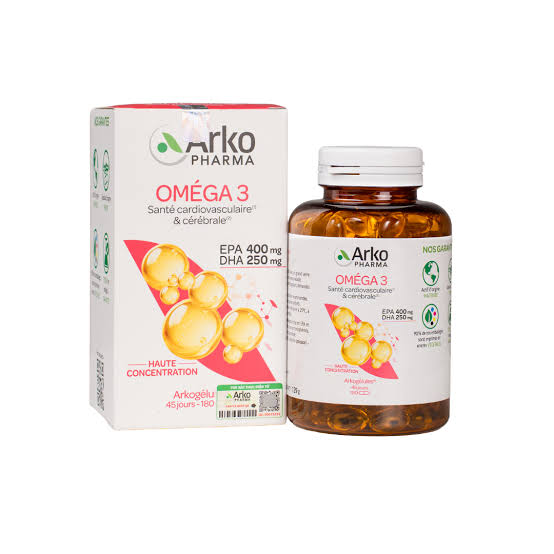
Omega-3 Supplements — Fish Oil, Krill Oil, and Prescription Options
For people who cannot or do not regularly eat fatty fish, omega-3 supplements are a widely available alternative. The differences between supplement types are meaningful.
Fish oil is the most common form. Standard fish oil capsules (1 gram each) typically contain approximately 180 mg of EPA and 120 mg of DHA — about 300 mg of EPA+DHA per capsule. Reaching 1 gram of EPA+DHA per day requires 3 to 4 standard capsules; concentrated fish oil products (500–750 mg EPA+DHA per capsule) reduce the pill burden. Enteric-coated capsules and storing fish oil in the freezer reduce fishy aftertaste. Third-party tested products (IFOS-certified or USP-verified) are more reliable for freshness and potency.
Krill oil provides EPA and DHA in phospholipid form rather than triglyceride form, which may improve absorption — though evidence of a clinically significant efficacy difference from fish oil is limited. Krill oil also contains astaxanthin (a natural antioxidant) and tends to cause less fishy aftertaste. The per-gram cost is higher than fish oil.
Algae oil is derived from microalgae — the same organisms that produce the EPA and DHA that fish accumulate. It provides preformed EPA and DHA with equivalent efficacy to fish oil per unit of omega-3 and is the recommended option for vegans and people with fish allergies.
Prescription omega-3 products include Vascepa (pure EPA at 4g/day, FDA-approved for TG reduction and CV event risk reduction in the REDUCE-IT population), Lovaza (EPA+DHA ethyl esters, 4g/day for TG reduction), and Epanova (omega-3 carboxylic acids, 4g/day). These are prescribed for documented hypertriglyceridemia and provide standardized, high-purity doses. Insurance coverage may be available for documented clinical indications.
How Much Omega-3 Do You Need?
For general cardiovascular health: 2 servings of fatty fish per week (approximately 250–500 mg EPA+DHA/day from food). This is the AHA’s primary recommendation for the general population. A 1g/day EPA+DHA supplement is a reasonable option if fish consumption is consistently low.
For people with existing heart disease: AHA Level IIa recommendation — 1g/day EPA+DHA supplement in consultation with a physician — though evidence of benefit at this dose is not definitive.
For people with elevated triglycerides (≥150 mg/dL): 2–4g/day EPA+DHA under medical supervision. Pure EPA (Vascepa) at 4g/day is the best-supported option for cardiovascular event risk reduction in high-TG statin-treated patients who meet the REDUCE-IT trial criteria.
Omega-3 index as a guide: The omega-3 index measures EPA+DHA as a percentage of total red blood cell membrane fatty acids. Above 8 percent is associated with the lowest cardiovascular risk category. The average American has an omega-3 index of approximately 4 to 5 percent. Regular fatty fish consumption or supplementation above 500 mg EPA+DHA/day moves the index toward the more favorable range.
Putting It Together — Omega-3 in a Heart-Healthy Diet
Omega-3 fatty acids are one component of a heart-healthy dietary pattern, not a standalone cardiovascular intervention. They address the triglyceride side of cardiovascular risk most effectively; they do not substitute for reducing saturated fat and trans fat, or for increasing soluble fiber.
For most people, the most practical step is eating 2 servings of fatty fish per week. Adding a standard fish oil supplement (1g/day EPA+DHA) provides additional benefit for those with low fish intake or existing cardiovascular disease, with acceptable benefit-risk ratio at this dose. High-dose omega-3 supplementation (2–4g/day) is best managed with physician oversight given both the potential triglyceride benefit and the modest AFib risk at higher doses.
For context on other dietary factors that affect cardiovascular risk, see saturated fat and cholesterol, trans fat and heart health, and foods that help lower cholesterol. For understanding what your cholesterol and triglyceride numbers mean, see LDL vs HDL cholesterol and causes of high cholesterol.
Sources
American Heart Association — Fish and Omega-3 Fatty Acids (heart.org) | US Food and Drug Administration — Advice About Eating Fish (fda.gov) | National Heart, Lung, and Blood Institute — Heart-Healthy Eating (nhlbi.nih.gov) | Bhatt DL et al. (REDUCE-IT). NEJM 2019;380:11–22 | Nicholls SJ et al. (STRENGTH). JAMA 2020;324:2268–80 | Manson JE et al. (VITAL). NEJM 2019;380:23–32
Omega-3 and Inflammation — The Cardiovascular Mechanism Beyond Triglycerides
While the triglyceride-lowering effect of EPA and DHA is the most quantifiable cardiovascular benefit of omega-3 fatty acids, a parallel mechanism — anti-inflammatory action — may contribute substantially to the cardiovascular event reduction seen in trials like REDUCE-IT, independent of what happens to lipid levels.
EPA and DHA are precursors to a family of bioactive lipid mediators called resolvins, protectins, and maresins — compounds that actively resolve inflammation rather than simply suppressing it. This is distinct from the mechanism of anti-inflammatory drugs like NSAIDs (which block pro-inflammatory prostaglandin synthesis) and from the indirect anti-inflammatory effects of lifestyle interventions. Resolvins derived from EPA (E-series) and from DHA (D-series) promote the clearing of inflammatory debris, reduce leukocyte recruitment to sites of inflammation, and modulate macrophage behavior — all processes directly relevant to plaque stability in atherosclerosis.
Atherosclerotic plaques are, in large part, inflammatory lesions. Stable plaques are covered by a fibrous cap that prevents rupture; vulnerable plaques are characterized by a large lipid core and thin fibrous cap driven in part by persistent inflammatory activation of macrophages and foam cells within the plaque. EPA and DHA incorporated into plaque macrophage membranes alter their inflammatory behavior in ways that may stabilize plaques and reduce the risk of rupture — the event that triggers most myocardial infarctions and strokes.
This anti-inflammatory mechanism offers one explanation for why REDUCE-IT found a 25 percent MACE reduction with pure EPA even though the change in triglycerides alone (approximately 18% reduction in the Vascepa group) does not fully account for the cardiovascular benefit. The plaque-stabilizing and anti-inflammatory effects of EPA, operating independently of its triglyceride-lowering effect, may have driven a meaningful portion of the clinical benefit.
From a practical standpoint, this means omega-3s may provide cardiovascular benefit through mechanisms that standard lipid panels do not measure. A patient whose LDL appears controlled on a statin but who has persistent low-grade inflammation (elevated CRP, oxidized LDL, Lp-PLA2 activity) may derive benefit from EPA supplementation through pathways not reflected in their cholesterol numbers.
The Omega-3 Index — A Better Marker of Omega-3 Status Than Supplement Dose
One of the practical limitations of omega-3 supplementation is the variability in how individuals absorb, incorporate, and metabolize EPA and DHA. Two people taking the same dose of the same fish oil product can end up with substantially different levels of omega-3 incorporation into their cell membranes — differences driven by genetics, body weight, dietary fat composition, and baseline EPA+DHA intake.
The omega-3 index, developed by researchers William Harris and Clemens von Schacky, addresses this limitation by measuring EPA and DHA as a percentage of total fatty acids in red blood cell membranes. Because red blood cells turn over every 90 to 120 days, the omega-3 index reflects average EPA+DHA intake and incorporation over approximately 3 months — a much more reliable biomarker than a single dietary recall or supplement dose count.
The omega-3 index classification:
- Above 8%: Low cardiovascular risk category (the target)
- 4–8%: Intermediate cardiovascular risk
- Below 4%: High cardiovascular risk category
The average American adult has an omega-3 index of approximately 4 to 5 percent — in the intermediate-to-high risk zone. In contrast, Japanese adults who eat fish daily average an omega-3 index of 8 to 11 percent — well within the low-risk category. This disparity in omega-3 index between Japan and the US corresponds to a significant difference in cardiovascular mortality rates, and is frequently cited as circumstantial evidence for the cardiovascular importance of marine omega-3 intake at the population level.
An omega-3 index test can be ordered by a physician or obtained through direct-to-consumer laboratory services. For people taking fish oil supplements to improve cardiovascular risk, measuring the omega-3 index before and after 3 months of supplementation confirms whether the supplement is actually raising EPA+DHA incorporation in the tissues that matter — rather than assuming a dose-response relationship that may not hold for every individual. For those who do not respond to standard doses (omega-3 index remains below 8% despite taking 1g/day), increasing the dose or switching to a higher-absorption formulation may be warranted under physician guidance.
Omega-3 and Pregnancy, Breastfeeding, and Child Development
DHA deserves particular attention in the context of pregnancy and early childhood because it is the dominant structural fatty acid in the developing brain and retina. During the third trimester of pregnancy and the first two years of life, the brain accumulates DHA rapidly — and the supply available to the developing fetus and infant depends on maternal intake.
The FDA and EPA jointly recommend that pregnant women, breastfeeding women, and young children eat fish regularly as part of a healthy diet, specifically choosing fish with lower mercury content. The recommendation is 8 to 12 ounces (2 to 3 servings) per week of “best choices” fish — salmon, sardines, trout, herring, and canned light tuna — for pregnant and breastfeeding women. This level of intake provides adequate DHA for fetal and infant brain development while keeping mercury exposure within safe limits.
For women who do not eat fish, prenatal vitamins often contain DHA, and algae-based DHA supplements are a safe, mercury-free alternative that has been specifically studied in pregnant and breastfeeding women. The DHA content of breast milk directly reflects the mother’s DHA intake — higher maternal omega-3 intake is associated with higher DHA concentrations in breast milk and better neurodevelopmental outcomes in infants in some observational studies.
For cardiovascular purposes in pregnant women, the same general principles apply as for the general adult population — adequate EPA+DHA intake supports lipid metabolism and reduces inflammation — but the primary clinical focus during pregnancy is on DHA for fetal neurodevelopment rather than cardiovascular event risk reduction. High-dose omega-3 supplementation during pregnancy (above 2–3g/day) should be discussed with an obstetrician or midwife, particularly given the modest blood-thinning effect of high-dose EPA that can affect bleeding time.
Practical Guide to Getting More Omega-3 Without Relying Solely on Supplements
Supplements are convenient but food-based omega-3 intake has the advantage of providing a broader nutritional matrix alongside EPA and DHA — protein, vitamin D (in fatty fish), selenium, and iodine. Building omega-3 intake through food is the preferred strategy and can be accomplished without dramatically changing eating habits.
The two-servings-per-week target in practice: Two servings of fatty fish per week translates to approximately 2 x 3oz portions — about 170 grams total per week, or roughly the size of two decks of cards. This is achievable with relatively small dietary adjustments: replacing two chicken or beef meals per week with fish. A Tuesday dinner of grilled salmon and a Saturday lunch of sardines on whole-grain bread covers the AHA’s general recommendation.
Canned fish as a practical solution: Canned sardines, canned mackerel, and canned salmon are among the most cost-effective and convenient high-EPA+DHA options available. A tin of sardines (3.75 oz, approximately 90g) provides approximately 1 to 1.5 grams of EPA+DHA and costs less than most fish oil supplement bottles on a per-gram basis. Canned fish also has a long shelf life, making it a reliable pantry staple for people who cannot shop for fresh fish frequently.
Incorporating fatty fish into familiar dishes: Salmon works in pasta, grain bowls, tacos, and salads — not just as a standalone fillet. Sardines blended into tomato sauce or mashed into olive oil and lemon on toast are traditional Mediterranean preparations that disguise the fish’s intensity for people who find whole sardines off-putting. Smoked salmon or lox on whole-grain crackers provides a high EPA+DHA addition to breakfast or snacks without requiring cooking.
When to consider supplementation: Regular fish consumption is not realistic for everyone — due to taste preferences, cost constraints, geographic access, pregnancy concerns about mercury, or plant-based dietary commitments. In these cases, a quality fish oil or algae oil supplement (500–1000 mg EPA+DHA/day) closes the gap. The supplement should be taken with a meal containing fat to maximize absorption, and stored in a cool, dark location (or frozen) to minimize oxidation.
I shared this article on omega-3 and heart health: what the with my doctor and they appreciated the level of detail. I appreciated how the article addressed both the clinical side and the practical lifestyle adjustments. Appreciate the effort that went into researching and writing this — it shows.
Really well-written article on omega-3 and heart health: what the. I have tried following advice from several sources but this is the most consistent with what my specialist told me. Forwarding this to others in my support group who are dealing with similar issues.
Thank you for covering omega-3 and heart health: what the so thoroughly without being overly technical. I especially valued the explanation of why these recommendations exist, not just what they are. This gave me real confidence going into my next specialist appointment.
I shared this article on omega-3 and heart health: what the with my doctor and they appreciated the level of detail. It is refreshing to see an article that acknowledges individual variation rather than one-size-fits-all advice. Forwarding this to others in my support group who are dealing with similar issues.
Thank you for covering omega-3 and heart health: what the so thoroughly without being overly technical. The specific numbers and thresholds mentioned are exactly what I needed to understand my results. Thank you for making complex medical information accessible without dumbing it down.
I never fully understood omega-3 and heart health: what the until I read this. What I liked most was that the article didn’t just say what to avoid — it also gave alternatives. This is going into my health folder that I bring to every doctor’s visit.