
Smoking and Heart Disease
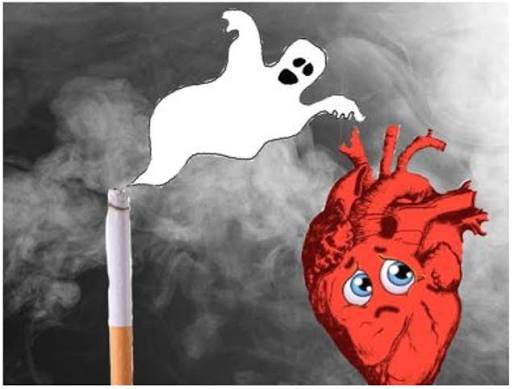
Smoking and heart disease share a relationship as well-established as any in medicine. Tobacco use is the single most preventable cause of cardiovascular death in the United States — responsible for approximately 480,000 deaths per year, with a substantial proportion attributable to heart attacks, strokes, and cardiovascular disease. Despite decades of declining smoking rates, roughly 28 million American adults still smoke cigarettes, and smoking-related cardiovascular disease remains an enormous public health burden.
What makes smoking so uniquely dangerous for the heart is not a single mechanism but rather the simultaneous activation of multiple pathways of cardiovascular damage. While most risk factors work through one or two mechanisms — elevated LDL deposits in arterial walls; high blood pressure mechanically stresses the endothelium — smoking attacks the cardiovascular system on six fronts simultaneously, which explains why it carries such disproportionate risk even relative to other major risk factors.
How Smoking Damages the Heart and Arteries — Six Simultaneous Mechanisms
1. Endothelial dysfunction. The endothelium — the single-cell inner lining of every blood vessel — is the control center for vascular health. Nitric oxide (NO), produced by endothelial cells, is the primary vasodilatory molecule in the arterial system. Cigarette smoke impairs endothelial nitric oxide production, reducing the arterial wall’s ability to relax and dilate. The result is chronically elevated vascular tone, increased blood pressure, and an endothelial surface that becomes more permeable to LDL particles and more prone to inflammatory cell adhesion — the early steps in atherosclerosis. Even occasional smoking produces measurable endothelial dysfunction, and chronic smoking causes structural endothelial damage that persists beyond individual smoking episodes.
2. LDL oxidation and accelerated plaque formation. Cigarette smoke contains thousands of free radicals per puff, generating an intense oxidative environment in the bloodstream and arterial wall. These free radicals oxidize LDL cholesterol, converting it to oxidized LDL (oxLDL) — a form that is dramatically more atherogenic than native LDL. OxLDL is recognized and taken up by macrophages in the arterial wall through scavenger receptors, converting them into lipid-laden “foam cells” — the characteristic cells of early atherosclerotic plaques. This oxLDL pathway operates independently of LDL concentration, meaning that a smoker with a normal LDL level still accelerates plaque formation through oxidative mechanisms that a non-smoker at the same LDL level would not experience.
3. Platelet activation and pro-thrombotic state. Smoking activates platelets and promotes platelet aggregation, increasing the tendency of blood to clot. It also raises fibrinogen — a clotting protein — and increases plasminogen activator inhibitor-1 (PAI-1), which impairs the normal mechanism for dissolving clots. The net result is a blood that is simultaneously more likely to form a clot and less able to dissolve one. This pro-thrombotic state is particularly dangerous at sites of vulnerable atherosclerotic plaque, where a partially ruptured plaque can serve as a nidus for acute thrombus formation — the immediate trigger of most heart attacks. This mechanism explains why smoking increases the risk of acute MI out of proportion to the degree of atherosclerosis, and why young smokers with relatively early plaque can still suffer catastrophic coronary events.
4. Carbon monoxide and reduced oxygen delivery. Every cigarette produces substantial carbon monoxide, which binds to hemoglobin approximately 200 times more strongly than oxygen, forming carboxyhemoglobin. This carboxyhemoglobin cannot carry oxygen, effectively reducing the oxygen-carrying capacity of the blood. In a healthy person, this reduction may cause no symptoms at rest but becomes limiting during exertion. In a person with existing coronary artery disease — even moderate narrowing — the reduced oxygen delivery can tip a borderline situation into myocardial ischemia. Carbon monoxide also independently promotes platelet stickiness, compounding the thrombotic effects of smoking.
5. Coronary vasospasm. Nicotine — through its acute stimulation of the sympathetic nervous system — can cause coronary artery spasm, a sudden intense constriction of a coronary artery that can reduce or occlude blood flow even in the absence of significant atherosclerosis. This phenomenon is more common in smokers and explains cases of MI in young smokers whose subsequent coronary angiography shows relatively minimal plaque. The combination of vasospasm (reducing lumen diameter) with the pro-thrombotic state (promoting clot formation at the site of spasm) creates a particularly dangerous scenario.
6. Dyslipidemia. Smoking reduces HDL cholesterol by approximately 5 to 10 mg/dL — a clinically meaningful decrease in this cardioprotective lipid. It simultaneously increases triglycerides, VLDL cholesterol, and the proportion of LDL present as small, dense LDL particles — the most atherogenic lipoprotein subtype. These lipid changes compound the direct vascular effects, creating a lipid environment that accelerates the deposition and oxidation of cholesterol in arterial walls.
How Much Does Smoking Raise Heart Disease Risk? The Data
The global evidence on smoking and heart disease risk is among the most robust and consistent bodies of data in cardiovascular epidemiology.
The INTERHEART study — a large case-control study spanning 52 countries involving over 15,000 heart attack cases — found that smoking accounted for approximately 36 percent of the population-attributable risk for myocardial infarction globally. Current smokers have approximately 2 to 4 times the coronary artery disease risk of non-smokers, with a clear dose-response relationship. Heavy smokers (more than 20 cigarettes per day) can have up to 5 times the coronary artery disease risk of lifetime non-smokers.
One of the most clinically important findings from smoking research is that even very low levels of smoking carry substantial cardiovascular risk. A major 2018 meta-analysis published in the British Medical Journal found that people who smoke as few as 1 to 5 cigarettes per day still carry approximately 38 percent excess cardiovascular risk compared to non-smokers. This non-linear dose-response — where the first few cigarettes per day account for a disproportionate share of the total cardiovascular risk — suggests that there is no safe level of regular tobacco use from a cardiovascular perspective.
The seminal British Doctors Study, which followed 34,000 male doctors for 50 years, found that cigarette smokers died on average approximately 10 years earlier than lifelong non-smokers, with cardiovascular disease accounting for a large portion of that difference. Among people aged 30 to 44 who experience myocardial infarction, smoking is a contributing factor in a substantial majority of cases.
Secondhand Smoke and Heart Disease — Not Just a Problem for Smokers
The cardiovascular toxins in cigarette smoke do not exclusively harm the person smoking. Secondhand smoke — the combination of smoke exhaled by the smoker and smoke emitted from the burning cigarette end — contains all the same cardiovascular-damaging compounds, often in higher concentrations than in mainstream smoke.
People who are regularly exposed to secondhand smoke in their home or workplace have approximately 20 to 30 percent higher cardiovascular disease risk compared to those not exposed. Approximately 35,000 cardiovascular deaths per year in the United States are attributable to secondhand smoke exposure.
The most compelling evidence for the cardiovascular harm of secondhand smoke comes from “natural experiments” created when jurisdictions enacted comprehensive workplace and public smoking bans. Studies in Minnesota, Scotland, Ireland, Italy, and multiple other locations consistently showed significant declines in acute MI hospitalizations — often in the range of 15 to 30 percent — within 1 to 3 years of smoking ban implementation. These rapid effects reflect the reversal of the acute pro-thrombotic effects of smoke exposure and demonstrate that even brief smoke-free periods have measurable cardiovascular impact. For people living with a smoker, cardiovascular exposure is roughly equivalent to smoking 1 to 5 cigarettes per day directly.
What About E-cigarettes and Vaping? The Cardiovascular Evidence
Electronic cigarettes have been widely marketed as a safer alternative to combustible cigarettes. While they likely produce less total toxin exposure than combustible cigarettes, current evidence does not support the characterization of e-cigarettes as cardiovascularly safe.
The primary cardiovascular concern with most e-cigarettes is nicotine content — the majority of e-cigarettes contain nicotine in concentrations that deliver sympathetic nervous system stimulation, platelet activation, blood pressure elevation, and heart rate increases similar to combustible cigarettes. Beyond nicotine, the aerosols from e-cigarettes contain acrolein — a highly reactive unsaturated aldehyde that is one of the most potent vascular toxins in cigarette smoke and is also present in e-cigarette aerosol. Acrolein impairs endothelial function, promotes oxidative stress, and contributes significantly to the cardiovascular harm from both combustible cigarettes and e-cigarettes.
The current scientific consensus — reflected in statements from the American Heart Association and the ACC — is that e-cigarettes are likely less harmful than combustible cigarettes, but are not safe from a cardiovascular standpoint, and should not be used as a primary smoking cessation tool when FDA-approved pharmacotherapies with established safety profiles are available.

The Cardiovascular Risk Reduction Timeline After Quitting
One of the most practically motivating facts about smoking and heart disease is how rapidly the cardiovascular system begins to recover after cessation. The benefits are not delayed by years or decades — they begin within minutes and continue for years.
- Within 20 minutes of the last cigarette: heart rate and blood pressure begin to normalize as acute nicotine and CO effects dissipate.
- Within 12 hours: carbon monoxide levels in the blood return to normal, restoring full oxygen-carrying capacity of hemoglobin.
- Within 2 to 3 months: endothelial function begins to improve, platelet activity normalizes, and circulation improves measurably.
- At 1 year after quitting: the risk of coronary artery disease is approximately 50 percent lower than in an active smoker — a reduction achieved in a single year.
- At 5 to 15 years after quitting: the risk of stroke approaches that of a lifetime non-smoker.
- At 10 to 15 years after quitting: coronary artery disease risk approaches non-smoker levels.
- At 15 years after quitting: overall cardiovascular risk for most people has returned to near-non-smoker baseline.
These numbers reflect more than just the elimination of ongoing tobacco-related damage — they reflect the cardiovascular system’s substantial capacity for repair and recovery. Endothelial function recovers. Platelet activity normalizes. Inflammatory markers decline. Even established atherosclerotic plaque can partially stabilize and shrink with the removal of ongoing oxidative and inflammatory insults from smoke.
Smoking After a Heart Attack — Why Cessation Is the Highest-Priority Post-MI Intervention
For patients who have already experienced a myocardial infarction, continuing to smoke is one of the most dangerous behaviors in cardiovascular medicine. Smoking cessation after MI reduces the risk of recurrent cardiovascular events by approximately 30 to 50 percent — a benefit comparable to or greater than the benefit of adding a second antiplatelet agent, adding a beta-blocker, or achieving excellent blood pressure control. No other single intervention in secondary cardiovascular prevention delivers this magnitude of risk reduction with a behavioral change alone.
The post-MI period is often described as a “teachable moment” for cessation — patients have just experienced a visceral demonstration of the consequences of cardiovascular risk factors, motivation to change is often at its highest, and clinical contact with healthcare providers is frequent. Structured cessation support programs delivered in the hospital and continued post-discharge consistently outperform standard care in achieving cessation in this population.
How to Quit — The Evidence-Based Approaches
Effective cessation strategies combine pharmacotherapy with behavioral support. No approach is universally successful, but the evidence clearly identifies the most effective options.
Varenicline (Chantix/Champix) is the most effective single pharmacotherapy for smoking cessation, producing approximately 2.2 times the odds of long-term abstinence compared to placebo. It is a partial agonist at nicotinic acetylcholine receptors — it partially stimulates these receptors (reducing withdrawal symptoms) while blocking nicotine from binding (reducing the reward from smoking). Cardiovascular safety concerns raised in early studies led to a black box warning that was subsequently removed after the EAGLES trial (2016) demonstrated no significant increase in cardiovascular events in high-risk cardiac patients taking varenicline. Varenicline is appropriate for use in patients with cardiovascular disease.
Bupropion (Wellbutrin/Zyban) is an antidepressant that works via dopaminergic and noradrenergic pathways to reduce nicotine cravings and withdrawal symptoms. It approximately doubles cessation rates compared to placebo and is an appropriate option when varenicline is not tolerated or contraindicated.
Nicotine replacement therapy (NRT) — available as patches, gum, lozenges, nasal spray, or inhalers — reduces withdrawal symptoms by providing controlled nicotine without the thousands of smoke toxins. All forms of NRT are cardiovascularly safe, including in patients who have had a recent MI. Combination NRT (a long-acting patch plus a short-acting form such as gum or lozenge) is more effective than single-product NRT and roughly doubles cessation rates compared to placebo.
Behavioral support adds approximately 10 to 15 percentage points to cessation success when combined with pharmacotherapy. The combination of pharmacotherapy plus comprehensive behavioral support produces the highest long-term abstinence rates — roughly 30 to 40 percent continuous abstinence at 12 months in clinical trials, compared to 3 to 7 percent for unassisted quit attempts.
Why Quitting at Any Age Delivers Meaningful Cardiovascular Benefit
A common source of fatalism among long-term smokers is the belief that “I’ve already smoked for so long — it’s too late to make a difference.” This belief is biologically unfounded.
The 50-year British Doctors Study found that smokers who quit at age 60 added approximately 3 years to their life expectancy. Those who quit at age 50 added 6 years. Those who quit at age 40 added 9 years. Those who quit at age 30 — essentially returning to a non-smoker trajectory — recovered virtually the full life expectancy of lifetime non-smokers. The magnitude of benefit declined with later cessation, but meaningful benefit was present at every age.
From a cardiovascular mechanism perspective, this makes sense: the pro-thrombotic and pro-inflammatory effects of smoking reverse rapidly after cessation regardless of how long smoking continued. Even a lifetime smoker who quits at 65 will have normalized platelet activity within weeks, reduced carboxyhemoglobin within hours, and meaningfully improved endothelial function within months. The cardiovascular system’s capacity for recovery — not just stabilization, but actual recovery — is substantial even after decades of tobacco damage.
The American Heart Association provides comprehensive smoking cessation resources for patients seeking to quit. The Centers for Disease Control and Prevention maintains evidence-based cessation tools and state quit line information. The National Heart, Lung, and Blood Institute offers patient education materials on smoking, cardiovascular disease, and cessation strategies.
Quitting smoking is not merely reducing a risk factor. It is removing the most powerful acute cardiovascular threat most smokers face — one that operates through platelet activation and thrombosis, not just through years of plaque accumulation — and allowing the cardiovascular system to begin recovering toward a trajectory that may extend life by a decade or more.
Related reading: What Causes Heart Disease? | Major Risk Factors for Heart Disease | Modifiable vs Non-Modifiable Heart Disease Risks | Family History and Heart Disease Risk | Heart Attack Prevention
Sources
- Yusuf S, et al. Effect of potentially modifiable risk factors associated with myocardial infarction in 52 countries (the INTERHEART study). Lancet. 2004;364(9438):937-952.
- Hackshaw A, et al. Low cigarette consumption and risk of coronary heart disease and stroke: meta-analysis of 141 cohort studies in 55 study reports. BMJ. 2018;360:j5855.
- Doll R, et al. Mortality in relation to smoking: 50 years’ observations on male British doctors. BMJ. 2004;328(7455):1519.
- Rigotti NA, et al. Treatment of tobacco use and dependence. N Engl J Med. 2002;346(7):506-512.
- Anthenelli RM, et al. Neuropsychiatric safety and efficacy of varenicline, bupropion, and nicotine patch in smokers with and without psychiatric disorders (EAGLES). Lancet. 2016;387(10037):2507-2520.
- Bhatnagar A, et al. Electronic cigarettes: a policy statement from the American Heart Association. Circulation. 2014;130(16):1418-1436.
The Interaction Between Smoking and Other Cardiovascular Risk Factors
Smoking does not simply add to other cardiovascular risk factors — it multiplies them. The interaction between tobacco use and established risk factors like hypertension, diabetes, and dyslipidemia is synergistic rather than additive, producing combined risks that dramatically exceed what would be predicted by simply summing the individual contributions.
The most clinically important interaction is between smoking and hypertension. Both independently damage the endothelium — smoking through oxidative stress and impaired nitric oxide production; hypertension through mechanical shear stress. When combined, these two mechanisms converge on the same arterial surface simultaneously, accelerating endothelial injury, LDL deposition, and atherosclerotic plaque formation far beyond the rate either produces alone. A smoker with hypertension faces cardiovascular risk that is several times higher than would be estimated by looking at either risk factor in isolation. This interaction is one of the primary reasons hypertension treatment guidelines apply particularly urgently to patients who smoke.
Smoking and elevated LDL interact through the oxidized LDL pathway described earlier. The free radicals in cigarette smoke don’t simply coexist with circulating LDL — they transform it into the oxidized LDL form that is dramatically more atherogenic. This means that a smoker with LDL of 130 mg/dL faces greater plaque formation risk than a non-smoker with LDL of 130 mg/dL, because a larger proportion of that LDL is converted to its most dangerous form. Conversely, statin therapy in smokers — by reducing total LDL available to be oxidized — provides proportionally greater benefit than statin therapy in non-smokers at the same initial LDL level.
Smoking and diabetes interact through overlapping pathways of endothelial dysfunction and oxidative stress. Both conditions impair nitric oxide production, both promote a pro-thrombotic state, and both accelerate the progression of atherosclerosis through different but complementary mechanisms. The cardiovascular risk in a person with both diabetes and active smoking is substantially higher than in a person with either condition alone — a combination that clinicians should treat with particular urgency across all modifiable risk factors simultaneously.
This multiplicative interaction framework has an optimistic implication: the cardiovascular benefit of smoking cessation is also multiplicative. Quitting smoking in the presence of hypertension, diabetes, or dyslipidemia removes the amplifying effect that tobacco had on those other risk factors — the remaining risks become additive rather than synergistic, and their management becomes more effective. A person with hypertension who quits smoking doesn’t simply eliminate one risk factor; they reduce the intensity of their hypertension’s cardiovascular impact as well.
Smokeless Tobacco and Cardiovascular Risk
Smokeless tobacco products — including chewing tobacco, snuff (dip), and snus — are often perceived as safer than cigarettes because they do not produce combustion smoke or carcinogen-laden tar. From a lung cancer and pulmonary disease perspective, smokeless tobacco is less harmful. From a cardiovascular perspective, the picture is more nuanced.
Smokeless tobacco delivers significant doses of nicotine, which produces the same acute cardiovascular effects as inhaled nicotine: sympathetic nervous system stimulation, heart rate elevation, blood pressure increase, and platelet activation. Regular use of smokeless tobacco raises resting blood pressure, increases the risk of hypertension, and promotes the same pro-thrombotic cardiovascular environment as cigarettes through nicotine-mediated pathways.
Epidemiological data on smokeless tobacco and cardiovascular disease shows elevated risks for MI and stroke compared to non-users, though generally lower than the risks from combustible cigarettes. Meta-analyses suggest smokeless tobacco users have approximately 13 percent higher all-cause cardiovascular mortality than non-users, with higher risk estimates for fatal MI specifically.
The Swedish snus (moist snuff) experience provides useful data: Sweden has among the lowest cigarette smoking rates in Europe but high snus use rates. Studies of snus users show elevated MI risk compared to non-users of any tobacco, though lower than cigarette smokers. Critically, snus does not carry the endothelial toxicity from combustion products or the carbon monoxide effects from smoke — but nicotine-mediated platelet and hemodynamic effects remain.
For patients who have switched from cigarettes to smokeless tobacco as an attempted harm reduction strategy, the cardiovascular perspective is that some reduction in cardiovascular risk has likely occurred — but the goal of tobacco-free cessation, using pharmacotherapy if necessary, remains the evidence-based recommendation for optimizing cardiovascular outcomes.
As someone dealing with this personally, the smoking and heart disease section was very helpful. What I liked most was that the article didn’t just say what to avoid — it also gave alternatives. Thank you for making complex medical information accessible without dumbing it down.
Thank you for covering smoking and heart disease so thoroughly without being overly technical. What I liked most was that the article didn’t just say what to avoid — it also gave alternatives. This gave me real confidence going into my next specialist appointment.
Bookmarked this article on smoking and heart disease immediately — going to reference it regularly. It is refreshing to see an article that acknowledges individual variation rather than giving one-size-fits-all advice. I wish I had found this article when I was first diagnosed — would have saved a lot of confusion.
Finally a resource that explains smoking and heart disease in plain language. This is the kind of evidence-based writing that actually changes how people approach their health. Looking forward to reading more articles from this website.
My doctor recommended I look into smoking and heart disease and this article covered it perfectly. I especially valued the explanation of why these recommendations exist, not just what they are. This gave me real confidence going into my next specialist appointment.
Really well-written article on smoking and heart disease. I appreciated how the article addressed both the clinical side and the practical adjustments. Keep up this kind of thorough health journalism — it genuinely helps patients like me.