
Early signs of kidney problems are mostly invisible — not because the kidneys hide their distress, but because they are designed to compensate for damage so effectively that the body feels nothing while meaningful deterioration is already underway. Nine out of ten adults with chronic kidney disease don’t know they have it, according to the National Institute of Diabetes and Digestive and Kidney Diseases (NIDDK). Understanding what the actual early signs look like — and why most of them show up in lab results rather than symptoms — is the most practical thing you can do to protect kidney function before it is significantly lost.

Why Early Kidney Disease Produces So Few Symptoms
The kidneys have enormous functional reserve. Each kidney contains approximately one million nephrons — the microscopic filtration units — and the body can lose up to 60 percent of that filtering capacity before blood chemistry becomes significantly abnormal and well before any physical symptom appears. As nephrons are damaged or lost, the remaining ones undergo compensatory hyperfiltration: they work harder, filtering more blood per unit time to maintain overall clearance. This adaptation preserves normal blood creatinine, normal potassium, and normal blood pressure for years — even as the underlying kidney disease progresses.
This is not a flaw in how the kidneys are designed; it is a feature that allows humans to survive with a single kidney, donate one to a family member, or tolerate decades of mild hypertension without acute crisis. The cost of that resilience is the detection gap: by the time symptoms of kidney disease appear — fatigue from anemia, edema from protein loss, nausea from uremic toxins — kidney function has typically declined to Stage 4 (eGFR below 30) or late Stage 3b. At that point, roughly 60 to 75 percent of normal kidney function has already been lost. The window for early intervention — when protective treatment slows progression most dramatically — has largely passed. This is why understanding the early signs of kidney problems means understanding lab values rather than waiting for symptoms.
The Lab Signs That Appear Before Symptoms
Several laboratory findings precede the development of kidney symptoms by months to years. These are the actual early signs:
- Rising UACR: The most sensitive early marker in diabetic and hypertensive nephropathy. A UACR above 30 mg/g (microalbuminuria) indicates that the glomerular filtration barrier is leaking albumin — a sign of early glomerular damage that can appear years before eGFR falls below 60. A UACR that doubles within a year (e.g., from 10 to 20 mg/g) is a meaningful signal even below the clinical threshold of 30 mg/g.
- Declining eGFR trend: An eGFR that was 82 two years ago and is 71 today represents a decline of approximately 5.5 mL/min/year — faster than the physiological 1 mL/min/year expected with aging. This rate of decline is an early sign of kidney disease even if both values remain above 60.
- Rising creatinine from baseline: A serum creatinine that has increased by 0.3 mg/dL or more from a prior baseline — even within the lab’s normal reference range — represents a clinically significant reduction in GFR. A creatinine rising from 0.8 to 1.1 mg/dL over 18 months warrants evaluation, not reassurance.
- Microscopic hematuria: Three or more red blood cells per high-power field on urine microscopy, confirmed on repeat testing, can be the first sign of glomerulonephritis, polycystic kidney disease, or kidney tumor — and requires evaluation per AUA 2020 microhematuria guidelines.
- Falling serum bicarbonate: Levels below 22 mEq/L indicate the kidneys are failing to adequately excrete acid — an actionable early marker of declining nephron mass.
- Rising serum phosphorus: Phosphorus above 4.5 mg/dL without dietary explanation indicates impaired tubular phosphorus handling, an early biochemical sign that can appear before eGFR falls significantly.
Foamy Urine — The Most Visible Early Physical Sign
Among physical signs you can notice without a lab test, persistent foamy or frothy urine is the most specific early indicator of kidney problems. The foam is caused by protein leaking into the urine (proteinuria): albumin and other proteins act as surfactants, creating bubbles that persist in the toilet bowl after urination. The key word is persistent. A small amount of transient foam that dissipates quickly is normal — often caused by forceful urine stream disturbing the water surface. What is not normal is foam that remains visible for 30 seconds or more after the stream stops, or foam that appears consistently across multiple voids throughout the day.
Not all foamy urine is from protein. Dehydration, certain foods and supplements, and urinary tract infections can produce temporary foaming. But persistent foamy urine that doesn’t resolve with adequate hydration and isn’t explained by diet or infection warrants a UACR test. Given that foamy urine can indicate microalbuminuria — the earliest treatable stage of diabetic or hypertensive nephropathy — this sign should never be dismissed without a UACR.
Mild Edema and Puffiness Around the Eyes
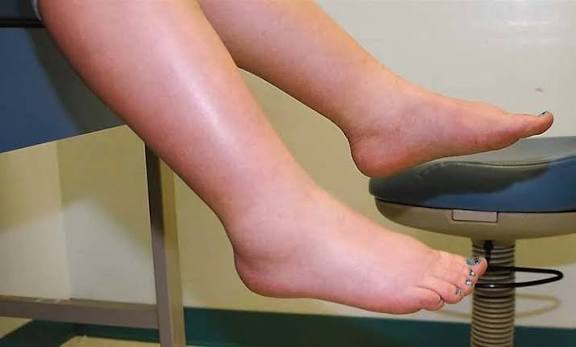
Edema — fluid accumulation in the tissues — can appear earlier than most people realize: mild ankle swelling at the end of the day, and puffiness around the eyes (periorbital edema) upon waking in the morning. The mechanism involves albumin loss: as the kidneys leak albumin into the urine, serum albumin falls, reducing the oncotic pressure that keeps fluid inside blood vessels. Fluid shifts into the interstitium, causing edema in dependent areas and in loose periorbital tissue.
Mild ankle swelling has many causes — venous insufficiency, prolonged sitting, certain medications (calcium channel blockers, NSAIDs), and heart or liver disease — so it is not specific to kidney problems. But the combination of ankle swelling with foamy urine, or periorbital edema in someone with diabetes or hypertension, warrants kidney evaluation. The distinguishing feature of kidney-related edema is often that it responds poorly to leg elevation compared to simple venous edema, and it may be accompanied by an abnormal urinalysis with protein.
Blood Pressure That Has Become Hard to Control
High blood pressure is both a cause and an early consequence of kidney disease, creating a feedback loop that can make hypertension progressively harder to control. As early CKD develops, RAAS activation increases and sodium handling becomes less precise — both driving blood pressure upward. The clinical implication is that blood pressure that was well-controlled on a single medication and now requires two or three agents to achieve the same target — without a clear lifestyle explanation — may signal early kidney involvement. Treatment-resistant hypertension that looks like medication failure may in fact reflect early kidney-driven RAAS overactivation. This can go unrecognized for years unless UACR and eGFR are checked.
Fatigue and Mild Anemia — Earlier Than Most Realize
EPO production declines from Stage 3a CKD onward, and subclinical anemia (hemoglobin in the low-normal range: 11.5–12.5 g/dL in women, 12.5–13.0 g/dL in men) can develop before any obvious symptom prompts investigation. Normocytic anemia — normal-sized red cells, but fewer of them — without iron deficiency, B12 deficiency, or another obvious cause in someone with declining eGFR is a meaningful early sign. The fatigue associated with mild anemia is often attributed to lifestyle factors: poor sleep, overwork, stress, aging. But fatigue that is persistent, doesn’t improve with adequate sleep, and occurs in a context of kidney risk factors warrants a full metabolic panel including hemoglobin and creatinine.
Nocturia — Getting Up at Night More Than Before
Nocturia is often attributed to an aging prostate in men or overactive bladder in older women — but an underrecognized cause is the loss of tubular concentrating ability in early CKD. Healthy kidneys concentrate urine at night, producing smaller volumes of more concentrated urine during sleep. This concentrating ability declines progressively as nephrons are lost. Adults with early to moderate CKD may find they produce larger volumes of more dilute urine overnight — not because of nocturnal polyuria from heart failure, but simply because the kidneys can no longer concentrate urine as efficiently. If nocturia is new or worsening in someone with diabetes, hypertension, or other kidney risk factors — and is not explained by BPH, OAB, or medication changes — kidney function testing is appropriate.
Disease-Specific Early Signs to Know
Diabetic nephropathy: The earliest detectable sign is microalbuminuria — a UACR rising from normal into the 30–300 mg/g range. In type 1 diabetes, this typically appears after 5 to 10 years of disease; in type 2, it may be present at diagnosis. In early type 1 diabetes, glomerular hyperfiltration — a paradoxically elevated eGFR — is an early sign of hemodynamic stress that precedes damage.
Polycystic kidney disease (ADPKD): In adults with a family history of PKD, early signs often appear in the 30s and 40s: hypertension at an unexpectedly young age, flank or abdominal fullness from cyst growth, episodic hematuria from cyst bleeding, or cysts discovered incidentally on abdominal imaging for another reason. eGFR is typically preserved until cyst burden becomes very high — so a normal eGFR in this context is not reassuring.
IgA nephropathy: Often presents as grossly bloody urine (cola-colored) occurring 1 to 3 days after a respiratory infection — a pattern called synpharyngitic hematuria. This can be the first sign of IgA nephropathy, a glomerular disease that may progress to CKD over years to decades.
Kidney stones (pre-stone): Microscopic hematuria on routine urinalysis, in someone with risk factors (high dietary oxalate, low fluid intake, family history), can prompt a 24-hour urine collection that reveals abnormal calcium, oxalate, citrate, or uric acid levels — risk factors for future stone formation that can be addressed before the first painful stone event.
Acute kidney injury (early): Rising creatinine within 48 hours of a nephrotoxic exposure (contrast dye, high-dose NSAID use, aminoglycoside antibiotics, dehydration during illness) is an early sign of AKI that appears on hospital or post-procedure labs. Decreased urine output after surgery or hospitalization warrants prompt creatinine measurement to detect early AKI before it becomes severe.
The Symptoms People Mistake for Something Else
Because early kidney problems rarely cause obvious kidney-specific symptoms, adults often attribute early signs to other, more familiar explanations:
- “I’m just tired” — fatigue from mild anemia developing in Stage 3 CKD is often mistaken for stress, aging, or poor sleep. Without checking hemoglobin and connecting it to kidney function, the cause is never identified.
- “My feet swell in the heat” — mild ankle edema from early albumin loss is frequently attributed to warm weather, prolonged standing, or tight shoes. When accompanied by foamy urine or rising UACR, the true cause is kidney-related.
- “My blood pressure meds stopped working” — treatment-resistant hypertension may reflect early CKD-driven RAAS overactivation rather than medication failure or lifestyle deterioration.
- “I’m just getting older” — nocturia, mild fatigue, and gradually rising creatinine are all attributed to aging, when in fact they may reflect treatable early kidney disease.
The common thread is that none of these symptoms are specific enough to diagnose kidney disease on their own — but each one, in the context of known risk factors for kidney disease, warrants targeted lab evaluation rather than reassurance.
When Absence of Symptoms Is Itself a Warning
Perhaps the most important early sign of kidney problems is the absence of symptoms in someone who has risk factors. If you have type 1 or type 2 diabetes, you are at risk for diabetic nephropathy — regardless of how well-controlled your blood glucose is. If you have hypertension, you are at risk for hypertensive nephropathy. If you have a first-degree relative with CKD or kidney failure, your lifetime risk is significantly elevated. If you are over 60, age-related eGFR decline makes kidney function monitoring standard of care. In all of these situations, waiting for symptoms is the wrong strategy — by the time they appear, the early intervention window has largely passed. The appropriate response to risk factors is annual eGFR and UACR testing, regardless of how you feel. For more on why this matters specifically as you age, see our article on why kidney health matters after age 40.
What to Do If You Notice Possible Early Signs
If you observe any of the following, the appropriate next step is a lab evaluation — not watchful waiting:
- Persistent foamy urine: Request a UACR and compare to any prior results.
- New ankle swelling or periorbital puffiness: Request UACR, eGFR, and serum albumin — particularly if you have diabetes or hypertension.
- An abnormal eGFR or creatinine on a routine panel: Do not assume lab error. Request a repeat in 4 to 8 weeks to confirm, and compare to prior results going back 1 to 2 years.
- Blood pressure requiring more medication than before: Discuss kidney evaluation (UACR, eGFR, kidney imaging) with your provider.
- Gross hematuria (any blood-tinged urine): Same-day evaluation — this is never a sign to wait on.
For understanding what healthy kidney labs look like by comparison, see our guide on signs of healthy kidney function. For the full picture of conditions that can develop if early signs are missed, see our article on common kidney problems in adults. For a broader overview, see our guide on what is kidney health.
How to Talk to Your Doctor About Possible Kidney Signs
One of the practical barriers to acting on early signs of kidney problems is knowing how to raise the concern effectively in a clinical visit. Many adults mention symptoms vaguely — “I’ve been tired” or “my ankles swell sometimes” — and receive reassurance without the targeted kidney evaluation those symptoms might warrant. A few specific communication strategies make a substantial difference.
Be specific about what you’ve observed. Instead of “my urine looks a bit different,” say “I’ve had persistent foam in my urine for the past three weeks that doesn’t go away within seconds of finishing urination.” Instead of “I’m tired,” say “I’ve had fatigue that doesn’t improve with sleep for about two months, and I want to rule out anemia.” Specificity — including duration, pattern, and triggers — shifts the clinical framing from a vague complaint to a targeted symptom that warrants investigation.
Name the tests you’d like by name. “I’d like to add a UACR to my next lab draw” is a specific, clinically appropriate request that most providers will accommodate without hesitation. “I’d like to check my eGFR trend compared to my results from two years ago” is similarly direct and actionable. Providers who are already stretched in a 15-minute visit may not proactively mention UACR if it wasn’t on the pre-visit checklist; asking by name closes that gap.
Provide context about your risk factors. “My mother was on dialysis, and I’m 52 with borderline high blood pressure. I’d like to have my kidney function checked comprehensively” gives a provider everything they need to justify ordering eGFR, UACR, and a urinalysis in one visit. Without that context, a blood pressure of 135/85 in a 52-year-old might generate a “let’s monitor it” response rather than a kidney evaluation.
Request your specific numbers. “My labs were normal” from a phone message or portal notification is not sufficient information when monitoring kidney function. Request the actual eGFR and creatinine values so you can track trends yourself. Most patient portals provide these, but you may need to know where to look — or ask your provider to review the numbers with you directly.
What Happens When Early Signs Are Caught in Time
Understanding what early kidney problem detection makes possible — in clinical and practical terms — is a compelling reason to act on the signs described in this article rather than deferring to symptoms that may never come in time.
When diabetic nephropathy is caught at the microalbuminuria stage (UACR 30–300 mg/g) rather than at macroalbuminuria or declining eGFR, the intervention options are at their most powerful. An SGLT-2 inhibitor started at this stage in a person with type 2 diabetes has the potential to delay kidney failure by a decade or more based on the trajectories seen in the CREDENCE and DAPA-CKD trials. The same medication started at Stage 4 CKD produces benefit, but the magnitude is smaller and the remaining functional tissue is a fraction of what was present at the earlier stage.
When hypertensive nephropathy is caught while UACR is rising but eGFR is still normal, blood pressure control below 130/80 mmHg — with an ACE inhibitor or ARB as a first-line agent — significantly slows albuminuria progression and delays eGFR decline. The key is that ACE inhibitors and ARBs are nephroprotective beyond their blood pressure-lowering effects specifically because of their action on intraglomerular pressure. Starting them before GFR falls means there is more functional glomerular architecture to protect.
When IgA nephropathy is identified after an episode of hematuria and confirmed by biopsy, the new KDIGO 2021 IgA nephropathy guidelines support consideration of systemic immunosuppression or the newly approved targeted-release budesonide formulation in patients at high risk of progression — and risk stratification is only possible if the diagnosis is made. An episode of grossly bloody urine that resolves on its own and is never evaluated may delay diagnosis by years.
The pattern across kidney conditions is consistent: early detection doesn’t just provide peace of mind — it creates the conditions under which the most effective treatments can do the most work. That is the clinical case for recognizing the early signs of kidney problems and acting on them promptly, not deferring until symptoms force the issue.
Building Your Early Warning System for Kidney Health
A practical early warning system for kidney problems doesn’t require special equipment or frequent medical visits — it requires knowing what to observe, what to track, and what to request. Here is a simple framework:
Observe monthly: Glance at your urine daily. Note color (aim for pale yellow) and foam (none persistent). Report any blood-colored or cola-colored urine immediately. Report any persistent foam that lasts more than a few seconds consistently.
Track your lab trend annually (or more often with risk factors): Keep a record of your eGFR and UACR values with dates — either in a health app, a spreadsheet, or a simple notebook. Comparing values over 2 to 3 years reveals trends that a single annual result cannot show.
Monitor blood pressure at home: A validated home blood pressure monitor used consistently provides far better data than a single in-office reading taken under varying conditions. If home readings are consistently at or above 130/80 mmHg, request a kidney function evaluation alongside blood pressure management.
Know your risk profile: Diabetes, hypertension, family history of CKD, age over 60, and cardiovascular disease are the primary risk factors. If you have any of them, annual eGFR and UACR are not optional monitoring — they are the standard of care that your system should reliably deliver.
For a comprehensive guide to the specific kidney health numbers that matter most — and what ranges to watch for at each stage of life — see our dedicated article on kidney health numbers every adult should know.
Sources: National Institute of Diabetes and Digestive and Kidney Diseases (NIDDK), niddk.nih.gov; American Kidney Fund, kidneyfund.org; National Kidney Foundation, kidney.org. KDIGO CKD Guidelines 2012/2024; AUA Microhematuria Guidelines 2020; ADA Standards of Medical Care 2024.
Pingback: Kidney Health Numbers Every Adult Should Know
Pingback: What Is Chronic Kidney Disease?
Pingback: Chronic Kidney Disease vs Acute Kidney Injury
Pingback: What Causes Kidney Disease?
Pingback: Kidney Disease Risk Factors Every Adult Should Know
This breakdown of early signs of kidney problems is exactly what patients need before a specialist appointment. The article answered questions I didn’t even know I had until I started reading. This gave me real confidence going into my next specialist appointment.
I shared this article on early signs of kidney problems with my doctor and they appreciated the level of detail. I appreciated how the article addressed both the clinical side and the practical adjustments. This gave me real confidence going into my next specialist appointment.
This is one of the clearest explanations of early signs of kidney problems I have found. It is refreshing to see an article that acknowledges individual variation rather than one-size-fits-all advice. Looking forward to reading more articles from this website.