
Cancer Risk Factors: What Increases Your Risk and What You Can Change
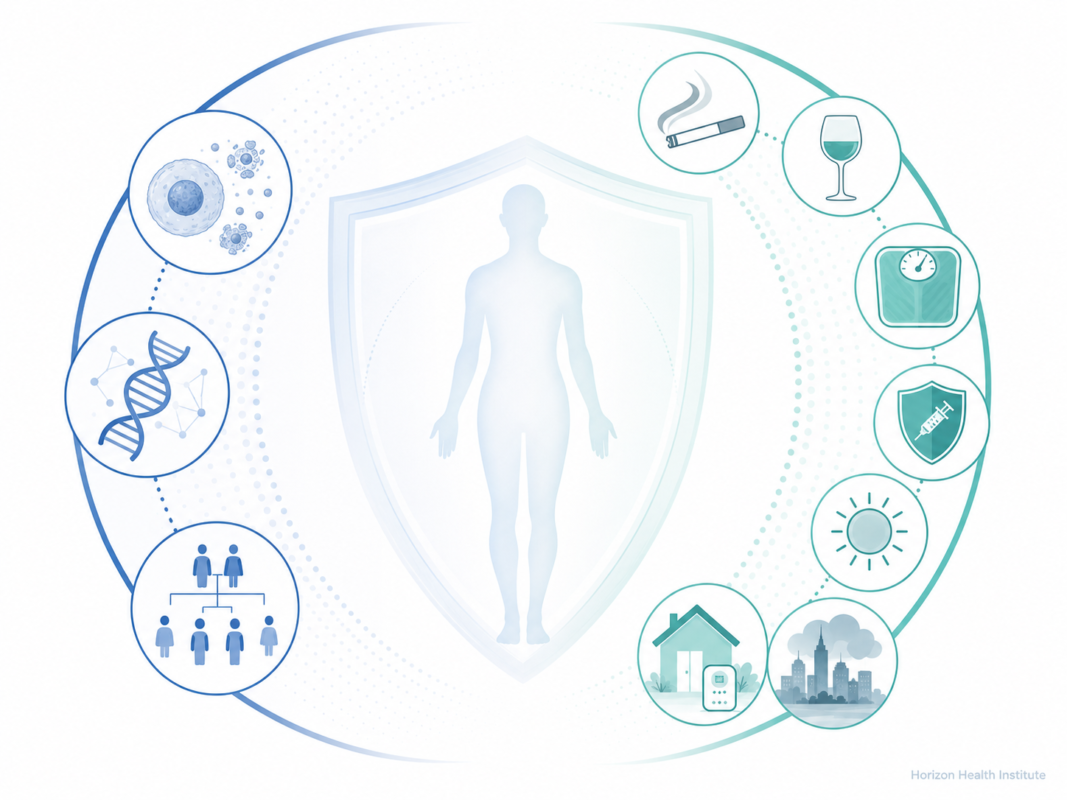
Cancer risk factors are conditions, exposures, habits, or inherited traits that may increase a person’s chance of developing cancer. Having one or even several risk factors does not mean a person will definitely get cancer. It simply means the risk may be higher and deserves thoughtful prevention, screening, and medical follow-up.
Some risks cannot be changed
Age, inherited genetic changes, and family history can influence cancer risk. These factors are important because they may affect when screening should begin or how closely a person should be monitored.
Many risks can be reduced
Tobacco use, excess alcohol, unhealthy weight, ultraviolet exposure, certain infections, and some environmental exposures are examples of risks that can often be lowered through prevention-focused choices.
Modern care helps find risk earlier
Screening tests, vaccines, blood work, imaging, genetic counseling, and regular clinical visits can help identify risk patterns before cancer becomes advanced.
Sources used for this article include the Centers for Disease Control and Prevention, National Cancer Institute, American Cancer Society, U.S. Food and Drug Administration, and World Health Organization.
Major Types of Cancer Risk Factors
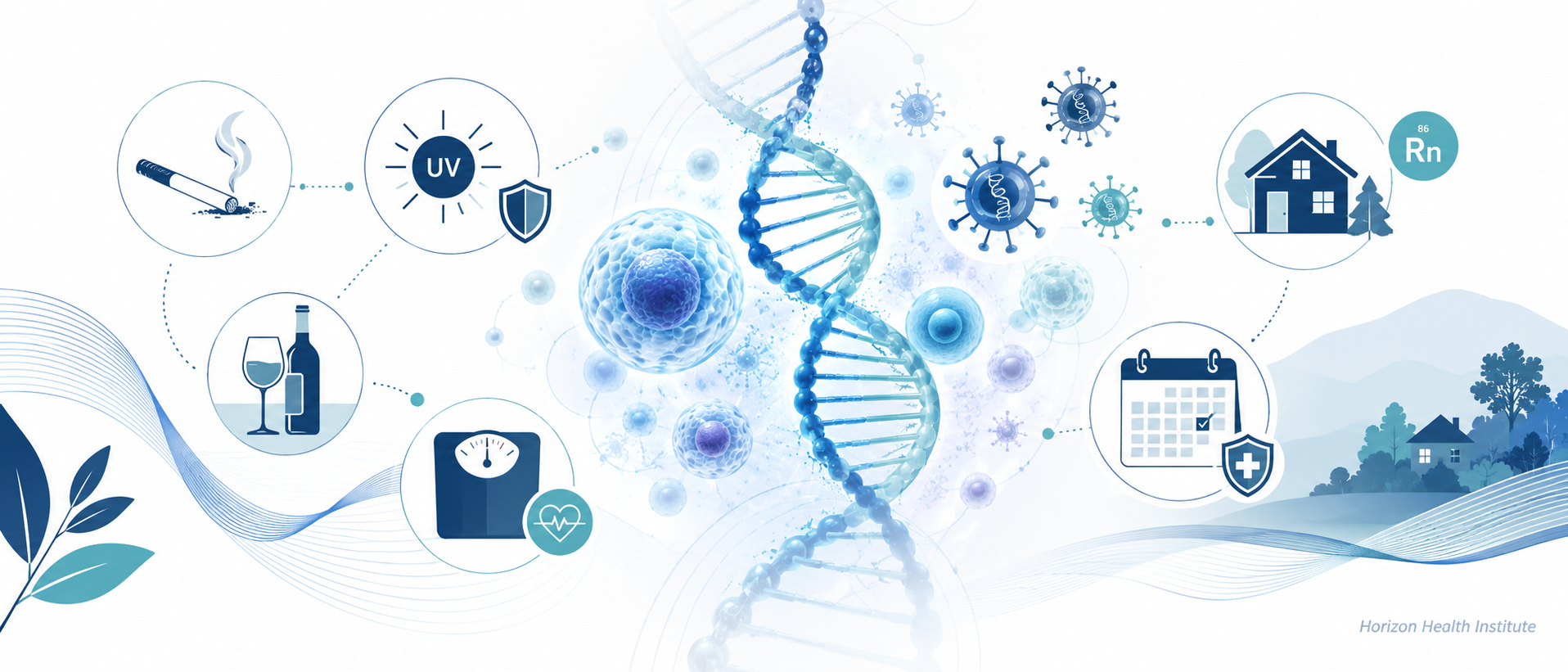
Cancer does not usually come from one single cause. In many cases, risk builds over time through a combination of biology, environment, lifestyle, infections, and aging. Understanding these categories helps people talk with their healthcare team in a more informed and practical way.
1. Age and natural cell changes
Cancer risk generally increases with age because cells have had more time to accumulate DNA damage and because the body’s repair systems may become less efficient over time.
- Age is one of the strongest risk factors for many cancers.
- Older adults may need age-appropriate cancer screening.
- Risk level still depends on the cancer type, personal history, and overall health.
2. Family history and inherited risk
A family history of certain cancers may suggest a higher inherited risk, especially when cancer occurs at a young age, affects several close relatives, or appears across generations.
- Examples include inherited risk patterns linked with breast, ovarian, colorectal, pancreatic, or prostate cancer.
- Genetic counseling may help some families understand their risk more clearly.
- Family history can influence screening timing and frequency.
3. Tobacco, alcohol, and lifestyle exposures
Tobacco use remains one of the most important preventable cancer risk factors. Alcohol, unhealthy weight, physical inactivity, and long-term poor diet patterns can also contribute to risk.
- Quitting tobacco lowers risk over time.
- Drinking less alcohol, or not drinking, can reduce cancer risk.
- Healthy weight, regular movement, and balanced eating support long-term prevention.
4. Infections, radiation, and environment
Some infections and environmental exposures can increase cancer risk. These may include HPV, hepatitis B and C, ultraviolet radiation, radon, air pollution, and certain workplace chemicals.
- HPV vaccination can help prevent several HPV-related cancers.
- Hepatitis B vaccination can reduce hepatitis B-related liver cancer risk.
- Sun protection and home radon testing are practical prevention steps.
Reference basis: CDC cancer risk factor guidance, National Cancer Institute cancer risk factor information, American Cancer Society Cancer Facts & Figures 2026, FDA HPV and cervical screening information, and WHO cancer fact sheet.
Which Cancer Risks Can Be Changed?
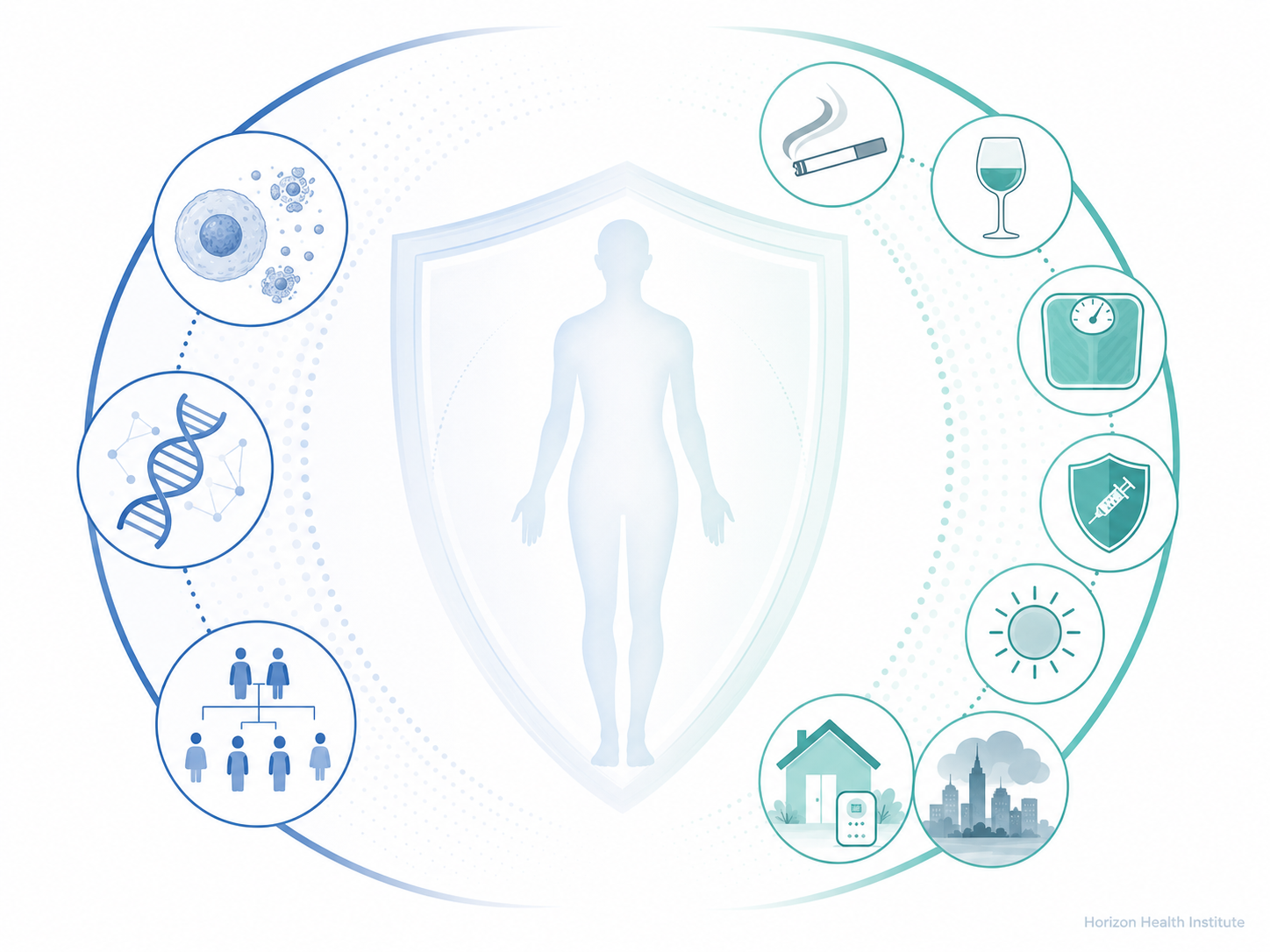
A practical cancer prevention plan begins by separating risk factors into two groups: those that cannot be changed and those that can often be reduced. Both groups matter. Nonmodifiable risk helps guide screening, while modifiable risk offers opportunities for prevention.
Risk factors you cannot fully control
These factors are not personal failures. They are part of a person’s biology, background, or medical history.
- Older age
- Family history of certain cancers
- Inherited genetic mutations
- Personal history of cancer or certain precancerous conditions
- Some immune system conditions or prior treatments
Risk factors you may be able to reduce
These are areas where prevention, medical guidance, and healthier routines may lower risk over time.
- Avoiding tobacco and secondhand smoke
- Limiting alcohol or choosing not to drink
- Maintaining a healthy weight
- Staying physically active
- Using sun protection
- Getting recommended vaccines and screenings
- Testing homes for radon when appropriate
How Modern Medicine Helps Manage Cancer Risk
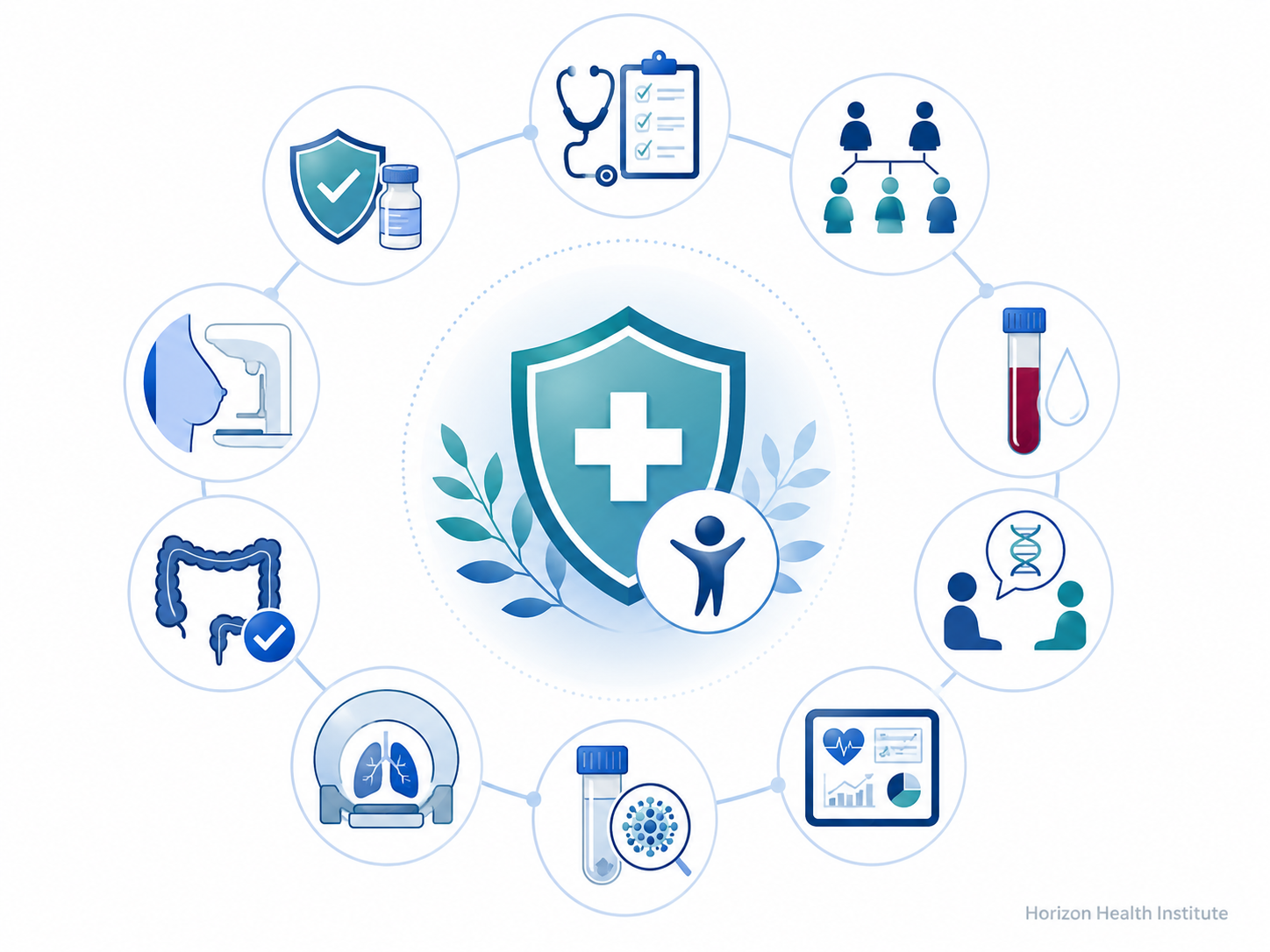
Modern cancer prevention is not only about lifestyle. It also involves clinical evaluation, laboratory testing, imaging when appropriate, vaccination, and evidence-based screening. These tools help healthcare professionals identify risk patterns, detect early warning signs, and monitor people who may need closer follow-up.
Clinical assessment
A healthcare professional may review symptoms, family history, personal history, medications, occupational exposure, and lifestyle patterns.
Lab and genetic testing
Blood tests, HPV tests, hepatitis testing, and genetic counseling may help clarify risk in selected patients.
Imaging and screening
Mammography, colonoscopy, low-dose CT for eligible lung cancer screening, Pap testing, HPV testing, and other tools can help detect certain cancers earlier.
Reference basis: CDC cancer prevention topics, National Cancer Institute risk factor information, FDA HPV and Pap test information, and American Cancer Society screening guidance.
Practical Ways to Lower Cancer Risk
No prevention plan can remove cancer risk completely. However, consistent habits and timely medical care can meaningfully reduce risk for many people. The best approach is realistic, steady, and personalized to age, health history, family history, and lifestyle.
Avoid tobacco
Avoid smoking, vaping nicotine products, smokeless tobacco, and secondhand smoke exposure whenever possible.
Protect your body daily
Use sun protection, stay physically active, support a healthy weight, and build meals around nutrient-rich foods.
Prevent infections
Ask about HPV vaccination, hepatitis B vaccination, and testing for infections that may increase certain cancer risks.
Follow screening guidance
Screening can help find some cancers or precancerous changes before symptoms appear.
When Should You Talk With a Healthcare Professional?
Consider discussing cancer risk with a healthcare professional if you have a strong family history of cancer, a personal history of precancerous changes, long-term tobacco exposure, unexplained symptoms, occupational exposure, or uncertainty about which screenings apply to you.
A Balanced Way to Think About Cancer Risk
Cancer risk should not create fear, but it should encourage awareness. The goal is to understand your personal risk profile, reduce what you can, and use modern medical care wisely. Horizon Health Institute encourages readers to view prevention and early detection as long-term health habits, not one-time decisions.
References
- Centers for Disease Control and Prevention: Cancer Risk Factors.
- National Cancer Institute: Risk Factors for Cancer and Age and Cancer Risk.
- American Cancer Society: Cancer Facts & Figures 2026 and cancer screening guidance.
- U.S. Food and Drug Administration: HPV, Pap testing, and cervical cancer screening information.
- World Health Organization: Cancer fact sheet and global cancer risk factor information.

This is one of the clearest explanations of cancer prevention: practical ways to lower I have found. I appreciated how the article addressed both the clinical side and the practical lifestyle adjustments. This gave me real confidence going into my next specialist appointment.
Thank you for covering cancer prevention: practical ways to lower so thoroughly without being overly technical. What I liked most was that the article didn’t just say what to avoid — it also gave alternatives. Thank you for making complex medical information accessible without dumbing it down.
As someone dealing with this personally, the cancer prevention: practical ways to lower section was very helpful. The section on managing this condition day-to-day was especially useful for meal planning. Thank you for making complex medical information accessible without dumbing it down.
Thank you for covering cancer prevention: practical ways to lower so thoroughly without being overly technical. What I liked most was that the article didn’t just say what to avoid — it also gave alternatives. This is going into my health folder that I bring to every doctor’s visit.
I have been reading about cancer prevention: practical ways to lower for weeks and this is the most thorough guide I found. I have tried following advice from several sources but this is most consistent with what my specialist told me. Keep up this kind of thorough health journalism — it genuinely helps patients like me.
This is one of the clearest explanations of cancer prevention: practical ways to lower I have found. The practical tips made this immediately actionable, not just theoretical. Appreciate the effort that went into researching and writing this — it shows.