
Cancer Prevention: Evidence-Based Ways to Lower Your Cancer Risk
Cancer prevention is not about one perfect habit. It is about building a practical, evidence-based plan that lowers risk over time, supports early detection, and helps people make better health decisions before symptoms appear.
Why Cancer Prevention Matters
Cancer develops when cells acquire changes that allow them to grow and divide in abnormal ways. Some of these changes are related to age, inherited genetics, or random errors during cell division. Others are influenced by exposures and behaviors that can be reduced.
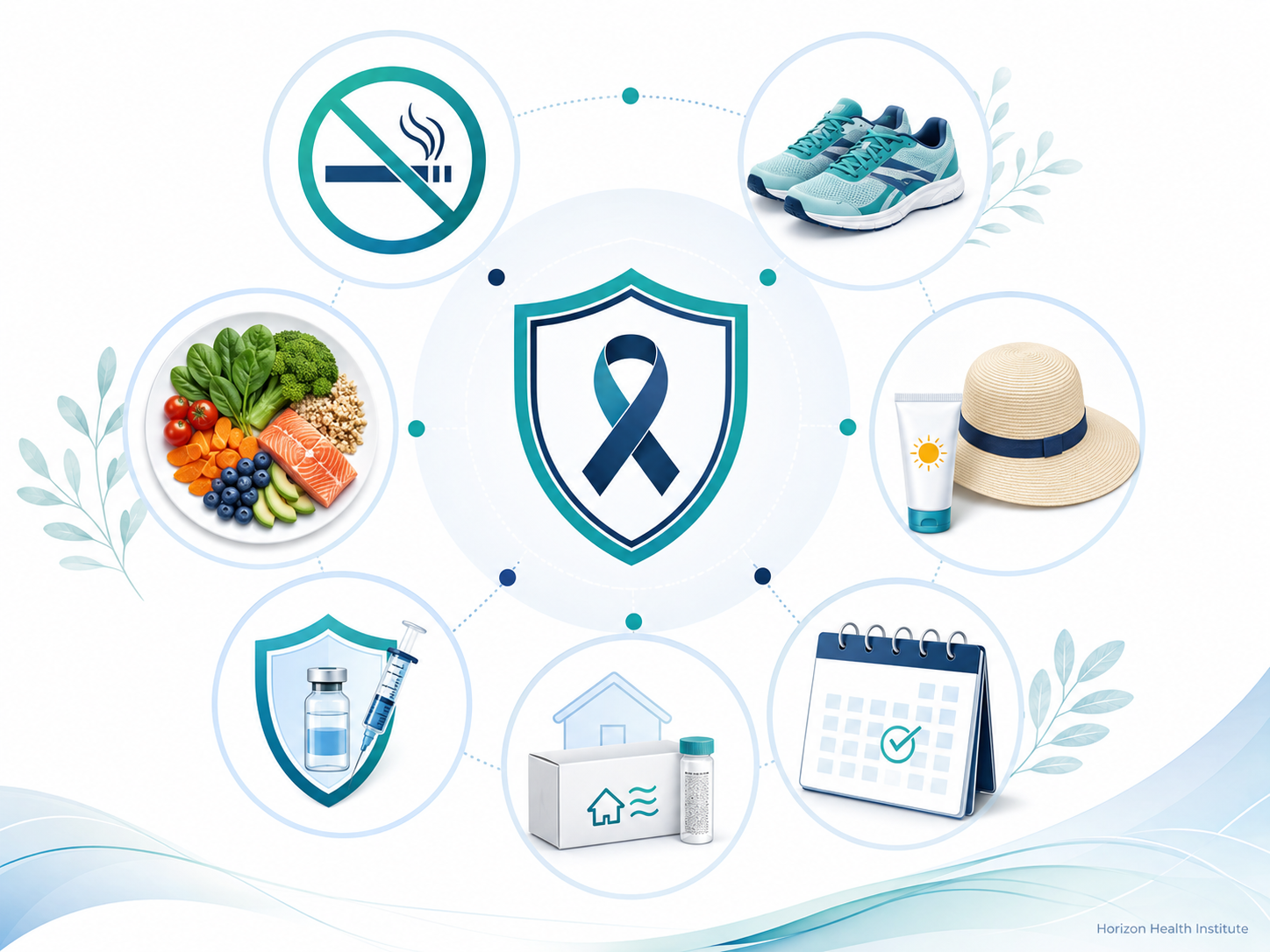
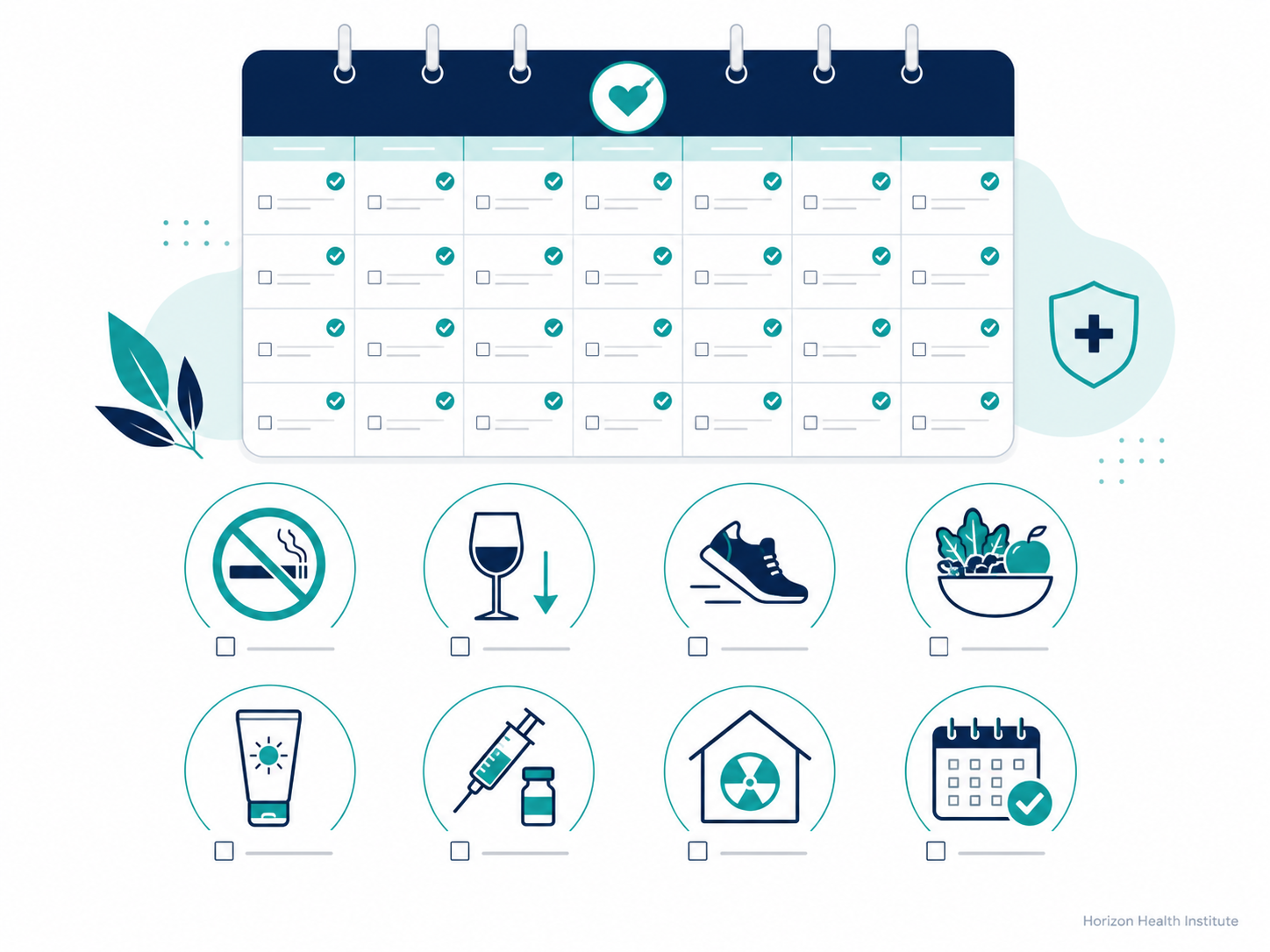
Public health organizations consistently emphasize that many cancer risks are modifiable. Avoiding tobacco, limiting alcohol, staying physically active, maintaining a healthy weight, protecting skin from ultraviolet radiation, receiving recommended vaccines, testing for radon, and completing age-appropriate screening can all play an important role in cancer risk reduction.
Horizon Health Institute perspective: Cancer prevention works best when daily habits are supported by modern medical care. A healthy lifestyle lowers risk, while screening, clinical evaluation, laboratory testing, imaging, and follow-up help detect concerning changes earlier.
Core Cancer Prevention Habits That Make a Difference
No single behavior can guarantee cancer prevention. However, the strongest prevention plans focus on reducing repeated exposures that damage cells, improving metabolic health, preventing cancer-related infections, and finding disease earlier through appropriate screening.
Avoid Tobacco in Every Form
Tobacco remains one of the most important preventable causes of cancer. Cigarettes, cigars, smokeless tobacco, and secondhand smoke can expose the body to cancer-causing chemicals that damage DNA and increase cancer risk.
- Do not start smoking or vaping nicotine products.
- If you smoke, ask a clinician about quitting support, medication options, and counseling.
- Avoid secondhand smoke at home, in cars, and in shared indoor spaces.
Limit Alcohol
Alcohol is linked with increased risk for several cancers, including cancers of the mouth, throat, voice box, esophagus, liver, breast, colon, and rectum. For cancer prevention, less alcohol is generally better.
- Consider alcohol-free days or alcohol-free routines.
- Do not use alcohol as a daily stress-management tool.
- Talk with a healthcare professional if cutting back feels difficult.
Maintain a Healthy Weight and Stay Active
Excess body weight and physical inactivity are associated with higher risk for several cancers. Regular activity helps improve insulin sensitivity, inflammation control, hormone balance, immune function, and long-term cardiovascular health.
- Build movement into daily life: walking, cycling, swimming, light strength training, or mobility work.
- Reduce long periods of sitting when possible.
- Focus on sustainable routines rather than short-term extreme diets.
Eat for Long-Term Cellular Health
A cancer-prevention eating pattern does not need to be complicated. The goal is to support a healthy weight, reduce inflammation, and provide fiber, vitamins, minerals, and protective plant compounds.
- Choose vegetables, fruits, beans, lentils, whole grains, nuts, and seeds often.
- Limit highly processed foods, sugary drinks, and frequent processed meat.
- Use healthy eating as a daily pattern, not a temporary challenge.
Protect Your Skin From UV Radiation
Ultraviolet radiation from sunlight and indoor tanning can damage skin-cell DNA. Sun protection is especially important during outdoor work, sports, travel, and high-UV hours.
- Use shade, protective clothing, sunglasses, and a wide-brimmed hat.
- Choose broad-spectrum sunscreen and reapply as directed.
- Avoid indoor tanning beds.
Test Your Home for Radon
Radon is a naturally occurring radioactive gas that can build up indoors. It cannot be seen or smelled, so testing is the only reliable way to know whether levels are high.
- Use a home radon test kit or hire a qualified radon professional.
- If levels are high, ask about radon mitigation options.
- Testing is especially important for basements and lower-level living areas.
Prevention Works Best When It Becomes a System
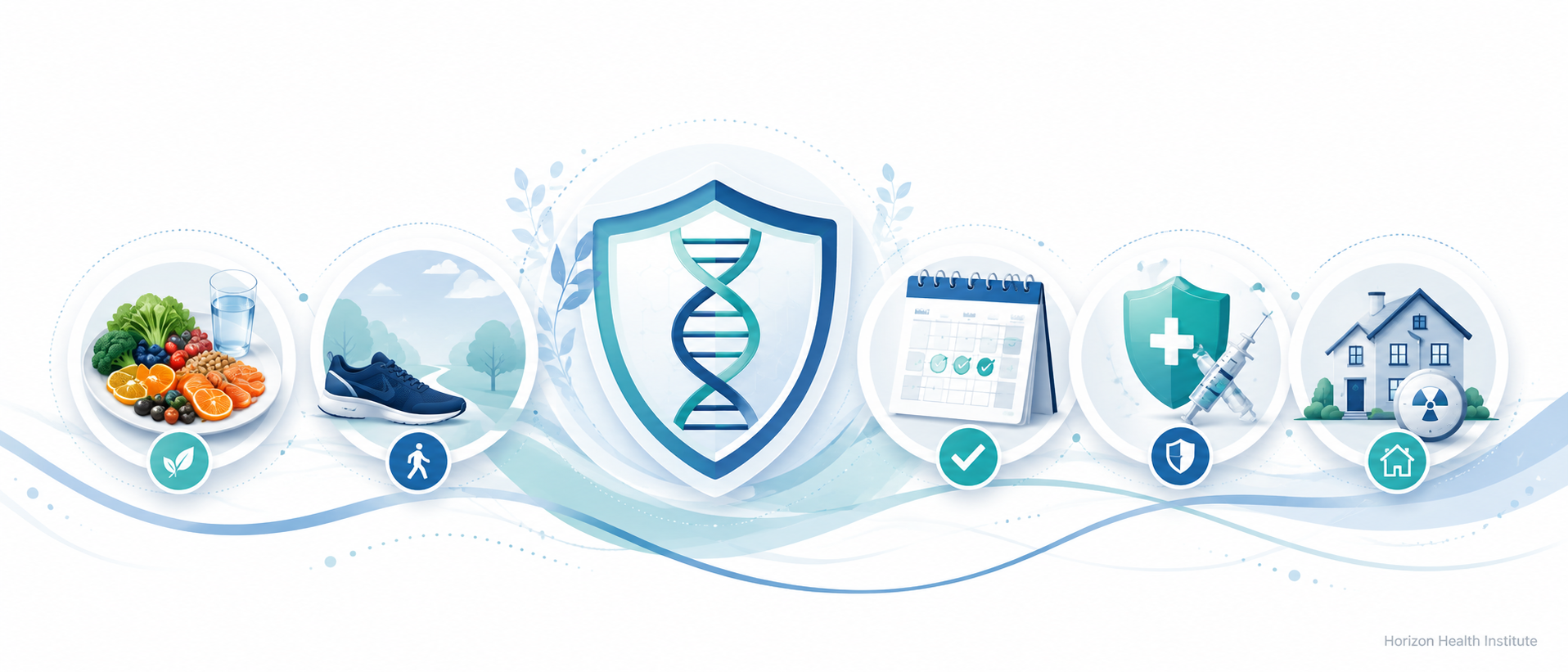
The most effective approach is not one dramatic change. It is a steady system: avoid tobacco, reduce alcohol, move often, eat mostly whole foods, protect your skin, test your home environment, stay current with vaccines, and follow recommended screening schedules.
Vaccines and Screening: Where Modern Prevention Becomes More Powerful
Lifestyle matters, but cancer prevention is also clinical. Vaccines can help prevent infections that raise cancer risk, and screening tests can detect some cancers or precancerous changes before symptoms develop.
Vaccines That Help Prevent Cancer
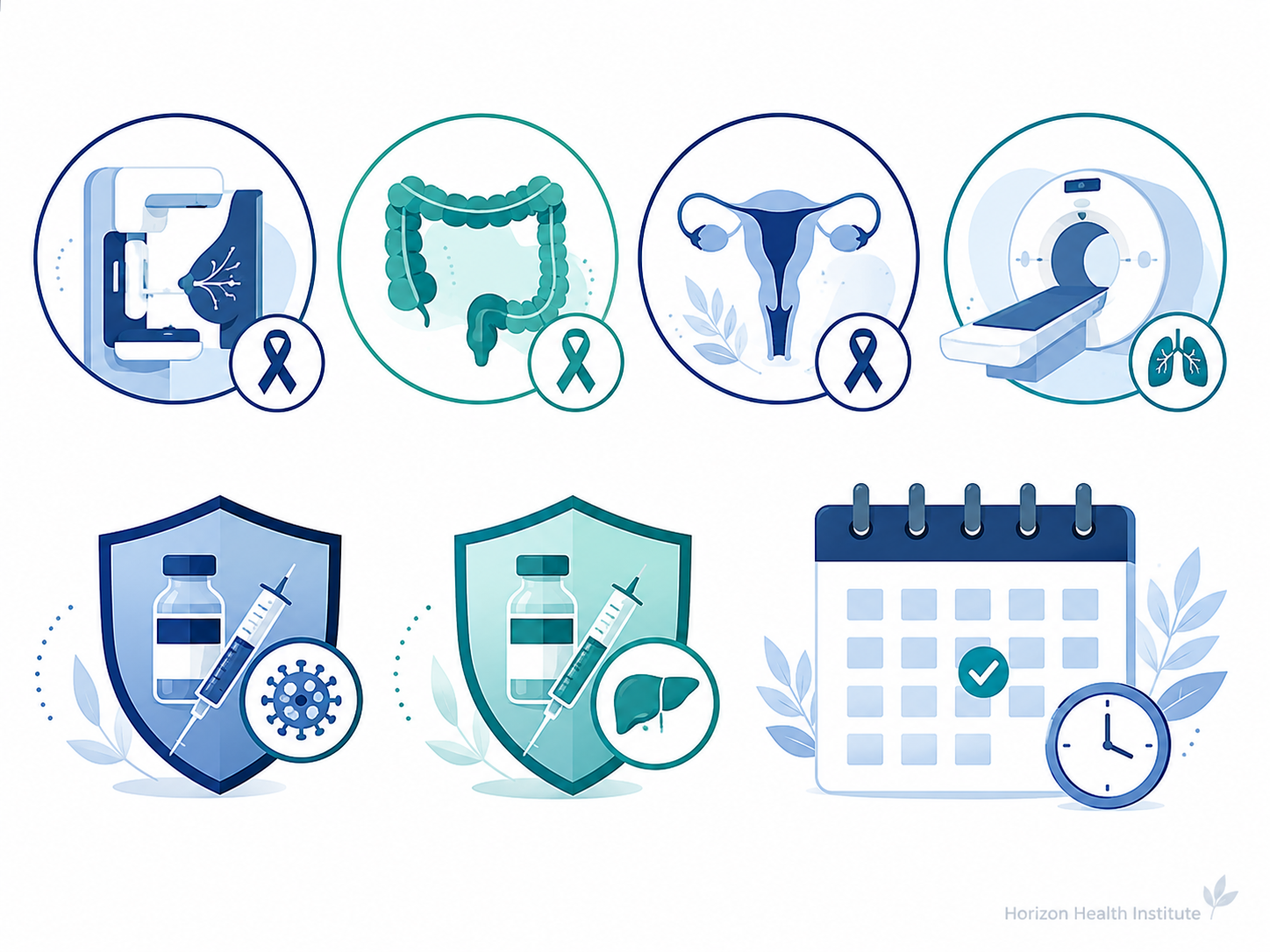
The HPV vaccine helps protect against human papillomavirus, which is linked to cervical cancer and several other cancers. The hepatitis B vaccine helps protect against hepatitis B infection, which can increase the risk of liver cancer.
Vaccine timing depends on age, prior vaccination status, health history, and individual risk. A clinician can help determine what is appropriate.
Screening Before Symptoms Appear
Screening means checking for cancer before symptoms develop. This is different from diagnostic testing, which is done when a person has symptoms, abnormal exam findings, or an abnormal screening result.
The right screening schedule depends on age, sex, personal history, family history, smoking history, and previous test results.
| Cancer type | Common screening approach | Why it matters |
|---|---|---|
| Breast cancer | Mammography for eligible women, with timing based on age and risk. | Can detect breast cancer before a lump is felt or symptoms develop. |
| Cervical cancer | Pap test, HPV test, or co-testing depending on age and guideline category. | Can detect precancerous cervical changes before they become cancer. |
| Colorectal cancer | Stool-based tests, colonoscopy, or other approved screening options for eligible adults. | Can find cancer early and may also find polyps before they become cancer. |
| Lung cancer | Low-dose CT screening for certain adults with a significant smoking history. | Can detect lung cancer earlier in people at higher risk. |
The Role of Modern Medical Care in Cancer Risk Management
Modern medicine supports cancer prevention by connecting risk assessment, clinical evaluation, laboratory testing, imaging, vaccination, and follow-up care. This is especially important for people with a strong family history of cancer, previous abnormal tests, chronic infections, or long-term exposure risks.
How to Build a Personal Cancer Prevention Plan
A practical cancer prevention plan should be realistic enough to follow and specific enough to track. Instead of trying to change everything at once, start with the risk factors that matter most for your health history and daily life.
The Bottom Line
Cancer prevention is strongest when it combines everyday choices with evidence-based healthcare. Avoiding tobacco, limiting alcohol, staying active, maintaining a healthy weight, eating a balanced diet, protecting your skin, testing for radon, receiving recommended vaccines, and completing appropriate screening can all help lower risk.
Horizon Health Institute encourages readers to see cancer prevention as a long-term health strategy: practical habits, informed medical decisions, early detection, and consistent follow-up working together.
Sources and References
- Centers for Disease Control and Prevention. Cancer Prevention. CDC
- Centers for Disease Control and Prevention. Cancer Screening Tests. CDC
- U.S. Preventive Services Task Force. Breast Cancer Screening Recommendation. USPSTF
- Centers for Disease Control and Prevention. Colorectal Cancer Screening. CDC
- Centers for Disease Control and Prevention. Testing for Radon in Your Home. CDC
- U.S. Food and Drug Administration. Sunscreen: How to Help Protect Your Skin from the Sun. FDA
- World Health Organization and International Agency for Research on Cancer. Four in Ten Cancer Cases Could Be Prevented Globally. WHO
- American Cancer Society. Cancer Facts & Figures 2024. American Cancer Society
This is one of the clearest explanations of cancer prevention: evidence-based ways to lower I have found. What I liked most was that the article didn’t just say what to avoid — it also gave alternatives. Will definitely be coming back to this site for more health information.
As someone dealing with this personally, the cancer prevention: evidence-based ways to lower section was very helpful. The connection between diet, lifestyle, and long-term outcomes is explained clearly here. Will definitely be coming back to this site for more health information.
As someone dealing with this personally, the cancer prevention: evidence-based ways to lower section was very helpful. The practical tips at the end made this immediately actionable, not just theoretical. Forwarding this to others in my support group who are dealing with similar issues.
I have been reading about cancer prevention: evidence-based ways to lower for weeks and this is the most thorough guide I found. The article answered questions I didn’t even know I had until I started reading. This gave me real confidence going into my next specialist appointment.
As someone dealing with this personally, the cancer prevention: evidence-based ways to lower section was very helpful. I appreciated how the article addressed both the clinical side and the practical adjustments. I wish I had found this article earlier — would have saved a lot of confusion.
This breakdown of cancer prevention: evidence-based ways to lower is exactly what patients need before a specialist appointment. I appreciated how the article addressed both the clinical side and the practical adjustments. Forwarding this to others in my support group who are dealing with similar issues.