
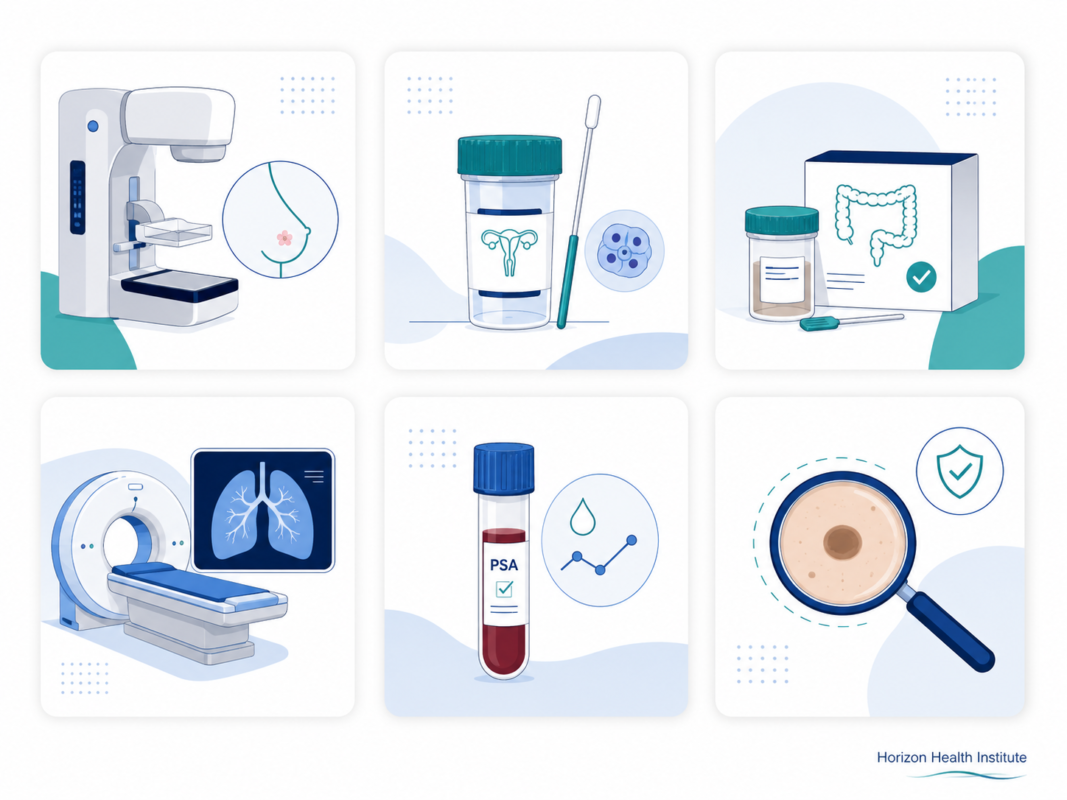
Cancer Screening: What Tests You May Need and When to Start
Cancer screening is one of the most practical ways modern medicine helps protect long-term health. It looks for cancer, or abnormal cells that may become cancer, before symptoms appear—when treatment is often more effective and options may be less intensive.
At Horizon Health Institute, cancer screening is viewed as more than a single test. It is a preventive health strategy that combines personal risk assessment, evidence-based guidelines, laboratory testing, medical imaging, clinical follow-up, and shared decision-making between patients and healthcare professionals.
Screening does not prevent every cancer, and it cannot detect every tumor. However, for several major cancers, routine screening can help find disease earlier or identify precancerous changes before they become invasive cancer.
Sources: CDC Cancer Screening Tests; National Cancer Institute Cancer Screening

What Is Cancer Screening?
Cancer screening means checking for cancer in people who do not have symptoms. Depending on the cancer type, screening may involve an imaging exam, a laboratory test, a physical exam, an endoscopic procedure, or a combination of methods.
The goal is not simply to “run more tests.” The goal is to use the right test, for the right person, at the right time. Age, sex, family history, tobacco exposure, prior test results, genetics, immune status, and personal medical history can all affect which screening plan makes sense.
A useful way to think about screening is this: symptoms tell us something may already be happening; screening tries to look earlier, before the body sends obvious warning signs.
Why Early Detection Matters
Many cancers are easier to treat when they are found before they spread. Early detection may allow for more treatment choices, less extensive therapy, and better long-term outcomes. In some cases, screening can also prevent cancer by finding abnormal changes before they become cancer.
Screening is especially important because early cancer may feel silent
A person can feel healthy and still have early-stage cancer or precancerous changes. For example, colon polyps may not cause symptoms for years, cervical cell changes may be found only through Pap or HPV testing, and early breast cancer may be too small to feel by touch.
- Breast screening uses mammography to look for breast cancer before a lump can be felt.
- Cervical screening uses Pap testing and/or HPV testing to find cell changes related to cervical cancer risk.
- Colorectal screening can find hidden blood, abnormal DNA markers, polyps, or cancer depending on the test used.
- Lung screening uses low-dose CT for certain people with a significant smoking history.
Sources: CDC; National Cancer Institute
Common Cancer Screening Tests in the United States
Screening recommendations can vary by organization, and some decisions should be personalized. The following overview focuses on commonly recommended cancer screening tests used in U.S. preventive care.
Sources: USPSTF A and B Recommendations; American Cancer Society Screening Guidelines
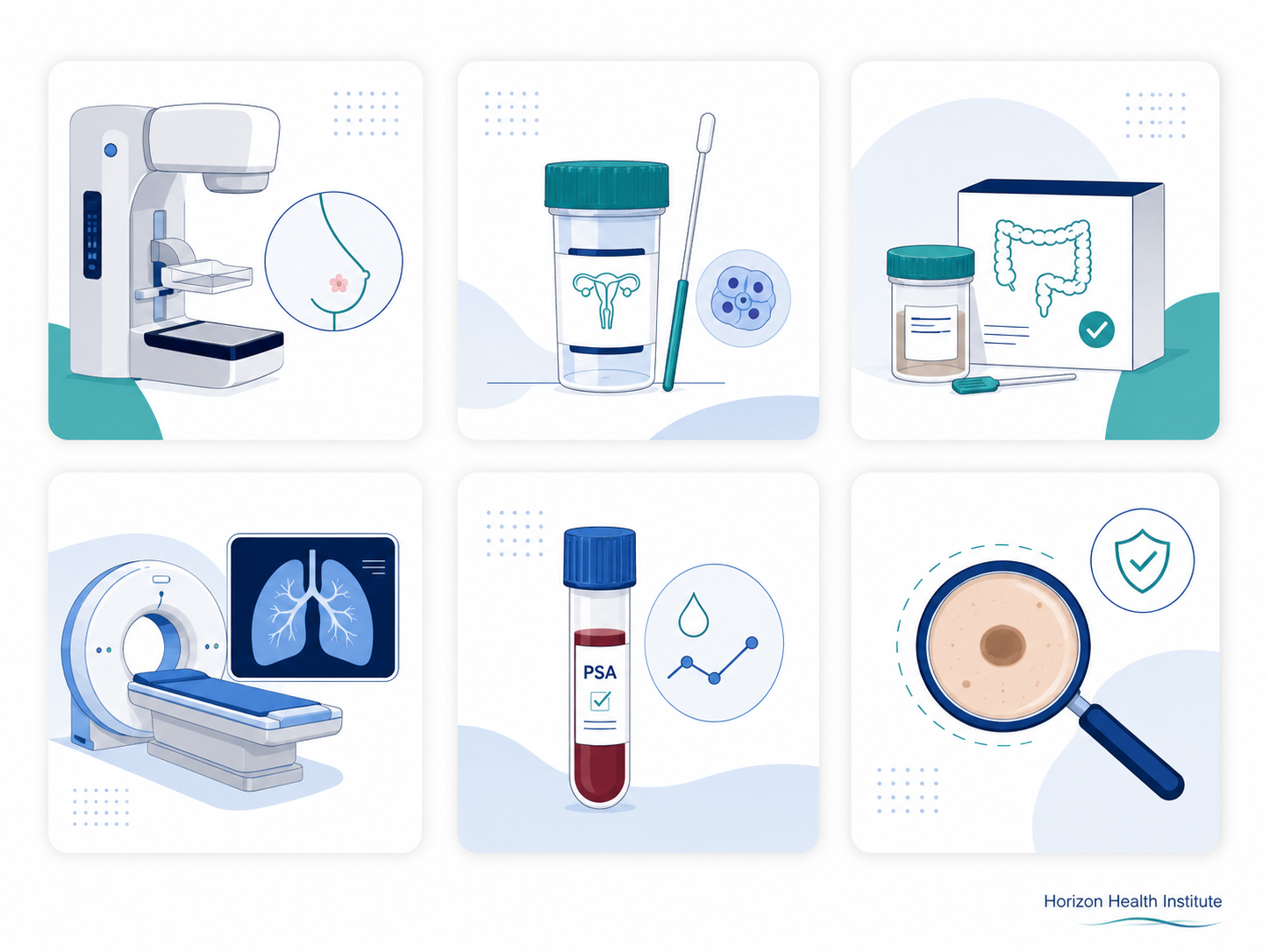
Cancer Screening by Type: What to Know
Breast Cancer Screening
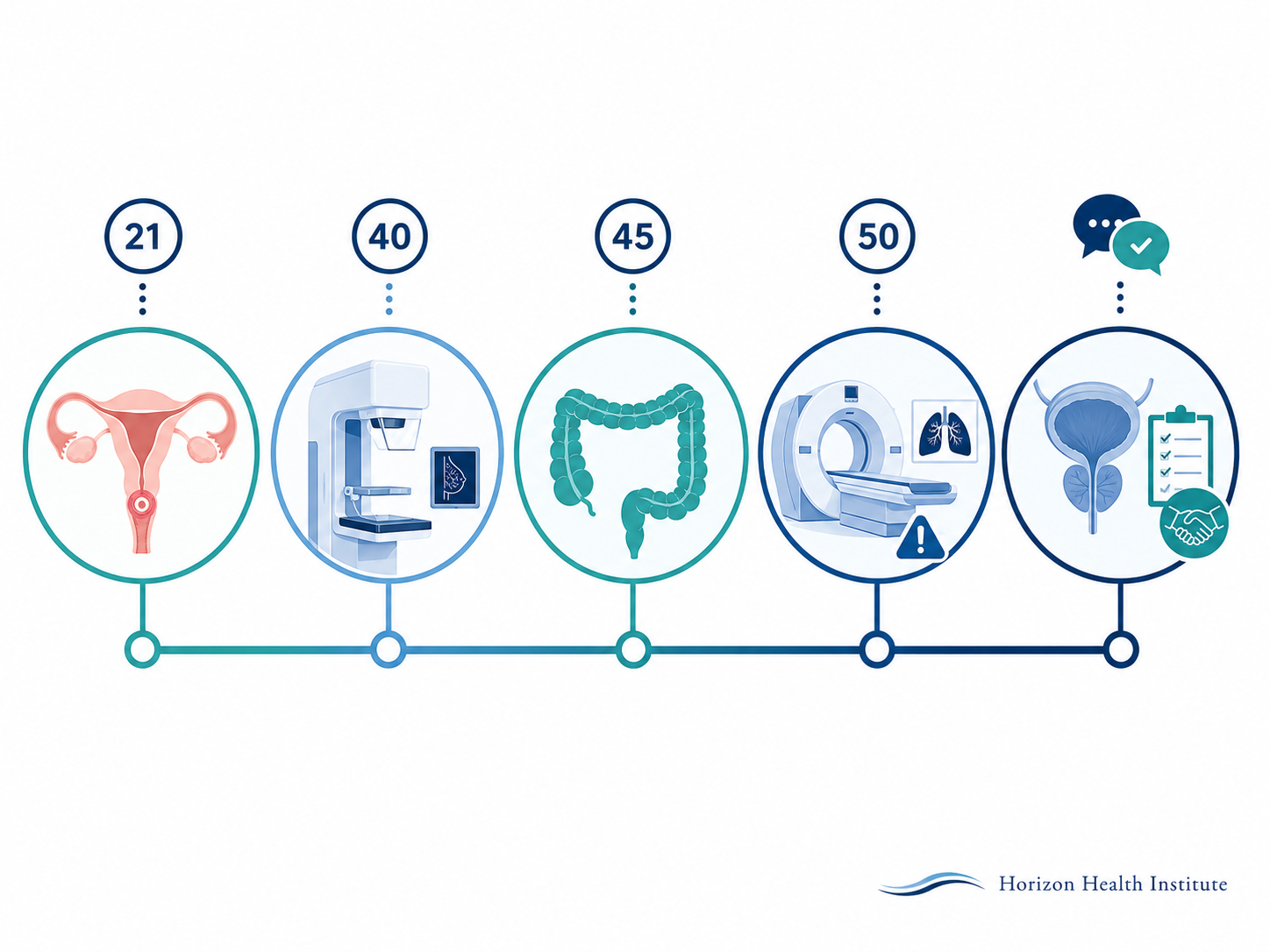
Mammograms are X-ray images of the breast that can detect changes before they can be felt. The U.S. Preventive Services Task Force recommends that women at average risk get screened every other year from ages 40 to 74.
Some people may need a more individualized plan. A clinician may consider family history, dense breast tissue, prior breast biopsies, genetic risk, or previous chest radiation when deciding whether additional imaging or earlier screening should be discussed.
Sources: USPSTF Breast Cancer Screening; CDC Cancer and Women
Cervical Cancer Screening
Cervical cancer screening can find abnormal cervical cells before cancer develops. The Pap test looks for cell changes, while the HPV test looks for high-risk types of human papillomavirus that can lead to cervical cancer.
The USPSTF recommends cervical cancer screening for women ages 21 to 65. For ages 21 to 29, screening is typically done with cervical cytology every 3 years. For ages 30 to 65, options include cytology every 3 years, high-risk HPV testing every 5 years, or co-testing every 5 years.
Sources: USPSTF Cervical Cancer Screening; CDC Cancer Screening Tests
Colorectal Cancer Screening
Colorectal cancer often develops from precancerous polyps in the colon or rectum. Screening can find these polyps so they can be removed before they become cancer. Screening can also find colorectal cancer earlier, when treatment is more likely to work well.
The USPSTF recommends colorectal cancer screening for adults ages 45 to 75. For adults ages 76 to 85, the decision is more individualized and should consider overall health, prior screening history, and personal preferences.
Screening options may include annual FIT or high-sensitivity stool blood testing, stool DNA-FIT every 1 to 3 years, CT colonography every 5 years, flexible sigmoidoscopy, or colonoscopy every 10 years. A positive stool-based or blood-based screening test generally needs follow-up with colonoscopy.
Sources: USPSTF Colorectal Cancer Screening; American Cancer Society Screening Guidelines
Lung Cancer Screening
Lung cancer screening is not recommended for everyone. It is designed for people at higher risk because of age and smoking history. The USPSTF recommends annual screening with low-dose computed tomography, also called low-dose CT or LDCT, for adults ages 50 to 80 who have a 20 pack-year smoking history and currently smoke or quit within the past 15 years.
LDCT is a specialized imaging test that uses a lower radiation dose than a standard diagnostic CT scan. It can detect small lung nodules, but not every nodule is cancer. That is why lung screening should be done in a structured program with careful follow-up.
Source: USPSTF Lung Cancer Screening Recommendation
Prostate Cancer Screening
Prostate cancer screening commonly involves a prostate-specific antigen blood test, known as a PSA test. The decision to screen is more preference-sensitive because PSA testing may detect cancers that would never cause harm, while also helping identify cancers that may need treatment.
Men should discuss PSA screening with a healthcare professional, especially if they have a family history of prostate cancer, are Black, or have other risk factors. A thoughtful discussion should include possible benefits, false positives, overdiagnosis, biopsy risks, and what follow-up may involve.
Skin Cancer Screening
Skin cancer screening often begins with noticing new, changing, bleeding, or unusual skin spots. A clinician or dermatologist may examine the skin more closely, especially for people with a history of skin cancer, many moles, heavy ultraviolet exposure, tanning bed use, or a family history of melanoma.
A practical screening plan is not the same for everyone. The best plan is based on age, risk factors, prior results, and the ability to complete recommended follow-up.
How Modern Medicine Supports Cancer Screening
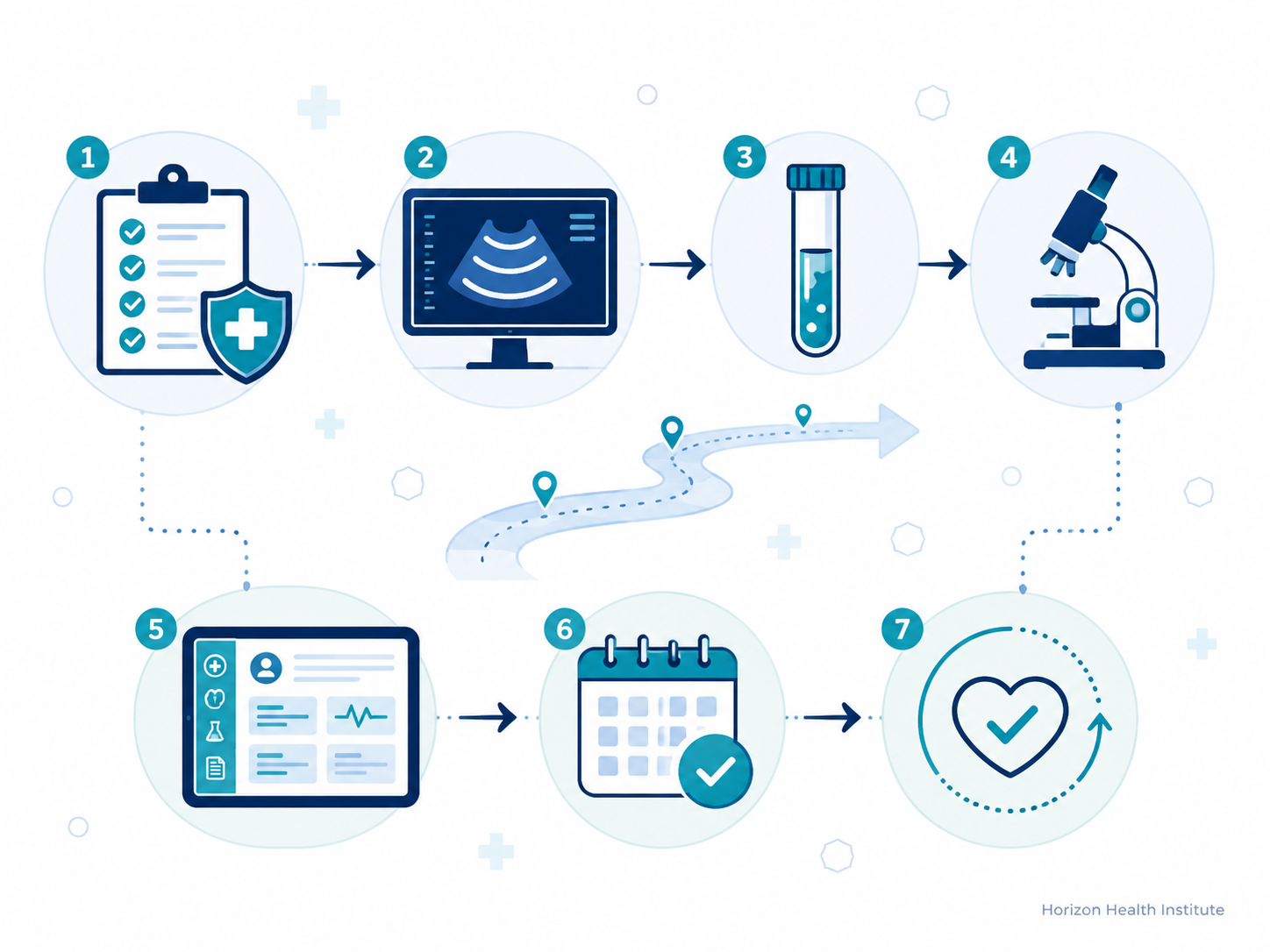
Cancer screening has become more precise because modern healthcare can combine clinical evaluation with imaging, laboratory science, pathology, and digital health records. This helps clinicians interpret results in context rather than treating each test as an isolated number or image.
Benefits and Limits of Cancer Screening
Screening can save lives, but every screening test has potential limits. A test may miss cancer, suggest cancer when none is present, or detect a slow-growing cancer that may never have caused harm. That is why trusted cancer screening guidance considers both benefits and possible harms.
Potential benefits
- Finding certain cancers before symptoms appear
- Detecting precancerous changes, such as cervical cell changes or colon polyps
- Allowing earlier treatment planning
- Helping people with higher risk receive closer monitoring
- Reducing the chance of dying from some cancers when screening is used appropriately
Potential limits
- False-positive results that lead to anxiety or extra testing
- False-negative results that miss cancer
- Overdiagnosis of cancers that may not have caused harm
- Procedure-related risks, such as bleeding or complications after invasive testing
- The need for timely follow-up after abnormal results
Questions to Ask Your Doctor About Cancer Screening
A good cancer screening conversation should be personal. Instead of asking only, “Do I need a cancer test?” consider asking questions that help your clinician match screening to your actual risk.
- Which cancer screening tests are recommended for my age and sex?
- Do my family history or personal medical history change when I should start screening?
- Which test options are available, and how often should they be repeated?
- What happens if the result is abnormal?
- Do I need a specialist, genetic counseling, imaging, or a biopsy?
- How should I track my screening schedule over time?
When Screening May Need to Start Earlier
Average-risk screening guidelines are useful, but some people need a more personalized plan. Earlier or more frequent screening may be considered for people with strong family history, inherited cancer syndromes, prior precancerous findings, inflammatory bowel disease, previous radiation exposure, certain immune conditions, or a major smoking history.
For example, someone with a first-degree relative who had colorectal cancer at a younger age may need colon screening earlier than age 45. A person with a known BRCA1 or BRCA2 gene mutation may need a specialized breast and ovarian cancer risk management plan. A current or former smoker with enough pack-year exposure may qualify for annual low-dose CT lung screening.
Horizon Health Institute recommends using screening guidelines as a starting point—not as a substitute for individualized medical advice from a qualified healthcare professional.
How to Stay on Track
Many people miss screening not because they do not care, but because life gets busy. A simple reminder system can make preventive health easier to manage.
- Keep a list of your last screening dates and results.
- Ask your healthcare office when your next test is due.
- Use phone reminders or a yearly preventive health calendar.
- Save copies of colonoscopy reports, mammogram letters, Pap/HPV results, and CT reports.
- Do not ignore abnormal results—follow-up is part of screening.
The Bottom Line
Cancer screening is one of the most important tools in preventive healthcare. It works best when it is evidence-based, personalized, completed on schedule, and followed by appropriate evaluation when results are abnormal.
For U.S. adults, the most common screening conversations include breast, cervical, colorectal, lung, prostate, and skin cancer. The right plan depends on your age, risk factors, health history, and preferences. When used wisely, screening helps modern medicine move from reacting to late symptoms toward detecting problems earlier—when care may have the greatest impact.
References
- Centers for Disease Control and Prevention. Cancer Screening Tests.
- National Cancer Institute. Cancer Screening.
- American Cancer Society. Guidelines for the Early Detection of Cancer.
- U.S. Preventive Services Task Force. Breast Cancer: Screening.
- U.S. Preventive Services Task Force. Colorectal Cancer: Screening.
- U.S. Preventive Services Task Force. A and B Recommendations.
I shared this article on cancer screening: what tests you may with my doctor and they appreciated the level of detail. I appreciated how the article addressed both the clinical side and the practical lifestyle adjustments. I wish I had found this article when I was first diagnosed — would have saved a lot of confusion.
Finally a resource that explains cancer screening: what tests you may in plain language. I appreciated how the article addressed both the clinical side and the practical lifestyle adjustments. Looking forward to reading more articles from this website.
Thank you for covering cancer screening: what tests you may so thoroughly without being overly technical. What I liked most was that the article didn’t just say what to avoid — it also gave alternatives. This is going into my health binder that I bring to every doctor’s visit.
Finally a resource that explains cancer screening: what tests you may in plain language. I have tried following advice from several sources but this is most consistent with what my specialist told me. Forwarding this to others in my support group who are dealing with similar issues.
I never fully understood cancer screening: what tests you may until I read this. The specific numbers and thresholds mentioned are exactly what I needed to understand my results. Appreciate the effort that went into researching and writing this — it shows.
As someone dealing with this personally, the cancer screening: what tests you may section was very helpful. The connection between lifestyle choices and long-term outcomes is explained clearly here. This is exactly why I prefer this website over generic health platforms.