

The PSA test is one of the most commonly ordered blood tests in men’s health — and one of the most commonly misunderstood. A man who receives an elevated result often assumes the worst. A man with a normal result often assumes he is cancer-free. Neither conclusion is correct, and both misunderstandings can lead to either unnecessary anxiety or dangerous complacency.
PSA — prostate-specific antigen — is a protein produced by the prostate gland, not specifically by prostate cancer. BPH, prostatitis, and a normal healthy prostate all produce PSA that enters the bloodstream. Understanding what the test measures, what affects it, and how results should be interpreted in context is essential before any clinical decision is made. If your PSA comes back elevated, our guide to high PSA covers the full evaluation pathway.
What Is PSA?
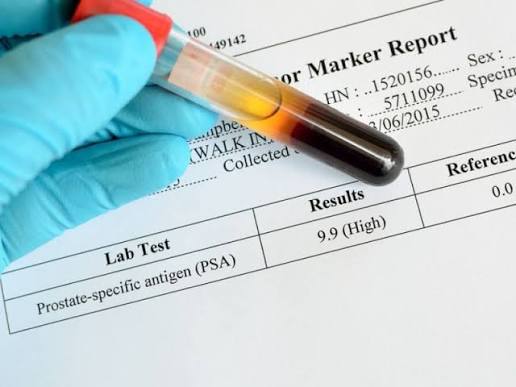
Prostate-specific antigen is an enzyme produced almost exclusively by the epithelial cells lining the prostate gland. Its primary biological function is to liquefy semen after ejaculation, allowing sperm to swim freely. Small amounts of PSA leak from the prostate into the bloodstream, where they can be detected and measured in nanograms per milliliter (ng/mL).
The amount of PSA in the bloodstream reflects how much the prostate is producing and how readily it leaks into circulation. Larger prostates produce more PSA. Inflamed prostate tissue from prostatitis produces dramatically elevated amounts. Prostate cancer disrupts the normal glandular architecture in ways that allow more PSA to enter the circulation — but so do many non-cancerous conditions.
PSA is organ-specific — produced almost entirely by prostate tissue — but it is not cancer-specific. Every prostate condition, benign or malignant, elevates it. This is the fundamental feature that makes PSA useful as a prostate indicator and imperfect as a cancer test.
The History of the 4 ng/mL Threshold
The most widely used PSA threshold — 4 ng/mL — was not derived from randomized trial data but from a study by Catalona et al. in the early 1990s that found PSA above 4 ng/mL was more sensitive and specific than DRE alone for detecting prostate cancer. The threshold was practical and useful in the era when PSA was first introduced, but its limitations have since become clear:
- At PSA 4 ng/mL, approximately 25–30% of men biopsied have cancer — meaning 70–75% do not
- Approximately 20–25% of significant prostate cancers occur in men with PSA below 4 ng/mL (the “false-negative zone”)
- The threshold does not account for prostate size, age, or race
More nuanced approaches — age-adjusted thresholds, PSA density, PSA velocity, and adjunct biomarkers — have largely replaced the simple 4 ng/mL cutoff in clinical practice, though it remains a common reference point in prostate cancer screening discussions.
PSA Forms — Free, Bound, and What They Tell You
The total PSA measured by a standard test combines two distinct fractions with different clinical implications.
Complexed (bound) PSA makes up the majority of total PSA — typically 70 to 90%. It is PSA that has attached to blood proteins. Cancer cells produce disproportionately more complexed PSA than BPH cells.
Free PSA is the fraction not attached to any protein. When prostate cancer is present, the free-PSA proportion decreases. Expressed as a percentage of total PSA, this ratio helps distinguish cancer from BPH when total PSA is in the 4 to 10 ng/mL range:
- Free PSA less than 10%: approximately 56% probability of cancer on biopsy
- Free PSA 10 to 25%: intermediate probability
- Free PSA greater than 25%: approximately 8% probability of cancer — more reassuring
[-2]proPSA is a precursor form of PSA disproportionately elevated in prostate cancer tissue. It is the basis for the Prostate Health Index (PHI), an FDA-approved blood test combining total PSA, free PSA, and [-2]proPSA that outperforms PSA alone for predicting clinically significant cancer.
What Are Normal PSA Levels?
The traditional 4 ng/mL threshold has real limitations. Age-adjusted reference ranges better reflect the fact that the prostate grows with age and produces more PSA:
- Ages 40 to 49: below 2.5 ng/mL
- Ages 50 to 59: below 3.5 ng/mL
- Ages 60 to 69: below 4.5 ng/mL
- Ages 70 to 79: below 6.5 ng/mL
PSA density (PSAD) divides total PSA by prostate volume (from MRI or ultrasound). It accounts for prostate size and is more specific than raw PSA:
- PSAD below 0.10 ng/mL/cc: low risk; biopsy often safely deferred
- PSAD 0.10 to 0.15 ng/mL/cc: intermediate; adjunct testing or MRI recommended
- PSAD above 0.15 ng/mL/cc: elevated concern; biopsy consideration increases
Approximately 20–25% of clinically significant prostate cancers occur in men with PSA below 4 ng/mL. High-grade tumors, including the most aggressive Grade Group 5 cancers, can produce relatively little PSA. A normal PSA is reassuring, not conclusive. A suspicious DRE finding or other clinical concern warrants evaluation regardless of PSA level.
PSA Velocity — When the Rate of Rise Matters
A single PSA value is a snapshot. PSA velocity (PSAV) measures how quickly PSA is rising over time — and the rate of rise can carry as much clinical information as the absolute value.
The clinically significant thresholds are:
- PSA rise greater than 0.75 ng/mL per year when total PSA is above 4 ng/mL: associated with increased cancer risk beyond what the PSA value alone predicts
- PSA rise greater than 0.35 ng/mL per year when PSA is between 2.5 and 4 ng/mL: concerning in this “borderline” zone
Critical caveats apply to PSA velocity calculations:
- At least two to three measurements over a minimum of 12 to 18 months are required for a valid velocity calculation
- Measurements must be from the same laboratory using the same assay platform — switching labs can create apparent velocity that is entirely artifactual
- PSA velocity is most clinically useful when the total PSA level is in the intermediate range; at very low PSA levels, normal biological variability can produce velocity values that appear alarming but are not
PSA doubling time (PSADT) is a related concept more often used in the post-treatment setting. It calculates the time for PSA to double, expressed in months. PSADT below 6 months after treatment indicates rapidly progressive disease; PSADT above 12 months is generally consistent with slower-growing disease and allows more conservative management.
What Causes a False Elevated PSA?
Many conditions and activities cause transient PSA elevation that resolves when the cause is removed. Recognizing these false positives prevents unnecessary biopsy:
- Benign prostatic hyperplasia (BPH): The most common cause. The enlarging prostate produces approximately 0.3 ng/mL of PSA per gram of additional tissue. A man with a 60-gram prostate from BPH may have a PSA of 4–6 ng/mL with no cancer present.
- Prostatitis: Especially acute bacterial prostatitis, which can dramatically elevate PSA above 20 ng/mL. Resolve the infection with antibiotics and recheck PSA 6–8 weeks after treatment clears.
- Prostate biopsy and TRUS: Significant PSA elevation persisting 4–6 weeks. Draw PSA before any prostate procedure, or at least 4–6 weeks after.
- Digital rectal exam (DRE): Modest transient elevation. Draw blood before DRE or at least 2 days after.
- Ejaculation: Mild transient elevation. 48–72 hours of abstinence before testing is recommended.
- Vigorous perineal activity (prolonged cycling, horseback riding): Transient elevation; avoid 24–48 hours before testing.
- Urinary tract infection: Elevates PSA; recheck after infection has fully resolved.
- 5-alpha reductase inhibitors (finasteride, dutasteride): LOWER PSA by approximately 50% after 6–12 months of use. Physicians must double the reported PSA value to estimate the true biological level in men on these medications. A failure to suppress by 50% within a year of starting a 5-ARI is itself an indication for evaluation.
PSA in Special Clinical Circumstances
Men on testosterone therapy: Exogenous testosterone can stimulate prostate tissue and raise PSA. Baseline PSA should be checked before starting testosterone therapy, and PSA should be monitored 3–6 months after initiation. A significant rise (e.g., more than 1.0 ng/mL above baseline within the first year) warrants urological evaluation.
After BPH treatment: Transurethral resection of the prostate (TURP) or laser procedures reduce prostate volume and typically lower PSA by 50% or more. PSA values after BPH surgery should be interpreted in this context; a rise above the post-procedure nadir may suggest prostate cancer development rather than BPH recurrence.
After radical prostatectomy: PSA should fall to undetectable levels (typically below 0.1 to 0.2 ng/mL) within 4–6 weeks. Biochemical recurrence is defined as PSA of 0.2 ng/mL or greater on two consecutive measurements. Any detectable PSA after radical prostatectomy warrants evaluation.
After radiation therapy: PSA declines gradually toward a nadir over 1–3 years. The Phoenix definition of biochemical recurrence after radiation is a PSA rise of 2 ng/mL or more above the post-treatment nadir. A PSA bounce — a temporary rise followed by return to nadir — is a recognized benign phenomenon after brachytherapy that should not be confused with recurrence.
Adjunct Tests When PSA Is in the Gray Zone
When PSA is in the 4–10 ng/mL range — the diagnostic gray zone where most elevated results fall — several additional tests help decide whether biopsy is necessary. These are the same adjunct tests discussed in our guide to high PSA evaluation:
- % free PSA: From the same blood draw; low percentage (<10%) argues for biopsy; high percentage (>25%) is more reassuring
- Prostate Health Index (PHI): FDA approved; combines total PSA, free PSA, and [-2]proPSA; better than PSA alone for detecting significant cancer
- 4Kscore: Blood test combining four kallikrein markers; estimates probability of Grade Group 2 or higher cancer; AUC approximately 0.82
- Multiparametric MRI (mpMRI): The most important adjunct; PI-RADS 1–2 allows biopsy to be safely deferred; PI-RADS 4–5 guides targeted fusion biopsy
How to Prepare for a PSA Test
- Avoid ejaculation for 48–72 hours before the blood draw
- Avoid vigorous cycling or perineal pressure for 24–48 hours
- Draw blood before DRE, or at least 2 days after
- Wait 4–6 weeks after any prostate biopsy, TRUS, or urological instrumentation
- Treat any active UTI or prostatitis first; recheck PSA 6–8 weeks after successful treatment
- Disclose finasteride or dutasteride use — your physician must adjust interpretation accordingly
Frequently Asked Questions
Does a low PSA guarantee no prostate cancer?
No. Approximately 20 to 25 percent of clinically significant prostate cancers occur in men with PSA below 4 ng/mL. High-grade tumors, including Grade Group 4 and 5 cancers, can produce relatively little PSA. A low PSA substantially reduces the probability of cancer but does not eliminate it. Age, race, family history, and clinical findings — including DRE results — all contribute to the full clinical picture. Men at elevated prostate cancer risk should discuss screening with their physician even if their PSA is in the normal range.
How often should I have a PSA test?
The frequency depends on your PSA level and risk profile. Men with PSA below 1 ng/mL at age 60 can safely test every 2–4 years. Men with PSA in the 1–3 ng/mL range should test every 1–2 years. Men with PSA approaching or above the threshold for evaluation, or at elevated risk (Black men, family history), may test annually. Annual testing is generally more important than the precise interval — what matters is having a trend rather than a single isolated value. See our full guide on prostate cancer screening for detailed interval recommendations by risk group.
Can a woman have a PSA test?
PSA is produced in very small amounts by paraurethral (Skene’s) glands in women — the embryological equivalent of the prostate. PSA testing has no established role in women’s clinical cancer screening. It is specific to people with a prostate gland.
Sources
- Catalona WJ et al. Measurement of PSA in serum as a screening test for prostate cancer. NEJM 1991.
- Catalona WJ et al. Use of the percentage of free PSA to enhance differentiation. JAMA 1998.
- Thompson IM et al. Prevalence of prostate cancer among men with a PSA level ≤4. NEJM 2004.
- Oesterling JE et al. Serum PSA in a community-based population of healthy men. JAMA 1993.
- AUA PSA Testing Best Practice Statement / Early Detection Guideline 2023.
PSA and Cancer Stage — What the Number Suggests
Before biopsy confirms a prostate cancer diagnosis, the PSA level provides an approximate signal about the extent of disease. This is used in initial risk stratification by the NCCN and AUA/SUO risk group systems:
- PSA below 10 ng/mL: Associated with predominantly localized cancer confined to the prostate. The vast majority of men diagnosed through PSA screening fall into this category. Most have Stage I or II disease and are candidates for curative treatment or active surveillance.
- PSA 10 to 20 ng/mL: Intermediate-risk range. Still predominantly localized but with higher probability of Grade Group 2 or 3 cancer. Requires MRI for staging; some patients will have extracapsular extension. Treatment rather than surveillance is more often appropriate.
- PSA above 20 ng/mL: High-risk prostate cancer per NCCN classification. Higher probability of lymph node involvement or pathologic upstaging after surgery. Staging workup (bone scan and/or PSMA PET-CT) is indicated after cancer is confirmed by biopsy.
- PSA above 100 ng/mL: Strongly associated with metastatic disease. Staging imaging is performed before or concurrently with biopsy. Androgen deprivation therapy may begin immediately.
These thresholds are useful for initial stratification but are not diagnostic by themselves. PSA level is one of three inputs into the standard clinical risk groups — the others being DRE findings (clinical T-stage) and biopsy Grade Group. A man with PSA 8 ng/mL and Grade Group 1 disease on biopsy has a very different prognosis than a man with PSA 8 ng/mL and Grade Group 4 disease. PSA tells you something important; it does not tell you everything.
Interpreting a PSA Result in Context — A Practical Framework
When your physician gives you a PSA result, the conversation should involve more than the number itself. Here is a framework for understanding what your result means in context:
Step 1: Was the test drawn under controlled conditions? If you had ejaculation within 48 hours, vigorous cycling, a DRE right before the draw, a recent UTI, or any prostate procedure within 4–6 weeks, the result may not reflect your true baseline. Repeat testing under controlled conditions before any clinical decision is made.
Step 2: What is your PSA history? A result of 4.2 ng/mL is very different depending on context: alarming if this is the first PSA and you are 48 years old; less concerning if you have had stable PSA of 3.8–4.2 ng/mL for three consecutive years at age 72 with a large BPH prostate.
Step 3: What is your age and prostate size? Age-adjusted ranges and PSA density (PSA ÷ prostate volume) contextualize an absolute value. A PSA of 5 ng/mL in a 70-year-old with a 75-gram prostate gives a PSA density of approximately 0.067 ng/mL/cc — well below the 0.15 threshold of elevated concern.
Step 4: What does your DRE show? A smooth, symmetric prostate on DRE is reassuring even with a mildly elevated PSA. A nodule or asymmetry on DRE is concerning regardless of PSA level.
Step 5: What adjunct tests are appropriate? In the 4–10 ng/mL gray zone, % free PSA, PHI, or 4Kscore can substantially refine the cancer probability before committing to biopsy. The result of these tests, combined with MRI findings, guides the final decision. If that evaluation ultimately leads to an elevated result you are navigating, our guide to high PSA evaluation covers each step of the subsequent pathway in detail.
PSA Monitoring After a Negative Biopsy
A negative biopsy — one that finds no cancer — does not end the surveillance obligation for a man with persistently elevated PSA. The false-negative rate of systematic 12-core biopsy is approximately 20–30% for clinically significant cancer, particularly in the anterior and apical prostate zones that are systematically undersampled.
After a negative biopsy, PSA should continue to be monitored — typically every 6 to 12 months. The key metrics to watch:
- PSA trend: A steadily rising PSA after a negative biopsy suggests ongoing disease activity. Persistence above the initial elevated level over 1–2 years warrants repeat biopsy.
- PSA doubling time: If PSA is doubling within 6–12 months, this rapid kinetic suggests clinically significant cancer that may have been missed, not BPH (which typically elevates PSA slowly over years).
- MRI findings: If an MRI was not done before the first biopsy, obtaining one after a negative result may reveal lesions that can be targeted with a repeat fusion biopsy.
Men with a persistently elevated PSA and two negative standard biopsies may benefit from PSMA PET-CT — a nuclear medicine imaging test that can localize disease invisible to conventional MRI. PSMA PET is increasingly available and is changing the workup for men in this difficult clinical situation. Understanding the full picture of prostate cancer risk factors, including genetic predispositions like BRCA2, may also explain why some men have persistently elevated PSA without a finding on standard evaluation.
Using PSA to Monitor Known Prostate Cancer
Beyond its role in screening and initial diagnosis, PSA is the primary tool for monitoring men who have been treated for prostate cancer or who are on active surveillance for low-grade disease.
On active surveillance — the standard management for Grade Group 1 and selected Grade Group 2 cancers — PSA is typically measured every 3–6 months. A significant rise in PSA (rapid velocity, or crossing a threshold such as 10 ng/mL), combined with MRI or biopsy findings, may trigger escalation from surveillance to treatment. PSA alone is not sufficient to prompt treatment escalation on active surveillance; biopsy reclassification (finding higher-grade cancer than was initially present) is the primary trigger.
After radical prostatectomy, a detectable PSA — typically defined as 0.2 ng/mL or above on two consecutive measurements — defines biochemical recurrence. The PSA doubling time after recurrence helps determine whether salvage radiation therapy should be pursued immediately or whether observation is appropriate while PSA remains very low.
After radiation therapy, the PSA nadirs slowly over 18–36 months and then remains stable if treatment was successful. A rise of 2 ng/mL or more above the nadir (the Phoenix definition) constitutes biochemical recurrence. Men on active surveillance or being monitored after treatment who want to understand more about what their PSA trend means should bring their complete PSA log — with dates, values, and labs — to every appointment.
PSA is a tool — powerful when understood, misleading when misread. A result is not a verdict. It is a data point that, combined with age, prostate size, PSA history, DRE findings, and risk factors, guides a decision. Physicians who understand this context and patients who know what questions to ask are the most effective team for navigating a PSA result toward the right outcome.
The PSA landscape continues to evolve. Newer biomarkers, improved MRI techniques, and liquid biopsy approaches are expanding the toolkit beyond PSA alone. But PSA remains the foundational starting point for prostate cancer detection, monitoring, and management — and understanding it well is still the first and most important step.
The PSA landscape continues to evolve. Newer biomarkers, improved MRI techniques, and liquid biopsy approaches are expanding the toolkit beyond PSA alone. But PSA remains the foundational starting point for prostate cancer detection, monitoring, and management — and understanding it well is still the first and most important step.
As someone dealing with this personally, the psa test: what it measures and section was very helpful. The connection between diet, lifestyle, and long-term outcomes is explained clearly here. This gave me real confidence going into my next specialist appointment.
Thank you for covering psa test: what it measures and so thoroughly without being overly technical. I appreciated how the article addressed both the clinical side and the practical lifestyle adjustments. Forwarding this to others in my support group who are dealing with similar issues.
Finally a resource that explains psa test: what it measures and in plain language. The specific numbers and thresholds mentioned are exactly what I needed to understand my lab results. Exactly the kind of evidence-based information that is hard to find in one place.
Came across this while researching psa test: what it measures and for a family member. I especially valued the explanation of why these recommendations exist, not just what they are. Thank you for making complex medical information accessible without dumbing it down.
This is one of the clearest explanations of psa test: what it measures and I have found. What I liked most was that the article didn’t just say what to avoid — it also gave alternatives. This is going into my health folder that I bring to every doctor’s visit.
As someone dealing with this personally, the psa test: what it measures and section was very helpful. I appreciate that the article is careful about distinguishing between what is known and what is still being researched. Shared this with three friends who are dealing with related issues. Very useful resource.