
BNP Blood Test and Heart Failure: What It Reveals
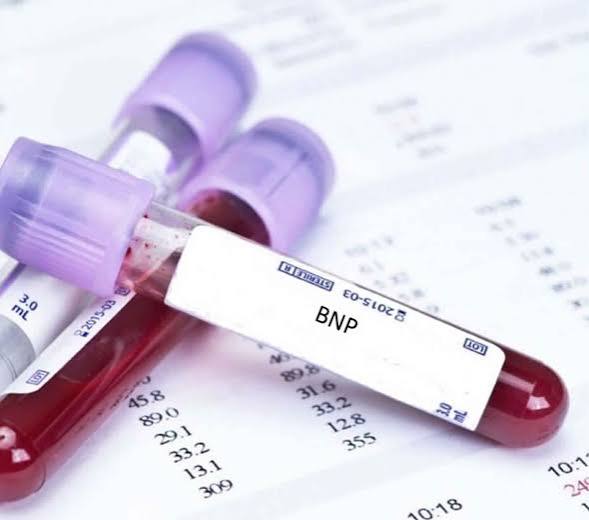
The BNP blood test ??? measuring B-type natriuretic peptide (BNP) or its inactive companion NT-proBNP ??? is the most powerful blood test available for detecting heart failure as a cause of breathlessness, monitoring heart failure treatment response, and predicting hospitalization risk in patients with established heart failure. Understanding what BNP measures, what an elevated level means, and why BNP alone does not tell the whole story helps patients with heart failure and their families make sense of this important test.
Unlike troponin (which rises when heart muscle cells die) or lipids (which reflect atherosclerotic risk), BNP is a hormone your heart produces in real time in response to being overstretched ??? it is a live signal of how much mechanical stress your ventricles are currently experiencing. In heart failure ??? where a weakened or stiffened heart cannot pump effectively ??? fluid backs up into the lungs and body, stretching the ventricular walls and triggering massive BNP release. Measuring BNP gives clinicians a real-time, quantitative assessment of cardiac filling pressure and congestion that would otherwise require invasive pressure monitoring inside the heart.
What BNP and NT-proBNP Measure ??? The Biology
BNP stands for B-type natriuretic peptide (originally called “brain natriuretic peptide” when first isolated from pig brain tissue in 1988, though it is produced predominantly by ventricular heart muscle). It is part of the natriuretic peptide family ??? a group of cardiovascular hormones whose primary physiological role is to counter the fluid-retaining, vasoconstricting effects of the activated renin-angiotensin-aldosterone system (RAAS) that occurs in heart failure.
When ventricular cardiomyocytes experience increased wall stress from elevated filling pressure, they synthesize a precursor molecule called proBNP-108. This precursor is rapidly cleaved by the enzyme corin into two fragments: the biologically active BNP-32 (the standard BNP measured in blood tests), and the biologically inactive NT-proBNP-76 (the N-terminal fragment). Both fragments are released into the blood simultaneously, but they behave differently: BNP-32 has a short half-life of approximately 20 minutes because it is rapidly degraded by neprilysin (a neutral endopeptidase on endothelial cells) and cleared by natriuretic peptide clearance receptors. NT-proBNP has a longer half-life of 1 to 2 hours and is cleared primarily by the kidneys ??? making NT-proBNP levels higher in absolute concentration, more stable over time (less moment-to-moment variation), and more affected by renal function than BNP.
The practical implication: both BNP and NT-proBNP measure the same underlying cardiac wall stress signal, but with different units, different assay platforms, and different thresholds. They are not interchangeable within the same patient ??? if your hospital measured BNP at a previous visit and NT-proBNP at this visit (or vice versa), the numbers cannot be directly compared. Hospitals standardize on one assay or the other; serial comparisons should always use the same biomarker.
The Diagnostic Thresholds ??? What Numbers Mean Heart Failure
The validated diagnostic thresholds for BNP and NT-proBNP in acute dyspnea evaluation:
BNP (measured by immunoassay):
- Below 100 pg/mL: heart failure is very unlikely as the cause of acute dyspnea ??? negative predictive value greater than 96 percent. Consider pulmonary, metabolic, or other causes.
- 100 to 400 pg/mL: indeterminate zone ??? BNP is elevated but not definitively diagnostic. Possible: mild or adequately compensated heart failure, right heart failure, pulmonary hypertension, atrial fibrillation, or renal failure. Clinical assessment and further testing (echo, chest X-ray) are needed.
- Above 400 pg/mL: heart failure is likely as the cause of acute dyspnea ??? positive predictive value approximately 74 percent. In combination with clinical findings (bilateral crackles, elevated JVP, orthopnea, edema), above 400 pg/mL is highly supportive of ADHF.
NT-proBNP (measured by electrochemiluminescence immunoassay ??? Roche Diagnostics):
- Below 300 pg/mL: heart failure ruled out with greater than 98 percent negative predictive value.
- Age-stratified rule-in thresholds: 450 pg/mL (age below 50), 900 pg/mL (age 50 to 75), 1800 pg/mL (age above 75) ??? at or above these thresholds, ADHF is the probable cause of dyspnea.
- Between 300 pg/mL and the age-stratified rule-in threshold: indeterminate ??? further evaluation required.

BNP in Heart Failure with Preserved Ejection Fraction (HFpEF)
Approximately half of all heart failure patients have heart failure with preserved ejection fraction (HFpEF) ??? meaning the heart’s pumping function (ejection fraction) is normal or near-normal (???50 percent) but the heart is stiff and cannot fill adequately during diastole. HFpEF is more common in older adults, women, and patients with hypertension, obesity, and diabetes ??? a population that is increasingly prevalent as these risk factors become more common.
The BNP/NT-proBNP test is useful but more nuanced in HFpEF than in HFrEF (reduced EF heart failure). Patients with HFpEF have elevated filling pressures and wall stress ??? the same stimulus for BNP release as in HFrEF ??? but natriuretic peptide levels in HFpEF tend to be lower than in HFrEF for the same degree of symptoms. Two factors explain this: HFpEF patients typically have normal or only mildly enlarged ventricles (less total myocardial mass releasing BNP), and obesity ??? a major HFpEF risk factor ??? is associated with lower BNP/NT-proBNP due to natriuretic peptide degradation by adipose tissue. A large, obese patient with genuine HFpEF may have a BNP of only 150 to 200 pg/mL ??? technically “elevated” but below the level expected for HFrEF with equivalent symptoms. This “obesity paradox” of natriuretic peptides may lead to HFpEF underdiagnosis if clinicians dismiss a modestly elevated BNP in an obese dyspneic patient as insufficient evidence of heart failure.
The Heart Failure Society of America (HFSA) and ACC/AHA HFpEF guidelines acknowledge that lower BNP thresholds (BNP ???35 pg/mL, NT-proBNP ???125 pg/mL) may be appropriate for diagnosing chronic stable HFpEF in outpatient settings ??? the same diagnostic criteria used for both HFrEF and HFpEF per ESC guidelines. The distinction from the acute setting (where higher thresholds are used for acute dyspnea evaluation) matters: in a stable outpatient being evaluated for exertional dyspnea, a BNP of 60 pg/mL may support HFpEF diagnosis if accompanied by diastolic dysfunction on echocardiography.
ARNI Therapy and the BNP Monitoring Paradox
Sacubitril/valsartan (Entresto) ??? the angiotensin receptor-neprilysin inhibitor (ARNI) approved for HFrEF and increasingly used in HFpEF ??? creates an important monitoring challenge for BNP interpretation that every heart failure patient on this medication should understand:
Sacubitril is a neprilysin inhibitor. Neprilysin is the enzyme responsible for degrading BNP in the blood. When neprilysin is inhibited by sacubitril, BNP is degraded more slowly ??? BNP levels in the blood rise (often by 2 to 4 fold) even as the underlying heart failure condition improves with ARNI therapy. A patient who started sacubitril/valsartan for ADHF and is clinically improving may have a rising BNP level that appears alarming but actually reflects the medication mechanism, not worsening heart failure. Using BNP to monitor treatment response in a patient on sacubitril/valsartan is unreliable and potentially misleading.
The solution: use NT-proBNP rather than BNP to monitor patients on ARNI therapy. Neprilysin does not degrade NT-proBNP (it lacks the neprilysin cleavage site), so NT-proBNP levels in ARNI-treated patients continue to reflect actual cardiac filling pressure and wall stress ??? declining with successful treatment just as in patients not on ARNIs. If your cardiologist has recently started you on sacubitril/valsartan and your BNP appears elevated, confirm that your care team is tracking NT-proBNP rather than BNP for serial monitoring. This is a common source of confusion in outpatient HF management.
See our related articles on heart failure symptoms and monitoring, blood tests for heart health, troponin test: what it means, common heart tests explained, and what is an echocardiogram. The American Heart Association heart failure diagnosis guide, NHLBI heart failure diagnosis page, and ESC heart failure guidelines provide authoritative clinical standards for BNP use in heart failure management.
- Maisel AS, et al. Rapid Measurement of B-Type Natriuretic Peptide in the Emergency Diagnosis of Heart Failure (BREATHING NOT PROPERLY). N Engl J Med. 2002;347(3):161-167.
- Januzzi JL, et al. NT-proBNP Testing for Diagnosis and Short-Term Prognosis in Acute Destabilized Heart Failure (PRIDE). Eur Heart J. 2006;27(3):330-337.
- McDonagh TA, et al. 2021 ESC Guidelines for the diagnosis and treatment of acute and chronic heart failure. Eur Heart J. 2021;42(36):3599-3726.
- Heidenreich PA, et al. 2022 AHA/ACC/HFSA Guideline for the Management of Heart Failure. J Am Coll Cardiol. 2022;79(17):e263-e421.
- Greene SJ, et al. The Vulnerable Phase After Hospitalization for Heart Failure. J Am Coll Cardiol. 2015;65(3):218-223.
What Happens to BNP Levels During Heart Failure Treatment
For patients hospitalized with acute decompensated heart failure (ADHF), BNP and NT-proBNP measurements are often repeated during the hospital stay to track treatment response ??? helping clinicians and patients understand whether the medications are working and when safe discharge is approaching:
Day 1 to 2 of treatment: Intravenous diuretics (furosemide, bumetanide, torsemide) are the primary acute treatment for the fluid overload of ADHF. As the kidneys excrete the retained sodium and water under diuretic effect, cardiac filling pressures fall ??? the ventricular wall stress that triggered BNP release diminishes, and BNP/NT-proBNP levels begin to fall. This fall is measurable within 12 to 24 hours of effective diuresis, providing an early biochemical confirmation that treatment is working. If BNP/NT-proBNP fails to fall (or continues to rise) despite aggressive diuretic therapy, this signals inadequate decongestion ??? often triggering dose escalation, addition of thiazide diuretics (metolazone) to potentiate loop diuretic effect, or escalation to continuous IV diuretic infusion or ultrafiltration.
Pre-discharge assessment: A BNP/NT-proBNP measurement 12 to 24 hours before anticipated discharge provides prognostic information critical to discharge timing. Patients whose BNP falls below 700 pg/mL before discharge have substantially lower 30-day readmission risk than those discharged with BNP above 700 pg/mL. The “biomarker-guided discharge” concept ??? waiting for BNP/NT-proBNP to fall below a threshold before discharging a patient who appears clinically dry ??? is increasingly used at advanced heart failure programs. The clinical paradox: patients who have responded well to diuretics may feel significantly better (symptom improvement) while still having substantially elevated filling pressures detectable by biomarker ??? “clinical decongestion” (patient feels better, no crackles, standing without dyspnea) often precedes “hemodynamic decongestion” (filling pressures normalized, BNP/NT-proBNP near baseline). Premature discharge at clinical decongestion before hemodynamic decongestion is a major driver of the high 30-day readmission rates in heart failure.
Transition from IV to oral diuretics: When patients transition from IV furosemide to oral furosemide in preparation for discharge, BNP/NT-proBNP may temporarily rise slightly as oral bioavailability (approximately 50 percent for furosemide, compared to 100 percent for IV) reduces acute diuretic effect. This temporary rise should not automatically delay discharge ??? the clinical picture (weight, edema, blood pressure, symptoms) and next-day outpatient follow-up plan are equally important discharge criteria alongside the biomarker.
BNP in the Outpatient Setting ??? Monitoring Chronic Heart Failure
Outside the acute hospital setting, BNP and NT-proBNP serve a different but equally important role in managing chronic, stable heart failure ??? tracking trends over time, identifying early decompensation before symptoms become severe, and guiding medication optimization:
In stable chronic heart failure, BNP/NT-proBNP is not a routine monthly test ??? it is measured at significant clinical junctures: at baseline when the diagnosis is established, after major medication changes, during periods of unexplained symptom change (new fatigue, reduced exercise tolerance, new ankle swelling without obvious dietary cause), and at periodic surveillance visits (typically 3 to 6 months in high-risk patients). The trend matters more than any single absolute value ??? a patient with longstanding HFrEF whose BNP has been consistently 250 to 350 pg/mL at multiple stable visits whose BNP rises to 800 pg/mL at a routine visit (without obvious precipitant like dietary sodium indiscretion or missed medication) warrants immediate clinical assessment and possible diuretic adjustment, even if they feel relatively well.
This “rising trend before symptom onset” is one of the most clinically valuable applications of serial outpatient natriuretic peptide monitoring: heart failure decompensation typically follows a hemodynamic sequence of rising filling pressures ??? rising BNP/NT-proBNP ??? symptom onset ??? with the biomarker rise often preceding the symptom onset by days to weeks. A monitoring program that detects this rise early allows proactive diuretic adjustment and possible telephonic nursing intervention before the patient deteriorates to a level requiring emergency hospitalization ??? the approach central to heart failure disease management programs that have demonstrated reduced hospitalizations in randomized trials.
Conditions That Falsely Elevate BNP ??? When to Question the Result
Understanding the conditions that elevate BNP without primary left ventricular heart failure helps patients and clinicians avoid over-diagnosis and ensures the result is interpreted in proper context:
Renal failure: As glomerular filtration rate (eGFR) falls, both BNP and NT-proBNP rise due to impaired renal clearance ??? NT-proBNP more than BNP, because NT-proBNP is predominantly renally cleared. Advanced CKD patients (eGFR below 30 mL/min/1.73m??) routinely have NT-proBNP above the standard diagnostic thresholds (450 to 1800 pg/mL) without clinical heart failure. Some centers use higher NT-proBNP cutoffs (1200 to 2000 pg/mL) in patients with eGFR below 60 to account for renal retention. The key principle: BNP/NT-proBNP in CKD patients must always be interpreted in the context of the patient’s baseline (prior values at similar eGFR) rather than as an isolated number compared to general population thresholds.
Pulmonary hypertension: Right ventricular hypertrophy and elevated RV wall stress from pulmonary arterial hypertension (PAH), chronic thromboembolic pulmonary hypertension (CTEPH), or pulmonary hypertension from COPD cause BNP/NT-proBNP elevation. In a patient with known pulmonary hypertension, BNP/NT-proBNP is used specifically to monitor RV function and treatment response to pulmonary vasodilator therapy ??? rising BNP in a PAH patient indicates RV decompensation, a prognostically serious event triggering therapy escalation.
Atrial fibrillation: AF-related atrial wall stress and loss of atrial compliance during fibrillation causes atrial BNP release. BNP is commonly mildly elevated in AF patients even without LV dysfunction. AF alone rarely causes BNP elevation above 400 pg/mL ??? values above this in an AF patient should prompt echocardiography to assess for underlying structural heart disease (HFpEF, mitral valve disease, cardiomyopathy).
Sepsis: Systemic inflammatory response in sepsis causes myocardial depression and possibly direct natriuretic peptide secretion. Elevated BNP in an ICU patient does not always indicate primary heart failure ??? it may reflect the cardiovascular effects of septic shock rather than a distinct cardiac diagnosis. Volume status assessment by clinical examination, echocardiography, and hemodynamic monitoring is more informative than BNP alone in the septic patient.
High-output states: Severe anemia, hyperthyroidism, and large arteriovenous fistulas increase cardiac output and ventricular volume load ??? elevating BNP/NT-proBNP despite normal cardiac structure. Treating the underlying high-output state (iron repletion, thyroid treatment, AV fistula modification) normalizes BNP in these patients without specific heart failure therapy.
Questions to Ask Your Doctor About Your BNP Result
Patients with heart failure benefit from understanding their BNP/NT-proBNP results as part of their self-management. Here are the most useful questions to ask your care team:
- “What is my current BNP/NT-proBNP, and how does it compare to my previous baseline?” ??? A single value is less informative than the trend. Ask what your typical range has been at stable visits.
- “Am I on sacubitril/valsartan (Entresto)? If so, should you be measuring NT-proBNP instead of BNP?” ??? ARNI therapy elevates BNP while NT-proBNP remains a valid monitoring marker. Your team should switch to NT-proBNP monitoring after ARNI initiation.
- “Does my kidney function affect this result? My eGFR is [X] ??? should the threshold be adjusted?” ??? Relevant for patients with CKD stage 3 or worse, where standard thresholds may not apply accurately.
- “My BNP is elevated but I feel okay ??? does this mean I am retaining fluid I can’t feel yet?” ??? Subclinical congestion (hemodynamic but not yet symptomatic) is a treatable state. Understanding this helps patients engage with proactive diuretic adjustments.
- “What BNP level should I reach before I’m discharged?” ??? Understanding the discharge BNP target empowers patients to participate in their own readiness assessment and reduces inappropriate early discharges.
- “If I gain 2 to 3 pounds of fluid weight at home, should I call and get a BNP measured?” ??? Knowing when to seek a biomarker check for suspected decompensation helps patients avoid delays that lead to emergency presentations.
BNP and Prognosis ??? What a Very High or Very Low Level Predicts
BNP and NT-proBNP are among the strongest prognostic biomarkers in heart failure ??? predicting mortality, hospitalization, and response to advanced therapies across all heart failure phenotypes:
In large meta-analyses of heart failure trials (including CHARM, Val-HeFT, and PARADIGM-HF), baseline NT-proBNP is the single strongest predictor of cardiovascular death and HF hospitalization ??? stronger than LVEF, NYHA functional class, 6-minute walk distance, or renal function. The relationship is continuous: for each doubling of baseline NT-proBNP, mortality risk increases by approximately 25 to 35 percent. Patients with NT-proBNP above 3000 pg/mL at stable outpatient visits have a markedly elevated short-term risk of hospitalization and death ??? a level that should trigger consideration of advanced heart failure evaluation (mechanical circulatory support, cardiac transplant assessment) at specialized centers.
Conversely, very low NT-proBNP in a heart failure patient on optimal medical therapy indicates excellent hemodynamic compensation ??? these patients have the most favorable prognosis and are least likely to experience near-term decompensation. The goal of optimally titrated heart failure therapy (ACE inhibitor/ARB or ARNI + beta-blocker + mineralocorticoid receptor antagonist + SGLT2 inhibitor ??? the four-pillar combination that is now the standard of care for HFrEF) is precisely this: drive BNP/NT-proBNP to as low a level as possible, reflecting maximally reduced cardiac wall stress and the best achievable hemodynamic compensation.
My cardiologist recommended I look into bnp blood test and heart failure: and this article covered it perfectly. The practical tips at the end made this immediately actionable, not just theoretical. Will definitely be coming back to this site for more health information.
This is one of the clearest explanations of bnp blood test and heart failure: I have found. I appreciated how the article addressed both the clinical side and the practical lifestyle adjustments. Appreciate the effort that went into researching and writing this — it shows.
As someone dealing with this personally, the bnp blood test and heart failure: section was very helpful. The specific numbers and thresholds mentioned are exactly what I needed to understand my lab results. I wish I had found this article when I was first diagnosed — would have saved a lot of confusion.
This breakdown of bnp blood test and heart failure: is exactly what patients need before a specialist appointment. The practical tips made this immediately actionable, not just theoretical. This is going into my health folder that I bring to every doctor’s visit.
Really well-written article on bnp blood test and heart failure:. What I liked most was that the article didn’t just say what to avoid — it also gave alternatives. Appreciate the effort that went into researching and writing this — it shows.
As someone dealing with this personally, the bnp blood test and heart failure: section was very helpful. I appreciate that the article is careful about distinguishing between what is known and what is still being researched. Appreciate the effort that went into researching and writing this — it shows.