
Stress and Kidney Health
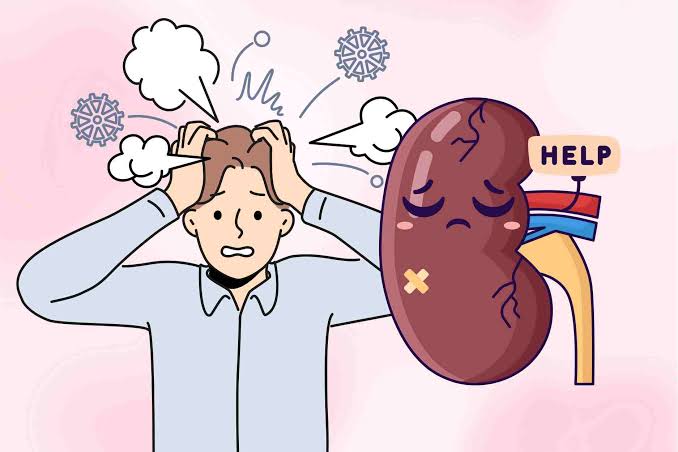
The link between psychological stress and kidney function is more direct than most patients realize. Stress is not merely an emotional experience — it triggers measurable biological cascades that raise blood pressure, elevate blood sugar, increase inflammation, and activate hormonal pathways that accelerate glomerular damage. These are the same mechanisms responsible for the kidney damage produced by untreated hypertension and diabetes, and they operate through stress independently of whether a patient also has those conditions.
For people with chronic kidney disease, the challenge compounds: CKD itself is a powerful source of ongoing psychological stress, creating a cycle in which the disease worsens its own progression through stress-mediated biological pathways. This guide covers how psychological stress damages kidney function, what the clinical evidence shows about stress and CKD outcomes, and the evidence-based interventions that interrupt this cycle.
How Psychological Stress Damages Kidney Function
When the brain perceives threat or pressure — whether from physical danger, work demands, disease worry, or interpersonal conflict — it activates the hypothalamic-pituitary-adrenal (HPA) axis, triggering the release of cortisol from the adrenal glands. Cortisol is the body’s primary stress hormone, and its effects on kidney-relevant physiology are extensive.
Blood pressure elevation. Cortisol activates mineralocorticoid receptors, promoting sodium retention and expanding intravascular volume — raising blood pressure. It also increases peripheral vascular resistance through vasoconstriction. A single acute stressor produces a transient BP spike; chronic stress produces sustained BP elevation equivalent, over time, to mild untreated hypertension. Since blood pressure is the most powerful modifiable driver of GFR decline in established CKD, chronic stress-driven BP elevation is a direct accelerant of kidney disease progression.
Blood sugar elevation. Cortisol promotes gluconeogenesis in the liver and increases insulin resistance in peripheral tissues — both of which raise blood glucose. For CKD patients managing concurrent diabetes or prediabetes, stress-driven glucose elevation adds to the glycation-induced glomerular damage that is the primary mechanism of diabetic nephropathy. Even in non-diabetic CKD patients, repeated glucose spikes from sustained cortisol contribute to the inflammatory load on glomerular capillaries.
Sympathetic nervous system activation. The stress response also activates the sympathetic nervous system, releasing catecholamines (epinephrine, norepinephrine) that cause afferent arteriole vasoconstriction — reducing renal blood flow and acutely lowering GFR. During a brief acute stressor, the kidneys recover fully. Under chronic stress, sustained sympathetic activation produces persistent renal vasoconstriction that causes glomerular ischemia and tubular damage over time.
RAAS activation. Psychological stress activates the renin-angiotensin-aldosterone system (RAAS) independently of blood volume changes. Stress-driven angiotensin II elevation raises intraglomerular filtration pressure and, over time, drives glomerular fibrosis. For CKD patients taking ACE inhibitors or ARBs to block RAAS activity, chronic stress-driven RAAS activation can reduce the effectiveness of these medications — requiring higher doses or additional agents to achieve the same blood pressure and proteinuria targets.
Systemic inflammation. Psychological stress activates nuclear factor kappa-B (NF-κB) signaling in immune cells, triggering the release of pro-inflammatory cytokines including interleukin-6 (IL-6), tumor necrosis factor-alpha (TNF-α), and C-reactive protein (CRP). These are the same inflammatory markers that drive glomerular endothelial damage and interstitial fibrosis in CKD. Patients with CKD already carry an elevated inflammatory burden from uremia; stress-driven inflammation compounds this without adding from a separable source — the effects are cumulative.
The Evidence: Stress, Mental Health, and CKD Outcomes
The epidemiological evidence linking psychological stress and stress-related disorders to kidney outcomes is substantial and growing.
Post-traumatic stress disorder (PTSD), one of the most studied stress-related psychiatric conditions, is associated with a 46% higher risk of incident chronic kidney disease in large prospective studies. This relationship persists after adjusting for hypertension, diabetes, obesity, and other established kidney risk factors — suggesting a contribution from the stress disorder itself, not merely its associated health behaviors.
Depression — a frequent consequence of sustained chronic stress — is independently associated with 40–60% higher risk of CKD progression and end-stage renal disease in multiple cohort studies. The mechanism is partly behavioral (depression reduces medication adherence, physical activity, and dietary discipline) and partly biological (depression is associated with elevated cortisol, sympathetic activation, and systemic inflammation — all of which accelerate kidney damage).
Work-related psychological stress has been associated with increased proteinuria — a marker of glomerular damage — in prospective occupational health studies. Disaster-affected populations (earthquake survivors, war-displaced communities) show acute kidney injury rates beyond what can be explained by trauma-related dehydration and rhabdomyolysis alone, suggesting a direct role of extreme psychological stress in acute kidney injury.
Within the CKD population specifically, depression and anxiety — which affect two to three times as many CKD patients as the general population — reduce medication adherence through established mechanisms: cognitive load from depressive symptoms impairs scheduling and follow-through; anxiety about side effects leads to dose skipping; fatigue and hopelessness reduce the motivation to maintain the complex dietary and medication regimens that CKD management requires. The downstream consequence of reduced adherence is worsened blood pressure and glucose control, which accelerates the very progression that drives the original anxiety.
The Stress-CKD Cycle: Why It Is Difficult to Break
CKD does not merely coexist with psychological stress — it generates it. Living with progressive kidney disease involves sustained exposure to uncertainty about progression rate, fear of dialysis initiation or transplant complications, complex dietary restrictions that affect social eating, fatigue that limits valued activities, financial burden from healthcare costs, and awareness of the impact of the disease on family members and caregivers. Each of these is a genuine stressor, producing the same HPA axis activation and sympathetic nervous system consequences as workplace or relationship stress.
The result is a self-reinforcing cycle: kidney disease causes psychological stress → stress elevates cortisol, BP, and inflammation → these worsen kidney function → declining kidney function increases the psychological burden of the disease → stress increases further. Emotional distress also impairs the protective lifestyle behaviors that slow kidney progression: stressed and depressed patients exercise less, sleep worse, and adhere to dietary restrictions less consistently. Each behavioral failure accelerates kidney decline, which increases distress.
Breaking this cycle requires directly addressing the psychological component — not as a secondary quality-of-life concern to handle after other things are managed, but as a primary intervention that reduces measurable biological drivers of kidney damage. The kidney disease prevention guide addresses the full landscape of modifiable risk factors; psychological stress is among the most underattended.
Stress, Cortisol, and Blood Pressure in CKD
The cortisol-blood pressure pathway deserves particular attention in CKD management, because it operates subtly and is rarely screened for. Chronic psychological stress produces sustained cortisol elevation that can raise blood pressure by 5–10 mmHg above what antihypertensive medications are designed to offset. A CKD patient whose blood pressure is ostensibly controlled at clinic visits — where stress is temporarily lower — may have significantly higher blood pressure at home, at work, or during emotionally difficult moments. The 24-hour blood pressure burden on the kidneys is what drives progression, not the clinic snapshot.
Cortisol’s activation of mineralocorticoid receptors produces aldosterone-like effects — sodium retention, volume expansion, and BP elevation — that can directly blunt the effectiveness of ACE inhibitors and ARBs prescribed for CKD. Patients whose BP remains difficult to control despite appropriate medication may be experiencing stress-driven cortisol elevation as a pharmacological antagonist to their treatment. Addressing the underlying stress through behavioral interventions may improve medication response without requiring additional antihypertensive agents. The evidence for this in CKD is preliminary but biologically plausible — and the intervention carries no pharmacological risk. This pathway connects directly to the detailed discussion of blood pressure control and kidney protection.
Stress also contributes to the non-dipping blood pressure pattern — the loss of the normal overnight BP reduction — through HPA axis activation and elevated nocturnal sympathetic tone. This is the same mechanism as sleep apnea-driven non-dipping, described in the sleep and kidney health guide. In patients with both sleep disorders and chronic psychological stress, these contributions combine to produce 24-hour BP elevation that is especially damaging to the kidneys overnight.
Evidence-Based Stress Management for CKD Patients
Stress management is not a generic recommendation to “relax more” — it is a set of evidence-based interventions with documented physiological effects on the biological pathways that connect stress to kidney damage. The following approaches have the strongest evidence base for CKD patients specifically.
Mindfulness-Based Stress Reduction (MBSR)
MBSR is an eight-week structured program developed by Jon Kabat-Zinn, consisting of weekly group sessions and daily home mindfulness practice. In CKD trials, MBSR consistently reduces depression, anxiety, and fatigue, and some studies show modest blood pressure reduction. The mechanism involves blunting HPA axis reactivity: MBSR practitioners show smaller cortisol responses to novel stressors after completing the program compared to before, meaning the biological stress response is less intense even when external stressors remain unchanged. MBSR programs are widely available in-person and online, and some dialysis centers have introduced abbreviated mindfulness programs within their patient education offerings.
Cognitive Behavioral Therapy
Cognitive behavioral therapy (CBT) addresses the thought patterns and behavioral responses that sustain depression, anxiety, and psychological distress in CKD patients. Multiple randomized controlled trials in dialysis patients show CBT significantly reduces depression and anxiety scores. The downstream kidney-relevant benefits are behavioral: improved mood increases the motivation and consistency to take medications, maintain dietary restrictions, exercise regularly, and attend appointments. CBT-I — the insomnia-focused CBT variant described in the sleep and kidney health guide — addresses both sleep and psychological stress simultaneously, making it particularly valuable for CKD patients managing both conditions.
Breathing Exercises and Relaxation Techniques
Slow diaphragmatic breathing at approximately six breaths per minute activates the parasympathetic nervous system through the respiratory sinus arrhythmia mechanism, producing acute reduction in sympathetic tone and blood pressure of 5–8 mmHg. Practiced regularly — even 10–15 minutes per day — this produces a sustained shift in autonomic balance toward parasympathetic dominance, reducing the baseline sympathetic activation that chronic stress maintains. Progressive muscle relaxation, another validated technique, systematically reduces HPA axis response in controlled studies. Both techniques require no equipment, cost nothing, and can be practiced at any CKD stage including during dialysis sessions.
Exercise as Stress Reduction
Regular exercise is among the most effective behavioral treatments for depression and anxiety — conditions that mediate much of the kidney damage attributable to chronic psychological stress. Exercise reduces cortisol acutely in the hours following a session and, practiced consistently, reduces baseline HPA axis reactivity — future stressors produce smaller cortisol spikes in regularly exercising individuals compared to sedentary controls. Daily walking is the most accessible exercise intervention across all CKD stages and simultaneously addresses blood pressure, blood sugar, weight, and the psychological stress that drives HPA activation — making it one of the most cost-effective single interventions available to CKD patients.
Social Support and Community
Social support is among the most robust buffers against stress-related health outcomes across the medical literature. CKD patients with strong social networks — family support, friend relationships, peer connections — show better blood pressure control, medication adherence, and survival in observational cohort studies compared to socially isolated patients. The mechanism involves both behavioral (social support improves adherence and healthy behavior) and biological (social connection reduces cortisol and inflammatory marker levels) pathways.
The National Kidney Foundation’s peer mentoring program connects CKD patients with trained peers who have lived through the same challenges — dialysis initiation, transplant waiting, dietary adjustment — providing both practical guidance and the stress-buffering benefit of being understood by someone with direct experience. Online CKD communities and in-person support groups serve a similar function, reducing the isolation that sustains chronic stress in patients managing a condition that significantly disrupts social participation.
Asking for Mental Health Support as Part of CKD Care
Mental health is clinical in CKD, not incidental. Depression and anxiety have measurable, documented effects on kidney progression rates and cardiovascular event rates in CKD patients. Yet mental health screening is not universally performed in nephrology practices, and many patients who would benefit from treatment are not identified.
Two brief self-report tools that can guide conversations with a care team are the PHQ-9 (Patient Health Questionnaire, nine items) for depression screening and the GAD-7 (Generalized Anxiety Disorder, seven items) for anxiety screening. Both are freely available online, validated across multiple populations including CKD patients, and take under five minutes to complete. Bringing completed scores to a nephrology appointment is a practical way to raise the topic. The NIDDK’s CKD guidance recognizes depression as a complication of CKD that warrants clinical management — not a personal failing or a secondary concern.
Mental health services are covered by most insurance plans for patients with CKD diagnoses. Teletherapy has expanded access significantly, removing transportation as a barrier for patients with dialysis schedules or fatigue. The American Heart Association’s stress management guidance also emphasizes that psychological stress is a cardiovascular risk factor — directly relevant to CKD patients, whose primary cause of death is cardiovascular disease rather than kidney failure itself.
Conclusion
The connection between psychological stress and kidney health is not metaphorical. Cortisol damages glomeruli through the same mechanisms as uncontrolled blood pressure; chronic sympathetic activation produces the same renal vasoconstriction as sustained hypertension; stress-driven inflammation compounds the uremic inflammatory burden of CKD through additive pathways. Managing psychological stress is not about achieving inner peace — it is about reducing a measurable biological load on organs that are already under pressure. MBSR, CBT, regular walking, breathing exercises, and social connection are evidence-based interventions with documented physiological effects on the cortisol, sympathetic, RAAS, and inflammatory pathways that connect stress to kidney damage. They belong in the same treatment conversation as antihypertensive medications and dietary phosphate restriction, because they address the same ultimate targets: lower blood pressure, lower inflammation, better glomerular hemodynamics, and slower CKD progression.
Stress and Kidney Health: Specific Patient Scenarios
Understanding how stress affects the kidneys is most useful when grounded in the real situations CKD patients encounter. The following scenarios illustrate how stress biology operates in common clinical contexts.
The dialysis patient facing schedule disruption. A hemodialysis patient whose session is rescheduled, delayed, or changed — a common occurrence in busy dialysis centers — experiences acute psychological stress: anxiety about fluid and toxin accumulation, disrupted daily routine, logistical challenges. This produces a cortisol and sympathetic response that raises blood pressure in the hours surrounding the disruption. Over a treatment career with hundreds of such disruptions, these acute stress responses contribute measurably to the 24-hour BP burden on whatever residual kidney function remains, and to cardiovascular event risk. Predictability and patient communication around scheduling are not merely service quality issues — they are clinical variables.
The pre-dialysis CKD patient watching their GFR decline. Patients at CKD stage 3–4 who monitor their eGFR results face a particular form of sustained anticipatory anxiety: each quarterly blood test is a potential marker of imminent dialysis initiation. This anticipatory anxiety — “the next test might be the one that changes everything” — is chronic, unresolvable through reassurance alone, and biologically produces the sustained HPA axis activation that accelerates the very decline the patient fears. CBT and MBSR specifically address anticipatory anxiety by restructuring the cognitive relationship to uncertainty — reducing the physiological stress response without eliminating appropriate health monitoring.
The transplant recipient managing immunosuppression anxiety. Post-transplant patients live with the sustained background fear of rejection — a fear that is never entirely without foundation and that produces chronic low-grade psychological stress. This stress occurs in the context of corticosteroid immunosuppression, which itself raises cortisol-like activity; the combination of exogenous corticosteroid effects and endogenous stress-driven cortisol can produce significant blood pressure elevation in the post-transplant period. Stress management is particularly valuable for transplant recipients because it addresses one of the few modifiable contributors to blood pressure in a population where BP is already difficult to control with medication.
Integrating Stress Management Into Your Kidney Care Routine
Stress management does not require large time commitments or major life restructuring. The most effective approach is to integrate specific, brief stress-reduction practices into an existing daily routine — the same habit-stacking strategy that works for exercise and sleep hygiene.
A practical starting structure: ten minutes of slow diaphragmatic breathing (six breaths per minute) in the morning before medication, a 20-minute walk after dinner (which simultaneously addresses physical activity and provides the cortisol-reducing effect of exercise), and consistent sleep and wake times that allow the nocturnal cortisol rhythm to normalize. These three practices, maintained consistently, address the HPA axis, sympathetic nervous system, and sleep-stress interaction that together account for the majority of stress-related kidney damage — without requiring formal therapy or program enrollment.
For patients with significant depression or anxiety — scores on the PHQ-9 above 10 or GAD-7 above 10 indicate moderate-to-severe symptoms — formal CBT or MBSR is a clinical intervention, not an optional wellness activity. These scores should prompt a direct conversation with a nephrologist or primary care physician about referral. The downstream kidney benefits of treating depression and anxiety — better medication adherence, better sleep, better exercise consistency, reduced cortisol — justify treating mental health as an upstream kidney intervention, not a separate concern.
The full ecosystem of lifestyle factors that protect kidney function — including physical activity, sleep quality, weight management, and stress management — are explored together in the kidney disease prevention guide. Stress management is not the least of these factors; for many CKD patients managing the psychological burden of a progressive disease, it may be the most immediately modifiable — and the one whose benefits cascade most broadly into the other lifestyle domains.
Stress, Sleep, and Kidney Health: How They Connect
Psychological stress and sleep disruption are among the most frequently co-occurring problems in CKD — and they reinforce each other through shared biological mechanisms. Chronic stress activates the HPA axis and sympathetic nervous system, impairing sleep initiation, sleep maintenance, and the depth of slow-wave sleep. Poor sleep in turn sustains cortisol elevation and sympathetic activation through the following day, perpetuating the stress state that disrupted sleep in the first place. For CKD patients, this creates a compound biological burden in which neither the stress nor the sleep problem can fully resolve while the other persists.
The same interventions address both: CBT-I directly targets the cognitive hyperarousal that underlies both insomnia and anxiety; MBSR reduces HPA reactivity in ways that improve both daytime stress resilience and nighttime sleep quality; regular walking reduces cortisol in the late afternoon and improves sleep onset at night. Addressing psychological stress and sleep disruption as a combined target — rather than treating them sequentially — produces faster and more durable improvement in both outcomes and in the kidney health parameters they affect. The detailed evidence for how sleep quality affects kidney function is covered in the sleep and kidney health guide, and the role of daily walking in managing both stress and sleep is addressed in the walking and kidney health guide.
Sources: National Kidney Foundation (kidney.org); National Institute of Diabetes and Digestive and Kidney Diseases (niddk.nih.gov); American Heart Association (heart.org); Kubzansky LD et al., “Traumatic stress and kidney disease risk: a longitudinal analysis,” American Journal of Kidney Diseases (2014); American Academy of Nephrology clinical guidance on depression and CKD.
I shared this article on stress and kidney health with my doctor and they appreciated the level of detail. This is the kind of evidence-based writing that actually changes how people approach their health. Keep up this kind of thorough health journalism — it genuinely helps patients like me.
My doctor recommended I look into stress and kidney health and this article covered it perfectly. The article answered questions I didn’t even know I had until I started reading. Thank you for making complex medical information accessible without dumbing it down.
This is one of the clearest explanations of stress and kidney health I have found. I especially valued the explanation of why these recommendations exist, not just what they are. This is exactly why I prefer this website over generic health platforms.