
Rectal cancer develops in the rectum — the final 12 to 15 centimeters of the large intestine before the anus. In 2024, an estimated 46,430 Americans were diagnosed with rectal cancer, accounting for about 30% of all colorectal cancers. To the patient, the diagnosis may seem similar to a colon cancer diagnosis with a different address. In practice, rectal cancer is managed differently enough that oncologists treat it as a distinct disease — it requires specialized staging tools, a different treatment sequence, and surgery inside a confined pelvic space with far less room for error.
Understanding what makes rectal cancer different is not just academic. It explains why a patient diagnosed with rectal cancer will need a dedicated MRI of the pelvis before surgery, why radiation therapy is typically given before the operation rather than after, and why, for some patients, surgery can be avoided entirely after a dramatic response to chemotherapy and radiation.
What Makes Rectal Cancer Different from Colon Cancer?
The colon and rectum are anatomically continuous — one flows into the other — which is why they are often grouped together as “colorectal cancer.” But the rectum’s location in the pelvis creates a set of challenges that fundamentally change how it must be treated.
The pelvis is narrow. The rectum sits surrounded by the bladder, the prostate in men, the uterus and vagina in women, the sacrum, and the pelvic floor muscles. The anal sphincter complex — the muscle group responsible for continence — sits immediately below. There is little room to maneuver, and getting clear surgical margins (removing the tumor with no cancer cells at the cut edge) is technically far more demanding than removing a segment of colon in the open abdominal cavity.
The rectum is enclosed by a specialized tissue envelope called the mesorectum — a layer of fatty tissue containing lymph nodes and blood vessels that surrounds the rectum within the pelvis. A thin fascial layer, the mesorectal fascia, wraps around the entire structure. How close the tumor gets to this fascia — the circumferential resection margin, or CRM — is one of the most critical predictors of whether the cancer will return locally after surgery. A tumor within 1 millimeter of the mesorectal fascia carries a substantially higher risk of pelvic recurrence.
Unlike much of the colon, the lower two-thirds of the rectum also lacks a protective peritoneal covering. Without this serosal layer, a tumor that grows through the rectal wall has a more direct path to surrounding pelvic structures — further elevating local recurrence risk and partly explaining why radiation before surgery is standard for most locally advanced rectal cancers.

Symptoms of Rectal Cancer
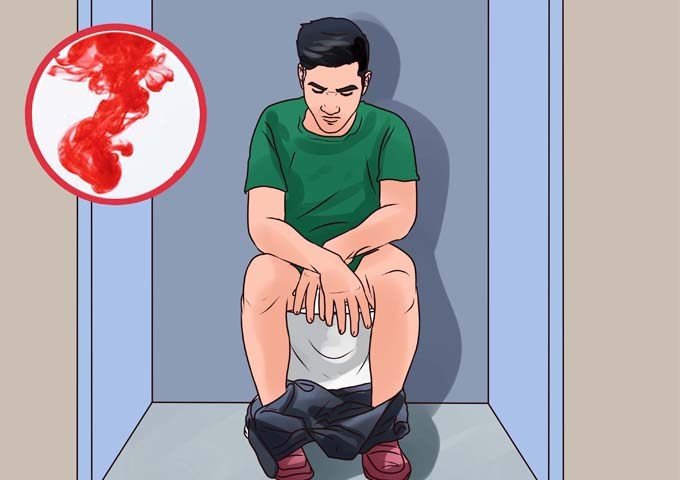
Rectal bleeding is the most common symptom of rectal cancer, and it is the symptom most commonly dismissed. A person who notices blood in the toilet or on toilet paper may assume it is hemorrhoids — a reasonable first thought, given that hemorrhoids are far more common than rectal cancer. But this assumption, left uncorrected for months or years, is one of the most frequent causes of diagnostic delay in rectal cancer.
Hemorrhoids and rectal cancer can both produce bright-red rectal bleeding. There is no way to reliably distinguish between them based on symptoms alone. Blood in or on the stool always warrants a clinical evaluation in an adult — the only way to confirm it is not cancer is to look inside.
The full range of rectal cancer symptoms includes:
- Rectal bleeding: bright-red blood in the toilet bowl, on stool, or on toilet paper; the most common presenting symptom
- Tenesmus: a persistent sense of incomplete evacuation — the uncomfortable feeling that there is still stool to pass even when the rectum is empty; caused by the tumor occupying rectal space
- Change in stool caliber: pencil-thin or ribbon-like stools, from the tumor narrowing the rectal lumen
- Change in bowel habits: new constipation, increased frequency, diarrhea, or alternating patterns
- Mucus with stool: often blood-tinged; produced by the tumor
- Rectal or pelvic pain: suggests locally advanced disease
- Sciatic-type pain or perineal pain: may indicate sacral invasion in very advanced cases
- Urinary symptoms: urgency, frequency, or difficulty urinating suggests bladder involvement
Early rectal cancer — Stage I and early Stage II — frequently causes only intermittent rectal bleeding, which patients and sometimes physicians attribute to other causes. This is why rectal cancer often presents at a more advanced stage than it might if patients sought evaluation sooner.
Rectal bleeding cannot be attributed to hemorrhoids without a medical evaluation. The symptoms overlap exactly — hemorrhoids cause bright-red rectal bleeding; so does rectal cancer. An adult who notices rectal bleeding should not wait to “see if it clears up.” A digital rectal exam and, in most cases, a sigmoidoscopy or colonoscopy are needed to confirm the source.
Diagnosis — Why MRI of the Pelvis Matters
The diagnostic workup for rectal cancer goes beyond the standard colonoscopy and CT scan used for colon cancer. Rectal cancer requires a specific, high-resolution MRI of the pelvis, and that imaging profoundly shapes the treatment plan.
A colonoscopy with biopsy is the first step — it confirms the diagnosis, determines the distance from the anal verge, and obtains tissue for pathological analysis. A digital rectal exam (DRE) assesses whether a tumor within 8 to 10 centimeters of the anal verge is mobile (suggesting T2 or less) or fixed (suggesting T3/T4 with surrounding structure involvement).
The MRI of the pelvis provides the information that determines the entire treatment strategy:
- T staging: How deeply the tumor has invaded — through the submucosa (T1), muscularis propria (T2), into mesorectal fat (T3), or into adjacent organs (T4)
- N staging: Whether mesorectal lymph nodes appear malignant based on size, shape, and signal characteristics
- Circumferential resection margin (CRM): Whether the tumor or involved nodes approach within 1 millimeter of the mesorectal fascia; a threatened CRM mandates neoadjuvant chemoradiation before surgery
- Extramural vascular invasion (EMVI): Tumor cells within blood vessels outside the muscularis propria; associated with systemic metastasis risk
- Tumor height and sphincter relationship: Determines whether sphincter-preserving surgery is anatomically feasible
Endorectal ultrasound (ERUS) is highly accurate for early-stage (T1/T2) local staging and is sometimes used when MRI findings are equivocal for early tumors. CT of the chest, abdomen, and pelvis completes the staging workup for distant disease.
Treatment — Why Rectal Cancer Needs Chemoradiation Before Surgery
Before the 1980s and 1990s, rectal cancer was treated with surgery alone. Local recurrence — the cancer returning in the pelvis after apparently curative surgery — occurred in 25 to 40% of cases, often causing severe, difficult-to-treat pelvic pain and fistulas. The integration of radiation therapy and concurrent chemotherapy transformed those outcomes. Today, local recurrence after proper multimodal treatment at an experienced center is below 10%.
Long-course chemoradiation (LCRT) remains a standard approach for locally advanced rectal cancer (Stage II or III, or any stage with a threatened CRM). Over five weeks, patients receive approximately 45–50 Gy of external beam radiation combined with 5-fluorouracil or capecitabine as a radiosensitizer. Surgery follows after a 6–8 week wait to allow maximum tumor response.
Short-course radiotherapy (SCRT) — 25 Gy delivered in five daily fractions over one week — was originally followed by immediate surgery. Evidence from the Stockholm III and RAPIDO trials has shown that delaying surgery 8–12 weeks after SCRT allows comparable or better tumor response with a shorter, more convenient radiation course.
Total neoadjuvant therapy (TNT) has emerged as the approach achieving the highest complete response rates. In TNT, all systemic chemotherapy (FOLFOX or CAPOX) is moved before surgery, given either before or after the radiation phase. The OPRA, RAPIDO, and PRODIGE 23 trials demonstrated that TNT increases the complete pathological or clinical response rate to approximately 25–35%, compared to 15–20% with standard LCRT alone, and improves disease-free survival. Higher complete response rates, in turn, expand eligibility for the watch-and-wait approach.
Surgery — Total Mesorectal Excision Explained
Total mesorectal excision (TME) — described by Richard Heald in 1982 — is the surgical standard for rectal cancer and the operation that transformed its outcomes. By reducing local recurrence from 25–40% with conventional surgery to below 5% at expert centers, TME is one of the most impactful surgical advances in oncology of the past 50 years.
The principle of TME is anatomical precision: the surgeon dissects along the “holy plane” between the mesorectal fascia and the parietal pelvic fascia, removing the rectum and its entire mesorectum as a complete, intact package. This removes all regional lymph nodes and maximizes the circumferential margin. The integrity of the mesorectal envelope is evaluated by pathologists as a quality indicator of the surgery.
Low anterior resection (LAR) is used for upper and middle rectal cancers. The rectum is removed and the colon is reconnected to the remaining rectum or anal canal. The patient retains the anus and the ability to defecate normally. A temporary diverting loop ileostomy — a small bowel opening that diverts stool away from the healing join — is typically created and reversed 2 to 3 months later.
Abdominoperineal resection (APR) is used for lower rectal cancers where the sphincter complex cannot be preserved while achieving adequate tumor-free margins. The rectum, anus, and surrounding sphincter muscles are all removed, and the patient has a permanent sigmoid colostomy. APR rates have declined significantly as sphincter-preserving techniques have improved, but it remains necessary for some tumors.
For very low rectal tumors, intersphincteric resection (ISR) can sometimes preserve the external sphincter while removing the internal sphincter, allowing a coloanal anastomosis. Transanal TME (TaTME) — a laparoscopic approach entering from below — has expanded access for low tumors in patients with a narrow or deep pelvis.
Low anterior resection syndrome (LARS) is the cluster of bowel dysfunction symptoms that frequently follow LAR: urgency, clustering (multiple stools in rapid succession), fecal incontinence, difficulty evacuating, and high stool frequency. Approximately 40–50% of patients experience major LARS, which can persist for years and significantly affects quality of life. Pelvic floor physiotherapy, biofeedback, rectal irrigation, dietary modification, and in some cases sacral nerve stimulation are used for management.
Watch and Wait — Can Surgery Be Avoided?
One of the most significant shifts in rectal cancer management over the past decade has been the expansion of watch and wait — also called organ preservation or non-operative management — for patients who achieve a complete clinical response (cCR) to neoadjuvant therapy.
A complete clinical response means that after chemoradiation, there is no visible or detectable residual tumor on MRI, endoscopy, or digital rectal exam. In these patients, proceeding to surgery means removing a rectum that may contain no viable cancer — accepting all the associated risks and long-term bowel dysfunction without clear benefit.
Watch and wait, pioneered by Angelita Habr-Gama and colleagues in Brazil beginning in the 1990s, defers surgery in favor of intensive surveillance. Patients undergo MRI and endoscopy every three months for the first two years, then every six months. In published series from experienced centers, approximately 60–75% of complete responders remain free of surgery at three years (OPRA trial), and the Habr-Gama group reports approximately 80% surgery-free at five years.
About 25–30% of patients who initially achieve a cCR develop local tumor regrowth. In most cases, salvage TME surgery can be performed successfully. This means the watch-and-wait approach, in experienced centers with rigorous surveillance, does not significantly compromise cancer cure rates — while offering the majority of complete responders the chance to avoid surgery, colostomy, and LARS entirely.
The key requirements: genuine cCR confirmed by both MRI and endoscopy, treatment coordinated with an experienced center that runs a structured watch-and-wait program, and strict adherence to the surveillance schedule.
Frequently Asked Questions
Is rectal cancer serious?
Yes — all cancers require prompt attention, and rectal cancer has specific features (location in the narrow pelvis, proximity to the sphincter and adjacent organs) that make diagnosis and treatment complex. However, when caught at Stage I, approximately 87% of patients are alive at five years. Even Stage III rectal cancer is treated with curative intent, and modern multimodal treatment — chemoradiation, TME surgery, adjuvant chemotherapy — produces durable remissions for many patients. For an overview of all colorectal cancers and their shared features, see our colorectal cancer guide.
Does rectal cancer always require a colostomy bag?
No. The majority of rectal cancer patients today do not require a permanent colostomy. For most upper and mid rectal cancers, a low anterior resection (LAR) preserves the anus. Sphincter-preserving techniques allow some patients with low rectal tumors to avoid permanent colostomy. Additionally, patients who achieve a complete clinical response to neoadjuvant therapy may qualify for the watch-and-wait approach and avoid surgery altogether. A permanent colostomy (from abdominoperineal resection) is still necessary when the sphincter cannot be preserved while achieving adequate tumor-free margins.
What is the survival rate for rectal cancer?
Five-year survival varies by stage: approximately 87% at Stage I, 70–80% at Stage II, 50–70% at Stage III, and approximately 15% at Stage IV overall. Stage IV rectal cancer with resectable liver-limited metastases can achieve 30–40% five-year survival with aggressive combined-modality treatment. These figures continue to improve with advances in TNT, targeted therapy for MSI-H tumors, and surgical technique.
Sources
- American Cancer Society. Cancer Facts & Figures 2024. cancer.org
- Garcia-Aguilar J et al. Organ Preservation for Clinical T2N0 Distal Rectal Cancer Using Total Neoadjuvant Therapy (OPRA trial). J Clin Oncol, 2022.
- van der Valk MJM et al. Long-term outcomes of clinical complete responders after neoadjuvant treatment for rectal cancer (IWWD). Lancet, 2018. thelancet.com
Related reading: Colorectal cancer overview | Colon cancer | Colorectal cancer screening | Colonoscopy guide
Rectal Cancer Research and Emerging Approaches
Rectal cancer treatment has seen significant advances over the past decade, particularly in organ preservation strategies and the integration of immunotherapy for mismatch repair-deficient (dMMR) tumors. Understanding these developments helps patients ask informed questions about their treatment options.
Total neoadjuvant therapy (TNT): The RAPIDO and PRODIGE 23 trials established TNT — delivering the full course of chemotherapy and radiation before surgery rather than splitting chemo before and after — as a new standard approach for locally advanced rectal cancer. TNT improves pathological complete response rates (pCR) compared to standard neoadjuvant chemoradiation, and pCR is associated with better long-term outcomes including higher rates of successful organ preservation.
Watch-and-wait after complete clinical response: Patients who achieve a complete clinical response (cCR) to neoadjuvant therapy — meaning the tumor is no longer visible on imaging or endoscopy after treatment — may be candidates for a “watch-and-wait” strategy rather than immediate surgery. The Habr-Gama group in Brazil pioneered this approach; subsequent prospective data from OPRA and other trials suggest that ~50% of patients who achieve cCR can avoid surgery entirely, with careful endoscopic and MRI surveillance. For patients for whom permanent colostomy or loss of sphincter function would be a devastating outcome, this is a transformative development.
Immunotherapy for dMMR rectal cancer: Approximately 4–5% of rectal cancers are mismatch repair-deficient (dMMR), also called microsatellite instability-high (MSI-H). These tumors respond dramatically to PD-1 checkpoint inhibitors (pembrolizumab, nivolumab). In a landmark 2022 New England Journal of Medicine study, 100% of rectal cancer patients with dMMR tumors treated with dostarlimab (a PD-1 inhibitor) achieved complete clinical response — meaning the tumor appeared to disappear entirely in every patient — allowing watch-and-wait rather than surgery or chemoradiation. This represents a potential paradigm shift for the subset of patients with dMMR rectal cancer.
For comprehensive information about colorectal cancer broadly, see our main guide to colorectal cancer. For symptom information relevant to both colon and rectal cancer, see our article on colon cancer symptoms. For guidance on screening that can detect colorectal cancers early, see our guide to colorectal cancer screening.
Key Resources on Rectal Cancer
- American Cancer Society — Colon and Rectal Cancer
- National Cancer Institute — Rectal Cancer Treatment (PDQ)
- NCCN — Colon and Rectal Cancer Guidelines
Living with Rectal Cancer: Quality of Life Considerations
Rectal cancer treatment — whether surgery, radiation, chemotherapy, or their combinations — affects quality of life in ways that differ meaningfully from colon cancer treatment, primarily because of the rectum’s anatomical proximity to the anal sphincter, the bladder, and the sexual nerve supply. Understanding these quality-of-life implications before treatment begins helps patients make decisions aligned with their personal values and priorities.
Bowel function: Low anterior resection (LAR), the sphincter-preserving surgery for rectal cancer, is associated with “LAR syndrome” — a cluster of bowel dysfunction symptoms including increased stool frequency, urgency, fragmentation of defecation (needing multiple visits to the toilet to complete a bowel movement), and fecal incontinence. These symptoms affect the majority of patients to some degree and can persist for years. The LARS score is a validated patient-reported outcome measure used to quantify these symptoms. Biofeedback therapy and dietary modification can help manage LAR syndrome, and symptoms often improve over 12–24 months but may never fully resolve.
Sexual function: Surgery and radiation for rectal cancer can damage the autonomic nerves (hypogastric plexus, pelvic splanchnic nerves) responsible for erection and ejaculation in men and lubrication and orgasm in women. The risk of sexual dysfunction varies with surgical technique (nerve-sparing total mesorectal excision is standard but nerve injury may still occur) and radiation dose to the pelvic floor. Patients should discuss sexual function explicitly with their oncologist and, where available, with a sexual health specialist.
Ostomy: Abdominoperineal resection (APR), required when the tumor involves the anal sphincter or cannot be removed while preserving continence, creates a permanent colostomy. Even with LAR (sphincter-preserving surgery), a temporary diverting ileostomy is frequently created to protect the anastomosis and allow healing; this is typically reversed 3–6 months later. Enterostomal therapy nurses (wound, ostomy, and continence nurses — WOCNs) provide essential education on ostomy management and help patients adapt to life with a stoma. Many patients with permanent colostomies report that quality of life improves substantially after adjustment to the stoma, particularly when LAR syndrome symptoms would otherwise have been severe.
Rectal cancer care requires a multidisciplinary team — colorectal surgeons, medical oncologists, radiation oncologists, radiologists, pathologists, and supportive care specialists — working together to deliver optimal outcomes. Seeking evaluation at a high-volume cancer center experienced in rectal cancer management is associated with better surgical outcomes, lower local recurrence rates, and better preservation of bowel function compared to centers that manage rectal cancer less frequently.
As someone dealing with this personally, the rectal cancer: symptoms, surgery, and treatment section was very helpful. The article answered questions I didn’t even know I had until I started reading. Forwarding this to others in my support group who are dealing with similar issues.
Finally a resource that explains rectal cancer: symptoms, surgery, and treatment in plain language. The connection between diet, lifestyle, and long-term outcomes is explained clearly here. This gave me real confidence going into my next specialist appointment.
Finally a resource that explains rectal cancer: symptoms, surgery, and treatment in plain language. The section on managing this condition day-to-day was especially useful for meal planning. Will definitely be coming back to this site for more health information.
As someone dealing with this personally, the rectal cancer: symptoms, surgery, and treatment section was very helpful. The article answered questions I didn’t even know I had until I started reading. Forwarding this to others in my support group who are dealing with similar issues.
This breakdown of rectal cancer: symptoms, surgery, and treatment is exactly what patients need before a specialist appointment. This is the kind of evidence-based writing that actually changes how people approach their health. Will definitely be coming back to this site for more health information.
This is one of the clearest explanations of rectal cancer: symptoms, surgery, and treatment I have found. This is the kind of evidence-based writing that actually changes how people approach their health. Will definitely be coming back to this site for more health information.