
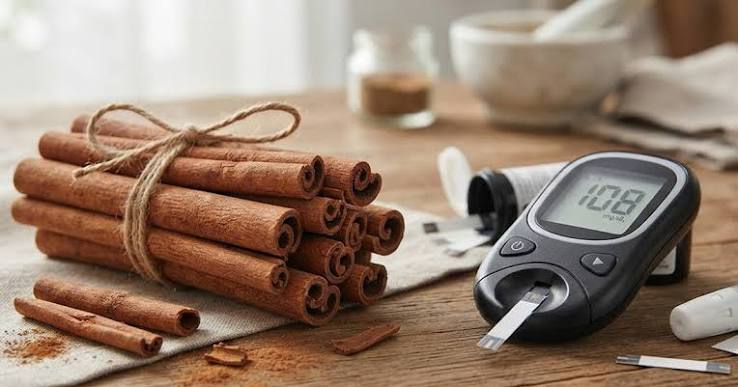
Cinnamon is one of the most studied and most commonly used culinary spices for blood sugar management. It has attracted research interest for decades — and generated a body of clinical trial evidence that is genuinely mixed, complicated by an important safety distinction that most people using cinnamon for blood sugar purposes are unaware of. This guide reviews what the clinical trial evidence actually shows, explains the critical difference between Ceylon cinnamon and Cassia cinnamon that determines long-term safety, covers the practical considerations for anyone choosing to use cinnamon as a blood sugar adjunct, and places cinnamon in honest context relative to the interventions with stronger evidence.

What Is Cinnamon? — Types and Active Compounds
Ceylon vs. Cassia — The Critical Distinction
The spice sold as “cinnamon” in most grocery stores is not a single botanical product — it is one of several species in the Cinnamomum genus, with two types dominating the commercial market. Ceylon cinnamon (Cinnamomum verum or zeylanicum) — also called “true cinnamon” — is native to Sri Lanka. It has a lighter color, softer texture, and more delicate flavor than the other common type. Cassia cinnamon (Cinnamomum cassia or aromaticum) is the type most commonly sold in supermarkets across the United States, Canada, and Northern Europe — darker, harder, and more intensely flavored. A third variety, Saigon cinnamon (Cinnamomum loureiroi), is similar to Cassia and found increasingly in specialty markets.
The critical difference is coumarin content. Cassia cinnamon contains 1–12 mg of coumarin per gram — a naturally occurring compound that is hepatotoxic (liver-damaging) at sustained high doses in sensitive individuals. Ceylon cinnamon contains coumarin at trace levels — approximately 100-fold less than Cassia. This distinction matters enormously for supplementation safety. The doses used in most blood sugar clinical trials — 1–6 grams of cinnamon daily — deliver significant coumarin loads if Cassia cinnamon is used. The European Food Safety Authority has established tolerable daily intake levels for coumarin that are easily exceeded with daily Cassia supplementation at doses studied in glucose trials. Most supplement products and clinical trials do not specify cinnamon type on the label or in the study methodology — a significant gap in the evidence that limits interpretation of both efficacy and safety data.
Active Compounds and Proposed Mechanisms
Cinnamon contains several compounds that have shown biological activity in glucose metabolism research. Cinnamaldehyde — the compound responsible for cinnamon’s characteristic flavor — has shown insulin-mimicking activity in cell culture studies. Procyanidins in cinnamon extract have shown effects on insulin signaling pathways in animal models. Type A polyphenols in cinnamon have demonstrated GLUT4 transporter activation in vitro — a mechanism that would increase cellular glucose uptake. These mechanistic findings are genuine. The gap between mechanistic findings in cell culture and animals, and meaningful clinical effects in humans taking oral cinnamon supplements, is where the evidence becomes uncertain. Cell and animal mechanisms do not reliably predict human clinical outcomes — a fundamental principle in pharmacological research that applies equally to pharmaceuticals and supplements.
What the Clinical Trials Show
Positive Trial Findings
The landmark early cinnamon trial — Khan et al., published in Diabetes Care in 2003 — studied 60 adults with Type 2 diabetes in Pakistan randomized to 1, 3, or 6 grams of cinnamon daily or placebo for 40 days. All three cinnamon doses significantly reduced fasting blood glucose (18–29%), LDL cholesterol, and triglycerides compared to placebo. This study generated enormous popular interest in cinnamon for blood sugar management. Several subsequent trials replicated some positive findings — particularly modest reductions in fasting glucose — supporting the hypothesis that cinnamon has some glucose-lowering activity. A 2013 meta-analysis in the Annals of Family Medicine found that cinnamon supplementation was associated with statistically significant reductions in fasting blood glucose (−10.3 mg/dL on average) and modest reductions in LDL cholesterol and triglycerides across 10 included trials.
Negative and Mixed Trial Findings
Not all trials have replicated the initial positive findings. A Cochrane systematic review — the highest quality evidence synthesis — found insufficient evidence to recommend cinnamon for glycemic management in diabetes or prediabetes, citing methodological limitations across available trials and inconsistency between study results. Several well-designed trials — including a randomized controlled trial in adults with Type 1 diabetes — found no significant glucose benefit from cinnamon supplementation. The heterogeneity in results across trials may reflect differences in cinnamon type and preparation, baseline participant characteristics, background medication, duration of treatment, and dose. The absence of standardized cinnamon type across trials particularly limits the ability to pool results meaningfully — a meta-analysis combining Cassia and Ceylon cinnamon trials is effectively comparing two different interventions.
What the Evidence Supports — An Honest Summary
The honest summary of the cinnamon-blood sugar evidence is this: there is a signal that cinnamon, particularly at higher doses and in Type 2 diabetes populations, may produce modest reductions in fasting glucose — on the order of 5–15 mg/dL in trials showing benefit. This effect, where present, is smaller than the glucose reduction produced by first-line diabetes medications, and smaller than the glucose reduction produced by consistent post-meal physical activity. The evidence is not strong enough to establish cinnamon as a recommended therapy for diabetes management. The Cochrane review’s “insufficient evidence” conclusion is the appropriate current scientific position. This does not mean cinnamon is definitively ineffective — it means the available evidence does not yet meet the standard required to make a positive evidence-based recommendation.
Safety — The Coumarin Problem
Coumarin and Liver Risk at Supplementation Doses
The European Food Safety Authority established a tolerable daily intake of coumarin at 0.1 mg per kilogram of body weight per day. For a 70 kg adult, that is 7 mg of coumarin per day as the tolerable upper limit. Cassia cinnamon at 1 gram contains approximately 1–12 mg of coumarin depending on origin — meaning that a single gram of high-coumarin Cassia easily approaches or exceeds the tolerable daily intake. At the 3–6 gram supplementation doses used in blood sugar trials, Cassia cinnamon delivers 3–72 mg of coumarin daily — multiple times the established safety threshold. Case reports of Cassia-supplementation-related hepatotoxicity exist in the medical literature, though they are uncommon. The risk is dose-dependent and likely varies significantly by individual susceptibility. Adults who wish to use cinnamon for blood sugar purposes and intend to take it daily at supplementation doses should use Ceylon cinnamon specifically — not the generic “cinnamon” sold in most stores, which is almost invariably Cassia or a Cassia blend. Ceylon cinnamon is available in health food stores and online and can be identified by its lighter color, papery rolled texture, and specific labeling as Ceylon or Cinnamomum verum.
Drug Interactions
Cinnamon at supplementation doses can modestly lower blood glucose in some individuals. This glucose-lowering effect, while modest, is additive with insulin and oral diabetes medications that lower glucose. Adults on insulin or sulfonylureas who add high-dose cinnamon supplementation should monitor glucose more frequently — particularly in the first 2–4 weeks — to detect any additive lowering effect that might require medication adjustment. Cassia cinnamon also contains compounds that weakly inhibit blood clotting — a potential concern for adults on anticoagulant medications including warfarin. Adults on anticoagulants should discuss cinnamon supplementation specifically with their prescriber or pharmacist before use. Our supplement safety for people with diabetes guide covers the full framework for identifying and managing supplement-drug interactions, including the monitoring approach for adults who choose to use glucose-lowering supplements alongside diabetes medication.
Practical Use — If You Choose to Use Cinnamon
Culinary vs. Supplemental Cinnamon
Adding Ceylon cinnamon as a culinary spice — in coffee, oatmeal, yogurt, smoothies, or cooking — at the amounts used in cooking (approximately 0.5–1 teaspoon per day) delivers a modest dose without significant coumarin concern even with Cassia, given the small quantity. The evidence for glucose benefit at culinary doses is weaker than at supplementation doses, but the safety profile is substantially better. This is the lowest-risk approach for adults interested in cinnamon for blood sugar purposes — the potential benefit (if any) is modest, the risk is low, and the culinary enjoyment is a genuine co-benefit. Adults who choose supplementation — taking cinnamon capsules or powder at 1–3 grams daily specifically for glucose benefit — should use only Ceylon cinnamon, verify the type on the label, and inform their care team. The blood sugar monitoring approach that lets you detect whether cinnamon is actually affecting your glucose — rather than assuming it is — is in our blood sugar log and tracking guide. The broader supplements for blood sugar overview that places cinnamon within the full supplement evidence landscape is in our supplements for blood sugar guide. The magnesium supplement evidence — which has a more consistent evidence base than cinnamon for glucose benefit in deficient adults — is in our magnesium and blood sugar guide. The berberine supplement evidence — the supplement with the strongest and most replicated clinical evidence for glucose reduction — is in our berberine and blood sugar guide. The chromium supplement evidence and safety profile — the essential trace mineral with consistent evidence for modest insulin sensitivity improvement in deficient adults — is in our chromium and blood sugar guide. The walking after meals intervention — which has far stronger evidence for post-meal glucose reduction than cinnamon — is in our walking after meals for blood sugar guide. The annual care checklist that includes supplement use review alongside clinical diabetes management metrics is in our annual diabetes care checklist. The NCCIH’s cinnamon evidence summary provides independent, non-commercial assessment of the cinnamon research for diabetes and other health applications. The ADA’s vitamins and supplements guidance covers the evidence standard applied to supplements in diabetes management. The NIDDK’s diabetes management overview integrates supplement considerations within the broader evidence-based diabetes care framework.
Why Cinnamon Trial Results Are So Inconsistent
The Standardization Problem
The inconsistency in cinnamon clinical trial results has several identifiable causes. First, cinnamon type is rarely specified in trial protocols or reported in trial publications — studies labeled simply “cinnamon” may use Cassia, Ceylon, or an undisclosed blend. If Cassia and Ceylon produce different glucose effects (which is plausible given their different active compound profiles), pooling their results in meta-analyses produces noise rather than signal. Second, cinnamon preparation varies significantly across trials — whole powder, aqueous extract, ethanolic extract, and standardized cinnamaldehyde extract all deliver different proportions of active compounds at the same labeled dose. Third, participant populations differ substantially — baseline glucose level, concurrent medication, dietary background, and diabetes duration all affect the measurable glucose response to any intervention.
These standardization problems do not mean that cinnamon definitively has no glucose effect. They mean that the current evidence base cannot reliably answer that question — because the trials are not measuring a consistent intervention in a consistent population. Better-designed, standardized trials using specified cinnamon species, consistent preparation, and adequately powered sample sizes would provide a clearer answer than the current body of evidence can support. Adults making supplement decisions today must act on the existing imperfect evidence, which is appropriately described as insufficient to confirm benefit rather than proven ineffective.
Placebo Effect in Glucose Trials
Placebo effects in blood glucose trials are real and measurable. Adults enrolled in a blood glucose management study increase self-monitoring frequency, become more attentive to dietary choices, and may increase physical activity — all as a consequence of study participation, not of any specific intervention. These behavioral changes independently improve glucose. In trials without adequate placebo control or blinding, it becomes impossible to separate the glucose improvement from cinnamon from the glucose improvement from increased self-management attention that study participation produces. Many of the positive cinnamon trials — particularly earlier ones — have been criticized on exactly these methodological grounds. The trials with the most rigorous blinding and placebo control tend to show smaller effects than those with less rigorous methodology — a pattern that is a recognized warning sign for inflation of treatment effects in clinical trial literature.
Cinnamon for Specific Populations — What the Evidence Suggests
Type 2 Diabetes — Where Most Evidence Exists
Virtually all cinnamon blood glucose research has been conducted in adults with Type 2 diabetes. If cinnamon has a glucose effect, it is most likely to appear in this population — particularly in adults with poor baseline glucose control, where the room for improvement is largest. The magnitude of effect in positive trials — 5–18% reduction in fasting glucose — is more clinically meaningful in adults with fasting glucose of 180+ mg/dL than in those with fasting glucose near target. Adults with very well-controlled Type 2 diabetes who are already achieving near-normal glucose are unlikely to see meaningful additional benefit from cinnamon supplementation, and face the coumarin risk without proportional potential benefit.
Prediabetes — Limited Specific Evidence
Few cinnamon trials have specifically enrolled adults with prediabetes rather than established Type 2 diabetes. A 2020 randomized trial published in the Journal of the Endocrine Society found that 500 mg of cinnamon three times daily for 12 weeks did not significantly improve glucose tolerance in adults with prediabetes. This null result in a well-designed trial in the prediabetes population — where preventive intervention is most clinically valuable — is an important piece of evidence that is less frequently cited than the positive trials in Type 2 diabetes. Adults with prediabetes considering cinnamon for blood sugar purposes should weigh this against the much stronger evidence for lifestyle interventions — dietary modification, physical activity, and weight management — that the Diabetes Prevention Program showed reduce progression to Type 2 diabetes by 58%. Our walking after meals for blood sugar guide covers one of the most effective and accessible lifestyle interventions for prediabetes glucose management, with a substantially stronger evidence base than cinnamon.
Type 1 Diabetes — Evidence Is Essentially Absent
Research on cinnamon in adults with Type 1 diabetes is extremely limited. A randomized trial at a pediatric diabetes center found no significant glucose benefit in young people with Type 1 diabetes. The mechanisms proposed for cinnamon’s glucose effects — improved insulin sensitivity, reduced intestinal glucose absorption — are relevant primarily to Type 2 diabetes pathophysiology. Adults with Type 1 diabetes should not expect meaningful glucose benefit from cinnamon supplementation based on current evidence, and the coumarin safety concern applies equally to this population. The blood sugar and exercise considerations that are more specifically relevant to Type 1 glucose management during physical activity are in our safe exercise with diabetes guide.
How to Test Whether Cinnamon Is Actually Working for You
The N-of-1 Self-Experiment Approach
Individual glucose response to cinnamon supplementation varies significantly — some adults appear to be glucose responders, others show no measurable effect. Given this variability, the most rational approach for an adult who chooses to try cinnamon supplementation is to measure the actual glucose response rather than assume benefit based on population-average trial data. A simple self-experiment design: measure fasting glucose daily for 2 weeks before starting cinnamon — establishing a reliable baseline. Start Ceylon cinnamon supplementation at a consistent daily dose. Measure fasting glucose daily for the subsequent 4 weeks. Compare the 4-week average on cinnamon to the 2-week baseline. If fasting glucose has not changed by more than the natural day-to-day variability, cinnamon is likely not producing a meaningful glucose effect for you personally. If fasting glucose has declined by more than that variability margin consistently, a response may be occurring — worth discussing with the care team, particularly if medication adjustment might be appropriate. Our blood sugar log and tracking guide covers the logging system that makes this kind of self-monitoring data interpretable rather than just a collection of numbers. The broader supplement evaluation framework — how to assess whether any supplement is producing a real effect in your own glucose data — is in our guide to reviewing blood sugar supplements safely. The supplements for blood sugar overview that places cinnamon within the full landscape of commonly used blood sugar supplements is in our supplements for blood sugar guide. The magnesium evidence — with more consistent trial results than cinnamon for glucose benefit in deficient adults — is in our magnesium and blood sugar guide. The berberine evidence — the supplement with the strongest and most replicated glucose reduction data — is in our berberine and blood sugar guide. The supplement safety guide covering drug interactions, quality verification, and disclosure to the care team is in our supplement safety for people with diabetes guide. The annual care review that includes supplement use alongside clinical diabetes management metrics is in our annual diabetes care checklist. The NCCIH’s independent cinnamon evidence review covers the current state of the research for blood glucose and other health applications without commercial incentive to overstate efficacy. The ADA’s supplements and vitamins guidance covers the evidence standards applied to supplement claims in diabetes management. The EFSA coumarin safety opinion is the authoritative source for the tolerable daily coumarin intake that determines safe Cassia cinnamon supplementation limits.
Cinnamon in Context — Honest Risk-Benefit Assessment
What Cinnamon Realistically Offers
Bringing honest perspective to cinnamon: if cinnamon produces its average effect from positive trials — a fasting glucose reduction of approximately 10 mg/dL — that is a clinically modest benefit. It would not meaningfully change A1C. It would not prevent complications or eliminate the need for lifestyle change or medication. It might marginally improve a glucose value that is already being managed by other means. For an adult whose fasting glucose is 140 mg/dL despite medication and lifestyle efforts, a 10 mg/dL supplement-driven reduction is genuinely small relative to what is needed to reach target range. For an adult whose glucose is already near target, it offers even less proportional benefit while the coumarin risk remains unchanged.
This context matters for decision-making. Cinnamon is not dangerous in culinary amounts. Ceylon cinnamon at low supplementation doses is unlikely to cause harm. But it is also not a meaningful driver of diabetes outcomes. Adults who enjoy cinnamon in food — adding it to oatmeal, coffee, or yogurt as a culinary choice — derive whatever modest glucose benefit exists, the considerable antioxidant activity that cinnamon contains, and genuine sensory enjoyment. That is a reasonable, low-risk approach. Adults who pursue high-dose Cassia cinnamon supplementation specifically as a blood sugar intervention — while delaying or avoiding stronger interventions — take more risk for equivalent or lesser benefit than the evidence-based alternatives offer. The building healthy habits framework that prioritizes diet, exercise, sleep, and stress management as the highest-evidence glucose interventions — within which supplements like cinnamon play a modest adjunctive role at best — is in our building healthy habits with diabetes guide. The chromium supplement profile — which shares some of the mechanistic rationale for insulin sensitivity improvement but with somewhat more consistent trial evidence — is in our chromium and blood sugar guide. The probiotics and blood sugar guide — a supplement category with emerging mechanistic evidence for glucose benefit through the gut microbiome — is in our probiotics and blood sugar guide. The fiber supplements guide — covering the supplement with perhaps the most mechanistically straightforward glucose benefit through carbohydrate absorption slowing — is in our fiber supplements and blood sugar guide.
Sources: Khan A et al. Cinnamon improves glucose and lipids of people with type 2 diabetes. Diabetes Care 2003; Allen RW et al. Cinnamon use in type 2 diabetes: an updated systematic review and meta-analysis. Annals of Family Medicine 2013; European Food Safety Authority. Coumarin in flavourings and other food ingredients. EFSA Journal 2008; NCCIH Cinnamon Evidence Summary 2024; ADA Vitamins and Supplements Guidance 2024.
This is one of the clearest explanations of cinnamon and blood sugar: evidence and I have found. The practical tips made this immediately actionable, not just theoretical. This is going into my health folder that I bring to every doctor’s visit.
I shared this article on cinnamon and blood sugar: evidence and with my doctor and they appreciated the level of detail. I appreciated how the article addressed both the clinical side and the practical adjustments. Will definitely be coming back to this site for more health information.
My doctor recommended I look into cinnamon and blood sugar: evidence and and this article covered it perfectly. I appreciated how the article addressed both the clinical side and the practical adjustments. This is going into my health folder that I bring to every doctor’s visit.