
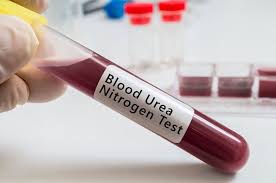
Every standard metabolic blood panel includes two kidney waste markers: creatinine and blood urea nitrogen (BUN). Most patients have heard of creatinine — fewer understand what the BUN blood test measures, why it matters, and how it adds to the picture creatinine provides. Yet BUN is not redundant. It captures a different aspect of metabolism and kidney function, and the relationship between the two values — the BUN-to-creatinine ratio — is one of the most clinically useful tools in internal medicine for distinguishing why kidney markers are elevated.
What Is BUN?
BUN stands for blood urea nitrogen. When proteins — from food or from natural tissue breakdown — are metabolized, they release nitrogen. The body cannot store excess nitrogen, so it is processed by the liver into urea, a small, water-soluble molecule. The liver exports urea into the bloodstream, and the kidneys filter it out and excrete it in urine. BUN measures the nitrogen content of the urea circulating in your blood at any given moment.
In some countries, “urea” is reported directly in millimoles per liter (mmol/L) rather than “BUN” in milligrams per deciliter (mg/dL). To convert BUN (mg/dL) to the urea equivalent, multiply BUN by 2.14. Dividing a urea value by 2.14 gives the approximate BUN equivalent.
Normal BUN Levels
Normal BUN values in adults generally range from 7 to 20 mg/dL, though different laboratories may use slightly different reference ranges. These ranges reflect the balance between urea production (driven by protein intake and catabolism) and urea excretion by the kidneys. Pregnancy lowers BUN (enhanced GFR increases clearance); high protein intake or catabolism raises it. BUN interpreted alone is not a reliable assessment of kidney function — it is most informative alongside creatinine and the clinical context.
What Causes Elevated BUN
Pre-renal causes are the most common reason for elevated BUN in clinical practice. Dehydration is the most frequent: when intravascular volume is depleted, renal perfusion falls, urine output drops, and BUN rises. This form of elevated BUN is rapidly reversible with adequate fluid intake — typically normalizing within 24 to 48 hours of hydration. Heart failure, sepsis, and NSAIDs can all reduce renal perfusion and elevate BUN by the same mechanism.
Upper gastrointestinal bleeding is a particularly important pre-renal cause to recognize. When blood is lost into the stomach or upper intestine, the hemoglobin and proteins are digested — effectively functioning as an enormous protein meal delivered directly into the gut. The liver converts the amino acid products to massive quantities of urea, and BUN rises dramatically — often to 40 to 80 mg/dL or higher — without a proportional creatinine rise. This produces the characteristic BUN-to-creatinine ratio above 20 that strongly suggests an upper GI source.
Corticosteroids increase protein catabolism throughout the body, raising urea production. A patient started on prednisone may see BUN rise by 5 to 10 mg/dL without any change in kidney function. A very high protein diet, prolonged fasting, major surgery, or severe burns similarly push BUN upward independent of GFR.
Renal causes — CKD, AKI, glomerulonephritis — directly reduce the kidneys’ ability to excrete urea. In these situations, both BUN and creatinine rise in proportion, and the ratio typically remains within the normal 10–20:1 range.
Post-renal causes — kidney stones, BPH, or tumors obstructing urinary outflow — raise BUN by back-pressure impairment of kidney filtration. Post-renal causes are often associated with reduced urine output or complete retention, which requires urgent evaluation.
What Causes Low BUN
The most important cause of low BUN is liver disease or liver failure. Because the liver is the site of urea synthesis, severe liver dysfunction dramatically reduces urea production. In advanced cirrhosis or acute liver failure, BUN may fall to very low levels even as ammonia accumulates in the blood — causing hepatic encephalopathy — because the liver can no longer convert ammonia to urea.
Other causes include malnutrition or very low protein intake (less substrate for urea production), overhydration and SIADH (dilutional effect), and pregnancy (increased GFR). In dialysis patients, a very low pre-dialysis BUN (below approximately 60 mg/dL on thrice-weekly hemodialysis) may indicate inadequate dietary protein intake rather than excellent dialysis — a sign of malnutrition requiring nutritional assessment.
The BUN-to-Creatinine Ratio — The Key Diagnostic Tool
The most useful clinical application of BUN is its ratio to creatinine. Both values in mg/dL: divide BUN by creatinine to get the ratio.
Normal (10–20:1): BUN and creatinine rise proportionally when kidney filtration is reduced by intrinsic kidney disease.
Elevated ratio (>20:1): BUN is disproportionately elevated. The physiological explanation is elegant: urea, unlike creatinine, is partially reabsorbed by the kidney tubules when tubular flow is slow. When renal perfusion is reduced and tubular flow slows — as in dehydration — more urea is reabsorbed before it can be excreted, while creatinine excretion is maintained relatively better, causing BUN to rise disproportionately. A high ratio in the context of dehydration or acute illness strongly suggests the kidneys themselves are intact but under-perfused.
Low ratio (<10:1): Creatinine is disproportionately elevated. Rhabdomyolysis (massive muscle breakdown releasing creatinine) is the classic cause, along with liver disease (reduced urea synthesis) and malnutrition.
BUN vs. Creatinine — Different Roles in Kidney Assessment
eGFR — the primary metric for CKD staging — is calculated from creatinine, not BUN, because creatinine is more specific for GFR and less affected by protein intake and liver function. BUN is more sensitive to non-renal factors: hydration, protein intake, catabolic state, and liver function all affect it substantially. This makes BUN a less reliable standalone GFR marker but a more informative contextual marker for understanding the mechanism behind abnormal kidney values.
When BUN and creatinine move together, intrinsic kidney disease is more likely the primary cause. When BUN moves disproportionately — especially upward with a high ratio — a non-renal contributor is usually involved. See the companion article on creatinine blood test for a detailed comparison of what each marker measures.
BUN in Dialysis Adequacy
For hemodialysis patients, BUN is the primary molecule used to calculate Kt/V — the standard measure of dialysis adequacy. The KDOQI-recommended minimum Kt/V is 1.4 per dialysis session. The urea reduction ratio (URR) — (pre-BUN minus post-BUN) divided by pre-BUN, times 100% — targets ≥65% per session. BUN serves as a surrogate for the many uremic toxins that dialysis removes; if urea is being efficiently removed, it is assumed other toxins are too.
One nuance: a very low pre-dialysis BUN in a hemodialysis patient may not indicate excellent dialysis. It may instead reflect malnutrition — the patient is producing less urea because they are eating too little protein. Distinguishing these requires looking at normalized protein catabolic rate (nPCR) and nutritional markers alongside BUN.
BUN and Upper GI Bleeding
One of the most clinically practical applications of BUN outside kidney disease is identifying upper gastrointestinal bleeding. When a patient has an elevated BUN but a relatively normal creatinine — producing a BUN:Cr ratio above 20 or 30 — upper GI bleeding is a key diagnosis to consider. Blood lost into the stomach or small intestine is digested as protein; the liver converts the products to urea, and BUN rises dramatically within 24 hours. A significant upper GI hemorrhage can raise BUN by 40 to 80 mg/dL without any change in creatinine.
Lower GI bleeding — from the colon — does not produce the same dramatic BUN rise, because blood in the colon does not undergo the same degree of protein digestion. This difference helps clinicians distinguish upper from lower GI sources even before endoscopy.
Conclusion
The BUN blood test is not just a backup to creatinine — it is a distinct marker that captures protein metabolism, liver function, hydration status, and urea excretion in a single value. The BUN-to-creatinine ratio is one of the most practical clinical tools for understanding why kidney markers are elevated and identifying whether the primary problem is the kidney itself or something upstream.
Read what is eGFR to understand how eGFR is calculated from creatinine, and see kidney health numbers every adult should know for the full set of values that define kidney health. For context on what CKD means and how it is staged, see what is chronic kidney disease.

How BUN Changes Across Kidney Disease Progression
Understanding how BUN behaves across the stages of chronic kidney disease helps patients interpret their own lab values as their condition evolves. In the earliest stages of CKD — G1 and G2, where eGFR is still above 60 mL/min/1.73m² — BUN is often within the normal range or only mildly elevated, because the kidneys retain sufficient reserve to clear most of the urea produced each day. This is one of the reasons CKD can be silent in its early stages: the two most common kidney markers on a routine metabolic panel — BUN and creatinine — may both appear normal even when significant glomerular damage has already occurred, particularly in patients with mild-to-moderate proteinuria.
As kidney function declines through Stage G3 (eGFR 30–59) and into G4 (eGFR 15–29), BUN begins to rise more consistently. At this stage, the inability to excrete urea efficiently leads to its accumulation in the blood — a state called azotemia. Patients with BUN values chronically above 40 to 50 mg/dL in the context of declining eGFR are accumulating uremic toxins, and dietary modifications (primarily protein moderation under the guidance of a renal dietitian) become an important management tool. Protein restriction in advanced CKD serves a dual purpose: it reduces the production of urea and other nitrogen-containing waste products, slowing the rate of uremic symptom accumulation, and it may slow GFR decline in some patients by reducing hyperfiltration injury in the remaining nephrons.
In Stage G5 (kidney failure, eGFR <15), BUN in untreated patients may rise to 80, 100, or even higher — levels at which uremic symptoms become pronounced and life-threatening. Uremia, the clinical syndrome produced by very high BUN and accumulation of other uremic toxins, manifests as nausea, vomiting, altered mental status, pericarditis, bleeding (from uremic platelet dysfunction), and eventually coma. Dialysis was developed specifically to reverse this syndrome by removing urea and other uremic toxins from the blood — restoring BUN to manageable levels and alleviating uremic symptoms. For context on how kidney disease progresses to this stage, see what is chronic kidney disease.
BUN in the Context of Acute Illness and Hospitalization
BUN is an important monitoring marker in hospitalized patients, particularly those with conditions that affect kidney perfusion, protein catabolism, or fluid balance. In the ICU or post-operative setting, BUN is measured daily or more frequently as part of the assessment of kidney function alongside creatinine, urine output, and fluid balance.
A rising BUN in an acutely ill hospitalized patient triggers a systematic assessment: Is the patient adequately hydrated? Is cardiac output sufficient to perfuse the kidneys? Are any nephrotoxic medications (NSAIDs, aminoglycosides, ACE inhibitors in a hypovolemic patient, iodinated contrast) contributing? Is there an ongoing source of protein catabolism — infection, burns, major trauma, or high-dose corticosteroids — that is raising BUN independent of kidney function? The answers guide clinical intervention: fluid resuscitation, vasopressors to maintain blood pressure and renal perfusion, nephrotoxin removal, or nutritional management.
One particularly important scenario in hospitalized patients is the distinction between pre-renal azotemia — where BUN is elevated because the kidneys are under-perfused but structurally intact — and intrinsic AKI, where the kidney tubules or glomeruli have been damaged. This distinction matters clinically because pre-renal azotemia is treated primarily with volume resuscitation, while established AKI from tubular injury (acute tubular necrosis) requires avoidance of further insults and supportive management, with careful attention to fluid balance to avoid both under- and over-resuscitation. The BUN:Cr ratio, fractional excretion of sodium (FENa), and urinalysis findings (granular casts in ATN vs. normal sediment in pre-renal) help make this distinction, and your guide on decreased urine output covers this distinction in the context of oliguria.
Practical Tips: How to Interpret Your BUN Result
When you receive a lab report showing your BUN value, here is a practical framework for making sense of it:
Look at it alongside creatinine. BUN alone tells you much less than BUN and creatinine together. Calculate the ratio: divide your BUN by your creatinine (both in mg/dL). A ratio of 10–20 is normal; above 20 suggests pre-renal causes or GI bleeding; below 10 suggests liver disease or rhabdomyolysis.
Compare to your previous values. A BUN of 22 mg/dL — slightly above the upper normal of 20 — means very different things depending on whether your BUN has always been 18–22 mg/dL (this is your normal range, no cause for concern) or whether it has risen from 12 mg/dL over the past six months (a meaningful upward trend). Keep a record of your kidney lab values over time. Ask your provider to compare today’s result to your historical trend.
Consider what you ate and drank. A large barbecue dinner with significant red meat and dehydration from a hot day can transiently push BUN into the high-normal or mildly elevated range. If your BUN is 22 mg/dL after a weekend of heavy protein intake and insufficient hydration, repeating the test under standard conditions is reasonable before drawing conclusions.
Think about your medications. Corticosteroids reliably raise BUN. If you have recently started or increased a prednisone dose, your BUN may rise by 5 to 15 mg/dL without any change in kidney function. This is expected and does not indicate new kidney disease. Inform your provider of any recent medication changes when discussing lab results.
Know when to seek further evaluation. A BUN above 30 mg/dL combined with an elevated creatinine and rising eGFR should be discussed with your provider promptly. A BUN above 60 mg/dL — particularly if you have not been on dialysis — warrants urgent medical evaluation, as this level may indicate significant kidney impairment or active GI bleeding. The guide on kidney health numbers every adult should know provides a complete list of the kidney values worth tracking and the thresholds that warrant attention.
BUN in Special Populations: Children, Elderly, and Vegetarians
BUN reference ranges and interpretation require adjustment in several important populations where baseline urea production and clearance differ substantially from healthy middle-aged adults.
In children, BUN values are somewhat lower than adult ranges because children have a higher GFR relative to their body size — meaning they excrete urea more efficiently per unit of blood volume — and their protein intake relative to body weight, while high, produces proportionally less urea than an adult’s diet. Pediatric normal BUN ranges are typically 5 to 18 mg/dL and are age-dependent. Interpretation in children with suspected kidney disease should always use pediatric reference ranges rather than adult normals.
In older adults, BUN tends to trend higher with age due to declining GFR — the same mechanism that raises creatinine in aging, but often more pronounced because protein catabolism can increase in elderly individuals who are unwell, have reduced muscle mass, or have lower fluid intake. An elderly person with a BUN of 25 mg/dL may have a normal eGFR on calculation because their low muscle mass produces little creatinine — creating a falsely reassuring eGFR — while the elevated BUN may more accurately reflect impaired urea clearance. In this population, pairing BUN interpretation with cystatin C-based eGFR provides a more complete picture of true kidney function.
In vegetarians and vegans, lower dietary protein intake — combined with the absence of meat-derived creatine that raises creatinine — leads to both lower BUN and lower creatinine baselines. A vegetarian may have a BUN of 8 mg/dL and a creatinine of 0.7 mg/dL and receive an eGFR well above 90 — not necessarily because kidney function is above average, but because both markers are reduced by diet. This population is another group in whom cystatin C-based eGFR is more reliable when precise GFR estimation is needed, because cystatin C is independent of both muscle mass and dietary protein intake.
Understanding that BUN is not a fixed biological constant but a dynamic value shaped by diet, hydration, liver function, kidney function, and metabolic state is the essential insight needed to use it well. The creatinine blood test and eGFR articles provide the complementary pieces of the kidney function picture that BUN alone cannot supply.
Azotemia vs. Uremia: Understanding the Clinical Terms
Two terms that appear in medical records and nephrology notes related to BUN are azotemia and uremia — and they are often confused. Understanding the distinction is useful for anyone navigating kidney disease.
Azotemia refers to an elevated concentration of nitrogen-containing waste products — primarily urea and creatinine — in the blood. It is defined biochemically: azotemia is present whenever BUN and creatinine are elevated above normal. Azotemia has no inherent symptom requirement — a patient can be azotemic (elevated BUN and creatinine) while feeling entirely well, as commonly occurs in asymptomatic Stage G3 CKD. The three categories of azotemia — pre-renal, intrinsic renal, and post-renal — correspond to the categories of BUN elevation described in this article.
Uremia is the clinical syndrome that results from severe, prolonged azotemia — the actual illness caused by the accumulation of uremic toxins beyond just urea and creatinine. Uremia involves the accumulation of dozens of biologically active molecules (middle molecules, protein-bound toxins, phosphorus, acid) that damage organ systems throughout the body. The clinical manifestations of uremia include nausea and vomiting, anorexia, pruritus (uremic itch), pericarditis, bleeding from platelet dysfunction, encephalopathy, and peripheral neuropathy. BUN above 100 mg/dL in a patient not on dialysis is typically associated with uremic symptoms, though individual tolerance varies. Dialysis was developed to treat uremia by removing urea and other uremic toxins before they cause irreversible organ damage. A patient with an eGFR of 8 and BUN of 120 mg/dL is not simply “azotemic” — they are uremic and need kidney replacement therapy. This distinction between a biochemical finding (azotemia) and a clinical syndrome (uremia) helps explain why kidney disease staging based on eGFR and proteinuria, not just BUN and creatinine absolute values, is the standard approach to guiding clinical decisions in CKD.
The BUN blood test, when understood in context with creatinine, eGFR, and the full clinical picture, becomes one of the most informative routine lab values available — not just for kidney assessment, but for understanding hydration, liver function, protein metabolism, and the body’s overall catabolic state. Pair it with your creatinine trend and your eGFR, and it completes a picture that no single value can provide alone.
Sources: National Institute of Diabetes and Digestive and Kidney Diseases | National Kidney Foundation | Mayo Clinic — Blood Urea Nitrogen
My doctor recommended I look into bun blood test: what it means and this article covered it perfectly. The specific numbers and thresholds mentioned are exactly what I needed to understand my results. This is exactly why I prefer this website over generic health platforms.
Came across this while researching bun blood test: what it means for a family member. The specific numbers and thresholds mentioned are exactly what I needed to understand my results. Exactly the kind of evidence-based information that is hard to find in one place.
My doctor recommended I look into bun blood test: what it means and this article covered it perfectly. What I liked most was that the article didn’t just say what to avoid — it also gave alternatives. Shared this with three friends who are dealing with related issues. Very useful resource.