
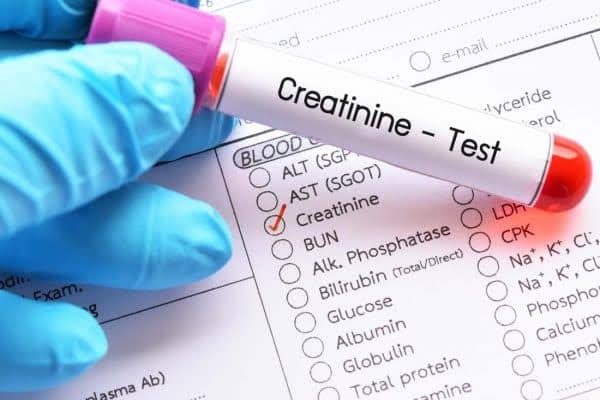
If you have ever had a routine blood test, chances are creatinine was included — and chances are no one explained what it measures. The creatinine blood test is one of the most commonly ordered laboratory tests in medicine, and it is the primary tool used in routine care to detect impaired kidney function. Yet for most patients, it is a number that passes by unremarked on a lab report unless it is flagged as abnormal.
Understanding your creatinine blood test result — what creatinine is, why the kidneys regulate its level, what elevated or low values mean, and how it connects to the eGFR number on the same panel — gives you a meaningful window into your kidney health.
What Is Creatinine?
Creatinine is a chemical waste product generated during normal muscle metabolism. The muscles use a molecule called creatine phosphate as an energy reserve during short bursts of intense activity. As creatine phosphate is broken down, it is converted to creatinine — a small, stable molecule that your muscles continuously release into the bloodstream.
The rate at which your muscles produce creatinine is relatively constant from day to day and is primarily determined by your total muscle mass. Because the kidneys filter creatinine from the blood at a predictable rate, the level of creatinine in the blood reflects how well the kidneys are filtering. When kidney filtration slows, creatinine accumulates. When kidneys are working well, creatinine levels remain within the normal range.
Normal Creatinine Levels
Creatinine reference ranges differ between men and women because muscle mass differs between the sexes. Standard reference ranges are approximately 0.74 to 1.35 mg/dL for men and 0.59 to 1.04 mg/dL for women. These ranges are averages derived from population studies and do not account for variation within those groups.
Athletes and individuals with high muscle development may have creatinine values at the upper end of or slightly above the reference range while having perfectly normal kidney function. Conversely, elderly individuals and people with low muscle mass from illness or prolonged inactivity may have creatinine values at the low end of or below the reference range even when kidney function is declining — because their muscles produce so little creatinine that even impaired kidneys can keep pace with clearance. In countries reporting in micromoles per liter (µmol/L), multiply mg/dL by 88.4 to convert: a creatinine of 1.0 mg/dL equals approximately 88.4 µmol/L.
What Elevated Creatinine Means
An elevated creatinine result means the kidneys are filtering less efficiently — but it does not by itself explain why. The causes of elevated creatinine are grouped into three categories based on where the problem originates.
Pre-renal causes reduce blood flow to the kidneys without directly damaging kidney tissue. Dehydration is the most common: when the body is volume-depleted, renal perfusion falls, filtration slows, and creatinine rises. This form of elevated creatinine is usually quickly reversible with adequate hydration. Other pre-renal causes include heart failure, sepsis, and NSAIDs (which block the prostaglandins that dilate renal arteries). In pre-renal elevation, the BUN-to-creatinine ratio is typically above 20.
Intrinsic kidney causes damage the kidney tissue itself. Chronic kidney disease (CKD) is the most common cause of chronically elevated creatinine. Acute kidney injury (AKI), glomerulonephritis, polycystic kidney disease, lupus nephritis, and diabetic nephropathy all produce elevated creatinine as kidney function is progressively impaired.
Post-renal causes are obstructions to urinary flow that cause back-pressure on the kidneys. Kidney stones blocking a ureter, an enlarged prostate, or a tumor compressing the urinary tract can all raise creatinine. Bilateral obstruction affecting both kidneys is a urological emergency.
Medications and diet can also transiently raise creatinine without reflecting actual kidney function change. Trimethoprim and cimetidine block the kidney tubules’ active secretion of creatinine, causing it to accumulate even when GFR is unchanged. A large red meat meal the evening before a blood draw can raise creatinine by several tenths of a milligram per deciliter.
What Low Creatinine Means
A creatinine level below the normal reference range almost always reflects reduced muscle mass rather than abnormally efficient kidneys. Conditions associated with low creatinine include advanced age (sarcopenia), severe malnutrition, muscle-wasting diseases, prolonged bed rest, and liver disease (which reduces creatine synthesis).
The clinical concern with low creatinine is that a lower-than-expected value makes the calculated eGFR appear falsely reassuring. A 90-year-old with advanced sarcopenia and a creatinine of 0.7 mg/dL might receive an eGFR report of 75 mL/min/1.73m² — which appears normal — but actual kidney filtration may be meaningfully lower. This is why cystatin C-based eGFR is increasingly used in elderly and malnourished patients.
Creatinine vs. BUN — Understanding Both Together
Creatinine and blood urea nitrogen (BUN) are both kidney waste products measured on standard metabolic panels. The BUN:creatinine ratio provides additional diagnostic information:
- Normal (10–20:1): both markers rise proportionally when intrinsic kidney filtration is reduced
- Elevated (>20:1): BUN is disproportionately high — suggests pre-renal causes (dehydration) or upper GI bleeding (digested blood raises BUN without affecting creatinine)
- Low (<10:1): creatinine is disproportionately high — suggests rhabdomyolysis, liver disease (reduced urea production), or malnutrition
Creatinine is generally more specific for kidney filtration capacity; BUN is more sensitive to hydration status and catabolic state. See the article on BUN blood test for a full explanation of what BUN measures and how to interpret it alongside creatinine.
Creatinine and eGFR — How They Connect
eGFR is mathematically derived from serum creatinine using the CKD-EPI equation, adjusted for age and sex. When creatinine is elevated, eGFR is low. When creatinine is normal, eGFR is typically reported as “>60.”
eGFR is preferred over creatinine alone for staging CKD because it accounts for the fact that the same creatinine value represents different levels of kidney function in different bodies. A serum creatinine of 1.2 mg/dL in a 30-year-old athletic male corresponds to a very different eGFR than the same value in an 80-year-old woman — because she produces much less creatinine, so 1.2 mg/dL represents more impairment relative to her baseline.
For drug dosing, many medications use creatinine clearance via the Cockcroft-Gault formula, which additionally incorporates body weight. Do not substitute eGFR for CrCl or vice versa without checking whether the drug’s prescribing information specifies which to use. See what is eGFR for a detailed explanation of how eGFR is calculated and what it means clinically.
Creatinine in Acute Kidney Injury
In acute illness, creatinine is the primary biomarker used to diagnose and stage acute kidney injury (AKI). The KDIGO AKI definition requires either a creatinine rise of ≥0.3 mg/dL within 48 hours, or a rise to ≥1.5 times the baseline creatinine within 7 days, or reduced urine output for 6 or more hours.
One important limitation is that creatinine lags behind the actual fall in GFR by approximately 24 to 48 hours — meaning GFR can fall substantially before the blood test reveals it. Cystatin C rises faster than creatinine in AKI, making it a more sensitive early biomarker, though it is not yet as widely available as creatinine in routine settings.
Limitations of Creatinine as a Kidney Marker
Creatinine is practical and widely available, but it has meaningful limitations. It is insensitive to early kidney disease — you can lose up to 50 percent of GFR before creatinine reliably rises above the normal range. This is why detecting early CKD requires looking beyond creatinine alone: the urine albumin-to-creatinine ratio and eGFR trend together provide a far more complete picture. See the guide on kidney health numbers every adult should know for the full set of values worth tracking.
Muscle mass variability also limits reliability across individuals. And in advanced CKD (Stage G4–G5), the kidneys increasingly rely on tubular secretion of creatinine as an alternative excretory pathway — causing eGFR calculated from creatinine to overestimate remaining true GFR. Cystatin C-based eGFR becomes more accurate in these patients.
How to Prepare for a Creatinine Blood Test
The creatinine test does not require specialized preparation. However, a few practical points apply: avoid large red meat meals the evening before, as cooked meat contains creatine that converts to creatinine and can transiently elevate your result. Inform your provider if you are taking trimethoprim or cimetidine, as these medications artificially raise creatinine. Fasting is not strictly required for creatinine measurement, though many metabolic panels are drawn fasting for glucose and lipid accuracy. If your creatinine has been rising across multiple measurements, bring prior results to your appointment or ask your provider to review your historical trend.
Conclusion
The creatinine blood test is a small but important window into kidney function — one available through routine annual blood work without additional testing. Understanding what creatinine measures, what influences the result, and how it connects to eGFR and BUN puts you in a position to recognize changes early and take appropriate action.
If your creatinine is elevated for the first time, ask your provider whether it has been rising over time, request a urine albumin-to-creatinine ratio to look for proteinuria, and confirm whether the test should be repeated. See what is chronic kidney disease for context on the full clinical picture, and decreased urine output if you have noticed changes in urination alongside elevated creatinine.
Creatinine in Special Populations: When Standard Ranges Do Not Apply
The standard creatinine reference ranges printed on lab reports are calculated from population averages and assume a relatively average body composition. In several important clinical populations, these ranges can be misleading — and understanding why helps patients and providers interpret results accurately rather than being falsely reassured or unnecessarily alarmed.
In older adults, age-related sarcopenia (muscle loss) progressively reduces creatinine production over decades. An 80-year-old may have a serum creatinine of 0.8 mg/dL and an eGFR of 65 — values that look normal on a standard reference range printout — but whose actual kidney function may be meaningfully lower than that number suggests. The Cockcroft-Gault formula, which adjusts for age and weight, gives a different picture than CKD-EPI in this group. Cystatin C-based eGFR, which does not depend on muscle mass, is increasingly recommended for elderly patients in whom creatinine-based calculations are suspected to be unreliable. If an elderly patient’s reported eGFR seems unusually good for their age and health history, cystatin C testing may provide a more accurate estimate.
In patients with amputations, the loss of a limb reduces the body’s total muscle mass and therefore creatinine production. The degree of reduction depends on how much of the limb was amputated — a below-knee amputation has a smaller effect than a bilateral above-knee amputation. Standard eGFR equations are not validated in this population, and the Cockcroft-Gault formula — which uses body weight — is typically adjusted downward to account for the estimated weight of the missing limb. This is a nuanced calculation best made by a pharmacist or nephrologist when precision is needed for drug dosing.
In patients receiving certain chemotherapy agents, creatinine can be elevated by both actual kidney toxicity (nephrotoxic chemotherapy) and by mechanisms that block tubular secretion (some platinum-based agents affect creatinine handling). Distinguishing drug-induced creatinine elevation from genuine GFR reduction is important because dose adjustments for the chemotherapy may be required if true GFR is falling, but unnecessary if creatinine is elevated by a non-GFR mechanism. Cystatin C and 24-hour urine creatinine clearance are used in oncology settings to clarify kidney function in these complex cases.
In pregnant women, as discussed in the context of eGFR, normal creatinine values are lower than in non-pregnant adults — approximately 0.4 to 0.8 mg/dL — because GFR increases by 40 to 65 percent during pregnancy. A creatinine of 1.0 mg/dL, unremarkable outside of pregnancy, may represent significant kidney impairment in a pregnant woman. Standard eGFR equations and reference ranges are not validated in pregnancy, and interpretation requires clinician expertise in obstetric nephrology.
Tracking Creatinine Over Time: Building Your Kidney Health Record
A single creatinine result, taken out of context, provides limited information. A creatinine of 1.2 mg/dL means very different things depending on whether that is your stable baseline over five years, an increase from your usual 0.8 mg/dL over the past six months, or a new finding you have never had measured before. The most valuable use of creatinine testing is longitudinal — tracking the value over time to identify whether it is stable, slowly rising, or rapidly increasing.
Patients with chronic kidney disease, diabetes, or hypertension should maintain a personal record of their kidney lab values over time. This can be as simple as a notebook or a spreadsheet that records the date, creatinine, eGFR, BUN, and urine albumin-to-creatinine ratio at each testing occasion. When these values are plotted over time — even informally — patterns become visible that a single result cannot reveal: a creatinine rising from 1.0 to 1.2 to 1.4 over 18 months tells a very different story than a creatinine that has been 1.1 to 1.2 for five years.
Most electronic health record patient portals now allow patients to view their lab trends over time in graph format. If your portal offers this view, use it. If you receive paper reports, keep a folder organized by date. When you see a new provider or visit an emergency department, having your historical creatinine values available — especially knowing your stable baseline — allows clinicians to immediately determine whether a current elevated result represents a new acute insult or a long-standing chronic pattern. This distinction determines whether urgent intervention is needed or whether watchful follow-up is appropriate.
For people who have not had creatinine tested regularly, the best time to establish a baseline is now — before any kidney disease develops. Annual creatinine and eGFR as part of a routine metabolic panel creates the reference point against which future results can be compared. The guide on kidney health numbers every adult should know provides a framework for which values to track and how to interpret changes, and the article on what is chronic kidney disease explains what happens when creatinine rises persistently and kidney function is confirmed to be declining.
Creatinine and Dialysis: What Happens When the Kidneys Stop Filtering
For patients with end-stage kidney disease (ESKD) on dialysis, creatinine takes on a different role in monitoring than it does in earlier CKD stages. At this point, the kidneys are no longer providing meaningful filtration, and creatinine removal depends entirely on the dialysis sessions. In hemodialysis patients, creatinine is measured as part of routine pre-dialysis blood work — typically before each session or periodically as ordered by the dialysis team — and is used as one of several markers to assess dialysis adequacy.
The pre-dialysis creatinine level in hemodialysis patients reflects the accumulation of creatinine between sessions — which depends on how much residual kidney function the patient still has (some dialysis patients produce a small amount of urine and continue to filter creatinine to a minor degree), how much muscle mass they have, and how efficiently the dialysis session is removing creatinine and other solutes. A gradually falling creatinine in a dialysis patient who has been stable may indicate declining muscle mass — a sign of malnutrition or muscle wasting — rather than improving kidney function. This is an important distinction, as malnutrition in dialysis patients is associated with significantly worse outcomes.
Peritoneal dialysis (PD) patients have creatinine measured from both blood and peritoneal effluent to calculate a peritoneal creatinine clearance — a measure of how efficiently the PD system is removing creatinine compared to the total body water volume. This calculation, combined with residual urine creatinine clearance, gives the nephrologist a complete picture of how effectively the patient’s combined dialysis-plus-residual-kidney-function system is clearing waste.
Kidney transplant recipients, once the transplanted kidney begins functioning, will see creatinine fall from dialysis-range levels — often above 8 to 10 mg/dL — toward a new stable post-transplant level that reflects the filtering capacity of the single transplanted kidney. The pace and degree of this initial fall is closely monitored in the first days and weeks after transplant as an indicator of immediate graft function. A creatinine that fails to fall as expected after transplant — or that rises after an initial fall — is investigated urgently for rejection, technical complications, or delayed graft function. For the transplant recipient, creatinine trend is the most sensitive day-to-day indicator of graft health, and any unexplained rise warrants same-day communication with the transplant team.
When to Call Your Doctor About a Creatinine Result
Not every elevated creatinine result requires an emergency call — but there are situations where prompt communication is warranted. If you receive lab results electronically and see a creatinine value that is flagged as high, the appropriate next step depends on the degree of elevation and the clinical context.
A creatinine that is mildly elevated — for example, 1.4 mg/dL in a man who has previously been 1.2 mg/dL — warrants a conversation at your next appointment, or a call to your provider’s office if your next appointment is more than two to three weeks away. A creatinine that has jumped substantially from a prior known value — for example, from 1.0 to 1.8 mg/dL — warrants a same-day call, even if you feel well, because a rapid rise in creatinine may indicate an acute kidney injury that can be treated if caught early. A creatinine above 3.0 mg/dL in someone who has not previously had kidney disease, or a creatinine accompanied by markedly reduced urine output, severe swelling, confusion, or difficulty breathing, is a reason to seek emergency evaluation rather than waiting for a phone call.
Knowing your baseline is the key to interpreting a new result. A creatinine of 2.0 mg/dL in someone with long-standing Stage 4 CKD is their expected value — it may not require any action if it is unchanged. The same value in someone whose creatinine has always been 0.9 mg/dL is a significant acute elevation that needs urgent evaluation. This is why establishing and tracking your baseline creatinine, eGFR, and kidney numbers over time is one of the most practical and effective things you can do to protect your kidney health — as outlined in the guide on kidney health numbers every adult should know.
The creatinine blood test, while simple and routine, carries meaningful information about kidney health when interpreted in context. Knowing your baseline, tracking the trend, understanding what raises creatinine beyond kidney disease — medications, diet, muscle mass — and recognizing when a new elevated result needs prompt attention are the practical skills that transform a lab number into a health-protective tool. Paired with eGFR, BUN, and urine albumin-to-creatinine ratio, creatinine forms part of the complete kidney health picture that allows early detection and early action. For people with diabetes or high blood pressure — the two leading causes of kidney failure — annual creatinine measurement is not optional; it is the minimum standard of kidney care.
Sources: National Institute of Diabetes and Digestive and Kidney Diseases | National Kidney Foundation | Mayo Clinic — Creatinine Test
As someone dealing with this personally, the creatinine blood test explained section was very helpful. The article answered questions I didn’t even know I had until I started reading. Forwarding this to others in my support group who are dealing with similar issues.
Came across this while researching creatinine blood test explained for a family member. The article answered questions I didn’t even know I had until I started reading. Shared this with three friends who are dealing with related issues. Very useful resource.
Finally a resource that explains creatinine blood test explained in plain language. The article answered questions I didn’t even know I had until I started reading. I wish I had found this article earlier — would have saved a lot of confusion.