
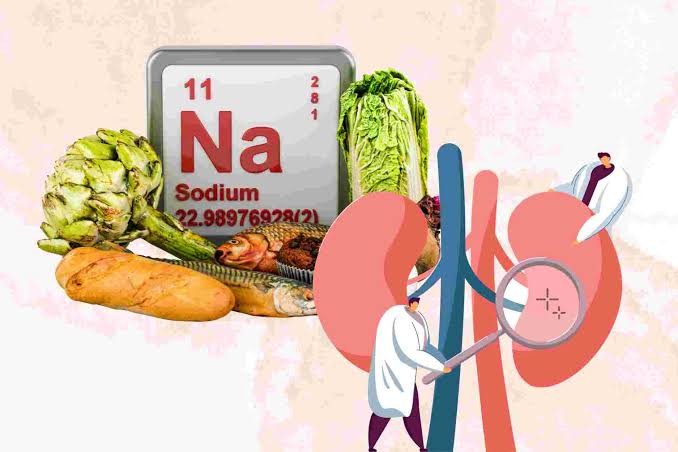
Low-Sodium Eating for Kidney Health
Sodium restriction is the dietary change most universally applicable to CKD patients — relevant at every stage from early disease through dialysis, and across every comorbidity that commonly accompanies kidney disease. It is also the restriction people most underestimate in difficulty. The common assumption is that limiting sodium means using less table salt, but the salt shaker contributes only about 10 percent of the average person’s sodium intake. The other 90 percent comes from processed food, restaurant meals, and packaged products — sources where sodium content is largely invisible until you look for it systematically. Closing the gap between the US average sodium intake of approximately 3,400 mg per day and the CKD target of less than 2,000 mg per day requires a different strategy than simply putting away the salt shaker.
This guide provides a practical framework for low-sodium eating in CKD: understanding why sodium is particularly harmful to the damaged kidney, identifying where dietary sodium actually comes from, reading labels accurately, cooking without salt, and navigating restaurants. The goal is not a flavorless, restrictive diet — it is a diet with different flavors, built through herbs, acids, and aromatics that become genuinely satisfying once the palate adapts to lower sodium levels.
Why Sodium Is Especially Harmful in CKD
In healthy kidneys, excess sodium is handled through natriuresis — the kidneys simply excrete the excess in urine. In CKD, this natriuretic capacity is reduced: fewer functioning nephrons means a smaller surface area for sodium excretion, and each individual nephron is already working near its maximum capacity. The result is that the same sodium intake that would be harmlessly excreted in a healthy person causes fluid retention and blood pressure elevation in a CKD patient, with disproportionate magnitude — small sodium loads cause larger blood pressure responses in patients with compromised renal sodium handling.
The mechanism through which sodium damages the kidney runs through hypertension and glomerular hyperfiltration. Elevated blood pressure from sodium-driven volume expansion increases hydraulic pressure within glomerular capillaries. This glomerular hypertension damages the podocytes — the specialized cells that form the glomerular filtration barrier — and leads to increased proteinuria, which is both a marker of kidney damage and a mechanism of further damage. Filtered protein in the tubular lumen is directly cytotoxic to tubular cells. The process creates a self-reinforcing cycle: sodium-driven hypertension leads to podocyte damage, which leads to proteinuria, which drives tubular injury and further GFR decline.
A pharmacological dimension adds urgency to sodium restriction: high sodium intake blunts the effectiveness of ACE inhibitors and angiotensin receptor blockers (ARBs), the cornerstone medications for CKD management. These medications work by blocking the renin-angiotensin-aldosterone system to reduce glomerular pressure and proteinuria. High sodium intake activates the RAAS in ways that partially overcome the medication’s blockade, reducing its blood pressure and antiproteinuric effect. Patients who restrict sodium respond better to the same ACE inhibitor or ARB dose than those who do not — meaning sodium restriction both works independently and amplifies the effectiveness of medications already being prescribed. The blood pressure and kidney protection guide explains the RAAS-based treatment strategy for CKD and how dietary sodium interacts with it.
Where Sodium Actually Comes From
National dietary data show that approximately 70 to 80 percent of the average American’s sodium intake comes from processed and restaurant foods, approximately 10 percent is added during cooking and at the table, and the remaining 10 percent occurs naturally in food. This distribution has an important implication: focusing exclusively on the salt shaker addresses at most 10 to 20 percent of the problem. The most impactful change is reducing processed and restaurant food consumption, not reducing cooking salt — though both matter.
The highest-sodium food categories are canned soups (800–1,500 mg per serving), processed and deli meats (600–1,500 mg per 3-oz serving), frozen meals (600–1,800 mg per package), fast food meals (1,500–3,000 mg per meal), and restaurant entrees (typically 1,000–2,500 mg per dish before bread, soup, or condiments). Several sodium sources are commonly underestimated. Bread contributes 130–200 mg per slice; three slices over the course of a day adds 400–600 mg before any meal is considered. Cottage cheese contains approximately 400–460 mg of sodium per half cup. Canned beans and vegetables typically contain 300–500 mg per cup unless labeled “no salt added.” Condiments add rapidly: a tablespoon of soy sauce contains approximately 900 mg; teriyaki sauce approximately 700 mg. Even modest use of these condiments can push a single meal over the daily budget.
Restaurant meals present a particular challenge because sodium content is difficult to estimate without access to nutritional information, and restaurant sodium is often dramatically higher than home-cooked equivalents. Chefs add salt at multiple points — the cooking water, the sauce, the finishing — and the cumulative sodium in a restaurant meal is typically two to three times higher than a similar dish cooked at home. The foods to limit for kidney health guide covers the broader dietary restriction framework for CKD patients, including sodium alongside potassium and phosphorus management.
Reading Sodium Labels Accurately
Food labels are the primary tool for managing sodium from packaged foods, but they require careful interpretation. The most important step before reading the sodium number is checking the serving size. Food companies frequently set serving sizes smaller than what people actually consume — a can of soup listed as “2.5 servings” at 750 mg of sodium per serving contains 1,875 mg total if eaten as one meal. The serving size on the label is set by the manufacturer; what constitutes a realistic eating amount is a separate judgment the reader must make, then multiply by the listed sodium accordingly.
The FDA defines sodium labeling terms precisely. “Low sodium” means the product contains 140 mg or less per serving — the regulatory standard for genuinely low sodium. “Reduced sodium” means the product contains 25 percent less sodium than the regular version, which does not mean it is low in sodium; a “reduced sodium” soup that started at 1,200 mg now contains 900 mg, which is still too much for a CKD patient trying to stay under 2,000 mg for the day. “No salt added” means no salt was added during processing, but does not guarantee low sodium, as some foods contain natural sodium. A practical guideline: target less than 200 mg of sodium per serving for snacks and sides, and less than 600 mg per serving for main meal items. The NIDDK’s CKD nutrition resources and the National Kidney Foundation’s kidney-friendly eating guidelines both provide sodium content lists for common foods.
Cooking Without Salt: Building Flavor Through Other Means
Cooking from whole ingredients at home is the single most effective sodium reduction strategy available. Home-cooked meals using fresh ingredients and “no salt added” canned goods typically contain 200–600 mg of sodium per meal — two to five times less than restaurant equivalents. The barrier is flavor: food cooked without salt tastes flat to someone accustomed to a high-sodium diet. The solution is to build flavor through a systematic combination of herbs, spices, acids, and aromatics that activate taste receptors through different mechanisms than sodium — and that the palate genuinely adapts to prefer over time.
The aromatic base is the most important flavor-building layer. Garlic cooked slowly in olive oil until golden builds a rich, savory base that reduces the perceived need for salt in any dish. Onions, shallots, and leeks provide a similar function. Fresh ginger adds warmth and depth without any sodium. Roasted garlic develops a sweet, caramelized character distinct from raw garlic and works particularly well as a spread or stir-in. These aromatics form the foundation of a low-sodium flavor profile across cuisines from Mediterranean to South Asian to East Asian.
Acid is the second most important flavor tool in low-sodium cooking. Fresh lemon juice, lime juice, and vinegars (white wine, apple cider, balsamic) brighten food and amplify flavor perception in ways that compensate for reduced salt. A squeeze of lemon over roasted fish or steamed vegetables shifts the flavor profile from flat to vivid. Umami — the savory, mouthwatering quality — can be added through low-sodium sources: nutritional yeast (check the label for added salt), dried mushroom powder, or small amounts of low-sodium tomato paste. Together, these layers — aromatics, acids, umami — create food that is genuinely satisfying rather than simply less salty.
Herbs and spices add flavor without any sodium concern. Dried herbs (basil, oregano, thyme, rosemary, dill, sage) and spices (cumin, turmeric, paprika, black pepper, cayenne, coriander) each contribute distinct flavor dimensions. Turmeric deserves particular mention: curcumin, its primary active compound, has anti-inflammatory properties studied in CKD contexts, and it pairs naturally with garlic and olive oil. The palate adapts to lower sodium over six to eight weeks of consistent reduction; most patients report that after this adaptation period, previously acceptable high-sodium foods start tasting uncomfortably salty — an encouraging sign that biological preference has shifted.
Navigating Sodium at Restaurants
Several strategies reduce sodium intake at restaurants without eliminating dining out. The first is choosing simply prepared proteins: grilled, baked, or roasted fish, chicken, or tofu without sauces or marinades are significantly lower in sodium than the same proteins with teriyaki, cream sauces, or pre-marinated preparations. Requesting no salt be added during cooking is effective in many full-service restaurants. Asking for sauces, dressings, and condiments on the side allows control over how much is actually consumed.
Asian cuisines — particularly Chinese, Japanese, Korean, and Thai preparations — are among the highest-sodium restaurant options because soy sauce, fish sauce, and oyster sauce are used extensively and are extremely sodium-dense. Requesting preparation without soy sauce, using reduced-sodium soy sauce when available, and ordering steamed dishes with sauce on the side are the most effective strategies in these settings. Fast food represents the most challenging environment — a single fast food meal frequently exceeds 2,000 mg — and is best treated as an infrequent exception. The kidney-friendly diet beginner’s guide covers meal planning frameworks that make restaurant exceptions manageable within the overall daily sodium budget.
Monitoring Sodium Reduction Progress
The most objective measure of actual sodium intake is the 24-hour urine sodium collection. Because nearly all consumed sodium is excreted in urine within 24 hours in CKD patients with residual kidney function, a 24-hour urine collection provides an accurate picture of intake — far more reliable than self-reported dietary recall. A 24-hour urine sodium above 100 mEq (equivalent to approximately 2,300 mg of dietary sodium) indicates intake above the CKD target. Many nephrology practices include 24-hour urine sodium as a routine monitoring tool in CKD management.
Blood pressure response is the most clinically accessible feedback signal for sodium restriction effectiveness. Reducing sodium from 3,400 mg to 2,000 mg per day typically lowers systolic blood pressure by 4 to 8 mmHg in CKD patients — a meaningful reduction given that each 10-mmHg reduction in systolic blood pressure is associated with significantly lower cardiovascular event rates. Body weight changes in the first one to two weeks of sodium restriction reflect fluid shifts rather than fat mass: patients who successfully reduce sodium often lose 1 to 2 kilograms within the first week as retained fluid is excreted. This rapid early weight change is a reliable indicator that sodium restriction is being achieved and that the kidneys are responding by clearing retained fluid. The best foods for kidney health guide covers the dietary choices that work alongside sodium restriction to slow CKD progression.
Conclusion
Low-sodium eating for kidney health is primarily about processed food and restaurant food, not the salt shaker. Closing the gap from 3,400 mg per day to less than 2,000 mg requires cooking more meals at home from fresh ingredients, reading labels with attention to serving size and the “low sodium” versus “reduced sodium” distinction, building flavor through herbs, acids, aromatics, and spices rather than salt, and making deliberate choices when eating out. The physiological benefits — lower blood pressure, reduced glomerular pressure, potentiated RAAS medication effectiveness — are substantial and compound over time. The subjective barrier of reduced palatability resolves through biological adaptation: most CKD patients who reduce sodium consistently for six to eight weeks report that their preferences shift and high-sodium foods become unpleasantly salty. Low-sodium eating is a skill learned over weeks, not a restriction endured indefinitely.
Sources: National Kidney Foundation (kidney.org); NIDDK — CKD Nutrition (niddk.nih.gov); KDIGO CKD Clinical Practice Guidelines; NKF KDOQI Nutrition in CKD Guidelines; Lambers Heerspink HJ et al. — sodium intake, RAAS inhibition, and CKD.
Managing a 2,000 mg daily sodium budget requires distributing it deliberately across meals rather than spending it unevenly — for example, consuming 1,500 mg at lunch and having only 500 mg left for the rest of the day. A practical allocation framework: breakfast 300–400 mg, lunch 400–600 mg, dinner 500–700 mg, and snacks 100–200 mg. This distribution is achievable with whole-food cooking but impossible to maintain on packaged meals, which is why cooking at home is the structural requirement that makes sodium restriction achievable in a sustainable way.
Breakfast is typically the easiest meal to control for sodium. Oatmeal (not the flavored instant packets, which contain 200–400 mg per serving, but plain rolled or steel-cut oats) cooked with water or low-sodium plant milk, topped with fresh berries, a small amount of cinnamon, and a drizzle of honey, contains essentially no sodium. Eggs cooked in olive oil with fresh herbs, paired with fruit, similarly contain very little sodium. Yogurt with fresh fruit is low-sodium if plain varieties are selected; flavored yogurts often contain 80–150 mg of sodium and may include phosphate additives. The breakfast meal is where the sodium budget can most easily be kept to 100–200 mg, leaving more budget for lunch and dinner.
Lunch and dinner built around home-cooked proteins (grilled fish, baked chicken without marinades, baked tofu, egg-white preparations), low-potassium vegetables seasoned with garlic, herbs, and lemon, and a starch (white rice, pasta, or white bread) can each be kept to 300–500 mg of sodium without compromising palatability once the herbs-and-aromatics approach is established. Soups and stews cooked from scratch — using low-sodium or no-sodium broths and no-salt-added canned vegetables — are effective and versatile low-sodium meal options that can be batch-cooked and stored, making it practical to have kidney-appropriate meals available on busy days without resorting to high-sodium packaged alternatives. The best foods for kidney health guide lists the specific vegetables, proteins, and fats that are most kidney-appropriate for building these meals.
Common Sodium Reduction Mistakes
Several patterns consistently undermine sodium reduction efforts even when patients are genuinely trying to comply. The most common is the “good food, bad condiment” pattern: a grilled piece of salmon with no added salt, served with two tablespoons of soy sauce, has had its sodium advantage completely erased — the soy sauce alone contributes approximately 1,800 mg of sodium. Condiment control is as important as main dish control, and this requires establishing sodium-free flavor alternatives (citrus, vinegar, herbs) that are used habitually rather than reaching for bottled sauces.
The “reduced sodium” label trap is another common failure point. Patients who switch from regular canned soup to reduced-sodium canned soup may reduce their sodium from 1,100 mg per serving to 800 mg — a genuine improvement, but still far above the 200 mg per serving target for packaged foods. The improvement feels like success and can reduce vigilance about total daily intake. The appropriate move is to replace canned soup with homemade soup from low-sodium broth or to eliminate canned soup entirely in favor of whole-food meals, not to treat “reduced sodium” products as if they are kidney-safe.
Eating out without a plan is the third most common sodium control failure. Patients who cook low-sodium meals at home but eat at restaurants two or three times per week without a sodium-reduction strategy at restaurants can still regularly exceed their weekly sodium budget despite their home cooking efforts. The restaurant strategies described above — grilled proteins, no-sauce preparations, condiments on the side, avoiding Asian-style preparations — need to be applied consistently at every restaurant meal, not just at particularly high-sodium restaurants. Treating every restaurant meal as a managed sodium event rather than a dietary vacation is what makes the overall weekly average achievable.
Finally, the bread-and-cracker undercount is a consistent source of untracked sodium. Patients who carefully count their main dish sodium but eat three to four slices of bread, a handful of crackers, and a bread roll with dinner have added 500–800 mg of sodium to their count without registering it as a sodium source. Tracking sodium from every food consumed, including bread, crackers, and other grain products, is required for accurate budgeting. Many CKD patients find it helpful to use a food tracking app (set to track sodium specifically) for the first two to four weeks of sodium restriction, then rely on their developed awareness of sodium-dense food categories to maintain the habit without continuous tracking.
Low-Sodium Product Substitutions That Work
Specific product-level substitutions consistently help CKD patients reduce sodium without sacrificing the convenience of packaged foods entirely. In the canned goods category, selecting “no salt added” versions of tomatoes, beans, and vegetables is the most impactful category-wide switch — a can of regular diced tomatoes contains 350–500 mg of sodium; the no-salt-added version contains 20–50 mg. Even within the “no salt added” category, rinsing canned beans and vegetables under cold water before cooking removes an additional 20 to 40 percent of residual sodium. These two steps together — selecting no-salt-added and rinsing — reduce the sodium in canned vegetables to a level that allows them to be used generously in cooking without budget concerns.
In the bread category, sodium content varies significantly across products in the same apparent category. White sandwich breads range from 80 mg to 200 mg per slice within major supermarket brands — comparing labels before purchasing can identify a bread that is 40 to 50 percent lower in sodium than another seemingly similar product. In the protein category, selecting fresh or frozen fish and chicken without marinades or injected solutions is important; “enhanced” poultry products — labeled as “retained to 15% of a solution” or similar language — typically contain 200–400 mg of added sodium per 4-oz serving that home-cooked plain chicken does not. The kidney-friendly diet beginner’s guide and the foods to limit for kidney health guide together provide the complete dietary framework for CKD patients managing multiple simultaneous restrictions.
Beyond the specific food choices, successfully reducing sodium long-term depends on building new habits rather than exercising ongoing willpower. Stocking the kitchen with fresh herbs, lemons, garlic, and quality vinegars makes the low-sodium alternative the path of least resistance when preparing a meal. Keeping a small selection of low-sodium pantry staples — no-salt-added canned tomatoes and beans, whole grain pasta, low-sodium broth — makes cooking from scratch convenient enough to sustain. As the weeks pass, the salt preference recalibrates, and what once tasted bland becomes normal while what once tasted normal begins to taste aggressively salty. Most CKD patients who commit to the six-to-eight week adaptation period report that this recalibration is real, reliable, and lasting — not a matter of continued deprivation but of genuinely changed preferences.
>
The statistic about 70-75% of sodium coming from processed foods rather than the salt shaker was something my wife and I needed to hear. We had completely eliminated table salt and couldn’t understand why my husband’s blood pressure wasn’t improving. Turns out the bread, cheese, and canned soup we were eating were the real culprits.
I’ve been on a 1,500 mg sodium limit for two years and I really related to the section about taste adaptation. The first month was hard — everything tasted bland. But around week 6, I genuinely started tasting the actual flavors in food rather than just salt. Herbs, citrus, and good quality ingredients make such a difference. Stick with it, new readers!
The sodium budgeting framework with meal-level targets is very practical. My previous approach was just trying to avoid obviously salty food, which led to big inconsistencies day to day. Thinking of it as 400-500mg per meal with a small buffer for snacks is a much more structured way to stay on track without obsessing over every gram.
Bookmarked this article on low-sodium eating for kidney health immediately — going to reference it regularly. The practical tips made this immediately actionable, not just theoretical. Thank you for making complex medical information accessible without dumbing it down.
I have been reading about low-sodium eating for kidney health for weeks and this is the most thorough guide I found. I appreciate that the article is careful about distinguishing between what is known and what is still being researched. Shared this with three friends who are dealing with related issues. Very useful resource.
Really well-written article on low-sodium eating for kidney health. What I liked most was that the article didn’t just say what to avoid — it also gave alternatives. This is exactly why I prefer this website over generic health platforms.