
Dialysis: What Patients Should Know
Dialysis is a life-sustaining kidney replacement therapy that filters waste products, excess fluid, and electrolytes from the blood when the kidneys can no longer perform this function adequately. For people with chronic kidney disease who have reached end-stage renal disease (ESRD) — defined as kidney function too low to sustain life without renal replacement therapy — dialysis is one of three treatment options alongside kidney transplantation and conservative kidney management. Understanding dialysis before reaching the point where it is urgently needed gives patients and families time to make informed decisions, prepare access surgery in advance, choose between dialysis modalities (hemodialysis or peritoneal dialysis), and plan the lifestyle adjustments that successful dialysis management requires. This guide covers what every patient should know about dialysis: what it does, how the two main types differ, when it is needed, what the treatment itself involves, and what quality of life on dialysis looks like for most people who are well-prepared and well-supported.
Dialysis is not a cure for kidney disease — it replaces some but not all of the kidney’s functions, managing the toxin and fluid accumulation that would otherwise be fatal, but not restoring the hormonal functions of the kidney (erythropoietin production, vitamin D activation, renin secretion) which must be replaced by separate medications. People on dialysis typically require erythropoiesis-stimulating agents (ESAs) for anemia management, active vitamin D supplementation for mineral bone disorder, and continuing antihypertensive therapy for blood pressure control — the medication burden of ESRD does not diminish when dialysis begins. For the full picture of treatment options when kidneys fail — including how dialysis compares to transplantation and conservative management — the kidney failure treatment options guide provides the comparative framework. For the specific details of hemodialysis — the most commonly used dialysis modality worldwide — the hemodialysis explained guide covers the mechanism, session structure, access types, and what to expect in detail.

What Dialysis Does: The Functions It Replaces
Healthy kidneys continuously filter approximately 180 liters of blood per day — producing about 1.5–2 liters of urine — removing uremic toxins (waste products of protein metabolism including urea, creatinine, uric acid, and dozens of other compounds), regulating fluid balance (excreting excess water from food and beverage intake), maintaining electrolyte balance (controlling potassium, sodium, phosphorus, bicarbonate, and magnesium at safe blood levels), and regulating acid-base balance. When kidney function falls below approximately 10–15% of normal (eGFR of 10–15 mL/min/1.73m²), these functions can no longer be maintained by the residual kidney function, and uremic symptoms — nausea, vomiting, confusion, pericarditis, peripheral edema, and eventually cardiac arrest from hyperkalemia — develop unless dialysis or transplantation is initiated. Dialysis replaces the filtration and fluid removal functions through two different technical approaches: hemodialysis uses an external dialyzer (artificial kidney) that filters blood by diffusion and convection across a semi-permeable membrane; peritoneal dialysis uses the peritoneal cavity and the peritoneal membrane as the dialysis surface, with dialysate solution instilled into the abdomen to absorb waste by osmosis and diffusion. Both methods remove the same toxins and excess fluid that the failing kidneys can no longer excrete, but at different rates, with different schedules, and with different implications for residual kidney function preservation, cardiovascular outcomes, and patient quality of life. What dialysis does NOT replace includes: erythropoietin production (the kidney’s hormone that stimulates red blood cell production — replaced by ESA injections), activation of vitamin D to its active form 1,25-dihydroxyvitamin D (replaced by active vitamin D supplementation), and the kidney’s immunological role (people on dialysis have impaired cellular and humoral immunity, contributing to the high infection rate that is a major cause of dialysis mortality). The NIDDK’s comprehensive dialysis patient resources are available at the NIDDK dialysis information page.
Hemodialysis Versus Peritoneal Dialysis: Choosing the Right Modality
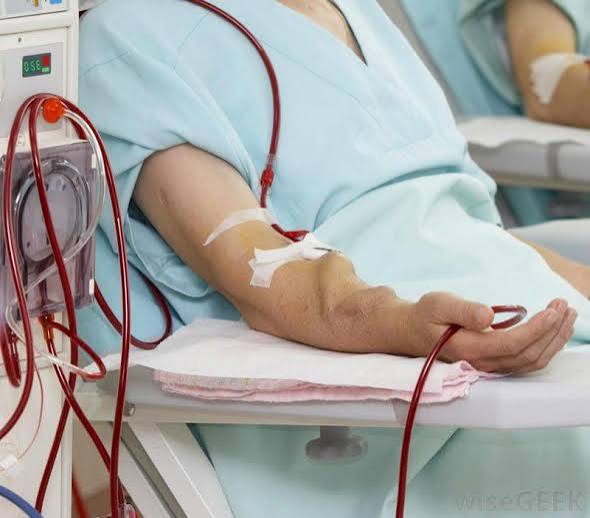
The choice between hemodialysis and peritoneal dialysis is one of the most important decisions a person approaching ESRD makes — ideally made months before dialysis is urgently needed, during the late CKD stage 4 or early stage 5 period when there is time for education, access creation, and training. Both modalities achieve adequate dialysis in most patients, but they differ significantly in mechanism, schedule, access type, lifestyle impact, and the patient characteristics for which each is better suited. Hemodialysis is performed using a dialysis machine that circulates blood from the patient’s body, through an external filter (dialyzer), and back — typically three times per week in four-hour sessions at a dialysis center, or daily or nocturnal sessions for home hemodialysis. It requires a vascular access — either an arteriovenous fistula (AVF, the gold standard), an arteriovenous graft (AVG), or a central venous catheter (CVC) — and is performed by dialysis staff at a center or by trained patients at home. Hemodialysis provides intensive intermittent clearance — high-dose removal of toxins and fluid three times weekly, with periods of toxin and fluid accumulation between sessions. Peritoneal dialysis is performed by the patient at home (or wherever they are) using the peritoneal cavity as the dialysis chamber: dialysate solution is instilled through a surgically placed abdominal catheter, left in the peritoneum for a dwell time (during which waste products move from the blood into the dialysate by diffusion and osmosis), then drained and replaced. PD is typically performed daily — either as continuous ambulatory peritoneal dialysis (CAPD, manual exchanges 3–5 times per day) or as automated peritoneal dialysis (APD, machine-performed overnight exchanges). PD provides gentler, more continuous clearance with less day-to-day fluid and toxin fluctuation than intermittent hemodialysis, and it allows patients to maintain employment, travel, and daily activities without the three-weekly in-center schedule constraint. PD is better suited to patients with residual kidney function (PD better preserves residual function than HD), those with poor vascular access, and those who prefer home therapy; it is less suitable for those with prior abdominal surgery (adhesions limiting peritoneal surface), hernias, or inflammatory bowel disease. The detailed comparison of hemodialysis and peritoneal dialysis from a patient perspective is in the peritoneal dialysis explained guide. The NKF patient resources on choosing a dialysis modality are at the NKF dialysis information page.
When Dialysis Is Needed: Recognizing the Right Time to Start
The timing of dialysis initiation is a nuanced clinical decision that balances the risks of uremic complications from delayed start against the risks and burdens of dialysis itself — a decision guided by symptoms, laboratory values, and clinical trajectory rather than by a single eGFR threshold. The historical practice of initiating dialysis when eGFR falls below 10 mL/min/1.73m² regardless of symptoms has been refined by evidence showing that early (asymptomatic) dialysis start does not improve outcomes compared to symptom-guided initiation; the IDEAL trial and subsequent studies found no mortality benefit from early vs. late dialysis start in asymptomatic patients, suggesting that starting dialysis at eGFR 8–10 in a well-controlled patient without uremic symptoms is not superior to waiting until eGFR reaches 5–7 with symptom guidance. Current KDIGO guidance recommends dialysis initiation when any of the following occur: signs or symptoms of uremia (uremic pericarditis, encephalopathy, unexplained weight loss, nausea/vomiting not otherwise explained, peripheral neuropathy attributable to uremia); volume overload refractory to diuretics; progressive malnutrition despite dietary counseling; hyperkalemia not controlled by medication and diet; or severe metabolic acidosis. When eGFR falls below 6–8 mL/min/1.73m² even without symptoms, many nephrologists recommend preparing access and planning start within weeks regardless, as rapid deterioration is unpredictable at this level. The key principle is that dialysis access should be created and dialysis modality should be chosen well before the threshold — AVF creation requires 3–6 months of maturation time before it can be used; PD catheter placement requires 2–4 weeks before the first exchange. Patients who present to dialysis urgently (as an emergency, without pre-planned access) face a significantly worse first-year prognosis than those who start planned — a strong argument for early dialysis education and access creation in CKD stage 4. For the complete guide to preparing for dialysis before the start date — the access surgery, dietary preparation, education, and planning that optimize outcomes — the preparing for dialysis guide covers every step. The StatPearls review of dialysis indications and management is available at the StatPearls hemodialysis clinical review.
What Quality of Life on Dialysis Looks Like
Quality of life on dialysis is highly variable and depends significantly on pre-dialysis preparation, modality choice, access function, clinical comorbidities, and psychosocial support — but the average experience is substantially better than the dire picture often assumed by newly diagnosed CKD patients who have not yet met well-established dialysis patients. Most people on well-established hemodialysis describe the dialysis schedule (three sessions per week, four hours each) as the most significant lifestyle constraint — the sessions themselves involve sitting or lying while connected to the machine, with access to reading, television, phone, or sleep, and are not painful for people with functioning fistulas. Fatigue in the hours following hemodialysis sessions is common — residual effects of fluid removal and the physiological stress of the treatment — but most patients recover within several hours and function normally on non-dialysis days. Diet restrictions are a persistent quality of life factor: potassium, phosphorus, fluid, and sodium restrictions are stricter on hemodialysis than pre-dialysis CKD, because the kidney’s remaining regulatory capacity is absent and the removal of these substances is limited to the three dialysis sessions per week. The between-dialysis potassium and fluid accumulation places limits on fruits, vegetables, dairy, and fluid intake that are meaningful and require ongoing dietary vigilance. People on peritoneal dialysis typically report better quality of life scores than in-center hemodialysis patients in surveys — the daily gentle nature of PD, home setting, and elimination of the three-weekly center schedule allows greater flexibility for work and social activities, though the daily exchange schedule (for CAPD) and the permanent abdominal catheter have their own quality of life impacts. The detailed account of daily life, dietary restrictions, travel, exercise, and emotional wellbeing on dialysis is in the life on dialysis guide. The KDIGO CKD clinical guidelines addressing dialysis initiation and management are at the KDIGO CKD guidelines page.
Sources: NIDDK — Dialysis · NKF — Dialysis · KDIGO CKD Guidelines · StatPearls — Hemodialysis
Dialysis Access: Fistulas, Grafts, and Catheters
Vascular access — the means by which blood is removed from and returned to the body during hemodialysis — is one of the most important determinants of hemodialysis outcomes and one of the most common sources of complications in people on hemodialysis. Creating the right access in advance and protecting it from damage or infection is a priority in late CKD and early dialysis care. Arteriovenous fistula (AVF) is the gold-standard vascular access for hemodialysis — created surgically by connecting an artery directly to a vein (usually the radial artery to the cephalic vein at the wrist, or the brachial artery to the cephalic or basilic vein at the elbow), causing the vein to enlarge and thicken (mature) over 3–6 months into a vessel strong enough to withstand the repeated needle cannulation required for hemodialysis. AVFs have the lowest infection rate of any access type, the longest patency (usability without intervention), and the best outcomes data — “Fistula First” campaigns have driven AVF creation rates to 50–70% among new HD patients in the US and even higher in Europe and Asia. The main disadvantage of the AVF is the 3–6 month maturation period that requires creation 3–6 months before the anticipated dialysis start, and the failure-to-mature rate (approximately 20–40% of AVFs do not mature adequately for use). Arteriovenous graft (AVG) — a synthetic loop or bridge connecting artery to vein — can be used within 2–4 weeks of creation (or immediately for some “early cannulation” grafts) and has higher blood flow than central catheters, but a higher infection rate than AVF and typically shorter long-term patency due to neointimal hyperplasia at the venous anastomosis. Grafts are used when patients have veins unsuitable for fistula creation. Central venous catheter (CVC) — a dual-lumen catheter tunneled under the skin and inserted into the internal jugular vein to the right atrium — can be used immediately upon placement for urgent or planned dialysis start, but has the highest infection rate of all access types (catheter-related bloodstream infections are a leading cause of dialysis hospitalizations and deaths), the poorest blood flow rates, and the highest rates of central vein stenosis from repeated central venous access. CVCs are appropriate as a bridge to fistula maturation or as permanent access in patients with no other option, but every effort should be made to transition from catheter to AVF or AVG as quickly as possible. For patients approaching dialysis, access creation planning should begin at CKD stage 4 — ideally at eGFR 20–25 — to allow time for fistula maturation and avoid catheter-dependent dialysis starts. People being told that dialysis is approaching should ask their nephrologist: “When should I see a vascular surgeon about access creation?” The NKF’s access education resources are at the NKF dialysis access page.
Common Complications of Dialysis and How They Are Managed
Dialysis maintains life in people with ESRD but is associated with a range of complications that require ongoing monitoring and management — complications that are much better managed when patients understand what to watch for and when to seek care. Intradialytic hypotension (low blood pressure during hemodialysis sessions) is the most common acute complication of hemodialysis, occurring in 20–30% of sessions in some populations — caused by rapid fluid removal exceeding the patient’s capacity for circulatory refilling, often in combination with antihypertensive medications taken before dialysis. Symptoms include dizziness, nausea, cramping, and loss of consciousness. Management includes slowing the ultrafiltration rate, placing the patient in a recumbent position, and administering saline; longer or more frequent dialysis sessions (including home hemodialysis) reduce the amount of fluid removed per session and significantly reduce intradialytic hypotension frequency. Access complications — including fistula stenosis, thrombosis, aneurysm, and infection — are among the most common reasons for dialysis-related hospitalization. AVF stenosis typically presents as decreased access blood flow or difficulty with cannulation and is treated with balloon angioplasty; thrombosis may require surgical thrombectomy. Infection of grafts or catheters requires prompt antibiotic treatment and often access removal. Dialysis adequacy — measured by Kt/V (the ratio of urea clearance to body water volume) — must be maintained above 1.2 for three-times-weekly hemodialysis to avoid the consequences of inadequate dialysis (increasing uremia, malnutrition, cardiovascular events, death). Monthly Kt/V measurements are standard, and adjustments to session length, blood flow rate, or dialyzer size are made if adequacy falls. Cardiovascular disease is the leading cause of death in dialysis patients — accounting for approximately 50% of all-cause mortality in ESRD — driven by the combination of ESRD-associated cardiovascular risk factors (hypertension, anemia, uremic toxin-mediated cardiomyopathy, vascular calcification from hyperphosphatemia) and the hemodynamic stress of intermittent hemodialysis on a vulnerable cardiovascular system. Infections — access infections, peritonitis in PD, and pneumonia — are the second leading cause of death in dialysis patients and a major source of hospitalizations. Vaccination (influenza, pneumococcal, hepatitis B, COVID-19) is strongly recommended for all dialysis patients and substantially reduces infection-related mortality. The comprehensive KDIGO dialysis management guidelines are available at the KDIGO CKD guidelines.
Diet on Dialysis: What Changes and Why
Dietary management on dialysis is significantly more restrictive than pre-dialysis CKD dietary guidance — because dialysis only removes toxins and fluid during the treatment sessions (3 per week for hemodialysis), the accumulation between sessions must be limited by dietary restriction. The four main dietary constraints on dialysis are potassium, phosphorus, fluid, and sodium. Potassium restriction is critical on hemodialysis: without functioning kidneys, potassium accumulates between sessions to potentially life-threatening levels (hyperkalemia causing cardiac arrhythmias), and high-potassium foods — bananas, oranges, potatoes, tomatoes, dairy, dried fruits, nuts, and many vegetables — must be strictly limited. The permitted potassium intake for most hemodialysis patients is approximately 2,000–3,000 mg/day, compared to the recommended 4,700 mg/day for the general population. Phosphorus restriction is required because dialysis removes only a fraction of the phosphorus that kidneys would normally excrete daily; hyperphosphatemia drives secondary hyperparathyroidism, vascular calcification, and cardiovascular death on dialysis. High-phosphorus foods (dairy, nuts, seeds, dark-colored colas, processed foods with phosphate additives) must be limited and phosphate binders are taken with every meal to bind dietary phosphorus in the gut before absorption. Fluid restriction on hemodialysis — typically limiting intake to 1,000–1,500 mL/day including water from food — prevents excessive interdialytic fluid gain (the weight gained between sessions from fluid intake minus urine output) that causes volume overload, hypertension, and heart failure. Patients who still produce some urine are allowed slightly more fluid. Sodium restriction drives thirst and worsens fluid retention; keeping sodium below 2,000 mg/day reduces fluid gain between sessions. Peritoneal dialysis patients generally have somewhat less restrictive dietary requirements than hemodialysis patients because PD provides continuous daily solute and fluid clearance. A renal dietitian specialized in dialysis nutrition is an essential member of the dialysis team — regular dietary counseling, phosphate binder adjustment, and nutritional status monitoring (serum albumin as a malnutrition marker) are standard parts of dialysis care. The questions every patient should ask before starting dialysis — about access, modality choice, diet, medications, transplant waitlisting, and quality of life — are covered in the questions to ask about dialysis or transplant guide. For people facing dialysis decisions who want comprehensive preparation guidance, the preparing for dialysis patient guide covers everything from access surgery planning to dietary preparation.
People approaching dialysis — or newly started — benefit most from connecting with an experienced dialysis nurse educator, a renal dietitian, and whenever possible with other patients who have been on dialysis for several years and can speak to the real-world experience of managing treatment schedules, dietary changes, access care, and the emotional adjustment to life on dialysis. Kidney disease support organizations including the National Kidney Foundation offer peer mentorship programs that pair new dialysis patients with experienced ones — a resource that complements clinical care with practical lived experience. The NIDDK’s detailed patient resources covering dialysis options, access, and life on treatment are available at the NIDDK dialysis page. For the complete guide to what life on dialysis actually looks like day to day — employment, travel, exercise, relationships, and emotional wellbeing — the life on dialysis guide provides the comprehensive patient perspective that clinical resources rarely offer in full.
People with end-stage kidney disease who are considering their options should know that dialysis, when started with good preparation and maintained with adequate adherence, allows most patients to live active, meaningful lives for years to decades — the median survival on dialysis varies considerably by age and comorbidity, but many patients dialyze successfully for 10–20 years or longer. Transplantation, where eligible, offers better long-term survival than dialysis for most patients; the kidney transplant pathway — evaluation, waitlisting, and living versus deceased donor options — is covered in the kidney transplant guide.
My nephrologist told me eighteen months ago that I’d likely need dialysis within a year, and I spent the first six months in complete denial — avoiding the education appointments and refusing to discuss access surgery. This article captures exactly why that denial is so dangerous. By the time I finally agreed to see the vascular surgeon my eGFR was at 9 and there wasn’t enough time for a fistula to mature properly — I ended up starting dialysis with a catheter, which I’ve now had for four months while waiting for my fistula to be ready. The complications section is real — I’ve had one catheter infection already that required two weeks of IV antibiotics and a near-hospital admission. If I had agreed to fistula creation when my nephrologist first recommended it at eGFR 20, I would have had a working fistula ready before I needed it. For anyone reading this who is in CKD stage 4 and has been told dialysis may be coming — please take the access creation conversation seriously much earlier than I did.
Excellent patient-centered overview of dialysis. The timing of dialysis initiation section accurately reflects the current evidence — the IDEAL trial data did fundamentally change practice away from early asymptomatic starts, but the caveat about having access ready before symptoms develop remains essential. The practical problem is that patients hear ‘you don’t need to start dialysis yet’ and interpret this as ‘I don’t need to see the vascular surgeon yet,’ when in fact the access creation window should be several months earlier than the anticipated symptom-guided start. I would add one practical point for patients: when your nephrologist says eGFR 20 and access referral, do not wait until you feel worse to make the vascular surgery appointment — the surgical waiting lists in many centers are 4-8 weeks alone, and fistula maturation adds another 3-6 months. The entire preparation timeline can easily exceed 6-9 months from referral to first use, meaning access conversation should start at eGFR 25-30 in many patients.
Thomas, your experience with catheter-dependent dialysis start — and the infection that followed — is unfortunately a pattern that could have been avoided with earlier access creation, and your message to other readers in CKD stage 4 is exactly right. The catheter infection risk is not a rare edge case: catheter-related bloodstream infections occur at a rate of approximately 1.5-3 per 1,000 catheter-days and are one of the leading preventable causes of dialysis hospitalization and death. Every week of catheter use that could be avoided by earlier fistula creation represents meaningful risk reduction. Dr. Diallo’s point about the cumulative timeline — vascular surgery waiting list plus maturation time — is clinically critical and underappreciated by most patients who have not navigated the system before. A useful rule of thumb: if your nephrologist says ‘you’ll need dialysis within 1-2 years,’ the vascular surgery referral should happen at that appointment, not when dialysis feels imminent.