
SGLT2 inhibitors — the drug class that includes empagliflozin (Jardiance), dapagliflozin (Farxiga), canagliflozin (Invokana), and ertugliflozin (Steglatro) — have become one of the most clinically significant developments in diabetes pharmacotherapy of the past decade, distinguished from all other diabetes medication classes by three features that make them pharmacologically unique: they lower blood glucose through an entirely insulin-independent mechanism, they produce benefits in heart failure and chronic kidney disease that extend far beyond their glucose-lowering effect, and they are the only diabetes drug class that causes weight loss and blood pressure reduction as direct pharmacological consequences of their mechanism rather than as secondary effects. Understanding SGLT2 inhibitors accurately — what they do in the body, what the cardiovascular and renal evidence actually shows, and what the realistic side effect experience involves — enables adults with Type 2 diabetes and their prescribers to make well-informed decisions about whether this class should be part of their treatment regimen.
SGLT2 inhibitors reduce HbA1c by approximately 0.5–1.0 percentage points as monotherapy or add-on therapy and lower fasting glucose by 20–30 mg/dL. In the EMPA-REG OUTCOME, CANVAS, DECLARE-TIMI 58, and CREDENCE cardiovascular outcome trials, SGLT2 inhibitors demonstrated significant reductions in cardiovascular death, heart failure hospitalization, and worsening kidney disease in adults with Type 2 diabetes — benefits that occur in addition to and partly independently of blood glucose lowering. The DAPA-HF and EMPEROR-Reduced trials established that SGLT2 inhibitors reduce heart failure hospitalization and cardiovascular death even in patients without diabetes, broadening their clinical indication beyond diabetes management.
How SGLT2 Inhibitors Work: The Kidney Glucose Mechanism
The mechanism of SGLT2 inhibitors is fundamentally different from every other diabetes medication class — it operates entirely within the kidney and does not involve insulin, glucose metabolism in muscle or liver, or any other aspect of the central glucose regulatory system:
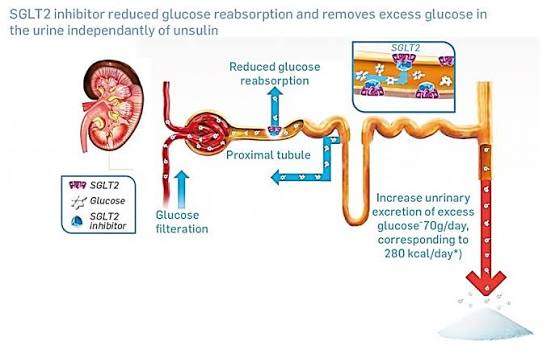
- Normal kidney glucose handling: The kidneys filter approximately 180 grams of glucose from the bloodstream daily through the glomerulus — equivalent to a full day’s dietary carbohydrate for most adults. Under normal circumstances, virtually all of this filtered glucose is reabsorbed back into the bloodstream as the filtrate passes through the kidney tubules, primarily via the SGLT2 (sodium-glucose cotransporter 2) protein in the proximal tubule. The SGLT2 protein accounts for approximately 90% of glucose reabsorption from the kidney filtrate; SGLT1 in the distal tubule handles most of the remaining 10%. This near-complete glucose reabsorption means that normal urine contains no measurable glucose — the body conserves all filtered glucose as a survival adaptation developed in evolutionary contexts where caloric scarcity was the norm.
- The SGLT2 inhibitor mechanism: SGLT2 inhibitor drugs block the SGLT2 protein in the proximal tubule, preventing it from reabsorbing filtered glucose. With SGLT2 blocked, approximately 50–90 grams of glucose per day passes into the urine rather than being returned to the bloodstream — directly reducing blood glucose, independent of any change in insulin secretion, insulin sensitivity, or glucose production. The glucose that exits in the urine represents approximately 200–360 calories per day of caloric loss, which explains why SGLT2 inhibitors cause weight loss (the body loses calories in the urine) and why they lower blood glucose even in patients with very low insulin secretion capacity (since the mechanism is entirely insulin-independent).
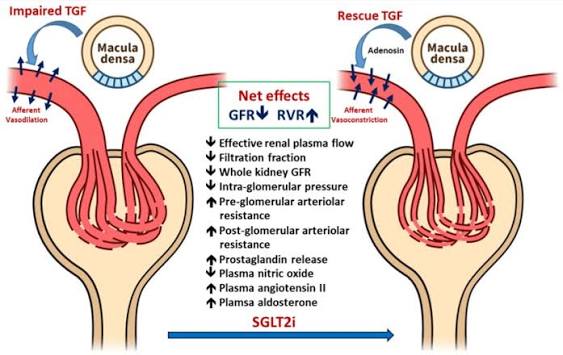
- Secondary hemodynamic and metabolic effects: The excretion of glucose with SGLT2 inhibition is coupled with sodium excretion (SGLT2 transports both sodium and glucose), producing a mild osmotic diuresis that reduces blood volume and blood pressure — explaining the blood pressure lowering observed with SGLT2 inhibitors independent of their glucose effect. The mild volume contraction also reduces cardiac preload, which may contribute to the heart failure benefit through a direct hemodynamic mechanism in addition to whatever cardiac protective effects the drug class produces through other pathways. The metabolic shift induced by SGLT2 inhibition (lower insulin levels needed, modest ketonemia from increased fatty acid oxidation) has been proposed as a mechanism for the cardiovascular and renal benefits that extend beyond what glucose lowering alone would predict.
Cardiovascular and Renal Benefits: The Evidence
The most clinically distinctive feature of SGLT2 inhibitors is the breadth and robustness of their cardiovascular and renal protection evidence — benefits that have transformed the drug class from a glucose-lowering add-on to a disease-modifying treatment for heart failure and chronic kidney disease that is now recommended in these conditions independent of diabetes status:
- Heart failure benefit — the strongest cardiovascular signal: The EMPA-REG OUTCOME trial (2015) first demonstrated that empagliflozin reduced cardiovascular death and heart failure hospitalization in adults with Type 2 diabetes and established cardiovascular disease. Subsequent analyses showed the heart failure benefit was the dominant driver of the cardiovascular mortality reduction — not atherosclerotic event reduction (which was more pronounced with GLP-1 receptor agonists in their trials). The DAPA-HF and EMPEROR-Reduced trials subsequently demonstrated that dapagliflozin and empagliflozin respectively reduced heart failure hospitalization and cardiovascular death in adults with heart failure with reduced ejection fraction (HFrEF), regardless of whether they had diabetes — the first time any diabetes medication was shown to benefit heart failure patients without diabetes. SGLT2 inhibitors are now included in heart failure treatment guidelines independently of diabetes status, representing one of the most significant expansions of a diabetes drug class in medical history.
- Chronic kidney disease protection: The CREDENCE trial showed that canagliflozin significantly reduced the risk of end-stage kidney disease, dialysis, kidney transplant, or death from kidney or cardiovascular causes in adults with Type 2 diabetes and chronic kidney disease. The DAPA-CKD trial confirmed similar renal protection with dapagliflozin in adults with chronic kidney disease with and without diabetes. These renal outcome data established SGLT2 inhibitors as recommended first-line treatment for diabetic kidney disease in the 2022 ADA Standards of Care — positioned even earlier in the treatment algorithm for patients with renal disease than their blood glucose lowering alone would justify. The EMPA-KIDNEY trial (2022) further confirmed empagliflozin’s renal protective effect in a broad chronic kidney disease population, cementing the class-level renal benefit across multiple agents and patient types.
- Atherosclerotic cardiovascular event reduction: While the heart failure and renal benefits are the most robustly established cardiovascular benefits of SGLT2 inhibitors, the CANVAS trial and EMPA-REG OUTCOME trial also showed reductions in MACE (major adverse cardiovascular events) in patients with established cardiovascular disease. This atherosclerotic benefit appears somewhat weaker and less consistent than the heart failure and renal protection signals — suggesting that SGLT2 inhibitors and GLP-1 receptor agonists have complementary rather than identical cardiovascular profiles, with GLP-1 agents providing stronger atherosclerotic protection and SGLT2 inhibitors providing stronger heart failure and renal protection. Many guidelines now recommend considering combination therapy (a GLP-1 receptor agonist plus an SGLT2 inhibitor) for patients with high cardiovascular risk and multiple comorbidities precisely to capture both mechanisms of protection simultaneously. For the comprehensive picture of how SGLT2 inhibitors fit within the full diabetes medication landscape — and when they are combined with metformin, GLP-1 medications, and insulin — see our diabetes medications overview. The GLP-1 medications with complementary cardiovascular protection are described in our GLP-1 medications and diabetes guide. The ADA’s medication management guidance, the NIDDK’s diabetes treatment resources, and the FDA’s SGLT2 inhibitor trial information provide authoritative clinical information on this drug class. The dietary approach that works alongside SGLT2 inhibitor therapy is in our diabetes meal planning guide.
SGLT2 Inhibitor Side Effects and Safety Considerations
The side effect profile of SGLT2 inhibitors is distinct from other diabetes medication classes and reflects their kidney-based mechanism — understanding these effects, their frequency, and their management prevents unnecessary discontinuation and ensures appropriate precautions are taken:
- Genital mycotic infections (most common significant side effect): The increased glucose concentration in the urine produced by SGLT2 inhibition creates an environment that promotes growth of Candida species in the genital area — causing genital yeast infections (vulvovaginal candidiasis in women, balanitis in men) in a meaningful proportion of patients. In clinical trials, genital mycotic infections occurred in approximately 10–15% of women and 4–6% of men taking SGLT2 inhibitors compared to 3–4% and 0.5–1% respectively with placebo. Most infections are mild to moderate and respond to standard antifungal treatment without requiring SGLT2 inhibitor discontinuation. Preventive measures include regular genital hygiene, promptly treating any initial infection, and considering whether recurrent infections are a signal to discuss alternative agents with the prescriber. Women with a history of recurrent yeast infections before starting SGLT2 inhibitor therapy should discuss this history with their prescriber when the medication is being considered, as they may have higher risk of recurrent infections on the medication.
- Urinary tract infections: Urinary tract infections are modestly more common with SGLT2 inhibitors than placebo in clinical trials (approximately 7–9% vs. 5–6%), reflecting the increased urinary glucose that can promote bacterial growth in the bladder. Most UTIs are uncomplicated lower urinary tract infections that respond to standard short-course antibiotic treatment. Rare but more serious: pyelonephritis (kidney infection) and urosepsis have been reported — patients experiencing symptoms of upper urinary tract infection (fever, flank pain, rigor) should seek prompt medical attention. Adequate hydration (which dilutes urinary glucose concentration) is the most practical preventive measure for SGLT2 inhibitor-associated urinary tract infection risk.
- Volume depletion and blood pressure effects: SGLT2 inhibitors produce osmotic diuresis (increased urine output from glucose excretion) alongside the blood pressure-lowering effects described above. In most patients this is beneficial — modest blood pressure reduction is a desired cardiovascular effect. However, in patients who are already on diuretics, have low baseline blood pressure, are elderly, or are dehydrated, the additional volume loss from SGLT2 inhibition can produce symptomatic hypotension (dizziness, lightheadedness, falls). When starting SGLT2 inhibitors, clinicians typically assess volume status, current blood pressure medications, and baseline blood pressure to anticipate whether dose reduction of concurrent diuretics or blood pressure medications may be needed. Patients taking diuretics alongside SGLT2 inhibitors should monitor for signs of excessive volume depletion and contact their prescriber if they experience symptoms of dizziness or lightheadedness upon standing.
- Diabetic ketoacidosis (rare but serious): SGLT2 inhibitors have been associated with a rare form of diabetic ketoacidosis (DKA) — characterized by elevated ketones and metabolic acidosis — that can occur at blood glucose levels that are not markedly elevated (euglycemic DKA, or “near-normal blood glucose DKA”). This occurs because SGLT2 inhibition lowers blood glucose while simultaneously shifting metabolism toward fat oxidation and ketone production, and because the normal early warning sign of DKA (very high blood glucose) may be masked by the glucose-lowering effect of the medication. Risk factors for SGLT2 inhibitor-associated DKA include prolonged fasting, severe illness or surgery, very low-carbohydrate diet, alcohol use, and extremely low insulin production capacity. SGLT2 inhibitors should be held before major surgical procedures (typically 3–4 days before elective surgery) and during serious illness, prolonged fasting, or other situations that increase ketone production. Symptoms of DKA (nausea, vomiting, abdominal pain, shortness of breath, confusion) warrant immediate medical attention and blood or urine ketone testing, regardless of blood glucose level, in patients taking SGLT2 inhibitors.
- Lower limb amputation risk (canagliflozin-specific concern): The CANVAS trial of canagliflozin identified a approximately twofold increased risk of lower limb amputations compared to placebo — primarily toe and foot amputations in adults with peripheral vascular disease or prior amputation history. This finding has not been replicated with the same statistical significance in empagliflozin or dapagliflozin outcome trials, suggesting it may be partly agent-specific or related to the specific high-cardiovascular-risk population studied. Current guidance recommends monitoring for signs of foot problems in all patients on SGLT2 inhibitors and exercising extra caution with canagliflozin in patients with peripheral vascular disease or prior lower limb amputation. The FDA has included amputation risk warning information in canagliflozin prescribing information; this issue is less prominent in current prescribing discussions given that empagliflozin and dapagliflozin have not shown comparable signals.
- Hypoglycemia risk: Like GLP-1 receptor agonists, SGLT2 inhibitors used alone have very low hypoglycemia risk because their mechanism is independent of insulin secretion. When combined with insulin or sulfonylureas, dose reductions of the insulin or sulfonylurea are typically needed as blood glucose improves — the prescribing clinician will guide this adjustment process.
The Specific SGLT2 Inhibitor Agents: What Distinguishes Each
Four SGLT2 inhibitors are currently approved in the United States, with some differences in their evidence base, approved indications, and relevant safety considerations:
- Empagliflozin (Jardiance): One of the two most commonly prescribed SGLT2 inhibitors in current clinical practice (alongside dapagliflozin). FDA-approved for Type 2 diabetes, reduction of cardiovascular death in adults with Type 2 diabetes and cardiovascular disease, heart failure (both reduced and preserved ejection fraction) in adults with and without diabetes, and chronic kidney disease. Lowest dose: 10mg daily; higher dose 25mg for additional glucose lowering. The EMPA-REG OUTCOME trial’s cardiovascular death reduction and the EMPEROR-Reduced/EMPEROR-Preserved trials’ heart failure benefits established empagliflozin as one of the best-studied SGLT2 inhibitors for both cardiovascular and heart failure indications.
- Dapagliflozin (Farxiga): The other most commonly prescribed SGLT2 inhibitor; FDA-approved for Type 2 diabetes, cardiovascular death or worsening heart failure in adults with heart failure (with and without diabetes), and chronic kidney disease in adults with and without diabetes. Available at 5mg and 10mg daily. The DAPA-HF trial’s heart failure benefit in non-diabetic patients and the DAPA-CKD trial’s renal protection in non-diabetic patients with chronic kidney disease broadened dapagliflozin’s clinical role beyond diabetes management. Dapagliflozin is also the first SGLT2 inhibitor approved for certain types of heart failure with preserved ejection fraction (HFpEF), the most common form of heart failure in older adults — an indication where few other medications have shown benefit.
- Canagliflozin (Invokana): The first SGLT2 inhibitor approved in the United States (2013); the agent with the most complete cardiovascular and renal trial data in the form of the CANVAS trial (cardiovascular outcomes) and the CREDENCE trial (renal outcomes in patients with diabetic kidney disease). The lower limb amputation signal from the CANVAS trial has reduced its use relative to empagliflozin and dapagliflozin in patients with peripheral vascular disease, though it remains appropriate and commonly used for patients without this risk factor. Available in 100mg and 300mg daily doses.
- Ertugliflozin (Steglatro): The most recently approved and least commonly used SGLT2 inhibitor in the US; has completed a cardiovascular outcome trial (VERTIS CV) that showed cardiovascular safety but did not demonstrate statistically significant superiority over placebo for MACE outcomes. Available in 5mg and 15mg daily doses. Less differentiated from the class leaders on either efficacy or approved indications, ertugliflozin is generally prescribed less frequently than the other three agents. The complete framework for understanding how SGLT2 inhibitors compare to and combine with GLP-1 receptor agonists, metformin, insulin, and sulfonylureas — and how to navigate the full diabetes medication landscape — is in our diabetes medications overview. The GLP-1 medications that are frequently combined with SGLT2 inhibitors for complementary cardiovascular protection are covered in our GLP-1 medications and diabetes guide. The first-line metformin that most patients are on when SGLT2 inhibitors are added is described in our Metformin: What Adults Should Know guide. The safety guidance that applies to all diabetes medications — including what to do about missed doses, illness protocols, and medication safety monitoring — is in our diabetes medication safety guide. The ADA’s SGLT2 inhibitor guidance, the NIDDK’s diabetes treatment resources, and the CDC’s diabetes medication management resources provide the authoritative clinical foundation for SGLT2 inhibitor prescribing and monitoring decisions that complement the individualized guidance of each patient’s healthcare team.
Who Should Take SGLT2 Inhibitors and When to Consider Them
The expanding evidence base for SGLT2 inhibitors has made them appropriate for several distinct patient populations, each with a different primary rationale for use:
- Adults with Type 2 diabetes and established heart failure: SGLT2 inhibitors are now among the four foundational drug classes recommended for heart failure with reduced ejection fraction (HFrEF) in adults with Type 2 diabetes — alongside beta-blockers, ACE inhibitors/ARBs, and mineralocorticoid receptor antagonists. The magnitude of heart failure hospitalization reduction seen in the DAPA-HF and EMPEROR-Reduced trials (approximately 25–30% relative risk reduction) is comparable to or exceeding other heart failure medications added to this regimen. For adults with Type 2 diabetes who develop heart failure, adding an SGLT2 inhibitor is both a diabetes management decision and a heart failure management decision.
- Adults with Type 2 diabetes and chronic kidney disease (CKD): Current ADA and KDIGO (Kidney Disease: Improving Global Outcomes) guidelines recommend SGLT2 inhibitors for adults with Type 2 diabetes and CKD with eGFR 20 mL/min/1.73m² or above (the threshold below which glucose-lowering efficacy is diminished but renal protection may persist). The CREDENCE and DAPA-CKD trials showed meaningful slowing of kidney disease progression at levels that substantially alter the trajectory of diabetic nephropathy — reducing the rate of progression to end-stage kidney disease in a patient population with very limited alternative disease-modifying options. Renal protection with SGLT2 inhibitors in patients with CKD is one of the most clinically significant diabetes-adjacent benefits of the drug class and should be considered a primary indication for adults with diabetic kidney disease independent of their blood glucose control status.
- Adults with Type 2 diabetes and high cardiovascular risk seeking weight and blood pressure benefit: For adults with Type 2 diabetes who are on adequate blood glucose control with metformin and/or other agents but have elevated blood pressure and overweight/obesity, the SGLT2 inhibitor’s dual glucose-lowering, blood pressure-reducing, and weight-reducing effects make it a logical add-on that addresses multiple cardiovascular risk factors simultaneously. The average 2–4 kg weight loss and 3–4 mmHg systolic blood pressure reduction from SGLT2 inhibition are modest compared to intensive lifestyle intervention or GLP-1 medications, but they are meaningful, consistent, and additive to the metabolic benefit of improved blood glucose control. The complete understanding of SGLT2 inhibitors within the broader diabetes medication context — including how and why they are combined with GLP-1 receptor agonists, when they replace versus add to insulin, and how they compare in cost and access — is provided in our diabetes medications overview. The sulfonylurea guide covers the older drug class they frequently replace as second-line agents in cardiovascular risk populations: sulfonylureas: what patients should know. The dietary approach that supports SGLT2 inhibitor therapy and overall blood sugar management is in our diabetes meal planning guide, and the meal prep approach that creates the dietary consistency that maximizes medication benefit is in our meal prep for blood sugar control guide.
Sources: American Diabetes Association — Standards of Medical Care in Diabetes, SGLT2 inhibitor guidance; NIDDK — diabetes treatment resources; EMPA-REG OUTCOME, CANVAS, DECLARE-TIMI 58, CREDENCE, DAPA-HF, EMPEROR-Reduced, DAPA-CKD, EMPA-KIDNEY trial results; FDA prescribing information for empagliflozin, dapagliflozin, canagliflozin, and ertugliflozin; mechanistic pharmacology of SGLT2 inhibition; ADA/EASD consensus on SGLT2 inhibitor use in cardiovascular and renal disease; KDIGO guidelines on SGLT2 inhibitors in chronic kidney disease; heart failure society recommendations on SGLT2 inhibitor use.
Came across this while researching sglt2 inhibitors explained for a family member. The practical tips made this immediately actionable, not just theoretical. Shared this with three friends who are dealing with related issues. Very useful resource.
I shared this article on sglt2 inhibitors explained with my doctor and they appreciated the level of detail. I have tried following advice from several sources but this is most consistent with what my specialist told me. This is going into my health folder that I bring to every doctor’s visit.
I shared this article on sglt2 inhibitors explained with my doctor and they appreciated the level of detail. I have tried following advice from several sources but this is most consistent with what my specialist told me. Forwarding this to others in my support group who are dealing with similar issues.