
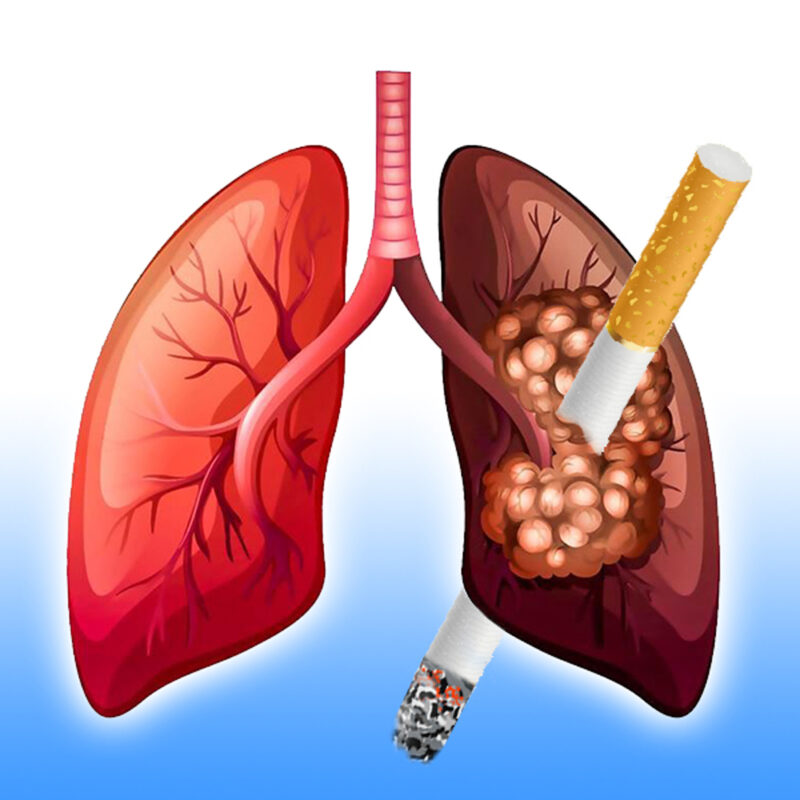
Tobacco smoking is the single largest preventable cause of cancer in the world. In high-income countries, it accounts for approximately 30% of all cancer deaths — more than any other single risk factor. The causal link between cigarette smoking and lung cancer was established by Doll and Bradford Hill in 1950 and confirmed by the US Surgeon General in 1964. More than six decades of subsequent research have only strengthened and expanded that conclusion.
What has changed is the scope. The 2014 US Surgeon General’s Report documented causal associations between smoking and at least 15 distinct cancer types — a list extending far beyond lung cancer. Tobacco is a system-wide carcinogen: its reach follows the route of carcinogen distribution through the body. Tissues directly bathed by tobacco smoke, and tissues receiving carcinogens through bloodstream delivery or excreted metabolites, all face elevated cancer risk.
This article examines the biology of tobacco carcinogenesis — the specific chemicals, the DNA damage mechanisms, the cancers caused, the dose-response relationships, and the evidence for what happens to cancer risk after cessation. These details matter not just for prevention messaging, but for clinical decisions about screening eligibility and cessation treatment.
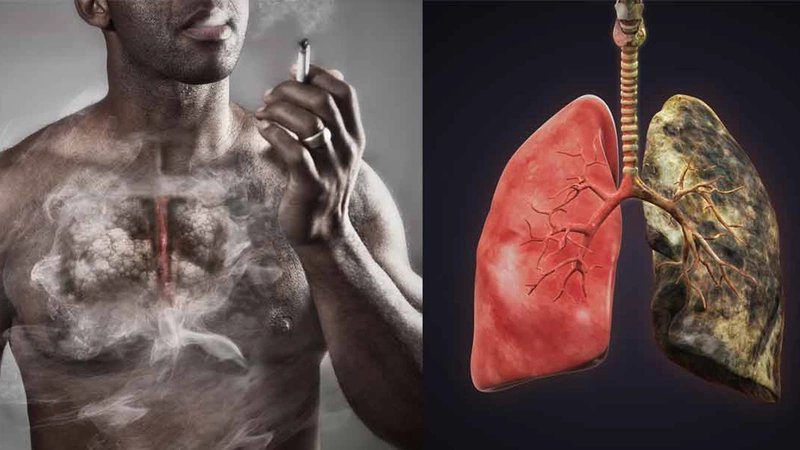
The Chemistry: 70+ Carcinogens in Tobacco Smoke
Tobacco smoke is a complex mixture of more than 7,000 chemicals, of which at least 70 are established carcinogens confirmed by IARC. The major categories:
- Polycyclic aromatic hydrocarbons (PAHs). Benzo[a]pyrene (B[a]P) forms bulky DNA adducts that produce specific G:C → T:A transversions at TP53 codons 175, 248, and 249 — the same mutation hotspots found in lung tumors from smokers, providing a direct molecular link between tobacco chemistry and cancer-driving mutations.
- Tobacco-specific nitrosamines (NNK, NNN). Formed specifically from nicotine during processing and combustion. Among the most potent lung carcinogens identified in tobacco smoke — and also present in smokeless tobacco, which is why chewing tobacco is also carcinogenic despite being uninhaled.
- Benzene. Causes acute myeloid leukemia through chromosomal aberrations in hematopoietic stem cells. Smokers have significantly higher circulating benzene levels than non-smokers — explaining how smoking causes a blood cancer unrelated to the lung.
- Formaldehyde. IARC Group 1 for nasopharyngeal cancer and leukemia.
- Heavy metals and inorganic carcinogens. Arsenic, cadmium, chromium VI, and nickel — all IARC Group 1 for lung cancer. Cadmium additionally accumulates in kidney tissue, contributing to renal cell carcinoma risk.
Why not every smoker develops cancer: Carcinogens require metabolic activation (Phase I enzymes: CYP1A1, CYP1B1, CYP2A6) and detoxification (Phase II: GSTM1, GSTT1, NAT2). Genetic polymorphisms in these enzymes create substantial inter-individual variation in carcinogen processing — a partial but not complete explanation for differential cancer susceptibility among smokers. It does not mean any genetic profile makes smoking safe.
How Tobacco Mutates DNA
COSMIC Signature 4 — the tobacco mutational fingerprint characterized by C>A transversions at specific trinucleotide contexts — is found in the genomes of over 96% of lung adenocarcinomas from smokers, and is also present in esophageal, liver, bladder, and other tobacco-related tumors. This is the direct molecular link between tobacco carcinogen chemistry and the mutations that drive cancer.
Each additional pack-year of smoking contributes approximately 150 additional mutations per tumor genome (Alexandrov et al., Science 2016). A typical lung adenocarcinoma from a smoker carries 10× or more mutations than one from a never-smoker.
Nicotine itself is not a carcinogen. It does not form DNA adducts. However, it activates nicotinic acetylcholine receptors on epithelial cells, stimulating proliferation, survival signaling (PI3K/AKT), and angiogenesis — acting as a tumor promoter that creates conditions favoring survival of already-initiated cells. Additional tobacco mechanisms include NF-κB inflammatory pathway activation, impaired mucociliary clearance (reducing the lung’s ability to clear carcinogens), and DNA repair inhibition by acrolein.
The 15+ Cancers Caused by Smoking
- Lung: 80–85% attributable to tobacco. Small cell lung cancer (SCLC) occurs in fewer than 5% of never-smokers — it is almost exclusively a tobacco-related malignancy.
- Larynx, pharynx, oral cavity: Directly bathed in tobacco smoke. 75–85% of laryngeal cancers are tobacco-attributable. Tobacco + alcohol creates 20–100× multiplied risk for head and neck cancers.
- Esophagus: Squamous cell carcinoma (direct exposure) and adenocarcinoma (GERD → Barrett’s progression).
- Stomach: Gastric cardia most strongly linked; carcinogens delivered via swallowed saliva.
- Pancreas: ~25–30% of pancreatic cancer cases attributable to tobacco; nitrosamines concentrate in the pancreas through biliary secretions.
- Kidney: ~1.5–2× increased renal cell carcinoma risk from cadmium accumulation and systemic carcinogen delivery.
- Bladder: Tobacco metabolites concentrate in urine, bathing the urothelium in carcinogens. Smoking accounts for ~50% of bladder cancer in men.
- Cervix: Tobacco metabolites found in cervical mucus; approximately doubles cervical cancer risk in women with persistent HPV infection.
- Acute myeloid leukemia: Benzene in tobacco smoke causes chromosomal damage in hematopoietic stem cells.
- Colorectal, liver, nasopharynx: All confirmed in USSG reports and IARC evaluations.
Dose-Response: Pack-Years and Risk
Pack-years = (packs per day) × (years of smoking). The relationship between pack-years and lung cancer risk is steep and dose-dependent.
The British Doctors Study — following 35,000 male physicians from 1951 to 2004 — provided definitive dose-response evidence: the longer and heavier the smoking, the higher the cancer risk across multiple sites; men who stopped at various ages showed progressive risk reduction.
A critical nuance: for lung cancer, duration of smoking is a more powerful predictor than intensity. Smoking for 40 years at 10 cigarettes/day carries higher lung cancer risk than smoking for 20 years at 20 cigarettes/day — the same 20 pack-years, but very different risk. This reflects the importance of cumulative time for the multi-hit mutation process: each additional year provides another opportunity for sequential mutations to accumulate in the same cell lineage.
No safe level: Research has not identified a threshold below which tobacco use carries no cancer risk. Light smokers (1–4 cigarettes/day) have measurably elevated cancer risk compared to never-smokers.
Not Just Cigarettes
Cigars and pipes. Cigar smokers who don’t inhale deeply still absorb carcinogens through oral and pharyngeal mucosa. Risk for head and neck cancers among habitual cigar smokers approaches that of cigarette smokers. Pipe smoking carries a similar cancer risk profile.
Smokeless tobacco (chew, dip, snuff, snus). IARC Group 1 carcinogen. Directly causally linked to oral cavity cancer, esophageal cancer, and pancreatic cancer. “Harm reduction” is valid only for lung cancer (not inhaled) — it is incorrect for the head/neck, esophageal, and pancreatic cancers that smokeless tobacco does cause.
E-cigarettes and vaping. Not carcinogen-free. E-cigarette aerosol contains formaldehyde (especially at high voltage), acrolein, diacetyl, heavy metals (nickel, chromium from heating coils), and tobacco-specific nitrosamines — but at much lower concentrations than combustible cigarettes. No long-term cancer outcome data yet exist (modern vaping began around 2010). For a current smoker, switching substantially reduces cancer risk. For a never-smoker, vaping is not risk-free.
Secondhand Smoke
IARC classified secondhand smoke as a Group 1 carcinogen in 2004. It causes lung cancer in non-smokers — approximately 7,000 non-smoker lung cancer deaths per year in the United States.
A counterintuitive finding: sidestream smoke — the smoke rising from the burning end of a cigarette between puffs — contains higher concentrations of certain carcinogens than the mainstream smoke inhaled by the active smoker, because it is produced at lower temperatures and passes through no filter. Passive exposure in enclosed spaces carries substantial carcinogen load.
Thirdhand smoke — residual tobacco contamination on surfaces, furniture, dust, and clothing — is an emerging area. Nitrosamines accumulate on surfaces and react with ambient compounds to form additional carcinogens. Evidence for direct cancer causation from thirdhand exposure is limited but accumulating.
When to Quit: The Cessation Evidence
After 10–15 years of not smoking, lung cancer risk falls to approximately half that of current smokers. It continues declining after 20 years — but never fully reaches the level of a lifetime never-smoker, because accumulated DNA mutations and epigenetic changes do not fully resolve.
From the British Doctors Study (Doll et al., BMJ 2004):
- Stopping at age 30: life expectancy approximates that of a never-smoker
- Stopping at age 40: gained ~9 years vs. continuing
- Stopping at age 50: gained ~6 years
- Stopping at age 60: still gained ~3 years
For other cancers: oral, laryngeal, and esophageal cancer risk begins falling within 5 years. Bladder cancer risk takes 10–15+ years because the urothelium continues excreting carcinogenic metabolites. There is no age at which cessation stops being beneficial.
Lung Cancer Screening for Former Smokers
USPSTF (2021) recommends annual low-dose CT (LDCT) for adults aged 50–80 with ≥20 pack-year history who currently smoke or quit within the past 15 years. The NLST trial demonstrated a 20% reduction in lung cancer mortality; the European NELSON trial demonstrated 26%. Screening finds cancers at earlier, more resectable stages.
Synergistic Exposures
Asbestos + smoking: A smoker has ~10× the lung cancer risk of a never-smoker; an asbestos-exposed worker has ~5×. Together: approximately 50–90 times the risk of an unexposed never-smoker. Asbestos fibers impair mucociliary clearance and create chronic inflammation that amplifies tobacco-induced DNA damage — far beyond what either exposure alone predicts.
Radon + smoking: Similarly multiplicative. A heavy smoker in a high-radon home faces dramatically elevated lung cancer risk compared to either exposure alone.
Alcohol + smoking (head and neck): Multiplicative risk for oral, pharyngeal, laryngeal, and esophageal cancers. Both carcinogens damage mucosal epithelium, and alcohol may impair DNA repair pathways that would otherwise compensate for tobacco-induced damage.
Who Should Be Screened for Lung Cancer
| Population | Recommendation |
|---|---|
| Age 50–80, ≥20 pack-years, current smoker or quit <15 years | Annual LDCT (USPSTF 2021) |
| Age <50 or <20 pack-years | LDCT not currently recommended; discuss with physician |
| Asbestos-exposed smoker | LDCT strongly indicated; discuss with occupational medicine |
| Former smoker with new cough, hemoptysis, or weight loss | Urgent clinical evaluation regardless of screening status |
Frequently Asked Questions
Is smoking the only cause of lung cancer?
No — but it causes 80–85% of cases. The remaining 15–20% occur in never-smokers and often have different molecular biology (EGFR mutations are more common in never-smoker adenocarcinomas). Radon gas, asbestos, air pollution, and secondhand smoke account for some never-smoker lung cancers.
Does vaping cause cancer?
No long-term cancer outcome data exist — modern vaping began around 2010. E-cigarettes contain carcinogens (formaldehyde, nitrosamines, heavy metals) at much lower concentrations than combustible cigarettes. They are not risk-free, but for a current smoker, switching substantially reduces cancer risk. For a never-smoker, vaping represents unnecessary risk.
How quickly does cancer risk fall after quitting?
It depends on the cancer type. Oral, laryngeal, and esophageal cancer risk begins declining within 5 years. Lung cancer risk falls by approximately 50% after 10–15 years of cessation. Bladder cancer risk takes 10–15+ years to decline significantly. Risk never returns to never-smoker baseline, but falls progressively with every additional year of not smoking.
Does smoking cause breast cancer?
The 2014 USSG Report noted emerging evidence of an association, particularly for women who began smoking before their first pregnancy. The causal link is not as firmly established as for the 15+ confirmed sites — evidence is suggestive rather than definitive.
Is one cigarette a day harmless?
No established safe threshold exists for tobacco use. Studies of light smokers (1–4 cigarettes/day) show significantly elevated cardiovascular risk and measurably elevated cancer risk compared to never-smokers. Very low consumption is less risky than heavy daily use, but is not without risk.
What is the most effective way to quit?
Combination therapy is more effective than any single approach. The most evidence-based strategies combine behavioral counseling with pharmacotherapy. Varenicline (Champix/Chantix) is the most effective single pharmacologic agent. Combination nicotine replacement therapy — patch plus rapid-delivery lozenge or gum — is more effective than patch alone.
Can ex-smokers be reassured by a normal chest X-ray?
No. Chest X-ray does not detect early-stage lung cancer reliably, and a normal X-ray does not eliminate lung cancer risk. Former smokers who qualify (age 50–80, ≥20 pack-years, current or quit <15 years) should undergo annual low-dose CT screening, which has been proven to reduce lung cancer mortality by 20–26% compared to X-ray.
The Bottom Line
The relationship between tobacco and cancer is the most studied causal relationship in cancer epidemiology — confirmed across 70+ years, multiple continents and study designs, and verified at the molecular level. The specific mutations that tobacco carcinogens produce in human DNA are identifiable by whole-genome sequencing and match the carcinogen’s known chemistry.
Thirty percent of all cancer deaths trace to a single modifiable behavior. Cessation at any age reduces risk. Screening with low-dose CT saves lives among former smokers who qualify. And the synergistic effects of tobacco with asbestos, radon, and alcohol mean that tobacco users with these co-exposures face substantially amplified risk that makes cessation even more consequential.
The biology is direct: carcinogens in tobacco smoke cause specific DNA mutations in vulnerable tissues, mutations that accumulate over decades until they transform a normal cell into a malignant one. Removing the carcinogen source interrupts that accumulation — at any point, at any age. The earlier the interruption, the greater the benefit.
This article is for educational purposes only and does not constitute medical advice. Individuals who smoke should consult a physician regarding cessation support and lung cancer screening eligibility. Do not delay medical evaluation based on information in this article.
- USSG. The Health Consequences of Smoking — 50 Years of Progress. 2014.
- Doll R, Peto R, et al. Mortality in relation to smoking: 50 years’ observations on male British doctors. BMJ. 2004;328(7455):1519.
- Alexandrov LB, et al. Mutational signatures associated with tobacco smoking in human cancer. Science. 2016;354(6312):618–622.
- IARC Working Group on the Evaluation of Carcinogenic Risks to Humans. Tobacco Smoke and Involuntary Smoking. IARC Monographs Vol 83. 2004.
- NLST Research Team. Reduced lung-cancer mortality with low-dose computed tomographic screening. N Engl J Med. 2011;365(5):395–409.
- de Koning HJ, et al. Reduced lung-cancer mortality with volume CT screening in a randomized trial (NELSON). N Engl J Med. 2020;382(6):503–513.
- USPSTF. Lung Cancer Screening Recommendation Statement. JAMA. 2021;325(10):962–970.
- ACS Cancer Facts & Figures 2024. American Cancer Society.
Thank you for covering smoking and cancer: how tobacco causes so thoroughly without being overly technical. I appreciated how the article addressed both the clinical side and the practical lifestyle adjustments. Forwarding this to others in my support group who are dealing with similar issues.
My cardiologist recommended I look into smoking and cancer: how tobacco causes and this article covered it perfectly. The article answered questions I didn’t even know I had until I started reading. I wish I had found this article when I was first diagnosed — would have saved a lot of confusion.
Finally a resource that explains smoking and cancer: how tobacco causes in plain language. It is refreshing to see an article that acknowledges individual variation rather than giving one-size-fits-all advice. Will definitely be coming back to this site for more health information.
This breakdown of smoking and cancer: how tobacco causes is exactly what patients need before a specialist appointment. What I liked most was that the article didn’t just say what to avoid — it also gave alternatives. I wish I had found this article earlier — would have saved a lot of confusion.
This breakdown of smoking and cancer: how tobacco causes is exactly what patients need before a specialist appointment. It is refreshing to see an article that acknowledges individual variation rather than one-size-fits-all advice. This is exactly why I prefer this website over generic health platforms.
Came across this while researching smoking and cancer: how tobacco causes for a family member. I especially valued the explanation of why these recommendations exist, not just what they are. This is going into my health folder that I bring to every doctor’s visit.