
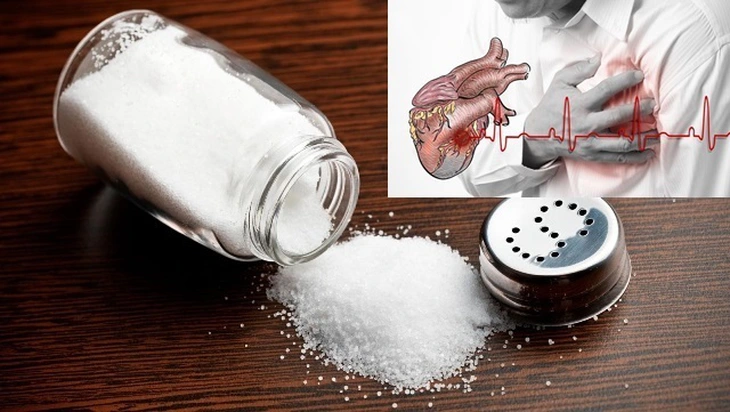
Salt and high blood pressure have one of the most thoroughly studied relationships in preventive medicine, yet the average American still consumes approximately 3,400 milligrams of sodium per day — nearly 50 percent above the recommended maximum of 2,300 mg and more than double the 1,500 mg target recommended for adults with hypertension. This gap between what public health guidelines advise and what most people actually eat is not primarily a matter of willpower or the salt shaker at the dinner table: approximately 70 to 75 percent of dietary sodium in the modern diet comes from processed foods, packaged products, and restaurant meals — sources where sodium content is largely invisible. Understanding why salt raises blood pressure, who is most vulnerable to its effects, and how to actually reduce dietary sodium in a practical way is one of the most actionable things anyone can do to manage or prevent high blood pressure.
How Salt Raises Blood Pressure
The primary mechanism through which dietary sodium raises blood pressure is straightforward: sodium draws water. When blood sodium concentration rises after a high-salt meal, the body responds by increasing thirst and retaining water to maintain osmotic balance. This sodium-driven water retention expands the volume of fluid in the vascular system, increasing cardiac preload and cardiac output, both of which raise blood pressure. In people with healthy kidneys and normal cardiovascular regulation, this pressure rise triggers compensatory natriuresis — the kidneys increase sodium and water excretion until blood volume and pressure return to normal. In people who are salt-sensitive, this compensatory mechanism is impaired, and sustained sodium intake sustains elevated blood pressure.
Beyond volume expansion, sodium elevates blood pressure through several additional mechanisms. Chronic high sodium intake activates the sympathetic nervous system, increasing heart rate, vasoconstriction, and renin release. High sodium also reduces the bioavailability of nitric oxide — the primary endothelium-derived vasodilator — by increasing oxidative stress in the vascular wall. When nitric oxide is less available, arteries cannot dilate as effectively in response to normal physiological signals, raising vascular resistance and blood pressure. Chronic high sodium intake also independently increases arterial stiffness through direct effects on smooth muscle cell function and extracellular matrix composition — a stiffness effect that can persist even when blood pressure is pharmacologically controlled.
What Is Salt Sensitivity and Who Has It?
Not everyone’s blood pressure responds equally to changes in dietary sodium, and this variation is captured by the concept of salt sensitivity. An individual is defined as salt-sensitive when their systolic blood pressure changes by 10 mmHg or more in response to controlled changes in sodium intake. By this definition, approximately 50 percent of people with established hypertension are salt-sensitive, and approximately 25 percent of people with normal blood pressure also show this pattern.
Salt sensitivity is substantially more common in older adults, in Black Americans, in people with chronic kidney disease, in people with diabetes mellitus, and in people with obesity. The higher prevalence of salt sensitivity in Black Americans explains in part why hypertension is more prevalent, more severe, and more refractory to treatment in this population, and why dietary sodium reduction and thiazide diuretics are especially effective antihypertensive strategies here. The physiological basis involves impaired renal sodium excretion at any given blood pressure, reduced nitric oxide production in response to high sodium, and heightened aldosterone responsiveness.
Critically, salt sensitivity is not merely a blood pressure phenotype — it is also an independent cardiovascular risk factor. A landmark follow-up study by Weinberger and colleagues demonstrated that salt-sensitive normotensive individuals had significantly higher rates of cardiovascular mortality over a 20-year follow-up period than salt-resistant normotensive individuals, even after controlling for blood pressure differences. This suggests that the vascular and renal biological changes that produce salt sensitivity carry cardiovascular risk independent of the blood pressure elevation they cause.
What the Research Actually Shows
The evidence that dietary sodium reduction lowers blood pressure is among the most consistent and well-replicated findings in nutrition research. The DASH-Sodium trial, published in the New England Journal of Medicine in 2001, randomly assigned 412 adults to one of three sodium levels — high (3,500 mg/day), intermediate (2,300 mg/day), and low (1,150 mg/day). Reducing sodium from the high to the low level produced a systolic blood pressure reduction of 6.7 mmHg in pre-hypertensive participants and 11.5 mmHg in those with hypertension — reductions comparable to the effect of a single antihypertensive medication, achieved through dietary change alone.
The INTERSALT study, conducted across 52 centers in 32 countries, found that communities with very low habitual sodium intake showed almost no age-related rise in blood pressure. The normal 5–8 mmHg per decade increase in systolic blood pressure seen in industrialized societies was essentially absent in these low-sodium populations — establishing that the progressive rise in blood pressure with age is not biologically inevitable but substantially driven by the cumulative dietary sodium load of modern diets over decades.
A Cochrane meta-analysis by He and MacGregor found that each 1 gram per day reduction in sodium intake was associated with a reduction in systolic blood pressure of approximately 1.1 mmHg. The Trials of Hypertension Prevention (TOHP) demonstrated that sustained sodium reduction was associated with a significantly lower rate of cardiovascular events over 10 to 15 years of follow-up, establishing that the blood pressure reduction from sodium reduction translates to real clinical outcomes.
One source of controversy is the PURE study, which reported a J-shaped relationship between sodium intake and cardiovascular outcomes. However, this finding has been extensively criticized for methodological issues, including the use of a single spot urine sample to estimate 24-hour sodium intake, survival bias, and reverse causality. Major hypertension guidelines from the ACC/AHA, WHO, and European Societies do not support a J-curve concern for sodium intakes achievable by normal dietary modification.
How Much Sodium Are You Actually Eating?
Only approximately 11 percent of dietary sodium in the typical American diet comes from salt added at the table. The dominant sources are processed and packaged foods — which contribute 70 to 75 percent of total sodium intake — and restaurant and fast-food meals. Bread and rolls are the single largest contributor of dietary sodium in the US population by total intake — not because any individual slice is extremely high in sodium, but because bread is consumed at every meal. Cold cuts, cured meats, pizza, canned soups, sandwiches, cheese, and savory snacks follow. A single restaurant meal or fast-food combination commonly delivers 1,500 to 3,000 mg of sodium — exceeding the entire daily recommended allowance in one sitting.
Products marketed as “healthy” or “natural” often contain substantial sodium: commercial vegetable juices, cottage cheese, deli turkey labeled “oven-roasted,” and flavored rice or pasta products frequently contain 600 to 900 mg per serving. Understanding food label terminology is also important: “reduced sodium” means 25 percent less than the original product — not necessarily low overall; “low sodium” means less than 140 mg per serving; “no salt added” does not mean sodium-free. Checking the percent daily value for sodium on nutrition labels, where 5 percent or less is low and 20 percent or more is high, is a practical approach to quickly scanning packaged foods.
The Role of Potassium: Sodium’s Natural Counterbalance
Dietary potassium is the nutritional counterpart of sodium in blood pressure regulation, and the ratio of sodium to potassium in the diet may be more physiologically important than either mineral’s absolute intake alone. Potassium promotes blood pressure reduction through several complementary mechanisms: it enhances renal sodium excretion, relaxes vascular smooth muscle by hyperpolarizing the membrane potential of arterial smooth muscle cells, reduces sympathetic nervous system activity, and directly counteracts some of sodium’s endothelial-damaging effects.
The typical American diet is simultaneously too high in sodium (3,400 mg/day average) and too low in potassium (approximately 2,500 mg/day against a recommended 3,500 to 4,700 mg/day). This dual imbalance compounds the blood pressure impact of each individual deficiency. The DASH dietary pattern addresses both elements simultaneously: low in sodium and rich in potassium through abundant fruits, vegetables, legumes, and low-fat dairy. The blood pressure reductions observed with the DASH diet — 8 to 14 mmHg systolic — are substantially larger than would be predicted from sodium reduction alone.
Foods naturally rich in potassium include potatoes and sweet potatoes, bananas, avocados, winter squash, spinach and dark leafy greens, beans and lentils, oranges, and low-fat dairy products. Potassium chloride salt substitutes — products that partially replace sodium chloride with potassium chloride — offer an additional practical way to simultaneously reduce sodium and increase potassium intake. However, patients with chronic kidney disease or who are taking ACE inhibitors, ARBs, or potassium-sparing diuretics should not use potassium salt substitutes without medical guidance, because their reduced ability to excrete potassium creates a risk of dangerous hyperkalemia.
How Much Should You Cut? Targets by Risk Level
The ACC/AHA 2017 hypertension guidelines recommend a maximum of 2,300 mg of sodium per day for the general adult population. The American Heart Association’s more ambitious goal is less than 1,500 mg per day for adults with established hypertension, Black Americans, or adults over 50. The World Health Organization recommends less than 2,000 mg per day for all adults. In practical terms, 2,300 mg of sodium is equivalent to approximately one level teaspoon of table salt from all sources combined. Reaching 1,500 mg per day represents approximately two-thirds of a teaspoon — a level that requires deliberate attention to food choices, particularly processed and restaurant foods. Even a partial reduction carries proportionate benefit: reducing from 3,400 to 2,300 mg per day produces a meaningful, clinically relevant reduction in blood pressure and cardiovascular risk.
Practical Strategies to Reduce Sodium
Reading nutrition labels before purchasing packaged foods is the most powerful single habit change for reducing dietary sodium. The goal is to choose products with 600 mg or less of sodium per serving when possible, and to compare products in the same category — sodium content in canned soups, crackers, or condiments can vary by threefold or more between brands. Buying low-sodium or no-salt-added versions of pantry staples (canned beans, canned tomatoes, broth) is among the highest-impact purchasing decisions available. Rinsing canned beans and vegetables under water for 30 seconds before use removes approximately 40 percent of added sodium.
Cooking from scratch provides the greatest control over sodium content. When cooking without added salt, flavor can be maintained with herbs and spices, acidic ingredients (lemon juice, vinegar), and aromatics. Many people who reduce salt intake gradually find that their taste perception adapts within two to four weeks: the saltiness that initially seems lacking becomes normalized, and previously-enjoyed high-sodium foods begin to taste uncomfortably salty. For restaurant meals, strategies include asking for sauces and dressings on the side, choosing grilled over breaded or sauced protein options, and being cautious with soups, stir-fries, and soy sauce-based dishes.
Understanding what high blood pressure is and how it develops provides essential context for why sodium reduction matters at a physiological level. Learning about the common causes of high blood pressure shows where dietary sodium fits alongside other modifiable risk factors. For patients with kidney disease, understanding the relationship between high blood pressure and kidney health is particularly relevant given that sodium restriction is critically important for kidney protection. Authoritative nutrition and blood pressure guidance is available from the American Heart Association, the CDC, and the National Heart, Lung, and Blood Institute.
Salt and high blood pressure are connected by some of the most robust evidence in dietary medicine. Sodium reduction is not a marginal lifestyle modification: at the level of the population, reducing average sodium intake by 1,000 mg per day would be expected to prevent hundreds of thousands of strokes and heart attacks annually. At the individual level, it is one of the most effective non-pharmacological blood pressure interventions available — and one that requires no prescription, no medical procedure, and no equipment.
The Myth of “Healthier” Salts: Sea Salt, Pink Salt, and Kosher Salt
A persistent misconception in the salt-reduction conversation is that certain types of salt — sea salt, Himalayan pink salt, Celtic grey salt, kosher salt — are meaningfully lower in sodium than ordinary table salt and therefore represent a heart-healthy alternative. This is not correct. All of these salt varieties are predominantly sodium chloride, and their sodium content per unit weight is essentially identical to standard iodized table salt: approximately 2,300 mg of sodium per teaspoon. The differences between these salt varieties lie in their mineral trace elements (pink salt contains traces of iron oxide that give it its color, and various sea salts contain trace minerals), their crystal size and texture (which affects how they dissolve and how they register on the palate), and their cost. None of these differences translate to meaningfully lower sodium intake.
In fact, some specialty salts are used in larger quantities than table salt because their larger, flakier crystals seem less “salty” when sprinkled directly on food — potentially leading to higher sodium consumption than standard salt. The marketing of premium salts as natural, artisanal, or minimally processed can create a misleading impression of healthfulness that may lead consumers to use more salt than they otherwise would. The only way to meaningfully reduce sodium from salt is to use less salt in total — regardless of variety — and to prioritize reducing sodium from processed and packaged foods, which account for the vast majority of dietary sodium.
Sodium and Long-Term Blood Pressure Progression: The Cumulative Picture
The relationship between dietary sodium and blood pressure is not static across a lifetime. In young adults with normal blood pressure, the blood pressure impact of high sodium intake may appear modest — and this can create a false sense of security that sodium intake “doesn’t really matter” when no hypertension is yet evident. However, the INTERSALT evidence and longitudinal cohort data make clear that the cumulative effect of high dietary sodium over decades progressively shifts the distribution of blood pressure upward, contributing to the nearly universal age-related rise in blood pressure seen in industrialized populations.
A person who consumes 3,400 mg of sodium per day from age 20 to age 60 has subjected their vascular system to four decades of sodium-driven arterial stiffening, endothelial stress, and gradual rightward shift of the pressure-natriuresis relationship. By the time hypertension becomes clinically evident, the vascular changes driving it are already advanced. This cumulative nature of the sodium-blood pressure relationship is why public health sodium reduction efforts target the entire population — not just people who already have high blood pressure — and why dietary habits established early in life influence cardiovascular risk trajectories across decades.
Sodium Reduction in the Context of a Comprehensive Blood Pressure Plan
Dietary sodium reduction is most effective when implemented as part of a comprehensive lifestyle and treatment approach to blood pressure management, rather than as a single isolated change. The blood pressure reduction achievable with sodium reduction alone — typically 4 to 8 mmHg systolic in hypertensive individuals making a transition from high to moderate sodium intake — is meaningful and clinically significant, but the full benefit of dietary modification is realized when sodium restriction is combined with other evidence-based strategies.
The combination of sodium restriction and the DASH dietary pattern produces blood pressure reductions of 11 to 14 mmHg systolic in hypertensive individuals — a magnitude that can reduce or eliminate the need for pharmacological treatment in some patients with Stage 1 hypertension. Adding regular aerobic exercise to this dietary approach produces further reductions, and weight loss in overweight patients amplifies the blood pressure benefit of both sodium restriction and increased potassium intake. Alcohol reduction, adequate sleep, and stress management each contribute additional blood pressure benefits that are partially independent of sodium intake.
For patients who are already on antihypertensive medications, sodium restriction potentiates the blood pressure-lowering effect of most drug classes, particularly diuretics and ACE inhibitors or ARBs, which work through mechanisms that are directly amplified by lower sodium intake. A low-sodium diet creates a more favorable hormonal and volume environment for these medications to exert their full blood pressure-lowering and organ-protective effects. Patients who struggle to achieve blood pressure targets on medications despite good adherence often show meaningful improvement when they implement substantial dietary sodium reduction in parallel with their medication regimen.
Sodium, Blood Pressure, and the Kidney: A Shared Vulnerability
The kidneys play the central role in both sodium regulation and long-term blood pressure control, and this shared dependency means that high sodium intake has dual consequences in patients with chronic kidney disease — worsening both the hypertension and the kidney disease that so often coexist. In healthy kidneys, pressure natriuresis — the kidney’s response of excreting more sodium when blood pressure rises — is the primary mechanism that keeps blood pressure from rising indefinitely in response to high sodium intake. In CKD, this response is blunted by reduced nephron mass and impaired sodium handling, meaning that the same sodium intake that a healthy kidney would easily manage causes sustained volume expansion and hypertension in the CKD kidney.
High dietary sodium in CKD also amplifies the proteinuria that drives kidney disease progression: sodium-driven intraglomerular hypertension increases the mechanical stress on the glomerular filtration barrier, increasing albumin leakage into the urine. Sodium restriction, conversely, reduces intraglomerular pressure and potentiates the antiproteinuric effect of ACE inhibitors and ARBs — the combination of RAAS blockade plus low sodium produces substantially greater albuminuria reduction than either intervention alone. For CKD patients, sodium restriction is therefore not merely a blood pressure management strategy but a direct renoprotective intervention that influences the rate of GFR decline.
Flavor Without Salt: Adapting Your Palate and Your Kitchen
One of the most common concerns people raise about reducing dietary sodium is that food will taste bland, unsatisfying, or unpleasant. This concern reflects a real physiological phenomenon — saltiness is one of the five primary tastes, and salt genuinely enhances the perceived flavor of food by suppressing bitterness, boosting savory and sweet notes, and improving the overall palatability of nearly all foods. However, the salt preference that makes high-sodium food taste “normal” is largely a learned preference, and it is reversible. Research shows that taste adaptation to lower sodium levels occurs within two to four weeks of sustained low-sodium eating: what initially seems like an absence of flavor becomes the new baseline, and previously enjoyed high-sodium foods begin to taste uncomfortably, almost unpleasantly salty. Many people who complete a systematic sodium reduction report that they can no longer eat restaurant soups, cured meats, or heavily salted snack foods without noticing their saltiness as excessive — a sensory shift that makes continued low-sodium eating easier and more sustainable.
In the kitchen, the most effective substitutes for sodium’s flavor-enhancing role are acids and aromatics. Citrus juice (lemon, lime, orange) added to cooked dishes just before serving provides brightness that compensates for reduced salt. Vinegars — apple cider, balsamic, sherry, rice wine — perform a similar function in cold preparations, dressings, and sauces. Fresh herbs (basil, cilantro, parsley, dill, tarragon) and dried spice blends (cumin, smoked paprika, coriander, turmeric, chili powder) add aromatic complexity that does not depend on sodium. Umami-rich ingredients like tomato paste, mushrooms, nutritional yeast, and small amounts of high-quality parmesan provide savory depth without proportionately high sodium content. Together, these strategies can produce genuinely flavorful, satisfying food at sodium levels well below the recommended threshold — and doing so consistently is one of the most sustainable long-term approaches to blood pressure management available.
I shared this article on salt and high blood pressure: what with my doctor and they appreciated the level of detail. The connection between diet, lifestyle, and long-term outcomes is explained clearly here. I wish I had found this article when I was first diagnosed — would have saved a lot of confusion.
Bookmarked this article on salt and high blood pressure: what immediately — going to reference it regularly. I have tried following advice from several sources but this is the most consistent with what my specialist told me. Will definitely be coming back to this site for more health information.
Came across this while researching salt and high blood pressure: what for a family member. The connection between diet, lifestyle, and long-term outcomes is explained clearly here. This is going into my health binder that I bring to every doctor’s visit.
Finally a resource that explains salt and high blood pressure: what in plain language. I especially valued the explanation of why these recommendations exist, not just what they are. This is going into my health folder that I bring to every doctor’s visit.
I have been reading about salt and high blood pressure: what for weeks and this is the most thorough guide I found. The specific numbers and thresholds mentioned are exactly what I needed to understand my results. Shared this with three friends who are dealing with related issues. Very useful resource.
I shared this article on salt and high blood pressure: what with my doctor and they appreciated the level of detail. I especially valued the explanation of why these recommendations exist, not just what they are. This gave me real confidence going into my next specialist appointment.