
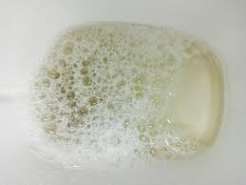
Most people have noticed foam in the toilet at some point and thought little of it. When foamy urine appears occasionally and clears within seconds, it usually has a perfectly ordinary explanation. When it appears consistently — every time you urinate, persisting longer than a few seconds — it can be the first visible signal that the kidneys are allowing protein to escape into the urine. That leakage is called proteinuria, and it is one of the earliest detectable markers of kidney disease. Understanding what persistent foam means, and when to take it seriously, is the subject of this article.
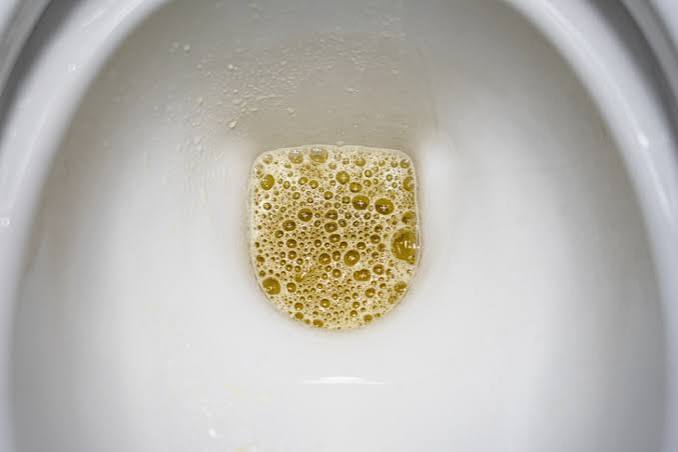
What Causes Foamy Urine?
Foam forms when urine contains substances that reduce its surface tension, allowing air to mix in and produce bubbles. Not every cause is medical — and most cases are not.
Temporary and Benign Causes
The most common explanation is simply the speed and force of the urinary stream hitting the toilet water. Fast urination creates turbulence, and turbulence creates bubbles — the same way water from a fast-running faucet foams in a sink. These bubbles disappear within ten to fifteen seconds and have no medical significance.
Dehydration is another common non-medical cause. When the body is low on fluids, urine becomes more concentrated — it contains more dissolved substances per unit of water. That concentration increases surface foam. If you notice foamy urine after a period of low fluid intake, try drinking more water over a day or two and see whether the foam resolves before assuming something is wrong.
A frequently overlooked explanation is residual cleaning products in the toilet bowl. Soap, disinfectant, or bleach tablet residue can interact with urine to produce foam that looks alarming but is entirely harmless. Flushing the toilet before urinating eliminates this variable and is a simple first check.
In men, retrograde ejaculation — a condition in which semen travels into the bladder rather than forward through the urethra — causes foamy urine after sexual activity. This is benign in terms of kidney function, though it can affect fertility and is worth discussing with a urologist if it becomes a recurring concern.
Proteinuria — The Medical Cause to Watch For
When foam persists — when it does not dissolve within thirty seconds and appears at every urination over several days — the most important cause to consider is proteinuria: excess protein in the urine.
The kidneys filter approximately 180 liters of blood every day through their filtration units, called glomeruli. Each glomerulus contains a specialized barrier that allows water and small waste molecules to pass through while retaining larger molecules — including albumin, the most abundant protein in the blood. When this barrier is damaged or inflamed, albumin and other proteins escape into the urine. Protein reduces urine’s surface tension, creating the fine, persistent foam that distinguishes proteinuria from the transient bubbles of speed or dehydration.
The standard diagnostic test for albumin leakage is the urine albumin-to-creatinine ratio (UACR). It requires only a spot urine sample — no 24-hour collection, no special preparation. A normal UACR is below 30 mg/g. Values between 30 and 300 mg/g indicate early albuminuria (early kidney stress); values above 300 mg/g indicate established kidney damage. Values above 3,500 mg/g suggest nephrotic syndrome — a condition in which protein loss is severe enough to cause significant swelling, low blood albumin, and elevated cholesterol. Understanding kidney health numbers every adult should know — including what UACR values mean — is one of the most useful things you can do before your doctor’s appointment.
How to Tell If Your Foamy Urine Is a Concern
The most practical test is persistence. Watch the foam after you urinate. If the bubbles dissolve within fifteen seconds, they are almost certainly caused by urination speed, dehydration, or the toilet environment. If the foam is dense, covers a significant portion of the water surface, and persists for thirty seconds or longer — and this pattern repeats consistently over several days — that warrants a medical evaluation.
Also notice whether the foam comes with other symptoms. Foamy urine alongside any of the following suggests something more significant may be going on:
- Swelling. Protein keeps fluid inside blood vessels. When large amounts leak into urine, blood albumin levels fall and fluid moves into surrounding tissues, causing swelling — typically in the ankles and feet first, but sometimes in the legs, hands, or around the eyes in the morning. Persistent foamy urine with unexplained swelling is a classic presentation of nephrotic syndrome and warrants urgent evaluation.
- Fatigue and poor appetite. High-level protein loss impairs immune function and general cellular health. Persistent proteinuria — particularly at elevated levels — is associated with fatigue that does not improve with rest.
- Blood in the urine. Foam combined with pink, red, or brown urine discoloration suggests both protein and blood are leaking through the kidney filter. Conditions like IgA nephropathy and lupus nephritis can cause this combination. Prompt evaluation is warranted.
- Foamy urine during pregnancy. Protein in the urine — particularly with elevated blood pressure — is a hallmark warning sign of preeclampsia, a serious pregnancy complication. Any pregnant woman noticing persistent foamy urine should contact her obstetric provider without delay.
Medical Conditions That Cause Protein in Urine
Proteinuria is not a disease in itself — it is a sign that the kidney filtration system is under stress. Identifying the underlying cause is what guides treatment.
Diabetic nephropathy is the leading cause of proteinuria worldwide, accounting for approximately 30 to 40 percent of chronic kidney disease cases in the United States. (NIDDK, 2023) Elevated blood glucose over years damages the delicate blood vessels of the glomeruli, initially producing early albuminuria and — if uncontrolled — progressing to established kidney damage and declining kidney function. If you have diabetes and notice persistent foamy urine, read about diabetes and kidney disease and ask your doctor for a UACR at your next appointment.
Hypertensive kidney disease develops when sustained high blood pressure damages the arteries and filtration units of the kidneys over time. Like diabetic nephropathy, this process is gradual and often silent until significant damage has accumulated. The article on high blood pressure and kidney health explains this connection in detail and why blood pressure control below 130/80 mmHg is so important to kidney preservation.
IgA nephropathy — also called Berger’s disease — is the most common primary glomerulonephritis worldwide. IgA antibodies deposit in the glomeruli, triggering inflammation. It often presents in young adults with episodes of bloody urine after a respiratory or gastrointestinal infection, but many patients also have persistent proteinuria. KDIGO 2023 guidelines now include newer options — sparsentan and intestinal-release budesonide (Nefecon) — specifically for IgA nephropathy. (KDIGO, 2023)
Focal segmental glomerulosclerosis (FSGS) involves scarring of portions of the glomeruli and is one of the most common causes of nephrotic syndrome in adults. It can be primary (idiopathic) or secondary to obesity, HIV infection, or other causes. Treatment depends on the underlying cause and typically requires a nephrology referral.
Lupus nephritis affects approximately half of people with systemic lupus erythematosus. It presents with proteinuria, blood in the urine, and declining kidney function, and is managed jointly by rheumatology and nephrology.
Orthostatic proteinuria is a benign condition primarily seen in adolescents and young adults. Protein leaks into the urine only when the person is upright; it normalizes when lying down. It causes no kidney damage and typically resolves by adulthood.
Exercise-induced and fever-related proteinuria are transient. Heavy exercise or fever temporarily increases glomerular permeability. Both resolve once the triggering factor resolves, and no treatment is required.
Preeclampsia in pregnancy is defined in part by new-onset hypertension after 20 weeks gestation combined with proteinuria. Given the risk of severe maternal and fetal complications, any pregnant woman with foamy urine should be evaluated promptly.
Multiple myeloma can produce abnormal proteins called Bence Jones proteins that appear in urine as foam. Conventional dipstick tests miss them because they detect albumin specifically; a urine protein electrophoresis (UPEP) is needed if multiple myeloma is suspected.
How Doctors Diagnose Protein in Urine
Urine dipstick is a quick screen — it detects protein at approximately 300 mg/L or higher, meaning it misses early albuminuria (the 30–300 mg/g UACR range where intervention is most effective).
UACR (urine albumin-to-creatinine ratio) is the gold standard. A spot urine sample collected at any time of day is sufficient. The National Kidney Foundation recommends UACR over dipstick for screening in people with diabetes or hypertension, and for anyone whose dipstick shows trace protein. (NKF, 2023)
eGFR from serum creatinine measures how well the kidneys are filtering overall. Proteinuria and eGFR together provide a more complete picture than either test alone — KDIGO CKD staging uses both parameters.
24-hour urine protein collection is ordered when nephrotic syndrome is suspected — it more precisely quantifies total protein loss.
Urinalysis with microscopy examines urine for red blood cell casts (glomerulonephritis), white blood cell casts (interstitial nephritis), or bacteria (infection).
Kidney biopsy is performed when the cause remains unclear after non-invasive evaluation — particularly when a primary glomerular disease is suspected.
Who Should Get Tested?
If you fall into any of these groups, a UACR test is appropriate — not optional:
- People with diabetes. Annual UACR is recommended by the American Diabetes Association, NIDDK, and KDIGO for anyone with type 1 or type 2 diabetes. (NIDDK, 2023)
- People with hypertension. Annual UACR is recommended — particularly for people whose blood pressure is not consistently controlled.
- Anyone with persistent foamy urine for more than one to two weeks that does not resolve with better hydration.
- Anyone with swelling and foamy urine. This combination warrants evaluation within days rather than weeks.
- People with a family history of kidney disease. First-degree relatives of people with chronic kidney disease should be screened regularly.
- Pregnant women with foamy urine. Given the preeclampsia risk, this should always be evaluated promptly by the obstetric team.
- Adults over 60 with any risk factor. A baseline UACR is reasonable for any adult over 60 with diabetes, hypertension, or a family history of kidney disease.
Treatment Depends on the Cause
Proteinuria is treated by addressing what is causing the kidneys to leak protein. The goal is to reduce protein loss — which in turn slows kidney damage progression.
For diabetic nephropathy: SGLT-2 inhibitors (empagliflozin or dapagliflozin) plus an ACE inhibitor or ARB, with tight blood glucose control and blood pressure below 130/80 mmHg.
For hypertensive kidney disease: ACE inhibitors (lisinopril, ramipril) and ARBs (losartan, valsartan). A creatinine rise of up to 30 percent after starting these medications is expected — it reflects the drug working correctly.
For IgA nephropathy: ACE/ARB for all patients with UACR above 30 mg/g; SGLT-2 inhibitors for those with eGFR ≥20; sparsentan and intestinal-release budesonide (Nefecon) for higher-risk patients per KDIGO 2023.
For FSGS and nephrotic syndrome: Complex and cause-dependent. Primary FSGS often requires immunosuppression. Obesity-related FSGS responds best to significant weight loss, which reduces glomerular hyperfiltration.
Across all causes: sodium below 2 grams per day, dietary protein 0.6–0.8 g/kg/day in established CKD, blood pressure below 130/80 mmHg, and avoidance of NSAIDs. Monitor UACR and eGFR every 3 to 6 months once proteinuria is established.
Frequently Asked Questions
Is foamy urine always a sign of kidney disease?
No — most cases have a benign explanation. Rapid urination, dehydration, and cleaning products in the toilet bowl all cause foam. The foam that suggests possible kidney disease is persistent: it lasts thirty seconds or longer, appears consistently at every urination over days to weeks, and may come with swelling or fatigue. If you are uncertain, a UACR urine test provides a clear answer quickly and inexpensively.
Can dehydration cause foamy urine?
Yes. Concentrated urine has a higher ratio of dissolved substances to water, which promotes surface foam. This typically resolves when fluid intake increases. If foamy urine persists after several days of adequate hydration, it is worth checking with a UACR test rather than continuing to attribute it to concentration.
What does it mean if foamy urine comes and goes?
Intermittent foam has a broader range of causes than persistent foam. Exercise, fever, or orthostatic proteinuria (protein that appears only when standing, a benign condition) can all cause this pattern. If foam appears and disappears without a clear trigger — especially with occasional swelling or fatigue — a UACR test can determine whether protein levels are fluctuating in a way that warrants follow-up.
How is proteinuria treated?
Treatment targets the underlying cause. Diabetic nephropathy responds best to SGLT-2 inhibitors plus ACE inhibitors or ARBs, with blood pressure and glucose control. Hypertensive kidney disease responds to ACE inhibitors or ARBs. IgA nephropathy is treated with RAAS blockade and, in eligible patients, newer agents including sparsentan. All causes benefit from sodium restriction, blood pressure below 130/80 mmHg, and avoiding NSAIDs. Heavy proteinuria typically requires specialist nephrology care. (KDIGO, 2023)
When should I see a doctor about foamy urine?
See a doctor if foam persists for more than one to two weeks and does not resolve with better hydration. Seek prompt attention if foamy urine comes with swelling in the legs, ankles, or face. Seek urgent care if you are pregnant and notice foamy urine with elevated blood pressure. For anyone with known diabetes or hypertension, persistent foamy urine is a reason to schedule a UACR test at the next available appointment. (Mayo Clinic, 2024)
Foamy urine is easy to dismiss — and most of the time, dismissal is correct. The foam disappears in seconds, better hydration resolves it, or the cause is nothing more than cleaning product residue in the bowl. But for those in whom the foam is persistent and recurring, the stakes are real: proteinuria is one of the clearest signals the kidneys send before function begins to decline. A single urine test — the UACR — can answer the question within a day and for very little cost. For anyone with foam that lingers and repeats, getting that test is the most important first step.
Understanding Nephrotic Syndrome: When Proteinuria Becomes Severe
Most cases of proteinuria that an adult encounters during routine screening or after noticing foamy urine fall in the mild to moderate range — UACR between 30 and 1,000 mg/g. These levels are concerning and warrant treatment, but they are manageable with the medications and lifestyle changes described above. Nephrotic syndrome is a different category: it occurs when protein loss from the kidneys is so heavy that it fundamentally disrupts the body’s fluid and protein balance.
The formal definition of nephrotic syndrome includes four features: heavy proteinuria (above 3,500 mg per day, which is roughly equivalent to a UACR above 3,500 mg/g), hypoalbuminemia (low blood albumin, typically below 3.5 g/dL), edema (fluid accumulation in body tissues), and hyperlipidemia (elevated cholesterol and triglycerides). Not all four features need to be present simultaneously for the diagnosis, but heavy proteinuria and low albumin are the essential findings.
The edema of nephrotic syndrome has a characteristic pattern. It begins in the most dependent parts of the body — the ankles and feet — and can extend up the legs and into the abdomen (ascites) and lungs (pleural effusion) in severe cases. Periorbital edema (puffiness around the eyes) is particularly common in the morning, when fluid accumulated during sleep redistributes. Patients may notice that shoes that previously fit comfortably no longer fasten, or that their face appears visibly puffy after waking.
The hyperlipidemia of nephrotic syndrome occurs because the liver compensates for falling albumin levels by increasing lipoprotein synthesis — it produces more of everything, including cholesterol and triglycerides. This lipid elevation is directly proportional to the degree of protein loss and resolves when proteinuria is treated. However, it does add cardiovascular risk during the period of active nephrotic syndrome, and statin therapy may be appropriate depending on individual risk factors and the expected duration of the condition.
Treatment of nephrotic syndrome is divided into specific therapy (treating the underlying glomerular disease — steroids for FSGS, immunosuppression for membranous nephropathy, RAAS blockade for diabetic or hypertensive nephrotic syndrome) and supportive therapy (managing fluid overload with diuretics, treating hyperlipidemia, preventing blood clots — nephrotic syndrome increases clotting risk because clotting factor proteins are lost along with albumin). This combination of disease-specific and supportive treatment requires specialist nephrology care and close monitoring.
Proteinuria in Special Populations
While the principles of diagnosing and managing proteinuria apply broadly, several populations warrant specific additional consideration.
Older Adults
The kidney’s filtration function naturally declines with age — eGFR decreases at approximately 1 mL/min/1.73m2 per year after age 40 in people without kidney disease. This age-related decline means that older adults often have a lower eGFR baseline before any disease process is added. However, proteinuria in an older adult is not a normal part of aging and always warrants evaluation. Additionally, older adults are more likely to have multiple conditions contributing to protein in the urine simultaneously — diabetes, hypertension, and age-related vascular disease may all be present — and treatment needs to address each contributing factor.
People of African Descent and APOL1
Adults of African descent have a higher risk of kidney disease from certain causes — particularly FSGS and hypertensive nephrosclerosis — that is only partially explained by disparities in diabetes and hypertension prevalence. A significant genetic contributor is APOL1: two specific high-risk variants (G1 and G2) in the APOL1 gene dramatically increase the risk of kidney disease when both copies are inherited. Approximately 13 percent of African Americans carry the high-risk APOL1 genotype. (NIDDK, 2024) For this population, foamy urine and proteinuria at any age should be taken seriously and evaluated promptly — the underlying process may be more aggressive than the UACR level alone suggests.
People with Autoimmune Disease
Lupus (SLE), rheumatoid arthritis, Sjogren’s syndrome, and other autoimmune conditions are associated with kidney involvement that can present as proteinuria. People with known autoimmune diseases should have kidney function and UACR monitored regularly — particularly during disease flares — because autoimmune kidney disease can progress rapidly if untreated. The presence of foamy urine in a person with a known autoimmune condition is a signal to contact their rheumatologist or primary care physician promptly rather than wait for the next scheduled visit.
Monitoring Proteinuria Over Time: What the Numbers Mean
For people with established proteinuria, monitoring is as important as the initial diagnosis. A single UACR reading provides a snapshot; the trend over time tells the clinical story. UACR can fluctuate from day to day based on hydration status, exercise the previous day, timing of the sample, and concurrent illness. For this reason, KDIGO guidelines recommend confirming an elevated UACR with at least one repeat measurement before assigning a risk category, and tracking trends over months to years rather than responding to single-point changes.
The direction of change matters more than any individual number. A UACR that is declining — moving from, for example, 800 mg/g to 400 mg/g over 12 months of treatment — is a sign that treatment is working and kidney damage is being slowed. A UACR that is stable is reassuring that progression is being held in check. A UACR that is rising — moving from 200 mg/g to 600 mg/g over the same period — signals that the current treatment strategy is insufficient and the plan needs to be revisited with the treating physician or nephrologist.
eGFR trend is equally important. A person whose eGFR is stable at 55 mL/min/1.73m2 over three years is in a very different position from someone whose eGFR has declined from 70 to 55 to 42 mL/min/1.73m2 over the same period. The rate of eGFR decline — typically measured as mL/min/year — tells clinicians how quickly the kidneys are losing function and whether the current treatment has slowed that rate. Interventions that successfully reduce both proteinuria and the rate of eGFR decline are the dual target of kidney protection therapy.
For people newly diagnosed with proteinuria, the practical implication is this: write down your UACR and eGFR numbers at every lab visit, and bring that record to each appointment. Understanding whether your numbers are moving in the right direction is the most important piece of information you can carry into a conversation with your doctor about your kidney health.
Sources: NIDDK (niddk.nih.gov), National Kidney Foundation (kidney.org), KDIGO 2023 CKD Guidelines (kdigo.org), Mayo Clinic (mayoclinic.org)
This is one of the clearest explanations of foamy urine: what it may mean I have found. The practical tips made this immediately actionable, not just theoretical. This gave me real confidence going into my next specialist appointment.
Really well-written article on foamy urine: what it may mean. The practical tips made this immediately actionable, not just theoretical. Thank you for making complex medical information accessible without dumbing it down.
I never fully understood foamy urine: what it may mean until I read this. I appreciate that the article is careful about distinguishing between what is known and what is still being researched. Appreciate the effort that went into researching and writing this — it shows.