

Swollen feet and ankles are easy to dismiss — a long day on your feet, a salty meal, a long flight. But persistent or unexplained swelling in the lower legs and feet is one of the most recognizable signs that the kidneys may not be doing their job. When the kidneys fail to properly manage fluid in the body, that fluid accumulates in the tissues rather than being eliminated in urine. The result is a type of swelling called edema — and the kidneys are one of the most common and least recognized causes of it.
According to the CDC, chronic kidney disease affects approximately 37 million Americans, and many of them first notice something is wrong not through a blood test but through swelling that doesn’t resolve with rest. This guide explains which kidney conditions cause swollen feet, how kidney edema differs from the many other causes of leg swelling, when swelling becomes a medical emergency, and what the standard treatment approach looks like.
How the Kidneys Control Fluid Balance
The kidneys maintain fluid balance through two interlocking mechanisms. The first is sodium excretion. Sodium is the main driver of water retention in the body; when sodium levels rise, the body retains water to maintain the right concentration. Healthy kidneys continuously filter sodium and fine-tune how much is kept and how much is eliminated. When kidney function is impaired, sodium excretion becomes inefficient, and excess sodium — along with the water that follows it — accumulates in the bloodstream and eventually leaks into surrounding tissues.
The second mechanism is albumin preservation. Albumin is a protein produced by the liver and filtered through the kidneys. Under normal circumstances, the kidneys keep albumin in the bloodstream and prevent it from spilling into urine. Albumin is the main protein responsible for maintaining oncotic pressure — the pressure that holds fluid inside blood vessels. When kidney disease allows albumin to leak into the urine (a condition called proteinuria), blood albumin levels fall. With lower oncotic pressure, fluid that would normally stay within blood vessels leaks out into the surrounding interstitial tissue. This is the mechanism behind the particularly severe edema seen in conditions like nephrotic syndrome.
These two pathways — sodium retention and albumin loss — explain why so many different types of kidney disease produce swelling, and why the pattern of swelling can look different depending on which mechanism is dominant.
Two Ways Kidney Disease Causes Swollen Feet
The Protein-Loss Pathway
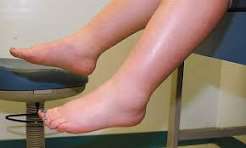
In conditions that damage the glomeruli — the tiny filtering units of the kidney — protein begins to leak into the urine. The most significant protein lost is albumin. As blood albumin levels fall, oncotic pressure drops, and fluid shifts from the bloodstream into surrounding tissues. The result is edema that tends to be soft, pitting (a finger pressed into the swollen area leaves a temporary dent), and bilateral. It may be accompanied by foamy or frothy urine — a visible sign of protein in the urine — and by periorbital edema (puffiness around the eyes, especially on waking in the morning, when fluid redistributed by lying down accumulates around the eyes).
The Sodium and Water Retention Pathway
In CKD, the kidneys lose their ability to excrete sufficient sodium as the number of functioning nephrons declines. The body compensates by activating the renin-angiotensin-aldosterone system (RAAS) and retaining water to maintain blood pressure — but this compensation comes at the cost of fluid overload. As CKD advances from stage 3 to stages 4 and 5, extracellular fluid volume expands, and this excess volume manifests as bilateral pitting edema in the feet and ankles, along with hypertension. Unlike the nephrotic pathway, albumin levels may be normal in early-to-moderate CKD, and the driving force is simply the kidneys’ failure to eliminate what the body takes in.
Nephrotic Syndrome: The Kidney Cause of Severe Swelling
Nephrotic syndrome is the condition most strongly associated with dramatic fluid-related swelling from kidney disease. It is defined by four features: proteinuria greater than 3.5 grams per day, hypoalbuminemia (serum albumin below 3.5 g/dL), edema, and hyperlipidemia. It affects approximately 3 people per 100,000 adults per year, and the National Institute of Diabetes and Digestive and Kidney Diseases identifies it as one of the most common serious kidney disorders in both children and adults.
The clinical picture is distinctive. Swelling starts in the feet and ankles and can progress to involve the legs, the abdomen (ascites), and the genital area in severe cases. Periorbital edema — puffiness around the eyes that is often most noticeable first thing in the morning — is a hallmark, because fluid redistributes away from the feet overnight and pools in the face. Urine appears foamy or frothy, which patients often notice before any other symptom. In severe hypoalbuminemia, the swelling can be impressive enough to leave the skin stretched, shiny, or leaking fluid.
The causes of nephrotic syndrome in adults vary by population:
- Membranous nephropathy: The most common cause in white adults. About 70 percent of cases are associated with antibodies against the phospholipase A2 receptor (anti-PLA2R). Can occur as a primary kidney disease or secondary to cancer, hepatitis B, or lupus.
- Focal segmental glomerulosclerosis (FSGS): The most common cause of nephrotic syndrome in the United States overall, and disproportionately affects Black adults. Associated with obesity, reflux nephropathy, sickle cell disease, and HIV.
- Minimal change disease: Most common in children but also occurs in adults, particularly those taking NSAIDs or lithium, or those with Hodgkin lymphoma.
- Diabetic nephropathy: The most common cause worldwide. Years of poorly controlled blood sugar damage the glomerular filtration barrier, leading to progressive proteinuria and eventually nephrotic-range protein loss.
- Amyloidosis: Protein deposits in the glomeruli from myeloma or chronic inflammatory disease. Suspect when proteinuria coexists with carpal tunnel syndrome and heart failure.
Nephrotic syndrome carries serious complications beyond swelling. Because antithrombin III is lost in the urine along with albumin, the blood becomes hypercoagulable, and patients face substantially elevated risk of deep vein thrombosis and pulmonary embolism, as well as renal vein thrombosis. Immunoglobulin loss increases susceptibility to bacterial infections. Hyperlipidemia, driven by compensatory hepatic protein synthesis, increases cardiovascular risk. These complications make prompt diagnosis and treatment important even when swelling itself is manageable.
CKD, AKI, and Glomerulonephritis as Causes of Leg Swelling
Nephrotic syndrome is not the only kidney condition that causes edema. Several other kidney disorders produce swelling through related but distinct mechanisms.
Chronic kidney disease causes edema through sodium and fluid retention rather than albumin loss. As the number of functioning nephrons declines — particularly in CKD stages 3b, 4, and 5 — the kidneys’ capacity to excrete the sodium and water in a normal diet is exceeded. The result is progressive bilateral pitting edema of the feet and ankles. For more on what the numbers from a kidney function panel mean, the guide on kidney health numbers provides a practical framework. For a deeper look at the disease course itself, the overview of chronic kidney disease covers stages, causes, and management.
Acute kidney injury (AKI) can produce edema that develops over hours to days. When kidney function drops suddenly, the body’s ability to excrete fluid collapses, and oliguria (urine output below 400 mL per day) is often the first visible sign. New swelling developing rapidly alongside decreased urine output is an acute emergency rather than a problem to monitor at home.
Glomerulonephritis — inflammation of the glomeruli — produces a distinct syndrome called nephritic syndrome, which includes hematuria (blood in the urine), proteinuria usually less than 3.5 grams per day, hypertension, and edema. In contrast to nephrotic syndrome, the edema of nephritic disease is driven primarily by sodium retention rather than albumin loss, and tends to be milder. Post-streptococcal glomerulonephritis — which develops 1 to 3 weeks after a strep throat or skin infection — is the most recognizable example: sudden swelling of the face and feet, accompanied by dark or cola-colored urine. The connection between blood in the urine and its possible causes is covered in more detail in the dedicated article.
Is the Swelling From Your Kidneys? How to Tell
Bilateral leg edema has many causes, and the kidneys are one of several organ systems that can produce it. Distinguishing kidney-related swelling from other causes requires looking at the full picture rather than the swelling alone.
Heart failure is one of the most common causes of bilateral leg edema. It produces pitting edema that is worse after standing or sitting and better with elevation, but it is typically accompanied by shortness of breath, orthopnea (inability to lie flat due to breathlessness), and jugular venous distension — features not typically present with kidney-related edema. Importantly, kidney disease and heart failure can coexist through cardiorenal syndrome, where each organ’s dysfunction worsens the other.
Liver cirrhosis causes edema through hypoalbuminemia (as the damaged liver produces less albumin) and is typically accompanied by ascites, jaundice, and signs of liver disease such as spider angiomata and palmar erythema. Albumin is low, as in nephrotic syndrome, but urine protein loss is absent.
Venous insufficiency produces edema from impaired venous return, typically in people with varicose veins or a history of DVT. The edema is worse after standing for hours and may be accompanied by skin changes including brown discoloration (hemosiderin staining) and skin thickening. It tends to improve significantly with leg elevation.
Lymphedema is non-pitting — pressing on the swollen area does not leave a dent — and is associated with a positive Stemmer sign (inability to pinch a fold of skin at the base of the second toe). It does not improve overnight with elevation the way pitting edema does.
Medication-induced edema is extremely common and often unrecognized. Amlodipine (a calcium channel blocker widely prescribed for hypertension) is the single most common medication cause of bilateral leg edema, affecting up to 30 percent of patients at standard doses. It works by dilating peripheral blood vessels, which increases capillary hydrostatic pressure and promotes fluid leakage. NSAIDs cause sodium retention. Gabapentin, pregabalin, thiazolidinediones, and corticosteroids can all cause leg swelling.
The features that most strongly point toward a kidney cause include: frothy or foamy urine (visible protein), periorbital edema that is worst on waking, a known history of kidney disease or diabetes, elevated creatinine or a low eGFR on a recent lab panel, and the absence of the cardiac or hepatic features described above. If urine dipstick shows 2+ or more protein, the workup moves urgently toward the kidney.
Red Flags That Require Prompt Medical Evaluation
Most new leg swelling, even when concerning, is evaluated through scheduled appointments rather than emergency visits. But certain combinations of swelling with other symptoms require same-day or emergency evaluation:
- Swelling with oliguria (significantly reduced urine output) — this pattern suggests AKI and requires emergency evaluation, as kidney function may be declining rapidly.
- Swelling with hematuria — the combination of edema and blood in the urine suggests glomerulonephritis. Dark or brown urine with new swelling after a recent strep infection is a classic presentation of post-streptococcal GN.
- Swelling with shortness of breath or orthopnea — suggests possible heart failure or pulmonary involvement; emergency evaluation is warranted.
- Rapid progression — swelling developing over hours rather than weeks is more likely to reflect AKI or cardiac decompensation than stable CKD.
- Swelling with frothy urine and periorbital edema on waking — classic for nephrotic syndrome; prompt evaluation is needed.
- Swelling with rash, joint pain, or fever — raises the possibility of lupus nephritis or vasculitis, which require urgent nephrology evaluation.
What Tests Does a Doctor Order for Kidney-Related Swelling?
Evaluating edema for a kidney cause begins with urine and blood tests, and may progress to imaging and biopsy depending on findings.
Urine tests are the first and most important step. A urine dipstick showing 2+ or more protein is a significant finding. A spot urine protein-to-creatinine ratio (PCR) provides a practical estimate of daily protein excretion: a ratio greater than 3.5 mg/mg is nephrotic range. A 24-hour urine collection for total protein and creatinine clearance gives more precise quantification when nephrotic syndrome is suspected. Urine microscopy examines the sediment for casts: oval fat bodies and fatty casts are characteristic of nephrotic syndrome; red blood cell casts indicate nephritic syndrome.
Blood tests include a basic metabolic panel (creatinine, BUN, eGFR, electrolytes, glucose), serum albumin (low in nephrotic syndrome), a lipid panel (elevated in nephrotic syndrome), liver function tests, and a complete blood count. TSH is checked to rule out hypothyroidism as a cause of non-pitting myxedema.
Serological tests for glomerulonephritis include ANA and anti-dsDNA (lupus), ANCA (vasculitis), anti-GBM antibodies (Goodpasture’s), complement levels C3 and C4, anti-streptolysin O (ASO) titer, and anti-PLA2R (membranous nephropathy).
Kidney biopsy is the gold standard for diagnosing glomerular disease. It is typically recommended when proteinuria exceeds 1 to 2 grams per day without an obvious underlying cause such as longstanding diabetes. The biopsy result guides whether immunosuppressive treatment will be used and which agent is appropriate.
Treating Kidney-Related Swollen Feet
Dietary sodium restriction is the most important lifestyle modification. Limiting sodium intake to less than 2 grams per day reduces the volume of fluid the kidneys must excrete and can meaningfully reduce edema in both nephrotic syndrome and CKD.
Diuretics are the primary medication for managing edema. Loop diuretics — furosemide (Lasix) and torsemide — work on the thick ascending limb of the loop of Henle and produce the most potent diuresis. Combination therapy with a thiazide diuretic such as metolazone can overcome diuretic resistance. Potassium-sparing diuretics such as spironolactone are useful in nephrotic syndrome but must be used cautiously in CKD due to hyperkalemia risk. According to the National Kidney Foundation, limiting fluid intake is generally not necessary unless sodium is controlled and diuretics are being used appropriately.
ACE inhibitors and ARBs reduce proteinuria by lowering intraglomerular pressure, independent of their blood pressure effect. They are first-line therapy for proteinuric kidney disease, including diabetic nephropathy and most forms of CKD with significant proteinuria.
SGLT2 inhibitors — empagliflozin and dapagliflozin — represent a major advance in kidney protection. Trials including CREDENCE, DAPA-CKD, and EMPA-KIDNEY demonstrated significant reductions in proteinuria, slower eGFR decline, and lower rates of progression to ESRD. They also have modest diuretic and natriuretic effects, contributing to reduction in edema. SGLT2 inhibitors are now standard of care in proteinuric CKD regardless of diabetes status.
Immunosuppressive therapy addresses the underlying glomerular disease in conditions like membranous nephropathy (rituximab is now first-line in many guidelines), minimal change disease (corticosteroids), and FSGS (calcineurin inhibitors for steroid-resistant cases). Effective treatment of the underlying condition reduces proteinuria and allows albumin levels to recover, which in turn resolves the edema. Monitoring kidney health over time — tracking eGFR, urine protein, and blood pressure — is essential. The guide on lower back pain and kidney health covers another common presentation of kidney disease that often accompanies fluid-related symptoms, as well as dark urine, which may signal the same underlying kidney inflammation driving edema.
Frequently Asked Questions
Can swollen feet be the first sign of kidney disease?
Yes — for some people, particularly those with nephrotic syndrome, bilateral pitting edema of the feet and ankles is the presenting complaint that leads to a kidney diagnosis. The kidneys can be significantly impaired before pain, fatigue, or other symptoms appear, which is why unexplained persistent swelling — especially with foamy urine — deserves investigation rather than reassurance.
What does kidney-related edema feel like compared to normal tired feet?
Kidney-related edema is typically soft, pitting, painless, and bilateral. Pressing a finger into the swollen area for 5 to 10 seconds leaves a dimple that takes time to refill. Normal tired feet may feel heavy or achy but don’t produce pitting, and they resolve reliably with overnight rest. Kidney edema persists after sleep — and periorbital edema on waking is a distinctive sign that normal tired feet never produce.
Should I reduce my fluid intake if my feet are swollen?
Not necessarily, and in kidney disease specifically, restricting fluids without medical guidance can be harmful. The primary dietary intervention is sodium restriction — not fluid restriction. Reducing sodium intake decreases the stimulus for water retention. Fluid restriction is only recommended in specific circumstances, such as advanced CKD with severe oliguria, and should be guided by a nephrologist.
Can SGLT2 inhibitors help with kidney-related swelling?
Yes, modestly. SGLT2 inhibitors promote sodium and glucose excretion through the kidney and have mild diuretic and natriuretic effects that can reduce edema. Their primary benefit is slowing progression of kidney disease and reducing proteinuria, but some patients notice modest reduction in swelling as well. They are not a diuretic substitute but a disease-modifying therapy in proteinuric CKD.
How long does it take for swelling to improve with treatment?
With diuretic therapy and sodium restriction, edema often improves noticeably within days to weeks. However, if the underlying kidney disease requires immunosuppressive therapy — as in membranous nephropathy or minimal change disease — full remission of proteinuria and resolution of edema may take weeks to months. Incomplete treatment of the underlying cause leads to recurrent edema.
Swollen Feet in Special Circumstances
Pregnancy and Kidney-Related Edema
Mild bilateral ankle swelling is physiologically normal in pregnancy — progesterone-driven venous dilation and the pressure of the growing uterus on the inferior vena cava both contribute to dependent edema. However, new or worsening edema in the second or third trimester, particularly when it involves the face or hands and is accompanied by elevated blood pressure, raises the concern for preeclampsia — a condition in which placental dysfunction triggers endothelial damage, proteinuria, and hypertension. Preeclampsia involves the kidney through exactly the same endothelial damage and proteinuria mechanism as other glomerular diseases, and it represents a kidney emergency for the pregnancy. Rapid worsening of swelling with headache, visual changes, or upper abdominal pain in a pregnant woman requires emergency evaluation. Women with pre-existing kidney disease or lupus face elevated risk of both preeclampsia and flares of their underlying condition during pregnancy.
Diabetes and Kidney-Driven Edema
Diabetic kidney disease is the most common cause of nephrotic syndrome worldwide, and for many people with longstanding type 1 or type 2 diabetes, bilateral ankle edema is one of the first signs that diabetic nephropathy is advancing to a clinically significant stage. Because people with diabetes often also develop peripheral neuropathy — which reduces sensation in the feet — edema may go unnoticed for longer than it would in someone with full foot sensation. Regular monitoring of urine for protein (through annual urine albumin-to-creatinine ratio testing) is a standard part of diabetes care specifically because catching proteinuria early allows interventions that can slow kidney decline before edema, a late marker, appears. The connection between advancing kidney disease and changes in how the body processes fluid is closely related to the patterns described in the overview of chronic kidney disease.
Sources: CDC Chronic Kidney Disease Data (2023); NIDDK — Nephrotic Syndrome in Adults; National Kidney Foundation — Edema and Kidney Disease; Mayo Clinic — Edema: Causes; DAPA-CKD Trial, NEJM 2020; EMPA-KIDNEY Trial, NEJM 2023; KDIGO 2021 Glomerular Disease Guidelines
Really well-written article on swollen feet and kidney problems. The specific numbers and thresholds mentioned are exactly what I needed to understand my results. Will definitely be coming back to this site for more health information.
I never fully understood swollen feet and kidney problems until I read this. The specific numbers and thresholds mentioned are exactly what I needed to understand my results. Forwarding this to others in my support group who are dealing with similar issues.
As someone dealing with this personally, the swollen feet and kidney problems section was very helpful. I appreciate that the article is careful about distinguishing between what is known and what is still being researched. Appreciate the effort that went into researching and writing this — it shows.