
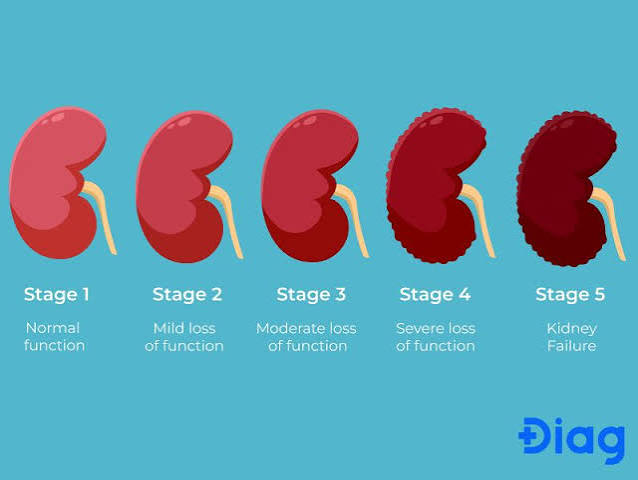
A diagnosis of chronic kidney disease comes with a stage number — G1, G2, G3a, G3b, G4, or G5 — and that number carries significant meaning. Your CKD stage reflects how much kidney filtering capacity remains, how rapidly complications are likely to develop, how often you need monitoring, what treatments are most important, and when to begin planning for kidney replacement therapy. Understanding what each stage means in practical terms helps patients participate more meaningfully in their care and make informed decisions about treatment, diet, and long-term planning.
The current staging system, established by the KDIGO (Kidney Disease: Improving Global Outcomes) organization and updated in 2024, uses two measurements to classify CKD: the estimated glomerular filtration rate (eGFR), which quantifies how well the kidneys filter waste from the blood, and the urine albumin-to-creatinine ratio (ACR), which quantifies how much protein the kidneys are leaking. No single measurement tells the complete story — the combination of both is what determines risk and guides care.
How CKD Is Staged — eGFR and Urine Albumin
The eGFR (estimated glomerular filtration rate) is calculated from serum creatinine using the CKD-EPI 2021 equation, which incorporates age and sex. It represents the approximate volume of blood the kidneys can filter per minute per 1.73 square meters of body surface area. A normal young adult eGFR is 90 to 120 ml/min/1.73m². The “estimated” qualifier matters: creatinine-based eGFR is an approximation, not a direct measurement. It can be unreliable in patients with very low muscle mass (elderly, malnourished individuals) or very high muscle mass (bodybuilders), where cystatin C-based eGFR is more accurate. More on what these measurements mean is in our guide to kidney function tests.
The urine albumin-to-creatinine ratio (ACR) classifies kidney damage into three categories. A1 (ACR below 30 mg/g) is normal to mildly increased. A2 (30 to 300 mg/g, formerly called microalbuminuria) indicates moderately increased albuminuria — the first detectable sign of kidney damage in diabetic nephropathy and hypertensive nephrosclerosis. A3 (above 300 mg/g, formerly called macroalbuminuria) indicates severely increased albuminuria and established nephropathy.
The KDIGO prognosis system combines eGFR stage and ACR category into a color-coded risk grid. Patients with G1 or G2 eGFR combined with A1 albumin level are at low risk of CKD progression. The same eGFR combined with A3 albumin levels places a patient in the high-risk category, because high albuminuria independently predicts faster kidney decline at every eGFR level. The practical implication: two patients with the same eGFR can have very different prognoses depending on their urine albumin level.
CKD is formally defined as an eGFR below 60, or the presence of markers of kidney damage (albuminuria, structural abnormality, abnormal urinary sediment, or pathological finding on biopsy), lasting for more than 3 months. The 3-month requirement distinguishes CKD from acute kidney injury — a single low eGFR reading does not establish a CKD diagnosis.
Stage G1 — Normal Filtering with Kidney Damage Present
Stage G1 is defined as an eGFR of 90 or above combined with a marker of kidney damage. The kidneys are still filtering at a normal or near-normal rate, but something is wrong with the kidney structure. Without a damage marker — no albuminuria, no structural abnormality, no abnormal urinary sediment — an eGFR above 90 in an otherwise healthy person is simply normal kidney function, not CKD G1. The damage marker requirement prevents over-diagnosis.
Who typically has G1 CKD: patients with early diabetic nephropathy whose eGFR is still preserved but who have developed A2 or A3 albuminuria; patients with IgA nephropathy who present with microscopic hematuria and mild proteinuria; patients with autosomal dominant polycystic kidney disease (ADPKD) detected early before significant cyst burden reduces eGFR; and patients with lupus nephritis who have active urinary sediment.
At this stage, most patients have no symptoms. CKD G1 is nearly always identified through screening in high-risk individuals — annual ACR and eGFR testing in diabetics and hypertensives — rather than through clinical presentation. Management focuses on treating the underlying cause, optimizing blood pressure to below 130/80 mmHg, starting an ACE inhibitor or ARB to reduce proteinuria if ACR is above 300 mg/g, considering an SGLT2 inhibitor if ACR is above 200 mg/g with an appropriate eGFR, and monitoring annually.
Stage G2 — Mildly Reduced Kidney Function
Stage G2 is defined as an eGFR of 60 to 89 combined with a marker of kidney damage. An important caveat applies here: an eGFR of 60 to 89 without any damage marker is not CKD — it may simply represent normal variation or normal aging. After age 40, eGFR declines at approximately 0.5 to 1 ml/min per year as a normal consequence of aging. An 80-year-old with an eGFR of 72 and no albuminuria, no abnormal urinalysis, and no structural kidney abnormality does not have CKD — they have the kidneys of an 80-year-old. Applying the CKD label inappropriately in this context causes unnecessary anxiety, unnecessary investigations, and medication changes that may not be warranted.
When damage markers are present alongside an eGFR of 60 to 89, CKD G2 is appropriate. At this stage, complications do not typically appear, and most patients feel well. The focus is on lifestyle modification (sodium restriction, weight management, exercise, smoking cessation), treating the underlying cause, optimizing blood pressure and blood sugar, and establishing a monitoring baseline for tracking trends over time.

Stage G3 — Moderate Decline (G3a and G3b)
Stage G3 is divided into G3a (eGFR 45 to 59) and G3b (eGFR 30 to 44) because these two sub-stages have meaningfully different clinical pictures. At G3a, most patients still feel well, but kidney function is unambiguously reduced and the risk of complications is beginning to increase. At G3b, complications are common and active management of multiple systems is required.
Stage G3a (eGFR 45–59): This is the most commonly diagnosed CKD stage in primary care, partly because it overlaps with the age-related eGFR decline described above. Anemia of CKD may appear, though it is often mild at this stage. Blood pressure control becomes more challenging. PTH, calcium, phosphate, and 25-hydroxyvitamin D should be measured at this stage to establish a baseline for mineral metabolism monitoring. Monitoring frequency is every 6 months. Referral to nephrology should be considered when the cause of CKD is unclear or when eGFR is declining faster than 3 to 5 ml/min per year.
Stage G3b (eGFR 30–44): This is a significantly different clinical situation from G3a. Anemia of CKD is common and may require iron supplementation and eventually ESA therapy. Metabolic acidosis (low bicarbonate) occurs in many patients and should be treated with sodium bicarbonate supplementation when serum bicarbonate falls below 22 mEq/L, because untreated acidosis accelerates muscle wasting and bone disease. Secondary hyperparathyroidism is now actively monitored and managed. Hyperkalemia becomes a meaningful risk, particularly in patients on ACE inhibitors or ARBs. A renal dietitian referral is appropriate at this stage. Monitoring frequency is every 3 to 6 months. Early conversations about kidney replacement therapy options should begin — not as an immediate need, but as education that allows patients to make informed decisions when the time comes. More on building a comprehensive kidney health plan is in our guide to the annual kidney health checklist.
Stage G4 — Severe Decline and Preparation for Kidney Replacement
Stage G4 (eGFR 15 to 29) represents severely reduced kidney function. While many patients with G4 CKD still feel relatively well — because the kidneys retain just enough function to prevent frank uremic symptoms in some — this is the stage at which active preparation for kidney replacement therapy becomes urgent rather than optional.
The priorities of G4 management include: completing transplant evaluation if the patient is a candidate and registering on the deceased-donor waiting list (time on the list counts from registration, not from when dialysis starts — registering early is a concrete advantage); creating an arteriovenous (AV) fistula for hemodialysis access, which requires 6 to 12 weeks of maturation before it is usable and should therefore be placed 6 to 12 months before anticipated dialysis; completing education about all kidney replacement options (in-center hemodialysis, home hemodialysis, peritoneal dialysis, transplant) so the patient can make a genuine choice rather than a crisis-driven one; and social work referral for disability benefits, financial assistance for medications, advance directive completion, and psychosocial support.
Uremic symptoms — fatigue, nausea, decreased appetite, pruritus (itching from retained uremic toxins), restless legs syndrome, and cognitive slowing — may appear in G4, particularly as eGFR approaches 20. When these symptoms significantly impair quality of life, dialysis initiation may be indicated even before eGFR reaches 15. Monitoring at this stage is every 1 to 3 months.
Stage G5 — Kidney Failure
Stage G5 (eGFR below 15) is kidney failure — the kidneys can no longer maintain the body’s internal environment without assistance. Kidney replacement therapy is necessary to sustain life for patients who choose to pursue it. The decision of when to start dialysis is based not on a specific eGFR threshold alone but on the combination of eGFR (typically 5 to 10 ml/min), uremic symptom burden, nutritional status, and patient preference. Starting dialysis prematurely before symptoms appear does not improve outcomes; starting it too late causes preventable uremic complications.
The kidney replacement options are: in-center hemodialysis (3 sessions per week, 3 to 4 hours each, at a dialysis center); home hemodialysis (performed more frequently at home, associated with better outcomes than in-center HD); peritoneal dialysis (daily home dialysis using the peritoneal lining as a filter, with either continuous ambulatory or automated cycling); and kidney transplant (either from a deceased or living donor — the best long-term option for eligible patients, with 10-year graft survival rates of 60 to 70% for deceased-donor and 70 to 80% for living-donor transplants). Conservative kidney management — symptom-focused care without dialysis — is a legitimate choice for carefully selected patients, particularly older adults with significant comorbidities for whom dialysis would not meaningfully extend quality life.
Rate of Progression — What Changes Your Outlook
Two patients can have the same eGFR stage and face very different futures depending on how fast their kidneys are declining. The eGFR slope — the annual rate of eGFR change — is as clinically important as the stage itself. A decline of less than 2 ml/min per year is considered slow; 2 to 5 ml/min per year is moderate; above 5 ml/min per year is rapid and should trigger investigation for a reversible contributing cause. Common reversible causes of rapid eGFR decline include uncontrolled hypertension, chronic NSAID use, dehydration, urinary obstruction, and a new glomerulonephritis superimposed on existing CKD.
The treatments that most reliably slow CKD progression are: tight blood pressure control (below 130/80 mmHg); ACE inhibitors or ARBs for proteinuric CKD; SGLT2 inhibitors (proven in CREDENCE, DAPA-CKD, and EMPA-KIDNEY trials to reduce eGFR halving and kidney failure events); and GLP-1 receptor agonists in patients with type 2 diabetes and CKD (FLOW trial, 2024). Smoking cessation, sodium restriction, and weight management also contribute to slowing progression.
Frequently Asked Questions
Can CKD stage improve? Yes — in some situations, eGFR can improve and the CKD stage can move to a less advanced category. This most commonly happens when a reversible cause is identified and treated — for example, stopping a nephrotoxic medication, treating a urinary obstruction, or aggressively controlling previously uncontrolled blood pressure. In diabetic nephropathy, SGLT2 inhibitors and tight glucose control can meaningfully slow or stabilize decline. What does not reverse is established glomerular scarring (glomerulosclerosis) and tubular fibrosis — these structural changes are permanent. So while eGFR improvement is possible, complete reversal of established CKD is rare. The more realistic and achievable goal is stabilization. More on what to ask your doctor about kidney treatment is in our guide to questions to ask during a kidney checkup.
What is the difference between G3a and G3b? Both are classified as Stage G3, but they have distinct clinical implications. G3a (eGFR 45 to 59) is often managed primarily in primary care with 6-monthly monitoring, and complications are just beginning. G3b (eGFR 30 to 44) typically requires nephrology involvement, 3 to 6-monthly monitoring, active management of anemia, metabolic acidosis, secondary hyperparathyroidism, and early kidney replacement therapy education. The KDIGO guidelines originally recognized this clinical distinction and divided G3 into two sub-stages precisely because lumping them together obscured important differences in prognosis and management intensity.
At what CKD stage do symptoms appear? The frustrating and important answer is: often not until Stage G4 or G5. CKD Stages G1 through G3a are typically entirely asymptomatic. Even G3b is frequently asymptomatic in patients without significant comorbidities. Fatigue, nausea, swelling, nocturia, pruritus, and cognitive slowing begin to appear in G4 and become prominent in G5. This is why population screening in high-risk groups — annual ACR and eGFR in diabetics and hypertensives — is so important: by the time symptoms drive a patient to see a doctor, the opportunity for early intervention has often passed. More on how doctors find CKD is in our guide to how doctors diagnose kidney disease.
What Causes CKD at Different Stages
The underlying cause of CKD shapes how quickly it progresses and what complications emerge at each stage. Diabetic nephropathy is the most common cause of CKD in the United States, accounting for approximately 37 percent of end-stage renal disease cases according to the USRDS 2022 annual data report. The natural history is predictable: microalbuminuria (A2) typically appears after 5 to 10 years of diabetes, followed by overt proteinuria (A3), then progressive eGFR decline over the next 10 to 20 years if blood glucose and blood pressure are not tightly controlled. SGLT2 inhibitors have significantly altered this trajectory, reducing the risk of eGFR halving and kidney failure events across all CKD stages in patients with type 2 diabetes.
Hypertensive nephrosclerosis is the second most common cause of ESRD at approximately 25 percent of cases. Unlike diabetic nephropathy, hypertensive nephrosclerosis typically causes less severe proteinuria and a more gradual eGFR decline. However, patients with both hypertension and diabetes carry compounding risk and often progress more rapidly than those with either condition alone.
Autosomal dominant polycystic kidney disease (ADPKD) follows a predictable timeline based on kidney volume rather than eGFR alone. Kidney volume doubles approximately every 7 to 10 years, and the Mayo Clinic imaging classification (Classes 1A through 1E) predicts rate of progression more accurately than eGFR does in early stages. Patients with Class 1C to 1E ADPKD typically reach kidney failure between ages 55 and 65 — the tolvaptan trials demonstrated that vasopressin V2 receptor antagonism can slow kidney growth by approximately 50 percent in this population.
Glomerular diseases — IgA nephropathy, focal segmental glomerulosclerosis (FSGS), membranous nephropathy, and lupus nephritis — have more variable trajectories depending on biopsy findings and treatment response. IgA nephropathy is the most common primary glomerulonephritis worldwide; the Oxford-MEST-C scoring system from the biopsy predicts prognosis more accurately than eGFR or proteinuria alone. Patients with high-risk pathological features (mesangial hypercellularity, segmental sclerosis, tubular atrophy, crescent formation) progress to kidney failure within 10 to 20 years even with treatment. Newer targeted release budesonide formulations have demonstrated efficacy in reducing proteinuria in IgA nephropathy without the systemic side effects of systemic corticosteroids.
Managing Life Across CKD Stages
Effective CKD management requires adapting to what each stage demands. In early stages (G1 through G3a), the primary goals are slowing progression and reducing cardiovascular risk — because CKD significantly increases the risk of heart attack and stroke at every stage, and cardiovascular disease kills more CKD patients than kidney failure does. The recommended blood pressure target of below 130/80 mmHg applies across all stages. Proteinuric CKD should be treated with an ACE inhibitor or ARB as first-line antihypertensive, since these agents reduce intraglomerular pressure and slow progression beyond their blood pressure-lowering effect alone. Dual RAAS blockade (combining an ACE inhibitor with an ARB) was shown in the ONTARGET and VA-NEPHRON-D trials to increase adverse events without additional kidney protection and is not recommended.
Dietary modification becomes more important as CKD advances. In early stages, dietary sodium restriction (below 2 grams per day) helps control blood pressure and reduces proteinuria. In G3b and beyond, dietary protein should be moderate — not severely restricted, as malnutrition is a real risk in CKD patients — typically 0.6 to 0.8 grams per kilogram of body weight per day for non-dialysis patients. Potassium restriction becomes important in G3b and G4 as the kidneys lose the ability to excrete potassium efficiently, raising the risk of dangerous hyperkalemia. Phosphate restriction is addressed in G4 and G5 to prevent secondary hyperparathyroidism and vascular calcification. A renal dietitian is the most reliable guide to navigating these dietary adjustments at each stage, and referral is appropriate from G3b onward. More on the diagnostic tests used to monitor these parameters is in our guide to kidney function tests.
Medication adjustments are required across all stages of CKD because the kidneys are responsible for clearing many drugs and their metabolites. Drugs that are renally cleared must be dose-adjusted based on eGFR to prevent toxic accumulation. NSAIDs (ibuprofen, naproxen, diclofenac) should be avoided at any stage of CKD because they reduce renal prostaglandin synthesis, causing renal vasoconstriction and acute-on-chronic kidney injury. Metformin, commonly used in type 2 diabetes, is generally safe through G3a but requires dose adjustment at G3b and is typically discontinued at G4 due to lactic acidosis risk. Gadolinium-based contrast agents used in MRI carry a risk of nephrogenic systemic fibrosis in G4 and G5 patients and must be used only when medically necessary with the lowest possible dose. Knowing your current eGFR and informing every prescriber — including dentists and urgent care providers — is important for avoiding preventable medication-related kidney harm. Our guide to how doctors diagnose kidney disease covers the tests that establish baseline kidney function before any major medication decision.
One consistent finding across CKD research is that patients who understand their stage and actively participate in their care have better outcomes than those who are passive recipients of treatment. Knowing what your eGFR and urine albumin mean, what monitoring schedule applies to your stage, which symptoms warrant urgent contact with your care team, and what decisions lie ahead transforms a CKD diagnosis from an abstract threat into a manageable condition. The information in this guide is a starting point; your nephrologist and primary care physician can interpret your specific combination of eGFR, albumin level, underlying diagnosis, and comorbidities to give you a prognosis and plan that applies to your individual situation. A complete annual review of kidney health parameters is outlined in our guide to the annual kidney health checklist.
Sources: NIDDK — Chronic Kidney Disease | National Kidney Foundation | KDIGO CKD Guidelines | American Kidney Fund | Related: Kidney Function Tests | How Doctors Diagnose Kidney Disease | Annual Kidney Health Checklist | Questions to Ask at Your Checkup
Bookmarked this article on chronic kidney disease stages explained immediately — going to reference it regularly. It is refreshing to see an article that acknowledges individual variation rather than one-size-fits-all advice. Forwarding this to others in my support group who are dealing with similar issues.
Bookmarked this article on chronic kidney disease stages explained immediately — going to reference it regularly. I especially valued the explanation of why these recommendations exist, not just what they are. Will definitely be coming back to this site for more health information.
I have been reading about chronic kidney disease stages explained for weeks and this is the most thorough guide I found. I have tried following advice from several sources but this is most consistent with what my specialist told me. Looking forward to reading more articles from this website.