
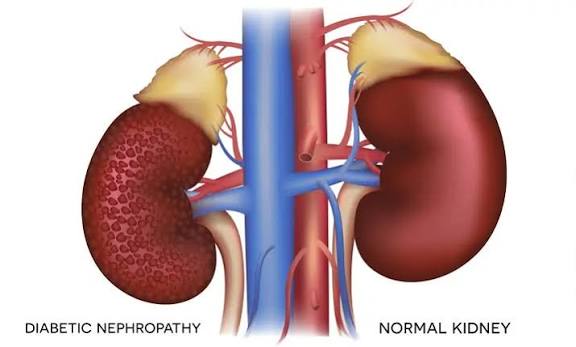
Diabetes and kidney health are inseparable concerns. Diabetes mellitus is the single largest cause of chronic kidney disease and kidney failure in the United States, accounting for approximately 44 percent of all new end-stage kidney disease cases each year. For the roughly 37 million Americans living with diabetes, understanding how the disease damages the kidneys — and what can be done to slow or prevent that damage — is one of the most important health conversations they can have with their physician. This article covers the mechanisms, diagnosis, staging, and full range of treatment options for diabetic kidney disease, including the breakthrough medications that have changed the field in the past five years.

How Diabetes Damages the Kidneys
The kidney’s filtering units — the glomeruli — are made up of tiny capillaries through which blood is filtered under precise pressure. Diabetes disrupts this delicate system through several simultaneous mechanisms, each amplifying the others.
Hyperglycemia and glomerular injury. When blood glucose remains chronically elevated, excess glucose reacts with proteins to form advanced glycation end-products (AGEs) that deposit in the glomerular basement membrane — making it thicker, leakier, and less effective. The specialized filtration cells called podocytes are particularly vulnerable to glucose-related damage. Podocyte loss is an early and critical step in diabetic kidney disease: once lost, podocytes do not regenerate.
Glomerular hyperfiltration. In early diabetes, elevated blood glucose causes blood vessels feeding the glomeruli to dilate, increasing filtration pressure inside the glomerulus. This hyperfiltration state — where the kidney works harder than normal — is initially invisible on standard kidney tests (eGFR may be elevated above 120 mL/min). However, sustained mechanical stress from hyperfiltration accelerates glomerular scarring (glomerulosclerosis).
RAAS activation. Diabetes activates the renin-angiotensin-aldosterone system (RAAS). Angiotensin II constricts the blood vessel leaving the glomerulus — raising intraglomerular pressure further — and triggers TGF-β, a potent driver of kidney fibrosis that progressively replaces functional kidney tissue with scar tissue.
Inflammation. Chronic hyperglycemia generates oxidative stress and promotes inflammatory cytokines — TNF-α, IL-6, and others — that injure tubular cells. Sustained tubular injury eventually leads to interstitial fibrosis and tubular atrophy, the common final pathway of nearly all progressive kidney diseases.
The Two Types of Diabetes and Kidney Risk
Both type 1 and type 2 diabetes cause diabetic kidney disease through the same fundamental mechanisms, with some differences in timeline. Type 1 diabetes typically causes kidney disease 10 to 15 years after diagnosis. Before modern therapy, 30 to 40 percent of people with type 1 diabetes eventually developed kidney failure. Screening for kidney disease begins 5 years after type 1 diagnosis. Type 2 diabetes accounts for the vast majority of DKD cases. Kidney damage may already be present at the time of a type 2 diabetes diagnosis, reflecting years of undetected high blood sugar during the prediabetes phase. Annual kidney screening begins at type 2 diagnosis. Insulin resistance, obesity, hypertension, and dyslipidemia — which frequently coexist with type 2 diabetes — amplify the kidney risk beyond glucose alone.
Early Signs of Diabetic Kidney Disease
The earliest stages of diabetic kidney disease produce no symptoms. The kidneys have enormous reserve capacity and can lose substantial function without generating noticeable signals. The earliest detectable abnormality is microalbuminuria — small amounts of the protein albumin in the urine, reflecting early glomerular leakiness. At this stage, eGFR may still be normal or even elevated due to hyperfiltration. As DKD progresses, proteinuria increases, blood pressure rises, and eGFR begins to decline. In advanced stages, symptoms of uremia appear: fatigue, fluid retention, nausea, and difficulty concentrating. For a full description of how kidney health is tracked through lab values, see our guide on kidney health numbers every adult should know.
How Diabetic Kidney Disease Is Diagnosed
Two measures are performed at least annually: UACR (urine albumin-to-creatinine ratio) — a spot urine test measuring how much albumin leaks into urine. A UACR below 30 mg/g is normal; 30–300 mg/g indicates microalbuminuria (A2); above 300 mg/g indicates macroalbuminuria (A3). Because UACR can fluctuate with hydration, exercise, or fever, the diagnosis of DKD requires two of three positive results over at least three months. eGFR (estimated glomerular filtration rate) — calculated from serum creatinine, age, and sex — tracks the filtration capacity of the kidneys. In diabetic kidney disease, albuminuria often precedes eGFR decline by years.
Stages of Diabetic Kidney Disease
DKD is staged using the combined UACR and eGFR classification framework: early DKD with normal eGFR and UACR involves hyperfiltration without measurable damage; microalbuminuria (A2, UACR 30–300) is the earliest sign of glomerular injury and is highly reversible with intervention; macroalbuminuria (A3, UACR >300) indicates significant proteinuria with higher risk of ESRD progression; and advanced CKD stages (eGFR below 45) reflect declining filtration with preparation needed for renal replacement therapy. Without effective treatment, the average time from microalbuminuria to ESRD is approximately 7 years. With modern management, progression can be substantially slowed. For a broader discussion of CKD staging, see our article on what is chronic kidney disease.
Glycemic Control and Kidney Protection
The DCCT trial in type 1 diabetes and the UKPDS trial in type 2 diabetes both demonstrated that tight glycemic control — HbA1c below 7 percent — substantially reduces the risk of developing microalbuminuria and slows progression of established DKD. The current ADA 2024 target is HbA1c below 7.0% for most adults. As eGFR declines, medication management becomes more complex: metformin should be held when eGFR falls below 30 mL/min/1.73m² due to lactic acidosis risk; insulin doses require adjustment; and sulfonylureas carry elevated hypoglycemia risk in advanced CKD.
SGLT-2 Inhibitors: The Kidney Protection Breakthrough
SGLT-2 inhibitors represent the most significant advance in DKD management in decades. The CREDENCE trial (2019) showed canagliflozin reduced the primary composite kidney outcome by 34% in adults with type 2 diabetes and CKD. The DAPA-CKD trial (2020) showed dapagliflozin reduced the composite kidney/cardiovascular outcome by 39% — including in adults without diabetes. The EMPA-KIDNEY trial (2022) showed empagliflozin reduced kidney disease progression or cardiovascular death by 28% in CKD with eGFR as low as 20. The kidney-protective mechanism operates through tubuloglomerular feedback: blocking glucose reabsorption in the proximal tubule raises NaCl at the macula densa, triggering afferent arteriole constriction and reducing glomerular hyperfiltration — independent of blood glucose lowering. SGLT-2 inhibitors are now recommended by KDIGO and ADA for all adults with type 2 diabetes and CKD (eGFR ≥20), regardless of glycemic control status.
ACE Inhibitors, ARBs, and Blood Pressure Control
ACE inhibitors and ARBs reduce intraglomerular pressure by dilating the efferent arteriole, lowering the mechanical stress driving glomerulosclerosis. They reduce proteinuria by 30 to 40 percent and are proven in trials (RENAAL, IDNT) to delay ESRD. ACE inhibitors and ARBs should not be combined — dual RAAS blockade increases the risk of hyperkalemia and acute kidney injury without additional benefit. The blood pressure target for adults with diabetes and CKD is below 130/80 mmHg (KDIGO 2021; ADA 2024). An ACE inhibitor or ARB is the preferred antihypertensive agent whenever UACR exceeds 30 mg/g. After initiation, potassium and creatinine should be rechecked within 1 to 2 weeks.
GLP-1 Receptor Agonists and Finerenone
The FLOW trial (2024) showed that semaglutide reduced kidney disease progression by 24% in adults with type 2 diabetes and CKD, with simultaneous cardiovascular benefit. GLP-1 receptor agonists may protect the kidneys through anti-inflammatory mechanisms, hemodynamic effects, and weight reduction. Finerenone — a nonsteroidal mineralocorticoid receptor antagonist — was FDA approved in 2021 for DKD (eGFR ≥25 with persistent high UACR despite RAAS blockade) based on the FIDELIO-DKD (2020) and FIGARO-DKD (2021) trials. The combination of ACE/ARB + SGLT-2 inhibitor + finerenone represents the current evidence-based triple-therapy standard for high-risk DKD.
Diet, Lifestyle, and Kidney Protection in Diabetes
Sodium restriction below 2,300 mg per day reduces blood pressure, lowers proteinuria, and improves the antiproteinuric effect of ACE inhibitors and ARBs. Protein moderation — approximately 0.8 g/kg/day — reduces nitrogen waste load on damaged kidneys in CKD stages 3b to 5. Weight management reduces glomerular hyperfiltration driven by elevated cardiac output in obesity. Physical activity — 150 minutes per week — improves insulin sensitivity, reduces blood pressure, and is associated with slower CKD progression. Smoking cessation is critical: smoking accelerates CKD progression approximately twofold and compounds the cardiovascular risk already high in diabetes. For context on kidney risk factors including smoking, see our article on kidney disease risk factors every adult should know.
When Diabetes Leads to Kidney Failure
When diabetic kidney disease progresses to eGFR below 15 mL/min/1.73m², renal replacement therapy becomes necessary: hemodialysis, peritoneal dialysis, or kidney transplantation. For adults with diabetes, kidney transplantation offers the best long-term survival outcomes. Simultaneous kidney-pancreas transplant (SKP) is an option for selected adults with type 1 diabetes — resolving both the organ failure and its metabolic cause, with 10-year kidney graft survival of approximately 75 percent. Planning for renal replacement therapy should begin at eGFR 20 to allow adequate preparation time.
Preventing Diabetic Kidney Disease
Prevention requires sustained attention to several targets simultaneously: optimal glycemic control (HbA1c below 7 percent) from diagnosis prevents early glomerular changes; early SGLT-2 inhibitor initiation for adults with type 2 diabetes and any CKD risk factors produces greater kidney protection than waiting for eGFR to decline; annual UACR and eGFR screening without fail catches DKD when intervention is most effective; blood pressure maintained below 130/80 mmHg with an ACE inhibitor or ARB reduces progression rate by 30 to 40 percent; and avoidance of nephrotoxins (NSAIDs, iodinated contrast without precautions, nephrotoxic herbals) protects residual kidney function. For context on what causes kidney disease including the role of diabetes, see our article on what causes kidney disease.
Diabetic Kidney Disease in Special Populations
Certain populations with diabetes face amplified kidney risk that warrants more aggressive monitoring and treatment. Older adults with type 2 diabetes already have reduced nephron reserve from age-related eGFR decline — approximately 1 mL/min/1.73m² per year after age 40. Combined with diabetes-related damage, older adults reach clinically significant CKD thresholds faster than younger adults with the same degree of glycemic exposure. Hypoglycemia in older adults is also more dangerous — falls, cognitive impairment, and cardiac events all increase with severe hypoglycemic episodes — so HbA1c targets are often individualized to 7.5–8.0% in frail elderly patients. Blood pressure management remains equally important regardless of age.
Adults of African descent with diabetes face a compounded risk: the APOL1 high-risk genotype — present in approximately 13% of African Americans — significantly amplifies the kidney risk from diabetes. Adults with both diabetes and APOL1 high-risk alleles progress to kidney failure at substantially higher rates than those with diabetes alone. Annual kidney screening from diagnosis is particularly critical in this population. Adults with type 2 diabetes and obesity benefit from the overlap between GLP-1 receptor agonist effects on weight and kidney protection: weight loss of 10–15% through semaglutide or tirzepatide reduces glomerular hyperfiltration, improves insulin sensitivity, and lowers blood pressure simultaneously.
Monitoring Schedule for Diabetes and Kidney Health
For adults managing both diabetes and kidney health, the recommended monitoring schedule integrates glycemic, kidney, and cardiovascular tracking:
- HbA1c: every 3 months until target achieved; every 6 months once stable
- UACR: annually from diabetes diagnosis (type 2); from 5 years post-diagnosis (type 1)
- eGFR (serum creatinine): same schedule as UACR; every 6 months if CKD present
- Blood pressure: every clinic visit; home monitoring recommended
- Serum potassium: within 1–2 weeks of starting or adjusting ACE inhibitor, ARB, or finerenone
- Lipid panel: annually — dyslipidemia compounds cardiovascular risk in DKD
- Ophthalmology: annually — diabetic retinopathy and DKD share the same risk drivers
- Foot exam: annually — peripheral vascular disease in diabetes compounds the cardiovascular risk of CKD
If UACR rises above 30 mg/g or eGFR falls below 60 mL/min/1.73m², referral to a nephrologist is appropriate. Earlier referral — at eGFR below 45 — allows collaborative management and kidney replacement therapy planning before urgency dictates the timeline.
The Cardiovascular-Kidney-Metabolic Connection
Diabetes, kidney disease, and cardiovascular disease form a tightly interconnected triad that the medical community now refers to as cardiorenal metabolic (CRM) syndrome. Each condition amplifies the others: diabetes accelerates kidney damage and cardiovascular atherosclerosis; CKD raises blood pressure, promotes dyslipidemia, and causes endothelial dysfunction that worsens cardiovascular risk; cardiovascular disease reduces cardiac output, creating chronic pre-renal stress on the kidneys that accelerates CKD progression. Adults with all three conditions have substantially higher all-cause mortality than those with diabetes alone.
The modern treatment framework directly addresses this triad. SGLT-2 inhibitors reduce HbA1c, lower eGFR decline, reduce cardiovascular hospitalization, and reduce heart failure. GLP-1 receptor agonists reduce HbA1c, promote weight loss, protect the kidneys, and reduce major adverse cardiovascular events (MACE). Finerenone reduces both kidney failure and cardiovascular events. Blood pressure control below 130/80 mmHg with an ACE inhibitor or ARB protects both kidneys and cardiovascular tissue. This convergence of kidney and cardiovascular benefit means that the best kidney treatment for a diabetic patient is also — by design — the best cardiovascular treatment. Managing diabetes well is inseparable from protecting both the kidneys and the heart.
Contrast-Induced and Drug-Induced Kidney Injury in Diabetes
Adults with diabetes and CKD face elevated risks from specific medical procedures and medications that require careful management. Contrast-induced AKI — kidney injury triggered by iodinated contrast agents used in CT scans and cardiac catheterization — is significantly more common in adults with diabetes and pre-existing CKD (eGFR below 45 mL/min/1.73m²). Risk minimization requires adequate pre-procedure hydration, choosing the lowest effective contrast volume, using iso-osmolar or low-osmolar contrast agents, and holding metformin for 48 hours after the procedure in adults with CKD. In many cases, the clinical question can be answered by MRI without gadolinium or unenhanced CT — avoiding contrast altogether.
Nephrotoxic medication review is essential at every encounter for adults with diabetes and any degree of CKD. NSAIDs — ibuprofen, naproxen, diclofenac — are the most common avoidable nephrotoxin; they block prostaglandin-mediated afferent arteriole dilation, reducing kidney perfusion and precipitating AKI particularly in the setting of volume depletion or coexisting RAAS blockade. Aminoglycoside antibiotics, used for severe infections, require dose adjustment based on eGFR and therapeutic drug monitoring. Certain diabetes medications themselves require dose adjustment or discontinuation in reduced kidney function: SGLT-2 inhibitors lose glycemic efficacy below eGFR 45 (though kidney protection persists to eGFR 20); GLP-1 receptor agonists are generally safe but should be used with caution in severe CKD due to GI side effects causing dehydration; insulin pharmacokinetics change as the kidney’s role in insulin clearance diminishes with declining eGFR.
Recognizing Diabetic Kidney Disease Before It Progresses
The window for most effective intervention in diabetic kidney disease is the microalbuminuria stage — when UACR is between 30 and 300 mg/g and eGFR is still preserved. At this stage, the glomerular injury is real but not yet irreversible: aggressive glycemic control, RAAS blockade, and SGLT-2 inhibitor initiation can stabilize or even partially reverse microalbuminuria in a substantial minority of patients. Once macroalbuminuria develops — UACR above 300 mg/g — the glomerular architecture has sustained more significant scarring, and the goal shifts from reversal to slowing progression. Once eGFR falls below 30 mL/min/1.73m², the primary focus becomes preparing for renal replacement therapy while maintaining quality of life.
This staging reality underscores the critical importance of annual UACR and eGFR testing — not as bureaucratic checkboxes but as genuinely life-altering diagnostic opportunities. An asymptomatic person with a UACR of 60 mg/g detected at a routine diabetes check can begin SGLT-2 inhibitor therapy and ACE inhibitor therapy, maintain blood pressure below 130/80 mmHg, and achieve tight glycemic control — and may never develop kidney failure. The same person who avoids annual testing until symptoms appear — fatigue, edema, nausea — may already have eGFR below 20 and macroalbuminuria at the time of diagnosis, with far less modifiable disease. The stakes of annual kidney screening in diabetes could not be higher.
Talking to Your Doctor About Kidney Protection in Diabetes
Despite the availability of highly effective kidney-protective therapies, a substantial proportion of adults with diabetes and CKD are not receiving the treatments that guidelines recommend. Studies have shown that SGLT-2 inhibitors — despite landmark trial evidence published since 2019 — remain underused in the diabetes and CKD population, particularly among primary care patients who do not see a nephrologist or endocrinologist. Adults with diabetes and any degree of kidney disease benefit from explicitly asking their physician: “Is my kidney function being checked annually? Should I be on an SGLT-2 inhibitor? Is my blood pressure on target? Is my UACR being monitored?”
The primary care physician, the endocrinologist or diabetologist, and the nephrologist each play distinct but complementary roles. Primary care manages the overall diabetes plan, blood pressure, and annual screening. The endocrinologist optimizes the glycemic regimen and navigates complex medication interactions as eGFR declines. The nephrologist manages CKD stages 3b and beyond, coordinates kidney replacement therapy planning, and monitors for complications of advanced CKD — anemia, metabolic acidosis, hyperphosphatemia, and secondary hyperparathyroidism. A care team approach — rather than fragmented single-specialist visits — produces the best kidney outcomes in diabetes.
The trajectory of diabetic kidney disease is not fixed. Adults diagnosed with microalbuminuria today, who receive the full evidence-based treatment package — SGLT-2 inhibitor, RAAS blockade, tight glycemic control, blood pressure target below 130/80 mmHg, smoking cessation, sodium restriction — have a substantially different kidney future than was typical 15 years ago, before these therapies were available. The science has moved rapidly; so has the potential for adults with diabetes to protect their kidney function for a full lifetime.
Key Takeaways: Diabetes and Kidney Protection
For adults with diabetes, protecting the kidneys requires a proactive, multi-pronged approach that begins at diagnosis and continues throughout life. The most important actions are those taken early — before microalbuminuria becomes macroalbuminuria, before eGFR begins its decline. Annual UACR and eGFR testing is the foundation: it identifies kidney involvement at its most reversible stage. SGLT-2 inhibitors, ACE inhibitors or ARBs, and tight glycemic control form the evidence-based core of kidney protection. GLP-1 receptor agonists and finerenone extend that protection further in high-risk patients. Blood pressure below 130/80 mmHg, sodium restriction, protein moderation, smoking cessation, and avoidance of nephrotoxic medications reinforce the pharmacological interventions. The combination of screening, guideline-directed therapy, and sustained monitoring gives adults with diabetes the best available tools for preserving kidney function — and for living a full, active life despite the challenge that diabetes presents to the kidneys.
Sources: American Diabetes Association, diabetes.org; National Institute of Diabetes and Digestive and Kidney Diseases, niddk.nih.gov; National Kidney Foundation, kidney.org. CREDENCE trial NEJM 2019; DAPA-CKD NEJM 2020; EMPA-KIDNEY NEJM 2022; FLOW trial NEJM 2024; FIDELIO-DKD NEJM 2020; KDIGO Guidelines 2022; ADA Standards of Care 2024.
Pingback: Heart Disease and Kidney Health
Pingback: Obesity and Kidney Disease Risk
Pingback: Family History and Kidney Disease Risk
My dad has had type 2 diabetes for 15 years and his doctor just told him his kidneys are starting to show damage. He’s devastated. Is it too late to slow things down at this stage? He’s 67.
Thank you for sharing that, Sarah — and please let your dad know it’s not too late. Even with established diabetic kidney disease, the right treatment combination (an SGLT-2 inhibitor if his eGFR allows, RAAS blockade, blood pressure at target, and tight glucose control) can meaningfully slow progression. The kidneys have real resilience when the damage drivers are addressed. Has his doctor mentioned whether he qualifies for empagliflozin or dapagliflozin? Those two have the strongest evidence for protecting kidney function even after CKD is diagnosed. Wishing your dad and your family all the best.
What exactly is the UACR test and how often should someone with type 2 diabetes get it? My doctor never mentioned it to me and I’ve had diabetes for 8 years.
Great question, James — and unfortunately, UACR is still underordered in primary care despite being the earliest marker of diabetic kidney damage. UACR stands for urine albumin-to-creatinine ratio. It measures how much albumin (a protein) is leaking into your urine, which is the first sign that the kidney’s filtration barrier is being stressed. It’s a simple urine test — just a spot sample, no 24-hour collection needed. With 8 years of type 2 diabetes, you should be getting it annually at minimum. If your result comes back above 30 mg/g, that’s worth discussing with your doctor promptly. We’d encourage you to ask at your next appointment — it takes about 30 seconds to add to a lab order.
Finally a resource that explains diabetes and kidney health in plain language. I have tried following advice from several sources but this is most consistent with what my specialist told me. This is going into my health folder that I bring to every doctor’s visit.
Bookmarked this article on diabetes and kidney health immediately — going to reference it regularly. What I liked most was that the article didn’t just say what to avoid — it also gave alternatives. This gave me real confidence going into my next specialist appointment.
Bookmarked this article on diabetes and kidney health immediately — going to reference it regularly. I appreciated how the article addressed both the clinical side and the practical adjustments. I wish I had found this article earlier — would have saved a lot of confusion.