
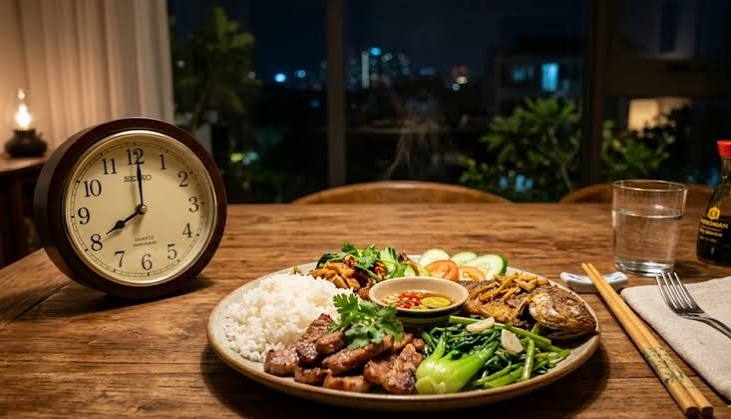
The question of meal timing and digestive comfort extends well beyond the folk wisdom about not swimming after eating. Emerging research reveals that when we eat profoundly influences digestive efficiency, gut microbiome composition, intestinal motility, and the risk of digestive conditions including acid reflux, IBS symptom exacerbation, and functional dyspepsia — often independently of what we eat. The body’s circadian clock coordinates gastric acid secretion, bile release, intestinal motility, gut hormone secretion, and even the metabolic activity of gut bacteria to align with expected meal times, and disrupting this timing creates digestive dysfunction that dietary quality alone cannot fully compensate for.
- Eating in alignment with circadian rhythms — earlier in the day, not late at night — optimises digestive enzyme activity, gastric motility, and gut hormone secretion
- Late-night eating significantly increases nocturnal acid reflux, impairs gastric emptying, and disrupts the migrating motor complex (the gut’s overnight housekeeping mechanism)
- Regular meal timing reduces IBS symptom frequency by stabilising the gut-brain axis response to eating and normalising transit patterns
- Meal frequency — 3 meals vs. 5–6 small meals — should be matched to individual digestive conditions; GERD patients benefit from smaller more frequent meals, IBS patients from regular predictable timing
- Inter-meal fasting intervals of 4–5 hours allow the migrating motor complex to clear residual food and bacteria from the small intestine

The Circadian Digestive Clock — Why Timing Matters
Every cell in the GI tract contains a molecular circadian clock — a set of transcription factors (CLOCK, BMAL1, PER1-3, CRY1-2) that oscillate with approximately 24-hour periodicity, coordinating cellular activity with anticipated environmental cycles. In the gut, these clocks regulate: gastric acid secretion (peaks in the late evening); bile synthesis and release from the gallbladder (highest in the morning); intestinal motility (gut movement slows at night); tight junction protein expression (barrier function varies diurnally); and the metabolic activity of gut bacteria (which also have circadian rhythms synchronised through the host’s eating and fasting cycles).
This coordinated timing means that the digestive system is genuinely more efficient at certain times of day than others. Morning and early afternoon represent peak digestive capacity for most people: gastric acid is appropriately sequenced after waking, bile production is timed for morning fat digestion, and intestinal motility is primed for efficient transit. Evening and night represent a physiological digestion-down period during which the gut is preparing for overnight fasting and repair rather than active digestion. Eating large meals during this down period creates a mismatch between digestive demand and digestive capacity that manifests as bloating, discomfort, acid reflux, and impaired morning gastric function.
Circadian Disruption and Digestive Consequences
Shift workers and frequent travellers crossing time zones demonstrate the digestive consequences of circadian disruption most clearly. Night-shift workers have significantly higher rates of GERD, IBS, and functional dyspepsia compared to day workers matched for dietary quality and caloric intake. The mechanism is direct: eating during the biological night (when the digestive circadian programme is in its rest phase) impairs gastric emptying efficiency, alters gut hormone secretion patterns, and disrupts the gut microbiome’s own circadian metabolic cycles.
Jet lag-associated digestive dysfunction — constipation or diarrhoea, bloating, appetite dysregulation — reflects this same circadian mismatch. The gut clock resynchronises to a new time zone more slowly than the suprachiasmatic nucleus (the master circadian clock in the brain), creating a period during which eating times and digestive capacity are misaligned. The gut microbiome resynchronises over 3–7 days after a time zone change, during which altered fermentation patterns and motility contribute to the transit irregularities familiar to frequent travellers.
Late-Night Eating and Acid Reflux
The relationship between meal timing and acid reflux is one of the most clinically well-established timing effects in digestive medicine. Multiple mechanisms converge to make late-night eating a particularly potent GERD trigger.
Postprandial Reflux and Sleep Position
The postprandial period — approximately 2–3 hours after eating — is when reflux risk is highest. During this window, the stomach remains distended, gastric emptying is ongoing, lower esophageal sphincter (LES) pressure is under postprandial depression from cholecystokinin (CCK) and other gut hormones, and the conditions for acid reflux are at their maximum. If this high-risk postprandial period coincides with lying down in bed, gravity — which normally assists in keeping gastric contents below the LES — is eliminated. The recumbent position reduces effective LES pressure by approximately 20% compared to upright posture, because gravity no longer assists LES closure.
Studies using 24-hour ambulatory oesophageal pH monitoring consistently show that the number of reflux episodes and the duration of acid exposure in the oesophagus are significantly higher in people who eat within 3 hours of bedtime compared to those who maintain a 3+ hour pre-sleep fasting interval, even when total food intake, meal composition, and body weight are matched. The American College of Gastroenterology guidelines for GERD management specifically recommend eating the last meal of the day at least 3 hours before lying down, and elevating the head of the bed by 20–30cm for people with nocturnal reflux symptoms. For more on how specific food types interact with this timing effect, see our evidence review on fatty foods and acid reflux.
Circadian Gastric Acid Peaks and Nocturnal Reflux
Gastric acid secretion follows a circadian pattern with production peaking in the late evening between approximately 20:00 and 23:00 — a timing that, from an evolutionary standpoint, likely corresponds to dinner being digested before sleep. In the modern context, where dinner may be eaten at 21:00–22:00 and bed follows at 23:00, the combination of maximum circadian acid secretion, full stomach, and postprandial LES depression occurs simultaneously with lying down. This creates a triple convergence of acid reflux risk factors that explains why nocturnal GERD is often more severe than daytime reflux even when overall dietary exposure is identical.
The Migrating Motor Complex — The Gut’s Overnight Maintenance Programme
One of the most important and least-known aspects of meal timing is its relationship with the migrating motor complex (MMC) — a cyclical pattern of intestinal motor activity that occurs during fasting periods, typically between meals and during sleep. The MMC is described as the “housekeeper” of the small intestine: it produces wave-like propulsive contractions that sweep residual food particles, dead cells, and bacteria from the stomach and small intestine into the large intestine, preventing the accumulation of material that would otherwise serve as a substrate for bacterial overgrowth.
The MMC initiates approximately 90–120 minutes after a meal is consumed, cycling with approximately 90-minute periodicity throughout the subsequent fasting period. It is suppressed by eating — even a small snack interrupts the cycle and resets the timer. This means that the MMC operates most effectively during prolonged inter-meal intervals, particularly overnight fasting, and is most impaired when eating is frequent or occurs late into the night.
The clinical relevance of MMC disruption is most apparent in small intestinal bacterial overgrowth (SIBO). SIBO develops when the mechanisms preventing bacterial accumulation in the small intestine — gastric acid, bile, and the MMC — are compromised. Frequent eating, late-night snacking, and irregular meal patterns all suppress MMC activity, impairing the bacterial clearance mechanism that keeps the small intestine appropriately populated. People with SIBO-pattern digestive symptoms (bloating, early satiety, altered motility) are typically advised to adopt regular meal timing with adequate inter-meal fasting intervals specifically to restore MMC function. The recommended minimum inter-meal fasting window to allow complete MMC cycles is approximately 4–5 hours between main meals.
Meal Timing and IBS — The Gut-Brain Axis Response
Irritable bowel syndrome is characterised by altered gut-brain axis signalling in which the gut’s response to normal physiological stimuli — eating, gas, distension — is amplified and misinterpreted as pain or urgency. Meal timing has a specific mechanistic relationship with IBS symptom patterns through the gastrocolic reflex: the physiological propulsive response of the colon to gastric filling that produces the urge to defecate after eating.
In people with IBS, the gastrocolic reflex is often amplified and accelerated, producing the characteristic post-meal urgency and cramping that characterises post-infectious or diarrhoea-predominant IBS. Regular, predictable meal timing reduces the variability of this reflex, allowing the gut-brain axis to calibrate its response to expected eating patterns rather than responding to each meal as an unpredictable stimulus. Research has shown that IBS patients who eat at consistent, regular times — the same meal times each day — report lower symptom severity scores compared to matched patients with irregular eating patterns, even when total intake and dietary composition are equivalent.
Meal frequency is also relevant: eating 3 regular meals at consistent times, without grazing or irregular snacking, tends to produce more stable gastrocolic reflex patterns and more predictable gut transit in IBS patients. The gut-brain axis benefits from behavioural predictability — both in what is eaten and when. For the evidence on how specific food choices interact with IBS motility patterns, see our article on spicy foods and digestion and for the broader motility discussion in the context of dietary fibre, see whole grains and digestion.
Breakfast Timing — First Meal Effects on the Gut
The first meal of the day has particular significance for digestive rhythm-setting. Eating breakfast activates the gastrocolic reflex, stimulates bile flow, and initiates the day’s digestive secretion pattern. Consistent breakfast timing helps anchor the rest of the day’s digestive circadian programme — gastric emptying efficiency, bowel movement timing, and appetite hormone secretion all benefit from a regular morning meal signal.
Skipping breakfast — which has become common in the context of intermittent fasting protocols — delays the digestive day’s beginning and can compress eating into a shorter window. The digestive consequences depend on the individual’s condition: for people with GERD, compressing eating into a later window reduces the overnight reflux risk associated with late-night eating, which may improve overall symptom control. For people with constipation, skipping breakfast and the morning gastrocolic reflex it triggers may worsen transit regularity. For people with IBS, the effects are highly individual and depend on whether the gastrocolic reflex is a dominant symptom driver.
Circadian nutrition research increasingly supports an earlier eating window — consuming the majority of daily calories in the morning and early afternoon rather than in the evening — as optimal for both metabolic and digestive health. Time-restricted eating studies with earlier windows (e.g., 07:00–15:00) show better outcomes for both metabolic parameters and digestive comfort than later windows (e.g., 12:00–20:00), even at equivalent total caloric intake.
Meal Frequency — Three Meals vs Small Frequent Meals
The optimal number of daily meals for digestive comfort depends on the individual’s primary digestive condition, and the evidence supports different strategies for different populations.
For people with GERD: Smaller, more frequent meals (4–5 smaller meals instead of 3 large ones) reduce the peak gastric distension per meal, which reduces the intragastric pressure peak and lowers the maximum LES-stress from above. The CCK-mediated LES relaxation is also smaller with smaller fat loads per meal. However, the timing of the last meal remains the dominant variable: even smaller frequent meals create ongoing reflux risk if they are consumed close to bedtime. The optimal pattern for GERD is smaller frequent meals throughout the active day with a firm 3-hour pre-sleep cut-off.
For people with IBS: Regular 3-meal timing — same meals at the same times each day — tends to produce more predictable gut-brain axis responses and more stable gastrocolic reflex patterns than either frequent small meals (which may perpetually stimulate the reflex without allowing predictable timing) or irregular large meals (which produce unpredictable and exaggerated stimuli). The goal is behavioural and physiological predictability rather than any specific meal count.
For people with SIBO or bloating: Adequate inter-meal fasting intervals (minimum 4–5 hours between meals) are important to allow MMC cycles to operate and clear the small intestine. Frequent snacking — eating every 1–2 hours — perpetually suppresses the MMC, maintaining the bacterial substrate conditions that drive SIBO symptoms. Three meals without snacking between them allows two complete MMC cycles per day during the inter-meal periods.
For general gut health: The gut microbiome appears to benefit from a period of fasting during sleep — typically at least 12 hours overnight — during which bacterial communities reorganise and the gut epithelium undergoes repair processes. Extending this overnight fast by avoiding late-night eating and delaying breakfast slightly (rather than eating within 30 minutes of waking) may support microbiome circadian function and intestinal barrier repair.
Pre-Exercise Meal Timing and Digestive Comfort
Exercise timing relative to meals significantly influences digestive comfort during physical activity. The gut redistributes blood flow to working muscles during exercise — reducing splanchnic (gut) blood flow by up to 80% during intense activity — which impairs gastric emptying, increases intestinal permeability, and can cause exercise-induced GI symptoms including nausea, bloating, cramping, and “runner’s diarrhoea.”
General guidelines for pre-exercise meal timing to minimise GI symptoms:
- 3–4 hours before: large meal is safe; stomach should be mostly empty by exercise time
- 1–2 hours before: small, easily digestible, low-fat, low-fibre snack only; high-fat or high-fibre meals remain in the stomach and cause GI symptoms during exercise
- 30–60 minutes before: small carbohydrate-based snack (banana, white rice, toast) if needed; avoid fat, protein, and fibre
- Immediately before: for most people, nothing; even light food within 30 minutes of intense exercise increases GI symptom risk
The type of exercise matters: endurance running produces the most GI symptoms (mechanical jostling, high splanchnic blood flow diversion), while cycling and swimming are better tolerated at equivalent intensities. For competitive athletes experiencing exercise-induced GI symptoms, training the gut through gradual exposure to eating and exercising simultaneously may improve tolerance over time — similar to how spice tolerance builds through gradual exposure. For the mechanism of gut adaptation through gradual exposure, see our article on spicy foods and digestion.
Practical Meal Timing Framework for Digestive Comfort
Based on the convergent evidence from circadian digestive research, reflux management guidelines, MMC physiology, and IBS management research, the following meal timing framework supports optimal digestive comfort for most people.
Morning anchor meal: Eat breakfast within 1–2 hours of waking, at a consistent time each day. This anchors the digestive circadian programme, initiates the gastrocolic reflex (benefiting people with constipation-dominant digestive patterns), and begins the day’s digestive secretion sequence at an appropriate time. Breakfast quality matters — a high-fibre, moderate-protein breakfast provides sustained satiety and appropriate fibre for microbiome function without the blood-sugar crash of a high-sugar breakfast that leads to early snacking. For breakfast food choices supporting gut health, see our articles on whole grains and digestion and fruits that support digestion.
4–5 hour inter-meal intervals: Allow a minimum 4–5 hours between main meals to permit complete MMC cycles between eating episodes. This is the most commonly violated timing principle in modern eating patterns, where continuous snacking has become normalised. During the inter-meal window, water and non-caloric beverages are appropriate and do not suppress the MMC; any food intake does. For people with SIBO-pattern symptoms, this interval is a therapeutic intervention, not just a habit preference.
Early dinner, firm cut-off: Eat the last substantial meal at least 3 hours before anticipated sleep time. For someone sleeping at 23:00, the last meal should be completed by 20:00. This single timing modification has been shown in clinical research to reduce nocturnal acid reflux episodes significantly, independent of meal composition. Front-loading calories earlier in the day — making lunch the largest meal — reduces the dinner portion size naturally, making the 3-hour pre-sleep rule easier to maintain. For the complete evidence on acid reflux and meal timing interaction, see our guide on fatty foods and acid reflux.
12-hour overnight fasting minimum: The overnight period between dinner completion and breakfast should be at minimum 12 hours, during which the gut operates in its maintenance and repair mode. This interval allows the gut microbiome to complete its circadian cycle, the intestinal epithelium to undergo cell renewal, and the MMC to complete multiple sweeping cycles. For people who eat dinner at 20:00, a breakfast time of 08:00 achieves this comfortably without requiring intentional fasting.
Frequently Asked Questions
Q: Is intermittent fasting beneficial or harmful for digestive health?
A: The evidence is condition-specific. For GERD, an earlier eating window (eating in the morning and early afternoon, fasting from early evening) substantially reduces nocturnal reflux risk and aligns with circadian digestive patterns — this form of intermittent fasting is beneficial. For IBS with constipation, skipping breakfast eliminates the morning gastrocolic reflex stimulus that helps initiate bowel movements, potentially worsening transit regularity. For SIBO, the extended overnight fasting periods allow more complete MMC cycles — beneficial for bacterial clearance. For metabolic reasons, time-restricted eating with earlier windows shows better outcomes than equivalent caloric restriction with a later eating window. The gut health effects of intermittent fasting depend almost entirely on where in the day the eating window is placed and which digestive condition is the primary concern.
Q: Does eating at the same time every day actually make a difference to digestion?
A: Yes — the research supports this with measurable physiological and symptomatic outcomes. Regular meal timing synchronises the gut’s peripheral circadian clocks, optimising digestive enzyme secretion, bile release, and intestinal motility to be at appropriate levels when food arrives. Irregular meal timing — varying breakfast time by more than 90 minutes between days, for example — has been shown to impair gastric emptying efficiency, alter gut hormone secretion patterns, and worsen IBS symptom scores compared to regular meal timing at equivalent total food intake. The gut-brain axis functions better when it can anticipate eating events and prepare the appropriate digestive response; unpredictable meal times produce suboptimal preparatory responses and more variable post-meal symptom outcomes.
Q: I often feel very bloated after evening meals but not after breakfast or lunch. Is this timing-related?
A: Yes, and this is a very common pattern with a clear physiological explanation. Evening bloating after dinner reflects the convergence of several timing-dependent factors: gastric emptying slows in the evening (circadian gastric motility decreases after the active day); the MMC operates less efficiently after an evening of continuous eating compared to after a long fasting period; gut microbiome fermentation activity peaks in the late evening when bacterial populations have had an entire day of substrate accumulation; and the upright-to-supine position transition after dinner reduces the gravitational assistance for GI transit. People who experience this pattern consistently benefit from: reducing dinner portion size, moving the main nutritional focus to lunch, avoiding high-fibre foods specifically at dinner (shifting them to breakfast and lunch instead), and completing dinner at least 3 hours before sleep.
Q: How long after a meal should I wait before exercising?
A: For most people and most exercise types, 2–3 hours after a full meal provides sufficient gastric emptying to allow comfortable exercise. For high-intensity endurance exercise (running particularly), 3–4 hours after a large meal is advisable. For resistance training and moderate-intensity exercise, 1.5–2 hours is usually adequate. The practical compromise for people who exercise in the morning: a small easily digestible snack 30–60 minutes before (banana, white rice cake, plain toast) rather than a full breakfast provides some fuel without the gastric load. Post-workout is an ideal time for the main meal of the day — the stomach is fully empty, digestive secretions are ready, and the post-exercise insulin sensitivity improves nutrient partitioning. The worst timing for exercise is immediately after a large, high-fat meal.
Q: Does eating late at night cause weight gain that then worsens gut health, or does the timing itself directly affect digestion?
A: Both mechanisms operate, and they are compounding rather than alternative explanations. The direct circadian effects on digestion are timing-specific: late-night eating impairs gastric motility, suppresses the overnight MMC, increases acid reflux risk, and disrupts gut microbiome circadian cycling regardless of body weight. The weight pathway is indirect: late-night eating preferentially increases body fat accumulation compared to equivalent calories consumed earlier in the day (likely through circadian differences in adipose tissue metabolism and insulin sensitivity), and the resulting increased visceral adiposity raises intra-abdominal pressure, worsening GERD through a structural mechanism. For people who already have excess body weight, late-night eating therefore operates through both the direct circadian pathway and the indirect weight-gain pathway simultaneously.
Q: I work night shifts. What meal timing strategies help manage digestive symptoms?
A: Night-shift workers face a fundamental conflict between social and work schedules and biological digestive circadian rhythms. Evidence-based strategies that reduce digestive dysfunction in shift workers include: eating the largest meal before the shift begins (early evening) rather than during the shift; avoiding large, high-fat, high-calorie meals during the biological night (02:00–06:00) when digestive efficiency is at its lowest; consuming small, easily digestible snacks (fruit, plain yoghurt, wholegrain crackers) during the shift if needed rather than full meals; maintaining consistent meal timing within the shift schedule even if it differs from the social norm; and using light exposure (bright light during the night shift, avoiding light after the shift) to partially resynchronise the circadian system. Complete circadian realignment is not achievable for most shift workers, but minimising meal volume and fat load during the biological night significantly reduces digestive symptoms compared to eating normally at night.
Q: Does meal timing affect the gut microbiome independently of what is eaten?
A: Yes — this is one of the more compelling emerging findings in chronobiology. The gut microbiome has its own circadian rhythms, with different bacterial species peaking in abundance at different times of day in synchrony with the host’s feeding and fasting cycle. Disrupting meal timing — eating at irregular times or eating during the biological night — desynchronises the gut microbiome’s circadian programme from the host’s, producing dysbiotic microbiome shifts that are distinct from those caused by dietary composition changes. Mouse studies have shown that the same diet produces different microbiome compositions depending on whether it is consumed during the active (biological day) or rest (biological night) phase. Human research is consistent: shift workers show altered microbiome composition compared to day workers matched for dietary quality, suggesting that timing per se influences which bacteria thrive, independent of food intake.
Many digestive symptoms improve significantly with meal timing adjustments. However, the following patterns warrant medical evaluation:
- Nocturnal symptoms that wake you from sleep — gut pain, diarrhoea, or urgency during sleep hours is rarely functional and requires investigation for IBD or other structural causes
- Early satiety disproportionate to meal size — feeling full after very small amounts may indicate gastroparesis, gastric outlet problems, or other structural issues beyond timing-related dysmotility
- Unexplained weight loss alongside altered eating patterns or early satiety
- Difficulty swallowing at any meal time — see a doctor promptly
- Persistent post-meal vomiting — may indicate gastric outlet obstruction or gastroparesis requiring medical assessment
- Symptoms worsening progressively despite timing adjustments over 4–6 weeks — consider formal gastroenterological assessment including breath testing for SIBO if symptoms fit that pattern
This article is for educational purposes only and does not constitute medical advice. Always consult a qualified healthcare provider regarding persistent digestive symptoms or for personalised advice about meal timing and specific digestive conditions.
- Lim SS, et al. “Circadian Clocks in the Gastrointestinal System.” Physiological Reviews. 2022;102(3):1291-1358.
- Khanijow V, et al. “Sleep Dysfunction and Gastrointestinal Diseases.” Gastroenterology & Hepatology. 2015;11(12):817-825.
- Konturek PC, et al. “Gut clock: implication of circadian rhythms in the gastrointestinal tract.” Journal of Physiology and Pharmacology. 2011;62(2):139-150.
- Thaiss CA, et al. “Transkingdom control of microbiota diurnal oscillations promotes metabolic homeostasis.” Cell. 2014;159(3):514-529.
- Bowers SJ, et al. “Meal timing regulates the human circadian system.” Current Biology. 2023;33(14):2952-2966.e4.
- Richter JE. “Role of the gastric refluxate in gastroesophageal reflux disease: acid, weak acid and bile.” American Journal of the Medical Sciences. 2009;338(2):89-95.
- American College of Gastroenterology. “ACG Clinical Guideline: Diagnosis and Management of Gastroesophageal Reflux Disease.” American Journal of Gastroenterology. 2022;117(1):27-56.
- Quigley EM. “The enteric microbiota in the pathogenesis and management of constipation.” Best Practice & Research Clinical Gastroenterology. 2011;25(1):119-126.
- Pimentel M, et al. “The relationship between IBS and food.” Gastroenterology Clinics of North America. 2021;50(3):703-716.
- Jakubowicz D, et al. “Meal timing and composition influence ghrelin levels, appetite scores and weight loss maintenance in overweight and obese adults.” Steroids. 2012;77(4):323-331.
The migrating motor complex section was genuinely new information for me and it perfectly explains something I’ve been experiencing for years. My gastroenterologist diagnosed me with SIBO last year and the treatment was a course of rifaximin. Symptoms came back within four months. Nobody explained to me that snacking throughout the day suppresses the MMC and maintains exactly the bacterial substrate conditions that allow SIBO to recur. I’ve been eating something small every 2 hours because I thought that was better for my gut. Reading this makes me want to change to 3 meals with proper 4-5 hour gaps and see whether that changes the recurrence pattern. Thank you for explaining the mechanism so clearly.
Your instinct is exactly right, Rachel, and the mechanism you’ve identified is precisely why SIBO recurrence is so common in people who haven’t addressed their meal timing patterns alongside the antimicrobial treatment. Rifaximin reduces the bacterial overgrowth, but if the MMC-suppressing snacking pattern continues, the small intestine is never given the sustained fasting intervals it needs to clear residual bacteria through MMC cycles. The recurrence timeline you describe — 4 months — is consistent with the rate at which bacterial populations rebuild in the small intestine when MMC function remains impaired. The intervention that addresses recurrence is not repeated antibiotic courses but rather the combination of prokinetic support (either pharmaceutical or with ginger, which has motilin receptor activity) and meal timing modification to restore MMC function. Some gastroenterologists now include prokinetic prescription and meal timing counselling as part of post-rifaximin SIBO management precisely because of this mechanism — it would be worth raising both points at your next appointment.
I’m a long-haul flight attendant so I deal with constant circadian disruption and have had digestive issues for most of my career. The section on shift workers was particularly relevant — I hadn’t seen the specific point that eating large, high-fat, high-calorie meals during the biological night (02:00-06:00) is when digestive efficiency is at its lowest, and that smaller, easily digestible foods during those hours significantly reduces GI symptoms. I’ve been treating a 3am break the same as a 12pm lunch and now I understand why that doesn’t work. The practical strategies you give for shift workers are the most useful I’ve read anywhere.