
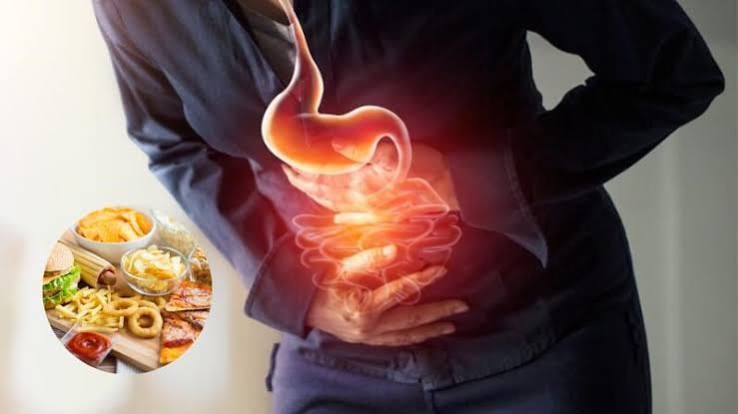
The relationship between fatty foods and acid reflux is one of the most consistently documented dietary associations in gastroenterology. High-fat meals do not simply sit heavily in the stomach — they trigger a cascade of physiological responses that collectively overwhelm the anti-reflux mechanisms protecting the oesophagus, producing the characteristic burning pain, regurgitation, and chronic mucosal irritation of gastro-oesophageal reflux disease (GERD). Understanding the precise mechanisms allows for targeted, evidence-based dietary modification rather than vague advice to avoid rich food.
- High-fat meals relax the lower esophageal sphincter (LES) via cholecystokinin (CCK) release, directly enabling acid to reflux into the oesophagus
- Fat delays gastric emptying, prolonging stomach distension and extending the window of reflux risk for several hours after eating
- Fried foods, fatty meats, full-fat dairy, and chocolate are the highest-risk categories across the research literature
- Switching to a Mediterranean-style low-fat diet reduces GERD symptom frequency by 30–40% in clinical trials
- Saturated fat (from fried food, red meat, butter) drives more LES relaxation per gram than monounsaturated fat (olive oil, avocado)
Why Fatty Foods Trigger Acid Reflux — The Physiological Mechanisms
Acid reflux requires two conditions simultaneously: stomach acid must be present, and the mechanical barrier preventing its upward migration must be compromised. Fatty foods affect both conditions. The anti-reflux barrier at the gastro-oesophageal junction — primarily the lower esophageal sphincter (LES) — depends on maintained resting tone to prevent acidic stomach contents from entering the oesophagus. When LES pressure drops below the threshold needed to counteract intragastric pressure, reflux occurs. High-fat meals drive this process through three well-characterised physiological mechanisms operating simultaneously.
Cholecystokinin and Lower Esophageal Sphincter Relaxation
The most direct mechanism involves cholecystokinin (CCK), a hormone released by I-cells in the duodenum in response to fat — and to a lesser extent protein — entering the small intestine. CCK serves essential digestive functions: it stimulates pancreatic enzyme secretion and gallbladder contraction to deliver bile for fat emulsification. However, its relaxant effect on smooth muscle extends beyond the gallbladder to include the LES. CCK-A receptor activation at the lower oesophageal sphincter reduces resting LES pressure, creating the mechanical conditions for acid entry into the oesophagus.
Research from Penagini et al. demonstrated that intraduodenal fat infusion significantly reduces LES pressure and that this effect is attenuated by CCK receptor antagonists — confirming that the LES relaxation is specifically hormone-mediated rather than a simple mechanical consequence of stomach fullness. The dose-response relationship is important: the more fat delivered to the duodenum, the greater the CCK release and the greater the LES relaxation. Small amounts of dietary fat may not trigger reflux in most people, while large high-fat meals reliably do so even in individuals without established GERD.
The CCK pathway also induces transient lower esophageal sphincter relaxations (TLESRs) — brief spontaneous relaxations lasting 10–40 seconds that normally allow trapped gas to escape through belching but simultaneously permit acid to splash upward into the oesophagus. High-fat meals increase both the frequency and duration of TLESRs, multiplying the number of reflux episodes per hour in the postprandial period. Studies using 24-hour pH monitoring have shown that the proportion of time oesophageal pH falls below 4.0 — the threshold indicating acid exposure — is significantly higher following high-fat meals than after matched low-fat meals providing the same caloric content.
Delayed Gastric Emptying and Prolonged Stomach Distension
Fat is the macronutrient that most powerfully slows gastric emptying — the rate at which stomach contents pass into the duodenum. This delay serves a genuine physiological purpose: fat requires bile emulsification and pancreatic lipase for digestion, and the small intestine needs time to produce and deliver these digestive agents. The consequence for reflux risk, however, is a prolonged window of gastric distension. A stomach that remains full and mechanically stretched for 4–5 hours after a high-fat meal, compared to 2–3 hours after a low-fat meal with the same caloric content, provides substantially more opportunity for reflux events to occur.
The mechanism involves the fat-sensing protein GPR119 in enteroendocrine cells of the duodenum, which detects fatty acids and promotes gastric retention via the enterogastric reflex. Cholecystokinin itself also delays gastric emptying through CCK-1 receptor activation on vagal afferents, creating a reinforcing feedback loop that further prolongs stomach distension. Gastric distension raises intragastric pressure, particularly during the postprandial period before normal stomach volume is restored, and this elevated pressure pushes against the LES from below — compounding the CCK-mediated LES relaxation from above.
Scintigraphic studies measuring gastric emptying half-time have shown that a high-fat meal (approximately 60% fat by caloric content) empties 40–50 minutes more slowly than an energy-matched low-fat meal. For people who lie down, exercise vigorously, or bend forward shortly after eating — all of which further reduce LES mechanical advantage or increase intra-abdominal pressure — the combination of delayed gastric emptying and positional factors creates a substantially elevated and prolonged reflux risk window.
Increased Gastric Acid Production
Fat in the diet stimulates gastric acid secretion through multiple pathways: direct stimulation of parietal cells and release of gastrin from G-cells in the stomach antrum. While gastric acid is essential for protein digestion and upper GI pathogen control, increased acid volume combined with impaired LES barrier function creates a more acidic and more voluminous refluxate. This is why people with GERD who regularly eat high-fat diets often report not only more frequent reflux episodes but more severe burning pain and longer recovery after each episode — the refluxate itself is more chemically damaging to the oesophageal mucosa.
The combination of fat-stimulated acid production and CCK-mediated LES relaxation is additive: the stomach is generating more acid at the same time that the barrier preventing its reflux is weakened. This synchronisation of two adverse physiological effects explains why high-fat meals are among the most reliable and reproducible GERD symptom triggers in clinical research settings, consistently outperforming other dietary variables including acidic foods, spicy foods, and caffeine in their effect on oesophageal acid exposure time.
Which Fatty Foods Are Most Problematic for Acid Reflux
Not all fatty foods carry equal reflux risk. The combination of fat content, fat type, cooking method, caloric density, and accompanying trigger compounds — caffeine, alcohol, carbonation, acidity — determines the overall reflux burden of a particular food. The highest-risk foods are those that combine high fat content with additional LES-relaxant or acid-stimulating properties.
Fried and Deep-Fried Foods
Fried foods — French fries, fried chicken, onion rings, tempura, spring rolls, fried fish — represent the highest-risk food category for acid reflux in epidemiological research. They combine very high fat content (often 15–25g per serving), high caloric density, the complete physiological CCK-response profile, and in many cases are consumed as part of large meals that independently increase intragastric pressure through gastric distension. Population studies consistently identify fried food consumption frequency as among the strongest dietary predictors of GERD symptom severity and weekly episode count.
The cooking process itself introduces additional adverse factors. Deep-frying at high temperatures generates advanced glycation end products (AGEs) and oxidised lipids that may independently promote low-grade oesophageal inflammation. The extremely high fat-to-volume ratio of fried foods also means that even moderate-sized portions deliver a large fat load rapidly to the duodenum, triggering a strong CCK response disproportionate to the apparent quantity of food consumed.
Fatty Cuts of Meat and Processed Meats
Fatty red meat — ribeye, T-bone steak, brisket, pork belly, lamb shoulder — and processed meats including bacon, sausages, salami, and chorizo combine high saturated fat content with high protein, creating a double stimulus for CCK release. Both fat and protein independently trigger CCK secretion from duodenal I-cells, and their combined effect in a protein-rich, high-fat meat meal produces a larger total CCK response than either macronutrient alone. A 200g ribeye can contain 25–35g of fat, predominantly saturated, which research has shown produces greater LES relaxation per gram than equivalent amounts of unsaturated fat.
Clinical GERD management guidelines from the American College of Gastroenterology specifically recommend reducing consumption of high-fat meats. For people who regularly experience heartburn after meat-heavy meals, switching to leaner preparations — chicken breast, turkey, lean beef tenderloin, white fish — produces measurable reductions in postprandial reflux episodes. The reduction in saturated fat content is the primary mechanism; the protein CCK contribution remains, but at a lower overall fat load, the total LES-relaxant signal is substantially attenuated.
Full-Fat Dairy Products
Full-fat cheese (particularly hard cheeses and cream cheese), cream, butter, whole milk, ice cream, and crème fraîche are high in saturated fat and trigger the same LES-relaxant CCK response as other high-fat foods. Dairy also contains casein — a protein that provides some buffering capacity for stomach acid — and calcium, which may modestly stimulate gastric acid production via calcium-triggered gastrin release. The net effect is variable across individuals, but high-volume full-fat dairy consumption reliably worsens reflux symptoms in people with established GERD, particularly in the forms most consumed in large quantities (cheese-heavy meals, cream-based sauces, butter-rich pastries).
The practical swap to low-fat or fat-free dairy — skimmed milk, low-fat Greek yoghurt, reduced-fat cheese — preserves the protein, calcium, and culinary role of dairy products while substantially reducing the fat load and CCK-mediated LES-relaxant effect. Some individuals with GERD also find plant-based alternatives such as oat milk or soy milk reduce symptoms, though this may partly reflect underlying lactose intolerance rather than fat-specific effects.
Chocolate and Cocoa Products
Chocolate deserves special attention as a GERD trigger because its adverse effects on LES function operate through three simultaneous mechanisms beyond its fat content alone. Dark and milk chocolate contains theobromine and caffeine, both of which independently relax the LES through methylxanthine-mediated smooth muscle relaxation. Cocoa butter — the fat component of chocolate — also stimulates CCK release, adding a third LES-relaxant pathway. Research has demonstrated that chocolate consumption produces significant LES pressure reduction and measurably increases oesophageal acid exposure time on 24-hour pH monitoring, consistent with clinical reports of heartburn following chocolate consumption.
Carob powder, sometimes suggested as a chocolate substitute, is substantially lower in fat and contains neither caffeine nor theobromine, making it a genuinely safer alternative for people with chocolate-triggered GERD. White chocolate eliminates caffeine and theobromine but retains full cocoa butter fat content, so it reduces but does not eliminate the reflux trigger profile. For the effects of tea on digestive health and its comparison with coffee as a GERD trigger, see our evidence review on tea and digestive health.
High-Fat vs Low-Fat Diets — What Clinical Research Demonstrates
Multiple randomised controlled trials and prospective cohort studies have examined the direct relationship between dietary fat intake and GERD outcomes, providing an evidence base that goes beyond anecdotal reports and clinical experience.
A landmark study by Shapiro et al. used 24-hour ambulatory oesophageal pH monitoring — the gold standard for objective acid exposure assessment — to compare reflux episodes after meals containing 55% fat versus meals containing 26% fat, matched for total caloric content. The high-fat meals produced significantly more reflux episodes per hour, longer acid clearance times, and higher DeMeester scores (a composite index of oesophageal acid exposure). These objective measures correlated with participant-reported symptom severity scores, validating the mechanistic studies in a clinically representative setting.
A prospective population-based cohort study following 6,215 participants over 7 years found that those in the highest quartile of dietary fat intake had a 2.4-fold greater risk of developing GERD compared to those in the lowest quartile, after statistical adjustment for BMI, smoking status, and alcohol consumption. This association held for both total fat and saturated fat, with saturated fat showing the stronger independent relationship with GERD incidence.
Intervention studies replacing high-fat Western diets with Mediterranean-style eating patterns — lower in saturated fat, higher in monounsaturated fat and dietary fibre — have reported 30–40% reductions in GERD symptom frequency within 4–8 weeks. A 2019 randomised controlled trial comparing Mediterranean diet adherence to proton pump inhibitor (PPI) therapy in mild-to-moderate GERD found that dietary intervention achieved comparable symptom control to medication in 62% of participants. This finding carries significant clinical implications given the documented adverse effects of long-term PPI use, including increased fracture risk, Clostridioides difficile infection susceptibility, magnesium deficiency, and possible effects on kidney function.
Meta-analyses pooling data from multiple studies consistently show that total fat intake is a significant independent predictor of GERD symptoms across diverse populations, with effect sizes comparable to those of other well-established risk factors such as obesity, smoking, and caffeine consumption. The evidence base for dietary fat reduction as a GERD intervention is among the most robust in the dietary-GI disease literature.
Saturated Fat, Unsaturated Fat, and GERD Risk — Does Fat Type Matter?
Beyond total fat quantity, the fatty acid composition of dietary fat modulates the magnitude of reflux effects. Research has begun to characterise differential effects of fat types on CCK secretion, LES function, and gastric motility.
Saturated fatty acids — found predominantly in animal products (meat, dairy, eggs), coconut oil, and palm oil — appear to produce greater CCK stimulation and more pronounced LES relaxation than unsaturated fatty acids in equivalent amounts. The differential response is attributed to their different binding profiles at CCK-secreting I-cell surface receptors and at the smooth muscle CCK-A receptors that mediate LES relaxation. Saturated fatty acids produce a stronger receptor signal per mole, translating into greater hormonal and mechanical effects on the anti-reflux barrier.
Monounsaturated fats — found in olive oil, avocado, almonds, hazelnuts, and most seed oils — produce a moderate CCK response that is measurably lower than saturated fat per caloric unit. While not neutral from a reflux perspective (any fat in adequate quantity will trigger some CCK response), they are substantially less reflux-promoting than saturated fat. This is a key mechanistic explanation for the more favourable GERD outcomes observed in populations following Mediterranean dietary patterns, which are high in olive oil and nuts but low in saturated fat, despite not being truly low-fat diets.
Polyunsaturated omega-3 fatty acids — from oily fish (salmon, mackerel, sardines), flaxseed, and walnuts — have anti-inflammatory effects on oesophageal and gastric mucosa that may partially counteract the mucosal damage caused by acid refluxate. A prospective study examining long-term dietary patterns and oesophageal adenocarcinoma risk — the cancer that develops from Barrett’s oesophagus, itself a complication of chronic untreated GERD — found that higher omega-3 dietary intake was associated with reduced oesophageal cancer risk. This does not mean oily fish is free of reflux effects in the acute postprandial period, but the inflammatory dimension of GERD-related mucosal damage may be partially modulated by omega-3 intake over time.
Trans fats — found in partially hydrogenated vegetable oils used in some margarines, commercially produced pastries, and processed snack foods — represent the worst combination: they produce strong CCK stimulation, have demonstrated pro-inflammatory effects on GI mucosa, delay gastric emptying, and contribute to metabolic dysfunction that independently worsens GERD risk through weight gain and insulin resistance. Public health guidelines advising minimisation of trans fat intake are well-supported by converging cardiovascular and GI evidence.
Meal Composition, Portion Size, and the Reflux Risk of Fat in Context
Fat content interacts with other meal properties to determine the overall reflux load. Understanding these interactions allows more precise dietary management than blanket fat avoidance.
Meal volume and caloric density: Large meals increase intragastric pressure regardless of macronutrient composition. High-fat meals tend to be calorie-dense, meaning smaller volumes deliver more total fat, but portion size effects on reflux are independent of fat content. A large low-fat meal can still provoke reflux through gastric distension alone. The combination of large portion size and high fat content produces synergistic — not merely additive — reflux risk, because maximum gastric distension overlaps with maximum CCK-mediated LES relaxation. Clinical guidelines consistently recommend smaller, more frequent meals over fewer large meals for GERD management. For evidence on meal timing and digestive comfort, see our dedicated analysis of meal timing and digestive comfort.
Concurrent LES-relaxant exposures: Common meal accompaniments significantly amplify the reflux load of fatty food. Alcohol relaxes the LES through a separate mechanism from CCK — direct ethanol effect on smooth muscle — and its combination with a high-fat meal produces additive LES pressure reduction from two independent pathways. Coffee (methylxanthines separate from caffeine’s direct effect) and carbonated beverages (gastric distension from CO2) each independently reduce LES pressure. A high-fat meal consumed with wine, coffee, and carbonated beverages — a common restaurant pattern — simultaneously activates four distinct reflux-promoting mechanisms. For guidance on managing coffee intake with digestive symptoms, see our evidence review on coffee and digestion.
Meal timing and sleep position: The postprandial period — the 2–3 hours after eating — is when reflux risk is highest because the stomach remains full and LES pressure is under continuous CCK-mediated depression. Lying down eliminates the gravitational advantage that upright posture provides for LES mechanical competence. Eating high-fat meals within 3 hours of bedtime is among the most reliable and clinically well-documented GERD triggers. Elevating the head of the bed by 20–30 cm using a wedge pillow or bed-raisers under the headboard partially compensates by restoring gravitational protection against nocturnal reflux.
Dietary fibre co-consumption: High-fibre foods in the same meal do not directly neutralise fat’s LES-relaxant effect, but dietary fibre reduces GERD risk through multiple indirect pathways: it promotes gastric motility (counteracting fat-induced gastroparesis), absorbs bile acids that can contribute to refluxate irritation, and is associated with lower body weight — which independently reduces intra-abdominal pressure. For the full evidence on fibre-rich foods and gut health, see our article on whole grains and digestion.
Evidence-Based Dietary Strategies for Managing Fat-Related Acid Reflux
Translating mechanistic evidence into sustainable practice requires specific, actionable modifications rather than generic advice to eat healthier. The following strategies are directly grounded in the physiological evidence reviewed above.
Cooking method substitution: Switching from frying to baking, grilling, steaming, or poaching reduces the fat content of meals dramatically without requiring different ingredient choices. A baked chicken thigh and a deep-fried chicken thigh begin as the same ingredient but differ by 15–20g of fat per 150g serving. Applied consistently, this single cooking method change reduces dietary fat load substantially without the cognitive burden of ingredient-by-ingredient nutritional analysis. Grilling fatty meats also allows much of their intrinsic fat to drip away during cooking, further reducing the fat load of an otherwise high-risk food.
Distributing fat intake throughout the day: Rather than eliminating fat, distributing it more evenly across smaller meals reduces the peak CCK stimulus at any individual meal. A single 50g fat meal produces greater LES relaxation than five 10g fat meals providing the same daily fat total, because the CCK dose-response is per-meal rather than cumulative. Front-loading the largest fat-containing meal in the middle of the day — where several hours remain before the vulnerable sleep period — also reduces the overlap between postprandial reflux risk and the recumbent position.
Fat-source substitution: Replacing high-saturated-fat sources with lower-saturated alternatives reduces the reflux-specific effects of dietary fat while preserving caloric value and meal palatability. Practical swaps include: olive oil instead of butter in cooking; grilled salmon or mackerel instead of ribeye steak; reduced-fat cheese instead of full-fat hard cheese; avocado instead of cream-based spreads; nuts and seeds instead of pastries. For evidence on the broader gut health benefits of plant-based eating patterns, see our articles on beans and digestive health and vegetables for gut health.
Individualised trigger identification: While fried food, chocolate, and full-fat dairy are high-risk across most people with GERD, individual thresholds vary considerably. Maintaining a food and symptom diary for 2–3 weeks — recording all meals, portion sizes, eating times, and symptom ratings on a 0–3 scale — identifies which specific fatty foods consistently precede symptoms for a given individual. This allows targeted, evidence-informed elimination of true personal triggers rather than blanket fat avoidance that may prove unnecessarily restrictive and difficult to maintain long-term.
Weight management as a structural intervention: For people with overweight or obesity, weight loss is the single most high-impact intervention for GERD symptom control. Visceral adipose tissue increases intra-abdominal pressure, which mechanically pushes intragastric contents toward the LES from below. A 10% reduction in body weight has been shown to reduce GERD symptom frequency by approximately 40% in clinical research — an effect comparable to or exceeding pharmaceutical acid suppression for many patients. Dietary fat reduction contributes to weight loss as well as directly reducing the acute reflux trigger effect, providing compounding benefits in this population.
The Broader Dietary Pattern — Beyond Individual Fatty Foods
Individual food avoidance, while useful, produces less consistent improvement than comprehensive dietary pattern change. The research literature increasingly supports approaching GERD management as a shift in overall eating pattern rather than identification and elimination of individual trigger foods, for several converging reasons.
First, multiple simultaneous triggers interact synergistically. Eliminating chocolate while maintaining daily fried food consumption, frequent alcohol use, and late-night large meals will produce only partial symptom improvement because multiple other reflux-promoting mechanisms remain active. The cumulative effect of removing multiple moderate triggers typically exceeds the benefit of eliminating one strong trigger while others persist.
Second, the Mediterranean dietary pattern — emphasised in research on gut health, cardiovascular disease, and metabolic health — also produces favourable GERD outcomes precisely because it is simultaneously lower in saturated fat, higher in dietary fibre, associated with healthy body weight, and rich in anti-inflammatory nutrients. Its documented effects on GERD represent multiple beneficial mechanisms operating in concert rather than a single dietary variable. For the evidence on Mediterranean-style produce and gut health benefits, see our articles on fruits that support digestion and spicy foods and digestion.
Third, the gut microbiome — increasingly recognised as a modulator of GI motility, gut permeability, and visceral sensitivity — is shaped by overall dietary pattern rather than individual foods. High-fat, low-fibre diets characteristic of Western eating reshape the microbiome toward pro-inflammatory profiles associated with increased gut permeability, reduced short-chain fatty acid (SCFA) production, and altered GI motility — all of which may amplify the mechanical reflux risk created by the fat-CCK-LES pathway. Conversely, high-fibre, varied plant-food diets support the microbiome composition associated with healthy GI function and lower GERD risk.
Frequently Asked Questions
Q: Can I eat fatty foods occasionally without triggering acid reflux if I normally follow a low-fat diet?
A: Occasional fatty meals typically produce less severe and shorter-duration reflux in people who habitually follow low-fat diets, because baseline LES resting tone is better maintained and gastric motility is more efficient. However, a single very high-fat meal — a restaurant meal comprising fried starter, fatty main, and rich dessert — will still provoke a measurable CCK-mediated LES response in most people with GERD. The impact is dose-dependent: occasional moderate fat intake is manageable for many people; occasional very large fatty meals are not. Compensating measures — smaller portions, avoiding lying down afterwards, not consuming alcohol simultaneously — reduce the impact of infrequent higher-fat eating episodes.
Q: Why does full-fat cheese trigger my reflux more severely than olive oil, even though both are fat sources?
A: Full-fat cheese contains a substantially higher proportion of saturated fatty acids than olive oil, which is predominantly monounsaturated. Saturated fat produces greater CCK stimulation and more pronounced LES relaxation per gram than monounsaturated fat. Cheese also contains significant protein, which is a second independent CCK secretagogue, adding a protein-mediated LES-relaxant signal on top of the fat-mediated signal. Olive oil contains negligible protein, so its CCK stimulus comes from fat alone. The double CCK pathway — saturated fat plus protein — in cheese creates a substantially larger total LES-relaxant hormonal response than olive oil of equivalent caloric quantity.
Q: Are ketogenic diets safe for people with acid reflux, given their very high fat content?
A: This is a nuanced area with apparent contradiction between the fat-GERD mechanism and some clinical observations. Several studies have shown that ketogenic and low-carbohydrate diets actually improve GERD symptoms in overweight individuals, primarily because they produce rapid and significant weight loss that reduces intra-abdominal pressure — a dominant GERD mechanism in this group. The weight reduction benefit can outweigh the direct LES-relaxant effects of increased dietary fat. However, fat quality matters significantly: a ketogenic diet centred on oily fish, avocado, olive oil, and nuts carries substantially less acute reflux risk than one based predominantly on fatty red meat, butter, and cheese. For lean individuals without excess body weight, ketogenic diets are more likely to worsen GERD because the compensating weight-loss benefit does not apply.
Q: Does eating fat late at night cause more acid reflux than eating the same food earlier in the day?
A: Yes, for multiple compounding reasons. The postprandial period — approximately 2–3 hours after eating — is when reflux risk is highest, because the stomach remains full, gastric emptying is ongoing, and LES pressure is under maximum CCK-mediated depression. Consuming high-fat meals late in the evening means this entire high-risk window occurs while in bed, where the recumbent position eliminates gravitational protection for LES mechanical competence. The lying-down posture reduces effective LES pressure by approximately 20% compared to upright positioning. Additionally, gastric acid secretion follows a circadian rhythm with peak production occurring in the late evening and night, creating a more acidic refluxate during precisely the period when the postprandial LES is most vulnerable. This combination makes late-night high-fat eating the single highest-risk eating pattern for nocturnal GERD symptoms and oesophageal mucosal damage.
Q: I’ve heard that proton pump inhibitors (PPIs) are effective for GERD — should I rely on them instead of dietary changes?
A: PPIs reduce stomach acid production and are effective at treating the symptoms and complications of GERD, but they address the downstream consequence (acid in the oesophagus) rather than the upstream cause (LES dysfunction from dietary fat). Dietary modification and PPI therapy are complementary, not mutually exclusive. Clinical evidence shows that patients who combine dietary fat reduction with PPI therapy achieve better symptom control than those using either approach alone, and some patients with mild-to-moderate GERD can manage symptoms adequately through diet alone, reducing or eliminating PPI dependence. Given the established adverse effects of long-term PPI use — including magnesium deficiency, increased fracture risk, Clostridioides difficile susceptibility, and possible effects on kidney function — addressing modifiable dietary drivers of GERD alongside any pharmaceutical management is clinically well-supported.
Q: Can ginger or specific teas help counteract the reflux effect of a high-fat meal?
A: Ginger has documented prokinetic effects — it accelerates gastric emptying through 5-HT4 receptor agonism and motilin receptor activity, which partially counteracts the gastric-emptying delay that fat produces. Consuming ginger tea during or after a high-fat meal may modestly reduce the gastric distension duration and associated reflux risk. Chamomile, deglycyrrhizinated liquorice (DGL) tea, and slippery elm have empirical support as oesophageal mucosa-soothing agents that may reduce symptom severity when reflux does occur, but they do not address the primary CCK-LES relaxation mechanism. They should be viewed as symptom-supportive rather than causally preventive. For the full evidence on herbal teas and digestive health, see our article on tea and digestive health.
Q: How quickly can GERD symptoms improve after reducing dietary fat intake?
A: The acute reduction in reflux episodes occurs within days to 1–2 weeks of consistent dietary fat reduction, because the CCK-LES relaxation mechanism responds to the fat content of individual meals rather than to accumulated dietary exposure. Within days of reducing fat content at meals, the peak CCK stimulus per meal drops, postprandial LES pressure is better maintained, and the number of reflux episodes per postprandial hour decreases. Symptomatic improvement often precedes measurable changes in 24-hour oesophageal acid exposure, which typically shows significant improvement within 4–8 weeks of sustained low-fat eating. Structural changes — improvement in oesophagitis grade on endoscopy — lag symptom improvement and typically require 8–12 weeks of consistent dietary modification for measurable resolution.
Occasional heartburn after a fatty meal is common and not medically concerning. The following symptoms require prompt evaluation because they may indicate complications of chronic GERD or other serious oesophageal conditions:
- Dysphagia — difficulty swallowing or a sensation of food sticking in the chest or throat, which may indicate oesophageal stricture or Barrett’s oesophagus
- Odynophagia — painful swallowing, which may indicate erosive oesophagitis
- Unintentional weight loss alongside reflux symptoms
- Persistent vomiting or vomiting blood (haematemesis)
- Black or tarry stools (melaena) — indicating possible upper GI bleeding from oesophageal or gastric erosion
- Chest pain not clearly related to eating, which requires cardiac causes to be excluded before attribution to GERD
- Symptoms persisting despite 4–8 weeks of dietary modification and over-the-counter acid suppression — these warrant endoscopic evaluation to assess for Barrett’s oesophagus, oesophagitis grade, or other pathology requiring targeted management
This article is for educational purposes only and does not constitute medical advice. Always consult a qualified healthcare provider for personalised diagnosis and treatment of GERD. Dietary changes for reflux management should be discussed with your doctor, particularly if you are taking acid-suppressing medications.
- Penagini R, et al. “Effect of increasing the fat content but not the energy load of a meal on gastro-oesophageal reflux and lower oesophageal sphincter motor function.” Gut. 1998;42(3):330-333.
- Shapiro M, et al. “The effect of dietary factors on esophageal pH in patients with GERD.” American Journal of Gastroenterology. 2007;102(8):1702-1708.
- Nilsson M, et al. “Lifestyle related risk factors in the aetiology of gastro-oesophageal reflux.” Gut. 2004;53(12):1730-1735.
- El-Serag HB, et al. “Dietary intake and the risk of gastro-oesophageal reflux disease: a cross sectional study in volunteers.” Gut. 2005;54(1):11-17.
- Newberry C, Lynch K. “The role of diet in the development and management of gastroesophageal reflux disease.” Journal of Thoracic Disease. 2019;11(Suppl 12):S1594-S1601.
- Mone I, et al. “Adherence to GERD diet recommendations and proton pump inhibitors.” Gastroenterology Research and Practice. 2016;2016:7231828.
- Festi D, et al. “Body weight, lifestyle, dietary habits and gastroesophageal reflux disease.” World Journal of Gastroenterology. 2009;15(14):1690-1701.
- Clarrett DM, Hachem C. “Gastroesophageal Reflux Disease (GERD).” Missouri Medicine. 2018;115(3):214-218.
- American College of Gastroenterology. “ACG Clinical Guideline: Diagnosis and Management of Gastroesophageal Reflux Disease.” American Journal of Gastroenterology. 2022;117(1):27-56.
- Koufman JA. “The otolaryngologic manifestations of gastroesophageal reflux disease (GERD).” Laryngoscope. 1991;101(S53):1-78.
The explanation of the CCK-LES relaxation pathway finally made sense of something I’ve noticed for years — that the size of a fatty meal matters as much as what’s in it. I’ve had GERD for a decade and always struggled with the vague advice to ‘avoid fatty foods’, but understanding that it’s a dose-dependent hormonal response via CCK explains why I can eat a small amount of the same food that wrecks me when I eat a full portion. I’ve started deliberately halving my portions of high-fat foods rather than eliminating them entirely, and the improvement has been noticeable. The section on saturated vs unsaturated fat was also genuinely new information for me — I had no idea olive oil was meaningfully different from butter in this context.
That’s a really astute observation, Marcus — the dose-dependency of the CCK response is exactly the right framework for thinking about this. What you’ve noticed practically is precisely what the pharmacology predicts: the CCK stimulus scales with the fat load delivered to the duodenum, not just the presence of fat. Halving your portion of a high-fat food halves the peak duodenal fat concentration, halves the CCK release, and produces substantially less LES relaxation. It’s a much more mechanistically coherent approach than trying to identify which specific foods to eliminate entirely, because the ‘trigger’ isn’t a food category — it’s a dose of fat. The unsaturated fat distinction is one of the less-publicised findings in GERD research and it does have real practical value: people using olive oil as a cooking fat and eating avocado and nuts can maintain a satisfying and varied diet while substantially reducing the saturated-fat-specific LES-relaxant load.
Really appreciated the evidence-based comparison with PPI therapy. My gastroenterologist has been pushing me to stay on omeprazole long-term but I’ve been uncomfortable with that given the fracture and kidney function concerns I’ve read about. This article gives me a solid foundation to have a more informed conversation about trying dietary intervention first — particularly the 2019 RCT showing 62% of mild-to-moderate GERD patients achieved comparable control through Mediterranean diet adherence. The weight management section was also very relevant for me personally. Bookmarking this to share with my doctor.