

Antibiotics and digestive side effects are closely intertwined — gastrointestinal symptoms are among the most common adverse effects reported with virtually every antibiotic class, affecting between 5 and 40% of patients depending on the agent, dose, and individual gut microbiome. For most people, antibiotic-associated GI side effects are mild, self-limiting, and manageable. For a smaller proportion, however, the disruption antibiotics cause to the gut microbiome leads to clinically significant complications including Clostridioides difficile (C. difficile) colitis, severe antibiotic-associated diarrhoea, or prolonged post-antibiotic bowel dysfunction that persists for months after the course is completed.
Understanding why antibiotics cause GI side effects — and distinguishing the common, manageable effects from the signs that warrant urgent medical evaluation — is relevant for anyone who takes antibiotic courses, which is to say most adults at some point in their lives. This article covers the mechanisms behind antibiotic GI toxicity, the different side effect profiles of major antibiotic classes, the role of probiotics and diet in microbiome recovery, and the specific risk and recognition of C. difficile colitis. The broader picture of how medications affect the digestive system is covered in the companion article on digestive medications for adults, and the question of when anti-diarrheal medications are appropriate — and when they are contraindicated — is addressed in the article on anti-diarrheal medications.
Why Antibiotics Cause Digestive Side Effects
Antibiotics cause GI side effects through two distinct mechanisms that often occur simultaneously. The first is direct GI toxicity — the antibiotic itself irritates the gastric or intestinal mucosa, stimulates gut motility receptors, or causes local inflammation independent of its effect on bacteria. Erythromycin is the clearest example: it is a potent motilin receptor agonist that increases peristaltic contractions, causing nausea, vomiting, and diarrhoea through a mechanism completely separate from its antibacterial effect. This is why erythromycin and its derivative azithromycin frequently cause GI symptoms even when given intravenously, bypassing gut absorption entirely.
The second and more significant mechanism is disruption of the gut microbiome — the community of trillions of microorganisms (bacteria, fungi, archaea, and viruses) that colonise the large intestine and play critical roles in digestion, immune regulation, and protection against pathogens. Antibiotics do not selectively target pathogenic bacteria; they suppress broad swathes of the commensal flora alongside any pathogen they are treating. This collateral disruption reduces microbial diversity, alters the relative populations of different bacterial families, and most importantly, removes the “colonisation resistance” that healthy gut flora provides — the competitive suppression of opportunistic pathogens, most notably C. difficile, which is normally kept at low population levels by competing commensal organisms.
The extent of microbiome disruption varies significantly between antibiotic classes. Narrow-spectrum antibiotics (amoxicillin, nitrofurantoin, clindamycin for anaerobic infections) affect a more limited range of organisms than broad-spectrum agents (co-amoxiclav, ciprofloxacin, cephalosporins). Antibiotics with high oral bioavailability that achieve significant colonic concentrations cause more microbiome disruption than those that are primarily absorbed in the small bowel. The dose, duration, and route of administration all matter — a 3-day course of trimethoprim for a urinary tract infection causes substantially less microbiome disruption than a 14-day course of co-amoxiclav for a skin infection.
GI Side Effect Profiles of Common Antibiotic Classes
Different antibiotic classes have characteristic GI side effect profiles that reflect their mechanisms of action, spectrum, and pharmacokinetics:
Penicillins (amoxicillin, co-amoxiclav): Amoxicillin alone causes GI side effects in approximately 5–10% of patients; co-amoxiclav (amoxicillin + clavulanate) causes them in 25–40%. The clavulanate component is the main driver — it has intrinsic GI irritant properties and is a more potent disruptor of the gut microbiome than amoxicillin alone. Co-amoxiclav is consistently among the antibiotic prescriptions most frequently associated with antibiotic-associated diarrhoea.
Macrolides (azithromycin, clarithromycin, erythromycin): GI symptoms are the most common reason patients discontinue macrolide courses. Erythromycin causes GI symptoms in up to 30% of patients; azithromycin and clarithromycin have somewhat better GI tolerability profiles. The motilin receptor agonism of macrolides causes nausea and diarrhoea through direct motility effects rather than microbiome disruption, which is why taking macrolides with food only partially ameliorates symptoms (food slows gastric emptying, reducing peak drug exposure to the gastric mucosa, but does not affect motilin receptor effects in the small bowel).
Fluoroquinolones (ciprofloxacin, levofloxacin): Broad-spectrum agents with significant microbiome disruption potential. Ciprofloxacin causes marked reductions in gut microbial diversity within 3 to 4 days of starting — some studies using 16S rRNA sequencing have shown that a 5-day course of ciprofloxacin reduces gut microbial diversity by 30–40% compared to baseline. Recovery takes 1 to 4 weeks for some species, but some taxa may not fully recover for 6 months or longer after a single course. Fluoroquinolones are also among the antibiotics most strongly associated with C. difficile infection risk.
Cephalosporins (cefalexin, cefuroxime, co-amoxiclav): GI symptoms in 2–10% of patients; moderate microbiome disruption. Third-generation cephalosporins used in hospital settings carry higher C. difficile risk than first-generation oral agents used in the community.
Clindamycin: Although its direct GI side effect rate is relatively low, clindamycin has historically been strongly associated with C. difficile colitis — it was the antibiotic most commonly implicated in early C. difficile outbreaks. This is now understood to relate to its near-complete bioavailability and high colonic concentrations, which cause profound anaerobic flora suppression (C. difficile is an anaerobe that thrives when competing anaerobic flora are suppressed).
Tetracyclines (doxycycline): Moderate GI side effects including nausea, oesophageal irritation (particularly if not taken with sufficient water and while upright), and diarrhoea. Doxycycline should always be taken with a full glass of water and the patient should remain upright for 30 minutes after each dose to prevent oesophageal ulceration.
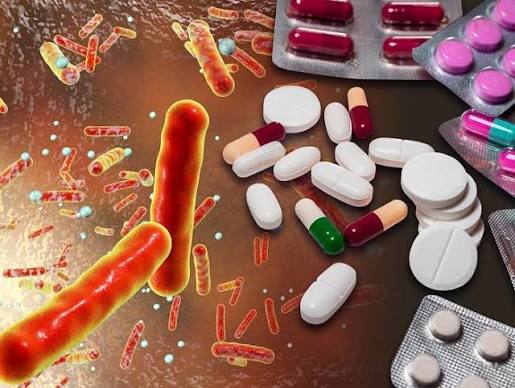
C. difficile Colitis: The Most Serious Complication
Clostridioides difficile (previously Clostridium difficile) is an anaerobic, spore-forming bacterium that colonises the colon when normal gut flora is sufficiently disrupted. It produces two toxins — Toxin A (enterotoxin) and Toxin B (cytotoxin) — that damage the intestinal epithelium, causing the spectrum of illness from mild antibiotic-associated diarrhoea to severe pseudomembranous colitis and toxic megacolon, which can be life-threatening.
C. difficile is present at low levels in the gut of approximately 3–5% of healthy adults in the community, kept at subclinical populations by competing commensal flora. Antibiotic exposure suppresses these competitors, allowing C. difficile populations to expand and produce clinically significant toxin levels. The spore form of C. difficile is highly resistant to alcohol-based hand sanitisers and environmental cleaning, which is why C. difficile spreads readily in hospital settings and is a major healthcare-associated infection.
Risk factors for C. difficile infection include: recent antibiotic use (within the preceding 8 weeks, particularly with broad-spectrum agents), age over 65, hospitalisation (especially prolonged), proton pump inhibitor use (the role of acid suppression in C. difficile risk is debated but supported by multiple epidemiological studies), impaired immune function, and prior C. difficile infection (which increases risk of recurrence). The proton pump inhibitors article covers the evidence around PPI use and C. difficile risk in more detail.
Recognising C. difficile: The typical presentation is watery diarrhoea (3 or more loose stools per day) occurring during or within 8 weeks after antibiotic treatment, often accompanied by lower abdominal cramping. Fever, leukocytosis, and elevated CRP indicate a more severe presentation. Bloody diarrhoea is less common with C. difficile than with invasive bacterial infections but can occur in fulminant colitis. The critical distinguishing feature from simple antibiotic-associated diarrhoea is severity, persistence beyond 48 hours after antibiotics are stopped, and the presence of systemic signs (fever, elevated inflammatory markers).
Diagnosis is made by stool testing for C. difficile toxins or the toxin-producing gene (PCR). Treatment of mild to moderate C. difficile is oral vancomycin or fidaxomicin for 10 days; fidaxomicin has a lower recurrence rate than vancomycin and is now the first-line recommendation in most guidelines. Metronidazole, previously first-line, is no longer recommended as primary treatment due to inferior outcomes compared to vancomycin and fidaxomicin. For recurrent C. difficile (which occurs in 15–30% of treated patients after a first episode), faecal microbiota transplantation (FMT) has demonstrated superior efficacy over repeated antibiotic courses in clinical trials.
Probiotics for Antibiotic-Associated Diarrhoea: What the Evidence Shows
The use of probiotics alongside antibiotics to reduce antibiotic-associated diarrhoea (AAD) is supported by a substantial body of clinical trial evidence, though effect sizes vary by probiotic strain, antibiotic class, and patient population. The 2012 Cochrane review and subsequent meta-analyses consistently find that probiotic supplementation reduces the absolute risk of AAD by approximately 30–40% compared to placebo. The evidence is strongest for Lactobacillus rhamnosus GG (Culturelle) and Saccharomyces boulardii (Florastor), which have the most trial data in this indication.
For C. difficile-associated diarrhoea specifically, Saccharomyces boulardii has shown benefit in reducing recurrence rates in some trials — though the evidence is inconsistent across studies and the benefit appears larger in patients at higher baseline risk. The 2017 PLACIDE trial, the largest RCT of probiotics for AAD and C. difficile prevention in hospitalised adults, found no significant reduction in C. difficile incidence — raising important questions about whether the benefit seen in smaller trials reflects populations at lower risk than the hospitalised elderly population studied in PLACIDE.
The practical recommendation most gastroenterologists give is: probiotics with Lactobacillus rhamnosus GG or Saccharomyces boulardii taken alongside antibiotics are reasonable for adults who have previously experienced AAD, for those on prolonged or broad-spectrum courses, and for older adults — while recognising that the benefit is probabilistic rather than guaranteed. The probiotic should be taken at least 2 hours apart from the antibiotic dose to prevent the antibiotic from killing the probiotic organisms before they can colonise. For the broader role of healthy habits supporting gut microbiome balance, the foundational lifestyle article is a useful complement.
Diet and Gut Microbiome Recovery After Antibiotics
The gut microbiome begins to recover within days of completing an antibiotic course, but full recovery — restoring both the diversity and composition of the pre-antibiotic baseline — takes considerably longer. Shotgun metagenomic studies have demonstrated that while the most abundant organisms recover within 1 to 4 weeks, some taxa depleted by broad-spectrum antibiotics may remain suppressed for 6 months or longer after a single course. Repeated antibiotic courses in the same individual compound this disruption, and some studies suggest that heavy antibiotic use during childhood permanently shapes adult microbiome composition.
Dietary interventions that support faster microbiome recovery include: high dietary fibre from diverse plant sources (different bacterial species ferment different types of fibre — the greater the dietary fibre diversity, the broader the range of organisms supported), fermented foods (yoghurt, kefir, kimchi, sauerkraut, kombucha), and reduction of highly processed, low-fibre foods that favour less diverse bacterial populations. A 2021 study in Cell comparing high-fibre diets to high-fermented-food diets found that high-fermented-food diets increased microbial diversity and reduced markers of immune activation more effectively than high-fibre diets over a 17-week period, though both had beneficial effects. The practical implication: during and after antibiotic recovery, prioritising a varied diet with multiple fibre sources and including fermented foods with live cultures is more supportive than simply taking a single probiotic supplement.
The relationship between gut motility, posture, and digestive health is explored in the articles on posture and acid reflux and sitting too long and digestive symptoms, which complement the microbiome-focused discussion here with the mechanical aspects of gut health.
Practical Steps to Reduce GI Side Effects While on Antibiotics
Several practical strategies reduce antibiotic GI side effects without compromising antibiotic efficacy. Taking the antibiotic with food (unless contraindicated — check the leaflet) slows gastric emptying and reduces peak mucosal drug concentrations. Staying well hydrated throughout the course reduces the concentration of drug reaching the colonic mucosa. Avoiding alcohol during antibiotic treatment reduces additional GI irritation and potential drug interactions. Starting probiotics at the beginning of the antibiotic course — rather than waiting until GI symptoms appear — provides greater protective benefit since it reduces the magnitude of microbiome disruption rather than attempting recovery after disruption is established.
Splitting antibiotic doses to smaller, more frequent amounts can reduce direct GI irritant effects for some agents (a 500 mg three-times-daily regimen may be better tolerated than a 1000 mg twice-daily regimen for some people). However, splitting doses should only be done if the antibiotic’s dosing schedule allows this — some antibiotics rely on achieving specific peak concentrations that require the prescribed dose to be taken as prescribed. Consult your pharmacist or prescriber before adjusting your dose frequency. Finally, keeping a simple record of any GI symptoms during the course and their severity helps your GP make more informed decisions about antibiotic choice if you need treatment for a future infection. The relationship between breathing patterns and gut comfort, which can also help manage GI distress during illness, is covered in the article on breathing exercises for digestive comfort.
- Diarrhoea with more than 4–5 loose stools per day during or within 8 weeks after antibiotics
- Diarrhoea accompanied by fever above 38°C
- Severe abdominal cramping alongside diarrhoea
- Blood or pus in the stool
- Diarrhoea that persists more than 48 hours after the antibiotic course is completed
- Worsening symptoms despite stopping the antibiotic
- Any diarrhoea in an immunocompromised patient or anyone over 65
Frequently Asked Questions
Not necessarily for every antibiotic course, but it is a reasonable precaution for longer or broad-spectrum courses, for adults with prior antibiotic-associated diarrhoea, or for those over 65. The best-evidenced strains are Lactobacillus rhamnosus GG and Saccharomyces boulardii. The key practical point is to take them at least 2 hours apart from antibiotic doses and to continue them for 1 to 2 weeks after the antibiotic course ends to support the recovery phase. For short courses of narrow-spectrum antibiotics in otherwise healthy adults, the benefit of probiotics is smaller and less certain.
Antibiotic-associated diarrhoea (AAD) is typically mild (2–4 loose stools per day), not associated with fever or significant abdominal pain, and resolves within a few days of completing the antibiotic. C. difficile tends to cause more significant diarrhoea (often 5 or more loose stools per day), is associated with lower abdominal cramping and sometimes fever, and may worsen rather than improve after antibiotics are stopped. If your diarrhoea during or after antibiotics is more than mild, persists beyond 48 hours after completing the course, or is accompanied by fever or significant abdominal pain, contact your GP or pharmacist for assessment — a stool test can distinguish between the two.
With caution, and not without first considering whether C. difficile is likely. For mild antibiotic-associated diarrhoea without fever, abdominal cramping, or blood — and without recent hospitalisation or prior C. difficile — loperamide can manage symptoms while the microbiome recovers. But if any of these features are present, or if you are over 65, immunocompromised, or have had previous C. difficile infection, do not use loperamide without speaking to a healthcare professional first. Using loperamide to suppress C. difficile diarrhoea can prevent toxin clearance and precipitate toxic megacolon — a potentially fatal complication.
It depends on the antibiotic. Most antibiotics with GI side effects are better tolerated when taken with food — food slows gastric emptying, reduces peak mucosal drug concentrations, and moderates the direct irritant effects. The exceptions are antibiotics where food reduces absorption: azithromycin tablets should be taken without food to ensure adequate absorption, though azithromycin capsules (where available) can be taken with or without food. Doxycycline should be taken with food and a full glass of water to reduce oesophageal irritation. Always check the patient information leaflet for your specific antibiotic regarding food interactions.
For most people after a standard antibiotic course, the most abundant gut bacteria recover to near-baseline levels within 1 to 4 weeks. However, full microbial diversity — including some less abundant but important species — can take 3 to 6 months to restore, and some species suppressed by broad-spectrum antibiotics may not fully recover without active dietary support. Diet rich in diverse plant fibres and fermented foods supports faster and more complete recovery than passive waiting. Repeated antibiotic courses cumulatively reduce baseline microbial diversity, particularly when courses are close together in time.
Individual variation in antibiotic GI tolerance largely reflects differences in baseline gut microbiome composition and resilience. People with higher baseline microbial diversity tend to tolerate microbiome disruption better because the overall ecosystem has more redundancy — when some species are suppressed, others with overlapping functional roles can compensate. People who have had prior antibiotic courses (which reduce baseline diversity), a diet low in fibre, or pre-existing gut conditions (IBS, functional dyspepsia) tend to experience more significant GI effects from the same antibiotic at the same dose than those with robust, diverse baseline microbiomes.
The most evidence-supported dietary approach for post-antibiotic gut recovery combines high dietary fibre diversity (multiple fruit, vegetable, legume, and whole grain sources) with regular consumption of fermented foods (yoghurt with live cultures, kefir, kimchi, sauerkraut, miso, or kombucha). The fibre diversity provides different fermentation substrates for different bacterial families, promoting broader microbiome recovery rather than selective growth of one or two species. Fermented foods introduce live microorganisms that may transiently colonise and support diversity during recovery. Reducing ultra-processed foods, which are low in fibre and high in additives that may suppress beneficial bacteria, further supports recovery.
You develop severe diarrhoea (more than 6 stools per day), high fever, or significant abdominal pain during or after an antibiotic course — particularly if you are over 65, have recently been hospitalised, are immunocompromised, or have had C. difficile before. These presentations require stool testing to exclude C. difficile colitis before any anti-diarrheal medication is used. Do not self-medicate with loperamide until C. difficile has been excluded.
- NHS. (2023). Antibiotics: Side effects. National Health Service (UK). Available at: nhs.uk/conditions/antibiotics/side-effects
- CDC. (2024). Clostridioides difficile (C. diff). Centers for Disease Control and Prevention. Available at: cdc.gov/cdiff
- Guh AY, Mu Y, Winston LG, et al. (2020). Trends in U.S. burden of Clostridioides difficile infection and outcomes. New England Journal of Medicine, 382(14), 1320–1330.
- Sonnenburg JL, Sonnenburg ED. (2019). The ancestral and industrialized gut microbiota and implications for human health. Nature Reviews Microbiology, 17(6), 383–390.
- Wastyk HC, Fragiadakis GK, Perelman D, et al. (2021). Gut-microbiota-targeted diets modulate human immune status. Cell, 184(16), 4137–4153.
- Goldenberg JZ, Ma SSY, Saxton JD, et al. (2013). Probiotics for the prevention of Clostridium difficile-associated diarrhea in adults and children. Cochrane Database of Systematic Reviews.
- Spor A, Koren O, Ley R. (2011). Unravelling the effects of the environment and host genotype on the gut microbiome. Nature Reviews Microbiology, 9(4), 279–290.
I’ve had four courses of antibiotics in the past two years — mostly co-amoxiclav for repeated sinus infections — and I’ve noticed that my gut has gradually become more sensitive over this time: I now get diarrhoea from the first day of any antibiotic, whereas it used to take three or four days. The explanation of cumulative microbiome disruption from repeated courses, and the mechanism behind why broad-spectrum agents cause more disruption than narrow-spectrum ones, explains something I’d noticed but never understood. I’m going to ask my GP whether a narrower-spectrum antibiotic might be appropriate for future sinus infections and specifically ask them about the co-amoxiclav vs amoxicillin distinction. I’d also never thought about probiotic timing in relation to antibiotic doses — I’ve been taking them at the same time, which I’ll change immediately. The dietary recovery section is also useful — I tend to go back to normal eating immediately after finishing antibiotics without thinking about microbiome recovery.
The progression you describe — increasing GI sensitivity with successive antibiotic courses — is a recognised pattern that reflects the cumulative effect on baseline microbiome diversity. The good news is that the microbiome has significant recovery capacity if given the right conditions, and the fact that you’re aware of the dietary and probiotic factors at play puts you in a much better position than most people to support recovery between courses. On the antibiotic choice point: sinus infections caused by bacteria are frequently amenable to amoxicillin alone rather than co-amoxiclav — the clavulanate component in co-amoxiclav is added to protect against beta-lactamase-producing organisms, which are not always the dominant pathogen in community-acquired sinusitis. Whether this distinction matters for your specific situation depends on what organisms have been implicated and your prescriber’s clinical judgement, but raising it is a reasonable and clinically informed question. On the probiotic timing: the standard recommendation is at least 2 hours between antibiotic and probiotic doses — taking them together means the antibiotic can directly suppress the probiotic organisms before they have any chance to colonise. The difference in outcome between same-time and staggered dosing is real in the trial data, particularly for Lactobacillus-based products that are more vulnerable to antibiotic exposure than Saccharomyces boulardii (which is a yeast, not a bacterium, and therefore not affected by most antibiotics).
The C. difficile section is very thorough and the treatment update is helpful — I wasn’t aware that vancomycin had replaced metronidazole as the standard first-line treatment, or that fidaxomicin had better recurrence outcomes. My mother had a C. difficile infection two years ago after a hospital stay and the first treatment was metronidazole, which appeared to work initially but she relapsed within six weeks. She was treated with vancomycin the second time. If fidaxomicin has better recurrence outcomes than vancomycin, I’m curious whether it’s available on the NHS or whether it’s primarily used privately. The point about FMT for recurrent C. difficile is also interesting — I’d heard about it but didn’t realise it was supported by clinical trial evidence as superior to repeated antibiotic courses. It would be worth knowing what the typical pathway is for accessing FMT treatment in the UK.