

Cloudy urine is one of those changes people notice in the bathroom and immediately wonder about. Sometimes the cause is completely benign — phosphate crystals settling in alkaline urine after a meal, requiring no treatment whatsoever. Other times, the cloudiness signals a urinary tract infection, a kidney problem, or a sexually transmitted infection that warrants prompt attention. This article covers the main causes of cloudy urine, how to distinguish benign from concerning, and when to seek medical evaluation.
What Makes Urine Cloudy?
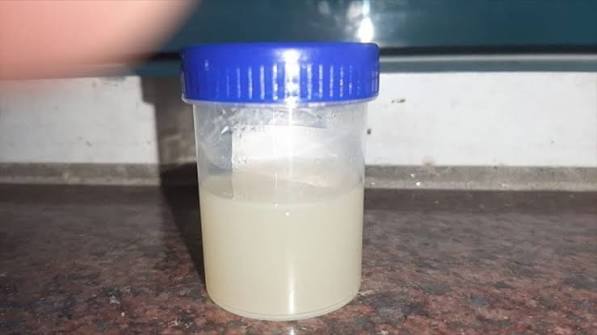
Normal urine is pale yellow to amber and clear. When urine appears cloudy, turbid, or milky, it means particles are suspended in the fluid — particles that should not be there in the quantities that produce visible cloudiness.
The particles responsible for cloudy urine include:
- White blood cells (pyuria): the most common pathological cause; indicates infection or inflammation
- Bacteria: often accompanies pyuria in infection
- Crystals: phosphate, uric acid, oxalate, or cystine crystals depending on urine pH and metabolic conditions
- Protein: large amounts of protein produce turbid, often frothy urine
- Red blood cells: heavy hematuria can contribute to turbidity
- Lymphatic fluid (chyle): produces characteristically milky-white urine (chyluria)
- Seminal fluid: retrograde ejaculation can make post-orgasm urine appear cloudy in men
- Mucus and vaginal cells: contamination during collection, particularly in women
The appearance of cloudy urine alone cannot tell you which of these is responsible. A simple dipstick urinalysis — and in many cases microscopic examination — is required to identify the cause.
Common Causes of Cloudy Urine
Urinary Tract Infection
Urinary tract infections are the most common pathological cause of cloudy urine. When bacteria infect the bladder (cystitis) or urethra (urethritis), the body sends white blood cells to the site of infection. These white blood cells — medically called pyuria when present at ≥10 cells per high-power field on microscopy — make urine appear milky-white or turbid.
UTI-related cloudiness is almost always accompanied by recognizable symptoms: burning or painful urination, urgency, frequency, and foul-smelling urine. Fever, chills, and back or flank pain suggest the infection has spread to the kidneys — pyelonephritis — which requires more urgent evaluation and often hospitalization.
Escherichia coli (E. coli) causes 80 to 85 percent of uncomplicated urinary tract infections. Other common pathogens include Klebsiella pneumoniae, Staphylococcus saprophyticus, and Proteus mirabilis. (IDSA, 2023) Uncomplicated cystitis in non-pregnant women is typically treated with trimethoprim-sulfamethoxazole for 5 days or nitrofurantoin for 5 to 7 days.
Phosphaturia — The Most Common Benign Cause
Phosphaturia is the excretion of amorphous phosphate crystals in the urine. These crystals precipitate when urine becomes alkaline — which commonly happens after eating a large meal high in dairy, taking antacids, or exercising vigorously. The result is urine that appears milky-white or cloudy immediately after voiding.
On a dipstick, phosphaturic urine is entirely normal: no leukocyte esterase, no nitrites, no blood, no protein. No symptoms. This matters clinically because phosphaturia is frequently mistaken for a UTI — both by patients and sometimes by clinicians relying on appearance alone without performing a dipstick or microscopy. That mistaken identification leads to unnecessary antibiotic prescriptions and contribution to antibiotic resistance. When the dipstick is normal and the patient has no symptoms, the correct answer is reassurance and observation — not antibiotics.
Proteinuria
When the kidneys are damaged, protein — particularly albumin — leaks from the bloodstream into the urine. Significant amounts of protein produce turbid, cloudy, or foamy urine. The KDIGO 2024 CKD guidelines define proteinuria by urine albumin-to-creatinine ratio (UACR): normal is less than 30 mg/g; moderately increased (A2) is 30 to 300 mg/g; severely increased (A3) is greater than 300 mg/g — which warrants nephrology referral. (KDIGO, 2024) The article on foamy urine covers the UACR measurement system and proteinuria causes in depth.
Sexually Transmitted Infections
Gonorrhea (Neisseria gonorrhoeae) and Chlamydia trachomatis cause urethral inflammation and discharge. When this discharge mixes with urine during voiding, the urine appears cloudy or murky. In men with gonorrheal urethritis, the discharge is typically thick, purulent, and yellow-green. Chlamydia is often subtler — thin discharge or no discharge at all.
STI-related cloudiness is most common in sexually active adults under 25, who account for more than half of new gonorrhea and chlamydia diagnoses in the United States. (CDC, 2023) Diagnosis requires a nucleic acid amplification test (NAAT) — standard urine culture does not detect these organisms. Per CDC STI Treatment Guidelines 2021: gonorrhea is treated with a single dose of intramuscular ceftriaxone 500 mg; chlamydia is treated with doxycycline 100 mg twice daily for 7 days. (CDC, 2021)
Kidney Crystals and Stones
Various crystal types form in the urine depending on pH and metabolic conditions. Struvite stones — caused by urease-producing bacteria (Proteus mirabilis, Klebsiella) — produce consistently cloudy, foul-smelling, alkaline urine; they always indicate an active infection. Cystinuria is a rare inherited condition in which cystine crystals produce persistently cloudy urine; they appear as flat hexagonal plates on microscopy.
Other Causes
Chyluria is the presence of chyle — lymphatic fluid rich in fats — in the urine, producing a distinctive milky-white appearance. In developing countries, the most common cause is lymphatic filariasis (Wuchereria bancrofti). In developed countries, chyluria is rare and typically caused by lymphatic obstruction from malignancy or trauma.
Retrograde ejaculation occurs when seminal fluid enters the bladder rather than being expelled during orgasm. The post-orgasm first void is characteristically cloudy or milky, containing sperm visible on microscopy. This is associated with prostate surgery (TURP), autonomic neuropathy from diabetes, alpha-blocker medications, and spinal cord injury.
Vaginal contamination in women produces artifactual cloudiness when vaginal cells, mucus, or discharge enter the sample during collection. A proper clean-catch midstream technique eliminates most contamination. A specimen that appears abnormal but clears on repeat collection with proper technique likely represents contamination.
Sterile Pyuria — When White Cells Are Present but No Bacteria Grow
Sterile pyuria is defined as pyuria (≥10 WBCs/hpf on microscopy) without bacterial growth on standard urine culture. It is an important finding because it requires a different diagnostic approach than standard UTI.
Renal tuberculosis is the classic cause of sterile pyuria — so characteristic that it appears in virtually every renal TB presentation. Mycobacterium tuberculosis does not grow on standard urine culture; it requires a dedicated acid-fast bacilli (AFB) culture and PCR. Renal TB should be considered in any patient with persistent sterile pyuria, particularly those with TB exposure, immigration from endemic regions, or known pulmonary TB.
Drug-induced interstitial nephritis — caused by NSAIDs, proton pump inhibitors, penicillins, and other medications — produces pyuria through inflammation of the kidney tubules. Eosinophiluria may be present. Discontinuation of the offending drug typically leads to resolution; corticosteroids are used in severe cases.
Chlamydia trachomatis urethritis produces pyuria but does not grow on standard urine culture — diagnosis requires a NAAT.
Bladder cancer can cause pyuria from tumor-associated inflammation. If sterile pyuria persists on repeat testing, evaluation should include NAAT for STIs, AFB culture and PCR for renal TB, CT imaging, and nephrology referral if inflammatory kidney disease is suspected. (NIDDK, 2023)
When to See a Doctor for Cloudy Urine
See a doctor within 24–48 hours if: cloudy urine is accompanied by painful urination, urgency, or frequency. If you are pregnant with any urinary symptoms, seek care the same day — UTI in pregnancy can progress rapidly to pyelonephritis and preterm labor.
Seek urgent care or emergency care if: high fever with urinary symptoms; flank or back pain with vomiting; inability or extreme difficulty urinating; pregnancy with fever and urinary symptoms.
Schedule within 1–2 weeks if: cloudiness is persistent but painless; you have known kidney disease with new turbidity; the urine appears foamy as well as cloudy (proteinuria workup needed).
Observe for 24–48 hours if: the urine became cloudy shortly after a large meal or after taking antacids, there are no symptoms, and the dipstick is normal — phosphaturia pattern. If cloudiness does not resolve or symptoms develop, see a doctor.
How Cloudy Urine Is Evaluated
Dipstick urinalysis is the first-line test: leukocyte esterase (WBCs), nitrites (bacteria), protein, blood, glucose, and pH. It takes minutes and provides the key clinical decision point.
Microscopic urinalysis identifies WBCs, RBCs, bacteria, crystals, casts, sperm, and epithelial cells. A high epithelial cell count suggests contamination.
Urine culture identifies the bacterial pathogen and provides antibiotic sensitivities. It is the definitive test for UTI and essential for complicated infections.
NAAT is required to diagnose gonorrhea and chlamydia — standard culture will miss both.
UACR is measured when proteinuria is suspected; eGFR assesses kidney function.
CT KUB (without contrast) identifies kidney stones. CT urogram (with contrast) provides upper tract imaging when malignancy is suspected.
AFB culture and PCR are ordered when renal TB is suspected — standard cultures will not detect Mycobacterium tuberculosis.
Treatment Depends on the Cause
UTI (uncomplicated): trimethoprim-sulfamethoxazole 5 days or nitrofurantoin 5 to 7 days for women; broader coverage for complicated infections.
Phosphaturia: no treatment needed. Reassurance and adequate fluid intake.
Gonorrhea: IM ceftriaxone 500 mg single dose. Chlamydia: doxycycline 100 mg BID for 7 days. Partner treatment required for both.
Proteinuria from kidney disease: ACE inhibitors or ARBs; nephrology referral for UACR greater than 300 mg/g. Tracking kidney health numbers — eGFR and UACR — is essential for monitoring progression.
Kidney stones: increased fluid intake; stone-specific dietary modification; tamsulosin for ureteral stones; ureteroscopy or shock wave lithotripsy for larger stones. Struvite stones require antibiotics and complete stone removal. The article on blood in urine covers kidney stone evaluation in detail.
Renal TB: isoniazid, rifampin, pyrazinamide, and ethambutol for 2 months, then isoniazid and rifampin for 4 additional months.
Interstitial nephritis: stop the offending medication; corticosteroids in severe cases.
Chyluria: antiparasitic treatment for filariasis; surgical lymphatic ligation for structural causes.
Retrograde ejaculation: no treatment needed if fertility is not a concern. Pseudoephedrine or imipramine may restore antegrade ejaculation. Sperm retrieval from the bladder is available for those seeking fertility.
Frequently Asked Questions
Is cloudy urine always a sign of infection?
No. While UTI is the most common pathological cause, phosphaturia — precipitation of benign phosphate crystals in alkaline urine — is a frequent and completely harmless cause that requires no treatment. Other non-infectious causes include proteinuria from kidney disease, crystalluria, retrograde ejaculation in men, and vaginal contamination in women. A dipstick urinalysis is the simplest way to distinguish infection from benign causes.
Can dehydration cause cloudy urine?
Dehydration makes urine more concentrated and darker, but significant cloudiness from dehydration alone is uncommon. The milky or turbid appearance typical of pyuria, phosphaturia, or proteinuria is not a feature of simple dehydration. Drinking more water and rechecking the urine clarifies the picture.
What does it mean when cloudy urine has no other symptoms?
Asymptomatic cloudy urine most commonly reflects phosphaturia (benign, often post-meal) or asymptomatic bacteriuria. Asymptomatic bacteriuria does not require treatment in most adults — exceptions include pregnant women and people about to undergo urologic procedures. Persistent asymptomatic cloudiness should be evaluated with a dipstick to rule out proteinuria or an STI, especially in sexually active young adults.
Should I always see a doctor for cloudy urine?
Not necessarily. Cloudy urine that appears once after a large meal, clears spontaneously, has a normal dipstick, and is symptom-free is almost certainly phosphaturia — observation is appropriate. Cloudy urine with painful urination, urgency, or frequency warrants prompt evaluation. Persistent or recurrent cloudiness — even without symptoms — should be evaluated, as several serious conditions (proteinuria, renal TB, STI) can be asymptomatic. (Mayo Clinic, 2024)
Can cloudy urine be a sign of kidney disease?
Yes. Significant kidney damage can cause protein to leak into the urine in large amounts, producing turbid or foamy urine. A UACR above 300 mg/g indicates severe proteinuria and warrants nephrology evaluation. The risk of progression to chronic kidney disease and kidney failure is substantially elevated at this level. Anyone with known kidney disease, diabetes, or hypertension who notices persistent cloudy urine should have a UACR and eGFR checked. The article on painful urination covers the overlap between urinary symptoms and kidney disease in detail.
Cloudy urine spans a wide spectrum — from the completely benign phosphaturia after dinner to the conditions that need prompt medical evaluation. The presence or absence of accompanying symptoms is the most useful initial filter. A simple dipstick urinalysis resolves most clinical uncertainty quickly. When symptoms are present, cloudiness is persistent, or a known health condition makes the finding more concerning, the evaluation is straightforward — and acting on it early produces meaningfully better outcomes than waiting.
Cloudy Urine in Special Populations
Women
Women experience urinary tract infections far more frequently than men — approximately 50 to 60 percent of women will have at least one UTI during their lifetime, and many experience recurrent infections. This high UTI prevalence means cloudy urine in women is most often due to infection and responds well to antibiotic treatment. However, it also creates a risk of over-attribution: not every episode of cloudy urine in a woman is a UTI, and assuming it is can lead to unnecessary antibiotic courses or, conversely, missing a more significant cause.
Vaginal contamination during specimen collection is a particularly common source of false-positive urinalysis results in women. A high white cell count in the urine with no symptoms, no bacteria on culture, and a high epithelial cell count on microscopy almost always represents contamination. Recollecting the specimen with proper clean-catch technique typically produces a normal result. Women who are asked to provide a midstream clean-catch specimen should be given clear instructions: separate the labia, clean the urethral opening with a provided wipe, discard the first portion of the stream into the toilet, then collect the middle portion in the cup.
In postmenopausal women, declining estrogen levels lead to changes in vaginal flora and urethral tissues that increase susceptibility to both UTIs and asymptomatic bacteriuria. Topical vaginal estrogen reduces UTI frequency in this population and is a recommended preventive measure for women with recurrent infections after menopause.
Men
UTIs are far less common in men than in women — when a man develops a UTI, the structural anatomy of the male urinary tract means the infection is by definition complicated and warrants a full evaluation including urine culture and a search for an underlying structural cause. Uncomplicated UTIs in men are rare enough that a UTI in a young man without clear precipitating factors (recent catheterization, urologic instrumentation) should prompt consideration of STI-related urethritis.
In older men, benign prostatic hyperplasia (BPH) obstructs urine flow and can lead to urinary stasis, increasing the risk of infection. Cloudy urine in an older man with urinary hesitancy, weak stream, or nocturia should prompt evaluation for both UTI and BPH-related obstruction. Retrograde ejaculation — producing post-orgasm cloudy urine — is particularly common after prostate surgery and with tamsulosin use; it is benign and does not require treatment unless fertility is a concern.
Pregnancy
Urinary tract infections during pregnancy require same-day evaluation and treatment without exception. The physiological changes of pregnancy — ureteral dilation from progesterone, mechanical compression of the ureters by the growing uterus, and changes in urine composition — dramatically increase the risk of ascending infection from bladder to kidney. Untreated UTI in pregnancy has a substantially higher rate of progression to pyelonephritis than in non-pregnant adults, and pyelonephritis during pregnancy is associated with preterm labor, low birth weight, and maternal sepsis.
Asymptomatic bacteriuria (bacteria in the urine without symptoms) is also treated in pregnancy — the only population in which this is standard practice for otherwise healthy adults. Routine urine culture screening for asymptomatic bacteriuria is recommended at the first prenatal visit. Cloudy urine in any trimester of pregnancy warrants same-day urinalysis and culture.
Phosphaturia vs. UTI: How to Tell Them Apart
Because phosphaturia is so commonly mistaken for a UTI, the practical distinctions are worth understanding clearly. The two conditions look similar to the naked eye but are clinically very different.
Context: Phosphaturia typically appears shortly after a large meal — especially one high in dairy (milk, cheese, yogurt) — or after taking antacids. UTI cloudiness is not tied to meals.
Symptoms: Phosphaturia causes no symptoms at all. UTI causes painful urination, urgency, frequency, and often foul-smelling urine. If there are no symptoms, the probability of UTI is low and the probability of phosphaturia (or asymptomatic bacteriuria) is higher.
Dipstick urinalysis: This is the key differentiator. Phosphaturia produces a completely normal dipstick: leukocyte esterase negative, nitrites negative, protein negative, blood negative. A UTI typically produces a positive leukocyte esterase and often positive nitrites (if the pathogen is gram-negative). If the dipstick is normal and there are no symptoms, phosphaturia is the far more likely diagnosis.
Microscopy: Phosphaturia shows amorphous crystals under microscopy with no white blood cells and no bacteria. UTI microscopy shows abundant white blood cells and often bacteria.
Resolution: Phosphaturia often clears within hours as the urine becomes less alkaline. UTI cloudiness does not resolve without antibiotic treatment — it may fluctuate but will persist.
The practical takeaway: a person who notices cloudy urine after a meal or antacid use, has no urinary symptoms, and gets a normal dipstick does not need antibiotics. Treating phosphaturia as a UTI is one of the more common unnecessary antibiotic prescriptions in outpatient medicine.
Recurrent Cloudy Urine: What to Investigate
A single episode of cloudy urine that is symptomatic and resolves with antibiotic treatment is a straightforward UTI. Recurrent cloudy urine — defined as two or more episodes within 6 months, or three or more within a year — warrants a more structured evaluation.
Recurrent UTI in women accounts for a large proportion of recurrent cloudiness. The evaluation includes urine culture with sensitivities at each episode, post-void residual urine measurement (to check for incomplete bladder emptying), and consideration of predisposing factors: sexual activity, spermicide use, antibiotic regimens, and anatomical factors. Preventive strategies — including low-dose antibiotic prophylaxis, post-intercourse antibiotic dosing, or topical vaginal estrogen in postmenopausal women — are effective and guideline-supported.
Recurrent phosphaturia is benign but can be bothersome. Increasing fluid intake, moderating dairy intake, and avoiding alkalinizing agents around meals may reduce frequency.
Recurrent kidney stones causing crystalluria and cloudiness require metabolic stone evaluation: 24-hour urine collection for stone risk factors (calcium, oxalate, uric acid, citrate, pH, volume), serum calcium and uric acid, dietary analysis. Stone-specific prevention — dietary changes and targeted medications — significantly reduces recurrence rates.
Persistent sterile pyuria (recurring WBCs in urine without bacterial growth) should not be attributed to repeated UTIs that keep “not showing up on culture.” If standard UTI treatment is failing to clear the pyuria, a systematic evaluation for renal TB, interstitial nephritis, chlamydia urethritis, and urologic malignancy is warranted. This is not a finding to manage empirically with repeated antibiotic courses.
Proteinuria causing recurrent turbidity requires ongoing monitoring rather than repeated workup from scratch. Once a UACR above 300 mg/g has been established, nephrology follow-up, ACE/ARB therapy, and regular kidney function monitoring are the appropriate response. The trajectory of eGFR and UACR over time determines management intensity. Regular tracking of these numbers — as covered in the article on kidney health numbers — is the foundation of effective CKD monitoring.
Sources: IDSA UTI Guidelines 2023 (idsociety.org), CDC STI Treatment Guidelines 2021 (cdc.gov), NIDDK (niddk.nih.gov), KDIGO CKD Guidelines 2024 (kdigo.org), Mayo Clinic (mayoclinic.org)
Came across this while researching cloudy urine: what it may indicate for a family member. This is the kind of evidence-based writing that actually changes how people approach their health. I wish I had found this article earlier — would have saved a lot of confusion.
This breakdown of cloudy urine: what it may indicate is exactly what patients need before a specialist appointment. The connection between lifestyle choices and long-term outcomes is explained clearly here. Shared this with three friends who are dealing with related issues. Very useful resource.
Bookmarked this article on cloudy urine: what it may indicate immediately — going to reference it regularly. This is the kind of evidence-based writing that actually changes how people approach their health. I wish I had found this article earlier — would have saved a lot of confusion.