
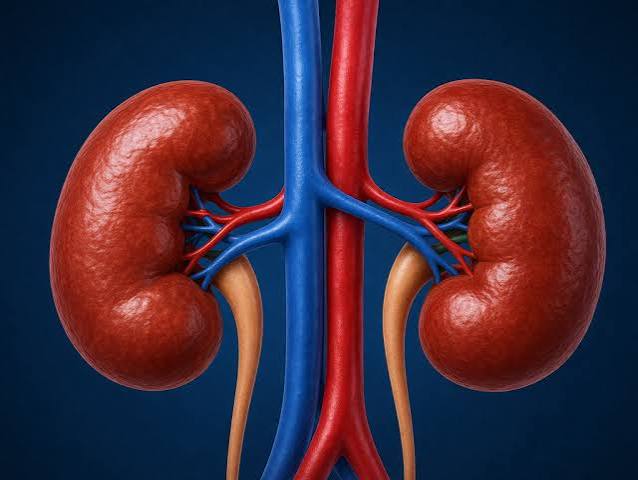
How often kidney function should be checked depends on three things: whether you already have kidney disease, how advanced it is, and what other conditions or medications raise your risk. For some people, annual testing is sufficient. For others, quarterly monitoring is the only way to catch further decline before it becomes irreversible. Knowing which schedule applies to you — and why — helps you stay ahead of kidney disease rather than always responding to crises.
Who Needs Kidney Function Testing?
Kidney function testing is not only for people who have already been diagnosed with chronic kidney disease (CKD). Several groups need regular monitoring even if their kidneys currently appear to be functioning normally:
- People with diabetes (type 1 and type 2) — diabetic kidney disease is the most common single cause of kidney failure worldwide, often developing silently with rising urine albumin appearing years before eGFR falls
- People with high blood pressure — uncontrolled hypertension damages the glomerular filtration barrier and causes hypertensive nephrosclerosis, a leading cause of kidney failure
- People with established CKD at any stage — to track whether disease is stable, slowly progressing, or accelerating
- People with a family history of kidney disease — including ADPKD, FSGS, Alport syndrome, or a family history of dialysis or kidney transplant
- People who have had an episode of acute kidney injury (AKI) — AKI substantially elevates lifetime risk of CKD; follow-up at 3 months post-discharge is mandatory
- People taking kidney-affecting medications — including NSAIDs, lithium, tacrolimus, cyclosporine, tenofovir, or cisplatin
- People with heart failure — at each ACE inhibitor or ARB dose change, because the kidney’s blood supply is sensitive to changes in cardiac output
The KDIGO Monitoring Schedule for CKD
The most widely used evidence-based monitoring framework comes from the Kidney Disease: Improving Global Outcomes (KDIGO) clinical practice guidelines. The guidelines recommend monitoring frequency based on the combination of eGFR category (G1–G5) and urine albumin category (A1–A3). The principle is straightforward: the higher the risk of CKD progression, the more frequently kidney function needs to be checked.
| eGFR Category | ACR A1 (<30) | ACR A2 (30–300) | ACR A3 (>300) |
|---|---|---|---|
| G1 (≥90) | 1x/year | 1x/year | 2x/year |
| G2 (60–89) | 1x/year | 1x/year | 2x/year |
| G3a (45–59) | 1x/year | 2x/year | 3x/year |
| G3b (30–44) | 2x/year | 3x/year | 3x/year |
| G4 (15–29) | 3x/year | 3x/year | 4x/year |
| G5 (<15) | 4x/year | 4x/year | 4x/year |
At each monitoring visit, the standard tests include serum creatinine (with eGFR calculated), a spot urine ACR, serum electrolytes, and blood pressure. For patients in G3b or beyond, the panel expands to include phosphate, calcium, PTH, vitamin D, hemoglobin, and iron studies. For a detailed explanation of each test, see our guide to kidney function tests.
Screening for People Without Known Kidney Disease
For people with diabetes: The American Diabetes Association (ADA) 2024 Standards of Care recommend that all adults with type 2 diabetes have both an eGFR and a urine ACR measured at the time of diabetes diagnosis and annually thereafter. For type 1 diabetes, the same tests are recommended starting 5 years after diagnosis.
For people with hypertension: Annual serum creatinine and eGFR monitoring is appropriate for all adults with hypertension. Adding the urine ACR is especially important in patients who also have diabetes, obesity, or a family history of kidney disease. For more on the urine albumin test, see our guide to the albumin-to-creatinine ratio.
For the general adult population: The USPSTF has not issued a recommendation for universal population-wide CKD screening. However, KDIGO and the American Heart Association support targeted screening at age 35–45 in anyone with cardiovascular risk factors, and every 3 years for middle-aged adults with diabetes or hypertension who have previously had normal results.

Monitoring When You Take Kidney-Affecting Medications
ACE inhibitors and ARBs characteristically cause a transient rise in serum creatinine (up to 10–15% above baseline) and may raise serum potassium in the first weeks of use. This is expected and does not mean the drug is harmful. Kidney function and potassium should be rechecked 1–2 weeks after starting or increasing the dose. A creatinine rise of more than 30% above baseline, or potassium above 5.5 mEq/L, requires dose reduction or holding the medication.
SGLT-2 inhibitors (empagliflozin, dapagliflozin, canagliflozin) cause a small, expected initial drop in eGFR — a hemodynamic effect that does not indicate kidney harm and should not prompt discontinuation. Recheck eGFR approximately 3 months after starting, then according to the patient’s CKD monitoring schedule.
NSAIDs (ibuprofen, naproxen, celecoxib) are not recommended for regular use in patients with eGFR below 45, because they reduce renal blood flow and can worsen proteinuria and raise potassium. If NSAIDs are used in patients with eGFR above 45, recheck kidney function and potassium within 1–2 weeks.
Metformin is generally safe in eGFR ≥45. KDIGO 2022 allows continued use with caution in eGFR 30–44. Hold metformin 24–48 hours before procedures using intravenous contrast dye and restart only once kidney function is confirmed stable 48 hours after the procedure.
Lithium causes progressive tubular damage even at therapeutic levels over decades. Annual serum creatinine, eGFR, and urine osmolality are recommended for all patients on long-term lithium, alongside quarterly serum lithium drug levels.
Calcineurin inhibitors (tacrolimus, cyclosporine) require monthly creatinine and drug levels in the first year, transitioning to every 3–6 months in stable long-term patients.
When You’ve Had Acute Kidney Injury
Any episode of acute kidney injury requires a follow-up measurement of serum creatinine and urine ACR at 3 months after the acute episode. The purpose is to determine whether kidney function returned fully to the pre-AKI baseline. If creatinine at 3 months is still higher than the pre-AKI baseline, this indicates either new CKD developed from the AKI, or unmasking of pre-existing CKD — both requiring nephrology referral and more frequent monitoring.
Even when creatinine fully recovers to baseline, AKI survivors have a significantly elevated lifetime risk of progressive CKD, end-stage renal disease, and cardiovascular events. Annual kidney function testing for at least 5 years after a major AKI episode is a reasonable precaution, even when immediate recovery appears complete.
What to Expect at Each Monitoring Visit
At minimum, each kidney monitoring visit involves a blood draw for serum creatinine and electrolytes, a urine sample for ACR, and blood pressure measurement. The provider reviews the trend in eGFR and ACR since the last visit — not just the absolute values — and adjusts medications if targets are not met: blood pressure below 130/80 mmHg in patients with CKD and proteinuria; ACR declining or stable under treatment.
Patients can track their own results using their online patient portal. The most useful numbers to record over time are the eGFR and ACR — graphing these two values across multiple visits gives a visual sense of whether kidney function is stable or declining. For more on what urinalysis results reveal about kidney health between formal blood tests, see our guide to urinalysis results explained.
Kidney Transplant Recipients: A Special Monitoring Schedule
In the first month after transplant, creatinine is checked daily to weekly, and any unexplained rise prompts immediate investigation. In the first year, monthly creatinine, drug trough levels, urinalysis, blood pressure, and ACR are standard. After the first year, stable recipients transition to every 3–6 months, with annual assessment of cardiovascular risk, vaccination status, cancer screening (transplant recipients on immunosuppression have elevated risk of skin cancer and lymphoma), and bone density. Any unexplained creatinine rise of 20% or more above the patient’s stable baseline requires prompt evaluation for rejection, drug toxicity, infection, or obstruction.
Frequently Asked Questions
Can I check kidney function at home?
There are no validated home tests that accurately measure eGFR or ACR. Home blood pressure monitoring, however, is an extremely important complement to formal kidney function testing, because blood pressure is the most actionable parameter between appointments.
What if I can’t afford regular kidney tests?
Kidney function tests are among the less expensive laboratory tests. Community health centers offer discounted testing. Many hospital systems and commercial labs offer self-pay rates below what is billed to insurance. Kidney tests are covered under Medicare and Medicaid for patients with CKD or diabetes. Discussing cost concerns with your provider often leads to a prioritized, streamlined test order.
At what age should healthy people start kidney function testing?
For people with no known risk factors, there is no universal recommendation in early adulthood. Anyone with diabetes or hypertension should begin testing at diagnosis, regardless of age. For people with cardiovascular risk factors, KDIGO and the AHA suggest a baseline eGFR and ACR at age 35–40. For everyone else, discussing kidney function at a routine physical every 3–5 years starting at age 50 is reasonable.
Is eGFR or creatinine more important to track?
The eGFR is more informative than raw creatinine because it accounts for age and sex, making it comparable across patients. However, what matters most is tracking both eGFR and ACR together, because they measure different aspects of kidney health: filtration capacity and filtration barrier integrity. For a full explanation, see our guide to protein in urine: causes and meaning.
What triggers my doctor to increase testing frequency?
A meaningful change triggers more frequent testing: eGFR falling more than 5 mL/min in a year, ACR moving to a higher KDIGO category, a new AKI episode, a new nephrotoxic medication, worsening blood pressure control, or a new symptom such as edema or decreased urine output. Any of these shifts the monitoring schedule to a higher frequency.
This article is for educational purposes only. Always consult a qualified healthcare provider for diagnosis and treatment of any medical condition.
Interpreting Year-Over-Year Trends: A Practical Patient Guide
Knowing your monitoring schedule is only part of the equation. Understanding what your results mean — and when they are trending in the wrong direction — gives you the information you need to advocate for timely care.
What “stable” looks like. A stable patient is one whose eGFR varies by less than 5 mL/min per year (within the expected measurement variability of the test), whose ACR stays within the same KDIGO category from year to year, whose blood pressure stays below the target of 130/80 mmHg, and whose electrolytes remain within normal range. Stable results on two consecutive monitoring visits are genuinely reassuring — they indicate that the disease is not progressing at a pace that needs to change the treatment plan.
What slow progression looks like. A decline in eGFR of 2 to 4 mL/min per year, with the ACR remaining stable or changing by less than one full category, represents the slower end of CKD progression. This pattern is typically seen in patients with well-controlled blood pressure and blood sugar on appropriate medications. It does not necessarily indicate treatment failure — some degree of decline over decades is expected even with optimal management — but it warrants continued close monitoring to ensure the decline does not accelerate.
What rapid progression looks like. A decline in eGFR of more than 5 mL/min per year — or any doubling of serum creatinine over a 12-month period — is classified as rapid CKD progression and should prompt immediate re-evaluation. The causes of rapid progression include: uncontrolled blood pressure, inadequate renin-angiotensin blockade, new or worsening proteinuria, a superimposed acute kidney injury (from illness or medication), or the development of a new kidney disease on top of existing CKD. Rapid progression is also the clearest trigger for nephrology referral in a patient who has been managed in primary care.
When ACR moves to a higher category. A patient whose ACR moves from A1 to A2 — or A2 to A3 — between visits has crossed a KDIGO threshold that changes both the monitoring frequency and the treatment intensity. Moving from A1 to A2 typically triggers initiation of an ACE inhibitor or ARB (if not already prescribed) and more frequent monitoring. Moving from A2 to A3 often triggers a nephrology referral and consideration of whether an SGLT-2 inhibitor or finerenone should be added. The threshold-crossing matters as much as the absolute number.
The role of blood pressure at each visit. Blood pressure is measured at every kidney monitoring appointment not as a formality but because it is directly actionable. For patients with CKD and urine albumin above 30 mg/g, each 10 mmHg reduction in systolic blood pressure below 130 mmHg reduces the rate of eGFR decline substantially — this is one of the most evidence-based interventions available for slowing CKD progression, and it is free in the sense that it requires no new medication, only optimizing the dose of an already-prescribed drug. A blood pressure of 148/92 at a monitoring visit is just as important a finding as a creatinine of 1.8, and deserves the same level of attention and follow-through.
Managing Kidney Function Monitoring During Acute Illness
Scheduled monitoring visits are designed for periods of relative stability. Acute illness changes the picture and often requires unscheduled kidney function testing outside the standard schedule.
Gastrointestinal illness with significant vomiting or diarrhea causes dehydration, which reduces renal blood flow and can precipitate pre-renal AKI — particularly in patients who are already taking ACE inhibitors, ARBs, NSAIDs, or SGLT-2 inhibitors. The standard advice for CKD patients who cannot maintain adequate fluid intake during a GI illness is to temporarily hold ACE inhibitors, ARBs, and diuretics (a practice sometimes called a “sick day medication” protocol or “sick day rules”), stay as hydrated as possible with small frequent sips of fluid, and contact their provider if they have not been able to eat or drink for 24 hours. A creatinine check 2 to 3 days into a significant GI illness is appropriate for patients in G3 or beyond.
Fever and systemic infection also reduce effective renal blood flow through vasodilation and fluid redistribution. Any severe infection — pneumonia, pyelonephritis, cellulitis requiring IV antibiotics — can trigger AKI in a CKD patient. If a CKD patient is hospitalized for any reason, a creatinine and electrolytes should be checked on admission and followed daily during the hospitalization, regardless of the primary reason for admission.
Before elective procedures, particularly those involving general anesthesia or IV contrast dye, CKD patients should have a creatinine and eGFR checked within the preceding 3 months. Anesthesia teams need this information to adjust drug dosing; radiologists need it to determine whether contrast can be safely administered and whether prophylactic hydration is needed. If a procedure has been scheduled more than 3 months since the last kidney function check, it is appropriate to request a new test before the procedure date.
During recovery from hospitalization, if any acute kidney injury occurred — even mild AKI Stage 1 — the creatinine must be rechecked 3 months after discharge. Many patients complete a hospitalization, feel better, and do not have follow-up blood work because they feel well. This gap in post-AKI monitoring is one of the most common missed opportunities to detect new or worsening CKD while treatment options are still most effective.
When to Ask for a Referral to Nephrology
Primary care providers are equipped to manage most CKD patients in G1 through G3a with stable disease. But there are specific circumstances where nephrology input changes the management plan in ways that primary care alone cannot provide:
Unexplained proteinuria: If the ACR is above 300 mg/g and the cause is not clearly diabetic nephropathy in a patient with long-standing diabetes and appropriate progression, a nephrologist should be involved. Causes such as IgA nephropathy, membranous nephropathy, focal segmental glomerulosclerosis, or minimal change disease require antibody testing, a kidney biopsy, and disease-specific treatment that differs from the standard ACE inhibitor plus SGLT-2 inhibitor approach.
Hematuria alongside proteinuria: The combination of microscopic hematuria with significant proteinuria — especially with active urinary sediment (RBC casts) — suggests glomerulonephritis that needs characterization and often biopsy. This is not a scenario for watchful waiting; glomerulonephritis can destroy kidney function over months without treatment.
Young patients with CKD: CKD diagnosed in patients under 40 is unusual and should almost always involve nephrology, because the cause is more likely to be a genetic or immune-mediated condition (ADPKD, Alport, IgA nephropathy, lupus nephritis) rather than the age-related diabetic or hypertensive nephrosclerosis seen in older patients. These conditions often have disease-specific treatments that need specialist input.
Resistant or difficult-to-control blood pressure in the context of CKD: If blood pressure cannot be controlled below 140/90 mmHg despite three or more antihypertensive medications including a diuretic in a CKD patient, nephrology should be involved. Renovascular hypertension from renal artery stenosis, primary hyperaldosteronism, and other secondary causes of hypertension are more prevalent in CKD patients and require specialist evaluation. Additionally, the optimal choice of antihypertensive agents and the management of CKD-associated electrolyte problems with multiple medications is within the nephrology skill set.
Planning for end-stage kidney disease: When eGFR falls below 20, the conversation about renal replacement therapy — hemodialysis, peritoneal dialysis, or preemptive kidney transplant — should begin at least 1 to 2 years before dialysis is expected to be needed. This is because creating an arteriovenous fistula for hemodialysis requires months to mature before it can be used, and getting onto a transplant waiting list involves an evaluation process that takes months. Waiting until dialysis is urgently needed removes the patient’s ability to plan and choose their modality thoughtfully, and dramatically worsens outcomes.
Practical Tips for Staying on Schedule
The biggest barrier to consistent kidney monitoring is not the test itself — it is remembering to schedule it, getting the right tests ordered, and following up on results. The following practical strategies help patients stay on track:
Tie testing to an annual event. For patients who require annual monitoring, linking the test to a predictable anchor — a birthday, an annual physical, a seasonal flu vaccine appointment — makes it easier to remember year after year without relying on a reminder from the clinic. Many clinic systems do not proactively reach out to patients for routine monitoring; the patient often has to initiate the appointment.
Keep a personal record of your results. Ask for a printed or electronic copy of each kidney function test result. Over time, a simple table with the date, creatinine, eGFR, and ACR value gives both you and your provider a clear visual of the trajectory. If you change primary care providers, this personal record ensures continuity of monitoring without having to reconstruct your history from scratch.
Ask specifically about ACR at each visit. Many kidney function “panels” ordered in primary care include only the blood tests — creatinine, BUN, and electrolytes — without the urine ACR. Patients with diabetes or hypertension should specifically ask at each annual visit whether a urine albumin test was ordered. If it was not, ask for it to be added — it requires only a small urine sample and is covered by most insurance plans for these indications.
Set medication reminders for sick-day protocols. Patients on ACE inhibitors, ARBs, or diuretics should have a written sick-day plan from their provider explaining which medications to hold if they develop significant vomiting or diarrhea, and when to seek medical attention. Having this plan ready before illness strikes prevents the common scenario of a dehydrated patient taking their usual kidney medications and precipitating an AKI that could have been avoided.
Sources: KDIGO CKD Guidelines 2024; ADA Standards of Medical Care 2024; NIDDK — Tests for Kidney Disease; National Kidney Foundation — Lab Values.
Really well-written article on how often should kidney function be. It is refreshing to see an article that acknowledges individual variation rather than one-size-fits-all advice. Exactly the kind of evidence-based information that is hard to find in one place.
My doctor recommended I look into how often should kidney function be and this article covered it perfectly. It is refreshing to see an article that acknowledges individual variation rather than one-size-fits-all advice. This gave me real confidence going into my next specialist appointment.
My doctor recommended I look into how often should kidney function be and this article covered it perfectly. What I liked most was that the article didn’t just say what to avoid — it also gave alternatives. Forwarding this to others in my support group who are dealing with similar issues.