
Salt and Kidney Health
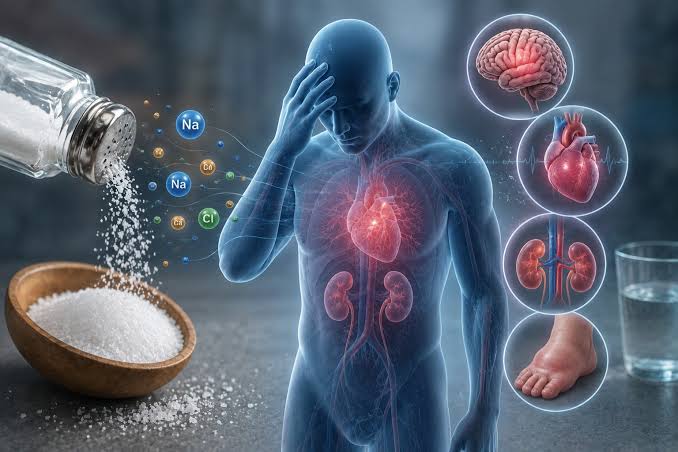
Salt — sodium chloride — is essential in small amounts and injurious in excess. For people with kidney disease, the injurious threshold is lower than for the general population, and the consequences of consistently exceeding it are direct: elevated blood pressure, worsening proteinuria, accelerated fibrosis, and faster progression toward kidney failure. The average person in the United States consumes approximately 3,400 milligrams of sodium per day — far above the 2,000 mg limit recommended by the World Health Organization for the general population and the 2,000 mg or less recommended by KDIGO for CKD patients. For most patients with kidney disease, the gap between actual intake and target intake is the single largest addressable dietary risk factor for CKD progression.
Understanding how salt damages kidneys requires moving beyond the simple association between salt and blood pressure. While hypertension is the primary mechanism of salt-related kidney injury, sodium causes direct cellular damage to kidney tissue through mechanisms that are partially independent of blood pressure — and its interaction with medications, proteinuria, fluid balance, and the renin-angiotensin-aldosterone system makes sodium restriction one of the highest-impact dietary interventions available to CKD patients and their care teams.
How Excess Sodium Damages the Kidneys
High dietary sodium damages kidneys through several converging pathways, each of which worsens the others.
Volume expansion and glomerular hypertension. High sodium intake expands plasma volume — the body retains water to maintain sodium concentration, increasing total blood volume. Expanded volume raises cardiac output and blood pressure, including within the glomerular capillaries. This intraglomerular hypertension — elevated filtration pressure — causes progressive mechanical damage to the glomerular filtration membrane: the fine network of fenestrated epithelium and podocyte foot processes responsible for selective filtration. Over years, intraglomerular hypertension destroys individual glomeruli (glomerulosclerosis), progressively reducing the total number of functioning nephrons and lowering GFR.
Direct fibrotic signaling. Sodium does not only raise blood pressure — it also activates profibrotic pathways directly in kidney tissue. High sodium concentration activates transforming growth factor-beta (TGF-β), a cytokine that promotes myofibroblast differentiation and interstitial fibrosis in the kidney. This effect occurs even in the absence of overt hypertension, explaining why sodium restriction slows CKD progression beyond what blood pressure reduction alone would predict. TGF-β-driven fibrosis is one of the final common pathways of CKD — replacing functional nephron tissue with non-functional scar — making sodium’s direct fibrotic effect particularly consequential for long-term kidney function.
RAAS interaction. High sodium intake attenuates the effectiveness of ACE inhibitors and ARBs — the cornerstone medications of CKD management — by suppressing renin and reducing the contribution of angiotensin II to the processes that these medications block. A CKD patient on an ACE inhibitor or ARB who consumes a high-sodium diet may experience only partial benefit from the medication. Research by Lambers Heerspink and colleagues (JASN 2012) demonstrated that adding dietary sodium restriction to ACE inhibitor therapy in CKD patients reduced proteinuria by 30–40% — an effect equivalent to doubling the ACE inhibitor dose, achieved through diet rather than additional medication and without the side effects of higher drug doses.
Proteinuria amplification. High sodium intake increases glomerular filtration pressure and protein leak through the filtration membrane, worsening proteinuria. Filtered protein that reaches the tubular lumen directly injures the proximal tubular cells responsible for reabsorption, triggering inflammation, fibrosis, and tubular cell death. Proteinuria is both a marker of glomerular damage and an independent driver of further kidney injury. Reducing proteinuria through sodium restriction therefore breaks a self-reinforcing cycle: less sodium → less filtration pressure → less protein leak → less tubular injury → slower fibrosis progression.
How Much Sodium Is Safe for Kidney Patients?
KDIGO clinical practice guidelines for CKD recommend a sodium intake of less than 2 grams (2,000 mg) per day for all CKD patients, regardless of stage, unless there is a specific clinical reason to allow higher intake. This corresponds to approximately 5 grams of table salt (sodium chloride is 40% sodium by weight). For context, the average American consumes nearly 3,400 mg of sodium per day — 70% above the CKD recommendation — with only about 25–30% of that coming from the salt shaker at the table. The majority of dietary sodium is hidden in processed foods, restaurant meals, and packaged products.
The National Institute of Diabetes and Digestive and Kidney Diseases (NIDDK) and the National Kidney Foundation both provide patient-specific guidance on sodium restriction for CKD. For dialysis patients, the target is typically 1.5–2 g/day with simultaneous attention to fluid restriction, since dietary sodium is the primary driver of thirst and fluid retention between dialysis sessions. Achieving the sodium target without simultaneously addressing fluid balance — and vice versa — produces only partial benefit.
For patients whose sodium intake is well above target, a staged reduction — decreasing by 500–800 mg per day every few weeks — is more sustainable than an abrupt change and allows the palate to adapt. Sodium preference is learned: studies show that taste adaptation to lower sodium occurs within 8–12 weeks, and foods that initially taste bland become adequately seasoned after sustained exposure to lower sodium levels. The blood pressure and proteinuria benefits of sodium reduction typically appear within 2–4 weeks of achieving the lower intake level, providing motivation for continued adherence.
Where Sodium Hides: Reading Labels and Identifying Sources
For most CKD patients, successfully reducing sodium intake requires systematically identifying and replacing high-sodium foods — not just putting down the salt shaker. The salt shaker contributes only 5–10% of total sodium intake for most Americans; the remainder comes from foods that don’t taste overtly salty but are among the largest sodium contributors in the diet.
High-sodium foods to monitor or replace:
- Bread and rolls: 100–200 mg per slice — not salty, but eaten in quantity throughout the day. Choosing low-sodium bread (available at most grocery stores) can save 300–600 mg per day without changing eating patterns.
- Canned soup: 800–1,200 mg per serving — often more than half a day’s CKD allowance in a single bowl. Low-sodium versions exist and are significantly lower; homemade soups with unsalted broth are the most controllable option.
- Processed and deli meats: 500–1,000 mg per 2 oz serving. Fresh, unseasoned proteins (chicken breast, fish, eggs) contain little natural sodium and are the most kidney-safe protein choices.
- Restaurant and fast food meals: 1,500–4,000 mg per meal — often a full day’s or two days’ sodium in a single sitting. Most restaurant chains publish sodium information online; choosing grilled proteins with vegetables and requesting sauces on the side significantly reduces intake.
- Condiments: Soy sauce (900 mg per tablespoon), ketchup (150–200 mg per tablespoon), pickles (300–900 mg per spear). Low-sodium soy sauce and sodium-free seasoning alternatives can replace high-sodium condiments without eliminating flavor.
- Cheese: 150–500 mg per ounce — easy to overconsume. Choosing lower-sodium cheeses (fresh mozzarella, ricotta, Swiss) and monitoring portion sizes reduces this source substantially.
Reading nutrition labels effectively: the Daily Value (DV) for sodium is based on 2,300 mg per day. A food with less than 5% DV per serving is low in sodium; above 20% DV is high. “Reduced sodium” on a label means 25% less than the regular version — which may still be high. “Low sodium” means 140 mg or less per serving; “sodium free” means less than 5 mg per serving. These designations apply per serving, so checking the serving size is essential — a “low sodium” food consumed in three servings may not be low sodium at all.
Salt and Blood Pressure: The CKD Amplification Effect
CKD patients are more “sodium sensitive” than healthy adults — the same dietary sodium load produces a larger blood pressure increase in a person with impaired kidney function because the kidney’s capacity to excrete sodium is compromised. A healthy kidney can excrete a high-sodium meal within 24–48 hours by increasing urinary sodium output; a CKD kidney may take 3–5 days to achieve the same clearance, during which sodium and water retention sustain an elevated blood pressure. This prolonged sodium-blood pressure relationship means that a single high-sodium meal can elevate blood pressure for days in a CKD patient, not hours.
The blood pressure benefits of sodium restriction in CKD are substantial and well-documented. The combination of DASH diet principles with sodium restriction — studied in the DASH-Sodium trial (Sacks FM et al., NEJM 2001) — produced blood pressure reductions of 8–12 mmHg systolic in the general population; in CKD patients, where sodium sensitivity is amplified, reductions of 5–10 mmHg are regularly achieved through dietary sodium restriction alone. For a patient whose blood pressure is 145/90 on current medications, adding dietary sodium restriction may bring the pressure below 140 without requiring additional drug dose or a new medication — a clinically meaningful change that reduces glomerular injury, reduces stroke risk, and may slow CKD progression. The detailed framework for blood pressure management in CKD is covered in the blood pressure and kidney protection guide.
Sodium and Potassium: The Balance That Matters
Dietary sodium and potassium interact in kidney health in ways that make managing both simultaneously more effective than focusing on either alone. Potassium counteracts some of the blood pressure-raising effects of sodium through vasodilatory and natriuretic (sodium-excreting) mechanisms. The ratio of sodium to potassium in the diet may be as predictive of cardiovascular and kidney outcomes as sodium intake alone.
However, the relationship between potassium and CKD is more complex than in the general population. Patients with CKD stages 4–5 often develop hyperkalemia (elevated blood potassium) because the kidneys cannot excrete potassium efficiently, and may require potassium restriction — the opposite of what would be recommended for a healthy person with hypertension. For patients in early CKD (stages 1–3) without hyperkalemia, adequate potassium intake from whole foods (vegetables, fruits, legumes) can complement sodium restriction as a blood pressure management strategy. For patients in advanced CKD or on dialysis where potassium restriction is required, the sodium restriction target remains unchanged — and is even more important, since high sodium intake increases thirst and fluid retention, compounding the fluid management challenges of dialysis. The advanced CKD management guide covers the electrolyte management considerations that arise in stages 4–5.
Practical Strategies for Reducing Sodium in a CKD Diet
Sustainable sodium reduction requires more than willpower — it requires a restructured approach to food selection, preparation, and flavoring that makes lower-sodium eating satisfying rather than punitive.
Cook from scratch more often. Restaurant and processed foods account for 70–75% of dietary sodium. Preparing meals at home using fresh or frozen unprocessed ingredients provides direct control over sodium content. A home-cooked chicken breast with roasted vegetables and lemon contains perhaps 150–200 mg of sodium; a restaurant version of a similar dish often contains 1,500–2,500 mg through marinades, sauces, and cooking salts.
Replace salt with other flavors. Citrus (lemon and lime juice, zest), fresh herbs (basil, cilantro, parsley, thyme), garlic, onion, and acid-based condiments (vinegar, unsalted hot sauce, tamarind) provide flavor complexity without sodium. Spice blends without added salt (check labels — many commercial spice blends contain significant sodium) allow varied flavor profiles without compromising the sodium target. The palate adjusts: within 8–12 weeks, lower-sodium foods taste appropriately seasoned.
Use low-sodium versions of pantry staples. Low-sodium canned tomatoes, low-sodium chicken broth, unsalted canned beans, and low-sodium soy sauce are widely available and directly replace high-sodium equivalents in recipes without requiring different preparation techniques. The sodium reduction from switching to low-sodium versions of regular pantry staples can easily amount to 500–1,000 mg per day without changing what is cooked.
Track sodium for two weeks. Many CKD patients who believe they eat a moderately low-sodium diet are surprised by the actual numbers when they log their food intake in a tracking app. Logging for two weeks identifies the specific high-sodium foods and meals that are driving intake above target — and provides a focused list of changes, rather than requiring a complete dietary overhaul. The National Kidney Foundation provides sodium tracking resources specifically for CKD patients.
Conclusion
Salt is the most consequential and most modifiable dietary variable in CKD management. Its effects — glomerular hypertension, direct fibrotic signaling, proteinuria amplification, RAAS interference, and fluid retention — converge on every major pathway of kidney disease progression. The KDIGO recommendation of less than 2 grams of sodium per day is supported by multiple lines of evidence and reflects a target that, when achieved, demonstrably slows progression, improves blood pressure control, reduces proteinuria, and makes other interventions (ACE inhibitors, ARBs, diuretics, fluid restriction) more effective. The gap between actual and target sodium intake in most CKD patients is the single largest addressable dietary contribution to disease progression — and closing that gap through consistent food choices, label reading, home cooking, and the adoption of low-sodium seasoning strategies is one of the most impactful actions a CKD patient can take between medical appointments.
Sodium Restriction and Medication Effectiveness: The ACE Inhibitor-Salt Interaction
One of the least-discussed aspects of kidney disease management is how dietary sodium directly determines how well medications work. ACE inhibitors and ARBs — the standard of care for CKD with proteinuria or hypertension — function by blocking angiotensin II, the primary effector hormone of the renin-angiotensin-aldosterone system. Their antiproteinuric and antihypertensive effects depend on reducing efferent arteriolar constriction and intraglomerular pressure. But high dietary sodium blunts renin secretion — a compensatory response to the sodium-driven volume expansion — reducing the RAAS activity that ACE inhibitors are targeting. The result: a patient eating 4,000 mg of sodium per day may receive only half the antiproteinuric benefit from their ACE inhibitor dose compared to a patient eating 1,800 mg per day.
This interaction has significant clinical implications. When a nephrologist increases an ACE inhibitor dose because proteinuria remains elevated, the first question should be whether sodium restriction has been achieved. The Lambers Heerspink trial demonstrated that dietary sodium restriction produced a proteinuria reduction equivalent to doubling the ACE inhibitor dose — meaning that achieving the sodium target is, from a medication-effect standpoint, equivalent to taking a full additional dose of the medication. For patients who have already reached the maximum ACE inhibitor dose and still have inadequately controlled proteinuria, a structured sodium reduction intervention may produce the blood pressure and proteinuria reductions that higher medication doses cannot. This synergy between dietary sodium restriction and RAAS-blocking medications is one of the strongest arguments for treating sodium restriction as a therapeutic intervention with defined targets, not a vague dietary recommendation to “try to eat less salt.”
The same principle applies to diuretic therapy. Patients on loop diuretics for fluid overload in CKD who consume high-sodium diets may find that the diuretic’s effectiveness is partially offset by sodium-driven fluid retention — requiring higher doses to achieve the same fluid balance. Sodium restriction reduces the fluid that needs to be diuresed, allowing lower diuretic doses and reducing the associated risks of diuretic-related dehydration and electrolyte imbalance. The interaction between sodium, fluid balance, and diuretic therapy is particularly relevant in CKD stages 4–5 where fluid management becomes a primary clinical challenge, as covered in the guide to slowing kidney disease progression, which addresses the integrated management approach for advanced CKD.
The DASH Diet and CKD: What Applies and What Needs Modification
The DASH (Dietary Approaches to Stop Hypertension) diet is one of the most studied and endorsed dietary patterns for blood pressure control and cardiovascular risk reduction. Its core components — high intake of fruits, vegetables, whole grains, and low-fat dairy; low intake of sodium, red meat, and added sugars — align well with several of the dietary goals for CKD management. However, DASH was designed for the general population, and its direct application to CKD patients requires modification, particularly for patients in stages 3–5 where potassium and phosphorus management become important.
The sodium component of DASH translates directly to CKD: the low-sodium DASH target (<2,300 mg/day, ideally <1,500 mg/day in the original trial) aligns with the KDIGO recommendation of <2,000 mg/day for CKD. The fruit and vegetable emphasis of DASH provides potassium, antioxidants, and fiber that support cardiovascular health and may reduce the uremic toxin precursors generated by high red meat intake — all beneficial in early CKD. The whole grains, reduced red meat, and low added sugar components reduce cardiovascular risk and metabolic acid load, both of which contribute to CKD progression.
The modifications required for CKD: In stages 1–3, most patients can follow a DASH-like approach with attention to sodium as the primary target. In stages 3b–4, potassium content of foods may need to be monitored if the patient develops hyperkalemia — certain high-DASH foods (oranges, bananas, potatoes, tomato products) are high in potassium and may need to be exchanged for lower-potassium alternatives. Phosphorus management becomes relevant in stage 4–5, where high-phosphorus foods (dairy, processed foods with phosphate additives, certain proteins) require attention. The advanced CKD monitoring guide addresses electrolyte management in detail. For most patients in early and moderate CKD, the most impactful dietary change remains sodium — the diet adjustment that simultaneously reduces blood pressure, improves medication effectiveness, reduces proteinuria, and manages fluid balance without requiring complex electrolyte calculations.
Working with a renal dietitian to create a personalized dietary plan that addresses sodium, potassium, phosphorus, and protein simultaneously — rather than trying to manage each in isolation — is the most effective approach for CKD patients who need dietary modification. Renal dietitians are trained to balance these competing priorities and can provide specific food lists, meal plans, and label-reading guidance tailored to each patient’s CKD stage, lab values, and cultural food preferences. Referral to a renal dietitian is recommended at CKD stages 3–4 and is standard of care at dialysis initiation. The kidney disease prevention guide outlines the full spectrum of lifestyle interventions — including dietary modification — in the context of a complete CKD prevention and management framework.
Monitoring Progress: How to Know Sodium Restriction Is Working
Dietary sodium restriction produces measurable, trackable clinical changes that can motivate patients and confirm whether the intervention is achieving its goals. Blood pressure response is the most immediate signal: within 2–4 weeks of sustained sodium reduction to under 2 g/day, most CKD patients will see a measurable decrease in resting blood pressure — often 5–10 mmHg systolic. Home blood pressure monitoring at the same time each morning, before medications, provides an objective measure of this response that patients can track against their pre-intervention baseline. A persistent downward trend in blood pressure without medication changes is direct evidence that sodium reduction is having its intended effect on vascular volume and renal perfusion pressure.
Urine sodium excretion — measured on a 24-hour urine collection or estimated from a spot urine sodium-to-creatinine ratio — provides direct confirmation of dietary sodium intake, since the kidneys excrete roughly as much sodium as is consumed once a steady state is reached. A 24-hour urine sodium below 80–85 mmol per day corresponds to a dietary intake below approximately 2 g of sodium. Many nephrologists include urine sodium monitoring in periodic assessments for CKD patients who are targeting sodium restriction — it provides objective evidence of adherence that self-reported dietary history cannot reliably supply. When a patient reports low sodium intake but urine sodium remains elevated, the care team can investigate which specific foods may be contributing unrecognized sodium to the diet, enabling more targeted counseling rather than generic advice to “eat less salt.” Tracking dietary sodium intake, using a blood pressure log, and monitoring urine sodium at periodic laboratory visits together provide the feedback loop that makes sodium restriction a data-driven intervention rather than a vague lifestyle suggestion.
Sources: National Kidney Foundation (kidney.org); NIDDK (niddk.nih.gov); American Heart Association (heart.org); Lambers Heerspink HJ et al., “Moderate Dietary Sodium Restriction Added to Angiotensin Converting Enzyme Inhibition,” JASN 2012; Sacks FM et al., “Effects on Blood Pressure of Reduced Dietary Sodium and the DASH Diet,” NEJM 2001; KDIGO CKD Clinical Practice Guidelines 2012/2024.
Pingback: Processed Foods and Kidney Health - Horizon Health Guide
I have been reading about salt and kidney health for weeks and this is the most thorough guide I found. This is the kind of evidence-based writing that actually changes how people approach their health. Will definitely be coming back to this site for more health information.
Really well-written article on salt and kidney health. What I liked most was that the article didn’t just say what to avoid — it also gave alternatives. Appreciate the effort that went into researching and writing this — it shows.
Bookmarked this article on salt and kidney health immediately — going to reference it regularly. The practical tips made this immediately actionable, not just theoretical. Exactly the kind of evidence-based information that is hard to find in one place.
Pingback: Kidney-Friendly Diet: A Beginner's Guide to CKD Eating