

The connection between late-night eating and blood sugar is stronger and more mechanistically specific than most people managing diabetes realize — it is not simply that eating more calories late at night is unfavorable in general, but that the physiology of glucose metabolism changes in specific, measurable ways during the evening and nighttime hours that make carbohydrate eaten late at night more glycemically disruptive than equivalent carbohydrate eaten earlier in the day. This phenomenon, driven by circadian variation in insulin sensitivity, cortisol and growth hormone secretion patterns, gut motility, and metabolic rate, means that a bedtime snack of 30g of carbohydrate can produce a larger and more sustained glucose elevation than the same 30g eaten at breakfast — with the resulting elevated fasting blood glucose the following morning representing both a direct metabolic harm and a measurement artifact that may misrepresent overnight glycemic control to clinicians reviewing morning glucose readings. Understanding why late-night eating and blood sugar interact the way they do provides the physiological foundation for the practical strategies that can dramatically improve both postprandial and fasting blood glucose by addressing what and when eating happens in the hours between dinner and sleep.
Insulin sensitivity follows a circadian pattern, with peak insulin sensitivity in the early morning and a progressive reduction through the afternoon and evening that reaches minimum sensitivity between approximately 10 PM and 4 AM. A carbohydrate load consumed at 10 PM requires approximately 30–40% more insulin to produce the same blood glucose clearance as the same carbohydrate load consumed at 8 AM — and in adults with impaired insulin production or insulin resistance, this reduced insulin sensitivity produces proportionally larger blood glucose elevations from late-night carbohydrate that persist into the next morning’s fasting measurement.
Why Late-Night Eating Raises Fasting Blood Glucose
The mechanism connecting late-night eating and blood sugar elevation — specifically elevated fasting glucose the following morning — involves several interacting physiological processes that distinguish evening glucose metabolism from daytime glucose metabolism:
- Circadian insulin resistance: Insulin sensitivity follows a predictable 24-hour pattern driven by the suprachiasmatic nucleus (the body’s master circadian clock) and its downstream effects on peripheral tissues including skeletal muscle, liver, and adipose tissue. Insulin sensitivity is highest in the morning (roughly 6 AM–12 PM) and progressively decreases through the afternoon, reaching its nadir during the late evening and early night hours — the window when late-night eating most commonly occurs. This is not pathological; it is a normal feature of human chronobiology that became problematic in the modern environment where food availability is decoupled from daylight hours. The practical implication: the same quantity of carbohydrate eaten at 10 PM requires substantially more insulin to clear than the same carbohydrate eaten at 8 AM, and in people with impaired insulin secretion (Type 2 diabetes) or insulin resistance (prediabetes), the additional required insulin is not produced, resulting in glucose remaining elevated at higher concentrations for longer durations than daytime carbohydrate loading would produce.
- The dawn phenomenon and its interaction with late-night eating: The dawn phenomenon is a normal physiological process in which cortisol and growth hormone secreted in the early morning hours (approximately 3–8 AM) stimulate glucose production by the liver and mildly raise blood glucose independent of any food intake — providing glucose to fuel the brain for the anticipated waking period. In adults without diabetes, this glucose release is matched by proportional insulin secretion that prevents significant blood glucose elevation. In adults with Type 2 diabetes or impaired insulin secretion, the hepatic glucose release of the dawn phenomenon produces fasting hyperglycemia that arrives at morning glucose testing with no corresponding food intake to explain it. When late-night eating adds an additional glucose load on top of the dawn phenomenon’s hepatic glucose release, the resulting morning glucose is the sum of the uncleared late-night carbohydrate and the dawn phenomenon’s independent contribution — producing the significantly elevated fasting glucose that many adults with diabetes observe after evenings that included late-night snacking compared to evenings without. Understanding that morning glucose reflects not just whether medication was taken and whether sleep occurred, but specifically what was eaten in the previous evening’s 3–4 hour window before sleep, is a clinically important insight that can dramatically improve fasting glucose readings through a single behavioral modification.
- Reduced overnight glucose clearance rate: During sleep, metabolic rate decreases significantly (approximately 10–15% below waking resting metabolic rate), skeletal muscle activity ceases almost entirely, and glucose uptake by peripheral tissues falls correspondingly. Glucose eaten late at night is therefore cleared by a system operating at substantially reduced capacity compared to waking daytime activity — glucose that might clear within 2 hours of a daytime meal may still be circulating 4–5 hours later after a late-night eating episode because the sleeping body’s glucose disposal mechanisms are largely inactive. This is compounded by the reduced insulin sensitivity of the late-night period — less efficient insulin signaling combined with reduced active glucose disposal produces a combination that persistently elevates blood glucose through the sleep period and into the fasting glucose measurement the following morning.
- The typical carbohydrate profile of late-night foods: The foods most commonly chosen for late-night eating are systematically high in rapidly absorbed carbohydrate — chips, crackers, cereal, ice cream, cookies, toast, leftover rice or pasta, sweetened yogurt — which represents the worst possible food category to consume during the lowest-insulin-sensitivity and lowest-glucose-disposal window of the 24-hour cycle. This is not coincidental; high-carbohydrate, high-sugar foods are preferentially chosen as late-night eating options because dopamine-driven reward circuits that underlie carbohydrate cravings are more active in the evening hours (particularly when fatigue and stress-related cortisol are elevated), and because high-carbohydrate foods are the most rapidly prepared, most readily available snack category. The collision of peak carbohydrate craving timing with minimum glucose clearance capacity is the specific mechanism that makes late-night eating and blood sugar management both particularly challenging and particularly rewarding when addressed successfully.
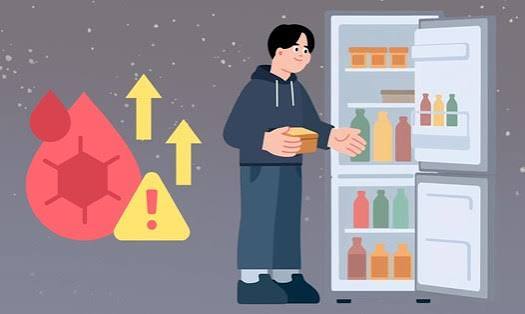
Strategies to Reduce Late-Night Eating and Improve Fasting Glucose
Effective management of late-night eating and blood sugar requires both environmental and behavioral strategies that address the underlying drivers of late-night eating rather than relying on willpower alone to resist food cravings during the highest-craving, lowest-cognitive-control window of the day:
- Strategy 1 — Ensure dinner is adequate in protein and fiber: The most common driver of late-night eating is genuine hunger produced by an inadequate dinner — specifically a dinner that was low in protein and fiber, the two dietary components that most reliably suppress appetite for several hours after eating. A dinner that contained 30–40g of protein and significant dietary fiber (from vegetables, legumes, or whole grains) produces satiety that typically persists for 4–5 hours — extending well past bedtime for adults who dine at 6–7 PM and sleep by 10–11 PM. Inadequate dinner protein (a light salad, a small bowl of soup, a plate predominantly of refined carbohydrate) produces a 2–3 hour satiety window that expires well before bedtime, generating genuine hunger that produces late-night snacking motivated by real caloric need rather than hedonic craving. The most reliable first intervention for late-night eating is ensuring dinner includes adequate protein and fiber — many adults find that simply making this adjustment eliminates late-night hunger without requiring any additional restrictive strategy. Our dinner ideas for blood sugar balance guide provides specific meal ideas optimized for both blood glucose management and satiety extension.
- Strategy 2 — Define a kitchen-close time and remove food from visible presence: Environmental modification is more effective than willpower-based approaches for managing late-night eating, because the primary trigger for much evening snacking is not genuine hunger but visual proximity to food combined with habitual eating behavior associated with evening television, reading, or screen time. Defining a kitchen-close time (e.g., 8 PM) — after which no additional eating occurs except in response to genuine, significant hunger — and removing food from the living areas where late-night snacking typically occurs (returning to the kitchen for food rather than having snacks on the couch, bedside table, or desk) creates environmental friction that interrupts the automatic habit loop driving habitual late-night eating. Moving food out of visual range in the evening reduces consumption not by restricting access but by removing the visual cue that triggers the habitual eating behavior — food out of sight is dramatically less likely to be eaten than food in the visual field, a finding supported by extensive behavioral science research on environmental food cue management.
- Strategy 3 — Distinguish genuine hunger from habitual or emotional eating: A practical test for genuine late-night hunger: ask whether you would eat a plain hard-boiled egg or a plain piece of chicken if available right now. If the answer is yes, the hunger is likely genuine caloric need. If the answer is “not really, I want something sweet/crunchy/specific” — the craving is hedonic rather than caloric, driven by dopamine reward circuits rather than genuine energy need. Genuine hunger responds equally to any calorie source and can be satisfied by low-carbohydrate, high-protein options that support rather than disrupt blood glucose. Hedonic craving is specifically for high-reward carbohydrate and sugar items and is not reduced by protein or non-carbohydrate alternatives — recognizing this distinction allows differentiating late-night hunger that warrants a small protein snack from late-night craving that warrants a non-food response strategy (distraction, herbal tea, sleep preparation).
- Strategy 4 — If eating late at night, choose the lowest-impact foods: When late-night eating is unavoidable — due to late work schedules, genuine hunger from unusual daily timing, or social occasions that extend into the evening — choosing the lowest-carbohydrate, highest-protein options available minimizes the blood glucose impact. Lowest-impact late-night food choices: a small handful of almonds or walnuts (1 oz: 4–6g carbohydrate, 4–6g protein, 14g fat), a hard-boiled egg (zero carbohydrate, 6g protein), plain Greek yogurt, 1/3 cup (5g carbohydrate, 12g protein), a small portion of cheese (zero carbohydrate, high protein and fat), raw vegetables with a tablespoon of hummus or almond butter (10g carbohydrate, 3g protein), or a small portion of cottage cheese (4g carbohydrate per 1/2 cup, 14g protein). These options provide sufficient caloric satisfaction to address genuine late-night hunger while producing minimal glucose elevation in the low-insulin-sensitivity nighttime window. The complete framework for structuring snacks across the day — including the evening window — to maintain blood glucose stability is covered in our healthy snacks for blood sugar support guide. The overall meal planning approach that ensures adequate dinner satiety to reduce late-night hunger is in our diabetes meal planning guide. The American Diabetes Association’s blood glucose management resources, the NIDDK’s diabetes dietary guidance, and the CDC’s diabetes prevention eating guidance all support limiting evening carbohydrate intake as a key behavioral strategy for improving fasting glucose outcomes in adults with diabetes and prediabetes.
Reading Your Fasting Glucose as a Late-Night Eating Feedback Tool
Morning fasting glucose is one of the most actionable pieces of feedback available for adults managing late-night eating and blood sugar — because fasting glucose is measured before the confounding variables of the day’s food choices, physical activity, and stress have accumulated, it primarily reflects the previous evening’s eating behavior, overnight glucose clearance, and dawn phenomenon magnitude. Systematically tracking fasting glucose alongside late-night eating behavior produces an individualized understanding of which late-night food choices and eating patterns correlate with better or worse next-morning glucose — far more useful than general guidance, because individual glycemic responses to specific foods and eating timings vary significantly:
- How to use fasting glucose as a late-night eating signal: Record fasting glucose first thing in the morning, before eating or drinking anything except water. Alongside the glucose reading, note briefly what was eaten after 7 PM the previous evening and at what approximate time. After 2–3 weeks of tracking, patterns emerge: evenings with no eating after dinner produce consistently lower fasting glucose than evenings with late-night carbohydrate; specific foods (e.g., a small handful of nuts) produce minimal next-morning effect while others (e.g., crackers, cereal, sweetened yogurt) consistently correlate with elevated fasting readings. This personal feedback transforms the general principle that late-night carbohydrate elevates fasting glucose into specific knowledge about which behaviors produce which outcomes in your specific physiology — the most motivating and precise form of dietary knowledge available for sustained behavioral change.
- Understanding elevated fasting glucose that isn’t from late-night eating: Not all elevated morning fasting glucose reflects the previous evening’s eating. The dawn phenomenon (hepatic glucose release driven by cortisol and growth hormone in the early morning hours, independent of food intake) can produce elevated fasting glucose even on evenings without late-night eating, particularly in adults with Type 2 diabetes where the insulin response to the dawn phenomenon’s glucose release is insufficient. Elevated fasting glucose from the dawn phenomenon alone is distinguished from late-night-eating-driven elevation by its consistency across evenings with and without late-night eating, its specific timing (typically highest between 6–8 AM and lower later in the morning), and its lack of correlation with specific evening food behaviors. If fasting glucose remains consistently elevated even on evenings with no eating after 7 PM and low-carbohydrate dinners, the dawn phenomenon or overnight hepatic glucose production — rather than late-night eating — may be the primary driver, and the appropriate management response differs accordingly and should be discussed with a healthcare provider.
- Target fasting glucose ranges and late-night eating impact: The American Diabetes Association recommends target fasting glucose of 80–130 mg/dL for most non-pregnant adults with diabetes, with individual targets set in consultation with a healthcare provider based on age, duration of diabetes, hypoglycemia risk, and other individual factors. Adults who track the impact of their late-night eating behaviors on morning fasting glucose frequently discover that eliminating or modifying late-night eating moves their fasting readings from above-target to within-target or from within-target to below-midrange-target — a clinically meaningful improvement achieved through a single behavioral modification that does not require medication changes or intensive lifestyle intervention beyond the specific evening eating pattern adjustment. This is the particular value of targeting late-night eating for adults whose morning glucose readings are the primary metric of concern in their diabetes management.
Sleep Quality, Cortisol, and Late-Night Eating: The Full Picture
The relationship between late-night eating and blood sugar extends beyond the direct glycemic effect of the food consumed — it includes the indirect effects of late-night eating on sleep quality, and the reciprocal effects of poor sleep on blood glucose and late-night eating behavior the following day. These mechanisms form a cycle that, once understood, provides additional motivation for addressing late-night eating as a comprehensive metabolic health intervention rather than a single dietary restriction:
- How late-night eating disrupts sleep quality and sleep architecture: Eating within 2–3 hours of bedtime — particularly high-fat or high-carbohydrate meals and snacks — increases gastric acid production, delays gastric emptying, elevates core body temperature (metabolic heat from digestion), and activates the sympathetic nervous system in ways that collectively delay sleep onset and reduce slow-wave (deep) sleep duration. The disrupted sleep architecture from late-night eating directly impacts the following day’s blood glucose management through two mechanisms: reduced slow-wave sleep decreases growth hormone secretion that normally occurs in the first hours of sleep (with downstream effects on insulin sensitivity), and the fatigue from disrupted sleep increases cortisol levels the following day, which independently elevates blood glucose through hepatic glucose production and reduces insulin sensitivity. Adults who significantly improve their late-night eating patterns typically report improved sleep quality as a parallel benefit — the reduction in late-night digestive activity allows more complete sleep cycles and the deeper sleep stages that restore optimal metabolic function.
- How poor sleep drives late-night eating the following evening: Sleep deprivation and poor sleep quality produce specific hormonal changes the following day that directly increase late-night eating behavior — elevated ghrelin (appetite-stimulating hormone), reduced leptin (satiety hormone), and increased activity of reward circuits that amplify hedonic food seeking, particularly for high-carbohydrate, high-sugar foods. Research on sleep restriction consistently shows that adults sleeping 5–6 hours per night consume significantly more calories in the evening hours (after 8 PM) than those sleeping 7–8 hours — driven by elevated hunger hormone levels and reduced prefrontal cortex inhibitory control from sleep deprivation. This creates a self-reinforcing cycle: late-night eating disrupts sleep → poor sleep increases next evening’s late-night eating urges → the cycle continues and escalates unless deliberately interrupted. The practical implication: improving overall sleep habits is not just a separate health goal from blood glucose management — it is a direct intervention on the hormonal drivers of late-night carbohydrate eating that, when improved, reduces the difficulty of implementing the late-night eating boundary strategies described above.
- Stress, cortisol, and evening carbohydrate craving: Cortisol, the primary stress hormone, stimulates appetite particularly for high-carbohydrate and high-fat foods through its effects on the reward circuitry of the brain. Adults under chronic work stress, financial stress, or interpersonal stress experience cortisol elevations that persist into the evening hours — when cortisol would normally be at its lowest under non-stressed conditions — producing both elevated blood glucose from cortisol’s hepatic glucose output effects and heightened carbohydrate craving from cortisol’s appetite-stimulation effects. The result is that stressed adults experience greater intensity of late-night carbohydrate cravings than non-stressed adults, at exactly the lowest-insulin-sensitivity period when satisfying those cravings produces the greatest blood glucose elevation. Stress management interventions — regular aerobic exercise, adequate sleep, relaxation practices — that reduce evening cortisol levels consequently reduce late-night carbohydrate craving intensity, making late-night eating boundaries easier to maintain not through increased willpower but through reduced physiological drive. Evening walks after dinner, which are independently beneficial for postprandial blood glucose management, also reduce cortisol levels and transition the nervous system from sympathetic (stress-activated) to parasympathetic (rest-and-recovery) states that reduce evening food craving. The complete daily eating structure that establishes the morning, afternoon, and evening eating pattern within which late-night eating management is most sustainable is covered in our diabetes meal planning guide. The dinner preparation strategies that ensure adequate protein and fiber to extend satiety into the evening are in our dinner ideas for blood sugar balance guide. The snack strategies for the pre-dinner and early evening window that prevent excessive hunger by bedtime are in our healthy snacks for blood sugar support guide. The meal prep approach that ensures adequate, satisfying evening meals are reliably available to prevent hunger-driven late-night eating is covered in our meal prep for blood sugar control guide. The American Diabetes Association’s comprehensive diabetes management resources, the NIDDK’s diabetes lifestyle guidance, and the CDC’s diabetes prevention dietary guidance all support the management of evening eating behavior, sleep quality, and stress as interconnected behavioral pillars of effective long-term blood glucose control.
Sources: American Diabetes Association — blood glucose management and behavioral guidance; NIDDK — diabetes dietary and lifestyle management resources; chronobiology research on circadian insulin sensitivity variation; dawn phenomenon physiology and clinical significance in Type 2 diabetes; studies on late-night eating and fasting glucose outcomes; behavioral science of food environment and habitual eating triggers; glycemic impact of specific late-night food choices; CDC diabetes prevention dietary guidance; research on protein and fiber in satiety extension and late-evening appetite regulation.
This is one of the clearest explanations of late-night eating and blood sugar I have found. The specific numbers and thresholds mentioned are exactly what I needed to understand my results. Shared this with three friends who are dealing with related issues. Very useful resource.
Came across this while researching late-night eating and blood sugar for a family member. The connection between lifestyle choices and long-term outcomes is explained clearly here. This is going into my health folder that I bring to every doctor’s visit.
Thank you for covering late-night eating and blood sugar so thoroughly without being overly technical. The practical tips made this immediately actionable, not just theoretical. Thank you for making complex medical information accessible without dumbing it down.