

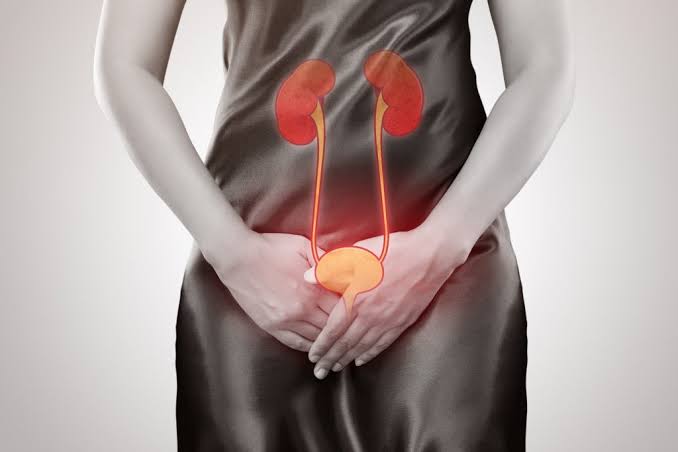
Urinary tract infections (UTIs) are one of the most common infections women experience — approximately 50–60% of women will have at least one UTI in their lifetime, and one in four will have a recurrent UTI within six months of their first infection. Women are eight times more likely to develop a UTI than men of the same age, and the gap is even larger in younger adults where hormonal and anatomical factors have maximum influence. Despite this extreme frequency, UTIs in women are often misunderstood — many women do not know why they are so susceptible, which risk factors apply to them specifically, or what evidence supports the prevention strategies they may have heard about.
This guide covers UTI in women comprehensively — why women are disproportionately affected, which specific risk factors matter most, how UTI presents and is treated in women, and what the evidence shows about prevention. It also addresses UTI in pregnancy — a particular context where UTI carries higher stakes and requires prompt, specific management.
Why Women Get UTIs More Often Than Men
The primary reason women develop UTIs far more frequently than men is anatomical. The female urethra is approximately 3–4 centimeters (about 1.5 inches) long, compared to approximately 20 centimeters (8 inches) in men. This short urethra means that bacteria from the perianal and perineal region — particularly Escherichia coli, which normally inhabits the colon — have a very short distance to travel to reach the bladder. The short urethra makes bacterial ascent into the bladder significantly easier and faster.
Additionally, in women the urethral opening is located close to both the vaginal opening and the anus — creating a geographic proximity that facilitates bacterial contamination of the urethra during daily activities, sexual intercourse, and toileting. Men, by contrast, benefit from their longer urethra, the antibacterial properties of prostatic secretions (which create an antimicrobial barrier in the urethra), and greater physical separation between the urethra and the rectum. For a broader overview of UTI causes and the full anatomy of UTI formation, see the UTI symptoms and causes guide.
Risk Factors for UTI in Women
Within the already-high baseline UTI risk that anatomy creates for all women, certain factors increase individual risk substantially:
Sexual activity: Sexual intercourse mechanically introduces bacteria from the perineal region into the urethra. The association between sexual activity and UTI is so strong that the informal term “honeymoon cystitis” describes UTI that develops shortly after beginning sexual activity. Women who are sexually active have significantly higher UTI rates than those who are not, and UTI risk increases proportionally with the frequency of sexual intercourse. Urinating within 30 minutes of intercourse is one of the most well-supported behavioral prevention strategies — it mechanically flushes bacteria from the urethra before they can reach the bladder.
Contraceptive methods: Diaphragms and spermicides both increase UTI risk. Diaphragms apply pressure to the bladder neck and alter the local anatomy in ways that may impair complete bladder emptying and increase bacterial colonization. Spermicides — whether used alone or applied to diaphragms or condoms — disrupt the normal vaginal lactobacillus flora that produces lactic acid and hydrogen peroxide to maintain a protective acidic environment. When lactobacillus populations are suppressed by spermicide, uropathogenic bacteria colonize the vaginal and periurethral tissue more easily. Women who use diaphragms or spermicide-treated contraception have two to three times higher UTI risk compared to women using non-spermicide hormonal methods or barrier methods without spermicide.
Menopause: Declining estrogen levels after menopause cause significant changes in urogenital tissue — the vaginal walls thin (atrophic vaginitis), lubrication decreases, and vaginal pH rises (becomes less acidic). These changes substantially reduce the protective lactobacillus flora that keeps uropathogens from colonizing the vaginal and periurethral tissue. Postmenopausal women have significantly higher UTI rates than premenopausal women of the same age. Local (topical) vaginal estrogen therapy — applied as a cream, ring, or tablet directly to the vaginal and urethral tissue — has strong evidence for reducing recurrent UTI risk in postmenopausal women and is recommended by major clinical guidelines as a preventive strategy. It has minimal systemic absorption and is generally safe even for women who cannot use systemic hormone therapy.
Previous UTI: A history of one or more UTIs is among the strongest predictors of future UTI. Approximately 25–30% of women who have one UTI will have a recurrence within six months. The biological basis for this recurrence risk includes genetic factors in host susceptibility (certain receptor types on bladder epithelial cells make some women’s bladders more hospitable to bacterial adhesion), residual bacterial populations in the bladder wall (intracellular bacterial communities that E. coli forms inside bladder epithelial cells and that can emerge months later), and behavioral factors that remain constant between episodes.
Diabetes: Women with diabetes have substantially higher UTI risk — approximately two to three times that of non-diabetic women — due to glucosuria (glucose in the urine that promotes bacterial growth), impaired immune neutrophil function, and bladder dysfunction caused by diabetic neuropathy. Diabetic women are also at higher risk of complicated UTI (upper tract infection) and UTI caused by resistant organisms.
Genetic susceptibility: Women who are non-secretors of blood group antigens have higher UTI risk — this is a genetically determined trait related to the surface proteins present on bladder epithelial cells. Women with mothers or sisters who experience recurrent UTIs are more likely to do so themselves, reflecting heritable host factors that influence bacterial adherence.
Diagnosing UTI in Women
For most healthy, non-pregnant adult women presenting with the classic triad of dysuria (burning), frequency, and urgency without fever or systemic illness, clinical diagnosis is sufficient to begin empiric antibiotic treatment. The positive predictive value of these three symptoms together is high enough that urine culture is not required before treatment in this population — this is one of the few clinical scenarios where culture is routinely deferred to after symptoms resolve (or used only if symptoms do not respond to the first antibiotic).
Urine culture is recommended when symptoms are atypical, when the patient has had a recent UTI or antibiotic treatment (increasing resistance risk), when symptoms do not resolve with initial treatment, when there is suspicion of upper tract involvement (fever, flank pain), or when the patient is pregnant. Culture identifies the specific causative organism and its antibiotic sensitivities, allowing targeted treatment rather than empiric selection.
Women with recurrent UTIs (three or more per year, or two within six months) may be offered additional evaluation including urine culture at each episode (to detect resistance patterns over time), and in some cases imaging or cystoscopy to rule out structural abnormalities, stones, or bladder lesions that may be contributing to recurrence.
Treating UTI in Women
Treatment of uncomplicated cystitis in women typically involves a short course of oral antibiotics — 3 to 7 days depending on the antibiotic selected. First-line options according to current guidelines include:
Nitrofurantoin (Macrobid): A 5-day course. Nitrofurantoin concentrates in the urine and is effective against the most common UTI pathogens while having relatively low rates of resistance. It is appropriate for uncomplicated lower UTI but should not be used for kidney infections (it does not achieve adequate tissue concentrations in the kidney) and requires dose adjustment or avoidance in significant kidney impairment.
Trimethoprim-sulfamethoxazole (TMP-SMX / Bactrim): A 3-day course. Highly effective when local resistance rates allow — regions where E. coli resistance to TMP-SMX exceeds 20% are generally advised to avoid this first-line. If you have taken TMP-SMX recently, resistance risk in your specific case may be higher than the local population rate.
Fosfomycin: A single-dose oral treatment. Convenient and associated with low resistance rates. Appropriate for uncomplicated lower UTI; less suitable for upper tract infection or complex UTI.
Fluoroquinolones (ciprofloxacin, levofloxacin) are effective for UTI but are no longer recommended as first-line for uncomplicated lower UTI because they carry risks (tendon damage, peripheral neuropathy, Clostridioides difficile colitis) that are disproportionate for a simple bladder infection. They are reserved for cases where first-line agents are not suitable. A detailed discussion of UTI antibiotic options appears in the antibiotics for UTI guide.
UTI in Pregnancy
UTI during pregnancy requires particular attention because it carries a higher risk of progressing to pyelonephritis (kidney infection) than UTI in non-pregnant women, and because pyelonephritis in pregnancy is associated with adverse outcomes including preterm labor and low birth weight.
Several factors increase UTI risk and complication risk during pregnancy:
The enlarging uterus presses on the ureters (the tubes connecting the kidneys to the bladder), causing physiological ureteral dilation (hydroureter) that slows urine flow and creates conditions for bacterial ascent. Pregnancy hormones (particularly progesterone) relax smooth muscle throughout the body including the urinary tract, reducing the efficiency of ureteral peristalsis (the wave-like contractions that move urine downward). Glycosuria (glucose in the urine) during pregnancy provides additional substrate for bacterial growth. All of these changes make pregnant women more susceptible to pyelonephritis even from a bladder-level UTI that might remain localized in a non-pregnant woman.
Because of this elevated risk, the NIDDK and obstetric guidelines recommend that all pregnant women be screened for asymptomatic bacteriuria at their first prenatal visit (and treated if positive — a departure from the non-pregnant recommendation to leave asymptomatic bacteriuria untreated), and that any symptomatic UTI in pregnancy be treated promptly without delay. Antibiotic choices during pregnancy are limited by fetal safety — nitrofurantoin and cephalosporins are generally preferred depending on trimester, while fluoroquinolones and TMP-SMX (particularly near delivery) are avoided.
Preventing UTI in Women
For women with infrequent or first-time UTI, general hygiene and behavioral measures are the appropriate prevention strategy. For women with recurrent UTI, more targeted approaches may be indicated:
Post-coital urination: Urinating within 30 minutes of sexual intercourse is one of the best-supported behavioral strategies for reducing UTI risk. The Mayo Clinic includes this as a core recommendation for women prone to sexual activity-associated UTIs.
Wiping technique: Always wiping front to back after bowel movements — transferring bacteria away from the urethra, not toward it — is a basic hygiene recommendation with strong intuitive and some empirical support. The CDC recommends this as a standard preventive measure.
Avoiding spermicide-based contraception: Women with recurrent UTI who use diaphragms or spermicide-treated condoms should discuss alternative contraceptive methods with their gynecologist. Switching away from spermicide can substantially reduce recurrence risk in susceptible women.
Topical vaginal estrogen (postmenopausal women): As described above, local vaginal estrogen therapy has strong evidence for reducing recurrent UTI in postmenopausal women and is recommended by both urology and gynecology guidelines.
Prophylactic antibiotics: For women with three or more UTIs per year, continuous low-dose antibiotic prophylaxis (a small daily antibiotic dose) or post-coital prophylaxis (a single antibiotic dose after intercourse) can reduce recurrence risk by 85–95%. This approach is typically managed by a urologist or gynecologist and involves careful monitoring for resistance development. More details are available in the recurrent UTI prevention guide.
Conclusion
UTI is disproportionately a women’s health issue — driven primarily by anatomy and amplified by hormonal, behavioral, and genetic factors that vary across a woman’s lifespan. Understanding these factors allows women to recognize when they are at highest risk, adopt appropriate prevention strategies, and seek prompt care when symptoms develop. The keys are recognizing classic symptoms early, using the right antibiotic for the full prescribed course, and working with a clinician on targeted prevention when UTIs recur. For a complete picture of UTI symptoms and their progression, see the UTI symptoms in adults guide.
Sources: NIDDK — UTI in Adults · Mayo Clinic — UTI · CDC — UTI
Interstitial Cystitis vs Recurrent UTI in Women: How to Tell the Difference
Many women with recurrent UTI-like symptoms are eventually diagnosed with interstitial cystitis (IC) — a chronic bladder condition that is not caused by bacterial infection. Because IC produces urgency, frequency, and pelvic pressure similar to cystitis, it is frequently mistaken for recurrent UTI, leading to repeated rounds of antibiotics that do not address the actual problem and may contribute to antibiotic resistance.
The key distinguishing features that suggest IC rather than recurrent bacterial UTI are:
Repeatedly negative urine cultures: A woman who experiences classic UTI symptoms multiple times per year but whose urine cultures consistently return negative — no bacterial growth — likely does not have bacterial cystitis. IC is diagnosed, in part, by ruling out recurrent bacterial infection. If you are being treated repeatedly with antibiotics for UTI-like symptoms but cultures rarely or never grow bacteria, discuss IC evaluation with your doctor.
Symptom pattern around menstrual cycle: IC symptoms in many women flare around the menstrual period and in the luteal phase (the two weeks before menstruation). Bacterial UTI does not typically follow this pattern. Cycle-related flares of urinary symptoms are a clinical indicator to consider IC.
Pain with a full bladder, relief after urination: Women with IC classically experience significant pain or pressure when the bladder fills, which is temporarily relieved by voiding — only for the pain to return rapidly as the bladder refills. Bacterial UTI causes discomfort throughout but does not necessarily follow this fill-void-pain-relief cycle as distinctly.
Persistence of symptoms between presumed infection episodes: Women with IC often have a baseline level of urinary discomfort or urgency that never fully resolves, in contrast to the complete symptom resolution that follows successful UTI treatment. IC is a chronic condition; bacterial UTI resolves after a successful antibiotic course.
If IC is suspected, evaluation by a urologist or urogynecologist — including cystoscopy to assess the bladder lining — is appropriate. IC is a distinct condition with its own treatments (bladder instillations, oral medications, pelvic floor physical therapy) that differ entirely from UTI antibiotics.
D-Mannose and Cranberry: What the Evidence Shows for Women
Two non-antibiotic supplements are widely discussed among women with recurrent UTI — cranberry products and D-mannose. The evidence for each is worth reviewing carefully because they are not equivalent and do not work the same way.
Cranberry (proanthocyanidins): Cranberry’s proposed mechanism is that proanthocyanidins (PACs) — specific compounds in cranberry — reduce E. coli’s ability to adhere to the receptor sites on bladder epithelial cells. The theory is biologically plausible: E. coli expresses type 1 and P fimbriae (hair-like appendages) that bind to mannose and galactose receptors on bladder cells, and PACs appear to interfere with this adhesion. Clinical trial evidence is mixed — some trials show modest UTI reduction in women with recurrent UTI using cranberry extract capsules (standardized for PAC content), while others show no benefit. The heterogeneity in study designs and cranberry product standardization makes clear conclusions difficult. The NIDDK notes that evidence for cranberry as a UTI preventive is limited. Current clinical guidelines do not recommend cranberry as a primary UTI prevention strategy but consider it a reasonable supplement for women who wish to try it alongside proven behavioral measures. Cranberry does not treat active UTI — it has no bactericidal action.
D-mannose: D-mannose is a simple sugar that, when excreted in urine, competitively binds to the type 1 fimbriae of E. coli in the bladder lumen — meaning bacteria bind to the free D-mannose molecules in urine rather than to the mannose receptors on bladder cells. Bound bacteria are flushed out during urination rather than adhering to and colonizing the bladder wall. This mechanism is specific to E. coli with type 1 fimbriae — the most common UTI pathogen — and is theoretically sound. Clinical trials on D-mannose for recurrent UTI prevention have generally shown promising results: one well-designed trial found D-mannose powder (2g daily) reduced recurrence rates comparably to a low-dose antibiotic prophylaxis over six months, with fewer side effects. D-mannose is generally considered safe and well tolerated. It is not a treatment for active UTI and is not effective against bacteria other than type 1 fimbriated E. coli. Discuss it with your doctor if you are considering it as part of a recurrence prevention plan.
Managing UTI Symptoms at Home While Awaiting Antibiotic Treatment
Once you have contacted a doctor and antibiotics are prescribed or on the way, several at-home measures can reduce the discomfort of UTI symptoms during the 24–48 hours before the antibiotic takes effect:
Urinary analgesic (phenazopyridine): Over-the-counter phenazopyridine (AZO, Uristat) is a urinary tract analgesic — it coats the irritated bladder and urethral lining and significantly reduces burning and urgency within 20–30 minutes. It works for symptom relief only and has no effect on the bacterial infection itself. It turns urine bright orange and should not be taken for more than two days. It is not appropriate for women with kidney problems.
Increased water intake: Drinking plenty of plain water dilutes urine, making it less acidic and less irritating to the inflamed bladder wall. Increased urination also helps flush bacteria. Avoid caffeine, alcohol, and highly acidic drinks (citrus juices, carbonated drinks) during active UTI — these can worsen bladder irritation and urgency.
Warm heat on the lower abdomen: A heating pad on the lower abdomen at moderate temperature helps relieve the suprapubic pressure and cramping associated with cystitis. This is a comfort measure with no effect on the infection itself, but meaningful relief of the pelvic discomfort component of UTI.
Rest and avoidance of irritants: Sexual intercourse should be avoided during active UTI — it introduces additional bacteria and worsens urethral irritation. Tight-fitting synthetic underwear can worsen external irritation; cotton underwear allows better airflow and reduces moisture. Scented soaps, bubble baths, and feminine hygiene sprays should be avoided during active infection and ideally avoided in general to maintain normal urethral and vaginal flora.
UTI Self-Testing Kits: Useful Tool or Unreliable Shortcut?
Over-the-counter UTI test strips are available at pharmacies and allow women to test their urine at home for the presence of nitrites and leukocyte esterase — the same markers used in a clinical dipstick test. These strips can confirm the likelihood of a UTI before contacting a doctor, which can be useful for women who are uncertain whether their symptoms are strong enough to warrant care. A positive result for both nitrites and leukocyte esterase in the context of classic UTI symptoms has a reasonably good positive predictive value — it strongly suggests a bacterial UTI is present.
However, these tests have important limitations women should understand. A negative home test does not rule out UTI — nitrites are only produced when the bacteria present reduce dietary nitrates, which not all UTI-causing bacteria do (E. coli does; Staphylococcus saprophyticus does less reliably). A woman with classic UTI symptoms and a negative home test strip should still contact a doctor rather than dismissing the possibility of infection. Additionally, home test strips do not perform a urine culture — they cannot identify which specific bacteria is causing the infection or which antibiotics will be effective. They are a useful screening tool to indicate whether urgent evaluation is needed, not a replacement for clinical assessment and appropriate antibiotic prescribing. The Mayo Clinic recommends clinical evaluation for UTI symptoms rather than self-treatment based on home tests alone.
As a nurse, I often see patients who don’t understand why they keep getting UTIs after switching to a diaphragm. This article explains the spermicide connection perfectly. I’ll be sharing this with patients who ask. The section on postmenopausal women and topical estrogen is especially underutilized — so many women don’t know this is an option.
I tried D-mannose for about three months after having four UTIs in one year. Honestly it seemed to help — I only had one UTI during that time. But I wasn’t sure if it was just luck or if it actually works. This article helped me understand the mechanism and now I feel more confident it was actually doing something.
That’s a really encouraging result, Rachel! The evidence on D-mannose is genuinely promising, especially for women with recurrent UTIs caused by E. coli — which is the most common cause. The mechanism (competitive binding to fimbriae so bacteria can’t adhere to the bladder wall) is biologically sound, and several clinical trials support its use for prevention. Of course, individual results vary, and it’s always a good idea to keep your doctor in the loop on supplements. Glad it seems to be working for you!