
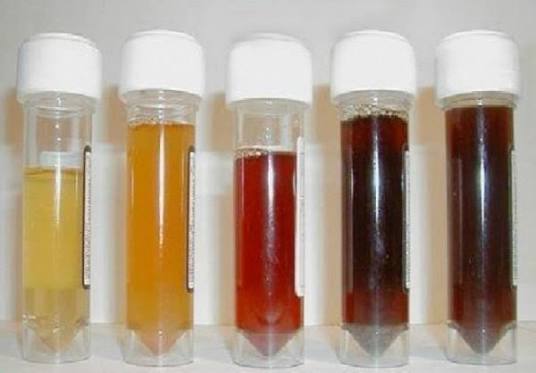
Dark urine — urine that is brown, tea-colored, cola-colored, or orange rather than pale yellow — is one of the most recognizable early warning signs of liver and biliary disease. The color change results from elevated conjugated (direct) bilirubin in the blood, which, because it is water-soluble, passes into the urine and imparts its amber or brown pigmentation. Unlike the unconjugated bilirubin that circulates in Gilbert’s syndrome or hemolysis — which is bound to albumin and cannot cross the glomerular filtration barrier into urine — conjugated bilirubin from hepatocellular disease or biliary obstruction is freely filtered and excreted by the kidneys, making bilirubinuria (bilirubin in the urine) a sensitive early marker of significant liver pathology.
Dark urine often precedes visible jaundice in cholestatic liver disease. The kidney excretes conjugated bilirubin into the urine before serum bilirubin levels rise high enough to visibly discolor the skin and sclera — which requires levels above approximately two to three milligrams per deciliter — making dark urine an earlier sign of hepatic disease in many patients. The classic triad of obstructive jaundice includes dark urine, pale stool, and yellow skin or eyes — each symptom reflecting the same fundamental problem (impaired bilirubin excretion into bile) from a different physiological angle. Recognizing dark urine as a potential liver symptom rather than attributing it to dehydration alone is an important clinical and patient-awareness priority.

Why Liver Disease Causes Dark Urine — The Bilirubin Pathway
Normal urine gets its characteristic pale yellow color from urochrome (urobilin), a breakdown product of urobilinogen that is absorbed from the intestine and excreted by the kidneys. In healthy individuals, only trace amounts of bilirubin appear in the urine — below the threshold detectable by the dipstick test used in routine urinalysis. When the liver is unable to excrete conjugated bilirubin normally — because of hepatocyte injury, intrahepatic cholestasis, or mechanical bile duct obstruction — conjugated bilirubin backs up into the systemic circulation. Because conjugated bilirubin is water-soluble and relatively small, it passes through glomerular filtration and is excreted in the urine, turning it dark amber, brown, or tea-colored.
The parallel change occurring in the stool is equally informative. When bile does not reach the intestine — because of obstruction or severely impaired secretion — the stercobilin that normally gives stool its brown color is absent or reduced, producing pale, clay-colored, or putty-colored stools. The combination of dark urine and pale stool in the same patient is pathognomonic of cholestasis — it cannot be explained by dehydration, dietary factors, or benign causes, and mandates prompt evaluation for biliary obstruction or significant hepatocellular disease. In contrast, dark urine from dehydration is accompanied by concentrated but otherwise normal-colored (pale to amber) urine without brown discoloration, and is not associated with pale stool or other liver symptoms.
A urine dipstick test for bilirubin is a simple, inexpensive, and sensitive screening test for bilirubinuria that can be performed during any clinical encounter. A positive dipstick result for bilirubin — even before serum bilirubin is elevated above the normal range — indicates conjugated hyperbilirubinemia and should trigger liver function testing including serum bilirubin fractionation, transaminases, and alkaline phosphatase. A positive urobilinogen on dipstick, in contrast, reflects increased urobilinogen absorption from the gut in states of hemolysis or early hepatocellular disease and may be the first detectable abnormality in acute hepatitis, before overt jaundice or clinical symptoms develop.
Conditions That Cause Dark Urine Through Liver or Bile Duct Pathology
Acute viral hepatitis — particularly hepatitis A and hepatitis E, which are typically icteric (jaundice-producing) — classically presents with a prodromal period of fatigue, nausea, and anorexia followed by the onset of dark urine, jaundice, and pale stool as hepatocellular injury produces conjugated hyperbilirubinemia. Many patients first notice that their urine has turned dark — the color change in urine is often more striking and easier to notice than subtle scleral icterus — and this prompts them to seek medical attention. Hepatitis B and C can also produce acute icteric hepatitis with dark urine, though icteric presentations are less common in hepatitis B and rare in acute hepatitis C. In all cases, viral serology testing is required to determine the causative agent and guide treatment decisions.
Alcoholic hepatitis — particularly severe cases — produces marked hepatocellular dysfunction with elevated conjugated bilirubin and dark urine. The combination of heavy alcohol use, dark urine, jaundice, and systemic illness (fever, abdominal pain, anorexia) is a classic presentation of alcoholic hepatitis and warrants urgent evaluation for disease severity using the Maddrey’s Discriminant Function or MELD score. Autoimmune hepatitis presenting acutely may also produce rapid-onset dark urine with jaundice, sometimes mimicking acute viral hepatitis in its clinical presentation. Drug-induced liver injury from hepatocyte-toxic medications — including acetaminophen overdose, isoniazid, nitrofurantoin, and many herbal supplements — produces dark urine as conjugated bilirubin accumulates from hepatocellular necrosis.
Biliary obstruction from any cause — choledocholithiasis (common bile duct gallstones), pancreatic cancer, cholangiocarcinoma, primary sclerosing cholangitis, or benign bile duct strictures — produces dark urine from conjugated hyperbilirubinemia alongside pale stool from absent bile in the intestine. The pattern is cholestatic rather than hepatocellular on liver tests (disproportionate elevation of alkaline phosphatase and bilirubin relative to transaminases), and abdominal imaging typically demonstrates biliary dilation proximal to the obstruction. In pancreatic cancer and cholangiocarcinoma, dark urine accompanied by progressive, painless jaundice and weight loss in an older adult is a presentation that requires urgent oncological evaluation without delay.
Non-Hepatic Causes of Dark Urine — Differential Diagnosis
Not all dark urine reflects liver disease. Dehydration produces concentrated, amber-colored urine that is darker than usual but is still yellow rather than brown or tea-colored; the distinction is usually apparent, but in genuine uncertainty, a urine dipstick for bilirubin resolves it — dehydrated urine is bilirubin-negative. Myoglobinuria — from rhabdomyolysis (muscle breakdown) caused by intense exercise, trauma, prolonged immobility, statin toxicity, or certain infections — produces brown to red-brown urine from myoglobin (not bilirubin), and the dipstick is positive for blood but microscopy shows no red cells. Hemoglobinuria from intravascular hemolysis (autoimmune hemolytic anemia, transfusion reaction, paroxysmal nocturnal hemoglobinuria) produces red-brown urine, also positive on dipstick for blood without red cells on microscopy. Porphyria — in which porphyrins in the urine darken on standing — produces port-wine or burgundy-colored urine particularly after sun exposure in patients with acute intermittent porphyria or variegate porphyria.
Medications and dietary factors can also produce chromatic urine. Rifampicin (used for tuberculosis and as a second-line antipruritic in cholestatic liver disease) produces bright orange-red urine that can alarm patients unfamiliar with the expected side effect. Nitrofurantoin (used for urinary tract infections) produces brown urine. Pyridium (phenazopyridine, a urinary analgesic) produces intense orange urine. Consumption of large quantities of beets (beeturia) produces red urine in individuals with a certain genotype affecting oxalic acid metabolism, though this is harmless and transient. The clinical context, medication review, and urine dipstick — particularly for bilirubin, blood, and protein — rapidly distinguish hepatic from non-hepatic causes of chromatic urine in most cases.
When Dark Urine Requires Urgent or Prompt Evaluation
Dark urine accompanied by the following features warrants same-day or emergency evaluation: fever and right upper quadrant pain (possible ascending cholangitis, a biliary emergency); altered mental status or confusion alongside jaundice (possible acute liver failure or hepatic encephalopathy); severe vomiting with inability to maintain hydration; signs of bleeding including blood in vomit or very dark tarry stool (possible upper gastrointestinal bleeding from varices or ulcers in the context of liver disease); or rapidly worsening jaundice over hours to days in the setting of known liver disease, recent medication change, or alcohol binge.
Prompt evaluation within days is appropriate when dark urine is: persistent beyond forty-eight hours without clear non-hepatic cause; accompanied by pale stool (cholestasis triad); accompanied by progressive fatigue, nausea, or anorexia; appearing in a patient with known risk factors for liver disease (chronic hepatitis B or C, excessive alcohol use, metabolic syndrome, prior liver disease); or associated with new-onset skin itching. A urine dipstick for bilirubin, followed if positive by serum liver function tests and fractionated bilirubin, is the appropriate initial investigation. Abdominal ultrasound follows in patients with elevated liver tests to evaluate for biliary dilation, gallstones, or liver parenchymal disease. The combination of dark urine with a positive dipstick for bilirubin, elevated conjugated serum bilirubin, and elevated alkaline phosphatase strongly suggests biliary obstruction and warrants imaging-guided evaluation for its cause.
Frequently Asked Questions About Dark Urine and Liver Health
Is dark urine always a sign of liver disease?
No. Dehydration is the most common cause of dark amber urine and is not related to liver disease. Medications, certain foods, myoglobinuria, and hemoglobinuria can all produce dark urine without hepatic involvement. The features that specifically suggest liver disease are: brown, tea-colored, or cola-colored urine (rather than concentrated yellow or orange); a positive urine dipstick for bilirubin; simultaneous pale stool; and accompanying symptoms of liver disease such as fatigue, nausea, jaundice, or right upper quadrant discomfort. Dehydrated urine is bilirubin-negative on dipstick and clears quickly after adequate fluid intake; bilirubinuria persists regardless of hydration status.
How long does dark urine last in acute hepatitis?
In acute viral hepatitis A, dark urine typically lasts two to four weeks, coinciding with the period of active hepatocellular inflammation and elevated conjugated bilirubin. As the hepatitis resolves and bilirubin normalizes, urine color gradually returns to normal. In severe or protracted hepatitis — including acute hepatitis B with impaired recovery, cholestatic hepatitis A (a variant with prolonged jaundice of eight to twenty-four weeks despite good prognosis), or drug-induced cholestatic hepatitis — dark urine may persist longer, sometimes for months. Persistent dark urine beyond four to six weeks after acute hepatitis should prompt re-evaluation for complications or an alternative diagnosis.
Can cirrhosis cause dark urine?
Yes. In decompensated cirrhosis — when the liver’s residual functional capacity is insufficient to maintain normal bilirubin excretion — conjugated hyperbilirubinemia develops and dark urine results. Dark urine appearing in a patient with previously compensated cirrhosis is a significant sign of decompensation and should prompt urgent hepatological evaluation. In the context of cirrhosis, new-onset dark urine may also reflect acute-on-chronic liver failure triggered by an infection, gastrointestinal bleed, or alcohol relapse — each of which requires specific investigation and management.
Sources: NIDDK — Liver Disease · ACG — Jaundice · Mayo Clinic — Dark Urine
Dark Urine in Specific Hepatic Conditions — Hepatitis C, MASLD, and Hemochromatosis
Chronic hepatitis C progresses slowly, and most patients are unaware of their infection for years or decades. Dark urine is not a typical feature of compensated chronic HCV infection — it usually appears only when significant hepatocellular damage impairs bilirubin processing or when the disease progresses to decompensated cirrhosis. However, acute hepatitis C — which is rare and often asymptomatic but occurs in a subset of newly infected patients — can produce an acute icteric syndrome with dark urine and elevated transaminases. The identification of acute HCV infection during the icteric phase allows early treatment with direct-acting antivirals (DAAs) that produce cure rates above ninety-five percent; treatment during acute infection may also reduce the risk of progression to chronic hepatitis. Any patient presenting with unexplained acute hepatitis and dark urine should be tested for HCV RNA (not just antibody, which may be negative in the first weeks of infection) along with hepatitis A and B serology.
Metabolic-associated steatotic liver disease (MASLD, formerly NAFLD) is now the most prevalent chronic liver condition worldwide, affecting approximately twenty-five percent of the global adult population in association with obesity, type 2 diabetes, and metabolic syndrome. Uncomplicated MASLD does not typically cause dark urine — the condition is predominantly silent in its early stages, characterized by hepatic steatosis without significant hepatocellular damage or cholestasis. Dark urine in a patient with known MASLD should therefore prompt evaluation for progression to metabolic-associated steatohepatitis (MASH) with significant fibrosis, superimposed acute hepatitis (drug-induced, viral, or alcoholic), or development of decompensated cirrhosis — all of which can produce conjugated hyperbilirubinemia. The appearance of dark urine in a previously asymptomatic MASLD patient represents a clinical change warranting urgent reassessment.
Hereditary hemochromatosis — excess iron accumulation in the liver, heart, and endocrine organs — does not typically cause dark urine from bilirubin in its early stages. However, advanced hemochromatosis with cirrhosis can produce conjugated hyperbilirubinemia and dark urine as hepatic architecture is destroyed. More characteristically, hemochromatosis patients may notice skin hyperpigmentation (bronze discoloration from melanin deposition stimulated by iron accumulation) that is sometimes confused with jaundice, particularly before the diagnosis is established. Liver function tests including serum ferritin and transferrin saturation should be checked in any patient with unexplained liver disease, particularly those with Northern European ancestry, a family history of liver disease, or the classic triad of cirrhosis, diabetes, and skin pigmentation changes — the “bronze diabetes” of textbook hemochromatosis presentations.
Practical Guide — What to Do When You Notice Dark Urine
When a patient notices that their urine has turned dark without an obvious benign explanation (such as starting rifampicin or eating large quantities of beets), a systematic approach efficiently separates the common from the concerning. The first question is whether the dark urine is truly brown or tea-colored rather than simply concentrated amber — drinking two to three glasses of water and observing whether the urine lightens significantly will usually resolve this; bilirubinuria does not clear with hydration, whereas concentrated normal urine does. If the urine remains dark after adequate hydration, or if it is brown rather than amber in color, the next step is a urine dipstick for bilirubin, protein, and blood — this can be obtained at most pharmacies or urgent care clinics without a prior appointment.
A positive dipstick for bilirubin requires same-day or next-day medical evaluation with serum liver function tests — there is no benign interpretation for bilirubinuria. If liver tests are abnormal, ultrasound of the abdomen evaluates the biliary tree, liver parenchyma, and pancreatic head as the next priority investigation. In the context of dark urine with abnormal liver tests, patients should simultaneously review their medications (including herbal and over-the-counter supplements), report any alcohol use, and disclose recent risk factors for viral hepatitis (travel, unprotected sex, intravenous drug use) to their clinician — this information directly shapes the differential diagnosis and the investigation path taken. Patients with known liver disease who notice new dark urine should contact their hepatologist or gastroenterologist promptly rather than waiting for a scheduled appointment, since this may represent a clinically significant change in their condition. The association of dark urine with pale stool, itchy skin, and yellowing of the eyes is the cholestatic triad and constitutes a medical urgency requiring evaluation within twenty-four to forty-eight hours at most.
Patients who are evaluated and found to have dark urine from a self-limited cause — such as a brief episode of dehydration or a single episode of alcohol excess that resolves with abstinence — should nonetheless be counseled about the specific circumstances that would warrant prompt return: recurrence of dark urine without clear cause, accompanying pale stool, development of visible jaundice, weight loss, or abdominal pain. A single negative evaluation provides reassurance but does not preclude liver disease developing in the future, particularly in patients with ongoing risk factors for hepatic conditions.
Dark Urine in Liver Transplantation and Post-Transplant Care
For patients who have undergone liver transplantation, the development of dark urine is a potentially serious sign that requires prompt evaluation. In the early post-transplant period, dark urine may reflect primary non-function of the transplanted organ, acute rejection, hepatic artery thrombosis (which compromises bile duct blood supply and can cause biliary necrosis), or biliary anastomotic complications including stricture or leak. Each of these is a surgical or immunological emergency requiring immediate assessment. In the late post-transplant period, dark urine may indicate acute or chronic rejection, recurrence of the original liver disease (hepatitis C or B recurrence, recurrent autoimmune hepatitis, or recurrent PBC), drug-induced liver injury from immunosuppressive medications or antimicrobials used for infection prophylaxis, or de novo liver disease in the allograft. Post-transplant patients are monitored with regular liver function tests precisely because clinical symptoms like dark urine often appear after biochemical deterioration has already occurred; the appearance of symptoms means the process is already advanced enough to produce conjugated hyperbilirubinemia.
The broader significance of dark urine as a sentinel symptom lies in its reliability as an early indicator of significant cholestatic or hepatocellular pathology — across a range of conditions from acute viral hepatitis to advanced cirrhosis to biliary obstruction — before other more overt signs of liver failure develop. A patient who acts on dark urine promptly — seeking evaluation, providing relevant history, and undergoing appropriate testing — creates an opportunity for intervention at a stage when the underlying condition is more likely to be reversible or manageable. Hepatitis A, most cases of drug-induced liver injury, and gallstone-related biliary obstruction can all be successfully treated when identified early; the same conditions, left unaddressed until liver failure or sepsis supervenes, carry substantially higher morbidity and mortality. Cultivating awareness of dark urine as a warning symptom — not merely a consequence of insufficient fluid intake — is therefore a meaningful contribution to early liver disease identification at the population level.
A useful clinical framework for approaching dark urine divides patients into three categories based on the dipstick result and the accompanying stool color. In the first category — dark urine with a positive dipstick for bilirubin and pale stools — the diagnosis is cholestasis until proven otherwise, and the priority is imaging to identify biliary dilation and distinguish intrahepatic from extrahepatic causes. In the second category — dark urine with a positive dipstick for blood but no red cells on microscopy — the priority is distinguishing myoglobinuria (elevated creatine kinase, recent muscle injury or exertion) from hemoglobinuria (hemolytic anemia on complete blood count), and the investigation pathway diverges accordingly. In the third category — dark urine with a negative dipstick for both bilirubin and blood — the most likely explanation is a medication, dietary factor, or concentrated normal urine, and reassurance after excluding clinical signs of liver disease is usually appropriate. This three-category framework allows clinicians to rapidly narrow the differential diagnosis and direct the correct investigation sequence without ordering comprehensive panels for every patient who presents with dark urine, while ensuring that the clinically significant causes — biliary obstruction and hemolysis in particular — are not missed by relying on clinical impression alone. Combined with a thorough medication review and assessment of associated symptoms including fatigue and abdominal discomfort, the structured approach to dark urine is one of the most efficient and high-yield evaluations in general medicine.